Parshat Vayechi6 min read

The Two-Mouthed Sword and the King Who Rose for God

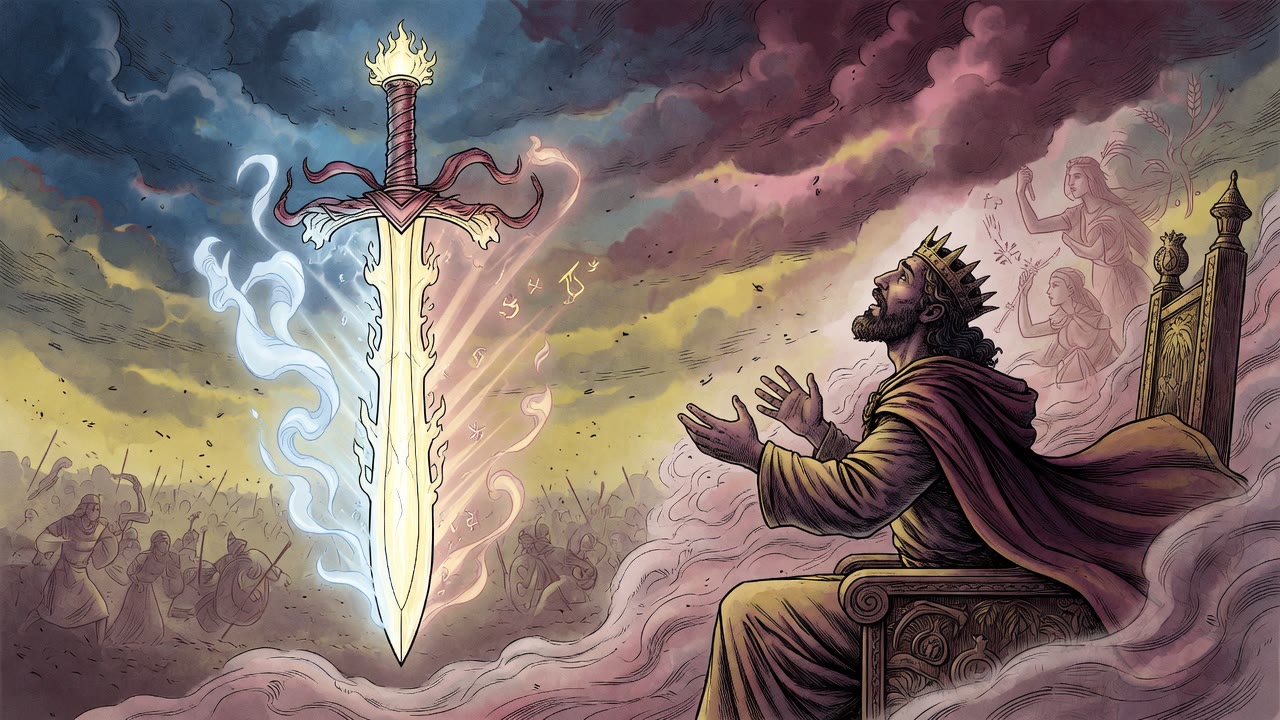
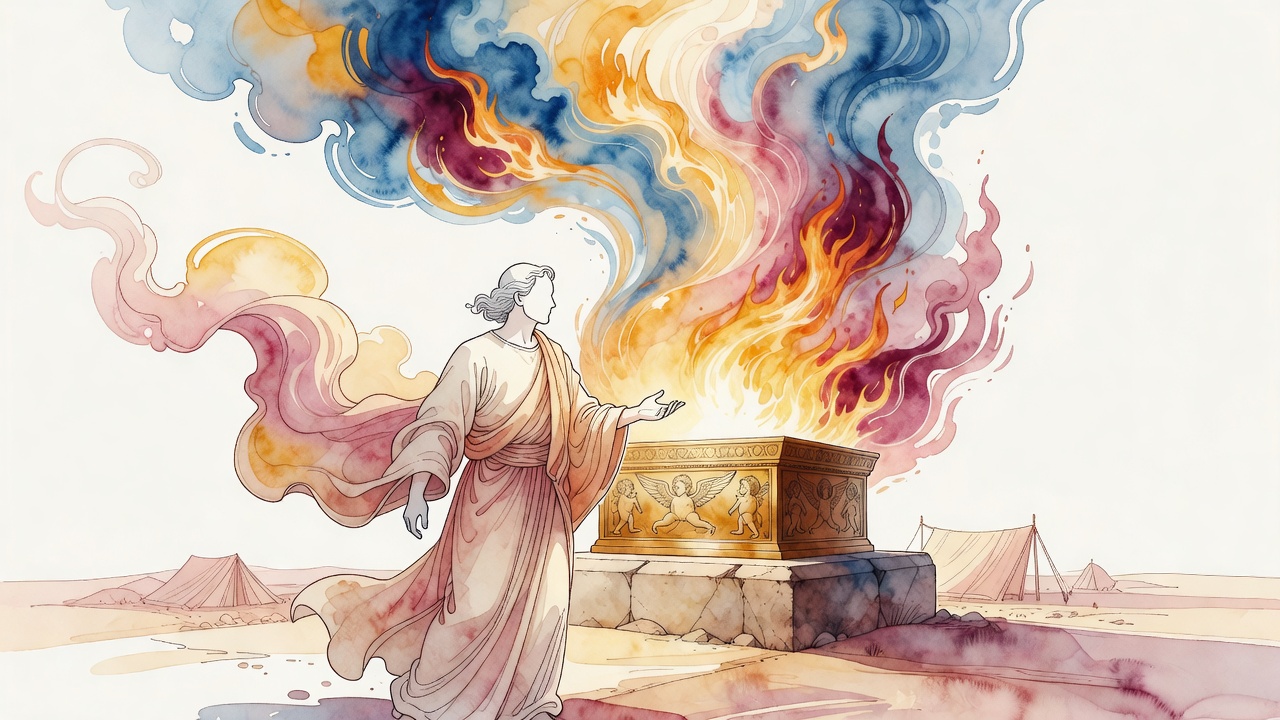
Ehud forged a sword with two mouths, strapped it to his right thigh, and the fat king of Moab rose for God's honor in the breath before he died.

Curated by Arthur · Told by Maggid ·
Table of Contents
  1. A Sword With Two Mouths
  2. I Have a Word of God for You
  3. The Wolf Tears in the Morning
  4. The Throne That Was Promised Back

The blade had two mouths and no scabbard fit for the world to see. Ehud, son of Gera, of the tribe of Benjamin, beat it out in secret, a cubit long and edged on both sides, and he hung it where no guard would think to search. Not on the left hip where a soldier's sword rides. On his right thigh, under his cloak, against the skin, where a left-handed man could reach across his own body and pull it free in the space of a breath.

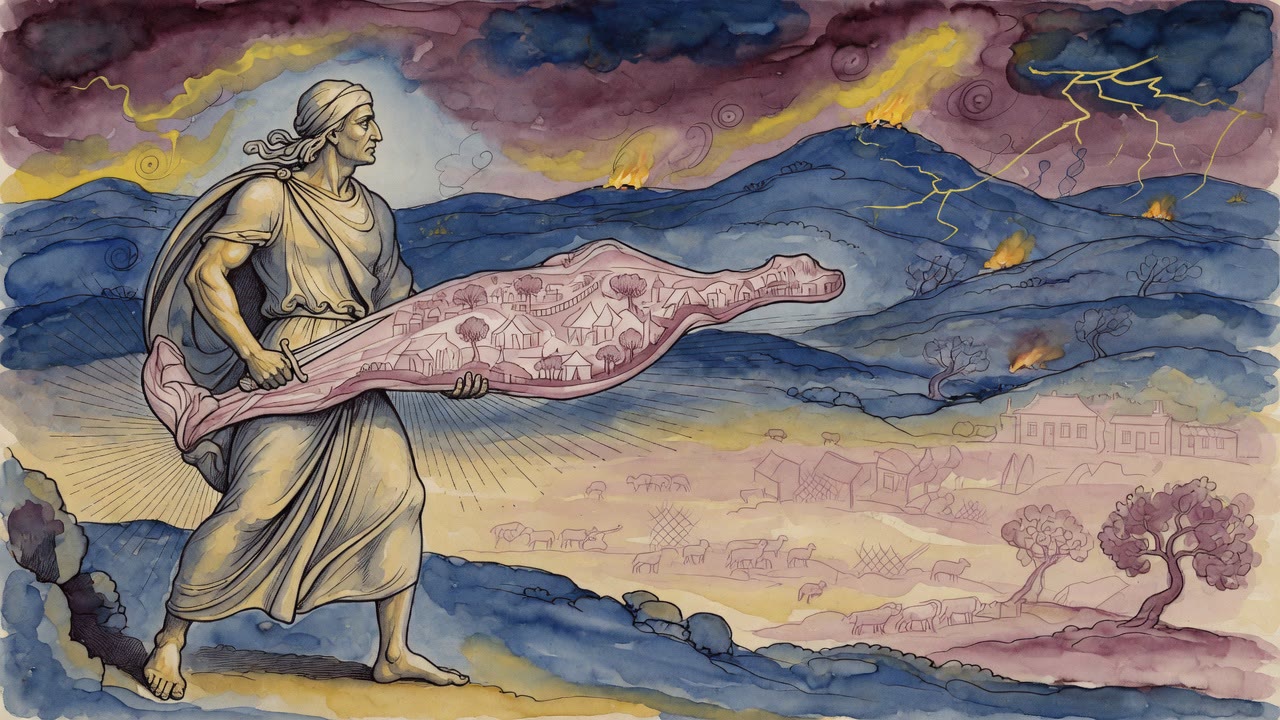
Benjamin had always been the wolf that tears. The old blessing said it of the tribe, a wolf devouring in the morning and dividing the spoil at evening, and now the wolf had a man and the man had a sword. Israel had been bent under Moab for eighteen years. The tribute went out each season to Eglon, king of Moab, a man so fat the rolls of him swallowed his belt. Ehud was the one chosen to carry the silver up to the king's house. He carried something else besides.

A Sword With Two Mouths

Why two mouths and not one. A sword cuts on a single edge and the smith grinds the other side blunt for the hand. Ehud's bit on both. The sages who studied the verse turned the iron into something stranger than iron. A two-edged sword, they said, is the word of God in the mouth of the righteous, the praise that is itself a weapon. Ehud was a man of Torah before he was a man of blood, and Torah is the blade that opens in two worlds at once. It feeds a man in this world and it feeds him in the world to come. So the weapon strapped to his thigh was twinned with the study on his tongue, and both had a cutting edge, and both were hidden under the cloak until the moment came to draw.

He brought the tribute. He bowed. He went out again with the men who had carried the silver, and at the carved stones near Gilgal he sent them on ahead and turned back alone.

I Have a Word of God for You

Eglon sat in his cool upper chamber, the summer room on the roof where the air moved, and the door was shut against the heat. Ehud came up the stairs and stood before the throne and said, "I have a secret word for you, O king." The servants were waved out. The room emptied. And then Ehud said the thing that decided everything that would come after, in this world and the next.

"I have a word of God for you."

A word of God. Not a word from Ehud, not a message from the conquered tribes, not a petition for mercy. The name of the Holy One had entered the room. And Eglon, king of Moab, oppressor of Israel, a pagan on a stolen throne, did the one thing no one expected. He rose. The mountain of him heaved up off the seat. The fat king who had no reason on earth to honor the God of his slaves stood up out of his chair for the sake of that Name, because a word of God deserved a man on his feet.

The Wolf Tears in the Morning

That was the instant the wolf had waited eighteen years for. Ehud reached across his body with his left hand, drew the two-mouthed blade off his right thigh, and drove it into the king's belly. The hilt went in after the iron. The fat closed over the haft and swallowed it, and the blade tip came out behind, and Ehud did not pull it back. He left the sword inside the king and went out and locked the doors of the upper chamber behind him.

The old blessing of Benjamin came true in a single afternoon. In the morning he devours the prey. That was the blade in Eglon's gut. And at evening he divides the spoil. That was after, when Ehud blew the ram's horn in the hill country of Ephraim and Israel came down behind him and seized the fords of the Jordan and took back the land that eighteen years of tribute had bought from them. The wolf tore in the morning and shared out the kill at dusk, exactly as the dying Jacob had said it would.

The Throne That Was Promised Back

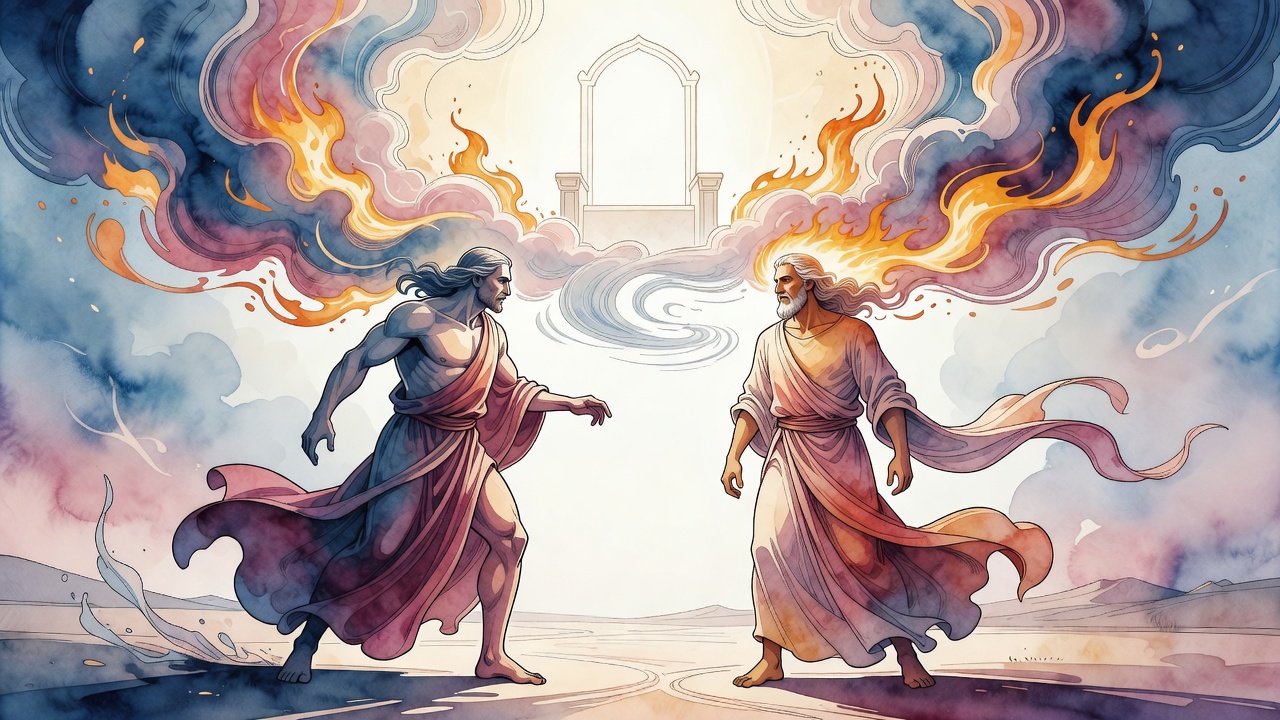
Here the story bends in a direction no one in that locked room could have guessed. Eglon was dead with a sword in him and a usurper's blood on the floor. By every measure the man deserved nothing. But the Holy One had been watching the moment before the blade, not only the blade.

He had seen the fat king rise. He had seen a Moabite stand up for the honor of a Name that was not his people's, with no soldier to impress and no advantage to win, a heartbeat before he was killed for it. And the Holy One, blessed be He, spoke a sentence over the corpse that turned the whole bloody scene inside out. "You apportioned honor to Me. You stood up from your throne for the sake of My honor. By your life, I will raise up from you a child who will sit upon My own throne."

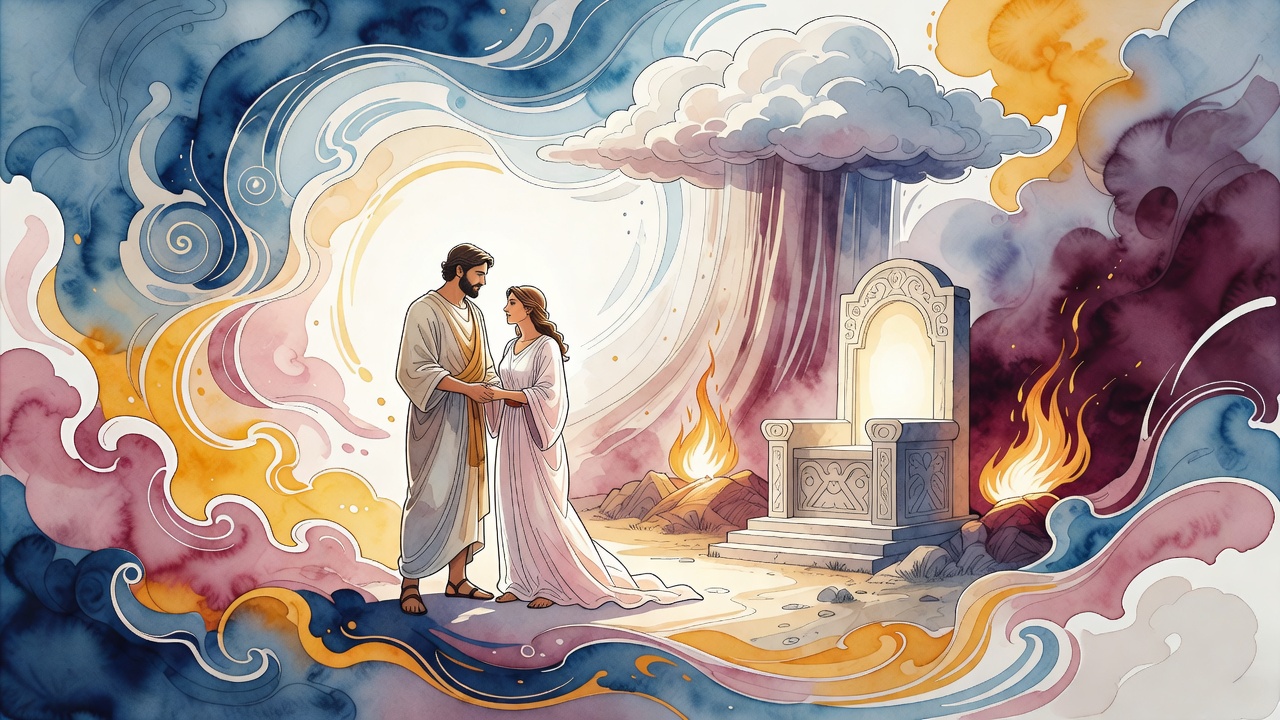
From Eglon, king of Moab, came a daughter. Her name was Ruth, the Moabite who left her dead husband's grave and her own people and walked into Bethlehem behind an old widow, swearing that Naomi's God would be her God. From Ruth came Obed, and from Obed came Jesse, and from Jesse came David, the shepherd anointed king over Israel. And from David came Solomon, who built the house for the Name and sat, the chronicler wrote, upon the throne of the Lord as king.

The throne of the Lord. The same throne the fat king had once heaved himself up from in a locked summer room, out of reverence, in the last clean moment of his life. He gave God a king's standing-up. God gave him back a king on the throne of heaven, four generations down a Moabite line, with a dead man's sword still buried in the beginning of it.


← All myths
From the tradition

Sources

4 sources

The texts this telling draws on, in full. Open a card to read inline, or expand it for a wider, quieter read.

Midrash Tanchuma Buber, Vayechi 14:2Midrash Tanchuma Buber, Vayechi

Another interpretation (of Judges 3:16): "And Ehud made himself a sword," and he set it on his right thigh. He came in to Eglon and said to him, "I have a word of God for you", (the king) "and he arose from his seat" (Judges 3:20). The Holy One, blessed be He, said: You have apportioned honor to Me and stood up from your throne for the sake of My honor; by your life, I will raise up from you a daughter from whom shall arise a son, and I will set him upon My throne. This is Ruth the Moabite, from whom arose Solomon, of whom it is written, "And Solomon sat upon the throne of the Lord" (I Chronicles 29:23). What is written? "And Ehud put forth his left hand and took the sword from off his right thigh" (Judges 3:21). "In the morning he devours the prey", "and he thrust it into his belly", "and at evening he divides the spoil" (Genesis 49:27).

Full source
Midrash Tanchuma Buber, Vayechi 14:1Midrash Tanchuma Buber, Vayechi

Another interpretation (of Genesis 49:27): "Benjamin is a wolf that tears," and so forth. It speaks of its judge, of Ehud. What is written? "And Ehud made for himself a sword, and it had two mouths" (Judges 3:16), for he was engaged in Torah, which is called "a two-edged sword" (Psalms 149:6). "And it had two mouths," because it consumes in two worlds, in this world and in the world to come.

Full source
Yalkut Shimoni on Nach 42:3Yalkut Shimoni on Nach

"And he rose from his seat" (Judges 3:20). Rav Bivai in the name of Rabbi Reuben said: Ruth and Orpah were the daughters of Eglon. The Holy One, blessed be He, said: You showed Me honor and rose from your throne for the sake of My honor. By your life, I will raise up from you a son, and I will seat him upon My throne, as it is said, "And Solomon sat upon the throne of the LORD as king" (I Chronicles 29:23). (It is written in remez 440.)

Full source
Bamidbar Rabbah 16:27Bamidbar Rabbah

When Gentile Nations Showed More Respect Than Israel is the question behind this passage from Bamidbar Rabbah.

Ouch.

The text goes on to illustrate this point with a fascinating story about Eglon, the king of Moab. Eglon, a "heathen," as the text puts it, showed respect for God simply by rising from his throne when Ehud son of Gera mentioned God's name (Judges 3:20). A pagan king, showing more reverence than God's own people. The Bamidbar Rabbah uses this to drive home the point: even those outside the covenant seem to get it, so why don’t we?

Then comes the heart of the matter. God asks, "Until when need I be tolerant of them? 'Until when, for this evil congregation?'" It's a raw, emotional question, filled with frustration and perhaps even a touch of sadness. It really gets you thinking about the patience and understanding that God has shown us over the millennia.

But the passage doesn’t stop with the criticism. It then shifts to a powerful, almost tender, analogy. God says, “As it were, a person purchases a slave so the slave will take the lantern and illuminate for the purchaser. But, I did not do so, but rather, you are My slaves, “for the children of Israel are slaves to Me” (Leviticus 25:55), but I take the lantern and illuminate for you." Usually, a master expects the slave to serve them, to make their life easier. But God flips the script. He’s saying, "I should be having you light the way for me, but instead, I'm lighting the way for you."

The analogy continues. Normally, a slave prepares the way for their master, setting up camp ahead of time. But God, as it is stated in (Numbers 10:33), had the Ark of the Covenant travel before the Israelites, "to scout a resting place for them." God is preparing the way for us, his supposed servants!

And finally, the last analogy: baking bread. Traditionally, a slave would bake bread for their master. But what did God do? He baked bread from the heavens – manna – for the Israelites (Psalms 78:25). “Men ate the bread of the mighty!” the verse proclaims.

What’s the takeaway from all of this? It’s a powerful reminder of the unique relationship between God and the Jewish people. God isn't just a distant, demanding deity. He is a loving, patient, and ever-giving presence in our lives. Despite our flaws and shortcomings, He continues to provide for us, guide us, and even "light the way" for us.

It's a challenging and comforting thought all at once, isn't it? It urges us to reflect on how we treat the Divine in our own lives and to strive to be worthy of the incredible gifts we've been given.

Full source