5 min read

The Crime in Gibeah Nearly Erased the Tribe of Benjamin

A Levite stopped in a Benjamite city and the men surrounded the house. By dawn his concubine was dead and Israel was at war with one of its own tribes.

Curated by Arthur · Told by Maggid ·
Table of Contents
  1. Hospitality Failed at the Door
  2. A Body Sent Through Israel
  3. The War Against Benjamin
  4. The Near-Extinction

The crime at Gibeah did not end with one dead woman. It nearly erased an entire tribe from the map of Israel.

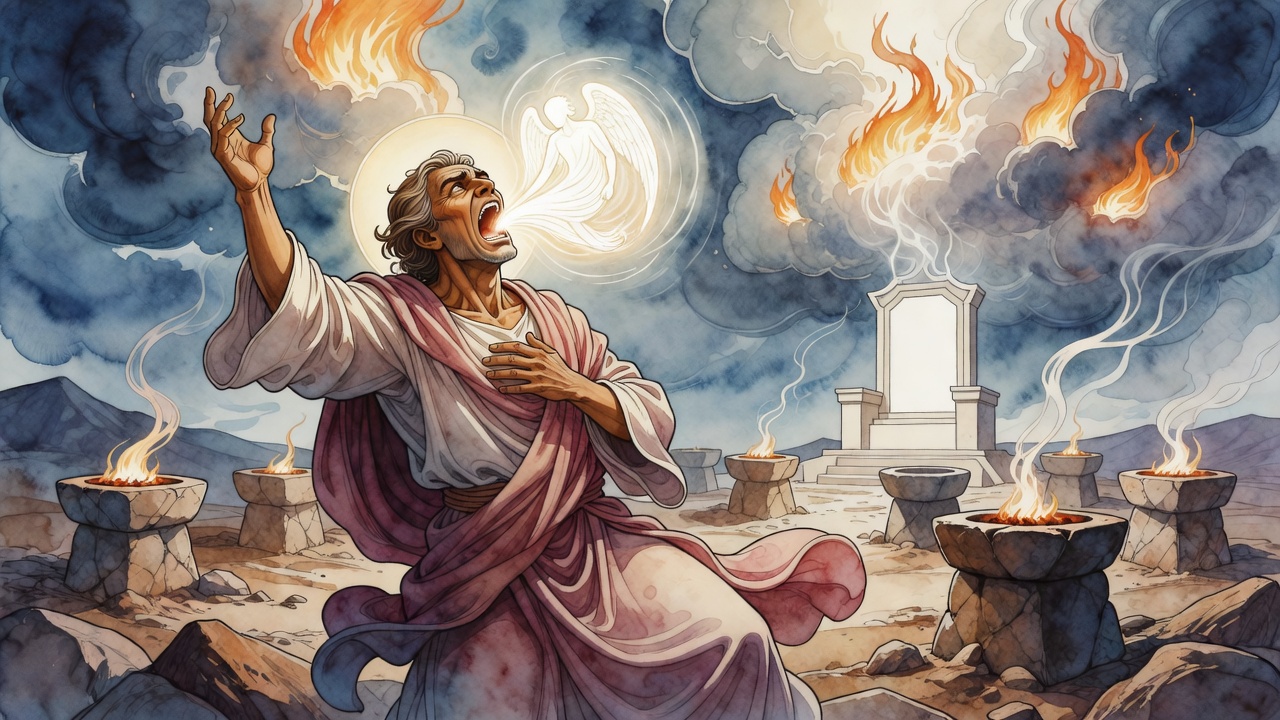
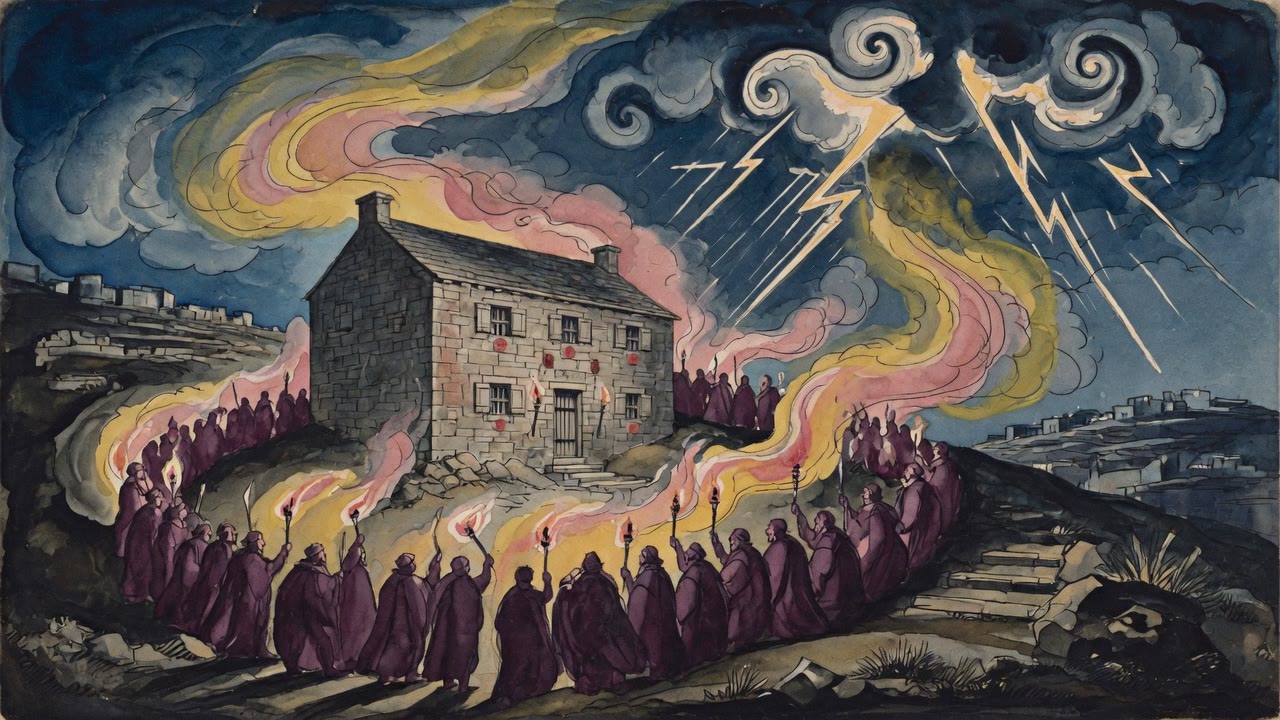
Judges gives the story the bleak refrain of an age without a king. A Levite was traveling through the territory of Benjamin with his concubine when night came on too fast. They stopped in Gibeah rather than a foreign city. An old man of Ephraim who was living in Gibeah found them in the town square and took them in, warning them not to stay in the open. The city men of Gibeah surrounded the house before the guests had finished eating, demanding that the old man send out the male visitor. They surrounded the house and beat on the door. They sounded exactly like the men of Sodom.

Hospitality Failed at the Door

The old host understood what the night meant before anyone else in the story did. The travelers in his house were inside the frame of the ancient covenant between host and guest, and breaking that frame was not a local crime. It was a statement about what Gibeah had become and what Benjamin had tolerated it becoming. The city of Sodom had been destroyed for precisely this. Benjamin had no Lot to pull strangers from the square. It had only an old man from another tribe who knew enough to be afraid.

The Levite pushed his concubine out the door. The text does not soften this. The men of the city abused her through the night. At dawn she fell at the threshold with her hands on the doorpost. When the Levite opened the door to leave in the morning, she was there.

A Body Sent Through Israel

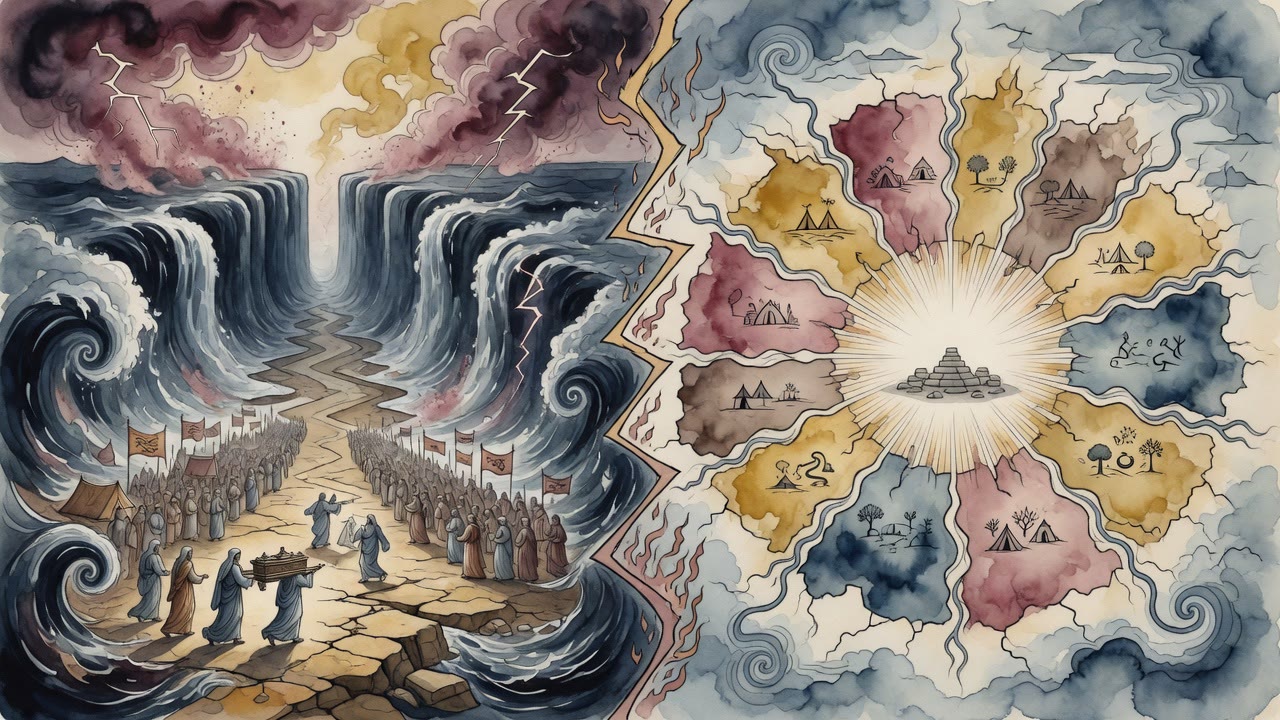
He did not bury her. He put her on his donkey, carried her home, and then he cut her body into twelve pieces and sent one to each tribe of Israel. The message he sent with each piece was not grief. It was accusation. Has such a thing ever happened since the day Israel came out of Egypt? Consider it. Take counsel. Speak.

Israel assembled at Mizpah. The whole congregation, from Dan to Beersheba, gathered as one body. The sages said Phinehas was the priest at Mizpah, and that what happened at Gibeah was connected to what had been festering in Benjamin for years. The tribe had adopted the idols of Micah. They had tolerated the corruption in their cities. The accumulation of unpunished sin had ended in a single night in Gibeah that now demanded an answer from the whole people.

The War Against Benjamin

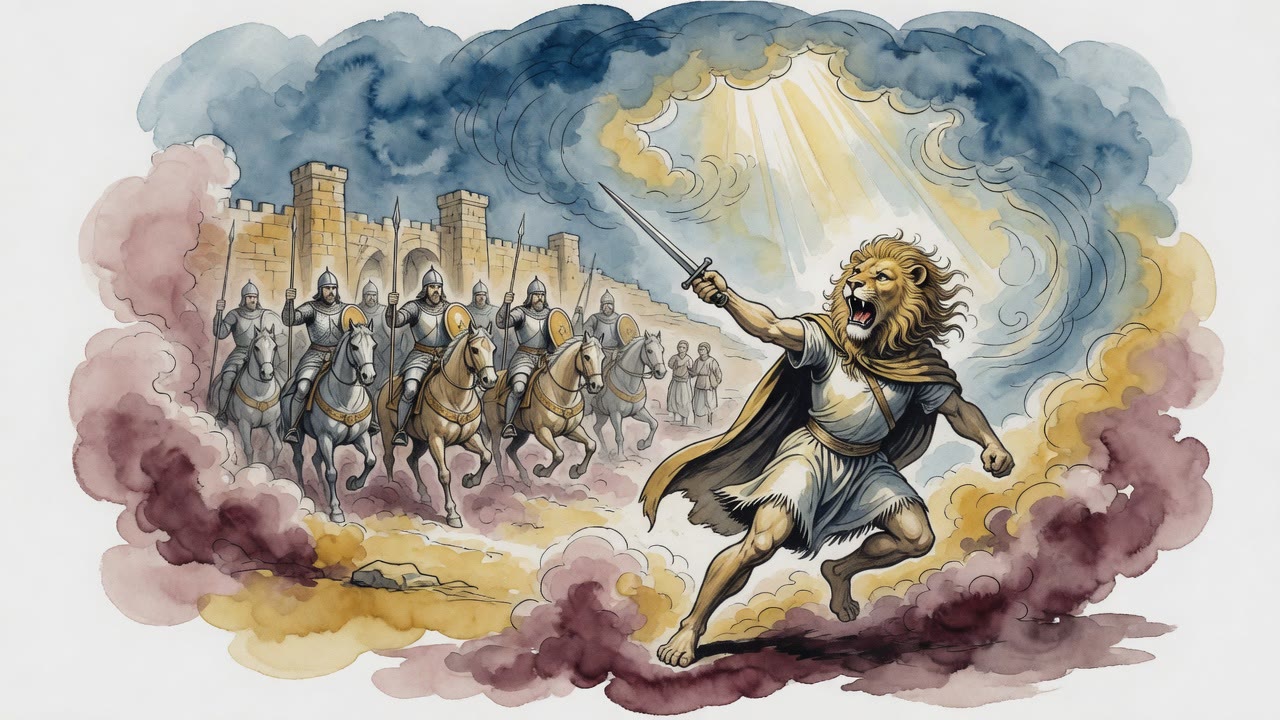
The tribes sent to the Benjamites demanding that they hand over the men of Gibeah. Benjamin refused and gathered its forces instead, twenty-six thousand swordsmen and seven hundred left-handed crack fighters from Gibeah who could sling a stone at a hair's breadth without missing. The other tribes had four hundred thousand fighting men.

Israel lost the first battle. Twenty-two thousand dead. They went up a second time and lost again, eighteen thousand dead. The tradition read both losses as deliberate punishment, not for attacking Benjamin but for their own sins, for the same indifference and failure to rebuke that had let Gibeah happen in the first place. When they added fasting and sacrifice before the third attack, the battle turned. Gibeah burned. Benjamin was reduced to six hundred men who fled to the rock of Rimmon.

The Near-Extinction

Israel had sworn at Mizpah not to give their daughters to Benjamin in marriage. The tribe of six hundred men would die out within a generation. Then the Israelites grieved what they had done. One tribe was nearly gone. In what followed, they bent the oath without quite breaking it, found women from Jabesh-Gilead whose men had not come to Mizpah, allowed Benjamin to take wives from Shiloh during the yearly festival. The tribe survived, barely, with enough people to rebuild something from the ruins of Gibeah.

The tradition counted the dead across the entire episode. Forty thousand Israelite soldiers. Seventy thousand Benjamites. Fifty thousand more struck down when the Ark came home to Beth-shemesh. Numbers like these, said the prophet Elijah in one teaching, did not happen by accident. Every death was by strict justice. The failure to speak, the failure to rebuke in time, had compounded across years until it required a war to settle.


← All myths

From the tradition

Sources

6 sources

The texts this telling draws on, in full. Open a card to read inline, or expand it for a wider, quieter read.

Antiquities V.2Antiquities of the Jews (Josephus)

The moment Joshua and Eleazar the high priest died, Israel began to unravel. Josephus does not soften this. The generation that had conquered Canaan gave way to one that could not hold it together.

Phineas prophesied that the tribe of Judah should take the lead, with Simeon fighting alongside them. They struck first at the city of Bezek, where a Canaanite warlord named Adonibezek had assembled his forces. The Israelites killed over ten thousand soldiers and captured Adonibezek himself. When they cut off his fingers and toes, he made a chilling confession: he had done the same to seventy-two kings. "I was not always hidden from God," he said, "as I now find by what I endure." They carried him alive to Jerusalem, where he died.

The tribes pushed south to Hebron, where they encountered the last of the ancient giants, men whose bodies were so enormous and whose faces were so alien that Josephus says their bones were still being displayed in his own day, unlike anything people could believe. The city went to the Levites. The surrounding land went to Caleb, the old spy who had scouted Canaan decades before under Moses. The descendants of Jethro, Moses's Midianite father-in-law, also received territory, they had abandoned their homeland to follow Israel through the wilderness.

Prosperity bred complacency. The tribes grew rich from Canaanite tribute and stopped fighting. They abandoned the aristocratic government Moses had designed, no senate, no magistrates, just farmers getting wealthy and ignoring the law. God warned them. They ignored the warning.

Then came the horror at Gibeah. A Levite man traveling with his concubine stopped for the night in a Benjamite town. The men of Gibeah surrounded the house and demanded the woman. They took her by force and abused her through the night. She died at the doorstep by dawn. The Levite cut her body into twelve pieces and sent one to each tribe (Judges 19:29). All Israel erupted. Four hundred thousand soldiers marched against the tribe of Benjamin, their own brothers. The Benjamites, outnumbered but defiant, won the first two battles, killing twenty thousand Israelites. Only on the third day, after fasting and prayer at Bethel, did God grant Israel victory. They slaughtered nearly the entire tribe, every city, every woman, every child. Only six hundred Benjamite men survived, fleeing to the rock of Rimmon.

Then came the remorse. Israel had sworn no one would give a daughter to Benjamin in marriage, effectively condemning the tribe to extinction. They found a loophole, four hundred virgins from Jabesh Gilead, whose people had refused to join the war. For the remaining two hundred men, they devised a scheme: let them hide in the vineyards at Shiloh during the festival and seize the dancing women for wives. And so the tribe of Benjamin survived, barely, rebuilt from the wreckage of civil war.

Full source
Legends of the Jews 2:76Legends of the Jews

Remember Micah? The guy who stole silver from his mother and then used it to make an idol (Judges 17)? Well, according to Legends of the Jews, the trouble didn’t stop there.

The people of the tribe of Benjamin, in particular, really took to Micah's idols. They were super into worshipping them, which, needless to say, didn't sit well with God. So, God decided it was time to hold Israel and Benjamin accountable for their actions. And the opportunity came soon enough, with the shocking incident at Gibeah.

An elderly man offers hospitality to travelers in Gibeah, which was a city inhabited by the Benjamites. But then, the men of the city, acting like the people of Sodom in the story of Lot, demand that the old man hand over his guests for their wicked desires. It’s a horrifying scene of abuse and violation.

The other tribes of Israel were understandably outraged. They demanded that the Benjamites make amends for this terrible crime. But the Benjamites refused. This refusal sparked a bloody war between the other tribes and Benjamin.

Here’s where it gets even more interesting. At first, despite the fact that the Urim and Thummim – those mysterious oracular objects used for divination by the priests – encouraged the Israelites to fight, saying, "Up to war, I shall deliver them into your hands," the Benjamites actually prevailed! According to Ginzberg's retelling in Legends of the Jews, the Israelites kept suffering defeat after defeat.

Why? The tribes eventually realized that God was allowing them to be defeated as a punishment for their own sins. They understood that something was seriously wrong.

So, they did what people in dire straits often do: they fasted, they gathered together before the Holy Ark, and they prayed. Phinehas, the son of Eleazar, who you might remember as a zealous priest, pleaded with God. "What means this, that Thou leadest us astray?" he cried. "Is the deed of the Benjamites right in Thine eyes? Then why didst Thou not command us to desist from the combat? But if what our brethren have done is evil in Thy sight, then why dost Thou cause us to fall before them in battle?"

Phinehas continues, laying his soul bare. "O God of our fathers, hearken unto my voice. Make it known this day unto Thy servant whether the war waged with Benjamin is pleasing in Thine eyes, or whether thou desirest to punish Thy people for its sins. Then the sinners among us will amend their ways."

He even recounts his own past actions, reminding God of his own zealousness in slaying Zimri and Cozbi for their public sin (Numbers 25), and how God protected him then. "But now," he laments, "eleven of Thy tribes have gone forth to do Thy bidding, to avenge and slay, and, lo, they have themselves been slain, so that they are made to believe that Thy revelations are lying and deceitful."

Phinehas concludes his impassioned prayer with a desperate plea: "O Lord, God of our forefathers, naught is hidden before Thee. Make it manifest why this misfortune has overtaken us."

It's a powerful moment of introspection and a cry for understanding. What do you think? What does it say about the relationship between divine justice and human actions? And how often do we stop to ask ourselves, "What is God trying to tell us?" when things go wrong? It’s a reminder that sometimes, the battles we fight are really about something much bigger than what's on the surface.

Full source
Tanna Debei Eliyahu Rabbah 11:1Tanna DeBei Eliyahu Rabbah

To what were Israel comparable in the days when the judges judged? To a king who bought houses and male and female servants from among them, some six years old, some five, some four, some three, some two, some one; and he raised them at his own table, and they ate of what the king ate and drank of what the king drank. He raised them and built them houses and planted them vineyards and trees and saplings, and said to them: Be careful with these saplings and these trees. Once they had eaten and drunk, they rose up and uprooted the vineyards and cut down the trees and chopped down the saplings and broke down the houses. When the king came and found all that they had done, he set his mind at ease toward them and said: They are like schoolchildren; what shall I do to these? He brought them and beat them, and so he did to them a second and a third time. So were Israel like before their Father in heaven in the days when the judges judged: they corrupted their deeds and were handed over to the kingdoms, and when they returned and repented, immediately the Holy One, blessed be He, would redeem them. This teaches you that not a single coin was ever taken from Israel except by justice, for all is nothing but justice.

And lest you say: Those forty-two thousand who were slain in the days of Jephthah the Gileadite, for what reason were they slain? Jephthah vowed an improper vow, and Phinehas son of Eleazar was alive in those days. Jephthah should have gone to Phinehas to have his vow annulled, but he did not go. This one said: I am head over all Israel, and shall I go to that one? And Phinehas said: He needs me, and shall I go to him? This one behaved with greatness toward himself. Woe to greatness, which buries its possessors; woe to greatness, which never brings about good. Jephthah the Gileadite vowed an improper vow, to offer up his daughter upon the altar. The men of Ephraim gathered against him to make a great quarrel with him. Phinehas should have told them to annul Jephthah's vow. Did you come for anything but to make a quarrel with him? But not only did he fail to protest against the men of Ephraim, he also failed to annul Jephthah's vow.

The Holy One, blessed be He, who sits upon the throne of righteous judgment, may His great Name be blessed forever and ever, said: Since this man placed his life in his palm and came to save Israel from the hand of Moab and the children of Ammon, and they came to make a great quarrel with him and gathered against him to wage war with him, immediately Jephthah went out and slew forty-two thousand of them, as it is said (Judges 12:1): "And the men of Ephraim cried out, and they said to Jephthah, Why did you cross over to fight against the children of Ammon, and did not call us... we will burn your house upon you with fire. And Jephthah said to them, I was a man of strife... and I saw that you were no deliverer, and I put my life in my palm... and why have you come up against me this day to fight with me? And Jephthah gathered all the men of Gilead and fought with Ephraim... and Gilead captured the fords of the Jordan against Ephraim. And it would be that when the fugitives of Ephraim said, Let me cross over, the men of Gilead said to him, Are you an Ephraimite? And he said, No. And they said to him, Say now Shibboleth, and he said Sibboleth." "Sibboleth" means nothing but the language of idolatry, like a man who says to his fellow, "Lift up the Idol [bal]." He could not pronounce it correctly, "and they seized him and slaughtered him... and there fell at that time of Ephraim forty-two thousand." Who slew all these? You must say: none slew them but Phinehas, who had it in his power to protest and did not protest, and who also should have annulled Jephthah's vow and did not annul it. And not Phinehas alone, but anyone who has it in his power to protest and does not protest, to return Israel to the good, and does not return them, all the blood spilled in Israel is upon him, as it is said (Ezekiel 3:17-18): "And you, son of man, I have made you a watchman for the house of Israel; you shall hear a word from My mouth and warn them... When I say to the wicked, You shall surely die, and you do not warn him... he, the wicked, shall die in his iniquity, but his blood I will require from your hand," for all Israel are sureties for one another.

And to what are they comparable? To a ship in which one compartment is breached. They do not say, One compartment in it was breached; rather, the whole ship was breached. So it is with Israel, as it is said (Joshua 22:20): "Did not Achan son of Zerah commit a trespass with the devoted thing, and wrath was upon all the congregation of Israel? And he was but one man; he did not perish alone in his iniquity."

And lest you say: Those seventy thousand who were slain at Gibeah of Benjamin, for what reason were they slain? Because the great Sanhedrin that Moses and Joshua and Phinehas son of Eleazar had left with them should have gone and tied iron cords around their loins and lifted their garments above their knees and gone around to all the cities of Israel: one day to Lachish, one day to Bethel, one day to Hebron, one day to Jerusalem, and so to all the places of Israel, and they should have taught Israel proper conduct over one year, two, and three, until Israel had settled in their land, so that the Name of the Holy One, blessed be He, would be magnified and sanctified in all the worlds He created from one end of the world to the other. But they did not do so; rather, when they entered their land, each one entered his own vineyard and his wine and his field and said, Peace be upon you, my soul, so as not to burden themselves overmuch. So the Sages taught in the Mishnah: Lessen your business and engage in Torah, and be humble of spirit before every person, and if you neglect Torah, there will be many idle ones set against you. And when the children of Benjamin did ugly and unfit things, at that hour the Holy One, blessed be He, sought to destroy the whole world. The Holy One, blessed be He, said: I gave them the Land of Israel only so that they would read and study and engage in Torah, each matter in its time, and learn proper conduct. The Holy One, blessed be He, said: Did I not thus write in My Torah that even if there is no Torah-learning among Israel but only proper conduct, the verse would be fulfilled for them (Leviticus 26:8): "And five of you shall pursue a hundred, and a hundred of you shall pursue ten thousand"; but if you keep the Torah and the commandments, one of you shall pursue a thousand and two of you shall put ten thousand to flight, as it is said (Deuteronomy 32:30): "One would pursue a thousand and two put ten thousand to flight." Therefore at Gibeah of Benjamin, because they were not engaged in Torah and in proper conduct, they gathered and went out to war and seventy thousand of them were slain. And who slew all these? You must say: none slew them but the great Sanhedrin that Moses and Joshua and Phinehas son of Eleazar had left.

And the concubine at Gibeah was in the days of Cushan-rishathaim. And what was the nature of that concubine, that they brought her and placed her before the judges of Israel? Rather, because the mercies of the Holy One, blessed be He, are always abundant upon Israel, the Holy One, blessed be He, said: Lest the nations say, Israel had not yet even entered their land and they corrupted their deeds; therefore they brought her and placed her before the judges of Israel. Blessed is the Omnipresent, blessed is He, whose mercies are always abundant upon Israel and who has pity upon the honor of Israel in all the places of their dwellings.

At that time the priesthood was taken from the sons of Eleazar son of Aaron and given to the sons of Ithamar son of Aaron for seventy-two years, until the sons of Eli corrupted themselves. Immediately the Holy One, blessed be He, said: What is the difference between this one and that one? Is not Eleazar a son of Aaron and Ithamar a son of Aaron? As it is said (Isaiah 63:5): "And I looked, and there was none to help, and I was appalled, and there was none to uphold." At that hour the Holy One, blessed be He, said that the priesthood should return to its owners, as it is said (1 Samuel 2:27, 30, 35): "And a man of God came to Eli... I said indeed that your house and the house of your father should walk before Me forever, but now, says the LORD, far be it from Me... and I will raise up for Myself a faithful priest... and he shall walk before My anointed all the days." This is Zadok the priest before David the king. In all things the Holy One, blessed be He, repays measure for measure.

Because of the evil deeds of the sons of Eli, who were corrupt, Israel went out to war and four thousand of them were slain, and the children of Israel said, Why has the LORD smitten us this day before the Philistines? At that hour the Holy One, blessed be He, said: When the sons of Eli were provoking Me in the court of Israel and in the court of the women, you said nothing to them, and now that you have gone out to war you say, Why has the LORD smitten us this day? And Israel said, Let us take to us from Shiloh the ark of the covenant of the LORD; and so they did, and they sent and brought the ark of the covenant, as it is said (1 Samuel 4:4-5): "And the people sent to Shiloh, and they carried from there the ark of the covenant of the LORD of hosts who is enthroned upon the cherubim, and there were the two sons of Eli with the ark of the covenant of God... And it came to pass when the ark of the covenant of the LORD came into the camp, all Israel shouted a great shout." At that hour all Israel shouted a great shout that had no substance in it; concerning that hour He says (Jeremiah 12:8): "She gave forth her voice against Me; therefore I hated her." "And the Philistines heard the sound of the shouting... and they knew that the ark of the LORD had come into the camp, and they said, Woe to us, for it was not like this yesterday and the day before; woe to us, who will deliver us from the hand of these mighty gods?" Immediately Israel went out to war and thirty thousand of them were slain, and the ark of the covenant was captured from them, as it is said, "and there fell of Israel thirty thousand footmen, and the ark of God was taken."

And the Philistines brought the ark of God to Ashdod, to the house of Dagon their god, as it is said (1 Samuel 5:2-4): "And the Philistines took the ark of God and brought it into the house of Dagon and set it beside Dagon. And the Ashdodites rose early on the next day, and behold, Dagon had fallen on his face to the ground before the ark of the LORD... and the head of Dagon and the two palms of his hands were cut off upon the threshold... And the hand of the LORD was heavy upon the Ashdodites... and they sent and gathered all the lords of the Philistines... and they said, Let the ark of the God of Israel go around to Gath... And it came to pass after they had brought it around, the hand of the LORD was against the city with a very great panic... and they sent the ark of God to Ekron... and the Ekronites cried out, saying, They have brought around to me the ark of the God of Israel to slay me and my people." Since they saw that such was His way, they led it into the field, as it is said, "and the ark of the LORD was in the country of the Philistines seven months." And there too the plague was great among them, as it is said (1 Samuel 6:2): "And the Philistines called for the priests and the diviners, saying, What shall we do with the ark of the LORD? Make known to us with what we should send it to its place." Even though these priests were idolaters, nevertheless there was proper conduct in them. And what was the proper conduct that was in them? That they said to them (1 Samuel 6:3-6): "If you send away the ark of the God of Israel, do not send it away empty, but you must surely return to Him a guilt offering; then you will be healed", corresponding to the plague He brought upon you, mice that were killing your men and women and little ones, who would afterward come out of your houses to the field and eat the wheat and barley and all kinds of legumes; and corresponding to this you shall make images of tumors of gold and mice of gold to His honor, as it is said, "And they said, What is the number of the lords of the Philistines? Five golden tumors and five golden mice... and you shall make images of your tumors and images of your mice that ravage the land, and give glory to the God of Israel... and why should you harden your hearts as Egypt and Pharaoh hardened their hearts?"

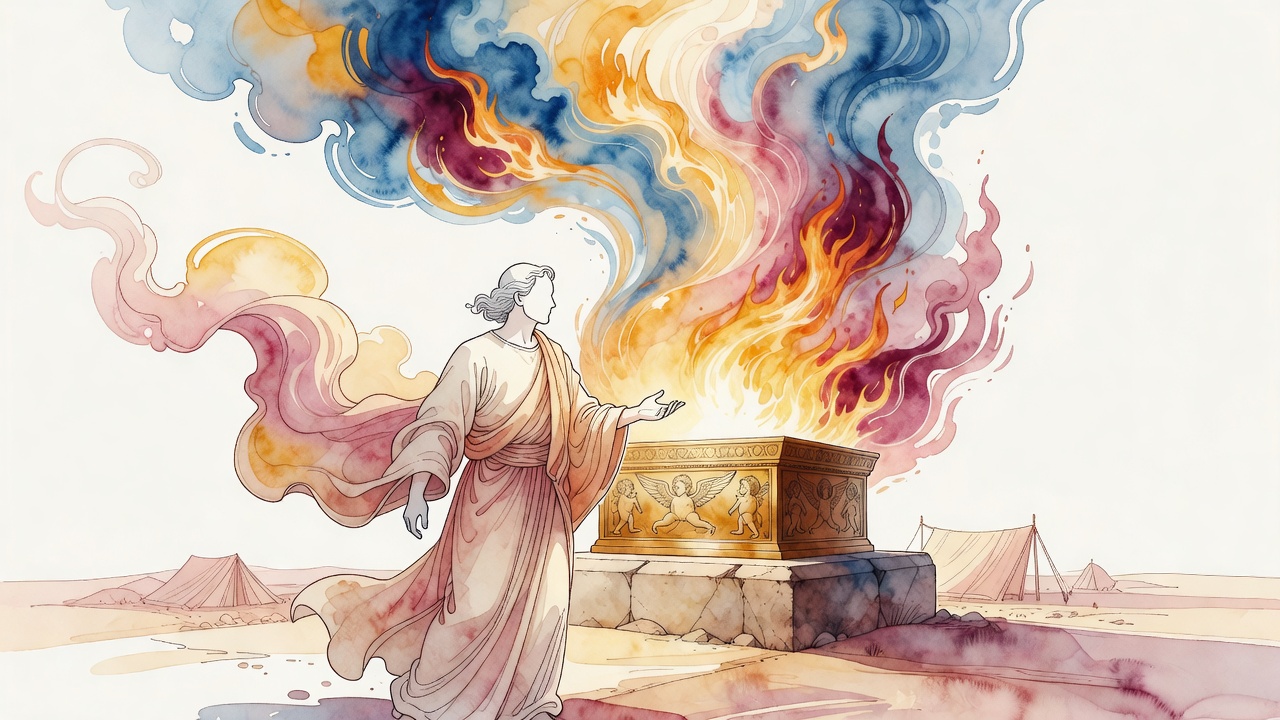
Immediately they filled it with silver and gold and set it upon the cart, as it is said (1 Samuel 6:7-12): "And the men did so, and they took two milch cows and harnessed them to the cart and shut up their calves at home, and they set the ark of the LORD upon the cart, and the box and the golden mice." And when the cows were walking on the road, the cows lifted up their voice and sang a song, and thus they said: Sing, sing, O acacia, sway in your great glory, inlaid with gold work, praised in the inner sanctuary of the palace, adorned with the choicest ornaments, as it is said, "And the cows went straight on the road, on the road to Beth-shemesh; on one highway they went, lowing as they went, and did not turn to the right or to the left, and the lords of the Philistines walked after them as far as the border of Beth-shemesh." And when they were about two thousand cubits distant from Beth-shemesh, the lords of the Philistines said: Let us take the garments and put them in a hidden place and see what they do for their God, since we ourselves honored Him so. And so they did: immediately they took the garments and placed them in a hidden place that they had. And the men of Beth-shemesh, when they saw the ark, ought to have taken their own garments and placed them upon their faces and come and fallen before the ark for one hour or two or three, until the ark of the King of kings, the Holy One, blessed be He, was covered, so that the Name of the Holy One, blessed be He, might be magnified and sanctified from one end of the world to the other. But they did not do so; rather, when they saw the ark they began to laugh and lift up their eyes and stand and dance and speak idle words, as it is said, "And the men of Beth-shemesh were reaping the wheat harvest in the valley, and they lifted up their eyes and saw the ark and rejoiced to see it." And they did not know who had placed the ark there nor who had taken the ark and placed it upon the stone, as it is said (1 Samuel 6:14-15): "And the cart came into the field of Joshua the Beth-shemite and stood there, and there was a great stone, and they split the wood of the cart and offered up the cows as a burnt offering to the LORD, and the Levites took down the ark of the LORD... and set it upon the great stone." And afterward the lords of the Philistines went their way, as it is said (1 Samuel 6:16): "And the five lords of the Philistines saw it and returned to Ekron that day."

Therefore there fell of Israel fifty thousand, and the great Sanhedrin among them, as it is said (1 Samuel 6:19): "And He smote the men of Beth-shemesh because they had looked into the ark of the LORD, and He smote of the people seventy men, fifty thousand men." Who slew all these? You must say: none slew them but the men of Beth-shemesh, in whom there was no proper conduct. This teaches you that not even a coin's worth was ever taken from Israel except by justice; rather, all is by true justice. May God be blessed forever and ever, who knows that as a reward for Deborah and Barak and their prophecy, a great deliverance came to Israel through them, and the reward of Ahab and Jezebel was that they perished from this world and from the world to come and lost their children with them; and the reward of the tribes of Zebulun and Naphtali, who did the will of their Father in heaven and the will of Jacob their father, was that a great deliverance came through them; and the reward of Jael wife of Heber the Kenite, who did the will of her husband, was that a great deliverance came through her; and the reward of Phinehas was that the men of Ephraim went out to war and twenty-two thousand of them were slain; and the reward of the great Sanhedrin, and Phinehas with them, was that seventy thousand were slain at Gibeah of Benjamin; and the reward of the sons of Eli was that four thousand were slain and afterward thirty thousand, and the ark was captured; and the reward of the men of Beth-shemesh, in whom there was no proper conduct, was that fifty thousand of Israel fell, and the great Sanhedrin too. From this they said: By the measure that a person measures, it is measured out to him. Surely, Master of all the worlds, Your righteousness is like the mighty mountains, Your judgments are a great deep.

Full source
Antiquities V.9Antiquities of the Jews (Josephus)

A famine drove one family out of Bethlehem and into the land of Moab. Elimelech took his wife Naomi and their two sons, Mahlon and Chillon, across the border to survive. The sons married Moabite women, Orpah and Ruth. Then, within ten years, all three men died, leaving Naomi alone in a foreign country with two daughters-in-law and nothing else.

Naomi decided to return to Bethlehem. She urged both young women to stay in Moab and find new husbands among their own people. Orpah kissed her goodbye and turned back. Ruth refused. She clung to Naomi and made one of the most famous declarations in all of scripture, she would go wherever Naomi went, live wherever she lived, and worship Naomi's God as her own (Ruth 1:16).

Back in Bethlehem, Naomi's old neighbors barely recognized her. She told them not to call her Naomi, "pleasantness". But Mara, meaning "bitterness," because God had dealt harshly with her. But the harvest season was beginning, and Ruth went out to glean grain in the fields, as the poor were entitled to do under Torah law.

She happened into the field of Boaz, a wealthy landowner and a kinsman of Elimelech. Boaz noticed her immediately. He told her not to glean but to reap alongside his workers, gave her food and water, and ordered his men not to touch her. When Naomi learned whose field Ruth had found, she recognized the hand of providence. Boaz was a go'el (גואל), a redeemer, someone with the legal right to restore their family's inheritance.

Naomi devised a plan. She sent Ruth to the threshing floor at night, where Boaz was sleeping after the barley winnowing. Ruth lay at his feet. When he woke at midnight and found her, she asked him to spread his cloak over her, a request for marriage and protection. Boaz agreed, but there was one man closer in kinship who had first right of refusal. The next day, before the elders of Bethlehem, that kinsman declined. Boaz married Ruth. Their son was Obed. Obed's son was Jesse. Jesse's son was David, the future king of Israel (Ruth 4:17). Josephus marvels at this: God raised a Moabite gleaner's descendants to the throne, proving that ordinary origins are no obstacle to divine purpose.

Full source
Legends of the Jews 6:11Legends of the Jews

Legends of the Jews turns to The Tribe of Dan Nearly Invaded Judah.

Well, according to the Legends of the Jews, as retold by Ginzberg, they were far from idle. Their story takes a turn toward adventure and… well, perhaps a little bit of mischief.

Apparently, the tribe of Dan had a plan. A BIG plan. Their initial thought? Head straight to Egypt and simply… take over. After all those years of slavery, they were going to turn the tables. But cooler heads prevailed. The princes of the tribe, wiser and perhaps a little more mindful of the Torah, reminded them of a rather significant detail: the Bible explicitly forbids the Israelites from settling in Egypt. Oops. (Deuteronomy 17:16)

So, plan A was scrapped. What next?

Perhaps fueled by a little bit of that conquering spirit, they considered attacking the Edomites, Ammonites, and Moabites. But again, the Torah stepped in. These nations, descendants of Lot and Esau, were to be treated with consideration. The Israelites were commanded to leave them alone. (Deuteronomy 2:4-9, 19) It seems even in ancient times, there were rules of engagement, even if divinely mandated!

Finally, they landed on a compromise. A plan that was… well, let's just say it was ambitious. They would go to Egypt, but not to stay. They would simply… pass through. Their ultimate destination? Ethiopia. Now, why Ethiopia? Ginzberg doesn't say, leaving us to wonder what riches or opportunities they sought there. Perhaps a new land to call their own?

But here's where the story gets interesting. The Egyptians, it turns out, were terrified of the Danites. Seriously. These weren't just rumors whispered in the marketplace. The Egyptians took it seriously enough to station their toughest warriors along the roads, anticipating the arrival of the tribe of Dan. Talk about reputation preceding you! What had the Danites done to earn such fear? Were they known for their ferocity? Their battle prowess? We aren't told, but clearly, something about them struck fear into the hearts of the Egyptians.

And what happened when the Danites finally arrived in Ethiopia? They weren't exactly welcomed with open arms. According to the legend, they "slew a part of the population, and exacted tribute from the rest." Ouch. It's a stark and rather brutal picture, isn't it? This isn't the triumphant return of heroes we might expect. It’s a story of conquest, power, and perhaps a little bit of ruthlessness.

So, what are we to make of this tale of the wandering, warring tribe of Dan? It certainly paints a different picture than the more familiar narratives of the other tribes. It reminds us that the story of the Jewish people is complex, filled with unexpected twists and turns. And that even within the sacred texts, there are echoes of ambition, conflict, and the ever-present struggle to find a place in the world.

It makes you wonder, doesn't it? What happened to those Danites in Ethiopia? Did they build a kingdom? Did they assimilate? Their story, as told in the Legends, is a potent reminder that history is rarely simple, and the paths we take are often far more winding than we imagine.

Full source
Bamidbar Rabbah 22:3Bamidbar Rabbah

The first reading, it seems straightforward. But as we delve deeper, guided by the wisdom of our sages in Bamidbar Rabbah, we uncover fascinating interpretations. The very repetition of "elef lamateh" – "one thousand from each tribe" – sparks debate. Was it really just one thousand from each tribe?

Some say that Moses actually sent two thousand from each tribe! And others went even further, suggesting three thousand from each tribe were sent, with twelve thousand serving as guardians of their weapons. Quite a force, wouldn't you agree? The text even connects this to the beautiful imagery of the Song of Songs (4:2): “Your teeth are like a flock of ordered ewes…that are all paired.” What does this mean? It suggests a sense of order and purpose, a perfect pairing in their mission.

How do we arrive at these higher numbers? The Rabbis in Midrash Rabbah point to the double mention of "elef lamateh elef lamateh" – one thousand from each tribe, one thousand from each tribe – concluding that this implies twenty-four thousand. And then, if we add in the next verse, (Numbers 31:5), "One thousand from each tribe from the thousands of Israel were provided, twelve thousand mobilized soldiers," we see another twelve thousand.

There’s even more to unpack here. The word "vayimasru," translated as "were provided," is ripe with interpretation. The Rabbis suggest it can also mean "they were handed over," implying that these soldiers were given as partners to each other. Why? To avoid the dangerous situation of a man entering alone to capture a woman, keeping the group safe.

However, there's a darker, more reluctant side to this story. The Rabbis suggest that "were provided" could also mean "against their will." Why would that be? Because the Torah seemingly linked Moses' death to the vengeance against Midian, the people feared that going to war would hasten his demise. "We will go to Midian, and Moses will die," they worried, and so they hesitated.

So, how did God resolve this impasse? According to the Midrash (rabbinic interpretive commentary), God told Moses to draw lots among the tribes. This way, the soldiers would be "provided on their own," essentially volunteering by divine decree. It takes away the human fear and creates a sense of holy purpose.

What can we take away from this intricate exploration? It highlights the depth and complexity of Torah interpretation. It reveals how a seemingly simple verse can unveil layers of historical, social, and even emotional context. More than that, it shows us how a community grapples with fear, duty, and faith, ultimately finding a way to fulfill a divine command, even when faced with uncertainty and reluctance. It teaches us that sometimes, the greatest acts of courage come when we confront our fears and step forward, even when we'd rather stay behind.

Full source