The Tribe of Dan Refused to Fight Judah and Left Canaan for Good
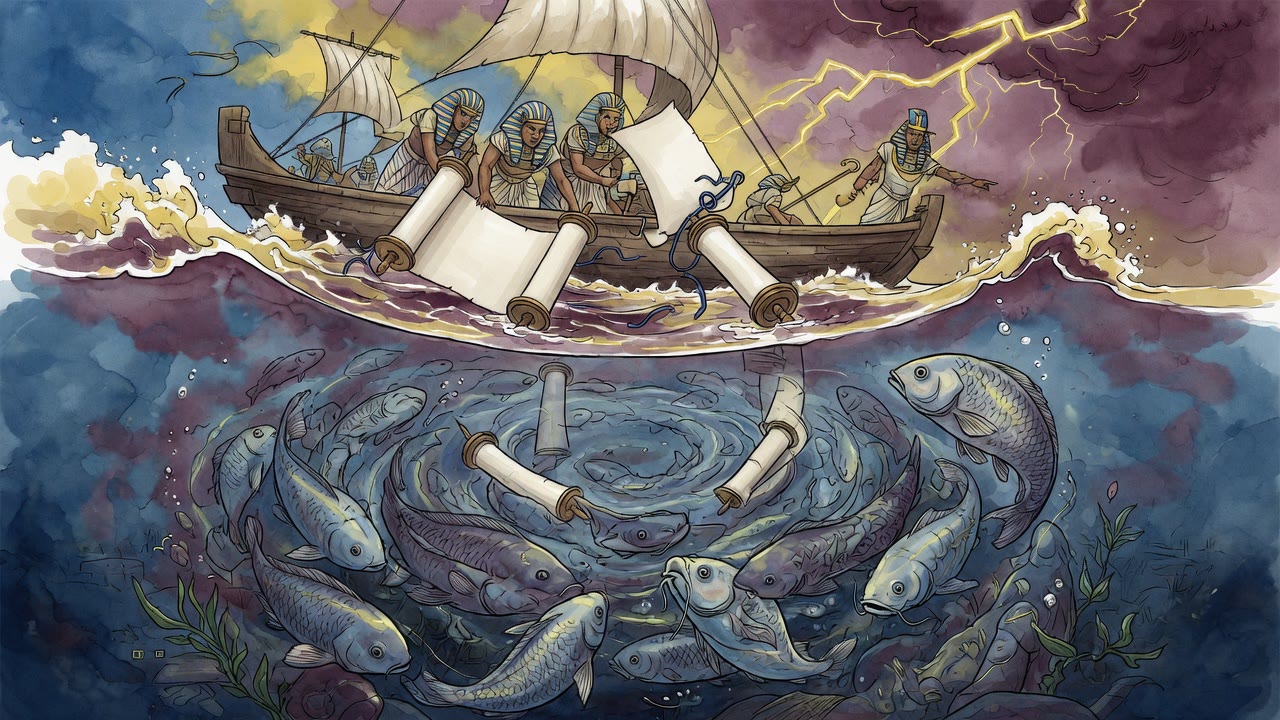
A storm drove Elchanan's spice ship onto a sandbank at the far end of the world. The men who came down to the beach were speaking Hebrew.
Table of Contents
 Click for full size
The Ship on the Sandbank
Elchanan son of Joseph had built a ship with sixty rooms in it, one for every servant and his goods, and a tower at the center so that from where he stood he could see every door.
He loaded it with ten thousand talents of pepper, ten thousand of frankincense, ten thousand of cinnamon and sweet cane, a thousand measures of saffron, and every other spice until there was no room left between the floor and the deck. Then he put ten thousand talents of silver aboard to buy fine clothing with, and took the helm himself.
The storm caught him a long way out. When it let go, the hull was sitting on sand in the Sea of Havila and the ship was not going anywhere.
Men came down to look at it. They were speaking Hebrew.
"Who are you?" Elchanan asked them.
"We are the sons of Dan," they said, and took him home with them, and honored him, and he asked how in the world they had got there. So they told him.
The Order They Would Not Obey
It began with Jeroboam, who had made two calves of gold and split the kingdom away from the house of David. He wanted the ten tribes to march on Jerusalem, and he put the question to the elders: who fights best?
The elders answered honestly. In all Israel there is no tribe with men like Dan.
So Jeroboam turned to them. "Rise, sons of Dan, and fight the men of Judah."
"By the life of our father Dan," they said, "we will never go up against our brothers, against the house of David and the king of Judah. Why should we shed innocent blood?"
Jeroboam heard that and gave them their choice. "Then get out of the land of Canaan."
They took up their swords and their spears and their bows and made ready to die fighting Jeroboam instead, and God stepped between them, so that even then they did not spill their brothers' blood. They walked out.
Every Road Was Closed
The first plan was Egypt. Go down and take the whole country and kill everyone in it, which after four hundred years of brickwork had a certain arithmetic to it.
Their princes stopped them with the Torah in their hands. You shall never see that place again. So Egypt was out as a home, and they settled for walking through it.
The Egyptians heard they were coming and put their hardest warriors on every road the Danites would use, and stood there, and watched them pass south.
Edom next. Then Ammon, then Moab. Each time the same thing happened: someone found the verse, and the verse said no, and the tribe put its weapons down and kept walking. Seven years from Canaan they reached the brook of Pishon, and there they got on camels and rode into Kush, which is Havila, and found fields and vineyards and gardens and palaces, and Ethiopians beyond counting, and a sea to live beside.
Twenty-Five Kings in One Day
Word reached the king of that country, and the kings of Kush gathered as one man. "Better that we all die on a single day than a little at a time at the hands of this strange nation."
Sixty-five of them camped on the far side of the brook of Pishon with a town lying between the two armies. Each king had a thousand horsemen and eighty thousand foot.
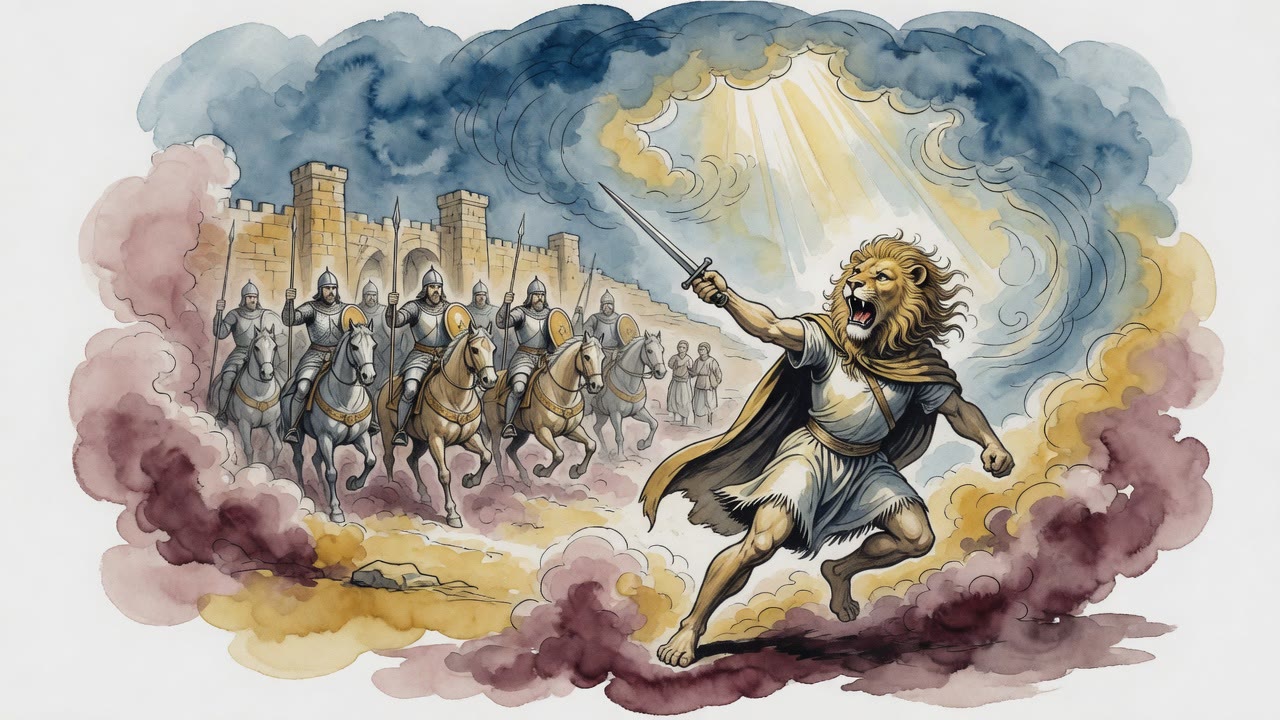
Two hundred thousand Danites took their bows in their hands and waded the brook, and the fighting happened in the water. Twenty-five kings died there.
That night, still in camp, they heard shouting and trumpets and got up shouting themselves, because three hundred thousand men of Naphtali and Gad and Asher had come in on horses. "Brothers, you must be tired. Rest until morning, and we will finish it with you."
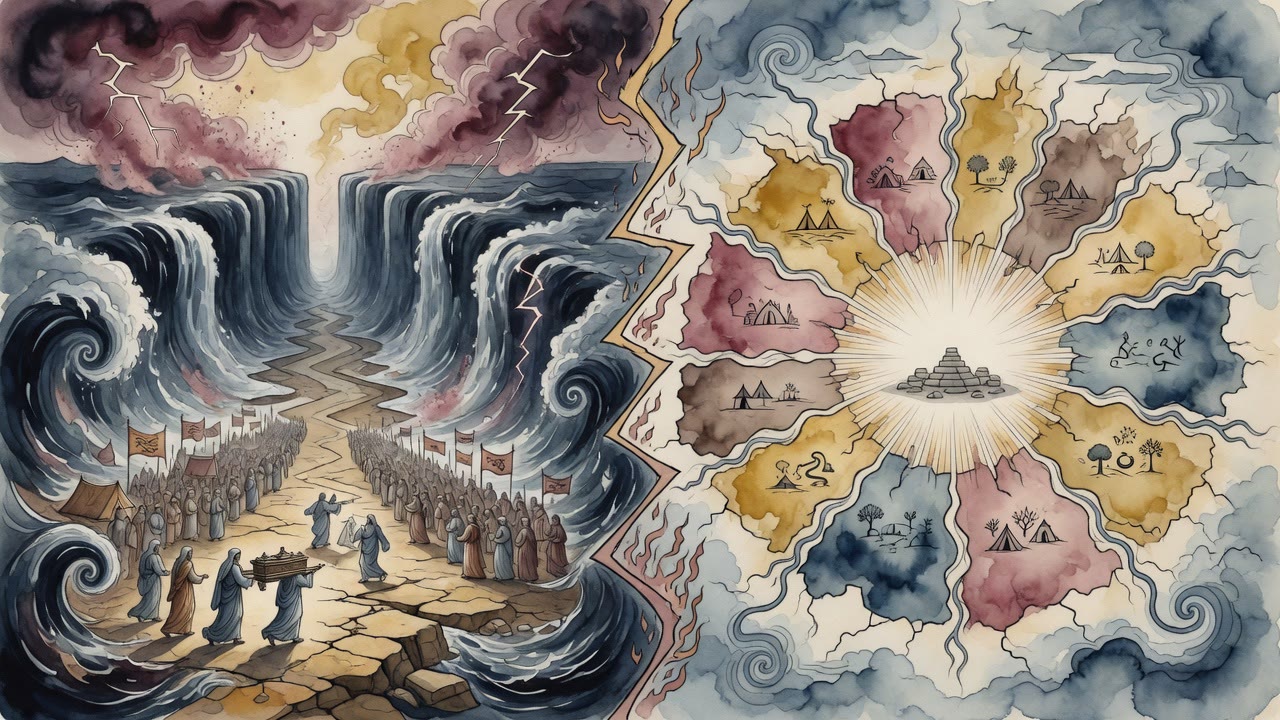
In the morning they killed every remaining king of Kush and divided the spoil by lot, and silver and gold lay about as common as stones. They killed part of the population and put the rest under tribute. The land of Havila is a square, and a man walking one side of it walks four months, and each of the four tribes took one side. They made Abiel son of Shaphat their king, and his brother Abihail captain of the host, both of them Danites. When the trumpet goes, the captain rides out under a hundred and seventy-three banners with fifteen hundred men to each, and comes back the same way. Every tribe serves three months of the year and keeps what it takes.
The River That Rests on Saturday
There was one more thing to tell him, and it was about the Levites.
When the exiles reached the Euphrates their captors wanted entertainment. Stand up in front of our gods, they said, and sing what you sang in the temple. The Levites answered them. "Fools. If we had sung a song of thanks for every miracle God did for us, we would never have been carried out of our own country at all. And now we are to sing to your idols?"
They were killed in heaps for it, and the killing spoiled the party, because the Jews still would not bow. The Levites who lived through it cut the fingers off their own hands. When the order came again to take up the harps, they held up what was left.
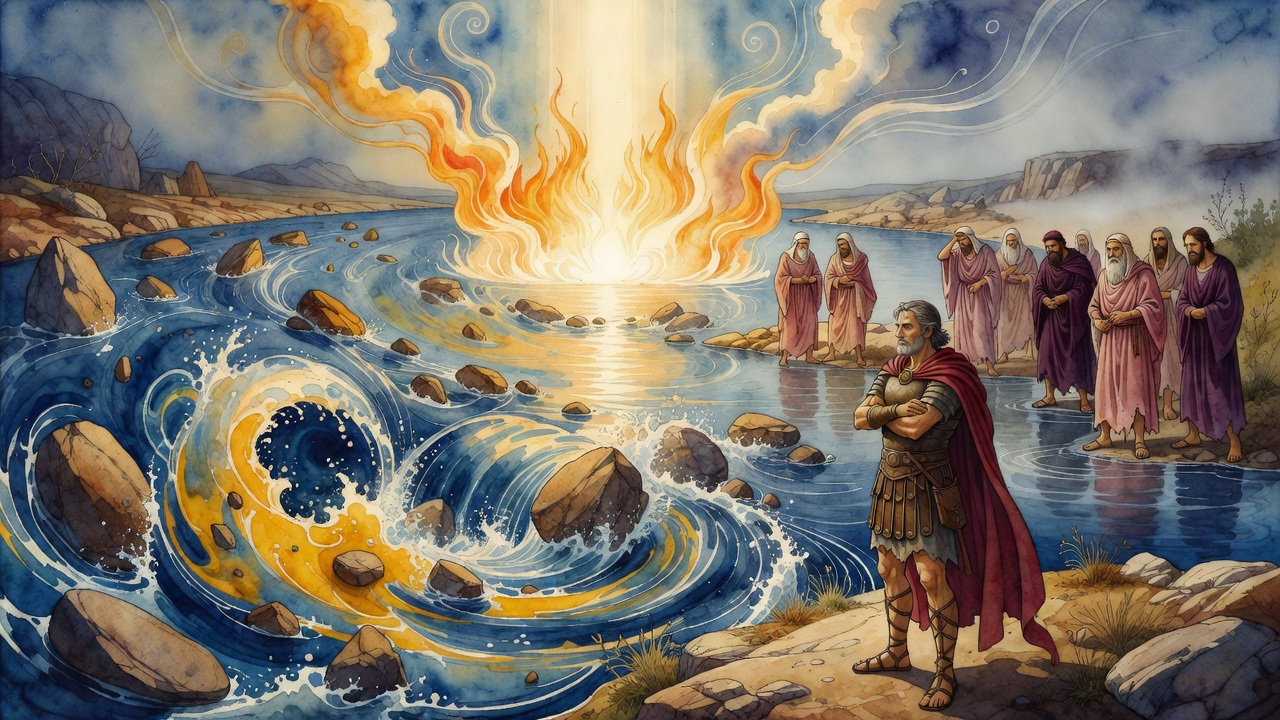
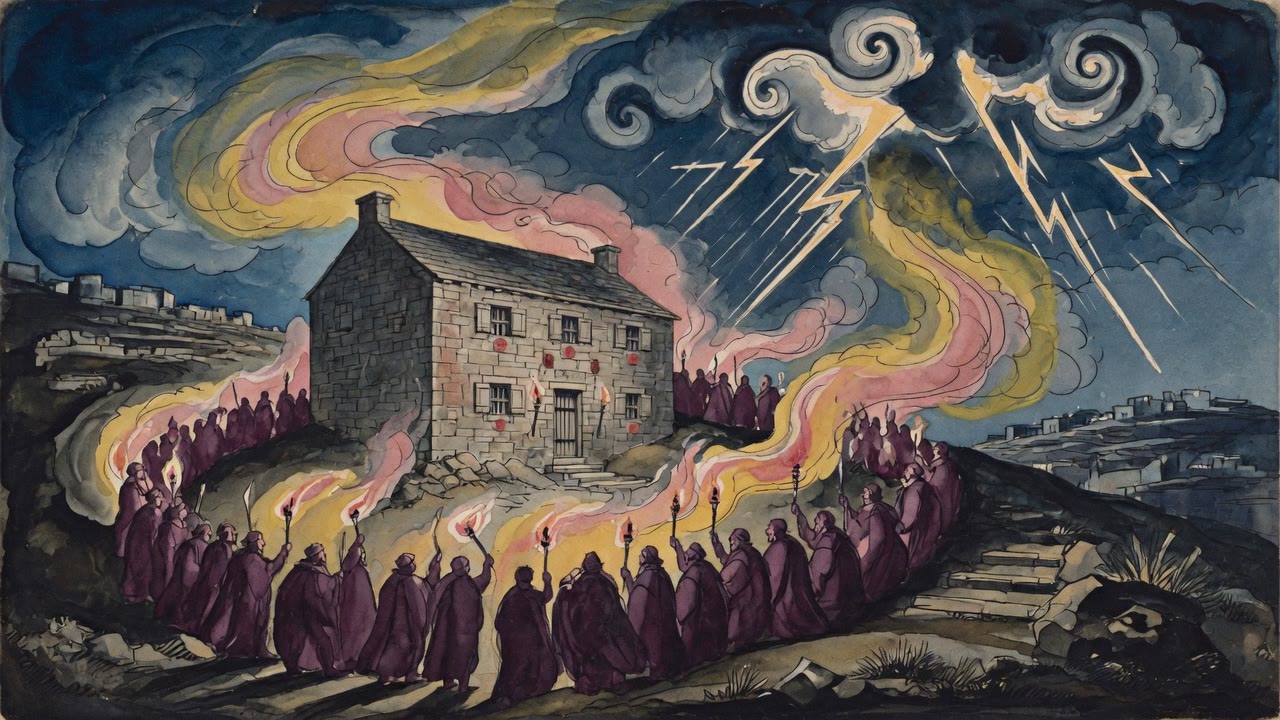
That night a cloud came down over them and their wives and their sons and their daughters, and a pillar of fire showed them the road until daybreak and brought them out at the sea. Then the river Sabbatyon was drawn around them, on three sides with the sea on the fourth. It runs two hundred cubits deep and it is full of sand and stones, and six days a week it rolls them with a noise like an earthquake that carries half a day's walk. On the Sabbath it stops. And the moment it stops, fire comes up out of the western bank and burns along the whole length of it, so that nothing living gets within thirty-four miles.
Behind that water they sow one seed and reap a hundred. Six springs run together into one pool and water everything. No unclean bird lands there and no unclean beast walks there. They build their own houses and plough their own ground, since there is no servant among them, and they live to a hundred and twenty, and no man there has ever buried a child. They leave their doors open all night. A small child walks out with the cattle for days at a time and comes back.
Nobody has ever seen the flames on that river except the sons of Dan, Naphtali, Gad and Asher, who are the only ones close enough to look.
Elchanan stayed with them twelve months.
← All myths