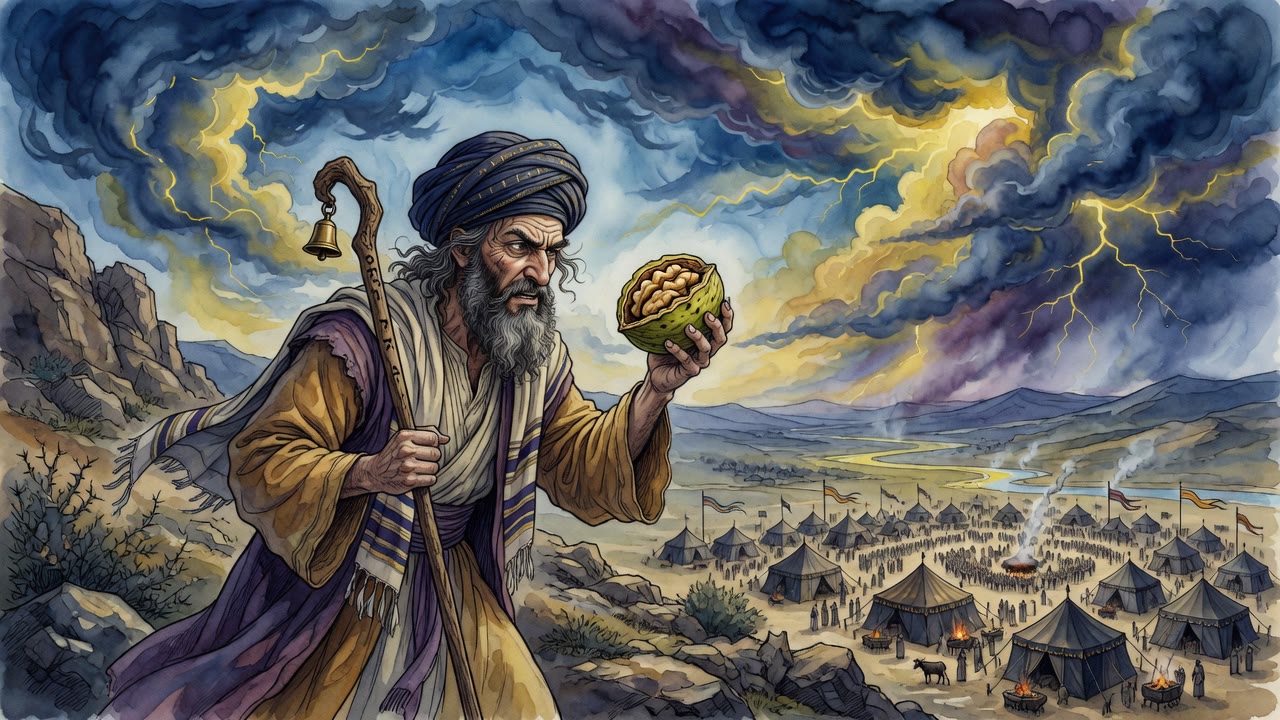
Balaam Flies Through Five Layers of Air and Phinehas Catches Him
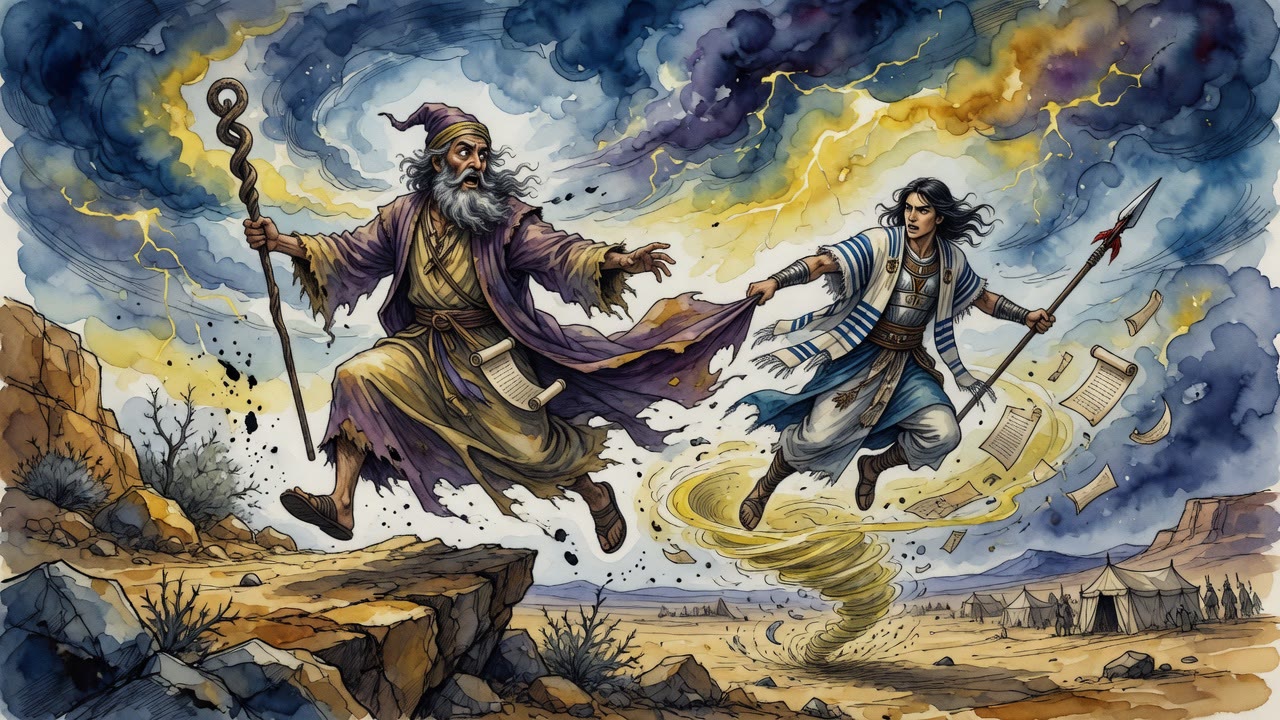
Phinehas shouted across his own army asking whether any man there could fly. A Danite went up after Balaam and lost him above the fifth layer of air.
Table of Contents
Moses briefed the men before they left for Midian, and most of the briefing was about one person.
 Click for full size
"Balaam the Wicked is there. He went to collect his wages. Before the wolf gets to the flock, set the trap for him." Then the part that sounded strange in a war order. "If you see that man working his magic, hold up the plate with holy to the Lord written on it. When he falls, kill him."
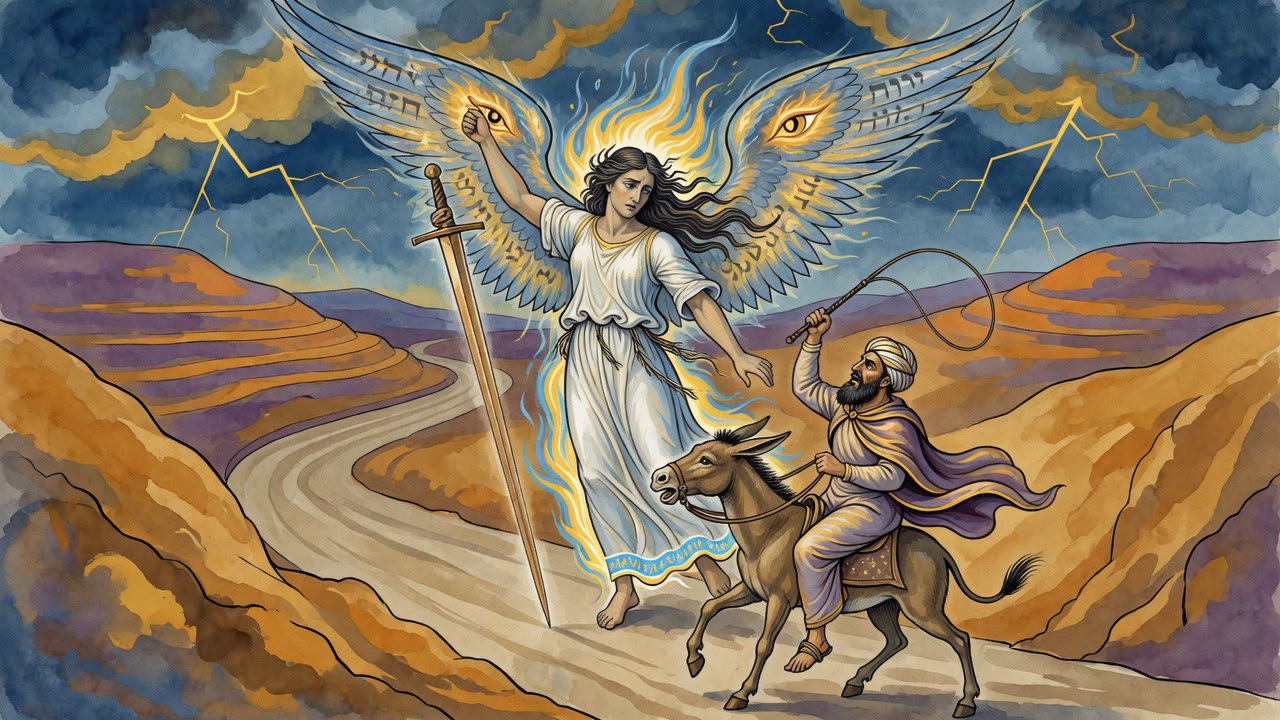
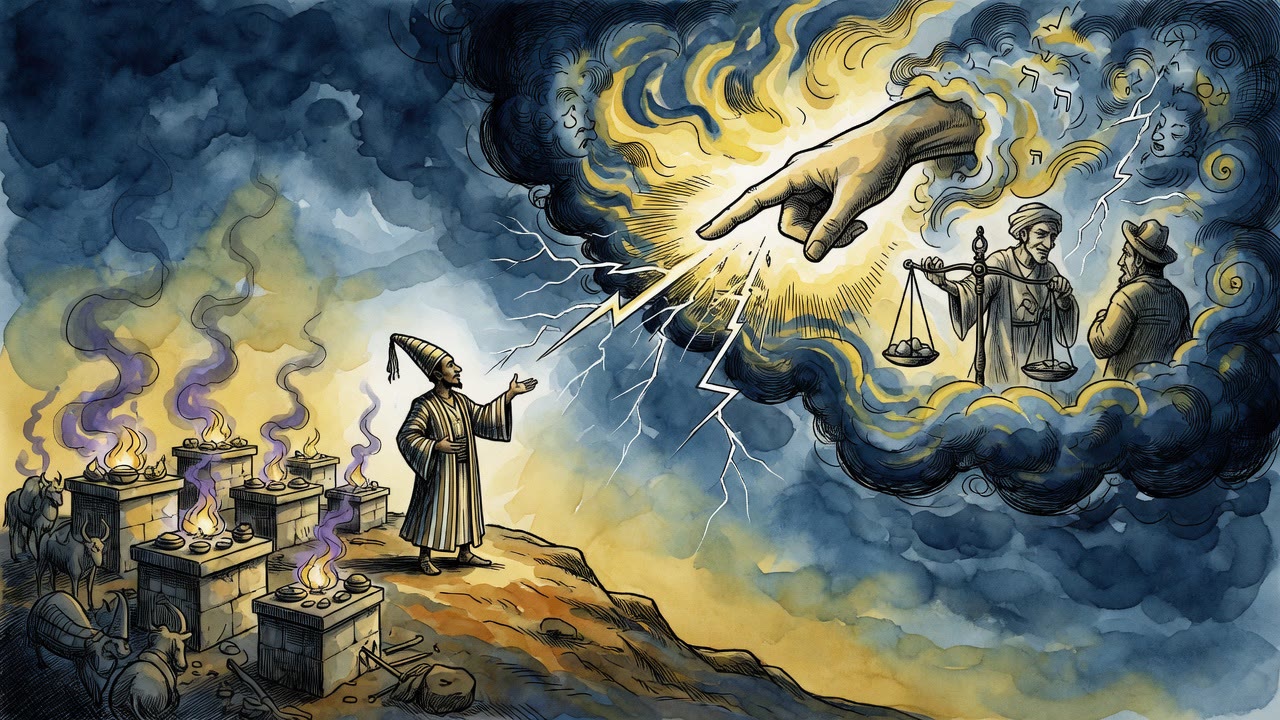
Balaam had come a long way for the money. He lived out by the Euphrates and had the biggest name of any prophet alive, so big that when Balak of Moav panicked at the size of Israel he sent his own ambassadors and the princes of Midian together to fetch him. That trip had gone badly. An angel with a sword had blocked a narrow place between two walls, the donkey had seen it and refused to move and taken a beating for it, and then the donkey had opened its mouth and complained about the beating in a human voice. At the seven altars every curse he opened his mouth to say had come out as a blessing. So he had changed method, told Balak to send the women down instead, and twenty-four thousand Israelites had died of it at Peor. Now he was in Midian with his hand out.
Phinehas Took the Plate off the High Priest's Forehead
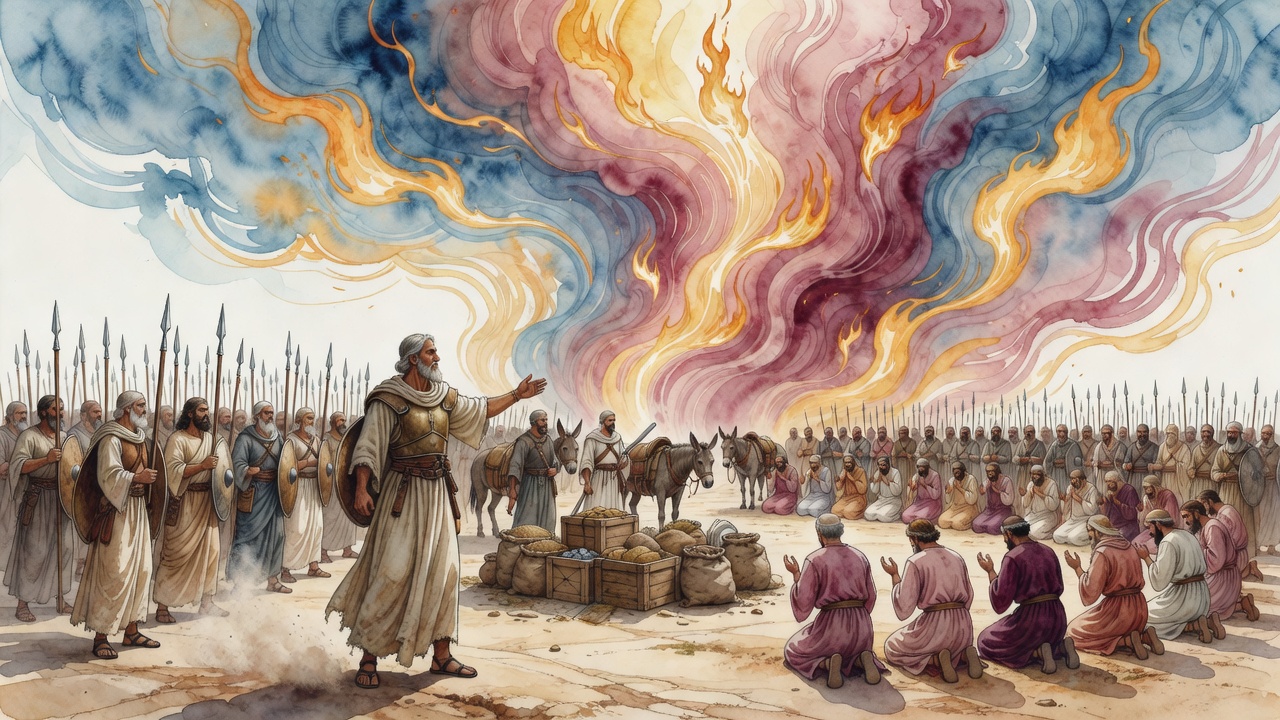
Phinehas got thirty-six thousand men and split them three ways. Twelve thousand to fight. Twelve thousand to hold the baggage. Twelve thousand whose entire assignment during the battle was to pray for the men who were fighting.
Moses handed over the Ark, which always went out with the army, and the Urim and Tummim, in case Phinehas needed to put a question to God in the field. Then he took the plate of pure gold off the front of the High Priest's mitre and gave that to him too.
"The knave will fly," Moses said. "He will take the five kings of Midian into the air with him. Hold this up in front of them and they will come down."
Five Layers of Air
Balaam saw Phinehas and the commanders of Israel coming and went straight up off the ground. His sons Jannes and Jambres worked the sorcery from below to lift him.
Phinehas stood in the field with an army around him and shouted a question at it. "Is there a man here who can fly after this villain?"
Zaliah of the tribe of Dan, who knew the same arts, answered it and went up. Balaam climbed faster. He found a road through the air that Zaliah could not get onto, went up through five separate layers of it, and was gone. Zaliah hung there with nothing above him and nothing to chase.
Phinehas spoke an invocation and tore the clouds off him. Balaam was suddenly visible again with the whole army looking up at him. Then the gold plate came up, the Name on it turned toward the sky, and the arch-magician of the age and the five kings of Midian dropped out of the air and landed among the corpses of their own men.
Phinehas Read Him His Own History
Balaam started bargaining from the ground. Spare him and he would never open his mouth against Israel again.
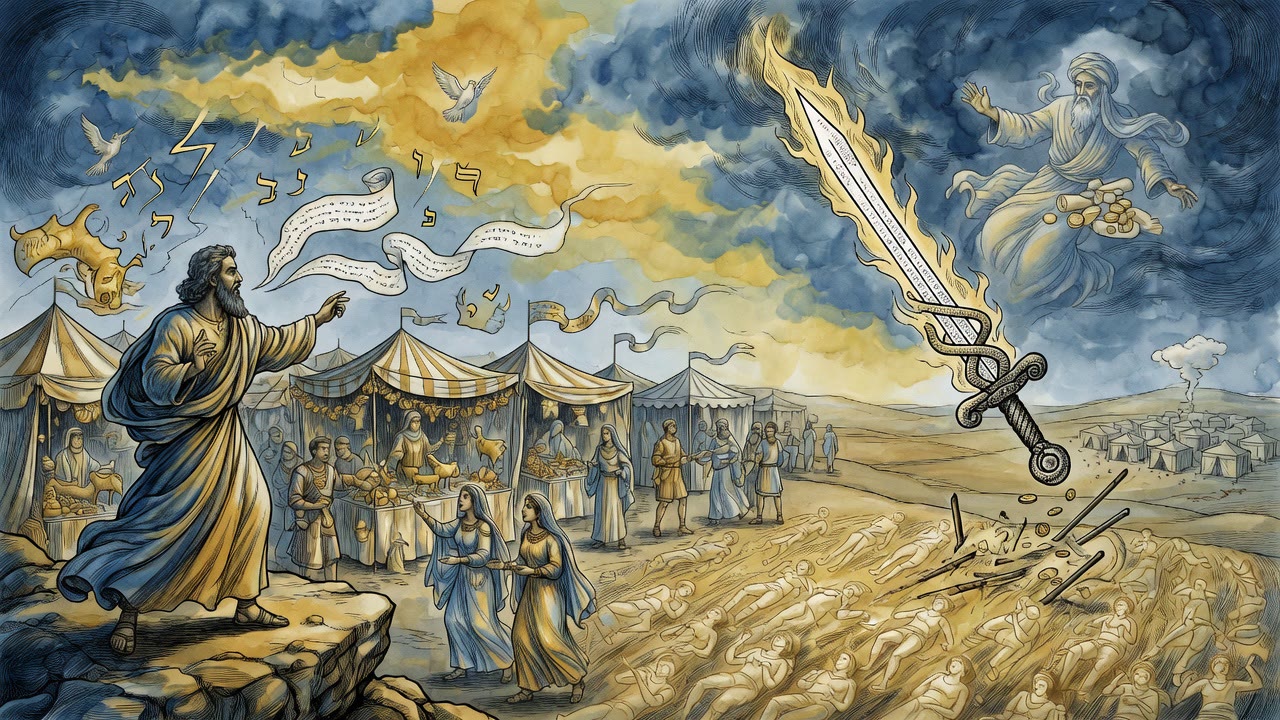
"Are you not Laban the Aramean, who tried to finish our father Jacob? Then you went down to Egypt to finish his children. When they came out of Egypt you put Amalek on them. Then you tried to curse them and God would not hear you. So you told Balak to hand over the daughters of his country, and twenty-four thousand of us are dead of that advice. There is nothing you can say."
The Sword With a Serpent Cut Into It
Phinehas told Zaliah to kill him, and added a condition. Not by the holy Name. A man like that does not get to die by the Name.
So Zaliah went at him with ordinary weapons and none of them would bite. The magic held. Phinehas watched it fail, then handed Zaliah a sword with a serpent engraved along both sides of the blade. "Kill him with the thing he belongs to. This is what he dies by."
That worked. Afterwards they put him through all four of the deaths the law knows: they hanged him, lit a fire under the gallows, struck his head off with a sword, and dropped the body from the gallows into the fire.
The rest of the campaign was fought with a rule that has no obvious military logic. They came at every Midianite city from three sides only and left the fourth open, so that anyone who wanted to run could still run.
Moses Did Not Stall and Joshua Did
God had told Moses in advance that this war was the last thing he would do. Take the vengeance for Israel, and then you are gathered to your people.
Moses did not slow down for one hour. He sent the men out the same day. He had asked for one thing, which was to see it with his own eyes before he died, and he got it.
Joshua watched all of this and drew a different lesson. When his turn came to fight thirty-one kings, he thought about what had happened to his teacher, and he took the first one and then dragged the rest of the war out over years. It is written that he waged war with all those kings over a long period. God told him what the stalling had bought him: ten years off the end of his life, so that he died at a hundred and ten instead of a hundred and twenty.
← All myths