4 min read

Barak Made Deborah First and Lost the Glory

Barak refused to march unless Deborah went with him, and the prophetess warned that the day's glory would slip from his hands into a woman's.

Curated by Arthur · Told by Maggid ·
Table of Contents
  1. If You Go, I Go
  2. Men Who Step Behind
  3. What Barak Was Bargaining For
  4. Blessing Those Who Bless
  5. The Song Writes the Rank
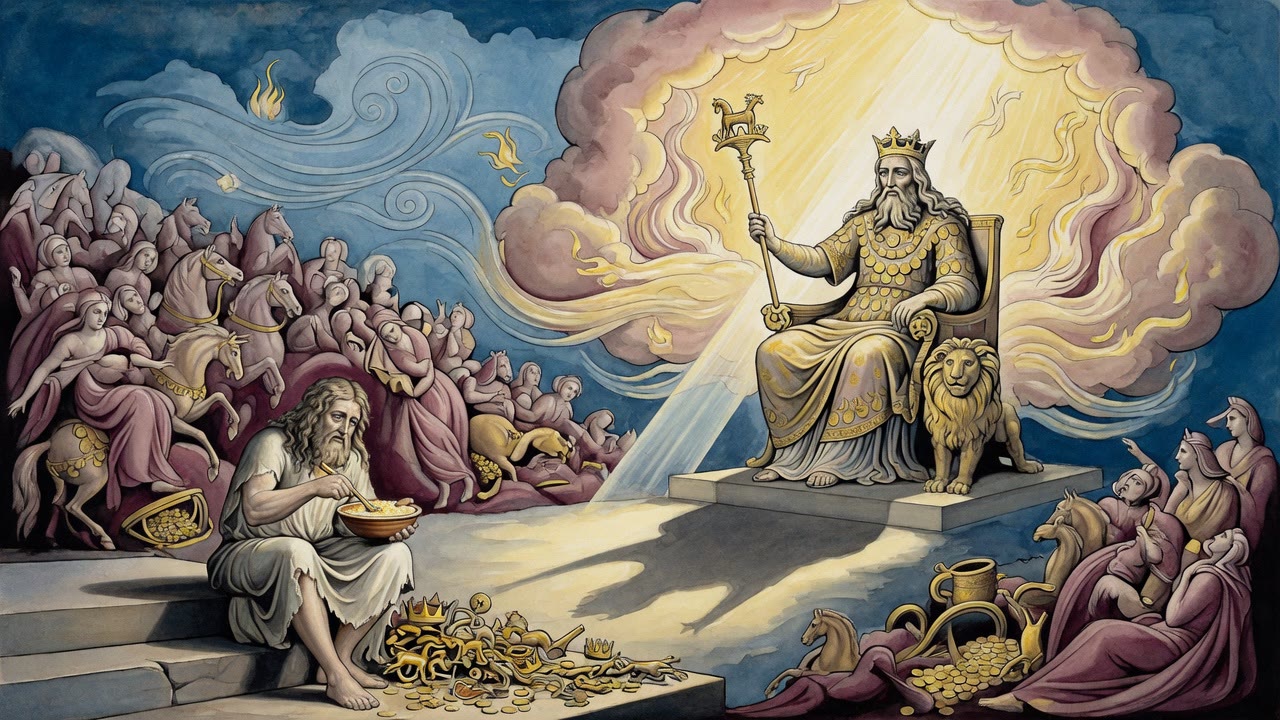
Barak Made Deborah First and Lost the Glory Click for full size

If You Go, I Go

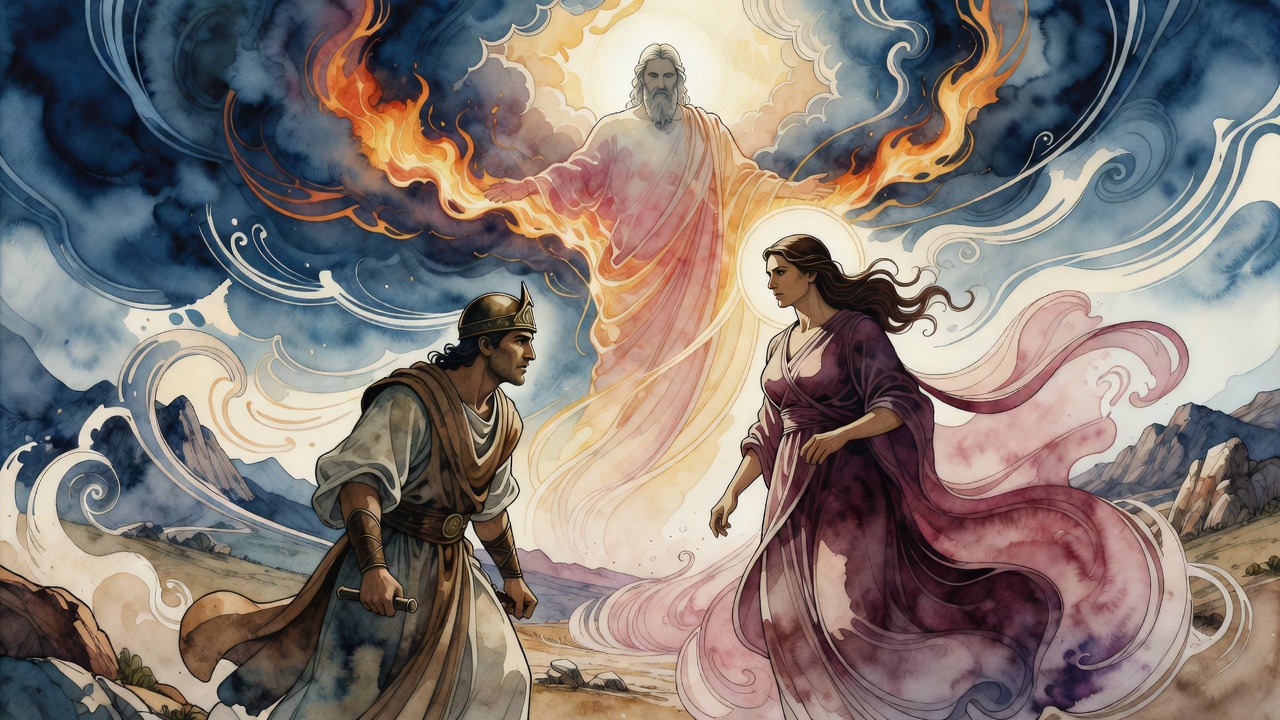
Deborah summoned Barak to war. The prophetess named the road, the enemy, the hour under the palm where she judged Israel. Barak's reply came conditional. "If you go with me, I will go. If you will not go with me, I will not go."

Deborah heard the catch in his voice. She agreed to go, and she warned him that the glory of the day would slip from his hands. When the moment came, the verse names them together, Deborah and Barak. The one who required a woman's presence to march became second in the telling. Sisera fell by another woman's hand. The song wrote the ranks in ink harder than iron.

Men Who Step Behind

Rabbi Reuven names two who were meant to lead and made themselves secondary by stepping behind a woman. Abraham told Sarah to call herself his sister in Egypt, and Scripture notes that Pharaoh treated him well for her sake. The protector leaned on the one he should have shielded.

Barak does the same pattern under different pressure: he will not advance without Deborah's cover. Some men are made smaller by the very thing they hoped would make them great. Safety bought by another person's voice can cost the name that wanted to be first on the lips of history.

What Barak Was Bargaining For

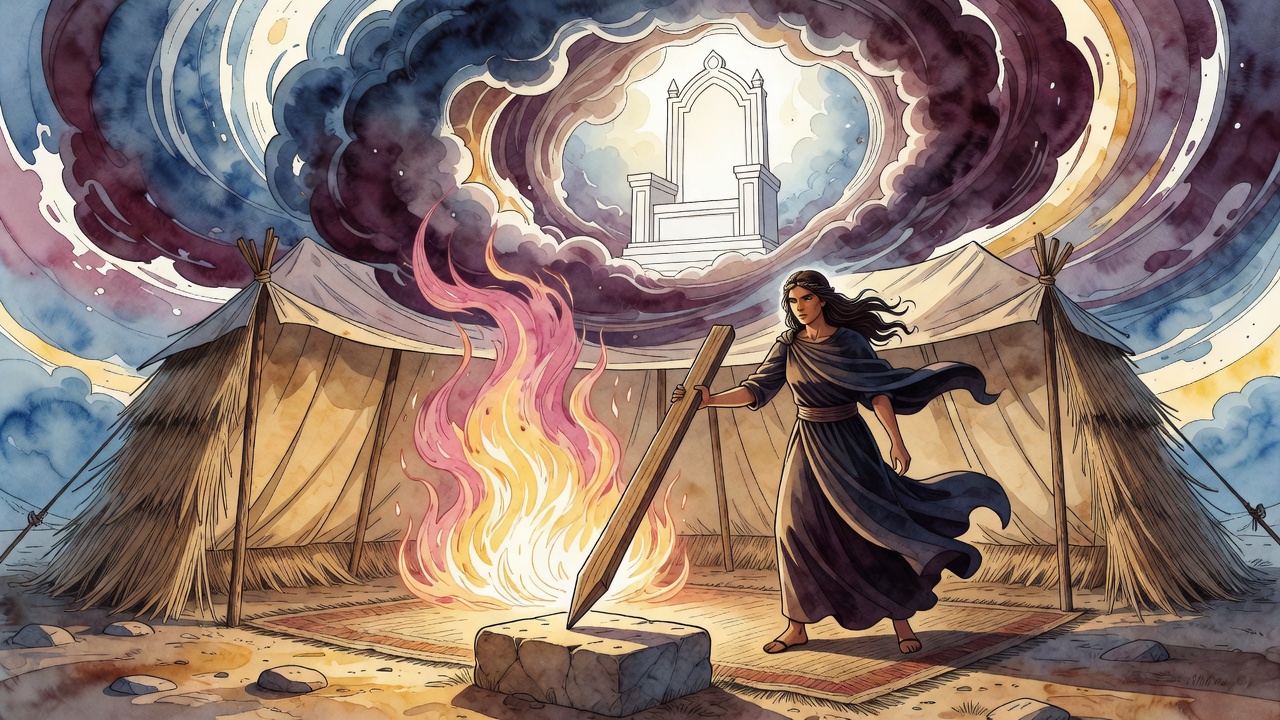
The sages debate the real object of Barak's condition. Was it her presence in the war itself so soldiers would not break? Or was it a place in the victory song that only a prophetess could grant? Either way, he tethered his feet to her mouth. Heaven answered with a different hero of the finish: a tent, a peg, a fallen commander, glory redirected.

Barak still fought. On the morning of battle he still mustered the tribes. The condition he had set did not cancel the charge; it only priced it. When the chariots of Sisera broke, the glory still slid toward the tent where Yael waited. Leadership that will not move without a borrowed spine is leadership already half surrendered, even when the battle is won.

Blessing Those Who Bless

Against this stands the promise to Abraham: "I will bless those who bless you, and one who curses you I will curse, and all the families of the earth shall be blessed in you" (Genesis 12:3). Rabbi Yirmeya heard a startling exactness. Regarding the righteous, God says I Myself will bless and I Myself will curse. Heaven takes the honor of the upright as a personal task.

Abraham, who once stepped behind Sarah's false sisterhood under fear, is still the man God defends with first-person verbs. The midrash does not cancel the critique of secondary courage. It refuses to cancel the covenant either. A leader can fail a moment and still carry a promise.

The Song Writes the Rank

Deborah's song remains. Barak's name remains inside it, not above it. Later singers did not erase him. They refused to let him stand alone at the top of the verse. The tradition wants generals who feel fear and a God who still blesses those who bless the righteous even when the righteous have flinched.

March if you are called. Do not make another person's courage the only condition of your legs. Between Abraham's sister-story and Barak's if-you-go, Jewish memory keeps a warning: borrowed bravery has a price, and the invoice is often a name written second.

Iron still rang on the road while the song already ranked him second, glory sliding toward a tent and a peg.

The army won with his arm and lost the headline of the verse, and that split is the midrash's whole measure of the day.

Covenant can still bless a flinching ancestor. Songs can still rank a general second. Both truths keep leaders honest.

The army won with his arm and lost the headline of the verse, and that split is the midrash's whole measure of the day.


← All myths
From the tradition

Sources

2 sources

The texts behind this telling. Some cards carry a translation of the source; others are our own retelling of it, and each card says which. Every card links out to the original.

Yalkut Shimoni on Nach 43:2Yalkut Shimoni on Nach

Translation of the source text.Yalkut Shimoni on Nach (Sefaria) · CC-BY-NC

"And Barak said to her: If you go with me, I will go" (Judges 4:8). Rabbi Pinchas in the name of Rabbi Reuven said: two men were primary, yet they made themselves secondary, and so they became secondary. They were Abraham and Barak. Abraham was primary: "And Abram took Sarai his wife" (Genesis 12:5); yet he made himself secondary, as it is said, "Please say you are my sister" (Genesis 12:13), and it is written, "And he treated Abram well for her sake" (Genesis 12:16). Barak, as it is written, "If you go with me, I will go."

Rabbi Yehuda says: "If you go with me" to Kedesh, "I will go" with you to Hazor; and if you will not go with me to Kedesh, I will not go with you to Hazor. Rabbi Nechemyah says: if you go with me to the song, I will go with you to the war; and if you do not go with me to the song, I will not go with you to the war.

"And she said: I will surely go with you, but the glory will not be yours" (Judges 4:9). Rabbi Reuven said: she said to him, what do you suppose, that the glory of the song was handed to you alone? And he was made secondary, as it is said, "Then sang Deborah and Barak" (Judges 5:1).

Full source
Bereshit Rabbah 39:12Bereshit Rabbah

Retold in our words. Read the original at the link below.The Sefaria Midrash Rabbah, 2022 · CC-BY

A powerful promise from God to Abraham: "I will bless those who bless you, and one who curses you, I will curse, and all the families of the earth shall be blessed in you" (Genesis 12:3). It’s a foundation of the covenant, but what does it really mean?

Rabbi Yirmeya, in a particularly striking interpretation, suggests that God is even more exacting when it comes to the honor of a righteous person than concerning His own! He points out that regarding God's honor, the Torah says, "For those who honor Me, I will honor, but those who scorn Me will be dishonored" (I (Samuel 2:3)0) – and it will be done by others. But when it comes to honoring the righteous, God Himself says, "I will bless those who bless you, and one who curses you, I will curse" – I, Myself, will take care of it!

This idea of blessing and bending the knee – it's all connected. The text goes on to explore the word venivrekhu (from (Genesis 12:3), meaning "shall be blessed"), linking it to the word berekh, meaning "knee." This leads to a discussion about bowing during prayer, specifically during the Amidah, the central prayer in Jewish liturgy.

We learn that there are specific times to bow, particularly during the blessings of the Patriarchs and the blessing of thanksgiving. And there were strict protocols! If someone bowed too much, they had to be corrected. According to Rabbi Yitzḥak bar Naḥman, in the name of Rabbi Yehoshua ben Levi, the Kohen Gadol, the High Priest, bowed at the beginning of each blessing, and a king bowed at the beginning and the end. Rabbi Simon even adds that a king, once he bowed at the beginning, wouldn't stand up until the entire prayer was finished, citing Solomon's prayer in I (Kings 8:54) as proof.

The text then explores different types of bowing. Rabbi Ḥiyya the Great demonstrated keria (bowing) before Rabbi Yehuda HaNasi, and he became lame as a result, but was eventually healed. However, when Bar Sisi demonstrated berikha (another form of bowing, perhaps deeper or more strenuous) before Rabbi, he became lame and wasn't healed! It seems the intensity and intention behind the physical act of bowing truly mattered.

But what about the second part of God's promise to Abraham: "all the families of the earth shall be blessed in you"? Does that just mean everyone gets rich? Not quite. The text suggests a deeper meaning.

One interpretation connects it to the story of Mordechai and Esther. Remember how Mordechai discovered a plot to assassinate King Ahasuerus (Esther 2:22)? The rabbis wondered why Mordechai, a Jew, would help an uncircumcised king. Rabbi Yehuda explains that just as Jacob blessed Pharaoh (Genesis 47:7), and Joseph and Daniel revealed secrets to foreign rulers, so too Mordechai acted for the benefit of the world.

Rabbi Neḥemya offers another perspective. He suggests that the blessing isn't about material wealth, but about consultation. When the nations of the world face trouble, they turn to the descendants of Abraham for wisdom and guidance. We, the Jewish people, become a source of insight and solutions for the world.

Perhaps it's a reminder that blessings are not just empty words. They carry power, responsibility, and the potential to impact the world. And maybe, just maybe, the act of bowing, of humbling ourselves, can open us up to receive and channel those blessings for the good of all.

Full source