Deborah Twisted Sanctuary Wicks Before She Judged
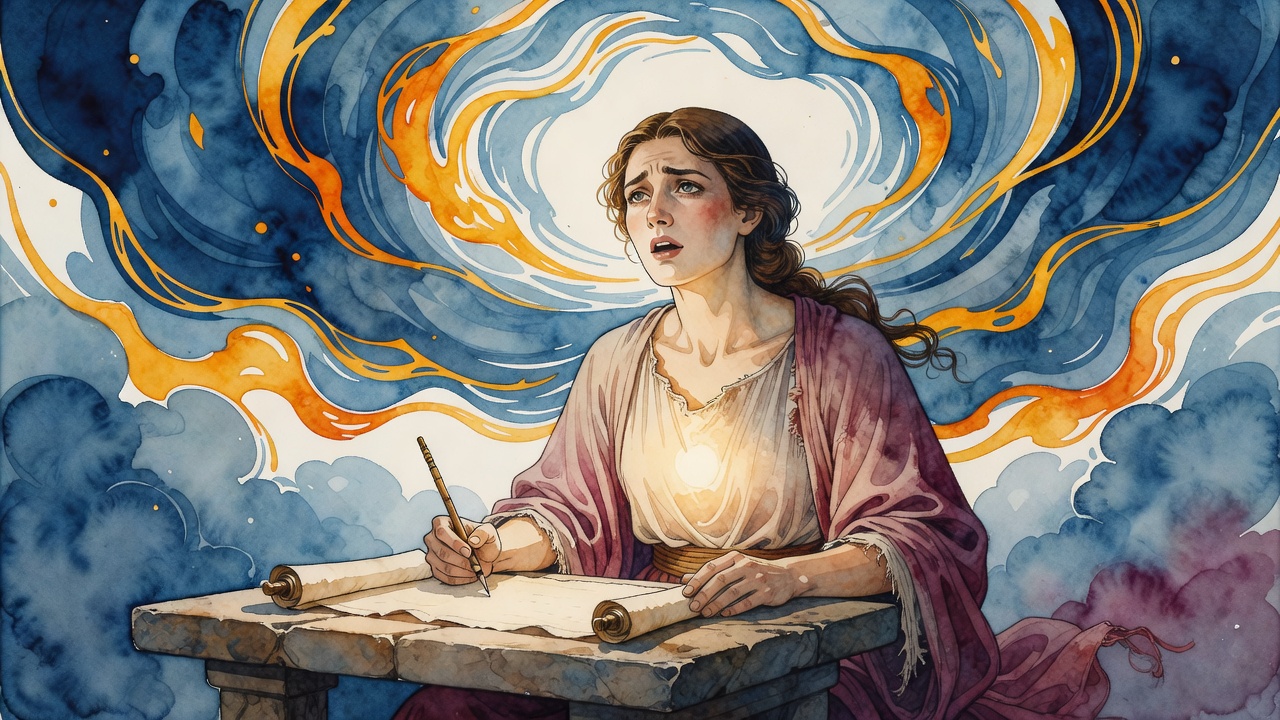
Before Deborah sat under the palm, she twisted wicks so the Sanctuary lamps would not go dark. The same hands later called Barak to war.
Table of Contents
 Click for full size
Wicks in the Dark
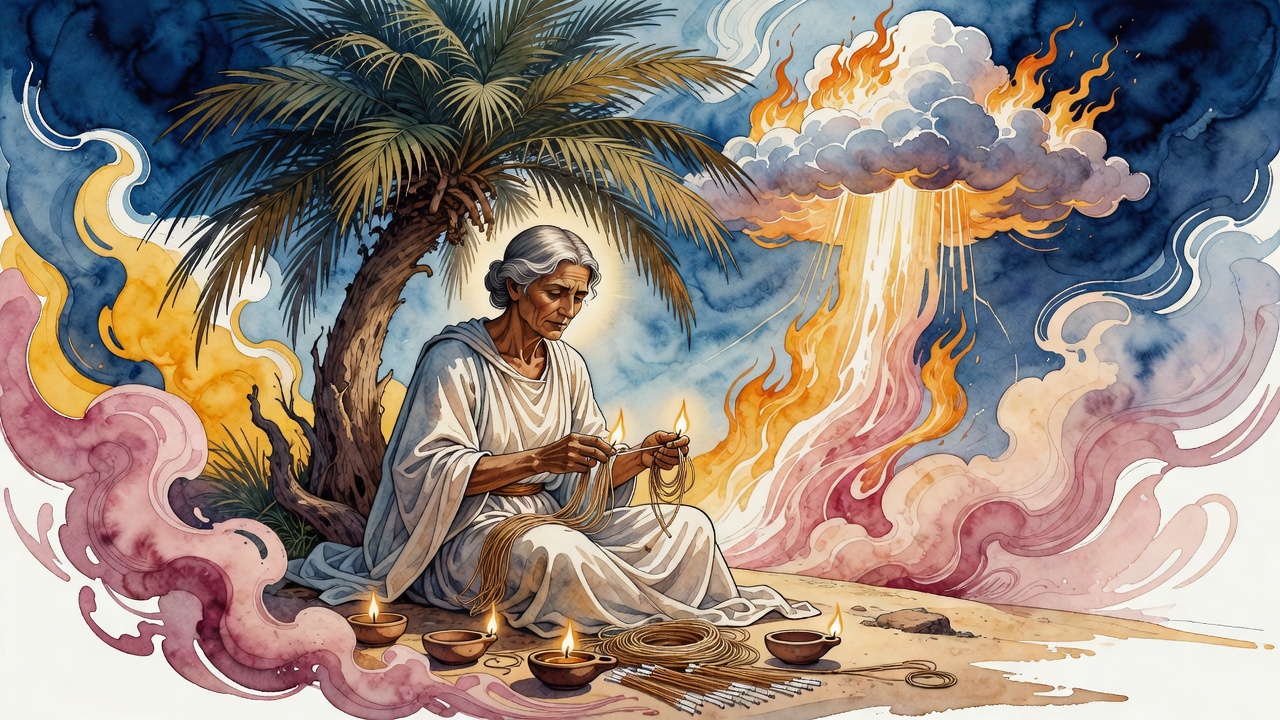
Deborah sat with a bundle of flax across her knees and twisted fiber until her fingers ached. The lamps of the holy house needed wicks that would not gutter when the oil ran thin. Night after night she fed flame to the Sanctuary so that worship would not go black. No one asked her name in those hours. The work was small, private, and stubborn. A woman who keeps light alive in a dark room learns how to hold a people upright later.
They called her the wife of Lappidoth. The sages heard a second meaning in the title. Lappidoth means torches. She was a maker of fire-threads, a servant of light long before she sat as judge. Public authority did not invent her. It found her already at work among oil and smoke.
The Palm That Kept Her Visible
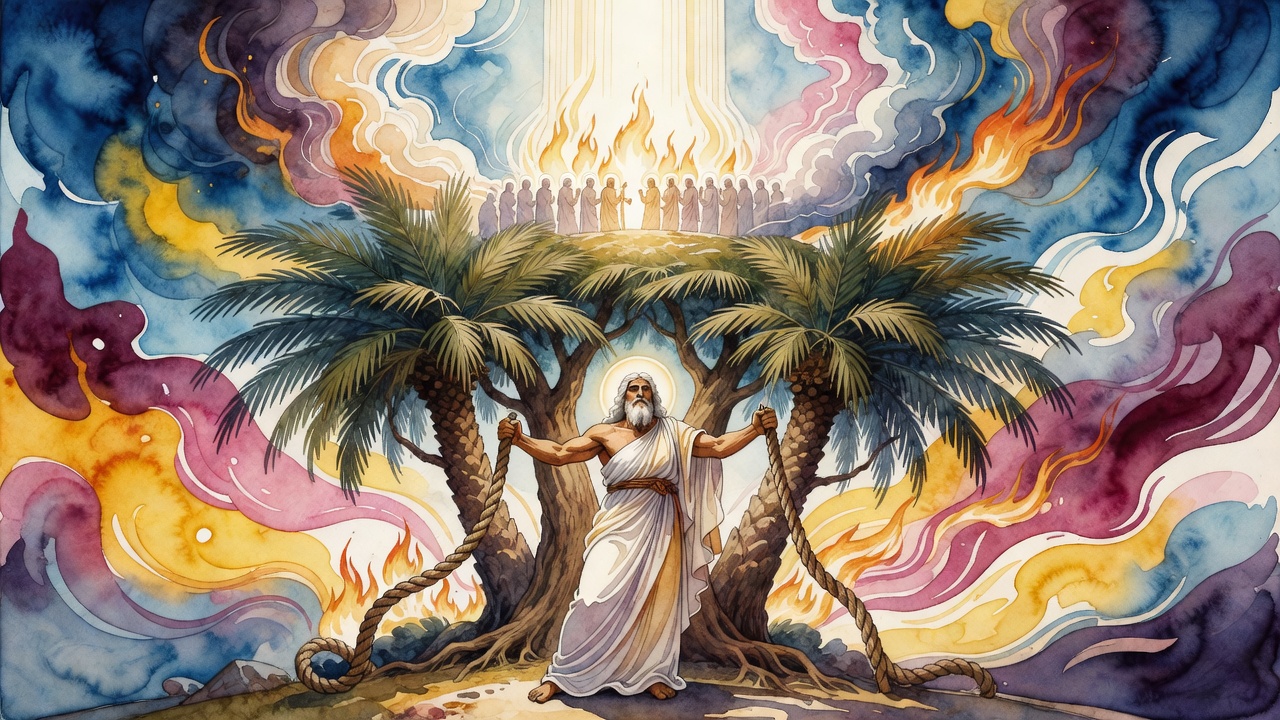
When Israel finally came to her for judgment, she did not close herself in a house. She sat under a palm tree in the open, where every passerby could see who stood before her and who left. One teaching is plain. She kept the court in public so no man would ever be alone with her. Another teaching is sharper. A date palm has a single living heart at its crown. Israel, at its best, keeps one heart turned toward heaven. And the shade of a palm is thin. In a generation thin of scholars, even thin shade is precious.
Under that tree she heard the cry of a people pressed by iron chariots. Sisera held the roads. The villages emptied themselves of courage. Deborah sent for Barak and spoke the word that would drag him into the valley. She would not let the hour pass while she stayed comfortable in private light.
Thunder Over Sisera
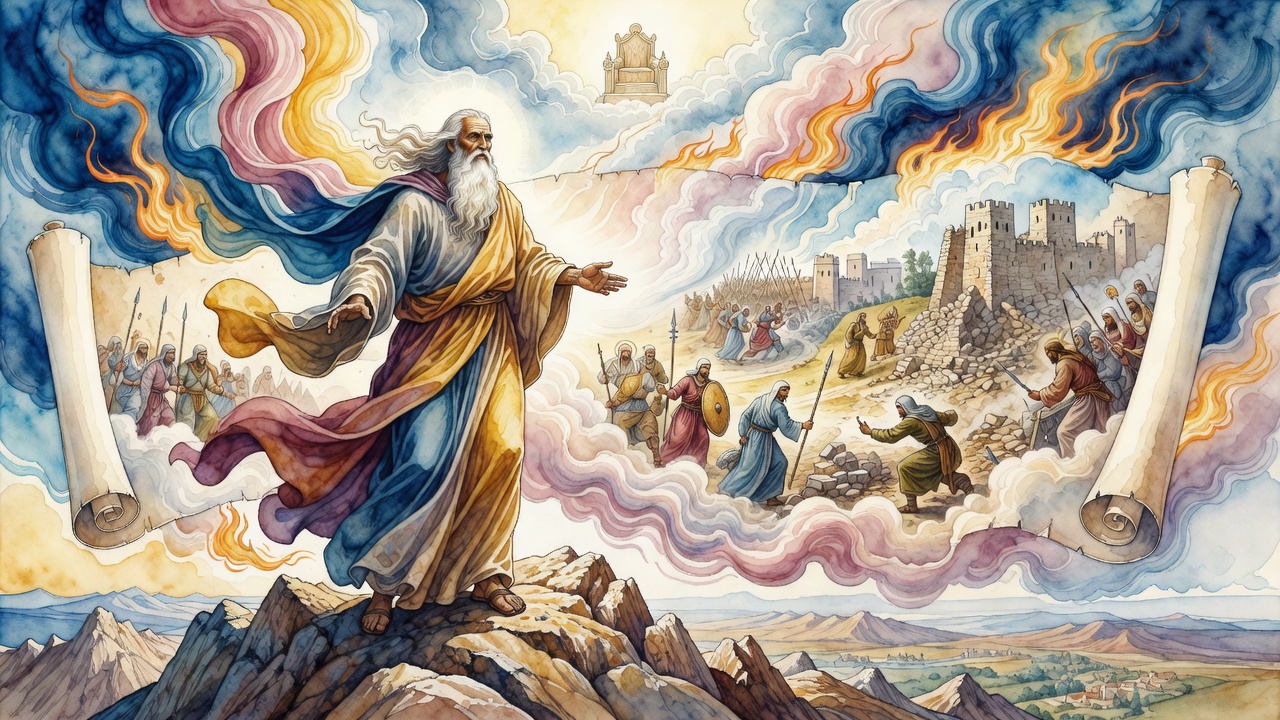
Barak answered that he would go only if she went with him. She rose. The palm was left behind. The road ran toward Kedesh and then toward the torrent of Kishon. When the battle broke, it was not only swords that decided it. Heaven threw confusion into the enemy ranks. The Lord thundered, and Sisera's order shattered into panic. Chariots stuck. Horses screamed. The captain who had made Israel tremble ran on his own feet toward a tent and a woman's hand.
The same God who had once thundered at Sinai still knew how to loosen an army without a long siege. Terror walked ahead of Israel like a second battalion. Deborah's song later named the stars that fought from their courses. First the wicks. Then the palm. Then the storm.
A Bee's Sting and a Prophet's Duty
The tradition will not flatter her past the bone. Rav Nachman noted that Deborah and Huldah, the two great prophetesses, carry names of sharp little creatures, bee and weasel. Deborah summoned Barak instead of going to honor him where he stood. Huldah, when messengers came from the king, spoke of "the man" who had sent them rather than naming the king with grace. Greatness does not buy exemption from courtesy. A prophet of God is held to a higher standard of soft speech, not a lower one.
Deborah still judged under the palm. The sting in her name is a warning, not a cancellation. The woman who twisted wicks could also wound with pride if she forgot whose light she tended.
Wisdom Above the Roar
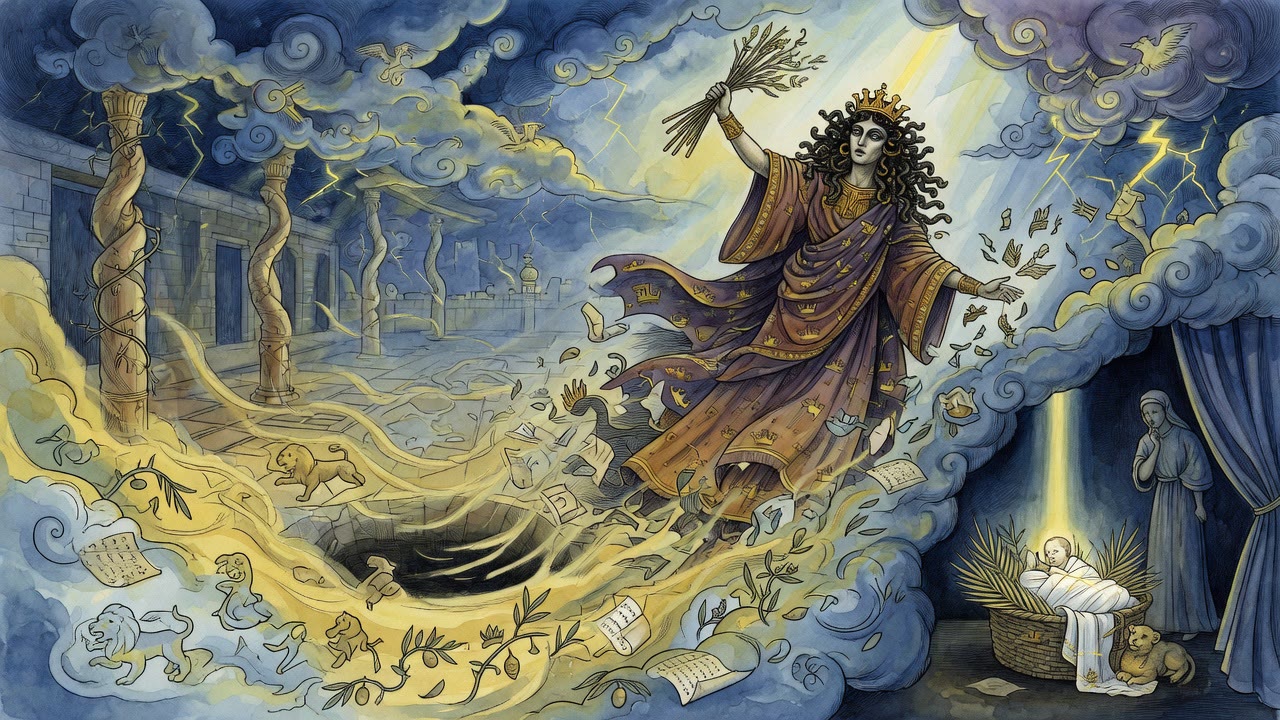
Far from that tree, another voice keeps calling over crowds. Wisdom, the Torah herself, stands at the head of roaring throngs and names the generations that drowned, scattered, and burned for cruelty. Flood, Dispersion, Sodom. She cries from her own opening pages before it is too late. Deborah's life sits inside that same cry. Private light becomes public judgment. Public judgment must still bow. The wick-maker who saves a people is not free to become a throng herself.
When the song ended and the land had rest, the palm remained. Thin shade. One heart. Oil that must be tended again tomorrow.
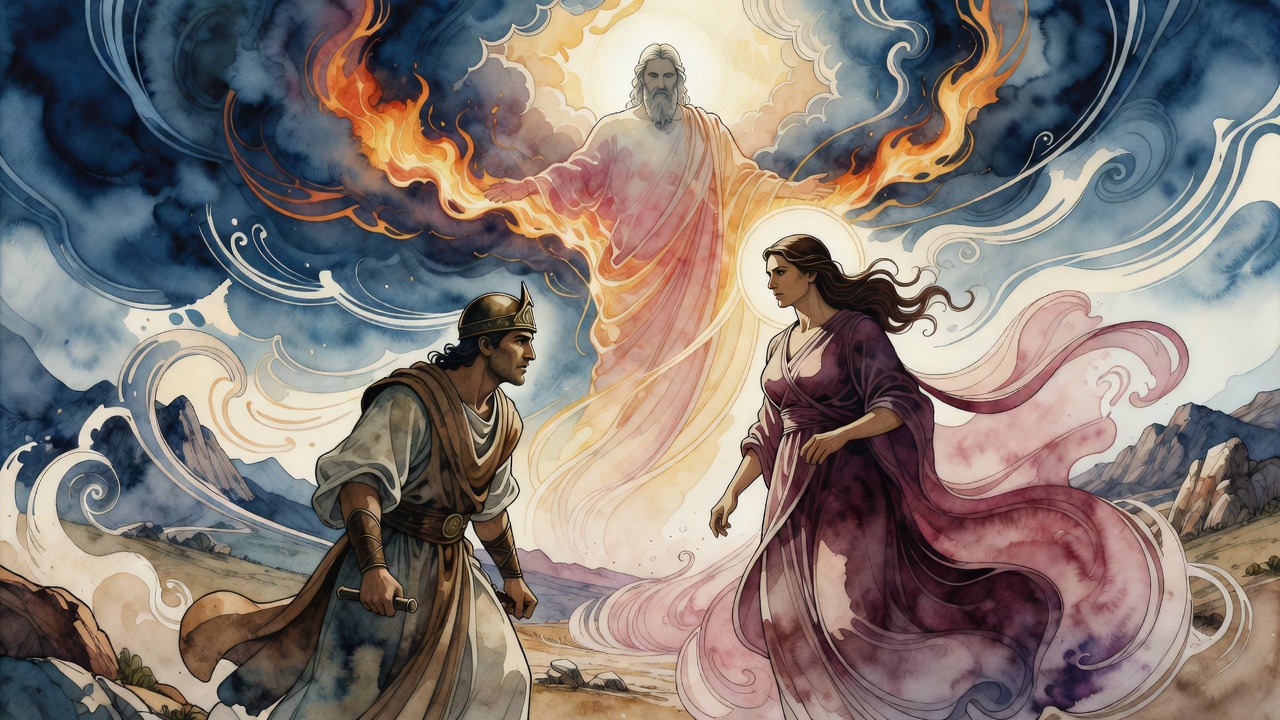
On the morning she called Barak, Deborah still smelled faintly of oil. The habit of the wicks had entered her skin. She spoke of ten thousand men and of a river that would sweep chariots like straw, and Barak looked at her as if a lamp had learned to give orders. "If you will go with me, I will go," he said. "If you will not go with me, I will not go." She did not flinch. "I will surely go with you. But the road you take will not be for your honor. The Lord will sell Sisera into the hand of a woman."
They moved. The muster at Kedesh filled the slopes with men who had forgotten how to stand in ranks. Deborah walked among them without a sword, and somehow the empty hands found spears. When the moment came she cried to Barak, "Up, for this is the day." He went down from Mount Tabor, and the Lord threw Sisera and all his chariots into confusion before Barak. The Kishon dragged iron and horseflesh. Sisera fled on foot to the tent of Yael, and the peg that finished him was held by a woman's wrist, just as Deborah had said.
Afterward the song rose like a second storm. Kings did not fight for them. The stars fought. The river fought. A mother of Sisera peered through a lattice and lied to herself about spoil of dyed cloth. Deborah's voice named every failure of the tribes that stayed home and every courage of those who risked their lives to the death. Then the land had rest for forty years, and the palm tree waited for the next hard question.
← All myths