5 min read

Sisera Bathed in a River and His Beard Caught Fish for an Army

By thirty Sisera had conquered the world in legend, with nine hundred chariots and a beard that trapped fish. The stars fought him into the mud.

Curated by Arthur · Told by Maggid ·
Table of Contents
  1. The Muscle Behind Hazor's Throne
  2. Nine Hundred Chariots and a Math That Failed
  3. Gideon's Quiet First Victory
  4. When the Stars Take a Side
  5. After the Mud Dried
Sisera Bathed in a River and His Beard Caught Fish for an Army Click for full size

The Muscle Behind Hazor's Throne

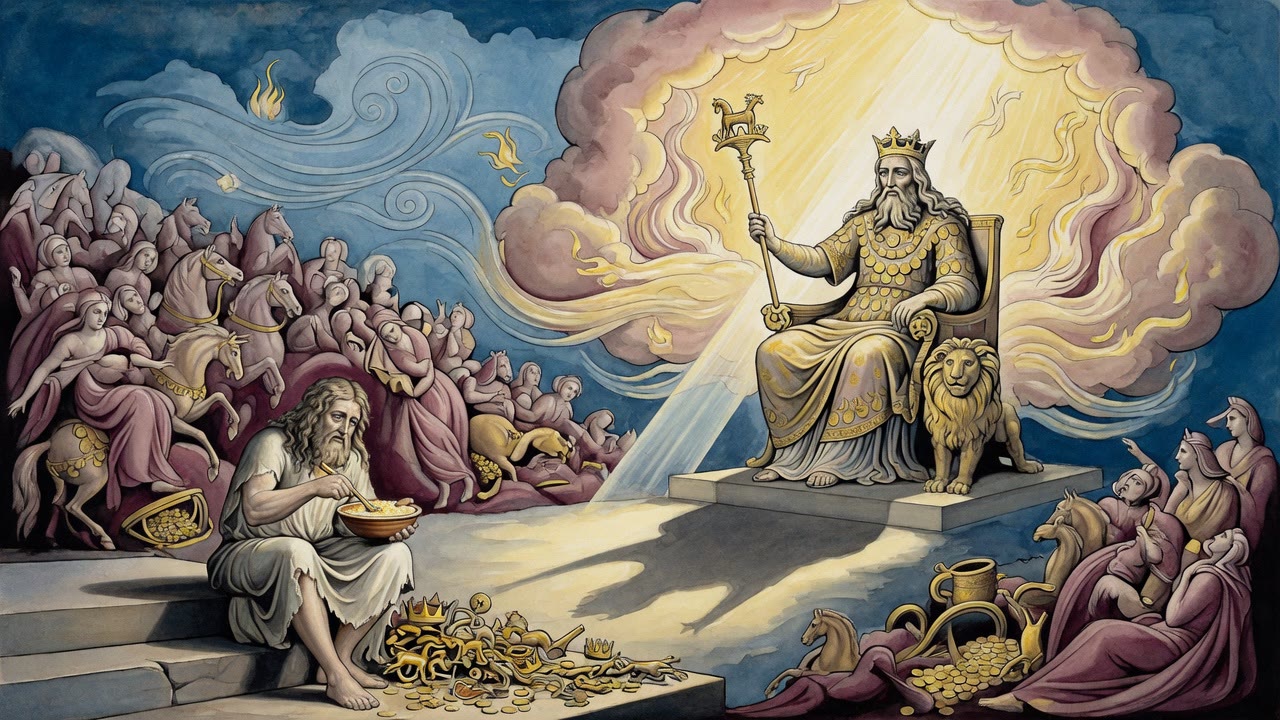
Jabin of Hazor held the title. Sisera held the terror. When Israel slid backward, God allowed that oppression, and the real weight on the villages was the general, not the crown. The legends refuse a modest portrait. By age thirty Sisera had conquered the entire world. The sound of his voice crumbled strong walls. Wild animals froze at his approach. His beard was a net. If he bathed in a river and dove, the fish caught in that hair could feed a multitude.

Nine hundred horses, the tradition piles on, pulled his chariot. Iron chariots already named in Judges multiply into a carnival of dread. Hyperbole becomes theology. Evil must look oversized so that the rescue cannot be mistaken for ordinary tactics.

Israel lived under a man who turned geography into a rumor of his body.

Nine Hundred Chariots and a Math That Failed

Judges records the muster. "Sisera called up all his chariots" (Judges 4:13). Nine hundred iron platforms, the advanced weapons of the age. Israel had no matching fleet. By every natural calculation the foot soldiers should have been scraped off the plain.

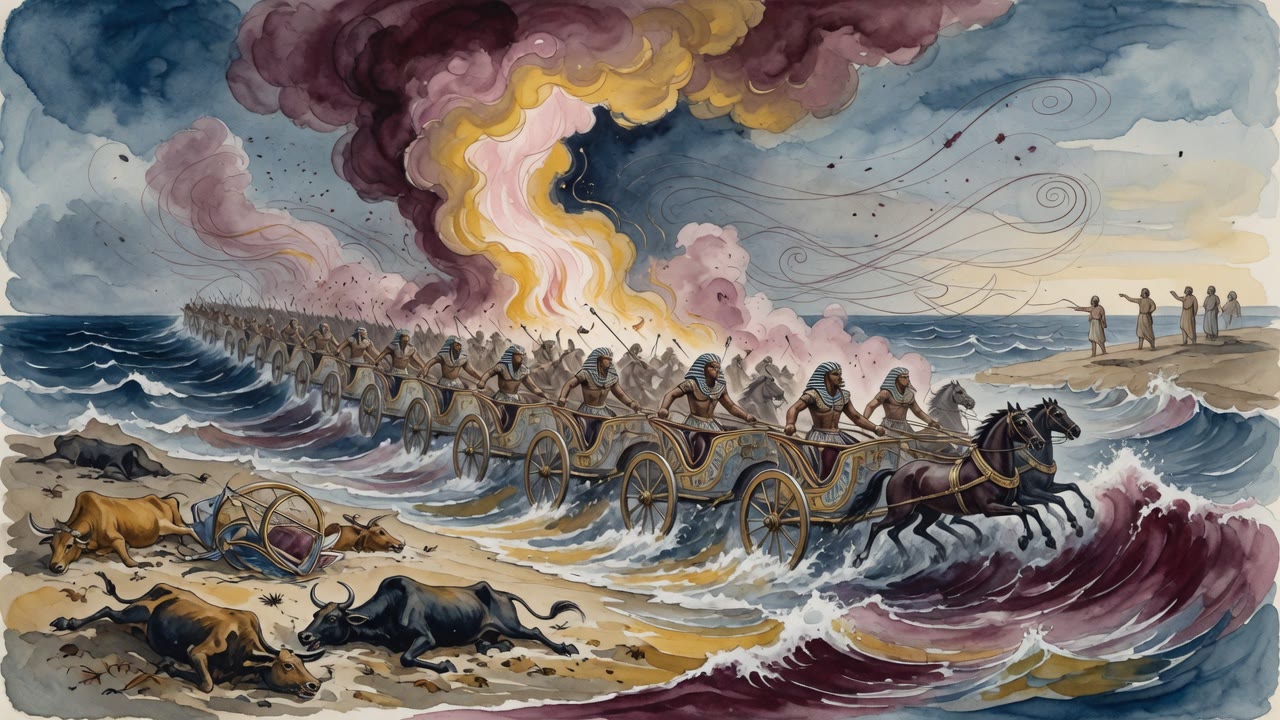
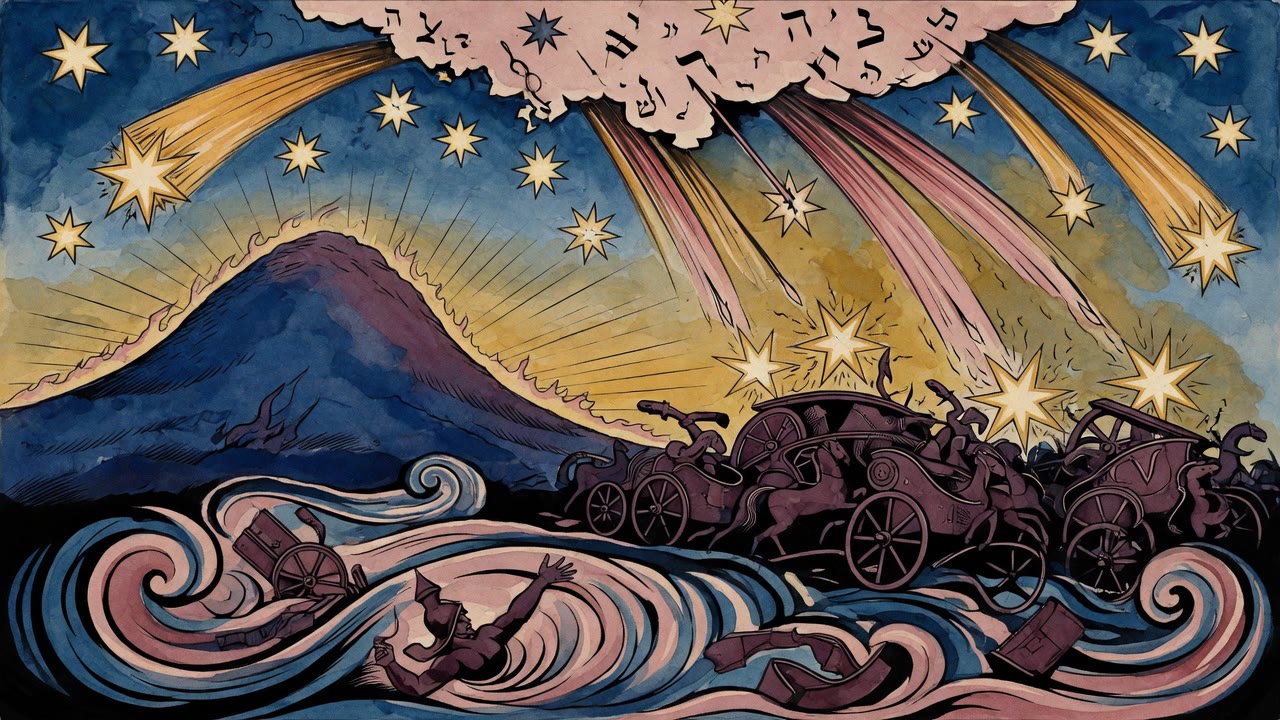
The Song of Deborah tells what happened instead. "From the heavens they warred" (Judges 5:20). Stars from their courses. The Mekhilta sets this battle beside the Reed Sea. Pharaoh's chariots drowned. Sisera's chariots drowned in mud when the Kishon rose. Same pattern. Hostile wheels. Heaven's water. A people who could not win on technology alone.

The iron that should have crushed became a trap. The beard that could feed armies could not drink the flood fast enough to save its owner.

Gideon's Quiet First Victory

Another judge's beginning sharpens Sisera's opposite. Before Gideon toppled Midian, he took his elderly father's place at the threshing floor. "Father, you are too old for this work. Go home and rest. If the Midianites come, I can run, but you cannot." The Talmud praises that small swap of danger. Heroism started as a son's legs offered in place of a father's.

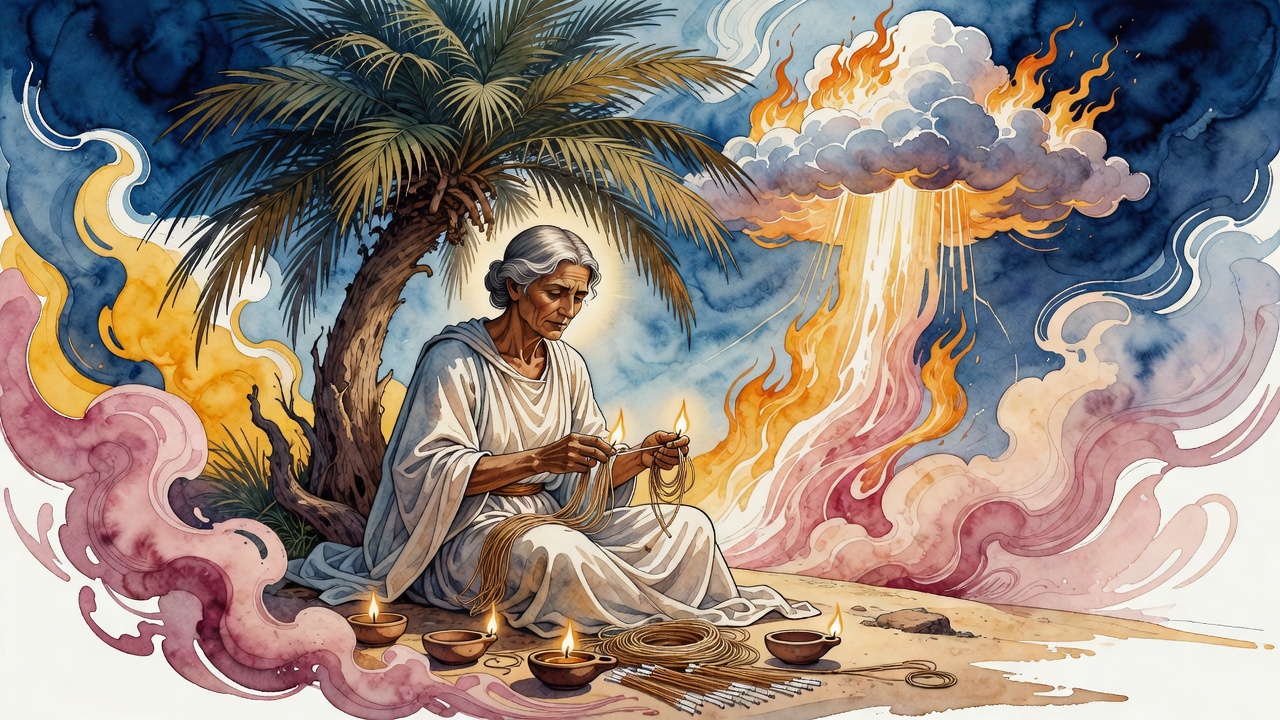
Gideon's later victory fell on Passover. A Midianite dream of a barley cake toppling the camp is read as the Omer's barley (the sheaf of new grain offered at Passover) speaking. Personal honor of parents and communal offering braided into one night of collapse for the enemy.

Sisera is excess body and voice. Gideon is a son who runs so his father can sleep. Heaven uses both stories to define what strength is for.

When the Stars Take a Side

The Mekhilta's lesson is spare. Whenever enemies rise against Israel with chariots that look final, the old Reed Sea file opens again. God fights from heaven. Sisera's world-conquest legend only raises the stakes of that file. If a man who feeds multitudes from his beard can still bog down in a creek, then no arsenal is an argument against the covenant.

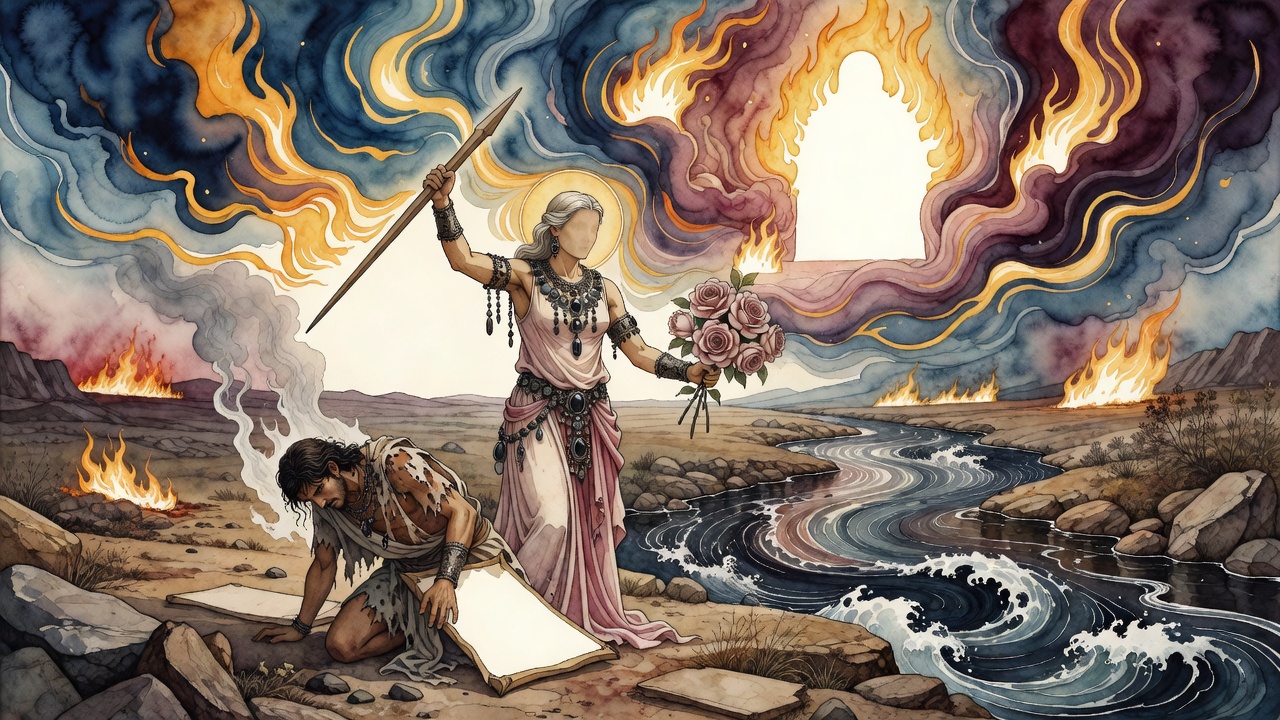
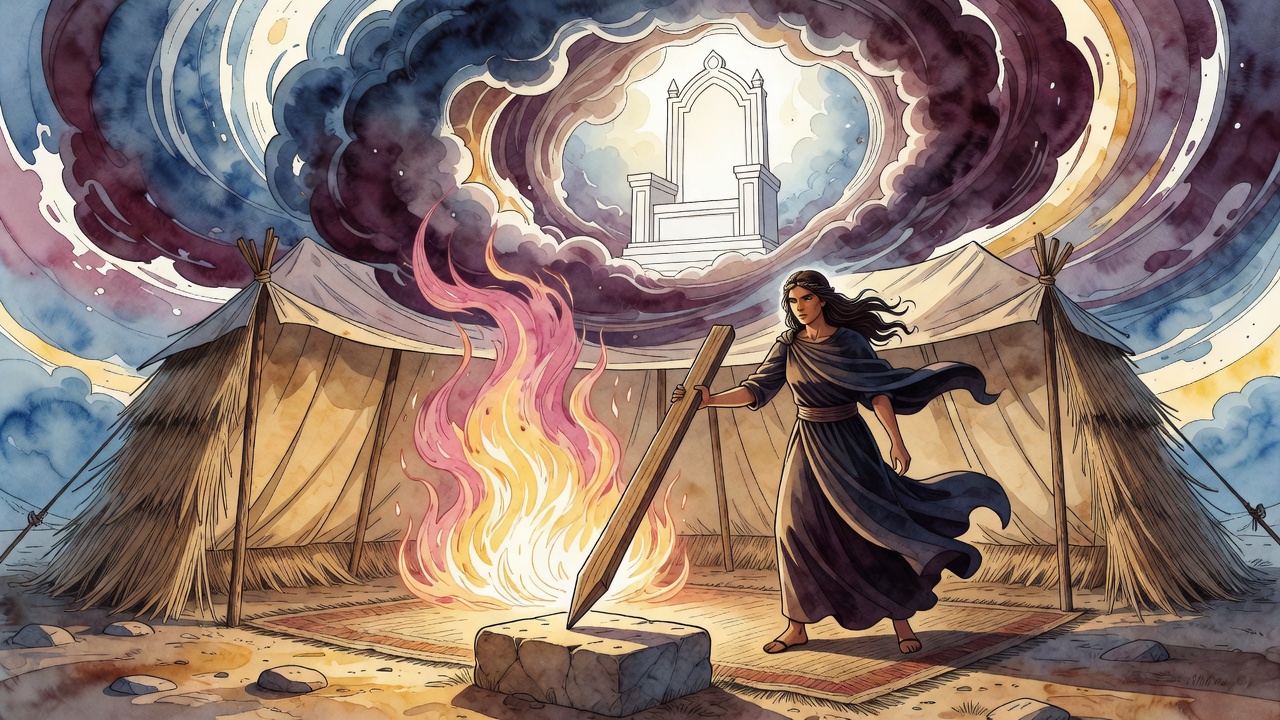
Deborah sings the stars. Jael's tent finishes the general. The oversized beard and the nine hundred horses end on the floor of a woman's house with a tent peg. The midrashic giant dies a story the plain of Kishon already predicted when the wheels stuck.

Empire by voice-collapse meets a song and a hammer.

After the Mud Dried

Israel remembers Sisera the way it remembers Pharaoh's horsemen: as proof that the most advanced violence still answers to weather God commands. The legends make him enormous so the mud can look like mercy. Gideon's father-story keeps another truth beside that spectacle. Sometimes the leader heaven wants is first a man who takes the dangerous chore so an old man can go inside.

Between the fish in the beard and the barley cake in the dream, the Book of Judges teaches that oppression invents giants and that deliverance can arrive as starlight, flood, or a son at a threshing floor.

Sisera's chariot needed nine hundred horses. The answer needed only heaven and a Kishon that would not stay polite. That is enough arithmetic for a people that keeps both songs and pegs in its memory.

Scale is the point of the beard story. A general so large that river fish feed multitudes from his hair is a cartoon until the Kishon answers, and then the cartoon becomes a theology of limits. No body is big enough. No chariot count is final. Deborah's stars and Jael's peg shrink the giant back to a man who can die indoors.

Set Gideon beside him one last time. One legend fattens evil until it is almost funny, then drowns it. The other begins deliverance with a son who takes a dangerous chore so his father can rest. The Book of Judges needs both registers. Without Sisera's excess, heaven's mud looks ordinary. Without Gideon's small honor, heroism looks only like weather and weapons. Together they teach that God breaks oversized terror and also promotes men who first learn how to run for someone else's sake.

Hold the last image a breath longer. The story is not finished when the plot facts are listed. It is finished when the pressure on the person under heaven is felt in the body: the run, the silence, the refused door, the open ledger, the mud, the courtroom, the ridge above the river.


← All myths
From the tradition

Sources

3 sources

The texts behind this telling. Some cards carry a translation of the source; others are our own retelling of it, and each card says which. Every card links out to the original.

Legends of the Jews 2:38Legends of the Jews

Retold in our words. Read the original at the link below.The Legends of the Jews by Louis Ginzberg (1909) · Public Domain

The Book of Judges tells us that God, in response to Israel's backsliding, allowed them to be oppressed by Jabin, the king of Hazor. But the real muscle behind the throne? That was Sisera. He was the one who truly made life difficult for the Israelites.

Who was this Sisera? Well, the Rabbis certainly had some thoughts.

In legends, Sisera was no ordinary warrior. He wasn't just a skilled commander; he was practically a force of nature. Ginzberg, in Legends of the Jews, paints him as a figure of almost superhuman strength and terror. When Sisera was just thirty years old, he had already conquered the entire world! The entire world.

The legends don't stop there. They embellish Sisera’s might with details that are both terrifying and, well, a little absurd. We're told that at the mere sound of his voice, the strongest walls would crumble. And it wasn't just human structures that feared him. Even the wild animals in the woods, we hear, would be paralyzed with fear at his approach.

And get this: his physical proportions were, shall we say, impressive. The text strains to describe just how enormous he was. According to the tradition, if Sisera took a bath in the river and dove under the water, the fish caught in his beard would be enough to feed a multitude! Now, that’s what I call a big beard.

The exaggeration continues. It apparently took nine hundred horses to pull his chariot. Nine hundred! You start to wonder if this is history or hyperbole. Maybe…it’s both?

What are we to make of these fantastical descriptions? Were the Rabbis simply exaggerating to make Sisera seem more formidable, a worthy adversary for the Israelite heroes? Perhaps. Or maybe these legends are trying to convey something deeper about the nature of evil, about the forces that stand against the divine will.

Perhaps they are trying to tell us that the challenges we face, the obstacles in our path, can sometimes seem overwhelming, even insurmountable. Like Sisera, they can appear larger than life, capable of crushing us with a single word or a single glance.

But the story of Sisera doesn't end here. As we know, he ultimately met his match in the unlikely form of Jael, a woman who defied him in his moment of need. So, the next time you feel like you’re facing your own personal Sisera, remember that even the mightiest of foes can be brought down by courage, cunning, and perhaps, a well-placed tent peg.

Full source
Mekhilta Tractate Shirah 6:6Mekhilta DeRabbi Yishmael

Retold in our words. Read the original at the link below.Mechilta, translated by Rabbi Shraga Silverstein · CC-BY

The Mekhilta de-Rabbi Ishmael draws a line from the Red Sea to another famous battlefield to demonstrate that God fights Israel's wars from heaven. The case in point: Sisera, the fearsome Canaanite general who terrorized the Israelites for twenty years with his nine hundred iron chariots.

The text is concise but devastating. Sisera assembled his full military might (Judges 4:13): "And Sisera called up all his chariots." Nine hundred chariots of iron, the most advanced weapons platform of the ancient world. The Canaanite army should have been invincible. The Israelites had no comparable technology, no standing army to match this force. By every natural calculation, Sisera should have won.

Then the Song of Deborah reveals what actually happened (Judges 5:20): "From the heavens they warred" against Sisera. The stars themselves fought from their courses. According to rabbinic tradition, God sent a cosmic upheaval, a supernatural storm, a heavenly intervention that turned Sisera's greatest advantage into his destruction. The iron chariots that should have crushed the Israelite foot soldiers instead became death traps, bogged down in the flooding Kishon River, their wheels mired in mud.

The Mekhilta cites this episode as part of a series showing that whenever enemies rise against Israel, heaven intervenes. The pattern established at the Red Sea, where God destroyed Pharaoh's chariots, repeated itself in the days of the Judges. Sisera had chariots, just as Pharaoh had chariots. And just as at the sea, it was not human military strategy but divine power that decided the outcome. The heavens themselves went to war on Israel's behalf.

Full source
Legends of the Jews 2:53Legends of the Jews

Retold in our words. Read the original at the link below.The Legends of the Jews by Louis Ginzberg (1909) · Public Domain

Sometimes, it's not about grand pronouncements or earth-shattering feats from the get-go. Sometimes, it starts with simply being a good son.

Take Gideon, for example.

Gideon, the judge and warrior who delivered Israel from the Midianites. But before he was a celebrated leader, he was just a dutiful son. The Talmud (Shabbat 139a) actually praises him for this very quality. His elderly father, fearing the marauding Midianites, still felt obligated to thresh his own grain. Gideon, seeing his father's vulnerability, stepped in. "Father," he said, according to the traditional telling, "you are too old for this work. Go home and rest, and I will take over. If the Midianites come, I can run, but you cannot." It’s a quiet act of kindness, born of respect and love. And according to our tradition, it's precisely this kind of character that made Gideon worthy of his future greatness.

The day Gideon won his monumental victory holds significance, too. It took place during Pesach (Passover), Passover. Remember the story of the Midianite's dream? The one about the barley cake that toppled the enemy camp? The Zohar, that foundational text of Jewish mysticism, sees a profound connection. That cake, it says, symbolizes the Omer offering – a barley offering brought during Passover. The Zohar implies that God championed the Israelites because they were fulfilling this sacred obligation.

So, it wasn't just Gideon's bravery or strategic brilliance. It was the convergence of personal virtue – his devotion to his father – and communal devotion – the offering of the Omer. It's a reminder that even small acts of kindness and devotion can ripple outward, shaping destinies and changing the course of history.

What does that say to us? Maybe that heroism isn't always about the spectacular. Maybe it's about the quiet acts of love and service that pave the way for something greater. Maybe it's about being a good son, a good daughter, a good person, one barley cake at a time.

Full source