The Stars Left Their Courses to Hunt Sisera at Tabor
Nine hundred iron chariots rolled against Israel, and the constellations climbed down from heaven to drown a general in his own flood.
Table of Contents
Nine hundred iron chariots came up the Kishon valley, and the ground shook under them like a struck drum. Sisera rode at their head, a general who had crushed Israel for twenty years, and he meant to crush them again at the foot of the mountain. Behind him the wheels threw up dust until the sky went brown with it. In front of him stood a ragged line of men with spears, and a prophetess on the high ground who would not run.
 Click for full size
The Prophetess Who Sent Ten Thousand Up the Slope
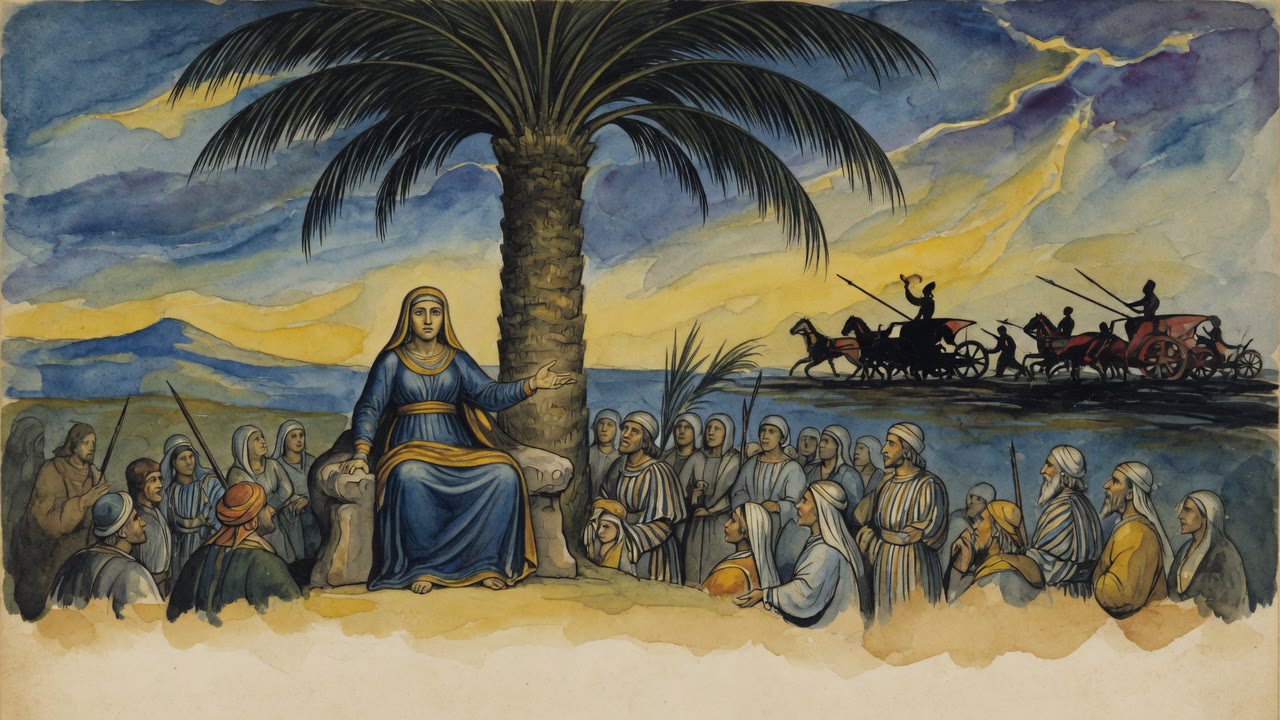
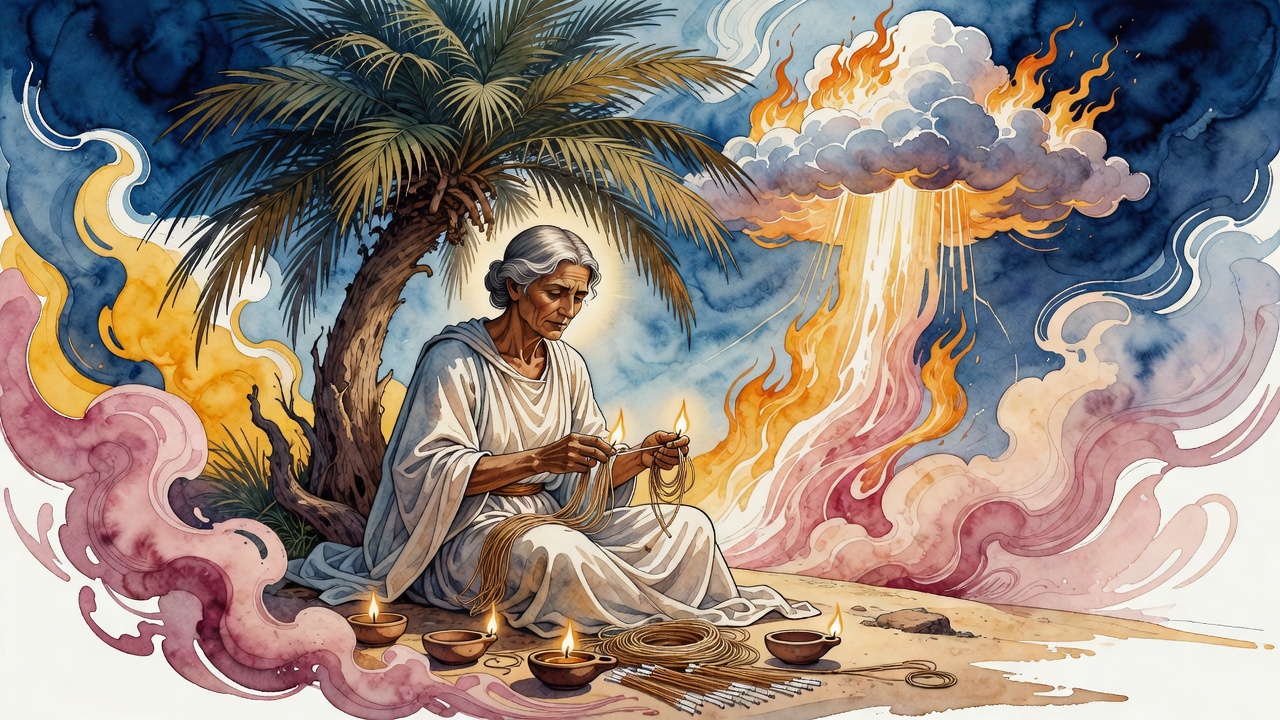
Deborah sat under her palm and watched the iron come, and she turned to the man beside her. "Up," she told Barak. "This is the day." Barak had ten thousand men of Naphtali and Zebulun gathered on Mount Tabor, farmers and herdsmen against armor, and he had told her plainly he would not march unless she marched with him. So she marched. The mountain held them like a held breath while Sisera arrayed his chariots on the plain below, and the difference between the two armies was simple and terrible. Israel had courage and stone. Sisera had nine hundred machines of iron that could ride a man into the dirt before he raised his arm.
No spear in that line was going to win this. Deborah knew it, and she sent the men down the slope anyway.
The Tempest That Broke on the Chariots
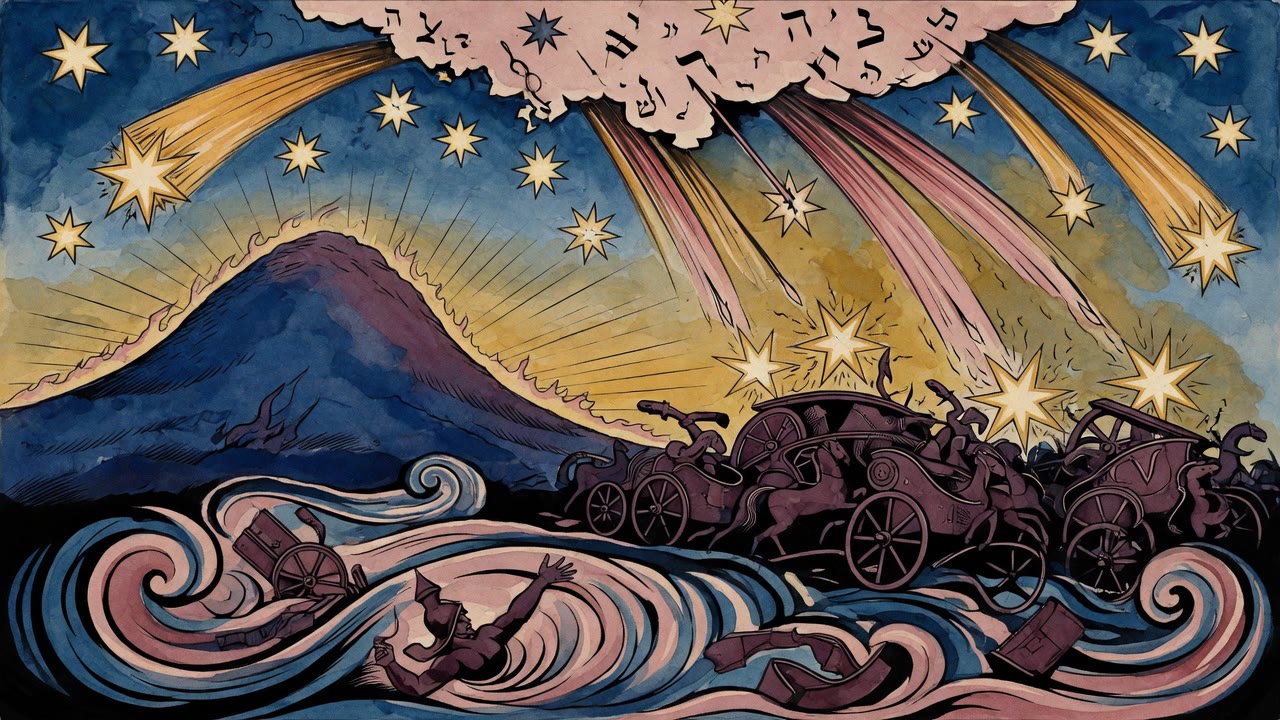
The sky changed first. It did not gather slowly the way weather gathers. It cracked open above the plain as if a seam in heaven had been torn, and the storm came down on the chariots and not on the mountain. Hail struck the charioteers full in the face. Rain came so hard and so blind that a driver could not see the horse in front of him, and lightning walked the field, and thunder rolled under the wheels until the teams went mad in their harness. The iron that had ruled the valley for twenty years turned worthless in an instant. A chariot needs hard ground and a clear road. The storm gave Sisera neither.
The wheels sank. The horses screamed and bolted sideways into one another. Men who had never been touched by an Israelite spear fell in the churning mud, and the river Kishon, swollen in a heartbeat, came up over its banks and swept the dead and the drowning down toward the sea. Ten thousand farmers came off the slope into that ruin and finished what the heavens had begun.
The Constellations Came Down From Their Tracks
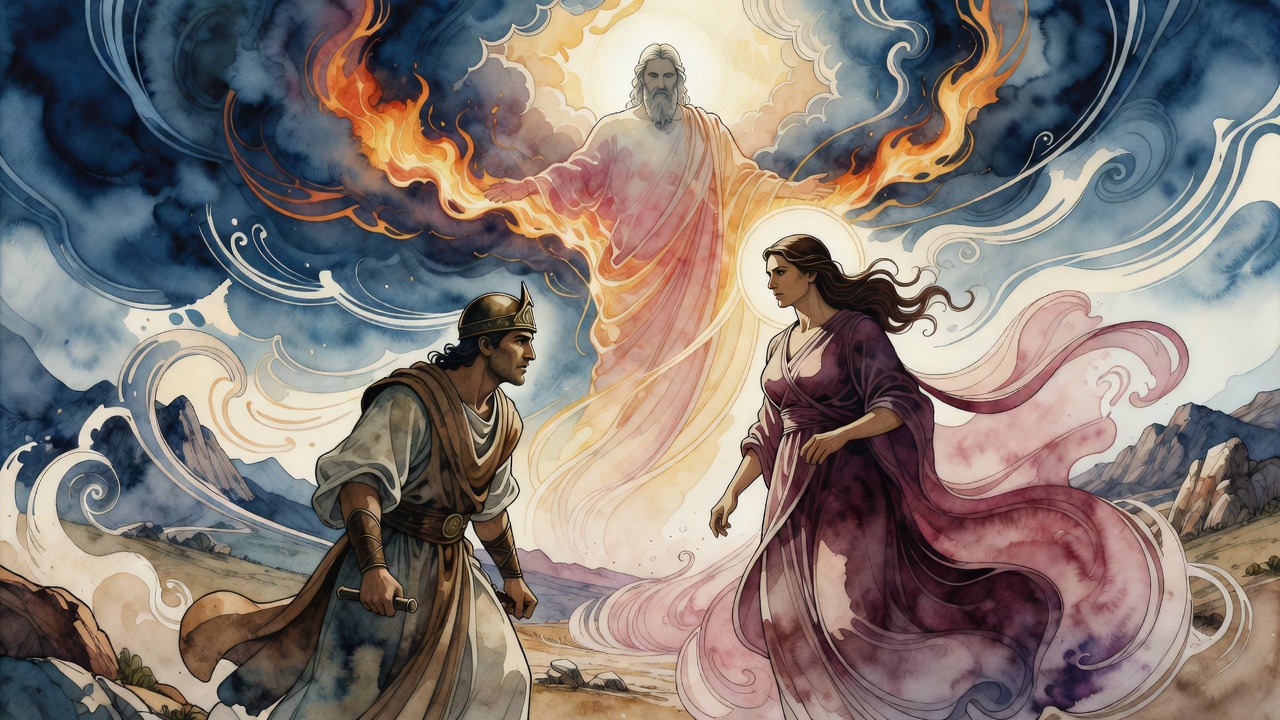
It was not only weather. The lights of heaven had left their places. The stars stepped down out of their fixed courses and made war on flesh and blood, pouring heat and flood on the host below, hunting the chariots through the dark the way hounds drive a deer into a net. Such a thing had never been seen. The fixed stars do not move. The sun keeps its road and the constellations keep theirs, night after night since the fourth day of the world. Now they had broken rank and come down to fight for a band of shepherds, and there was no one on either side of that battle who was not amazed.
And the mountain itself was lifted up. Tabor, which had only ever stood and watched, was raised high to join the war, so that the very rock under Israel's feet rose into the fight against the men of Canaan. Earth and sky had both enrolled. The chariots of iron were caught between a mountain that climbed and stars that fell.
The General Who Ran on Foot
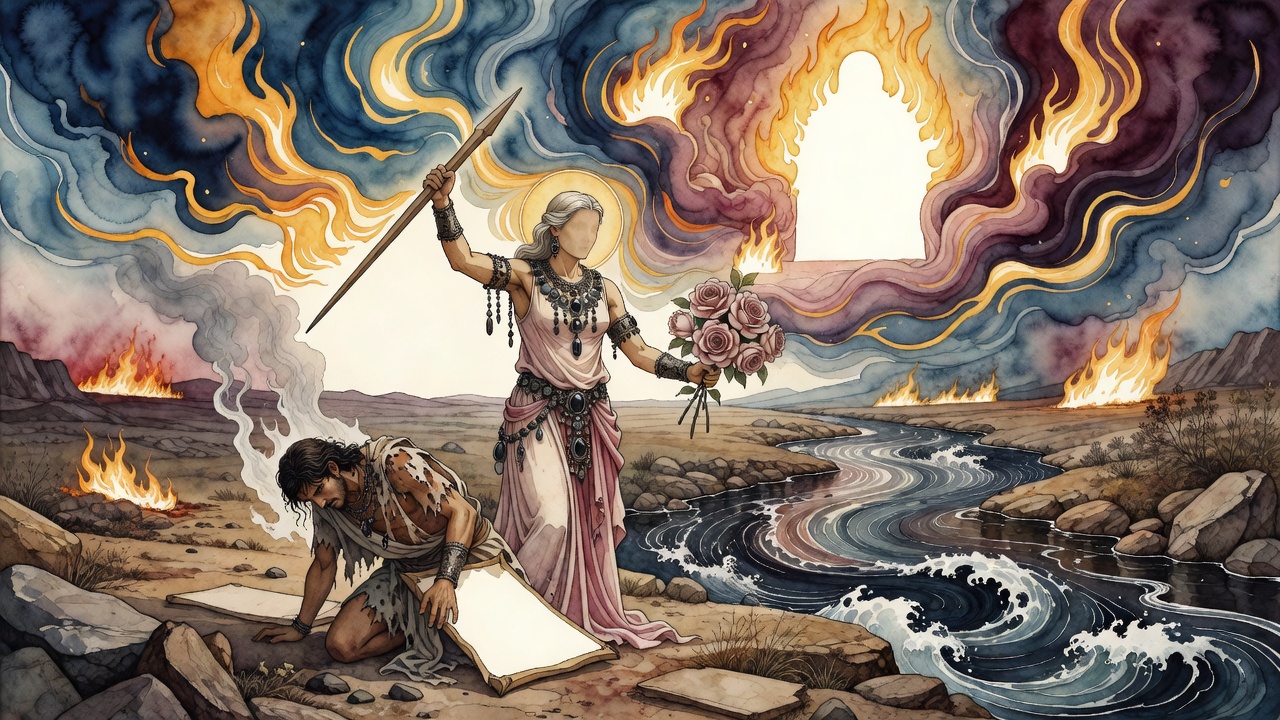
Sisera came down from his chariot. The man who had ridden out at the head of nine hundred could not ride out of his own defeat. He ran on foot, alone, soaked and blind and stumbling, while behind him the flood carried off everything he had brought into the valley. He reached the tent of Jael, wife of Heber the Kenite, and she came out to meet him. "Turn aside, my lord," she said. "Turn aside to me. Do not be afraid." She covered him with a rug. He asked for water and she gave him milk, and he slept the dead sleep of a man who has run past the end of his strength.
Then Jael took a tent peg in one hand and a mallet in the other. She crossed the floor of the tent without a sound. She drove the peg through his temple and into the ground beneath, and the general who had owned the valley lay pinned to the earth he had meant to keep. When Barak came running after his enemy, Jael lifted the tent flap. "Come," she said. "I will show you the man you are looking for." He was already dead.
The Carcasses Hung on the Gate
Picture the children of a king's palace who go down into the forest and come back dragging lions and leopards and bears, and hang the carcasses on the wall facing the city gate, so that everyone who passes stops and stares and asks who could have trained them to bring down such beasts. That is what heaven looked like that day. The Holy One had trained the very stars against Sisera, and hung his iron host up for all the world to gape at, and the people stood amazed, for there had never been a thing like it, that the lights of the sky should climb down to make war on men.
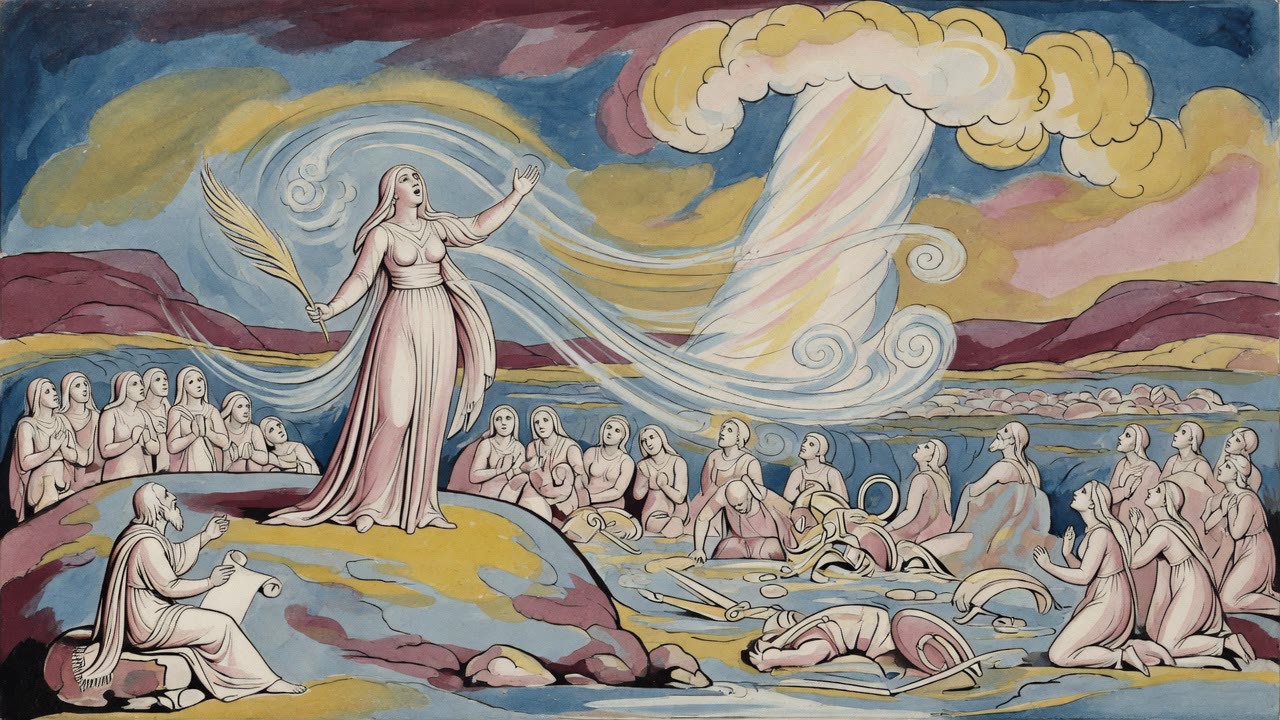
Deborah climbed back up the slope and sang. She sang of the kings who came and fought, of Kishon sweeping the dead to the sea, and of the stars in their courses that had fought against Sisera. On the plain below, the iron lay cooling in the mud, and the mountain settled back onto its base, and the constellations, their hunt finished, climbed back into the dark and took up their old fixed roads as if they had never moved at all.
← All myths