6 min read

Beelzeboul Wielded a Shovel and Benaiah Shone Like the Dawn

Solomon set Beelzeboul and the powers of darkness to dig his Temple while Benaiah met a queen on the road and shone like the morning star.

Curated by Arthur · Told by Maggid ·
Table of Contents
  1. Beelzeboul Came Boasting and Found a Foundation Waiting
  2. The King Set the Pit of Hell to Digging a Pit
  3. Word Came That a Queen Was on the Road
  4. The Queen Came Down From Her Chariot for a Servant
  5. From the Pit Below to the Throne Above

The spirits of the air came to Solomon one after another, bound by the ring on his finger, and each one arrived boasting.
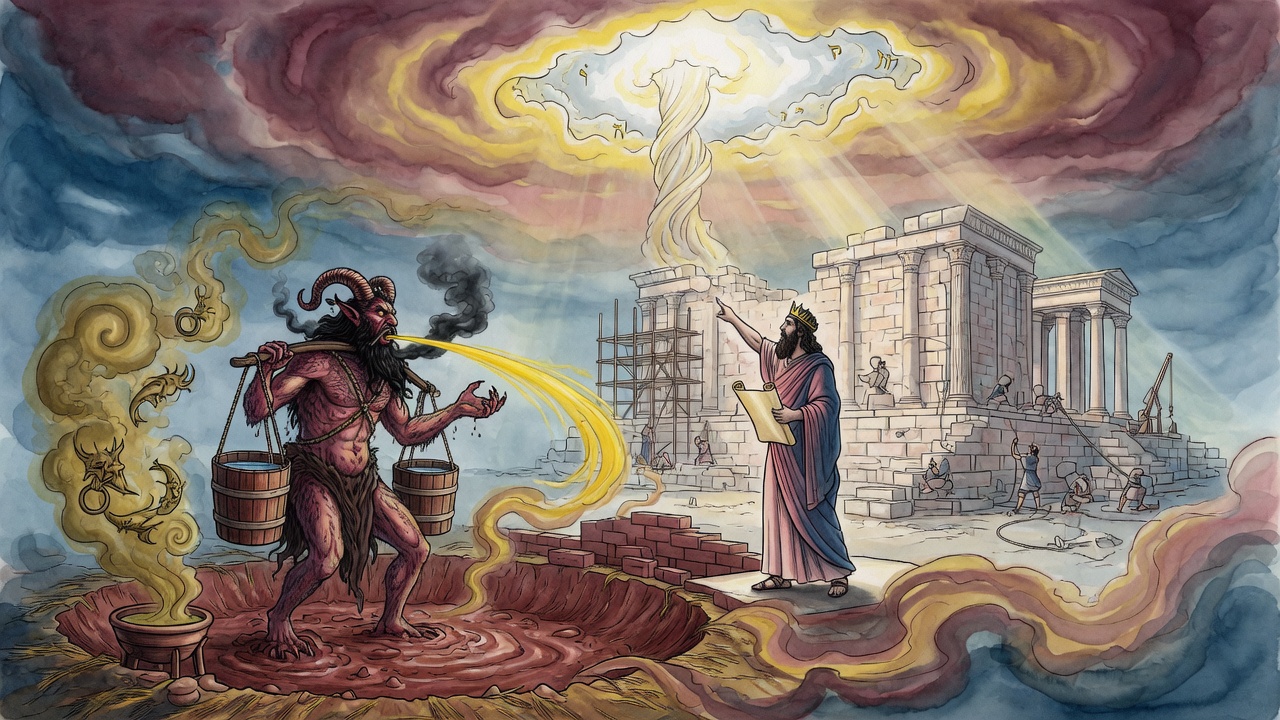
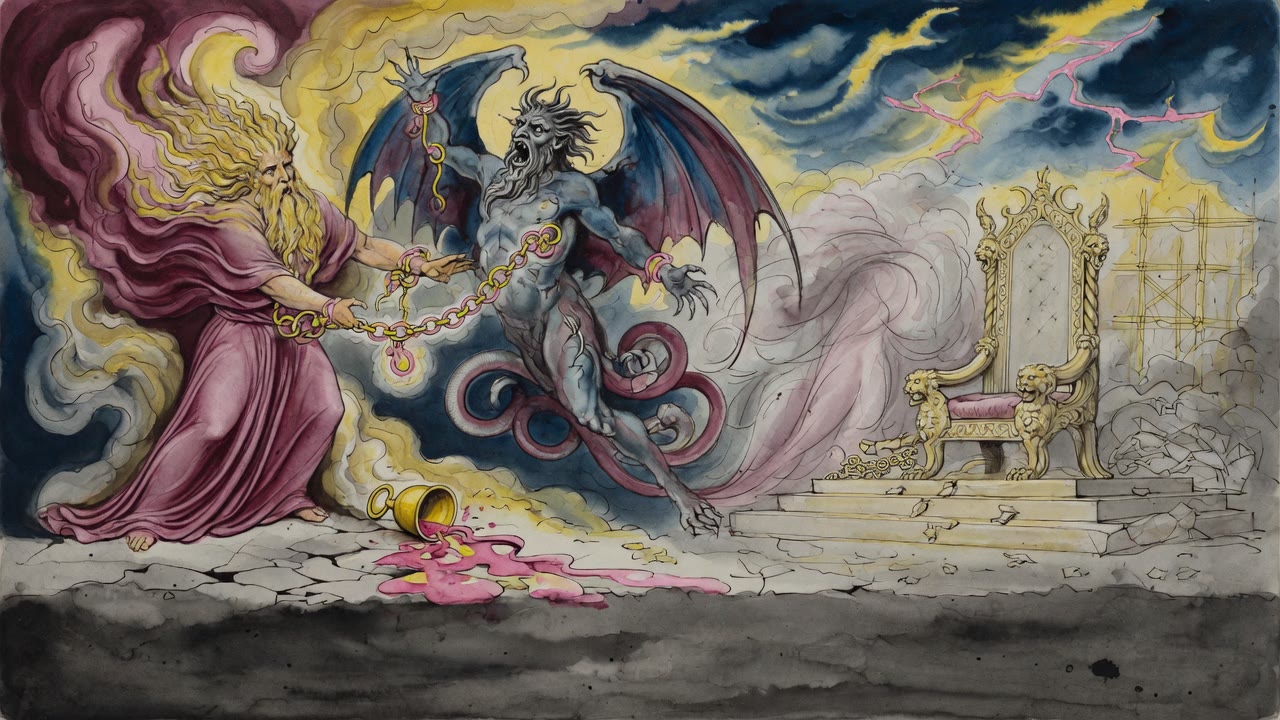
First came Beelzeboul, swaggering across the floor of the unfinished court as though he owned it. He called himself the last of a host that had fallen from grace, the sole survivor, the prince of the deep pit. He ruled all of Tartarus, he said, that black abyss below the abyss, and he wanted Solomon to know it. He even kept a child in the Red Sea, he bragged, who rose up now and then to report on what he had been doing in the world.

Beelzeboul Came Boasting and Found a Foundation Waiting

Solomon let him talk. The king had heard the speeches of demons before, and he had learned that the louder the boast, the heavier the load a king could lay on the back behind it.

Behind Beelzeboul came Tephros, the demon of ashes, gray and smoking, trailing the smell of cold fire wherever he set his feet. After him came seven female spirits, who lined up before the throne and announced together that they were part of the thirty-six elements of darkness. Thirty-six. They said it like a threat. What the number meant they did not explain, and Solomon did not ask. He had a different question in mind.

The question was the Temple. It was to run two hundred and fifty cubits in length, and a building like that needs a hole dug for it first, down to where the rock can bear the weight of God. Solomon looked at the prince of Tartarus, at the demon of ashes, at the seven daughters of darkness, and he saw a labor crew.

The King Set the Pit of Hell to Digging a Pit

"Dig," Solomon told them. "Dig the foundation."

The court went still. Then, from the whole crowd of them, came a single low sound, a murmur of protest rolling up out of the floor like a groan out of a grave. The prince of Tartarus had not crossed from the abyss to lean on a shovel. The demon of ashes had not expected honest dust. The seven elements of darkness had not come to haul stone in the daylight.

Solomon did not raise his voice. He did not have to. The ring did the arguing for him. He told them again to be industrious, and the unseen powers of the air bent their backs and began to dig.

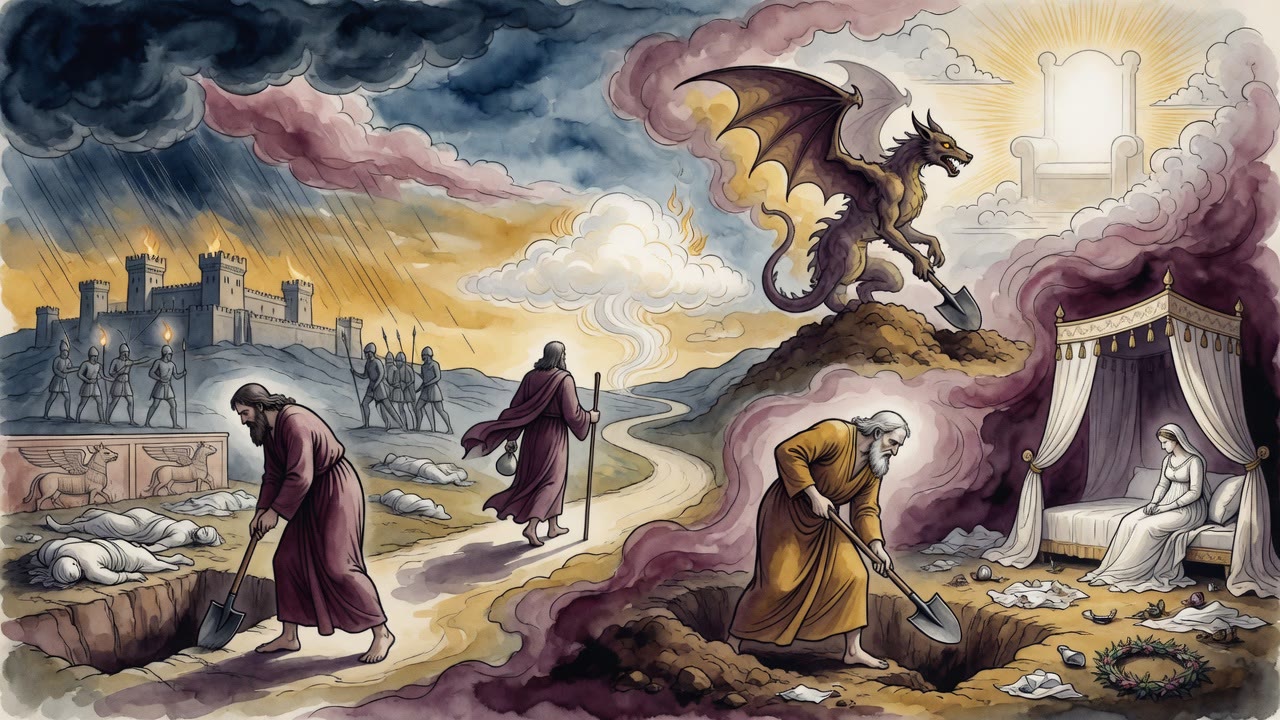
So the foundation of the house of God went down into the earth on the labor of demons. Beelzeboul, who had ruled the pit, now dug one. Tephros, made of ashes, sifted the soil. The thirty-six elements of darkness gave up, at last, something other than darkness. Their secrets came into the light along with the dirt, every boast turned into a confession, every prince of the deep turned into a hired hand. Solomon did not gloat. The work itself was the answer to every speech they had made.

Word Came That a Queen Was on the Road

While the demons broke ground below, word reached the palace that a queen was coming up from the ends of the earth. The Queen of Sheba had heard of Solomon and would see him for herself, and her caravan was already on the road.

Solomon did not go out to meet her himself. He sent Benaiah.

Benaiah went out toward her, and the men who watched him go could find nothing in the ordinary world to compare him to. He was like the dawn, that first flush of color spreading across the eastern sky before the sun has cleared the hills. He was like the morning star, brighter than any light around it, burning low and steady over the horizon. He was like a lily standing by running water, white against the green. The court had servants, and then it had Benaiah, and the difference was the difference between a torch and the planet Venus.

The Queen Came Down From Her Chariot for a Servant

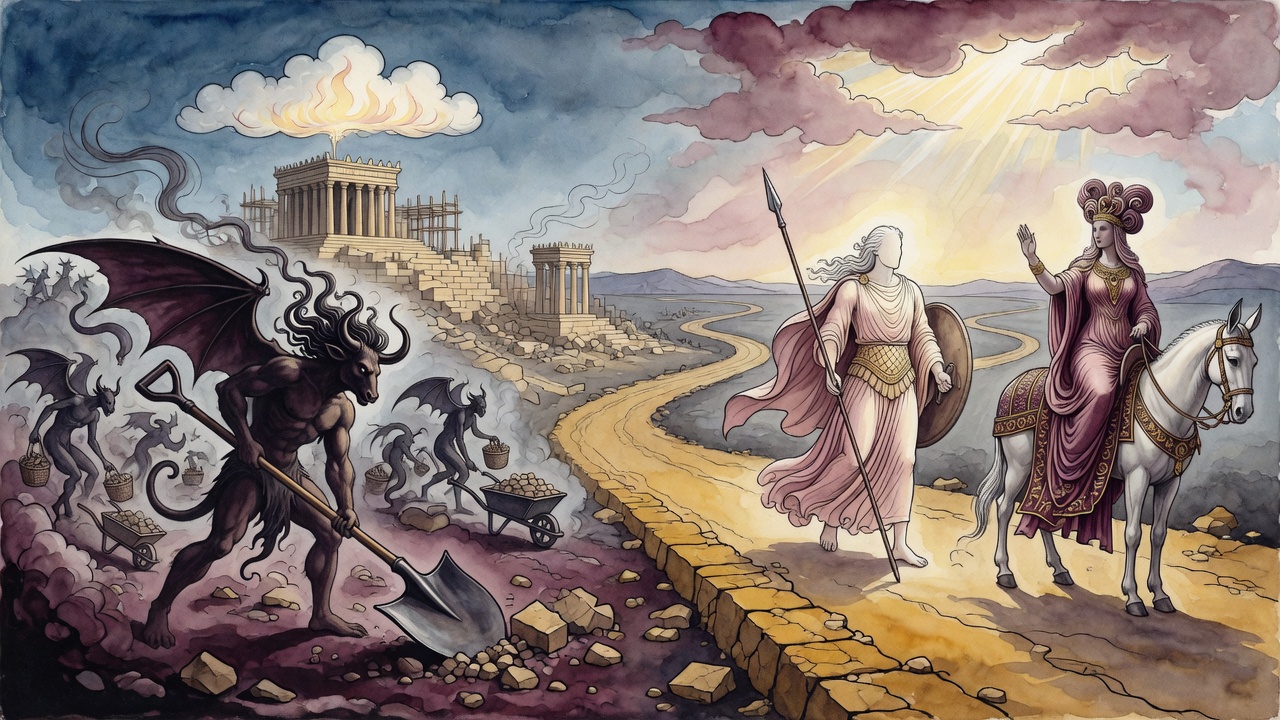
The Queen of Sheba saw him on the road and stopped her chariot. She was a ruler in her own right, carried all her life past the finest sights her kingdom could raise, and the sight of this one man standing in the dust undid her. She climbed down to do him honor. She took him for the king.

Benaiah did not let the mistake stand. "I am not King Solomon," he said. "I am only one of the servants who stand in his presence."

The queen turned to the nobles riding behind her. "If you have not seen the lion," she said, "at least you have seen his lair. And if you have not yet seen King Solomon, at least you have seen the beauty of the man who stands before him."

Then she rode on toward Jerusalem, where the king who had bent the princes of Tartarus to dig his foundation was waiting to receive a queen who had bowed in the road to one of his attendants.

From the Pit Below to the Throne Above

That was the reach of Solomon at the height of his power. Beneath the city, the spirits of the air dug in the dark and gave up their cures and their names. On the road into the city, a queen from the far edge of the world stepped down into the dust because a single servant of his court shone like the rising day. The king sat between the two, master of what crawled out of the abyss and what came marching out of the sunrise, and for one stretch of years nothing under heaven, above the earth or below it, failed to answer when he spoke.


← All myths
From the tradition

Sources

2 sources

The texts this telling draws on, in full. Open a card to read inline, or expand it for a wider, quieter read.

Legends of the Jews 5:88Legends of the Jews

It wasn't just about flashy displays of power, that's for sure. According to the legends, he put them to WORK!

Ginzberg, in his monumental work Legends of the Jews, tells us about one particular episode after Solomon's initial encounters with demonic forces. It’s a wild ride.

First up, Beelzeboul – yes, THAT Beelzeboul (a name some connect to the more commonly known Beelzebub). He struts back onto the scene, all bravado, claiming he's the LAST man, err, angel, standing from a group that fell from grace. Can you imagine the arrogance? He boasts to Solomon that he rules over everyone in Tartarus, that deep, dark abyss. And get this: he apparently has a kid living in the Red Sea! This aquatic offspring, the legend says, pops up from time to time to give Beelzeboul a report card on his activities.

Next in line is Tephros, the Demon of Ashes. I can't help but picture a gloomy figure trailing smoke and sorrow wherever he goes.

But wait, there's more! A whole entourage of female spirits arrives – seven of them. They declare they're part of the "thirty-six elements of darkness." Thirty-six! That's a lot of… darkness. What exactly that means, the text doesn't elaborate, but it certainly sounds ominous.

So, what does Solomon do with this motley crew of demonic royalty and dark elemental forces? He doesn't throw a party, that's for sure. Instead, he puts them to work.

He orders them to dig the foundation for the Temple. Now, remember, we’re not talking about a tool shed here. The Temple, according to this account, was planned to be two hundred and fifty cubits long. That's a HUGE foundation.

And how do these dark entities respond? Not with enthusiasm, that’s for sure. They let out a united murmur of protest – a collective groan of disapproval echoing from the depths. But Solomon, ever the wise and powerful king, isn’t having any of it. He insists they get industrious. And, according to the legend, they begrudgingly begin to perform the tasks he has commanded.

Can you imagine the scene? Beelzeboul, the self-proclaimed ruler of Tartarus, wielding a shovel? The Demon of Ashes, actually covered in ash? And those thirty-six elements of darkness… hopefully contributing something other than gloom to the construction process.

It makes you wonder, doesn’t it? What was Solomon REALLY thinking? Was he just trying to build a magnificent Temple? Or was he also trying to teach these Watchers a lesson about humility and the value of hard work? Or, perhaps, was he simply demonstrating that even the darkest forces can be bent to serve a higher purpose? The Legends certainly leave us with plenty to ponder.

Full source
Legends of the Jews 5:57Legends of the Jews

Her visit to King Solomon is one of the most famous encounters in all of history. But before she even met the wise king, there was an intriguing little prelude involving this Benaiah.

As the time of her arrival approached, Solomon, in his infinite wisdom, sent Benaiah to greet her. And the descriptions of Benaiah? They're breathtaking. The legends compare him to the dawn, that glorious flush of color that paints the eastern sky, heralding a new day. He’s like the evening star, Venus, shining brighter than all the others. He's even likened to a lily, flourishing by the water's edge – a symbol of purity and beauty. Imagine the impression he must have made!

The text from Legends of the Jews describes Benaiah in such vivid terms, it's almost as if we can see him standing there.

Here’s where the story gets interesting. When the Queen of Sheba caught sight of Benaiah, she immediately descended from her chariot to pay him homage. Why? Because his presence was so commanding, so regal, that she mistook him for the king himself!

Benaiah, ever the loyal servant, gently corrected her. "I am not King Solomon," he said. "I am merely one of his servants who stand in his presence." The Queen of Sheba, a powerful ruler in her own right, accustomed to the finest things and the most impressive people, was so taken by Benaiah that she assumed he was the king.

Her reaction is priceless. Turning to her nobles, she exclaimed, "If you have not beheld the lion, at least you have seen his lair, and if you have not beheld King Solomon, at least you have seen the beauty of him that stands in his presence." In other words, even a glimpse of someone so close to the king, someone who embodied his court's values, was enough to inspire awe.

What does this little episode tell us? It’s not just about Solomon's power and wisdom, but about the kind of people he surrounded himself with. Benaiah was not just a servant; he was a reflection of Solomon's greatness. He embodied the beauty, the wisdom, the majesty of the court.

It makes you wonder, doesn't it? What kind of impression do we leave on the world? Do we reflect the values we admire? Do we embody the qualities we respect? Perhaps, like Benaiah, we can all strive to be a little more like the "lion's lair," offering a glimpse of the greatness within, even before the main event.

Full source