Ben Azzai Found the Scroll That Named Isaiah's Killer
A hidden scroll in Jerusalem held one line no one would say aloud, that King Manasseh dragged the prophet Isaiah to trial and had him sawn apart.
Table of Contents
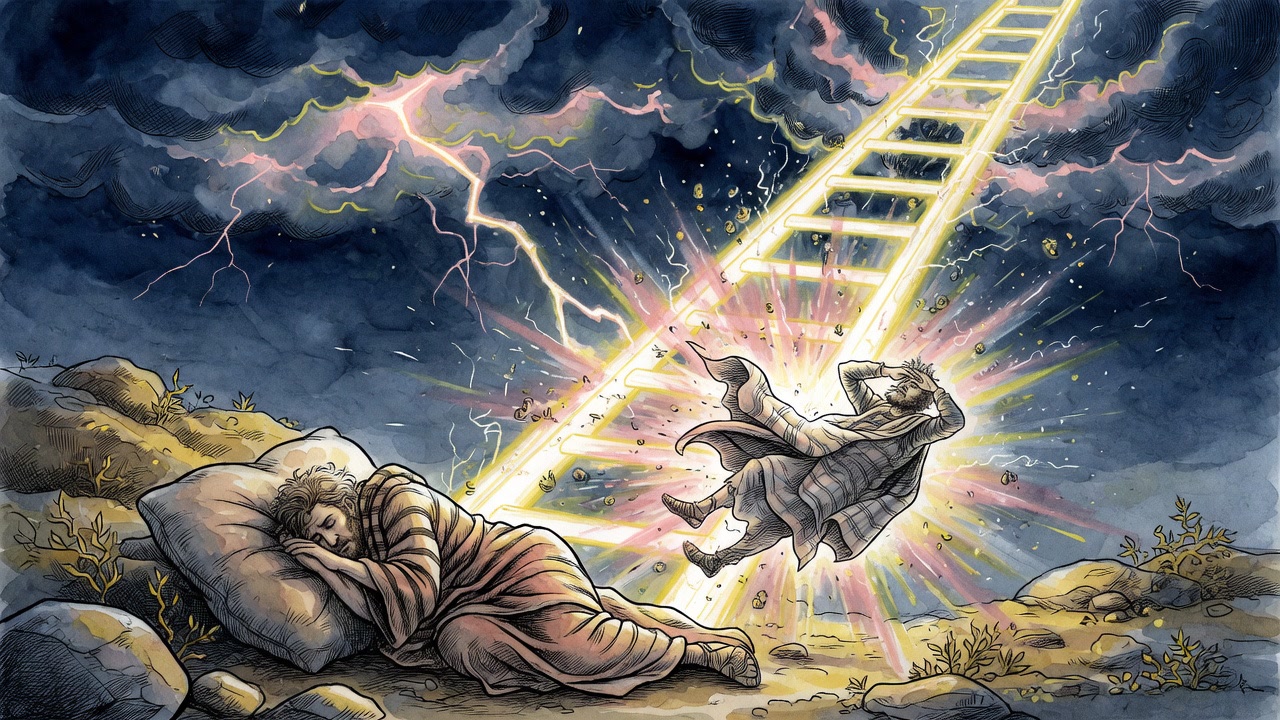
Ben Azzai was turning over books in Jerusalem when he found a scroll no one had cataloged, a roll of hidden teachings tucked among the permitted ones. He unrolled it and read, and one line stopped his hand. "Manasseh killed Isaiah." He read it again. The grandfather of the prophets, the king who could recite fifty-two readings of the book of Leviticus from memory, had put the greatest of the prophets to death. The scroll did not soften it. It only recorded that a court had sat, and a verdict had come down, and a prophet had died inside a tree.
 Click for full size
The King Who Knew Everything and Worshipped Stones
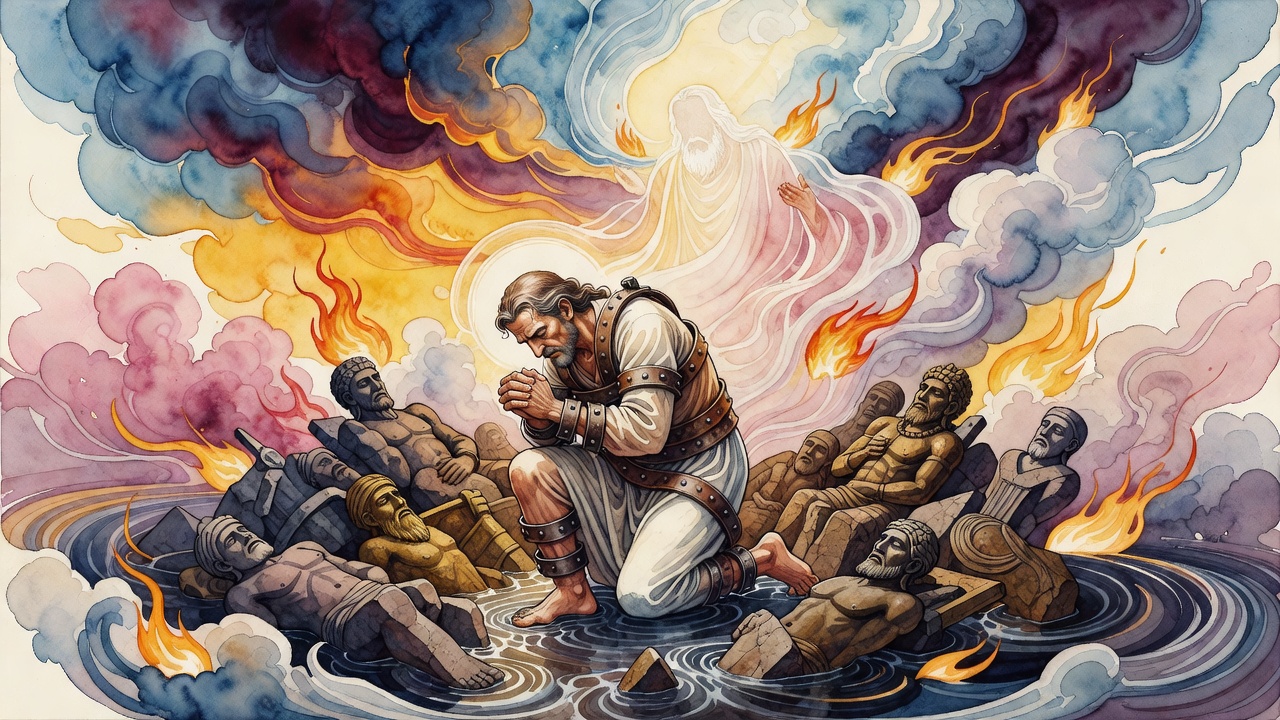
Manasseh did not come to his crimes ignorant. He was the most learned man in his kingdom. He knew the slaughter of the offerings, the laws of leprous houses, the purities and the impurities, every chapter of the priestly code parsed and reparsed until he could open any one of fifty-two readings without a scroll before him. And he bowed to idols. He set carved things in the courts of the house of God and burned his own learning behind smoke that rose to wood and stone.
So when Isaiah spoke in the streets, the king did not meet him as an ignorant man meets a prophet. He met him as a scholar who had decided that scholarship was a weapon. He had read everything Isaiah had said. He had read everything Moses had said. And he had found, he believed, the seams where the two did not agree.
Three Verses Laid Like Charges
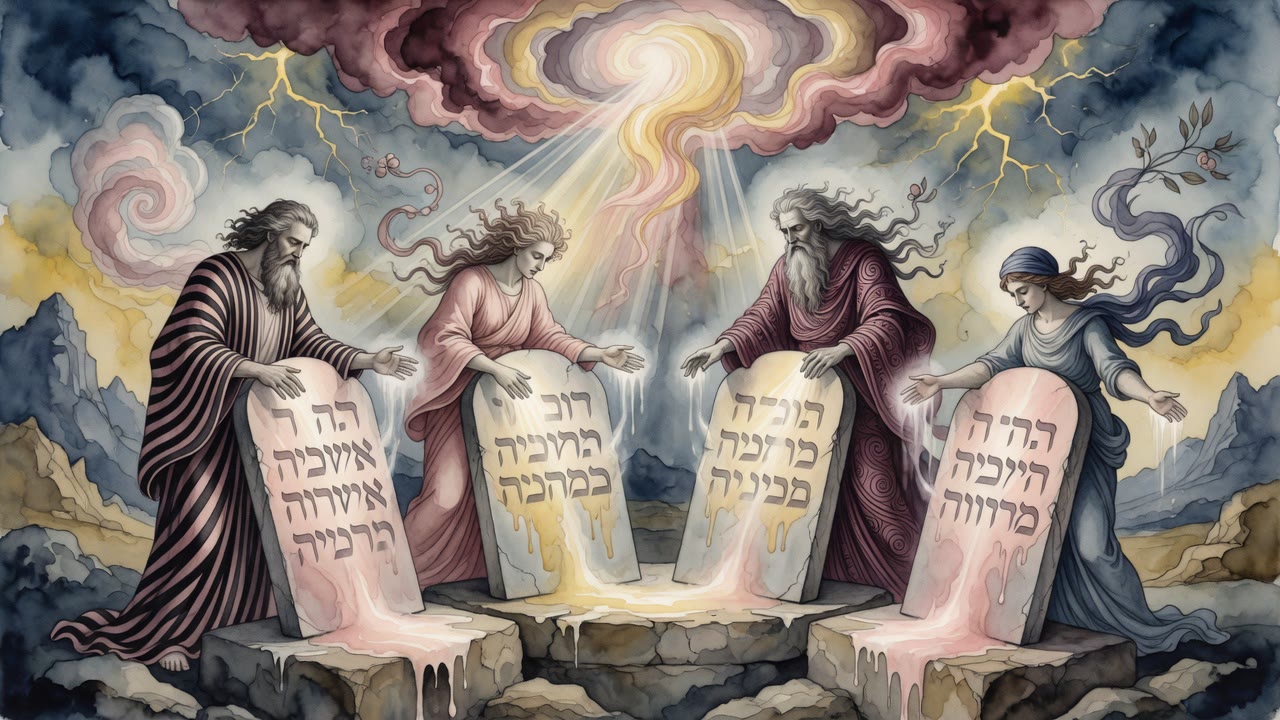
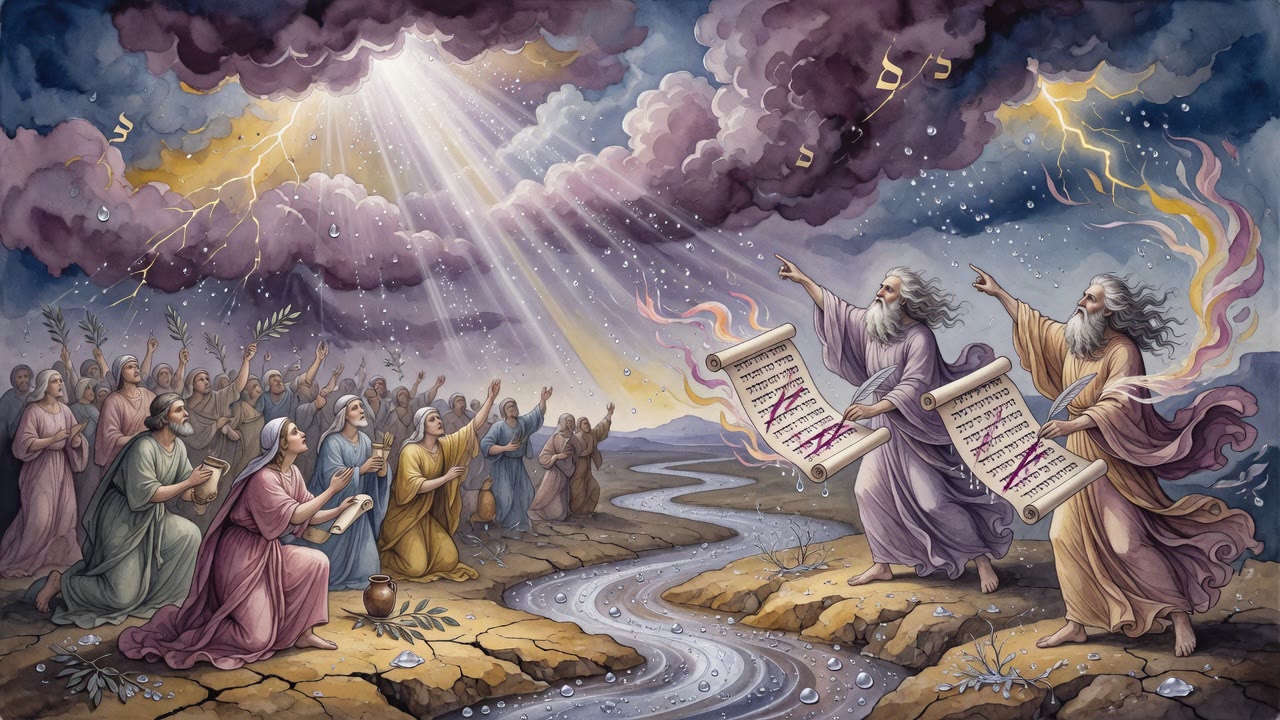
They brought Isaiah before the king, and Manasseh did not rage. He prosecuted. "Your teacher Moses said, For no man shall see Me and live," he began, "and you said, And I saw the LORD. Your teacher Moses said that the LORD is near whenever we call upon Him, and you said, Seek the LORD while He may be found, as though there are hours when He cannot be found. Your teacher Moses said, The number of your days I will fulfill, a fixed measure, and you said to my own father Hezekiah, I will add fifteen years to your days, as though the measure could be moved." Three verses, set down like three charges. The king who knew the whole law had built a trial out of contradictions, and he waited for the prophet to answer.
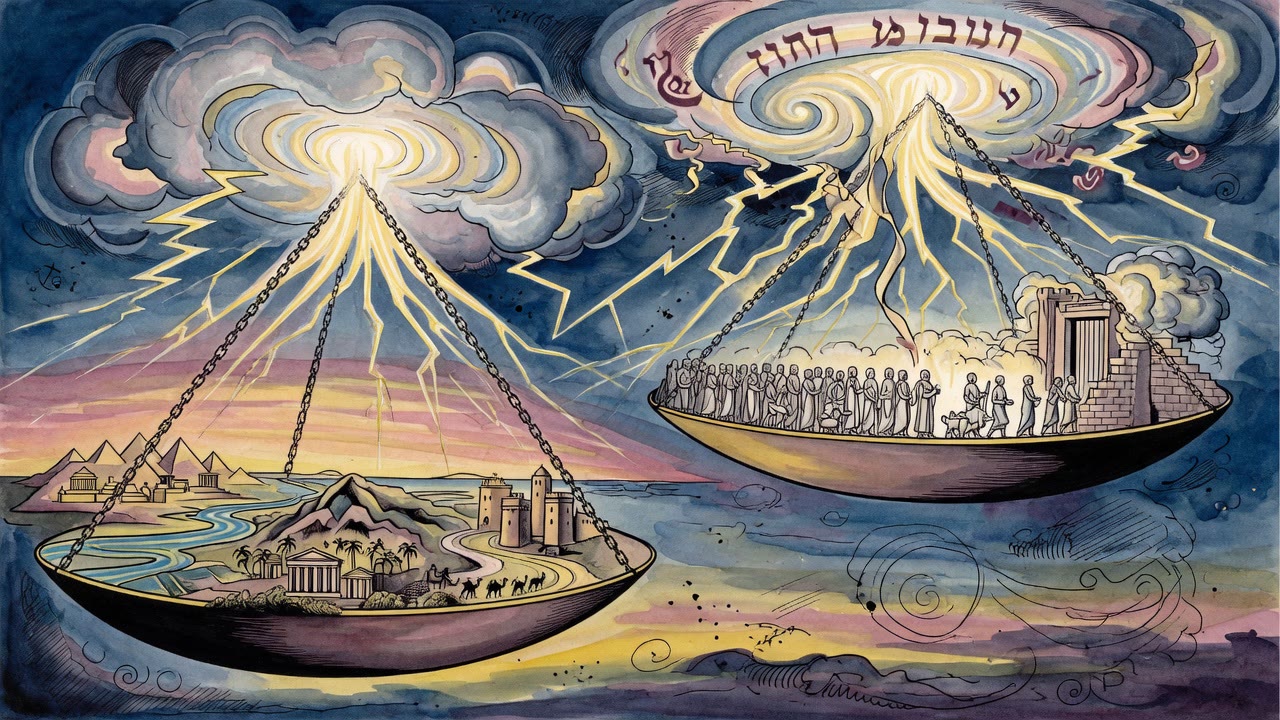
There were answers. Isaiah knew them. The prophets gazed at God through a dim glass and Moses alone through a clear one, so both could be true at once. The nearness Moses promised was for the whole people, and the seeking Isaiah urged was for the lone man, in the ten days that stand between the new year and the day of atonement. The fixed days were a man's portion, and the fifteen given to Hezekiah had been drawn from his own merit, not added from nowhere. Each charge had its reconciliation. None of it left the prophet's mouth.
The Silence That Saved a King From a Worse Sin
Isaiah looked at the king and made a calculation that cost him his life. "I know he will not accept it from me," he said within himself. "And if I answer him and he refuses the answer, I will have made him a willful sinner, a man who heard the truth and chose against it with his eyes open." A man who sins in ignorance is one thing. A man who is handed the reconciliation of every verse and still kills the prophet is another, and Isaiah would not be the one to push the king across that line. So he held the answers behind his teeth and let the charges stand unrefuted, knowing how it would look, knowing what the court would do with a defendant who would not defend himself.
Swallowed Into the Cedar
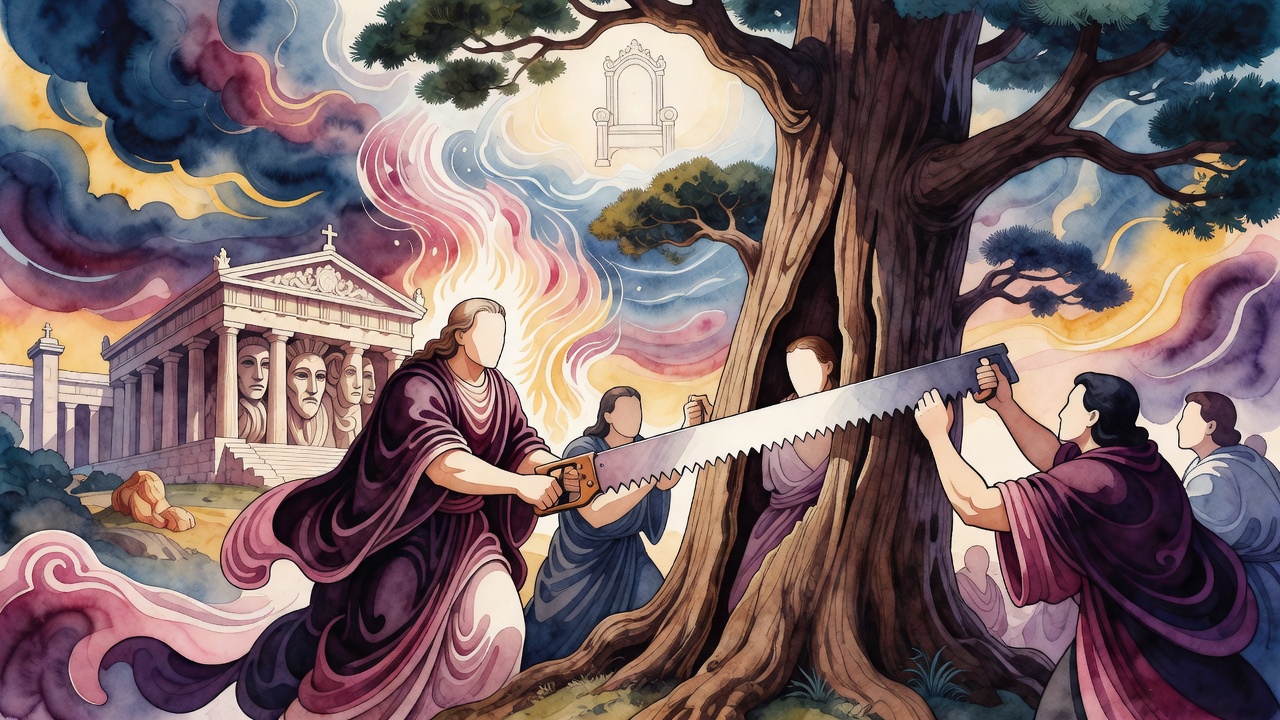
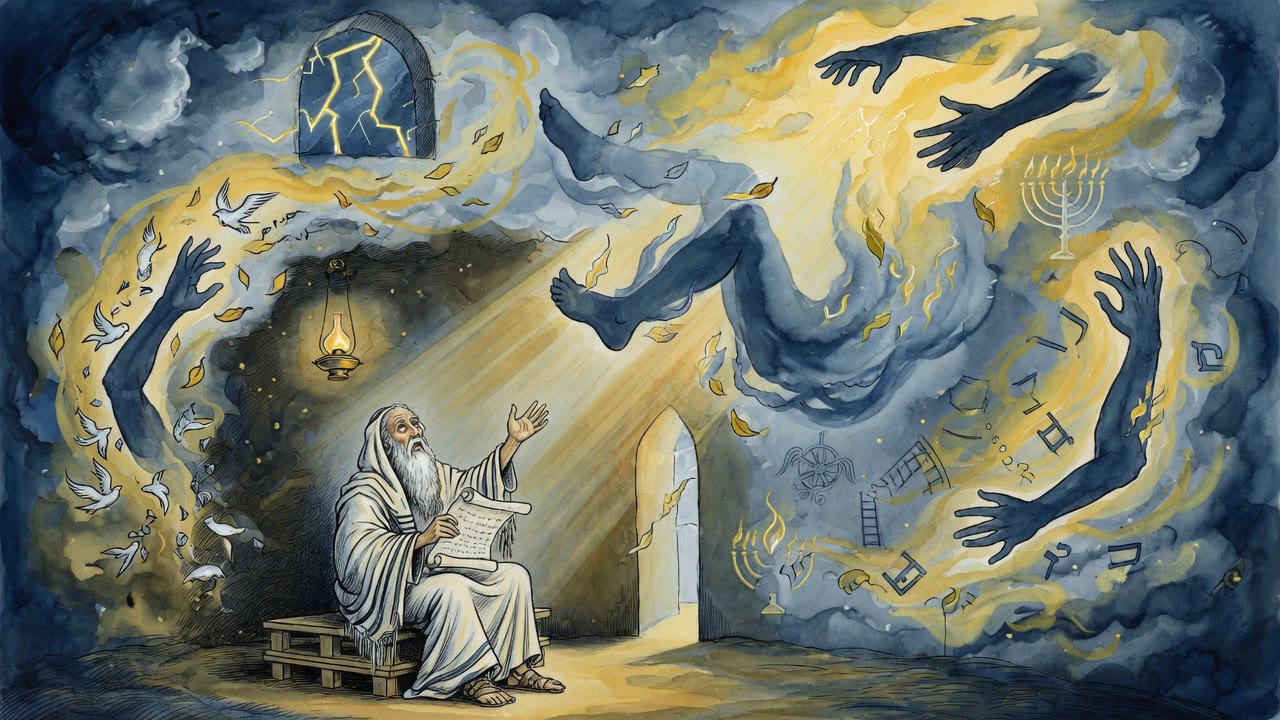
When the soldiers moved, Isaiah spoke a name of God, and the trunk of a cedar opened and took him in. The wood closed around him like a fist. They could not reach him, so they brought the tree itself before the king, and the saw was set against the bark. The teeth went in slowly. They cut through the cedar and they cut through the prophet hidden in it, and the work went on until the saw reached his mouth. At his mouth, he died. For long ago he had stood before the throne of God and said of himself, I dwell among a people of unclean lips, and the lips that had spoken that word were the place where the cutting ended his life.
The King Who Came Back in a Dream to Defend Himself
Generations later, in Babylonia, a master named Rab Ashi told his students he would lecture the next day on "our colleague Manasseh," as though the idolater-king were a peer to be discussed across a study table. That night Manasseh came to him in a dream and put a question of law before him, a fine point of how bread is broken for blessing, and Ashi could not answer it. The dead king answered it for him. Astonished, Ashi asked the only thing worth asking. "If you were so learned, why did you serve idols?" And Manasseh answered without apology. "Had you lived in my time, you would have caught the hem of my garment and run after me." The pull of the carved things, he was saying, had been a current strong enough to take even a man who had memorized the whole priestly code, even a man like Ashi. He had drowned in it with all his learning intact, and he had taken a prophet down with him rather than hear three verses reconciled.
← All myths