Job Was a King of Edom Who Chose His Own Suffering
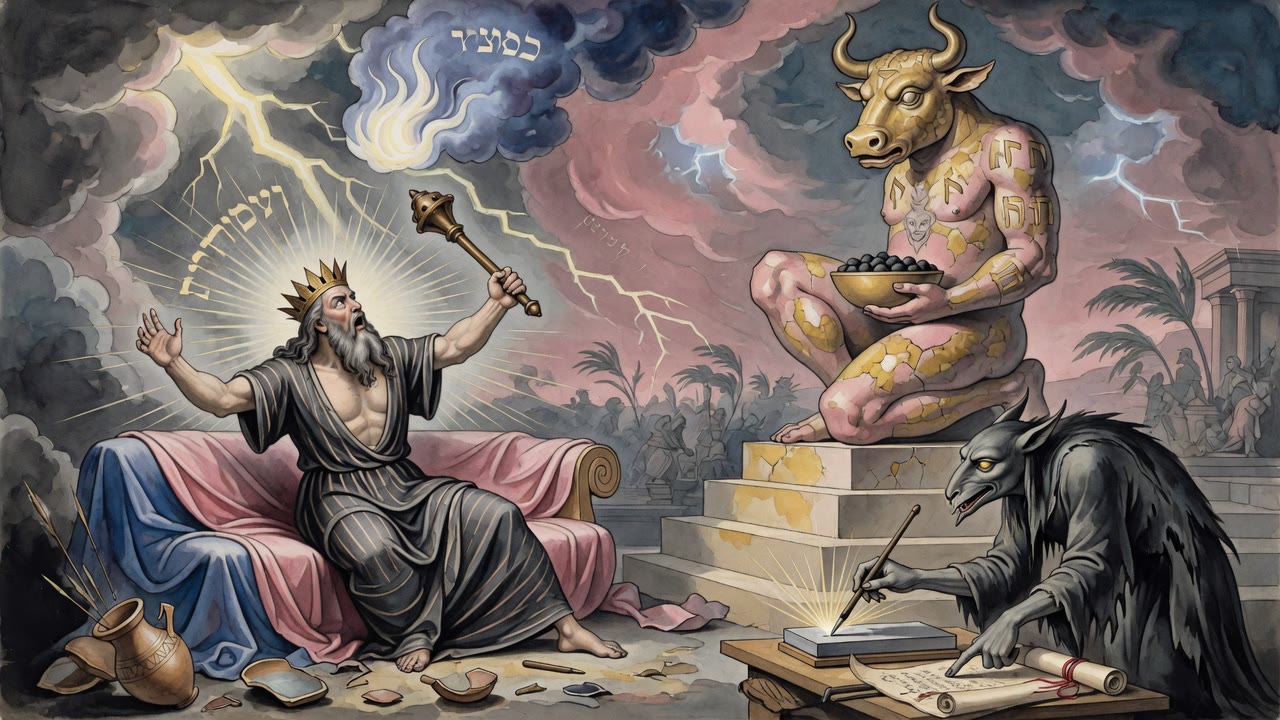
An archangel woke King Jobab in the dark and told him the idol his people fed was the tempter's handiwork. He took fifty men up and broke it.
Table of Contents
 Click for full size
The Upright King of a Crooked Land
The land was called Uz, which is to say counsel, and the counsel hatched there was against the One who made it. Idols stood on its high places. Sacrifices smoked on its altars. Travelers called the country Edom, the place where wicked plans were laid, and over this crooked kingdom sat a king named Jobab, whom later ages would call Job. He was upright in a country that was not. His subjects bowed to a figure of stone, their king watched them bow, and a question turned in him that he could not put down.
Was the thing on the high place truly the maker of heaven and earth? The people fed it, sang to it, laid their firstborn troubles at its feet. Job believed nothing of it, yet he ruled men who staked their whole lives on it, and he did not know how a man was meant to tell the true God from the handsome lie his people loved.
The Voice That Named the Idol
One night the question was answered for him. A voice spoke his name into the dark, his old name, Jobab, and told him to rise. "Arise," it said, "and I will tell thee who he is whom thou desirest to know. This one to whom the people offer sacrifices is not God. He is the handiwork of the tempter, wherewith he deceives men." The voice named its rank, an archangel sent from the throne, and it did not flatter the king. It warned him. If he raised his hand against the idol, the ancient Accuser would rise against him, and the king would suffer for the deed past all measure.
But the warning came wrapped in a promise. Steadfastness would turn his troubles into joys. His name would be honored while the generations lasted. And he would have a portion in the resurrection of the dead, a share in the life that does not end. The king weighed an idol against his own body, and chose. "Out of love of God," he said, "I am ready to endure all things unto the day of my death. I will shrink back from naught."
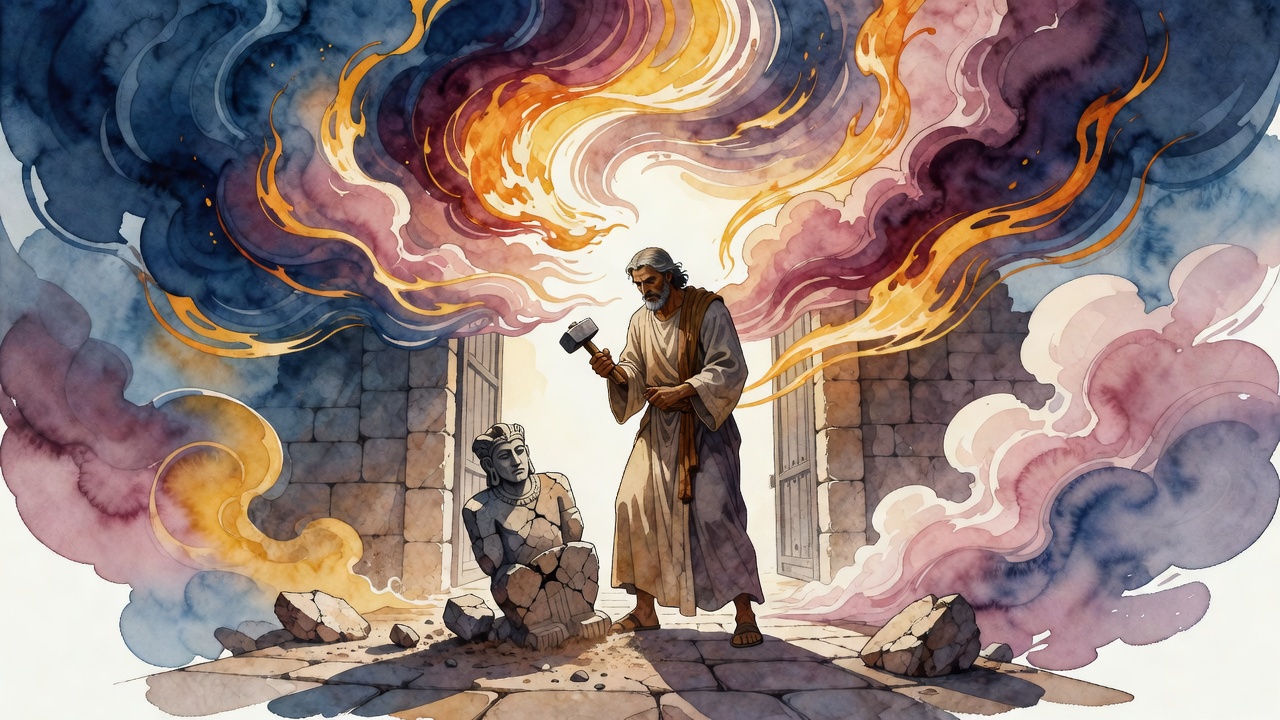
He did not wait for morning to soften the resolve. He took fifty men, went up to the idol, and broke it. No bargaining, no quiet hand in the dark that could be denied later. The king of the land tore down the god of the land in the open, and the ground was cleared for the one who had waited for exactly this.
The Beggar at the Gate
Job was no fool about what he had loosed. He knew the Accuser would come, and that such an adversary does not knock as himself. So he set guards with a single instruction, admit no one, and withdrew into the inner chamber to wait behind his own walls.
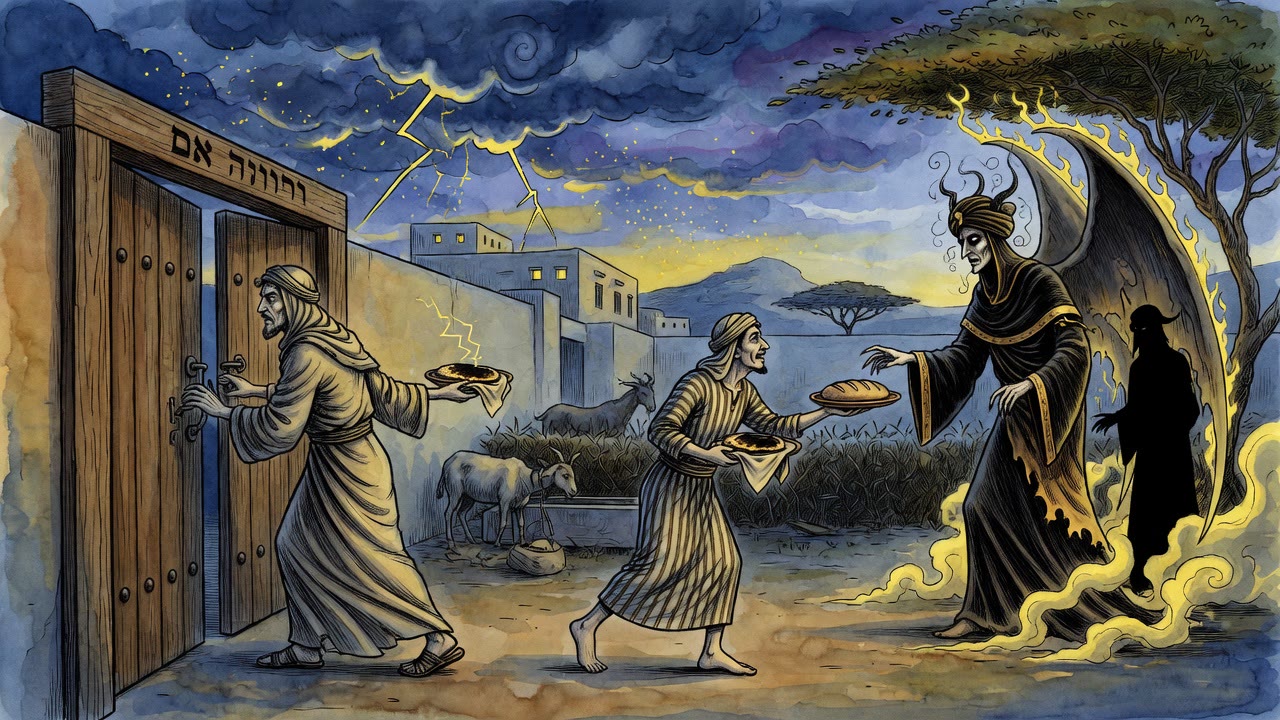
The visitor came almost at once, a beggar leaning on the gate, asking to be let in to the king. The guard refused him as he had been told. The beggar changed his plea: not entry then, only bread, a single piece carried out to a hungry man at the door. Inside his chamber Job knew at the first word who stood at his gate, and sent his answer out plain. "Do not expect to eat of my bread," he said, "for it is prohibited unto thee." Then, to drive the refusal home, he had a piece of bread burned black and ordered it carried out to the beggar.
The servant could not do it. Ashamed to put a scorched crust in a poor man's hand, he hid the burnt bread and slipped the beggar a good piece instead. But the one at the gate was not deceived by mercy. He named the swap to the servant's face, and the shaking guard went back, fetched the burnt bread, and laid it where his king had meant it to go, repeating the king's own words over it.
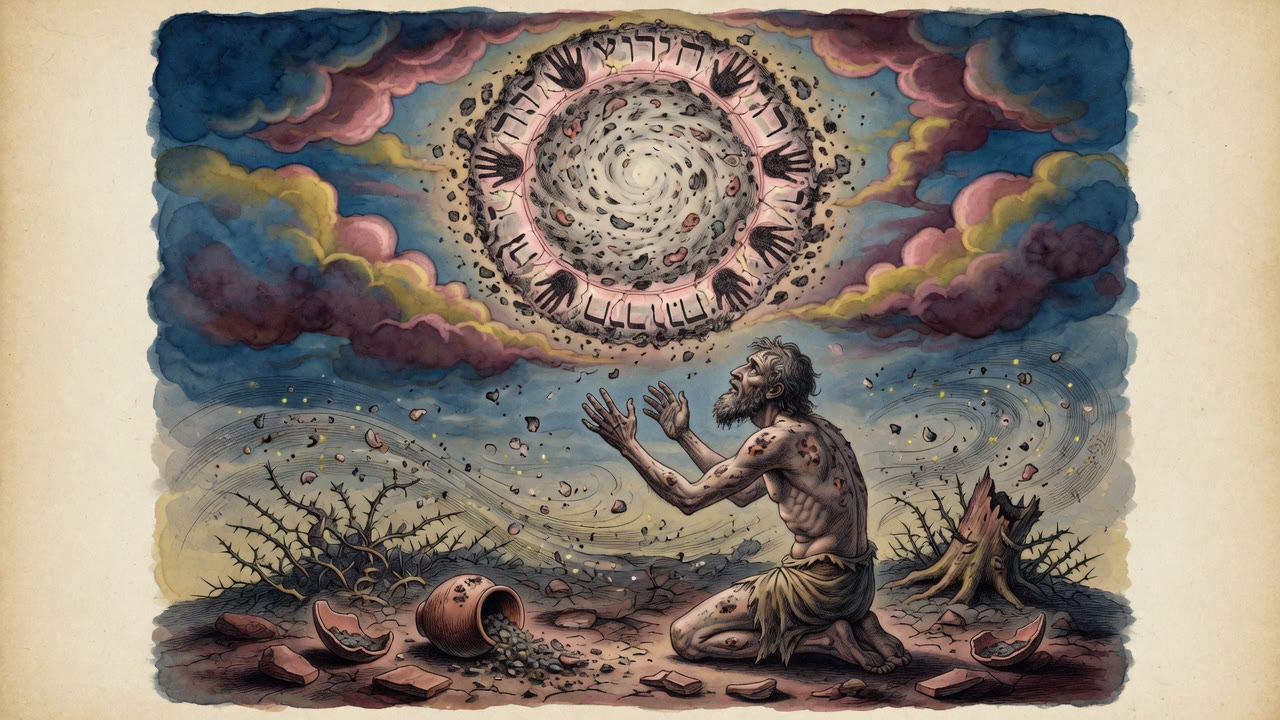
The beggar took the black bread and gave his blessing in kind. "As the bread is burnt," he said, "so I will disfigure thy body." It reached Job in his chamber, every word of it. The king did not flinch. "Do as thou desirest," he said, "and execute thy plan. As for me, I am ready to suffer whatever thou bringest down upon me." The bargain the archangel had named was struck, not in heaven but at a palace door, over a loaf the wrong color.
The Body Given Over and the Belt That Held
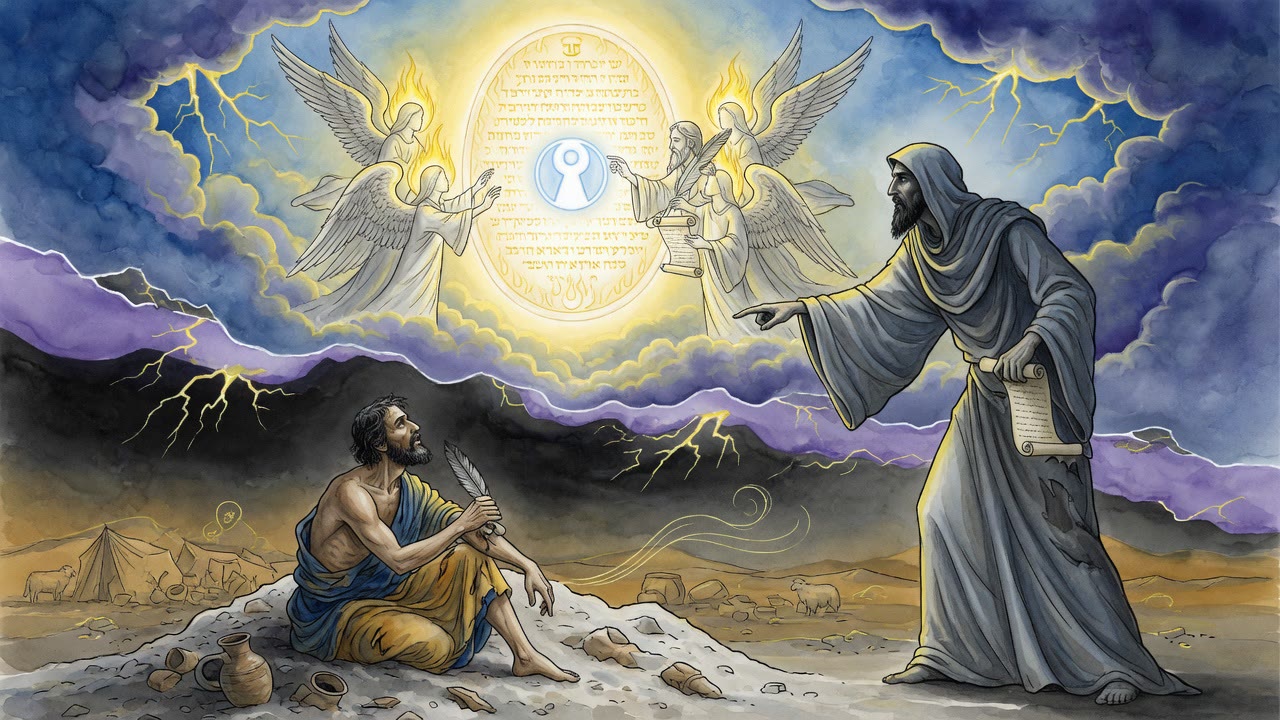
What the beggar promised, he delivered. The disfigurement came. The kingdom that had been Job's became a thing remembered, and the man who had ruled Edom from a throne came at last to lie sick upon a bed, the boast of the gate tested down to the bone. But a mercy was hidden in the suffering. For three days Job lay sick and did not truly suffer, because a celestial girdle had been bound about him, a belt out of heaven that made his body proof against the pain. He had given himself over to be hurt, and the hurt was real, and still the One he had chosen kept a hand on the worst of it.
Music for the Angels at the Door
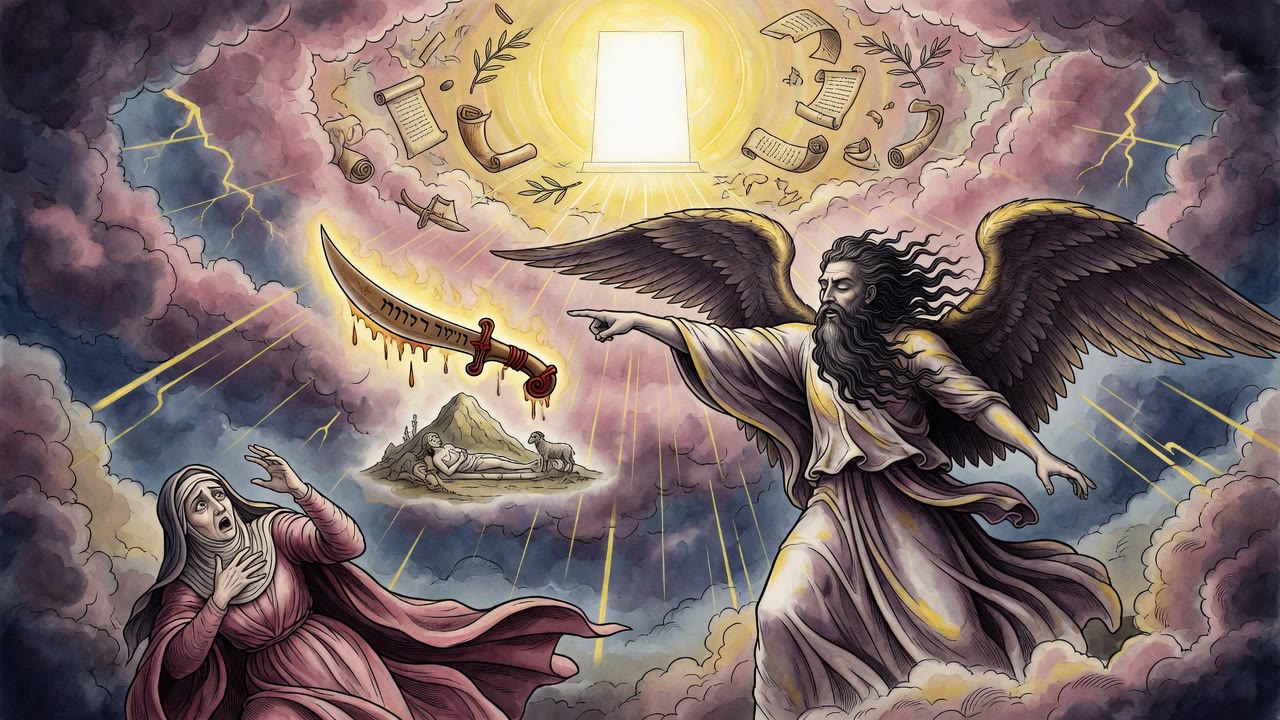
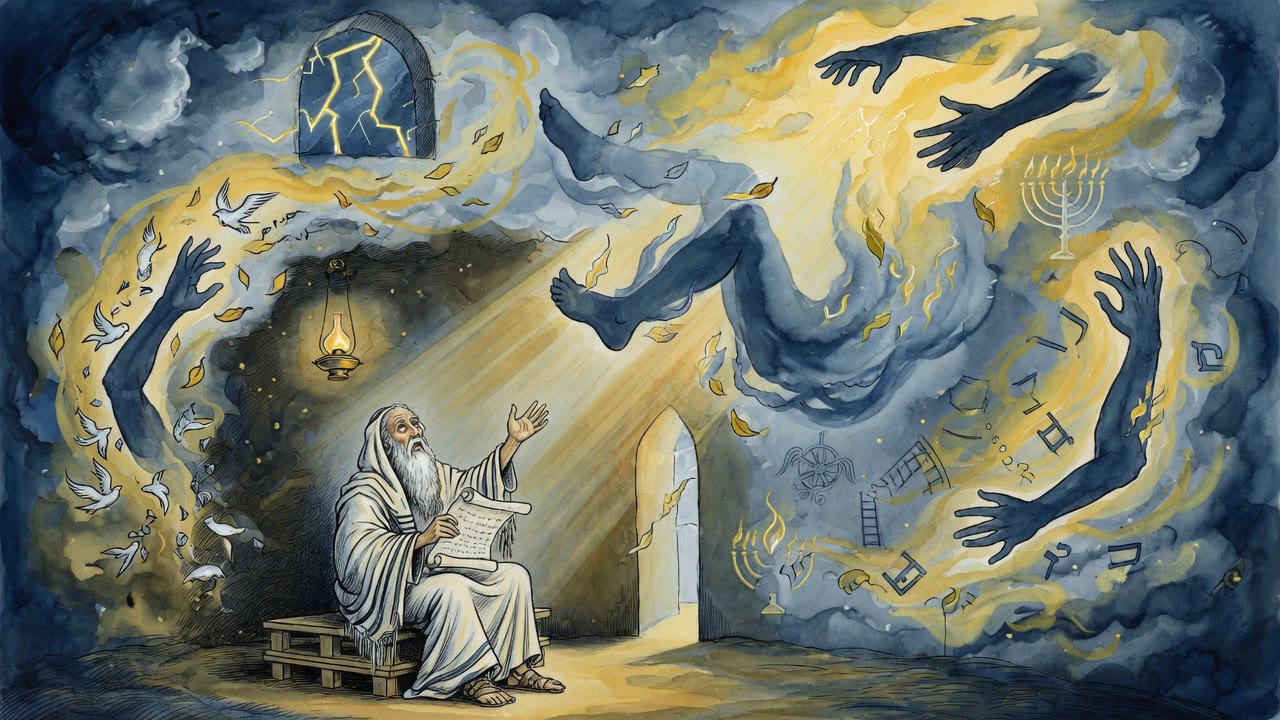
On the fourth day he saw them coming. Angels, descending, sent for his soul. He did not flee and he did not bargain. He rose from the bed instead, called his three daughters, and put an instrument into each of their hands. To the eldest, Jemimah, whose name is Day, he gave a cithern of strings. To the second, Keziah, whose name is Perfume, a censer for the burning of incense. To the youngest, Amaltheas, whose name is Horn, a cymbal. Welcome them, he told the three. Meet what is coming with music.
So the daughters stood and played and sang their praises in the holy tongue, in Hebrew, over the dying of their father, and the room that should have held only grief held a song. Then came the last arrival. He who sits in the great chariot appeared above the bed, bent and kissed Job, and rode away eastward bearing the king's soul with him. Only the three daughters saw it go. No crowd, no court, no kingdom looking on. A man who had once ruled Edom passed out of the world to the sound of his own children singing, the whole bargain of the gate at last paid out as joy.
← All myths