Jair Burned the Faithful and Fire Answered From Heaven
An idol, a furnace, and seven men who would not bow, until heaven sent the lord over fire to turn the tyrant's flames back on his own servants.
Table of Contents
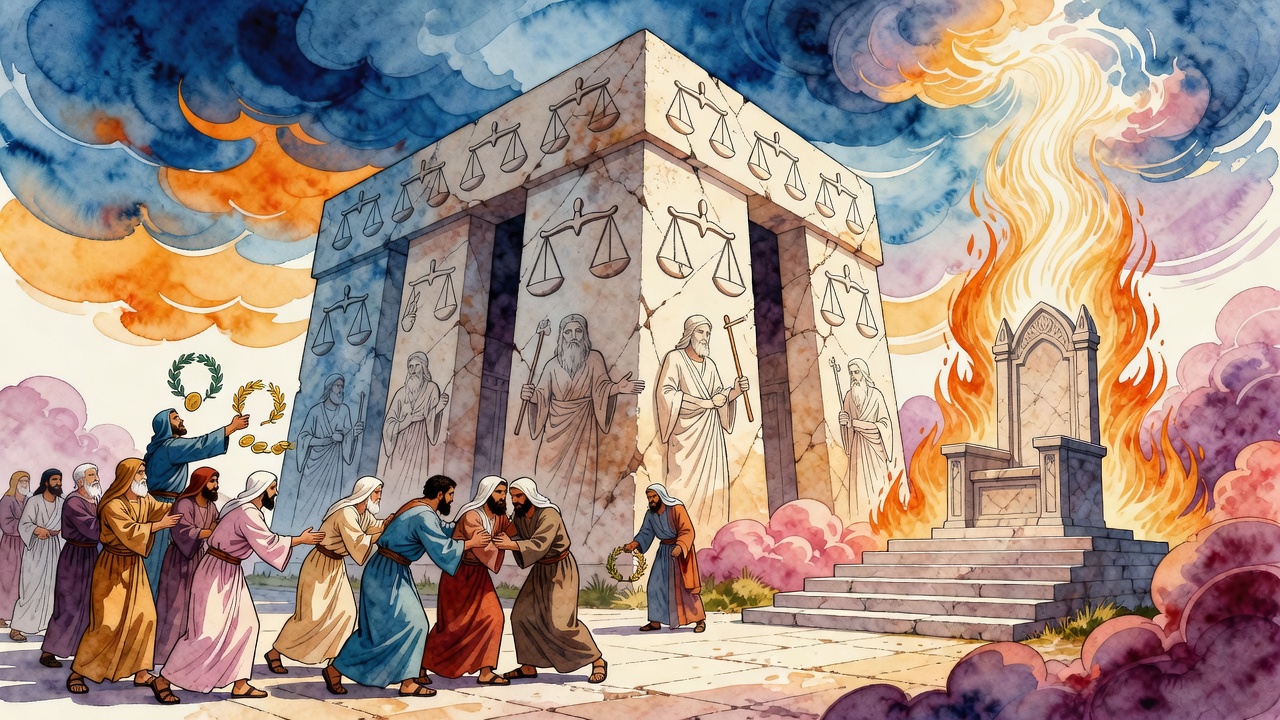
The altar went up overnight, and by morning a herald walked the streets of Israel with a single command. Bow to Baal, or burn. Jair had built the thing himself, stone on stone, and he meant to see every knee bend before it. He had taken the seat of a judge over God's people, and he was worse than Abimelech before him, a man who did not merely fall into wickedness but went hunting for it. He did not want quiet idolatry in the corners of the land. He wanted a public surrender. He wanted the whole nation to look at the new god and call it lord.
 Click for full size
Most of them did. Fear is an old persuader, and the furnace beside the altar was already stoked.
Seven Who Would Not Bend
Seven men stood where they were and did not move. Their names were Deuel, Abit Yisreel, Jekuthiel, Shalom, Ashur, Jehonadab, and Shemiel. They were not princes or warriors. They were men who remembered what they had been taught, and the memory was stronger than the herald's voice.
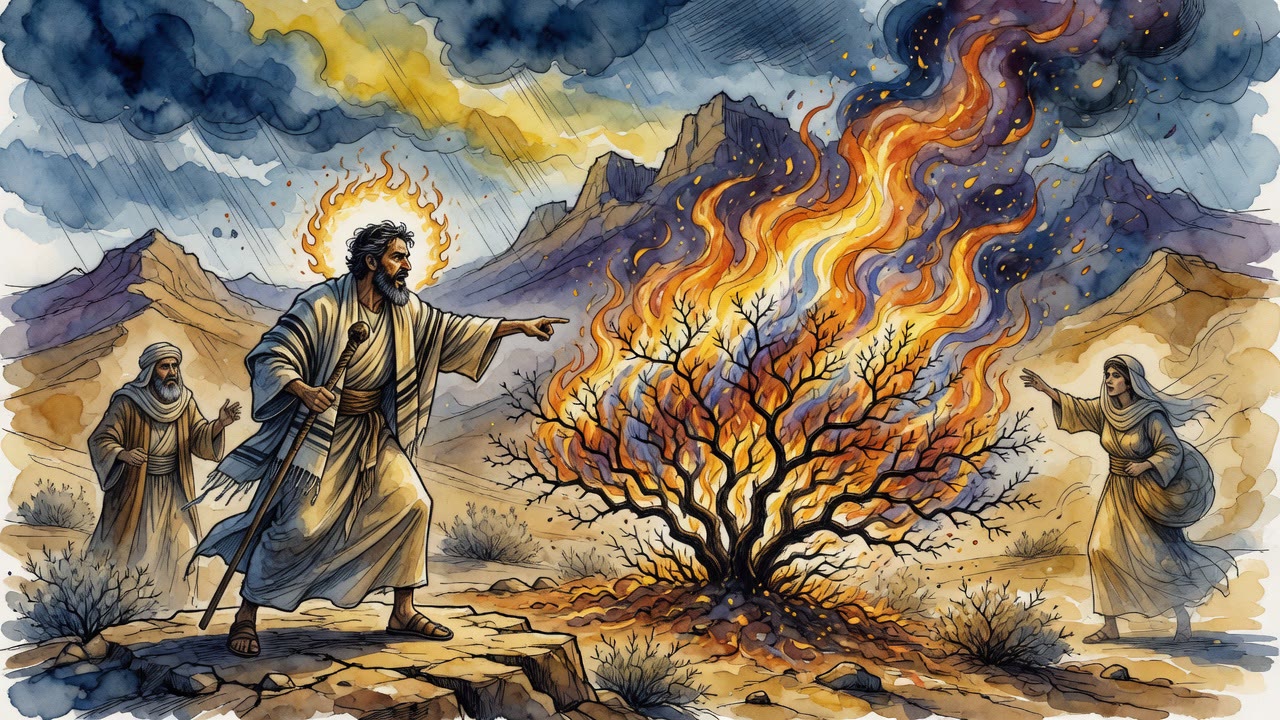
When Jair's soldiers dragged them to the altar, they answered with the charge of Deborah, the words she had pressed into the people before she died. "Take heed that your heart lead you not astray to the right or to the left," they said. "Day and night you shall devote yourselves to the study of the Torah." Then they turned the question back on the man who had built the altar. Why corrupt the people, they asked, by saying, "Baal is God, let us worship him"? And they threw down the only test that mattered. If Baal is truly a god, let him speak. Let the stone open its mouth and say one word in his own defense.
The stone said nothing. It never does. But the silence did not shame Jair. It enraged him.
The Furnace Jair Built
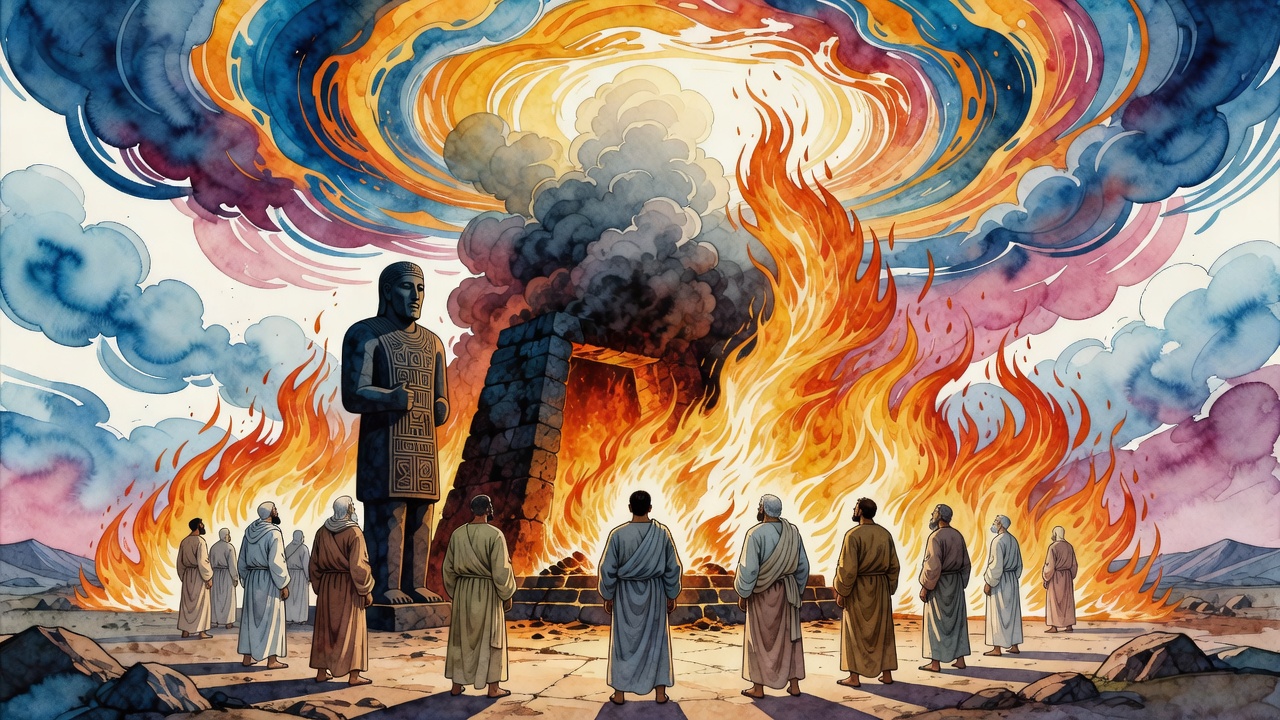
He ordered the seven burned alive. His servants moved to obey, hauling the men toward the flames he had prepared for exactly this, and the fire climbed higher as if it were hungry. There was nothing strange in it yet. Tyrants have always known how to feed a fire and how to make a crowd watch.
What the people did not know was that this had happened before, in another country, to another man. Long ago Nimrod had raised a furnace whose flames shot to the sky and ordered Abraham thrown in for refusing the king's gods. The princes who came near to do it were eaten by the fire instead, leaping flames that consumed the executioners and left their target standing. Abraham had walked out, and the warden who watched him survive declared God aloud and would not take it back even when the sword was raised over his neck. The furnace had a long memory. It had always known which side of the flame to burn.
The Lord Over Fire Comes Down
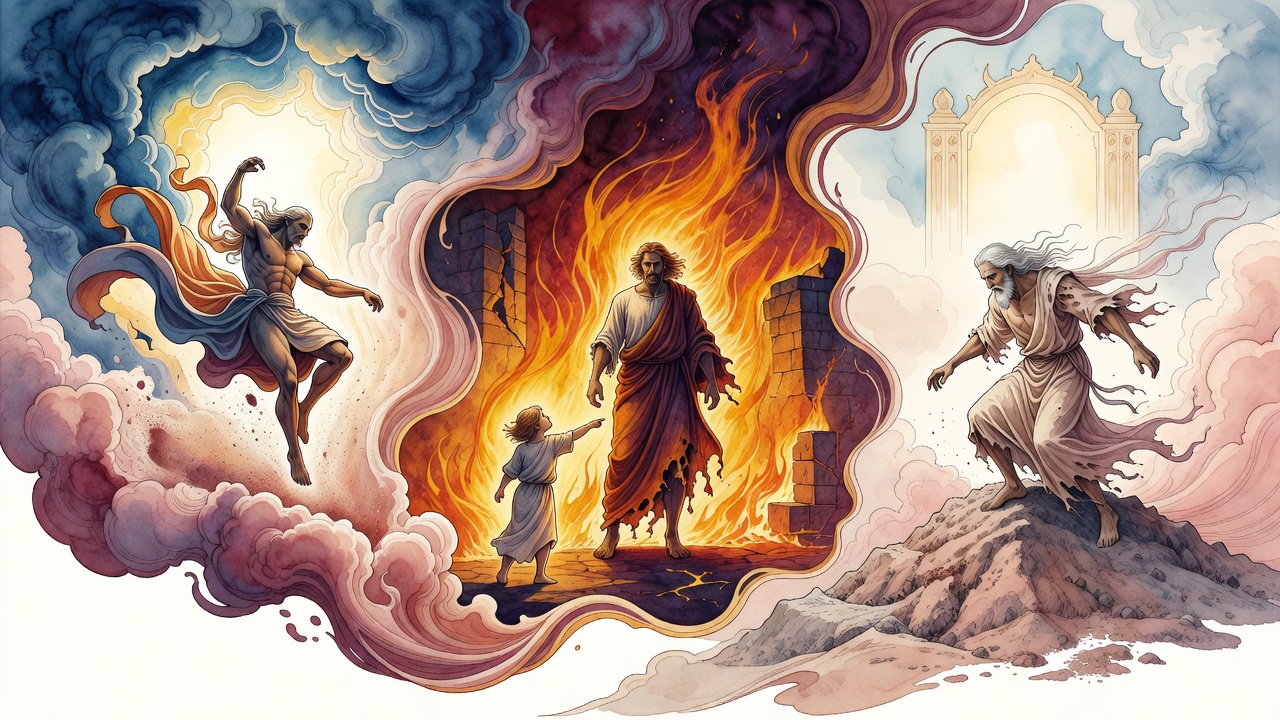
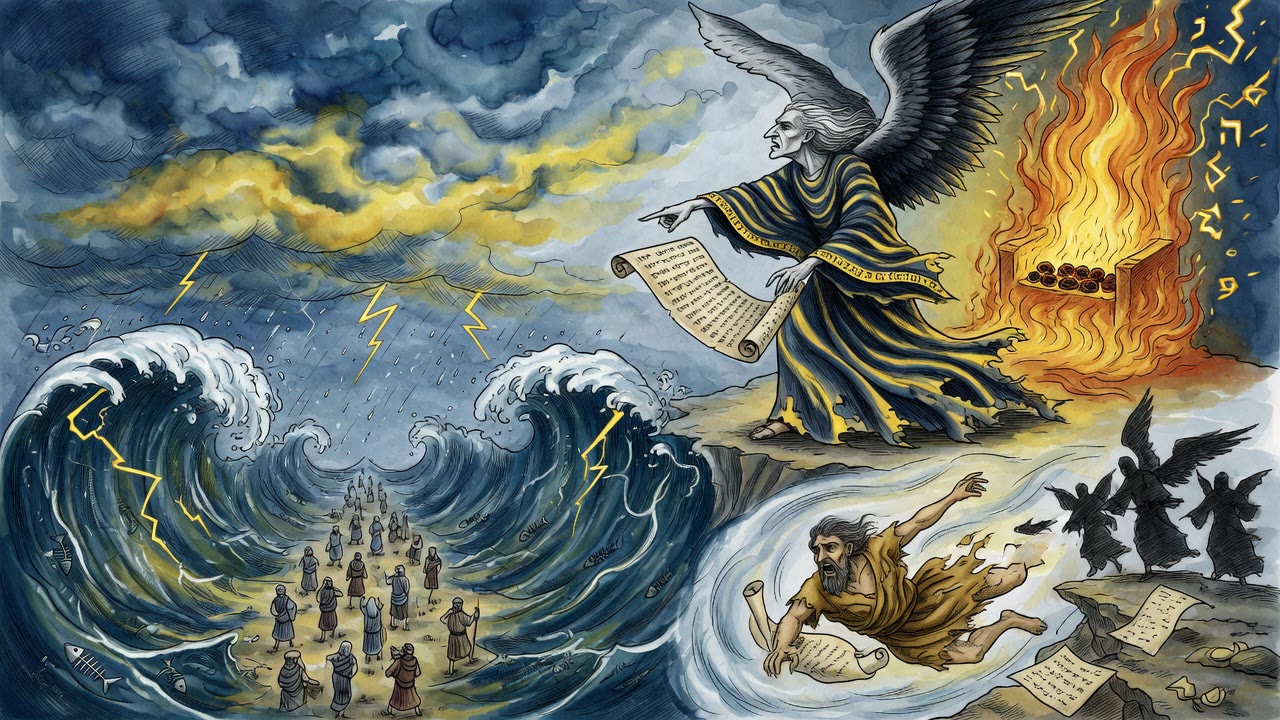
So when Jair's servants pushed the seven toward the blaze, heaven sent down the one who answers fire with fire. God dispatched the angel Nathaniel, the lord set over flame, and the angel did not argue and did not warn. He simply put the fire out.
The flames Jair had built collapsed into cold ash. And the fire that the angel carried, the living fire that comes from above, turned on the men who had lit the pyre. Jair's servants screamed where they stood. The blaze they had stoked to murder seven now swallowed them whole, and the seven it was meant for stood untouched in the middle of it, animated and freed by a fire that does not take the innocent.
Then Nathaniel did one more thing. He struck the eyes of everyone in that place, the whole watching crowd, blind in an instant, so that the seven walked out through the confusion and no hand could be raised against them. By the time sight returned, the faithful were gone and the executioners were ash.
The Sentence Spoken to the Judge
Jair did not run. Perhaps he did not understand yet what had answered him. So the angel came to him directly and let him hear the verdict in full.
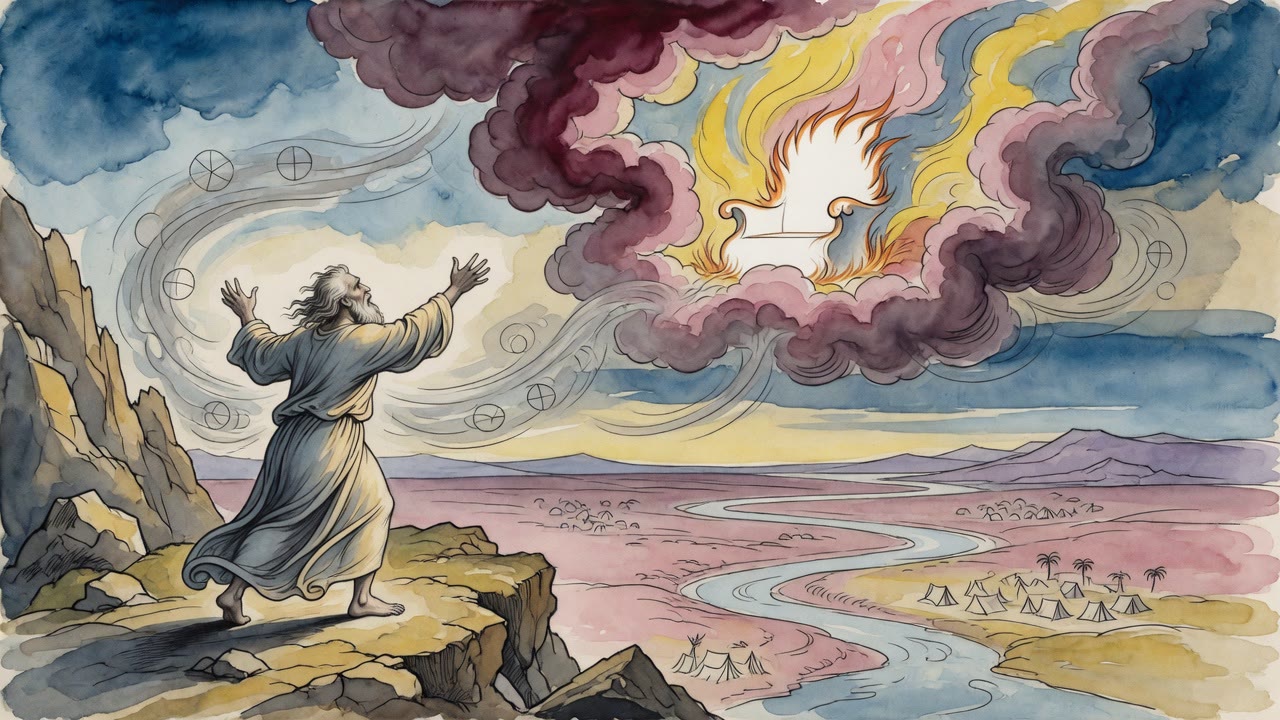
"I appointed you as prince over My people," Nathaniel told him, "and you broke My covenant, seduced My people, and sought to burn My servants with fire. But they were animated and freed by the living, the heavenly fire. As for you, you will die, and die by fire, a fire in which you will abide forever." The angel did not raise a hand. He did not need to. The sentence carried its own execution inside it.
And it came as it was spoken. The man who had built an altar to make others burn went into a fire that would not let him out, not after a year, not after an age. He had wanted the whole nation kneeling before stone. He ended alone inside a flame that never cooled, while the seven who had refused him studied Torah in the daylight he could no longer reach.
← All myths