Satan Fell to Earth and Abraham Walked Out of Nimrod's Furnace
Abraham was twenty days old when he walked out of the cave, and his own mother did not know him. Nimrod heard about it and was afraid.
Table of Contents
 Click for full size
Twelve Wings and a Naming Contest
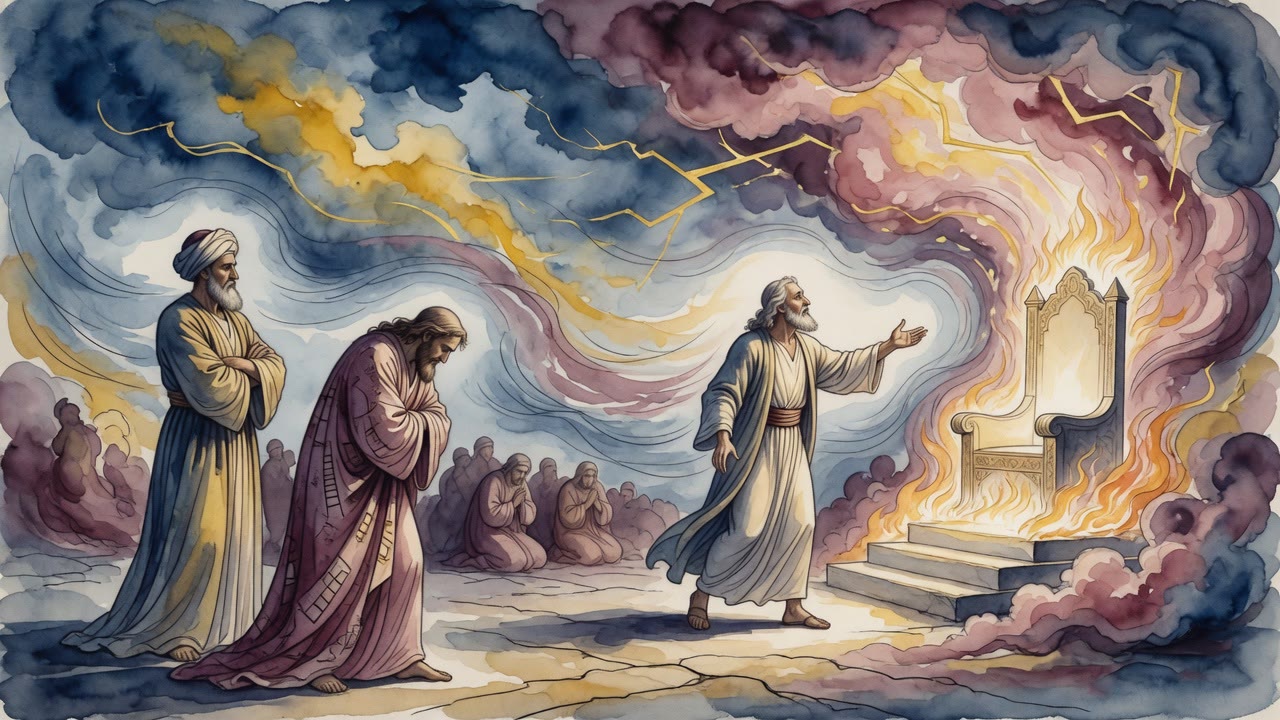
The angels were told to bow. Adam had just been given a soul, the smell of wet clay was still on him, and the whole heavenly host was ordered down in front of him. Satan had twelve wings where every other angel had six, and he stayed standing. "You made us out of the splendor of the Shechinah (שכינה), the presence of God," he said, "and now you tell us to throw ourselves down in front of a thing you scraped out of the ground."
God answered that the thing scraped out of the ground had more understanding in it than he did, and Satan demanded a contest. The animals were walked past them both. An ox, a cow, a camel, a donkey, and Satan had no name for any of them. Then Adam was asked, and Adam gave every creature the name it already carried in heaven.
Michael was already flat on his face. He turned on the screaming angel beside him: bow to the image of God, or God will break out in anger against you. Satan said he would put his own throne above the stars instead, and he was thrown out of heaven that hour, down onto the earth, where the man of dust lived.
The Baby Who Walked Out of the Cave
In a valley outside a city ruled by Nimrod, a woman left a newborn on the floor of a cave and walked home. The king had already killed seventy thousand infant boys. She had gone out of the city to give birth so that this one would not be counted, and she did not come back for twenty days.
The baby cried in the dark until the angel Gabriel came down and made milk run out of the little finger of the child's own right hand. He drank from himself until he was ten days old. Then he stood up and walked out along the edge of the valley.
Night came and the stars came out with it. "These are the gods," he said. Then dawn wiped them off the sky, and he would not worship things that could be erased. The sun rose, and set. The moon came up and went dark. "There is One who sets all of them moving," he said, and he was still working it out aloud when Gabriel walked him to a spring to wash.
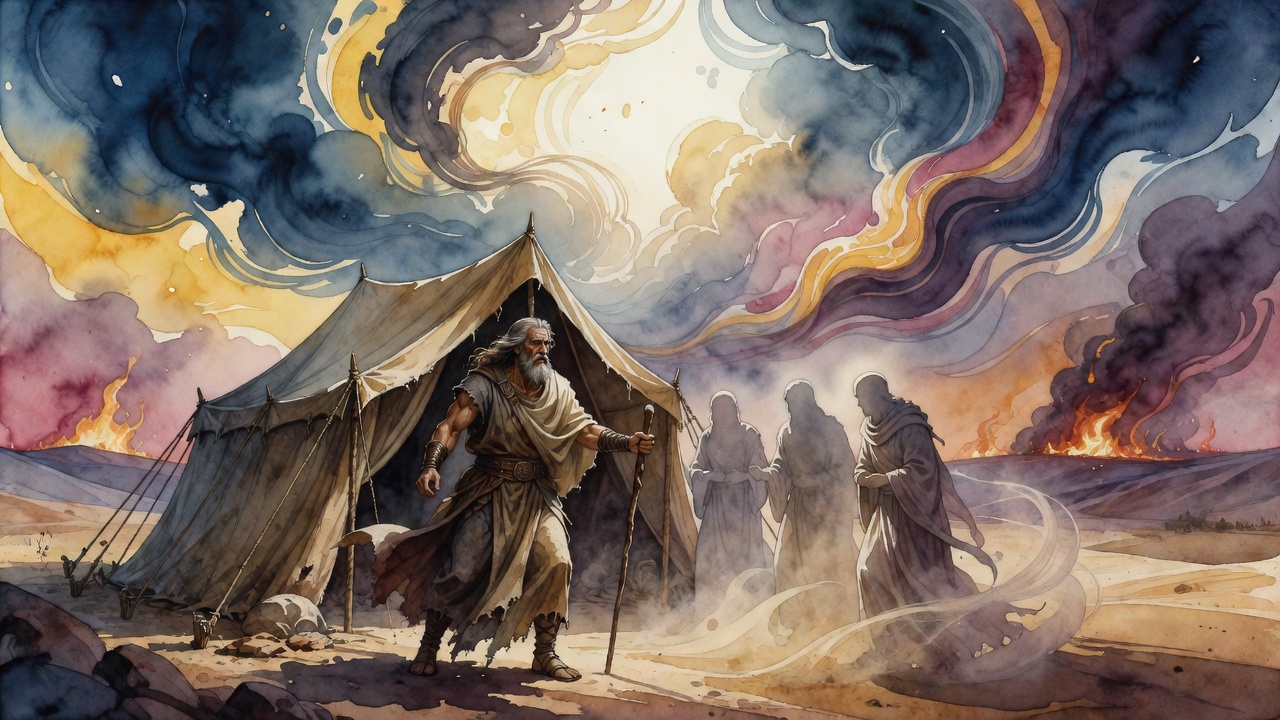
His mother came out to the cave expecting bones. She found a large boy at the edge of the valley and did not know him. She told him she was looking for her son. He asked how old the child was. Twenty days, she said. "Is there a woman in the world," he said, "who abandons her newborn in the desert and comes looking for him after twenty days?" She said God might yet turn out to be merciful. He told her he was the son she had come for.
She looked at him. "My son, how you have grown. Twenty days old, and you already walk, and your mouth already talks."
Then she asked whether there was any god besides Nimrod. Abraham said yes, and told her to go back to the city and say so at the palace.
Nimrod's Court Hears About a Child
Terah was a prince in the king's household, and he went and lay flat on the floor of the throne room. Nobody who lay down in front of Nimrod could lift his head again until Nimrod gave the word. When the word came, Terah reported what his wife had found in the valley.
Fear went through the king. His counselors were unimpressed. He had rulers of thousands, rulers of hundreds, rulers of fifties, rulers of tens. Send the smallest of them to pick the boy up and put him in a cell.
"Show me another baby of twenty days," Nimrod said, "walking on his feet, talking with his mouth, announcing that there is a God in heaven who sees and is not seen." The room went quiet.
A man in a black silk robe came in and lay down in front of the throne. He asked why a king should be terrified of a small child, and he had the answer ready before anyone asked for it. Open the arsenal. Arm the princes, the chiefs, the governors, every fighting man in the kingdom, and send them to bring the boy in.
Nimrod liked it. The army went. Abraham watched it come across the valley and cried, and God packed the air between the boy and the soldiers with heavy cloud until they turned and ran. They came back asking to leave the country entirely. The king paid them, and left with them, and the court moved to Babylon.
A Year in the Dark With No Bread
The reprieve did not hold. The king's anger came back around to Abraham and ended in an order: prison, with no bread and no water for the prisoner. Gabriel moved into the cell and stayed a year, and a spring of fresh water came up out of the floor.
At the end of the year the great men of the realm brought the king a proposal. Burn him where everyone can watch, and the people will believe in Nimrod forever. Every subject in every province, man and woman, young and old, was ordered to carry wood, and they carried it for forty days. The pile was lit, and the flames went up so high that the crowd backed away from its own bonfire.
The warden sent to fetch the prisoner pointed out that a man kept a year without food or water is a corpse. Nimrod told him to call the name anyway. If it answered, drag it to the pyre. If not, bury the remains and wipe the name out.
"Abraham, are you alive?"
"I am living."
The warden asked who had been feeding him, and got an answer about the God of all gods, who is in every place at once, who sees and cannot be seen, and who is the God of Nimrod as much as anyone else's. The warden said so out loud in front of the king. Nimrod told him to take it back or die. He refused, and when the hangman set a sword against his throat and pushed, the blade broke.
The Catapult in Front of the Furnace
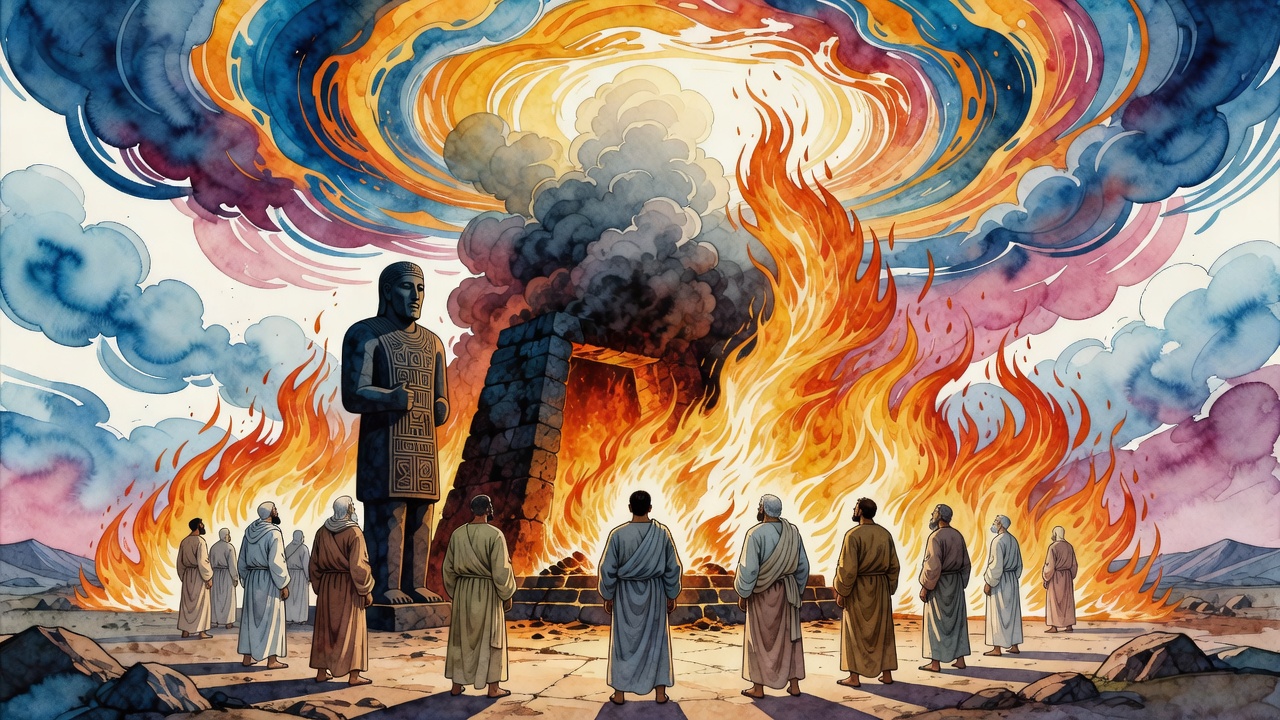
A prince was sent to throw Abraham in. The flame came out of the furnace mouth and ate him where he stood. They sent another, and another. Every man who got a hand on Abraham burned, and the dead piled up around the fire while the prisoner stood untouched.
The man in the black silk robe came back with a solution that required nobody to walk up to the flames. A catapult. He built it himself, and they tested it three times with stones to be certain of the range. Then they tied Abraham's hand and foot and set him in the cup.
Satan came close and put a bargain in his ear: bow to Nimrod, believe in Nimrod, and walk away from all of this. Abraham told him God should rebuke him, and he went. Then his mother came and asked for the same thing in gentler words. "Water can put out the fire of Nimrod," he told her. "The fire of God does not go out, and no water touches it." She stood beside the machine and said, "May the God you serve get you out of Nimrod's fire."
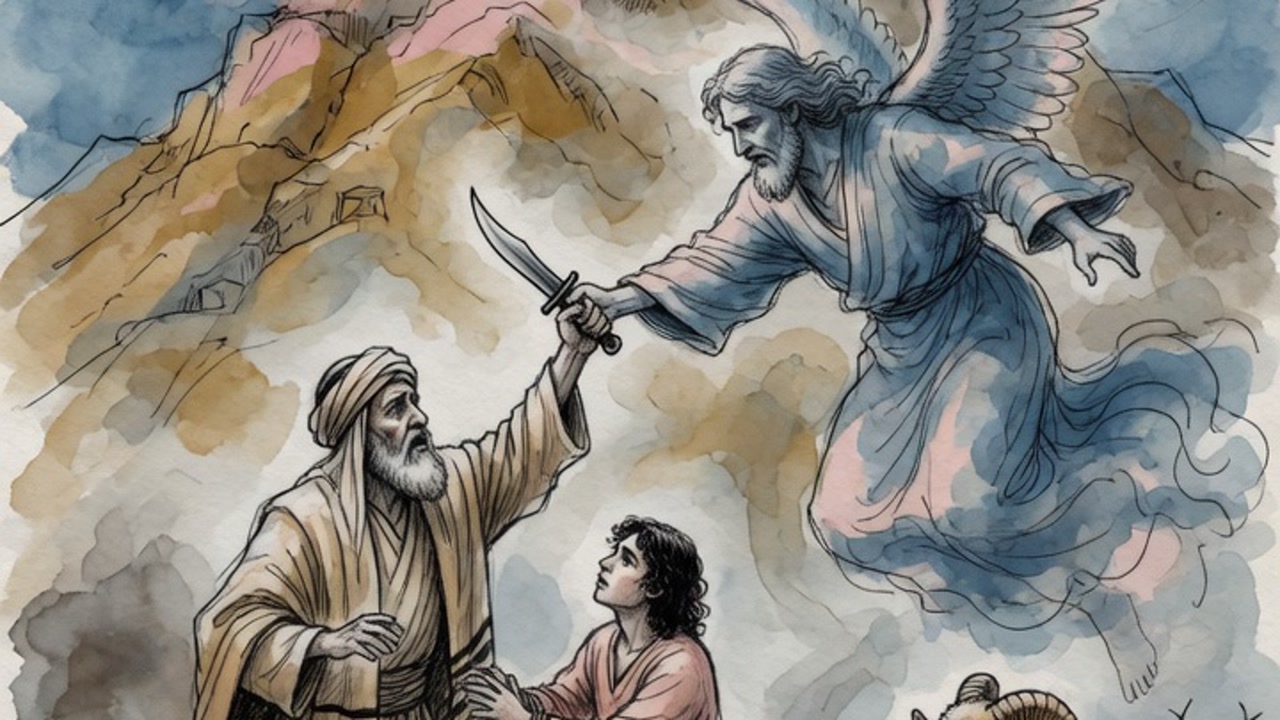
Gabriel came one last time and asked whether he should save him. Abraham said the God of heaven and earth would rescue him. That answer was what God had been waiting for, and the order went to the fire: cool down, and give my servant Abraham some quiet.
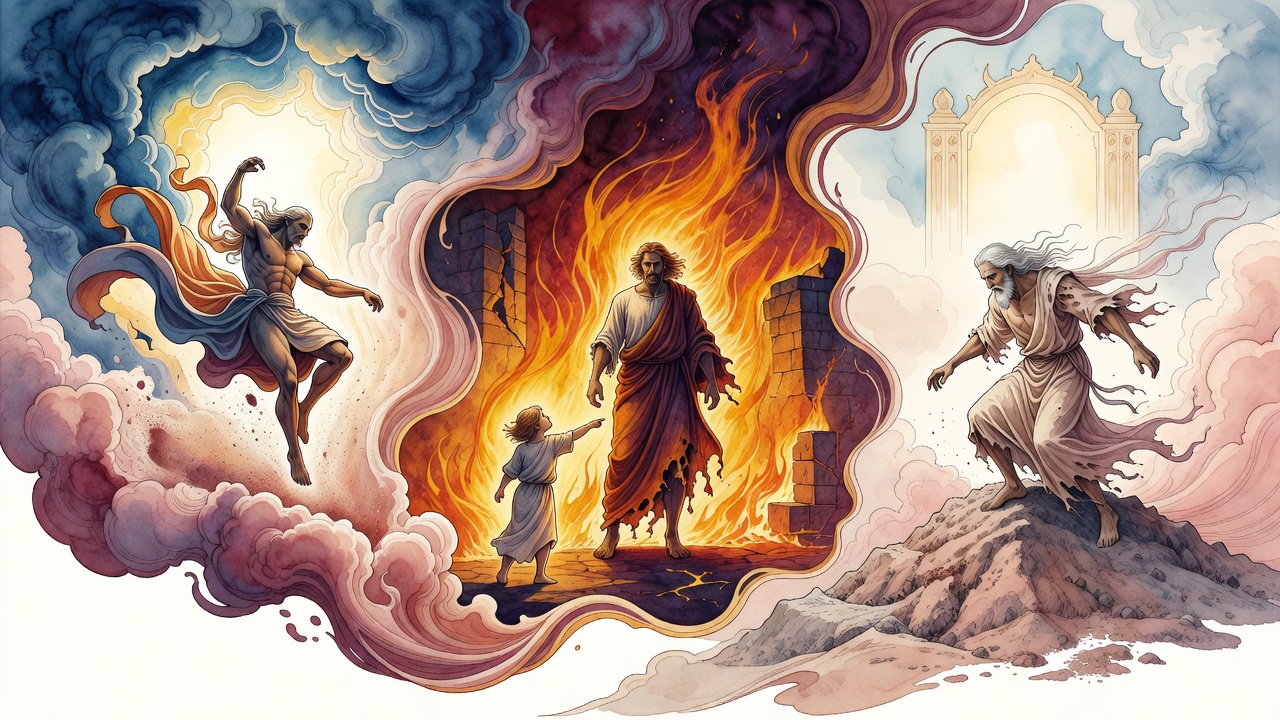
No water was needed. The logs put out buds. Every kind of wood in that pile grew its own fruit, and the furnace turned into a royal garden with angels sitting in it and Abraham sitting among them.
"Great witchcraft," Nimrod said. His own princes contradicted him where he stood. Not witchcraft. The God of Abraham, and no other beside him.
Haran, Abraham's brother, had been running the numbers the whole time. If Abraham came out of the fire, Haran would declare for Abraham's God. If Abraham burned, Haran would take the other side. Now Abraham was sitting in a garden of budding logs, so Haran announced where he stood and walked toward the furnace. The fire took him at the edge of it. He was the first son since the creation of the world to die while his father was still alive.
Terah had read that star years before without understanding it. He had seen it burn up. He had also seen it fill the whole world. Haran burned in front of him, and Haran's daughter Sarah married Abraham.
← All myths