The Angel Switched the Cup at Bethuel's Wedding Table
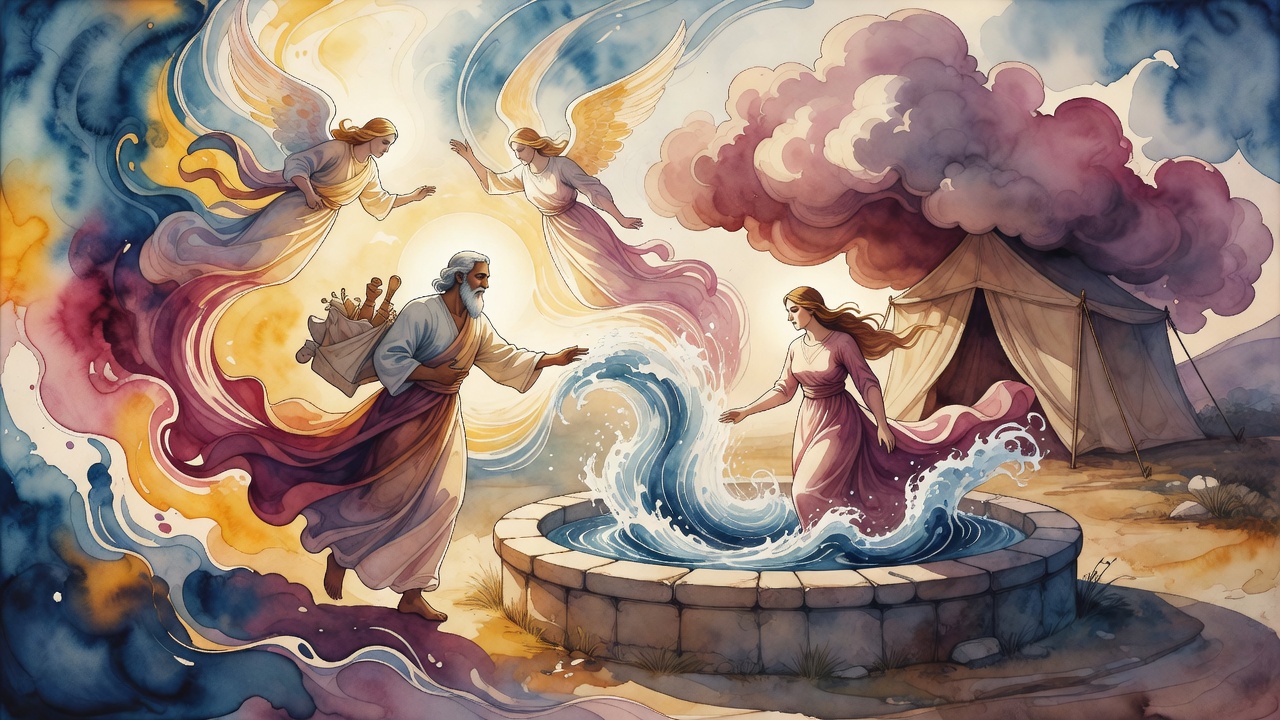
Bethuel laid poison for Abraham's servant, but an unseen angel turned the deadly cup so the host drank his own death before dawn.
Table of Contents
 Click for full size
The Old Man Who Asked to Look Old
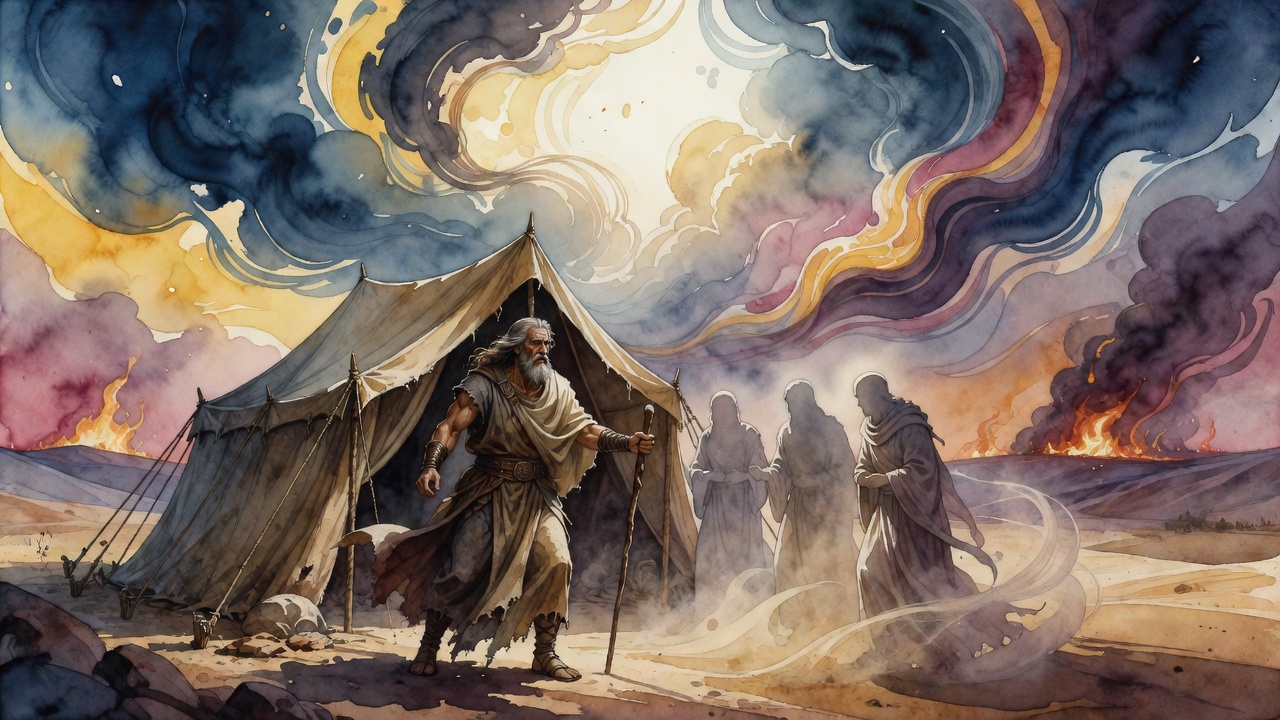
After Sarah died, Abraham wanted to be seen as old. Until then no one could tell him from his son. Isaac wore his father's face, and a man who came to the tent with a petition would as easily bow to the boy as to the elder. So Abraham prayed for white hair and a bent back, and heaven granted it. Now strangers knew at a glance which one of them had buried a wife at Hebron.
One thing still gnawed at him. Isaac had no wife. On Mount Moriah, with the knife already lifted, Abraham had felt the whole future tilt toward a man dying childless. The angel had stopped the blade. The future had not stopped pressing. Isaac needed a daughter of the right house, and the daughters of Canaan were not it.
The Servant Who Wore His Master's Soul
Abraham called for Eliezer. This was no ordinary house-slave. Eliezer mirrored his master in face and in spirit, schooled in the same law, holding the same mastery over the evil inclination that gnawed at lesser men. If anyone could carry a sacred errand into a foreign country, it was this one.
"I am old," Abraham told him, "and I do not know the day of my death. Go to my homeland, to my kin, and bring back a wife for my son." Eliezer turned the order over like a coin and found a flaw in it. "And if no woman will follow me back to this land," he said, "may I give my own daughter to Isaac?"
Abraham's answer landed hard. "No. You are of the accursed line, and my son is of the blessed line. Curse and blessing cannot be poured into one cup." He would not see Isaac carried back to the country he himself had fled, as if returning a redeemed man to the pit. "He who took me out of my father's house will send His angel before you," Abraham said, "and you will take a wife for my son from there." Eliezer set his hand beneath his master's thigh, in the place of the covenant, and swore.
The Meal Laid to Kill a Guest
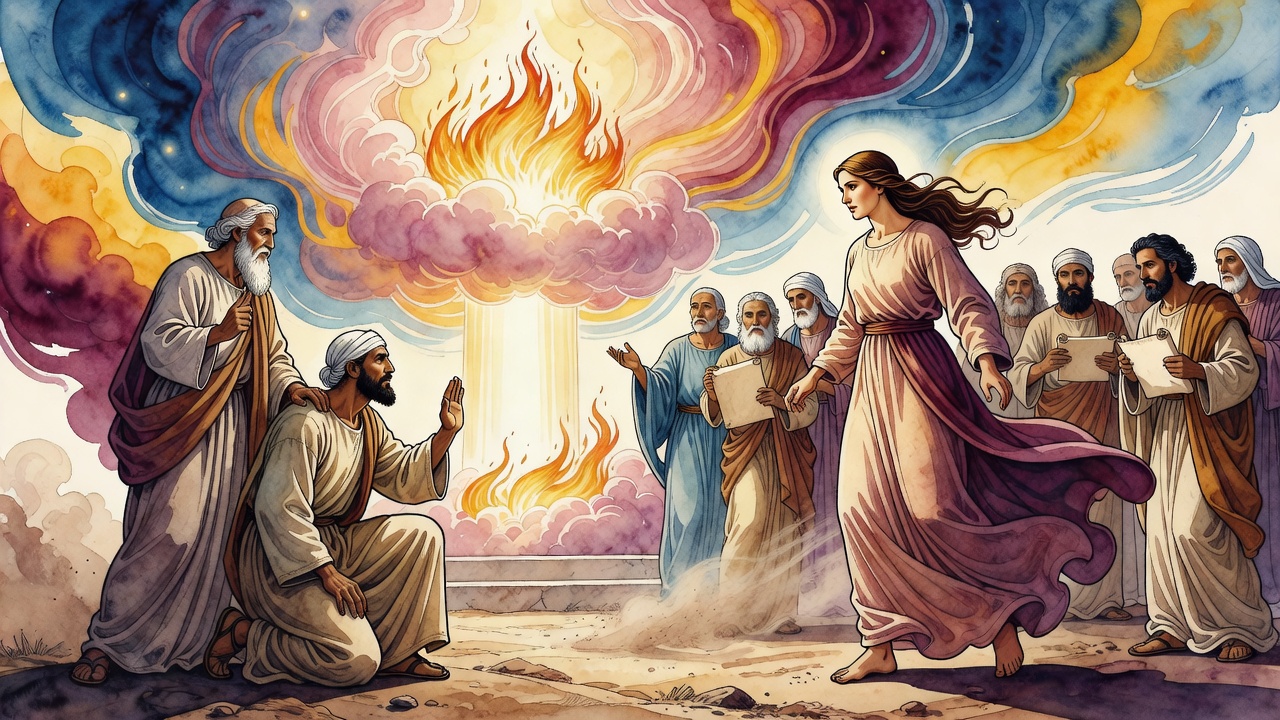
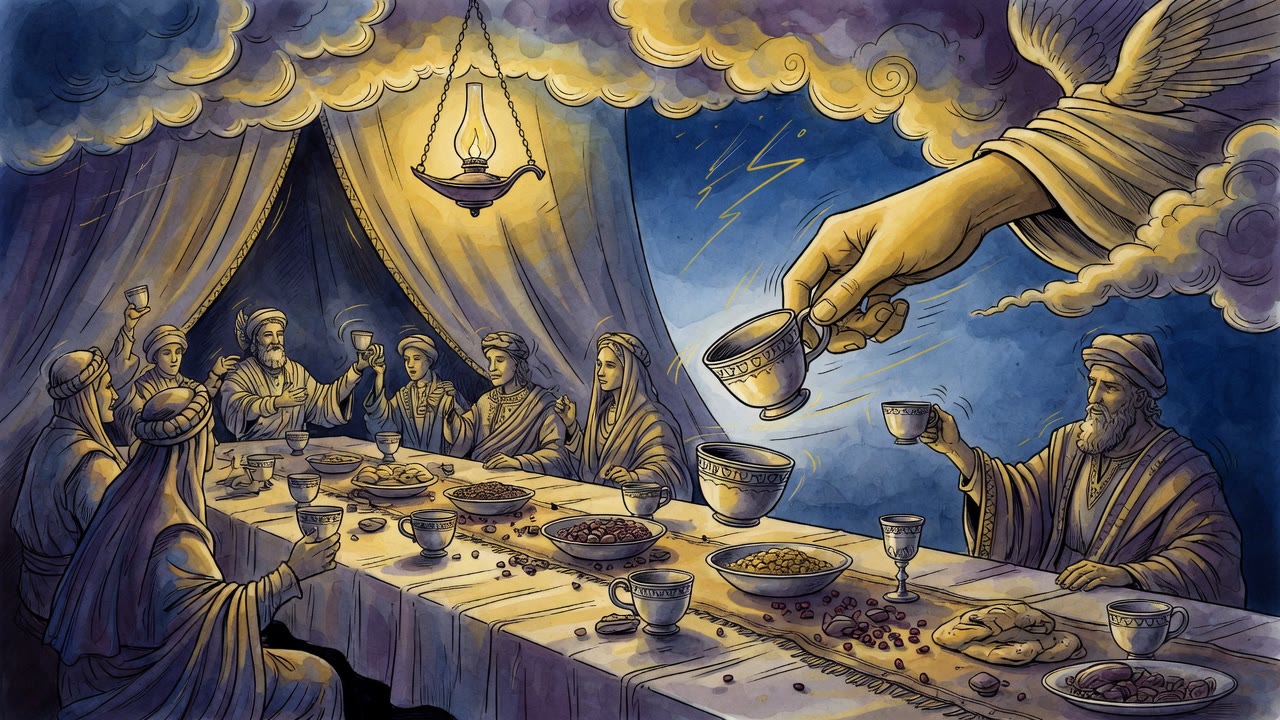
The angel went ahead of him, unseen, the whole long road. Eliezer came at last to the house of Bethuel, the father of the girl, and was welcomed in with every sign of warmth. A table was set. Dishes were brought. And something in those dishes had been prepared to do more than feed him.
They meant to murder him. Not with a blade in the dark, which would leave a body and a question, but with hospitality. Bethuel had no wish to give up his daughter to a stranger from a far country, and a dead envoy tells no master what he found. So the poison went into the food and the food went down before the guest, and the household waited, smiling, for him to eat.
Eliezer would not lift his hand to the meal. Before bread, the errand. He refused to taste a thing until he had said why he had come, until the words of his master were out of his mouth and the business stood open on the table between them. He began to speak. He told them of Abraham, of the son, of the oath, of the road.
The Cup That Found the Wrong Mouth
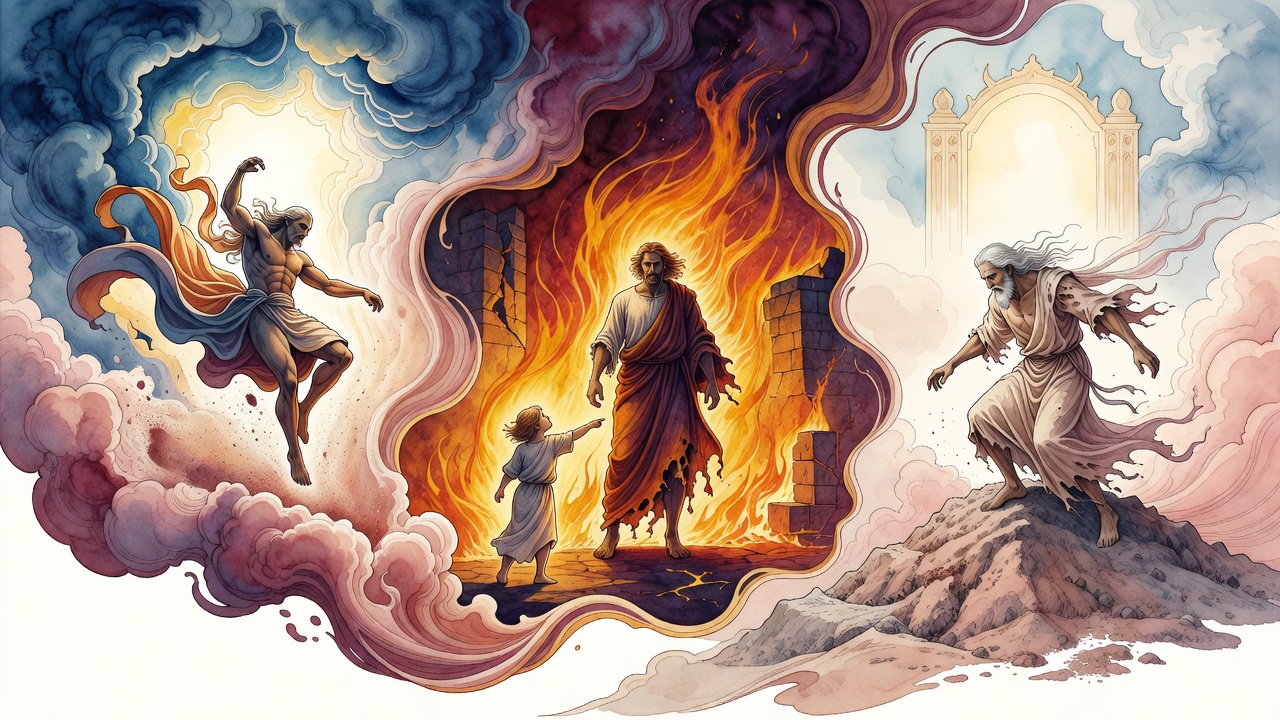
While he talked, the unseen angel moved. The deadly dish did not stay where it had been set. It slid, by no hand anyone at the table could name, until it rested in front of Bethuel himself. And Bethuel, host of his own ambush, ate.
By the next dawn he was dead. The poison meant for the guest had gone into the man who brewed it, and the household that had sat down to bury a stranger rose to bury its own father instead. No sword had been drawn. No accusation could be laid. A dish had simply changed places in the night.
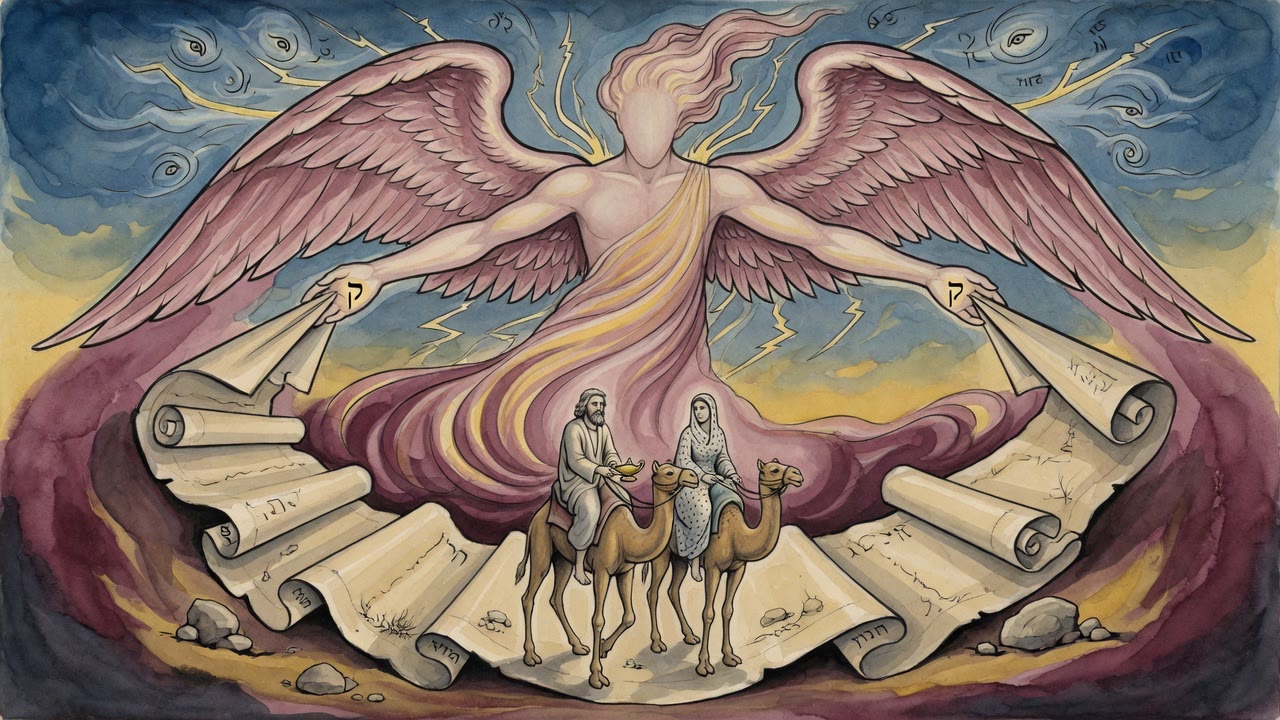
Eliezer drew out the document he carried, a marriage deed under Abraham's seal, in which the old man bequeathed everything he owned to Isaac. He let Abraham's kin feel how tightly his master still held them across all the years and miles of separation. And he let them feel the other edge of it too. Abraham did not need them. There were daughters of Ishmael, daughters of Lot. If this house would not give a bride, another would.
The Blessing That Came Out Cold
At first the family agreed. Take her, they said. Then their father lay dead in the house, and they began to find reasons to wait. It was not decent to marry off the girl without asking her. She should sit the seven days of mourning, the shivah, before she went anywhere. The road could keep.
Eliezer would not be kept. He could see the angel that had walked beside him standing just beyond the door, waiting. "The man who came with me and prospered my way," he said, "waits for me without." There would be no week of delay with a heavenly escort standing in the yard.
So they turned to Rebekah herself. Would she go, now, with this man? She would. Her mother and her brother gave her up, and they spoke the blessings a departing daughter is owed, and they meant almost none of it. Their words went out over her like a cold thing dressed as a warm one, the blessing of grudging mouths, which the old teachers warned was a curse wearing a better coat. The proof came slowly, across barren years in which the chosen bride bore no child, until at last the husband prayed her open. The angel had switched the cup. No one could switch the heart behind a blessing.
← All myths