6 min read

God Paid Egypt, Ethiopia, and Seba as Ransom for Israel

God handed over Egypt, Ethiopia, and Seba as ransom for Israel out of love. Then a sharper voice asks whether the beloved ever called back.

Curated by Arthur · Told by Maggid ·
Table of Contents
  1. The Three Nations Laid on the Scale
  2. The Beloved Who Walked North
  3. But You Did Not Call Me, Jacob
  4. The Three Hundred and Sixty-Five Houses
  5. The Unanswered Voice

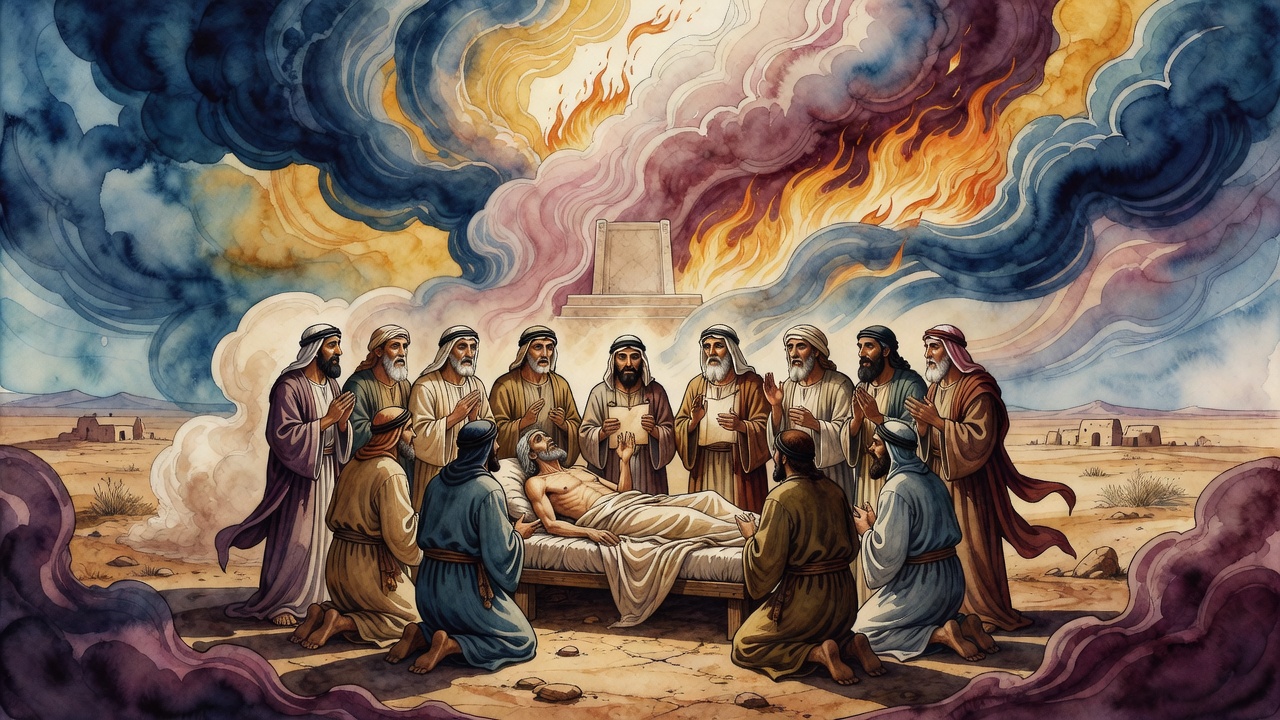
The water stood in two walls, and a boy looked up at them as he walked. Behind him the sea hissed where the chariots had been. He did not understand the price of the road he was walking on. He only knew the ground was dry, and that men with whips were not on it anymore.
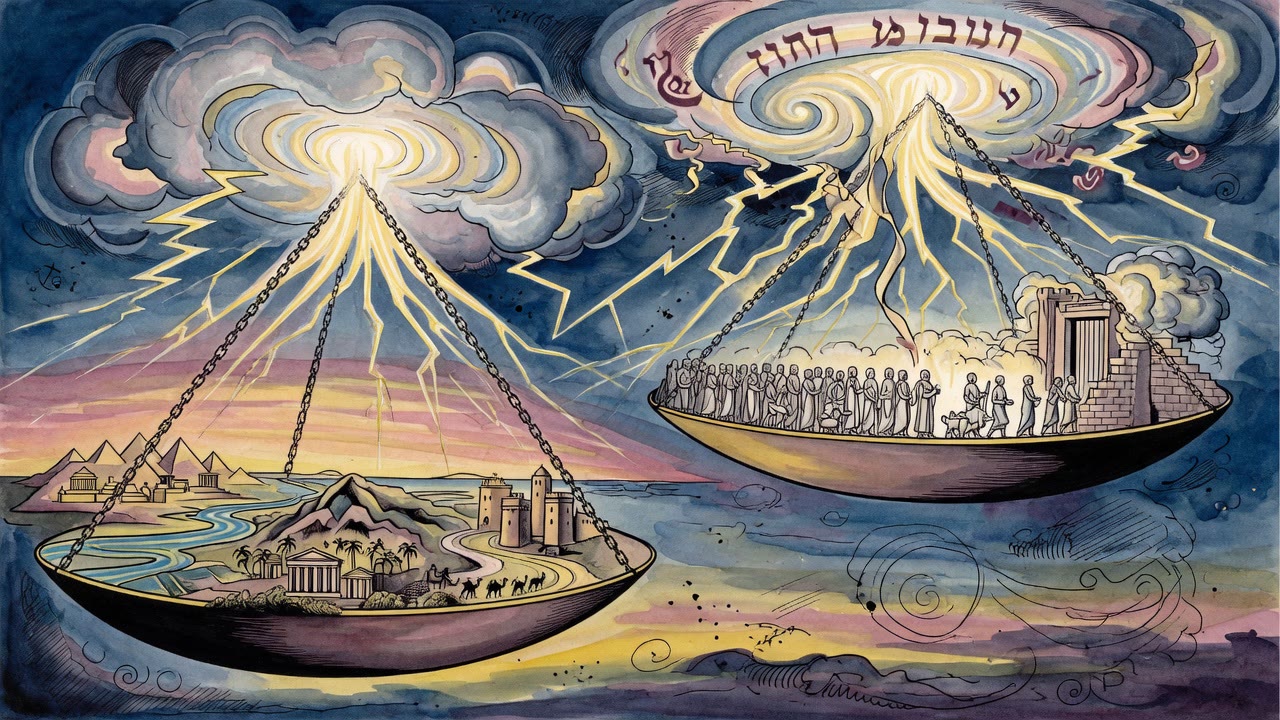
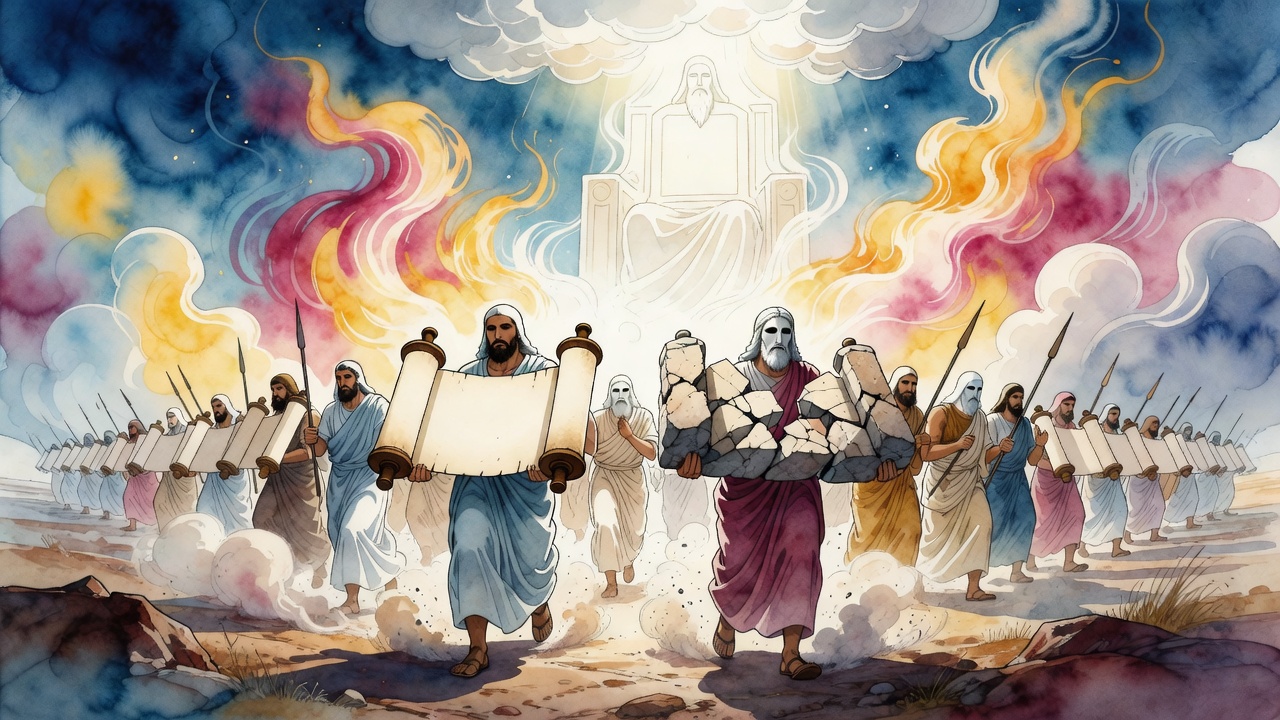
The price had a name, and the name was payment. Egypt had been spent. The empire that held a people for generations was set down on the scale like a coin and weighed against the souls of slaves, and the slaves were heavier. That is the strangeness of the road through the sea. It was not free. Someone had reached into the treasury of nations and paid.

The Three Nations Laid on the Scale

Hear how the transaction was spoken: "I gave Egypt as ransom for you, Ethiopia and Seba in your place" (Isaiah 43:3). The Hebrew word is kofer, ransom, the sum laid down to buy a captive back. Three nations went onto the scale. Egypt first, the great house of brick and overseers. Then Ethiopia. Then Seba, lands far to the south, handed over so that a column of freed slaves could keep walking north.

This was not strategy. No general trades a superpower for a band of brickmakers and calls it a wise campaign. The reason came in the next breath, and it was not a reason any treasury would accept. "Because you were honored in My eyes, you were honored and I loved you, and I placed a man in your place and nations in place of your souls" (Isaiah 43:4). The word for honored came twice, the way a person says a thing twice when they mean it past argument. Egypt drowned. Ethiopia and Seba were set down in the dust of the dead. The bill was paid in empires, and it was paid out of love.

The Beloved Who Walked North

So the boy walked on dry ground because of love so heavy it crushed kingdoms under it. That should have been the whole story. A people bought at impossible cost, a buyer who counted them dearer than the powers of the earth.

But the line that praises the beloved sits two breaths away from a line that accuses her. The same prophet who weighed the nations turned and said something colder. The road kept going north, past the sea, into the years, and somewhere up that road the beloved stopped looking back at who had paid for her.

But You Did Not Call Me, Jacob

Rabbi Yitzchak stood up to teach, and he reached for the cutting verse. "But you did not call Me, Jacob, for you wearied of Me, Israel" (Isaiah 43:22). You did not call. The one who emptied the treasury of nations stood waiting to be called by name, and the name did not come. The buyer had not grown tired. The bought one had. She wearied of the one who had paid for her.

Where did her calling go, if not back to the one who paid? Another teacher answered by pointing far north, to Damascus, and to a prophecy that read like a sentence of ruin. "Behold, Damascus is removed from being a city, and it will be a heap of ruins. Abandoned are the cities of Aroer" (Isaiah 17:1 to 17:2). And here a question snagged like a thorn. Aroer sits down in the territory of Moab, far from Damascus. What does Aroer have to do with the ruin of a city to the north? Why does the one place evoke the other?

The Three Hundred and Sixty-Five Houses

The answer was a count. In Damascus there stood three hundred and sixty-five houses of idolatry, one for every day the sun comes around. Each had its appointed day, and on its day the people of the city would go in and bow there, working their way through the year one false house at a time. They kept it orderly. Each idol got its turn.

That was the city's custom, and it would have stayed the city's shame alone. But there was one day, the teaching said, when the worshippers made a circuit of all of them, every house in a single round, every idol bowed to before the sun set. And on that day Israel did not stand apart. Israel gathered them all together and worshipped them, all of them, the whole crowded year of false houses pressed into one act of bowing.

This is what the prophet caught when he wrote of the people that they "served the Be'alim, and the Ashtarot, and the gods of Aram." The names of every neighbor's god, collected and bowed to. Damascus evoked Aroer and Moab and all the rest, because Israel had swept them together into one armful of strange worship. The mouth that should have called one name had learned to call all the others.

The Unanswered Voice

Set the two scenes side by side and the ache is the whole of it. On one side, a buyer pouring out Egypt, Ethiopia, and Seba, three kingdoms spent, the sea split, the chariots stilled, all to carry one people out onto dry ground. On the other side, that same people standing in a foreign city, working their way through three hundred and sixty-five houses, then through all of them at once, calling on every name but the one that had called them by name first.

"You did not call Me, Jacob." The buyer was not poor and not absent. The buyer stood within earshot the whole time, having already paid more than the earth was worth, waiting for the beloved to turn around on the long road and say the name back. The water had stood in two walls for her. The empires had gone down into the dark for her. And the voice that had spent everything stood unanswered, listening to her bow in another city to gods that had cost nothing and bought no one out of anywhere.


← All myths
From the tradition

Sources

2 sources

The texts this telling draws on, in full. Open a card to read inline, or expand it for a wider, quieter read.

Esther Rabbah 3:4Esther Rabbah

Rabbi Yitzḥak began: “But you did not call Me, Jacob, for you wearied of Me, Israel” (Isaiah 43:22). Rabbi Yoḥanan understood it [the verse in (Isaiah 43:22)] from this, as it is written: “A prophecy of Damascus: Behold, Damascus is removed from being a city and it will be a heap of ruins. Abandoned are the cities of Aroer; [they will be for flocks, and they will lie down, and none will threaten]” (Isaiah 17:1–2). What is it that stands in Damascus and evokes Aroer? Isn’t Aroer within the region of Moav? Rather, there were three hundred and sixty-five houses of [different types of] idolatry in Damascus, and they would worship [in] each one of them on its day. They had one day when they would go around to all of them on that day and worship [all of] them, and Israel assembled them together and worshipped them; that is what is written: “The children of Israel continued to do evil in the eyes of the Lord, and they served the Be'alim, and the Ashtarot, and the gods of Aram, and the gods of Sidon, and the gods of Moav, and the gods of the children of Ammon, and the gods of the Philistines; they forsook the Lord, and they did not serve Him” (Judges 10:6), not even in conjunction with other gods.Rabbi Abba bar Kahana said: Shall a priestess not be like an innkeeper?2“Shall a priestess not be like an innkeeper” was apparently a popular saying. Here it means: Should not God be worshipped as much as other gods? Rabbi Yosei son of Rabbi Ḥanina: The Holy One blessed be He said: My children did not even make me like the dessert that comes at the end. Rabbi Levi said: [This is comparable] to a king’s servant who prepared a feast for his soldiers and invited all the king’s legions and did not invite his master. The king said to him: ‘If only you had treated me like all of my soldiers.’ So too, The Holy One blessed be He said: If only My children had treated me like the dessert that comes at the end; rather, “but you did not call Me, Jacob, for you wearied of Me, Israel” (Isaiah 43:22). Regarding the Baal, what is written? “They called in the name of the Baal from the morning until noon, saying: ‘The Baal, answer us.’ But there was no voice, and none responded” (I Kings 18:26). He sits and talks all day and does not tire, but when standing to pray, he tires; he sits and talks all day and does not tire, but when sitting to study,3The verb refers specifically to the practice of reviewing the Oral Torah. he tires. That is: “But you did not call Me, Jacob” – if only I had not known you, Jacob – “for you wearied of Me, Israel” (Isaiah 43:22). “You did not bring Me the sheep of your burnt offerings” (Isaiah 43:23) – these are the two daily offerings, as it is stated: “The one lamb you shall offer in the morning” (Numbers 28:4). “And you did not honor Me with your offerings” (Isaiah 43:23) – these are the portions of the offerings of sacred sanctity that are burned on the altar. “I have not burdened you with a meal offering” (Isaiah 43:23) – this is the handful of flour taken from the meal offering. “And I have not wearied you with frankincense” (Isaiah 43:23) – this is the handful of frankincense.“You did not buy a cane [kaneh] for Me with silver” (Isaiah 43:24). Rabbi Huna said in the name of Rabbi Yosei: Cinnamon [kinamon] grew in the Land of Israel and goats and deer would eat it. “And with the fat of your offerings you did not satisfy Me,” (Isaiah 43:24) – these are the portions of the offerings of lesser sanctity that are burned on the altar. “Rather, you burdened Me with your sins, you wearied Me with your iniquities” (Isaiah 43:24) – look what your sins have caused me, Jacob. Isn’t it enough that you count the days for the banquet of the men, but even made a banquet for the women; that is what is written: “Also, Vashti the queen made a women’s banquet.”

Full source
Mekhilta Tractate Nezikin 10:33Mekhilta DeRabbi Yishmael

Beloved is Israel. So beloved that God gave entire nations as kofer, as ransom, for the souls of His people. The proof is (Isaiah 43:3): "I gave Egypt as kofer for you, Ethiopia and Seba in your place."

God traded nations for Israel. Egypt, the superpower that enslaved the Israelites for centuries, was given over to destruction so that Israel could go free. Ethiopia and Seba were offered in Israel's place. The prophet depicts a cosmic transaction in which the fate of empires was determined by their role as payment for Israel's liberation.

The reason? (Isaiah 43:4): "Because you were honored in My eyes, you were honored and I loved you, and I placed a man in your place and nations in place of your souls." The repetition of "honored" emphasizes that Israel's value to God is not merely strategic or covenantal, it is rooted in love and esteem.

This teaching transforms the Exodus from a national liberation story into a cosmic love story. God did not simply free Israel because He promised to. He freed Israel because their souls were precious enough to warrant the destruction of empires. Egypt's downfall was not merely punishment for oppression. It was the price God was willing to pay for the redemption of His beloved. The plagues, the splitting of the sea, the drowning of the army, these were the kofer, the ransom, paid in Egyptian lives for Israelite souls.

Full source