Parshat Vayishlach5 min read

Jacob Came Home Whole After Exile and Struggle

Jacob came home whole after exile, a wrestling wound, and years with Laban. His wholeness became proof that the covenant survived the road.

Curated by Arthur · Told by Maggid ·
Table of Contents
  1. The Man Who Returned With a Limp
  2. Whole in Body, Money, and Torah
  3. Beersheba Before Egypt
  4. The Vine Pulled From Egypt
  5. The Cry That Proved the Promise

Jacob came home limping, and the Torah called him whole.
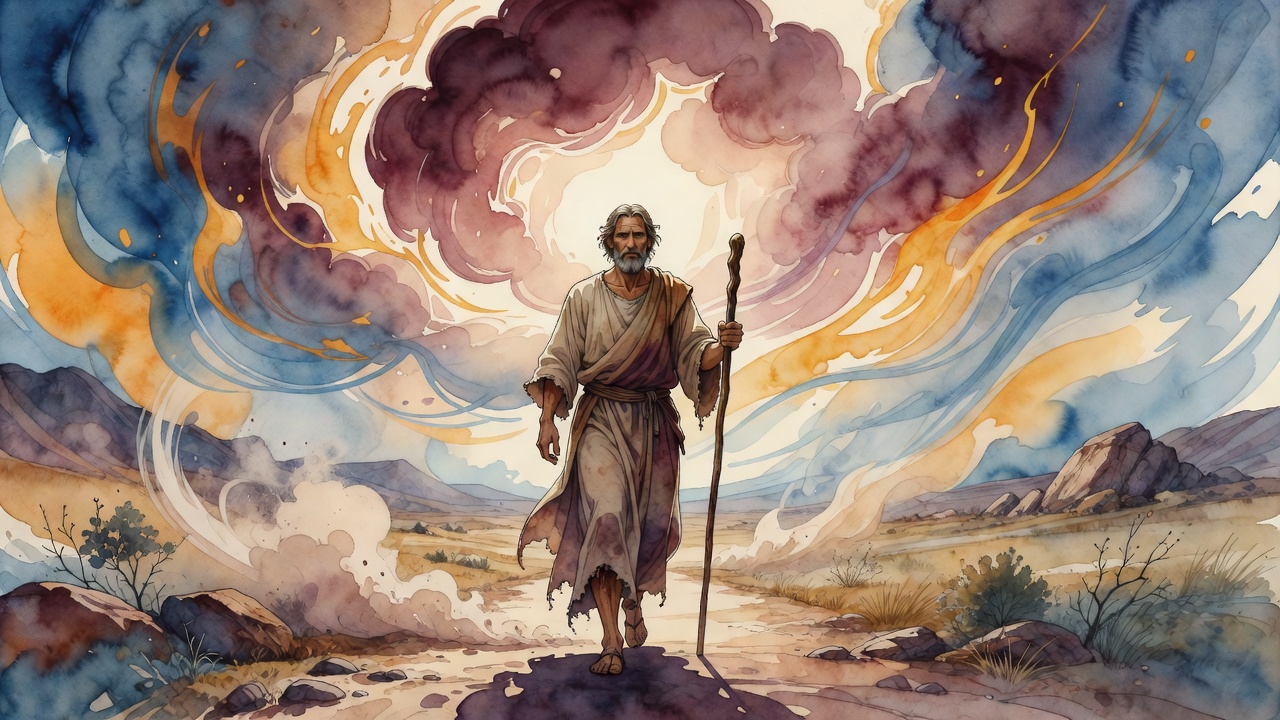
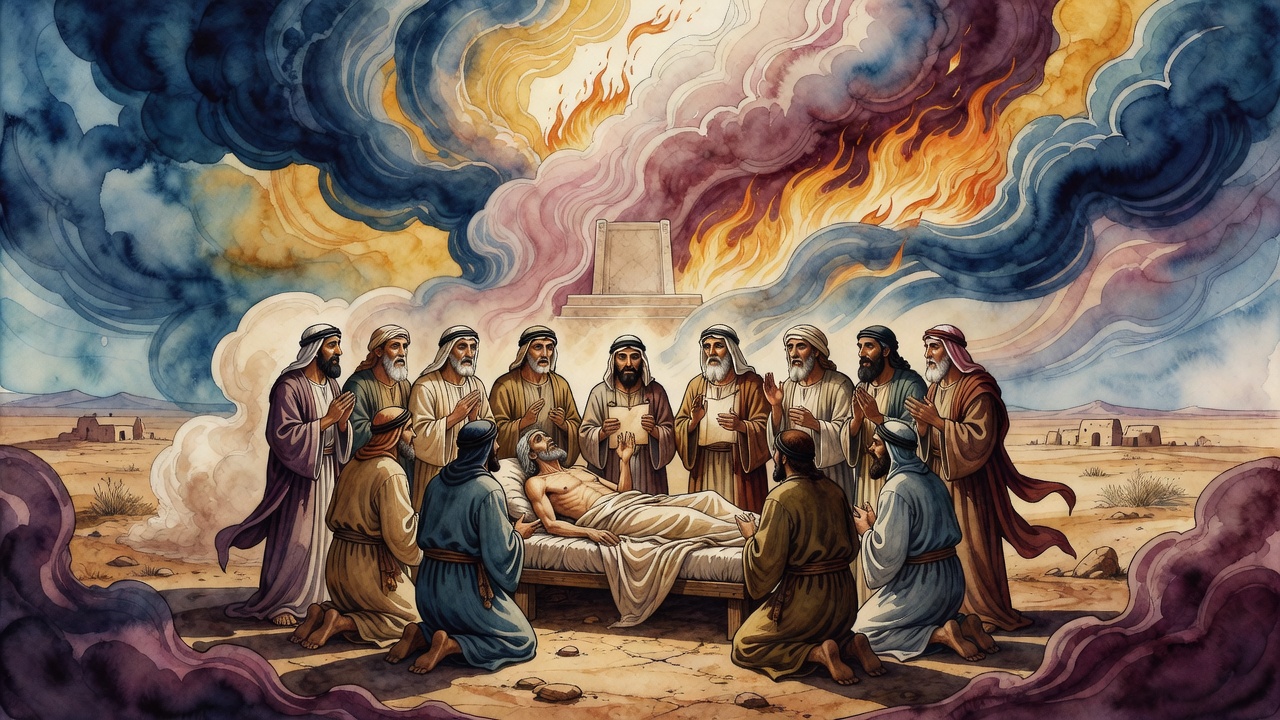
He had left with a staff and a brother's rage behind him. He returned with wives, children, servants, flocks, fear, gifts for Esau, and a wound from the night wrestle at the river. One hip carried pain. One name had been changed. Nothing about him looked untouched.

Then he reached Shechem, and the word came down: shalem. Whole.

The Man Who Returned With a Limp

Jacob's wholeness was not the absence of damage.

He had spent twenty years in Laban's house, where every agreement could become a trap by morning. He had worked seven years for Rachel and received Leah. Seven more for Rachel. Six more for flocks whose markings became a battlefield of wages and cunning. Laban changed the terms again and again, and Jacob learned how to survive without becoming Laban.

Then came the river. Alone in the dark, Jacob wrestled until dawn with a being strong enough to wound him and mysterious enough to bless him. He crossed the water changed. The limp did not cancel the blessing. It proved the encounter had happened.

So when the Torah called him whole, the word meant something fiercer than safe.

Whole in Body, Money, and Torah

The sages counted three kinds of wholeness.

Jacob was whole in body, though he limped. The wound marked him, but it had not destroyed him. He was whole in wealth, though Laban had tried to drain him through tricks dressed as contracts. The flocks were still there. The household had crossed with him.

Most of all, he was whole in Torah. Years among Laban's gods, deals, feasts, lies, and family manipulations had not erased what Jacob carried inside. Exile can steal language. It can make compromise feel like wisdom. It can teach a person to laugh at what once felt holy. Jacob came back with his inner inheritance still alive.

That was the miracle. The man had changed, but the covenant in him had not spoiled on the road.

Beersheba Before Egypt

Later, Jacob had to leave the land again.

Joseph was alive in Egypt. The son Jacob had mourned for twenty-two years was calling him down. Hunger pressed from one side, love from the other. Jacob gathered everything he had and traveled south, but he stopped at Beersheba before crossing into the next chapter of exile.

Beersheba held the memory of his fathers. Abraham had called on God there. Isaac had built there. Jacob stopped because departure from the land could not be treated like ordinary travel. He needed to know whether the covenant would go with him into Egypt.

God answered in the night. Go down. Do not fear. I will go down with you, and I will surely bring you up.

The Vine Pulled From Egypt

Israel would later be imagined as a vine.

A vine can be transplanted, but not casually. Its roots are disturbed. Its branches are cut back. Its fruit may disappear for a season. From the outside, transplantation can look like ruin. But a vine moved by the right hand can take root more deeply in the place prepared for it.

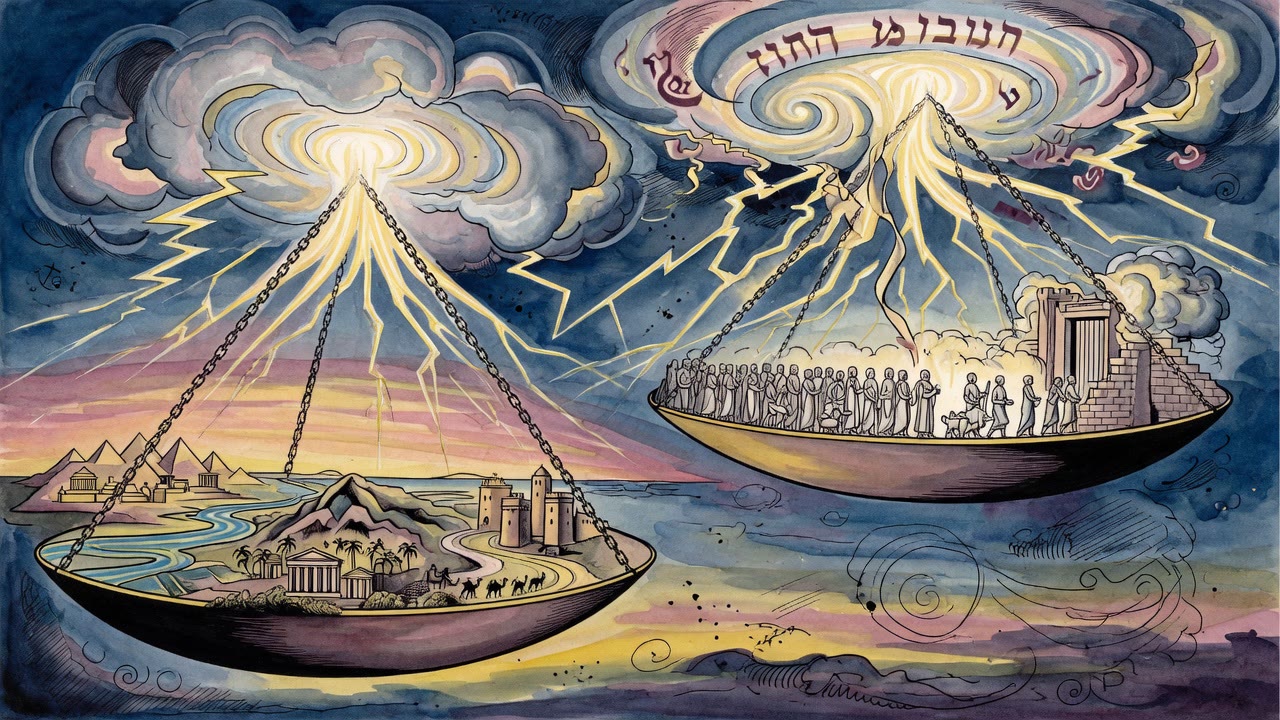
Jacob's descent to Egypt was like that. The family went down as a household and would come up as a people. The exile did not cancel the promise made at Beersheba. It put the promise under pressure until its hidden strength could be seen.

The man who once came home whole after Laban now carried a whole family toward a harder exile, trusting that God had promised to travel with them.

The Cry That Proved the Promise

Centuries later, the children cried out from bondage.

Their work had become crushing. The king of Egypt died, but the labor lived on. Their cry rose, and heaven heard the covenant with Abraham, Isaac, and Jacob. The promise spoken at Beersheba had not gone stale in Egypt. It had been waiting inside the suffering like a coal under ash.

Jacob's wholeness at Shechem and Israel's cry in Egypt belong to the same pattern. The covenant survives roads, wounds, dishonest houses, famine, migration, and slavery. It does not survive by keeping people untouched. It survives by bringing them through with the essential thing still burning.

Jacob came home limping, and he came home whole. His children would learn, much later, that those two truths can inhabit one body.


← All myths
From the tradition

Sources

7 sources

The texts this telling draws on, in full. Open a card to read inline, or expand it for a wider, quieter read.

Bereshit Rabbah 79:1Bereshit Rabbah

The Torah is full of stories of resilience, and one that particularly resonates with this idea is Jacob's return to Canaan.

In (Genesis 33:18), we read: "Jacob arrived intact to the city of Shekhem, which is in the land of Canaan, upon his arrival from Padan Aram, and he encamped before the city." The simple phrase "Jacob arrived intact" – vayyavo Ya'akov shalem – feels loaded with meaning. What does it mean to arrive "intact" after years of hardship, deception, and exile?

The Rabbis of Bereshit Rabbah, a classic collection of Midrashic (rabbinic interpretive commentary) interpretations, dive deep into this question. They connect Jacob's safe arrival with a verse from Job (5:19): "In six troubles He will deliver you, and in seven, no harm will touch you." The Midrash playfully interprets this: if Jacob faced six troubles, he could withstand them. If seven, he could still withstand them! It's a evidence of his unwavering spirit and the protection he received.

The Midrash continues to examine the verse in Job, linking each phrase to specific events in Jacob's life. "In famine, He redeems you from death" (Job 5:20) alludes to the famine in the land of Canaan, described in (Genesis 45:6). "And in war, from the sword" (Job 5:20) echoes Laban's threat to harm Jacob, recounted in (Genesis 31:29). It's as if Job's words were a prophecy foretelling Jacob's journey.

Then comes a fascinating idea: "From the scourge of the tongue you will be hidden" (Job 5:21). Rav Aḥa goes on to say that evil speech is so terrible that God created a special place just to hide it away! That's how damaging gossip and slander can be.

"And you will not fear pillage when it comes" (Job 5:21), the Midrash suggests, refers to Esau and his chieftains. "At pillage and hunger you will laugh" (Job 5:22) is then linked to Laban, who, according to the Rabbis, came "hungry" for Jacob's wealth. It paints a vivid picture of Jacob overcoming those who sought to exploit him.

But it doesn't stop there. "For your covenant will be with the rocks of the field…" (Job 5:23) brings us back to Jacob's famous dream at Bet El. Remember how "he took one of the stones from the place, and placed it beneath his head" (Genesis 28:11)? Even in his vulnerability, a covenant was being forged.

The Midrash then touches upon delicate family matters. "You will know that your tent is at peace" (Job 5:24) despite…well, let's just say some less-than-peaceful incidents. The text mentions the incidents of Reuben and Bilha, and Judah and Tamar. These were moments of transgression and shame within Jacob's family. Yet, according to Sifrei Devarim ch. 31, God told Jacob that Reuben had repented, and Judah openly admitted his fault. The Peirush Maharzu notes that Jacob's tent remained at peace despite these falls. It’s a poignant reminder that even in imperfect families, peace and reconciliation are possible.

The Rabbis continue, "When you visit your abode, you will not be lacking" (Job 5:24). They state that Jacob lived to the ripe old age of 84 without ever experiencing an unintentional seminal emission! This idea, while perhaps strange to our modern sensibilities, highlights the Rabbis’ concern with maintaining ritual purity and spiritual wholeness.

And finally, a beautiful image of legacy: "You shall know also that your descendants will be many, and your offspring like the grass of the earth" (Job 5:25). Rabbi Yudan says that Jacob didn't die until he had seen six hundred thousand of his sons' descendants! Talk about leaving your mark on the world.

The Midrash concludes with a reflection on death: "You will come to the grave at the right time [bakelaḥ], like a grain pile at its time" (Job 5:26). Rabbi Yitzḥak interprets bakelaḥ as "moist [laḥ]," suggesting a vibrant, life-filled end. The Rabbis, however, understand it as "complete [bekhola]," echoing the original idea of Jacob arriving "intact."

So, what does it all mean? Perhaps that being "intact" isn't about avoiding hardship or living a perfect life. It's about emerging from the trials, the betrayals, the famines, and the wars with your spirit unbroken. It's about maintaining your connection to your covenant, your family, and your faith. It's about leaving a legacy of descendants, both physical and spiritual. Jacob, despite everything, arrived shalem – whole, complete, and at peace. And maybe, just maybe, we can too.

Full source
Bereshit Rabbah 94:4Bereshit Rabbah

Jewish tradition is just teeming with those kinds of moments. Take Jacob, for instance, as he's about to head down to Egypt to reunite with his son Joseph. The Torah tells us, "Israel, and everything that he had, traveled and came to Beersheba, and he slaughtered feast-offerings to the God of his father Isaac" (Genesis 46:1).

But… why Beersheba? What's the deal with this seemingly minor stop?

The rabbis, in their infinite wisdom, didn't let this detail slide by. Bereshit Rabbah, that incredible collection of rabbinic interpretations on the Book of Genesis, dives right in. Rav Naḥman suggests Jacob went to Beersheba to chop down cedars. Cedars planted by none other than his grandfather, Abraham! Remember? "He planted…[in Beersheba]" (Genesis 21:33). Jacob, on the cusp of a major life change, reconnecting with his family's roots – quite literally! He's going back to the very spot where Abraham, the patriarch, sowed seeds of faith and hospitality. It's a beautiful image, isn't it?

The story doesn't end there. The rabbis, masters of the unexpected connection, take us on a bit of a detour.

We jump ahead to the construction of the Mishkan, the Tabernacle, in the wilderness. Remember that central bar, the one described as "inside the boards" (Exodus 26:28)? Rabbi Levi tells us this bar was a whopping thirty-two cubits long. Now, where on earth did they find a piece of wood that long in the middle of the desert?

The answer, according to tradition, is astonishing. These weren't just any random pieces of wood. These were acacia trees, already prepared and waiting! It’s not written "with whom [acacia wood] could be found" (Exodus 35:24), but rather, “with whom [acacia wood] was found.” As if they were expecting it all along.

These trees, according to Rabbi Levi, were chopped down from a place called Migdal Tzevaaya (a place in the Land of Israel) generations earlier. They were brought down to Egypt with Jacob and his family! And get this: "neither was a knot nor a crack was found in them." They were preserved, protected, specifically for this sacred purpose.

The story gets even more fascinating. The tradition tells us that even in the time of the Sages, acacia trees still grew in Migdela. However, because of the belief that the wood for the Ark and Tabernacle originated there, the people of Migdela refrained from using those trees. They even consulted Rabbi Ḥanina, a colleague of the Rabbis, who advised them: "Do not deviate from the custom of your fathers."

So, what’s the connection between Jacob chopping down trees in Beersheba and the acacia wood for the Tabernacle? It's a bit of a leap, admittedly. But it highlights a central theme in Jewish thought: continuity.

The actions of our ancestors resonate through time. What Abraham planted, Jacob harvested, and ultimately, that legacy became part of the very structure that housed the Divine Presence in the wilderness.

It makes you wonder, doesn't it? What "trees" are we planting today? What customs are we preserving? And how might they, generations from now, contribute to something sacred and enduring?

Full source
Vayikra Rabbah 36:2Vayikra Rabbah

It's a metaphor, a living, breathing symbol of the Jewish people themselves.

We find this beautiful idea elaborated on in Vayikra Rabbah 36, a section of the Midrash (rabbinic interpretive commentary) that explores the Book of Leviticus. It starts with the verse, "I will remember My covenant with Jacob" (Leviticus 26:42), and connects it to (Psalm 80:9), "You transported a grapevine from Egypt." From there, it blossoms (pun intended!) into a tradition of associations. "You transported a grapevine from Egypt," says the verse. Just like a careful gardener wouldn’t plant a grapevine in rocky, unsuitable soil, God didn't just plop Israel into the Land of Israel. No, no. According to this Midrash, God first "drove out the nations and planted it," clearing the ground for a new beginning. Only after removing the Canaanite nations did God plant Israel there.

Just as clearing beneath a grapevine improves its growth, the more God cleared the path for Israel, the more they flourished. As (Psalm 80:10) says, "[You cleared space for it], and it took root and filled the land."

The Midrash doesn't stop there. It goes on to compare the orderly planting of a vineyard – in rows, not haphazardly – to the way Israel was organized, "each according to his banner, with the insignias of their patrilineal houses" (Numbers 2:2). Order, structure, purpose.

But here's where it gets really interesting. The grapevine, though lower than many other trees, dominates them. It climbs, it spreads, it's vital. Similarly, Israel, though sometimes appearing humble in this world, is destined to "take possession from one end of the world to the other." We find this idea echoed throughout the Hebrew Bible, with figures like Joseph, Joshua, David, Solomon, and Mordechai all rising to positions of great power and influence. "Joseph was the ruler" (Genesis 42:6). "David’s renown circulated in all lands" (I (Chronicles 14:1)7).

And what about the leaves on the grapevine, those unassuming protectors of the precious fruit? The Midrash suggests they represent the "ignoramuses" – not meant in a derogatory way, but rather, those who aren't Torah scholars – who, in their own way, "cover the Torah scholars," providing for their needs. They support and enable the study and transmission of Torah.

Even the different types of grapes – large and small – find their parallel in Israel. Those who toil in Torah, the greatest among them, often appear the most humble. The greater a person is in Torah, the greater his humility.

Remember, too, that a grapevine requires three blessings. And Israel? They are blessed with three blessings each day: "May the Lord bless you"; "may the Lord illuminate"; "may the Lord lift" (Numbers 6:24–26). A daily reminder of divine favor.

The Midrash continues, drawing parallels between grapes and raisins, wine and vinegar, representing the diverse elements within Israel: masters of Bible, Mishna, Talmud, and aggada (the narrative portions of rabbinic literature). It reminds us that we must offer a blessing "over the good and over the bad; over the good, blessed…who is good and does good; over the bad, blessed…the true Judge."

Even the changing fortunes of the grapevine, initially trampled but eventually gracing the table of kings, mirrors the historical experience of Israel. There may be times when they seem "loathsome in this world," but ultimately, "The Lord your God will place you supreme" (Deuteronomy 28:1).

The Midrash goes on, comparing the grapevine to cedars, reeds, and dry branches, each carrying a different symbolic weight, but always pointing back to the enduring strength and resilience of Israel, sustained by Torah and the merit of the patriarchs.

So, the next time you see a grapevine, remember this Midrash. Remember that it's not just a plant; it's a symbol of a people, their history, their faith, and their enduring covenant with God. It's a reminder that even in the face of adversity, there is always hope for growth, for renewal, and for a future where Israel will flourish.

And finally, let's remember, "Behold, the Guardian of Israel neither slumbers nor sleeps" (Psalms 121:4).

Full source
Midrash Tehillim 107:3Midrash Tehillim

Jewish tradition certainly does. There's a fascinating idea tucked away in Midrash Tehillim, the collection of interpretations on the Book of Psalms, specifically Psalm 107, that really makes you think about the very nature of divine speech and action.

It centers around the phrase "The redeemed of the Lord." Now, who are these "redeemed"? The Midrash offers a couple of possibilities: are they those who have been redeemed? Or those who will be redeemed? It's a subtle difference, but it opens up a whole world of understanding.

Rabbi Yehuda, son of Rabbi Shalom, puts it beautifully. He marvels at the very expression, because it points to something profound: the statement of the Holy One, blessed be He, is fulfilled. That’s But what does that mean?

Rabbi Huna, quoting Rabbi Dostai, who quoted Samuel bar Nachman, takes it a step further. He says that the statement of the Holy One, blessed be He, isn't just a statement – it's a deed. It's action. It's already happening. It's not just a promise; it's as good as done.

So, where do we see this principle in action? The Midrash (rabbinic interpretive commentary) points us straight to Abraham. Remember the covenant God made with him in (Genesis 15:18)? "On that day the Lord made a covenant with Abram, saying: 'To your descendants I have given this land.'"

Notice the tense: "I have given." But wait a minute… did Abraham even have descendants at that point? No! He didn't even have a child yet! So how could God say He has already given the land?

This is the key. It demonstrates that the statement of the Holy One, blessed be He, is a deed. The promise is so certain, so absolute, that it's spoken of as already accomplished. It’s like God’s word bends time and space, bringing the future into the present.

The Midrash concludes that, similarly, when we say "The Redeemer of the Lord," it's because He has already, in a sense, redeemed them. The redemption is so sure, so guaranteed by God's word, that it can be spoken of as a present reality.

So, what does this mean for us today? Perhaps it's a reminder of the power of our own words. Maybe it's an encouragement to trust in the promises, even when we can't see the fulfillment yet. Or perhaps, it's a call to recognize that the divine word is not just a pronouncement, but a force that shapes the world around us, constantly bringing redemption closer with every utterance. As we find in Midrash Rabbah, God's words create reality.

Full source
Targum Pseudo-Jonathan on Genesis 33:18Targum Pseudo-Jonathan on Genesis

"Then Jacob came in peace with all that he had to the city of Shekem, in the land of Canaan, in his coming from Padan Aram; and he dwelt near the city." Targum Pseudo-Jonathan (Genesis 33:18) emphasizes three things: Jacob came in peace, with all that he had, and he chose to dwell near the city rather than inside it.

The rabbis famously took the Hebrew word shalem, whole, complete, at peace, as the summary of Jacob's journey. He arrived whole. After twenty years with Laban, after the wrestling at the Jabbok, after the reunion with Esau, nothing essential had been lost.

Three kinds of wholeness

The Talmud (Shabbat 33b) reads Jacob's shalem as threefold: whole in body (his limp had healed), whole in wealth (his flocks had survived), and whole in Torah (his learning had not been eroded by exile). The patriarch who limped out of Peniel walked into Shechem restored.

The detail "he dwelt near the city, not in it" is also telling. Shechem was a Canaanite city with Canaanite customs. Jacob wanted to be close enough to trade with it and far enough to stay distinct from it. The choice foreshadowed the tragedy that would soon unfold around Dinah.

The takeaway: wholeness is a posture you can lose in one decision. Jacob arrived whole; the question was whether he could stay that way.

Full source
Yalkut Shimoni on Torah 133:27Yalkut Shimoni on Torah

"Jacob came whole" (Genesis 33:18). Rav said: whole in his body, whole in his money, and whole in his Torah. "He camped before the city" (Genesis 33:18). Rav said: he established coinage for them. Rabbi Yochanan said: he established bathhouses for them. Although it is written, "he was limping on his thigh" (Genesis 32:32), here he was whole in his body. Although it is written, "If Esau comes to the one camp and strikes it" (Genesis 32:8), here he was whole in his children. Although Rabbi Abba said that for nine years he honored Esau with that gift, here he was whole in his money. Rabbi Yochanan said: he was also whole in his Torah, unlike Joseph, who forgot, as it says, "for God has made me forget all my toil" (Genesis 41:51). "He camped before the city": he showed grace to the faces in the city and began sending them gifts. Another interpretation: he began setting up markets and selling cheaply. This teaches that a person must show gratitude to one from whom he has benefited.

Rabbi Shimon ben Yochai was hidden in a cave for thirteen years, he and his son, eating carobs of Gidura until their bodies grew rusty. At the end he came out and sat at the mouth of the cave. He saw a hunter catching birds. When he heard a heavenly voice say, "Released, released," the bird escaped; when he heard the voice say, "Snare," it was caught. He said: if a bird is not caught apart from Heaven, all the more so the soul of a human being. He went out and saw that matters had quieted and the decree was annulled. They came and bathed in the hot springs of Tiberias. His son said to him: Father, Tiberias has done all this good for us; shall we not purify it from corpses? He took lupines, cut them, scattered the cut pieces, and marked the market. Wherever a corpse was there, it rose up; they removed it and left until he had purified it from corpses. Wherever there was no impurity, the lupine stood in place, and he marked which place was impure and which place was pure. A certain Samaritan, an ignorant man, saw him and said: shall I not go and mock this old Jew? Some say he was from the market of Garginah, and some say from the market of the sack-makers. He took a corpse and buried it in the market they had purified. In the morning he said: you said bar Yochai purified Tiberias; come and see this corpse. Rabbi Shimon saw by the Holy Spirit that the man had put it there. He said: I decree concerning the one above that he go down, and concerning the one below that he come up. So it was. Later, when a scribe repeated the charge in Magdala of the dyers, Rabbi Shimon said: may it come upon me if I do not have rulings about Tiberias as numerous as the hairs of my head, that it is pure except for this place and that place. You were not counted with us when it was purified. You breached the fence of the sages; of you it is said, "whoever breaches a fence, a serpent shall bite him" (Ecclesiastes 10:8). Immediately he became a heap of bones.

He passed through the valley of Beit Netofa and saw a man standing and gathering sabbatical-year aftergrowths. He said to him: are these not sabbatical-year aftergrowths? The man said to him: are you not the one who permitted them? Did we not learn: Rabbi Shimon says all aftergrowths are forbidden except cabbage aftergrowths, for nothing like them exists among field vegetables? He said to him: but my colleagues disagree with me. You breached the fence of the sages. "Whoever breaches a fence, a serpent shall bite him" (Ecclesiastes 10:8), and so it happened to him. Another interpretation of "he camped before the city": Jacob entered at twilight and established the Sabbath boundaries while it was still day. This teaches that our father Jacob kept the Sabbath before it was given.

Full source
Midrash Tanchuma Buber, Vayishlach 9:1Midrash Tanchuma Buber, Vayishlach

"And Jacob came whole " (Genesis 33:18). Let our master teach us: what is the law concerning speaking a superfluous word on the Sabbath? Thus our Rabbis taught: vows may be inquired into for annulment when they are for the needs of the Sabbath. Behold, a matter that is not for the needs of the Sabbath may not be inquired into, and it need not be said that it is forbidden to multiply words on the Sabbath.

Rabbi Huna said: if a person is corrupted through a transgression, immediately the angels of destruction denounce him, as it is said, "And his soul draws near to the pit" (Job 33:22). What shall a person do? Let him occupy himself with Torah and he will endure. And if he does not know how to study Mishnah, let him read Scripture. And if he does not know how to read, let him take hold of the Torah and live, as it is said, "It is a tree of life to those who take hold of it" (Proverbs 3:18), for if he is not a master of Torah, let him take hold of a Scripture-teacher and a Mishnah-teacher, who teach Torah, and he merits to live, as it is said, "It is a tree of life to those who take hold of it." But if he was a master of Torah, the Torah heals him from every evil thing and from every pain, as it is said, "A healing tongue is a tree of life" (Proverbs 15:4), this is the Torah.

You have no person who labored in Torah like our father Jacob, as it is said, "And Jacob was a wholehearted man, dwelling in tents" (Genesis 25:27). It is not written here "dwelling in a tent," but "dwelling in tents", going forth from the house of study of Shem, and going to the house of study of Eber, and from the house of study of Eber to the house of study of Abraham. Therefore, when he wrestled with the angel, he was limping upon his thigh, as it is said, "And the sun rose for him <...> and he was limping upon his thigh" (Genesis 32:32 [31]). Immediately the Holy One, blessed be He, revealed Himself to him and healed him and brought him whole to the city of Shechem. From where? From what is read in this matter: "And Jacob came whole " (Genesis 33:18).

Full source