5 min read

The Black-Handled Knife and the Child Who Saw Angels

Medieval Jews chase signs with children and black-handled knives, while sages at Usha open the law to foreign eyes without fear.

Curated by Arthur · Told by Maggid ·
Table of Contents
  1. The Child and the Polished Surface
  2. Rav on the Road
  3. Two Astrologers in Usha
  4. Two Ways of Asking the Sky
The Black-Handled Knife and the Child Who Saw Angels Click for full size

The Child and the Polished Surface

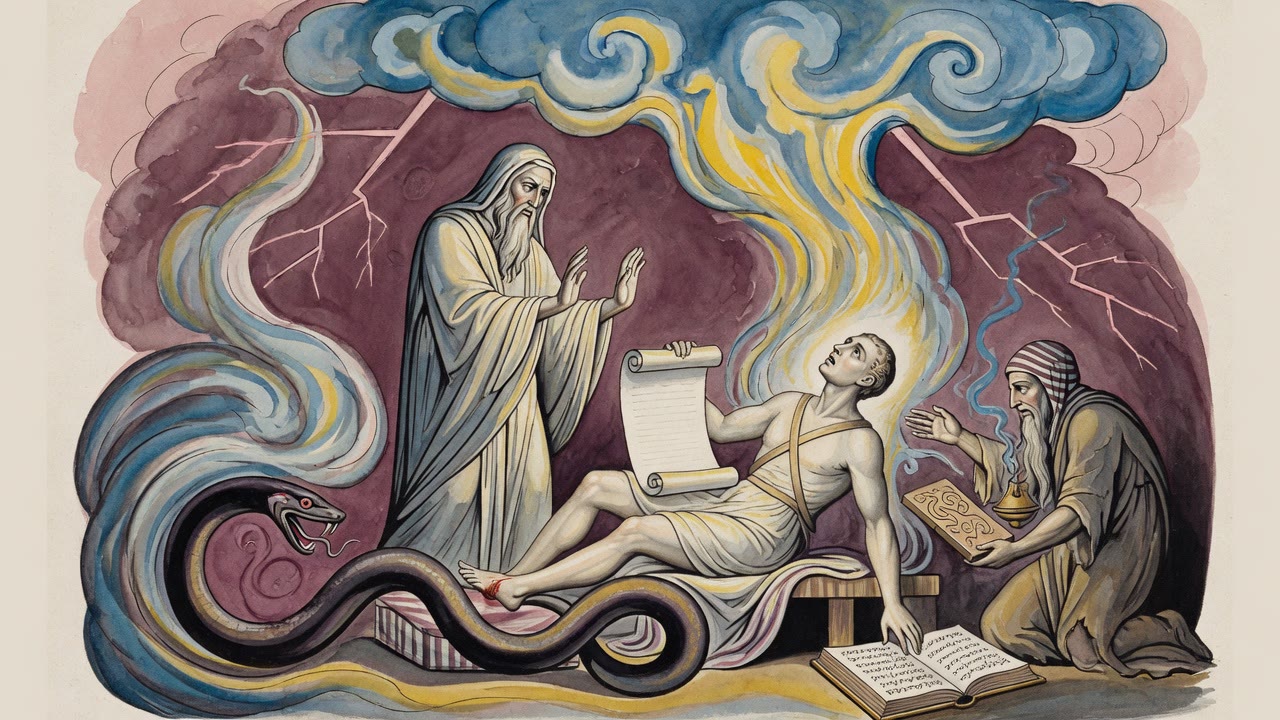
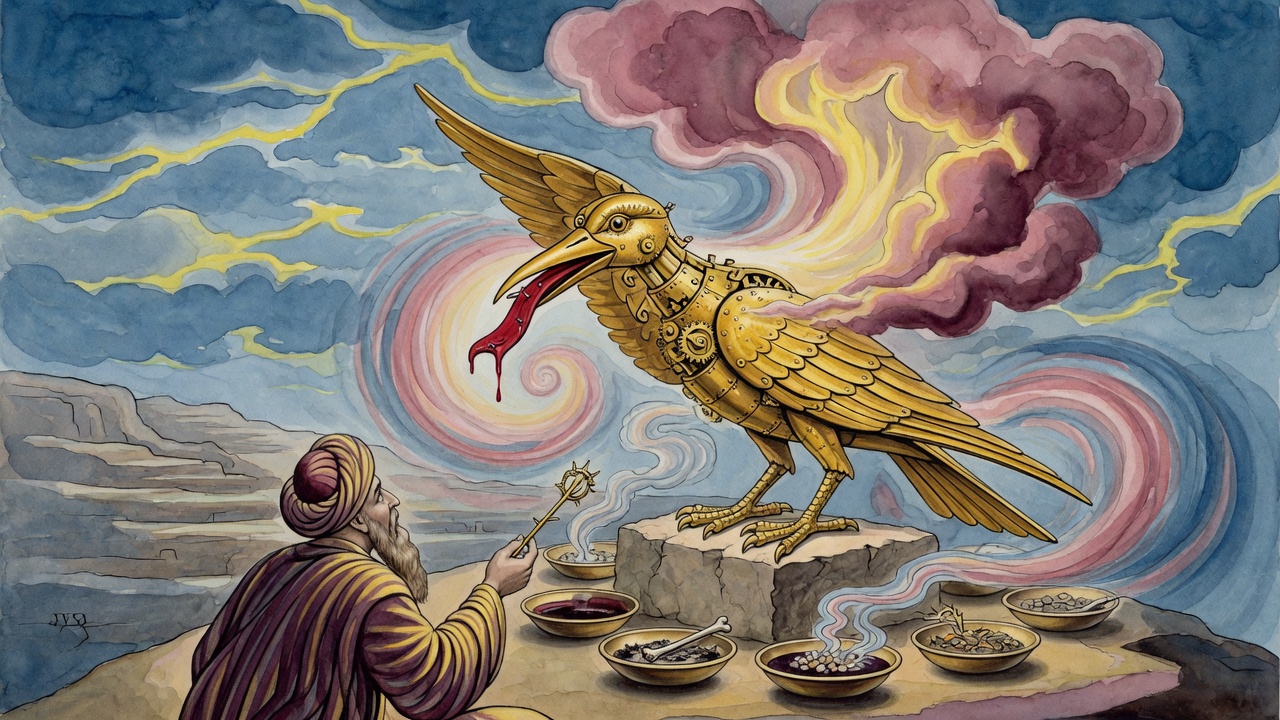
A ritually pure child sat, sometimes in a practitioner's lap, while strange words were whispered into a small ear and repeated aloud. Oil, a mirror, or a thumbnail caught the light. The child stared until shapes came. First an angel. "What color is he wearing?" If red, the angel was angry and more prayer was needed. If white, the work could go forward. Then letters surfaced, and the master assembled them into answers.

Across centuries the same black-handled knife appears for invoking the princes of the thumbnail, from Rashi's France to manuscripts of Spain, Tunis, and the Ottoman lands. The Torah forbids divination (Deuteronomy 18:10-12). The street kept inventing ways to ask anyway, and the sages spent ages drawing the line between forbidden omen-hunting and permitted signs like Eliezer's test at the well or Jonathan's signal before battle.

The child's eyes watered from staring. The room smelled of oil. Adults leaned in as if holiness could be cheated into speaking early. Anxiety wore the costume of ritual precision.

Rav on the Road

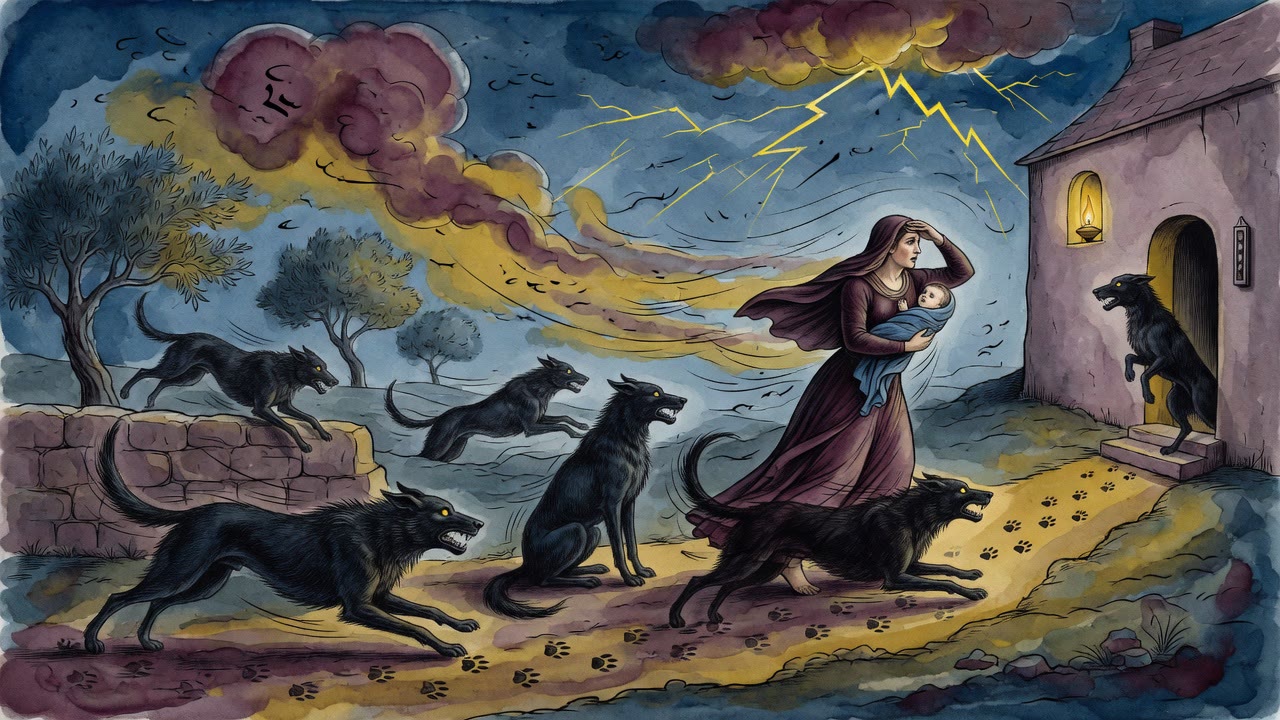
Rav once traveled toward a distant town and met a run of small shocks: a bird cutting the path, a dog barking thrice, a donkey planted in the road. Other cultures would have turned him around. He paused. He would not rewrite his journey on signs alone, and he would not mock the whisper of caution in his own heart. A person should not rely on omens, he taught, but neither should a person ignore that whisper.

When Eliezer sought a wife for Isaac, the water-and-camels test was read as character watch, not as surrender of reason to superstition (Genesis 24:14). The servant looked for kindness in a stranger's hands. That is different from forcing a nail to cough up tomorrow's secrets. The boundary is thin. Careful feet walk it without pretending the world is mute or that every flutter is a decree.

Rav wiped dust from his sleeve and kept walking, more awake than before, less enslaved than a man who lets a bird vote on his route. The road remained a road. Caution remained a tool, not a master.

Two Astrologers in Usha

After the Bar Kokhba revolt failed in 135 CE, the life of the Sanhedrin (the high court of seventy-one sages) regrouped in places like Usha. Two astrologers arrived as a delegation to study Jewish law under Rabban Gamliel's house and report home. They came ready to find a system they could dismiss. They studied civil procedure, property, servants and strangers, festivals, witnesses. The Exempla says they found the legislation excellent. A few narrow rulings struck them as odd beside Roman or Babylonian habit. The overall judgment held. The Torah's law stood up under foreign eyes.

They did not convert. They did not need to for the story to matter. The sages had not hidden the books. They had opened the table and let the law speak. In a century of imperial suspicion, that openness was its own kind of courage. No black knife was required to validate a statute about damages or festival rest. Daylight was enough.

The astrologers left with notes, not with secret names. Their report, if the tale holds, was a rare compliment from the outside: this people's justice works.

Two Ways of Asking the Sky

The child with the black knife and the astrologers in Usha ask different questions. One wants a secret letter from a polished nail. The other wants to know whether a people's justice can bear inspection. Jewish anxiety about signs never fully died in the medieval street. Jewish confidence about law sat in Usha and did not tremble. Between them stands Rav's road, where a man may feel a warning without making the bird his master.

Sneezes, dreams, the direction of a flame, the street collected omens the way pockets collect lint. The academies kept answering with distinctions, permissions, and bans. Eliezer's jug of water remains the model of a sign that tests character in public. The thumbnail princes remain the model of a hunger that wants tomorrow without earning it.

The angel in the oil may wear red or white. The law in Usha wore daylight. That is the harder brilliance to counterfeit. A child can be taught to stare at a mirror. A people that opens its statutes to foreign critics has already chosen a different kind of seeing.

A mother in a medieval alley might still pay for a whispered charm when a child burned with fever, while a student in the beit midrash argued the exact border of Deuteronomy's ban. Both lived inside one people. The black knife and the open code did not cancel each other cleanly. They competed for trust. Usha's guests chose the code. The street often chose the knife. The tradition records both so no one can pretend the struggle was simple or finished.


← All myths
From the tradition

Sources

3 sources

The texts behind this telling. Some cards carry a translation of the source; others are our own retelling of it, and each card says which. Every card links out to the original.

Jewish Magic and Superstition, Ch. 14Jewish Magic and Superstition (Trachtenberg, 1939)

Retold in our words. Read the original at the link below.Jewish Magic and Superstition, Joshua Trachtenberg (1939) · Public Domain

Despite the Torah's explicit prohibition against divination (Deuteronomy 18:10-12), medieval Jews practiced it extensively. And spent centuries debating exactly where the line fell between forbidden sorcery and permitted "signs." The Talmud itself drew a distinction: Eliezer's test at the well (Genesis 24:14) and Jonathan's sign before battle (1 Samuel 14:9-10) were innocent, while deliberate omen-seeking was not. Joshua Trachtenberg documented how this boundary was interpreted, stretched, and frequently crossed throughout the medieval period.

The most elaborate Jewish divination technique involved a child medium, a reflective surface, and a precise ritual script. A ritually pure child was seated, sometimes in the practitioner's lap. And mysterious words were whispered in the child's ear, which the child repeated aloud. The child then gazed into a polished surface (oil, a mirror, a thumbnail) and reported what appeared. First the child would see an angel. "What color is he wearing?" the master would ask. Red meant the angel was angry, more prayers were needed. White meant success. Then letters would appear, which the master would assemble into words and answers.

This ritual was remarkably stable across centuries and geographies. Rashi in 11th-century France mentions the requirement of a black-handled knife for invoking the "princes of the thumbnail." Manuscripts from 16th-century Spain, 17th-century Tunis, and 18th-century Ottoman lands preserve the identical detail. A 1455 German text by Johann Hartlieb describes an almost identical procedure. So close that it seems drawn from the same tradition, though scholars believe the accounts are independent.

Simpler methods flourished too. Sneezing was an omen, the Talmud noted its significance, and a late tradition held that before Jacob, everyone who sneezed immediately died. Dogs howling at night foretold death, a belief the Talmud (Bava Kamma 60b) connected to the presence of Samael, the Angel of Death, passing through town. Special foods eaten on Rosh Hashanah, apples in honey, pomegranates, fish heads, functioned as a form of sympathetic divination, where consuming symbols of abundance was believed to draw abundance into the coming year.

Even the great rationalist Mordecai Jaffe (16th century), who denounced most divination methods, stopped short of condemning all omens. The pull of tradition was simply too strong. Medieval Jews lived in a world where signs were everywhere, in flickering candles, in the flight of birds, in the itching of an eyebrow. And reading them felt less like sorcery than survival.

Full source
Gaster, Exempla no. 258The Exempla of the Rabbis (1924)

Retold in our words. Read the original at the link below.The Exempla of the Rabbis, Moses Gaster (1924) · PD-US-pre-1929

Two astrologers were sent on a delegation to Rabbi Gamliel in the town of Usha. Their mission was to study Jewish law from its source, to examine it in detail, and to report back to their own authorities on what they found.

Usha in the second century was one of the centers where the Sanhedrin reassembled after the failure of the Bar Kokhba revolt in 135 CE. Rabban Gamliel of Yavneh's grandson presided there. The astrologers arrived expecting to find a body of law they could critique or dismiss.

They did not. The astrologers studied what Rabban Gamliel taught them, and they found the Torah's legislation excellent. Civil procedure, property rules, the treatment of servants and strangers, the calendar of festivals, the laws of witnesses and evidence, all of it appeared to them sound and wise. The Exempla uses the word "excellent." The two men were not converts and did not become converts, but they were honest observers.

They did report back that a few minor legal prescriptions seemed peculiar to them. Some Jewish rulings on narrow technical matters struck them as odd compared to what they knew of Roman or Babylonian law. But the overall judgment was clear. The Jewish system held up under the scrutiny of foreign experts.

The story preserves a small but important Jewish self-assurance. The sages were not nervous about outside examination. They welcomed the astrologers, opened the tradition to them, and let the law speak for itself. The Book of Exempla places this scene among its brief reports because what it records is rare. A foreign delegation looked at Jewish law and said, on the whole, it works.

Full source
Exempla of the Rabbis, No. 273Exempla of the Rabbis (Gaster, 1924)

Retold in our words. Read the original at the link below.The Exempla of the Rabbis, Moses Gaster (1924) · Public Domain

Gaster's Exempla lists tale 273, "Carefulness," pointing to Hullin 95b, Midrash HaGadol on Genesis Hayye Sarah, and En Yaakov.

The original is a bibliographic index card, not the carefulness tale itself.

Full source