The Black Dog That Blocked Rabbi Ishmael's Mother Eight Times
The water was cold the eighth time. She had already been in it seven times that night. At the door, a man wore her husband's face.
Table of Contents
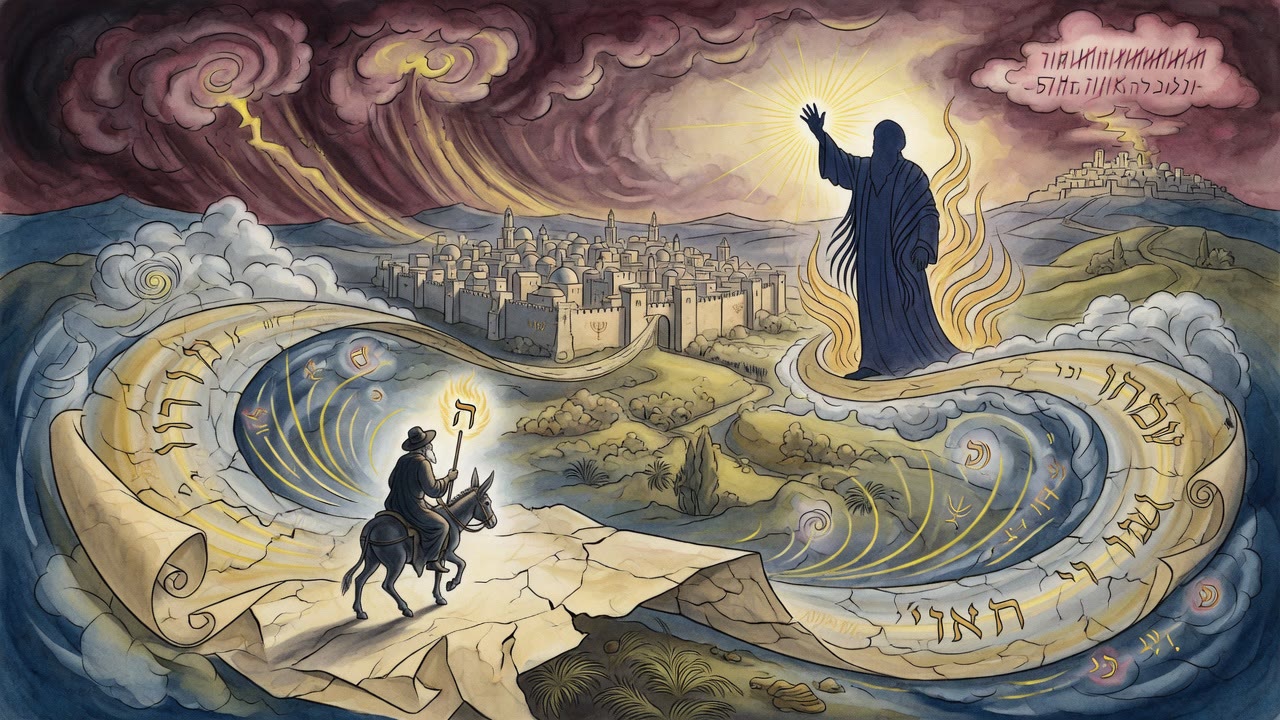
The water was cold, and she had already been in it once that night. She stood dripping at the edge of the mikveh (מקוה), the ritual bath, and listened to the dark street. The house she would walk back to had stayed quiet for years. No cradle. No small voice. Only a husband who counted the years the way other men count debts.
 Click for full size
He Sent Her Out With a Rule
He had spoken low before she left. Go to the bath. Immerse. Then watch the road home. If anything unclean crosses the path, anything ugly, turn around. Go back. Immerse again. Come home only clean, because only then, he believed, would heaven give them a child.
She wrapped herself against the night air and stepped out the bathhouse door.
The Black Dog on the Stones
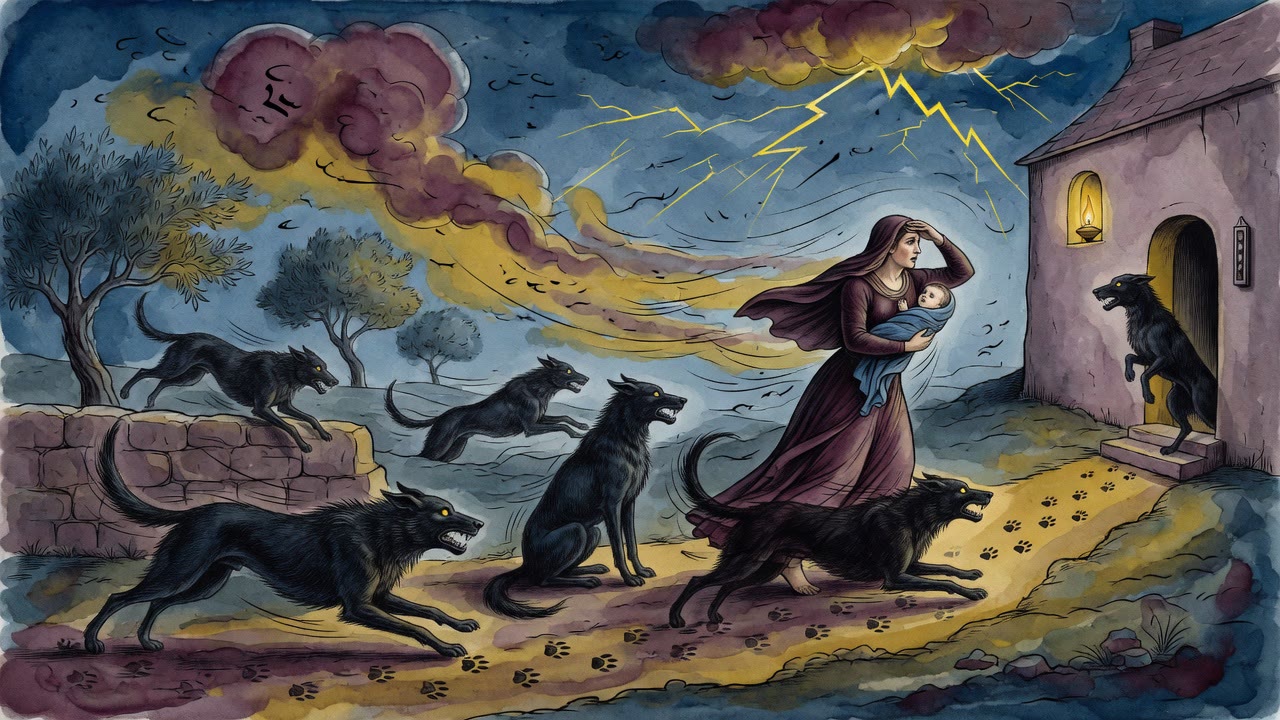
It was waiting. A black dog, low and quick, slid out of the shadows and cut across the road, close enough that she heard its feet on the stones.
She stopped. She remembered his words. An unclean thing had crossed her path, and so the immersion was undone. She turned around, walked back, undressed again, and went down into the water.
She came out. She dried herself. She opened the door. The dog crossed.
She went back. She immersed. She came out. The dog was there.
Eight Times Down
Once. Twice. Three times into the water, and three times the black shape sliding across the stones. Four. Five. Her skin ached from the cold. Her hair hung heavy. Six. Seven. Another woman might have decided the dog was only a dog, walked home, and said nothing.
She did not. The eighth time she went down with the same care as the first, because her husband had asked it of her. By then stubbornness had hardened into something else. Eight immersions. Eight returns. She stood at the door having been tested eight separate times, still dripping, the street empty except for the work the dog had already done.
Gabriel Wore Her Husband's Face
Heaven had been watching the way a judge leans forward when a witness keeps telling the truth. God saw the cold water and the black dog and the eight refusals to quit.
So God sent Gabriel.
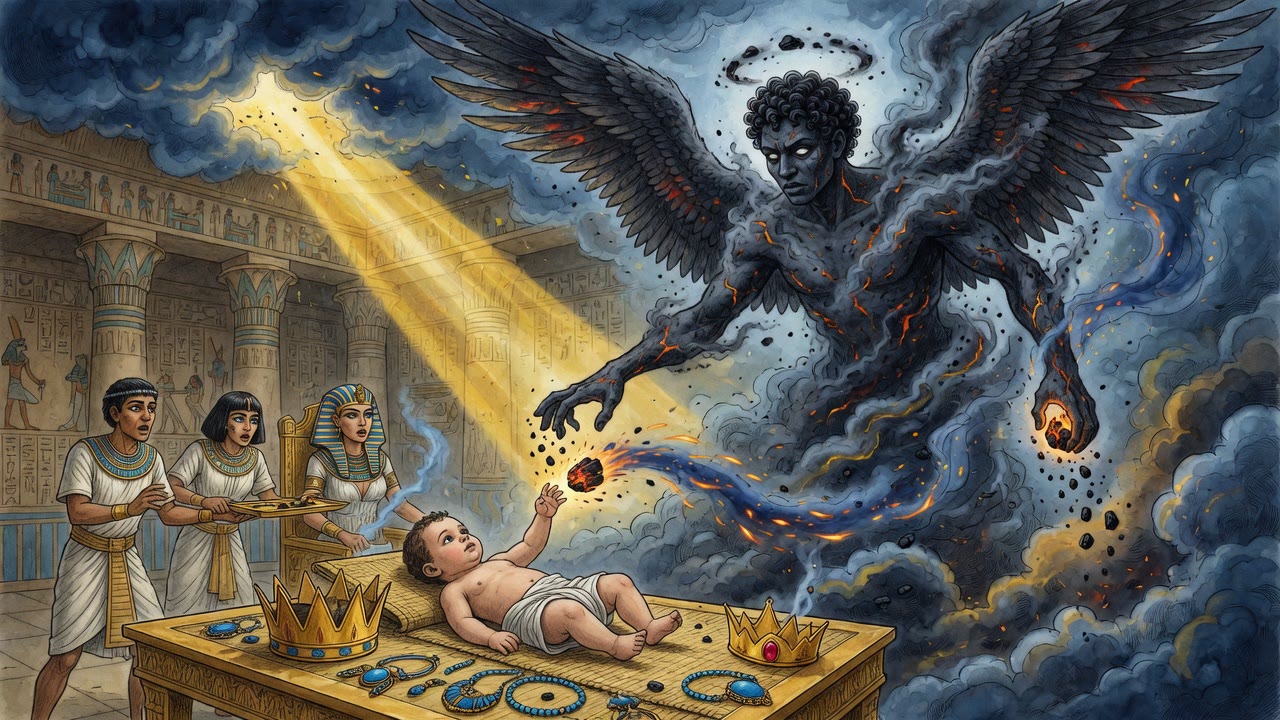
The angel came down and put on a shape. Not wings. Not fire. Nothing that would frighten her. Gabriel took the form of her husband, exactly his face, exactly the man she loved, and met her at the bathhouse door as if he had come out into the night to walk her home.
From that night, after the barren years, she conceived.
The child she bore was Rabbi Ishmael ben Elisha. Everyone who saw him said the same thing. He was so handsome that he resembled an angel. People meant it as praise. The boy's face was not an accident. It was an inheritance from the visitor at the door.
He Climbed the Other Way
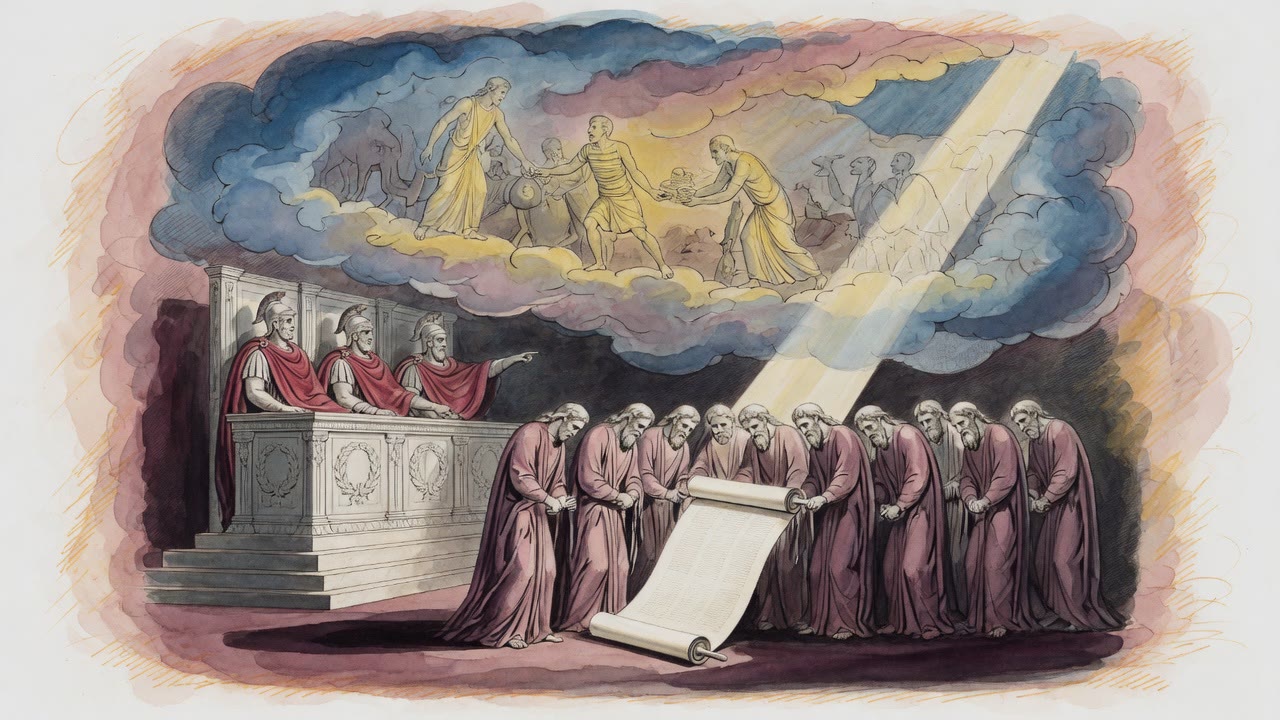
The boy with the angel's face grew into one of the great sages of his generation. A Roman emperor, curious about the Torah, summoned ten sages to study with him. All went smoothly until they reached the verse: "He who kidnaps a man, whether he has sold him or is still holding him, shall be put to death" (Exodus 21:16). The emperor thought of Joseph, sold by his brothers, and demanded to know why those brothers had never been punished. The sages conceded that the law applied.
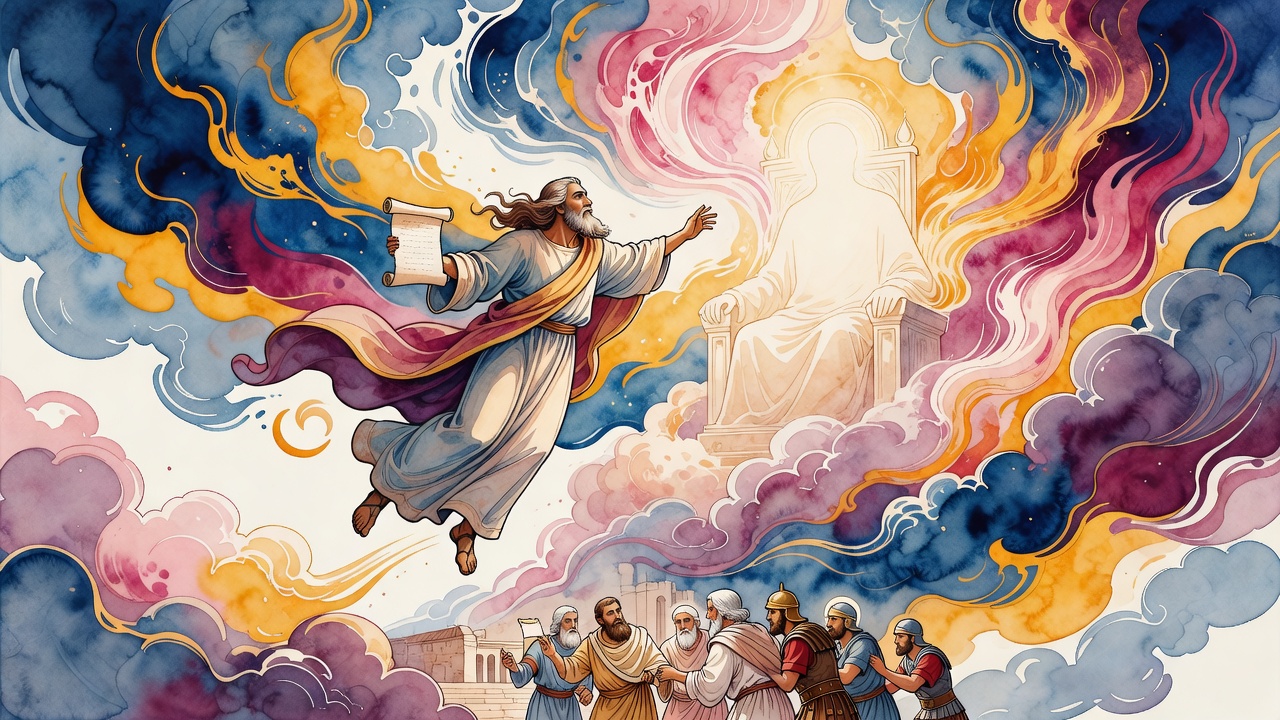
Out of that trap came the decree against the ten. Out of the decree came Rabbi Ishmael's ascent. The man conceived at a bathhouse door went up at the end to stand where the angels stand.
Another bathhouse sits in the same company. The prophet Jeremiah went to a bath and found wicked men of Ephraim there. He rebuked them. They turned on him and would not let him leave until he did as they did. He left that place cursing the day he was born (Jeremiah 20:14). From that water, without any union of man and woman, his daughter conceived Ben Sira.
An angel came down for Rabbi Ishmael's mother. A sage climbed up. The road ran both ways through that family.
← All myths