Heaven Waited Until Dawn Before Egypt Drowned
Fire makes peace with hail, Gabriel holds back at the sea, and Michael waits for dawn to drown Egypt's sorcerers, because destruction must wait for command.
Table of Contents
They had asked Moses when, and he had said tomorrow, and they told him the truth back: there was no strength left in them for another day. So he prayed, standing between a sea that had not opened and an army they could already hear.
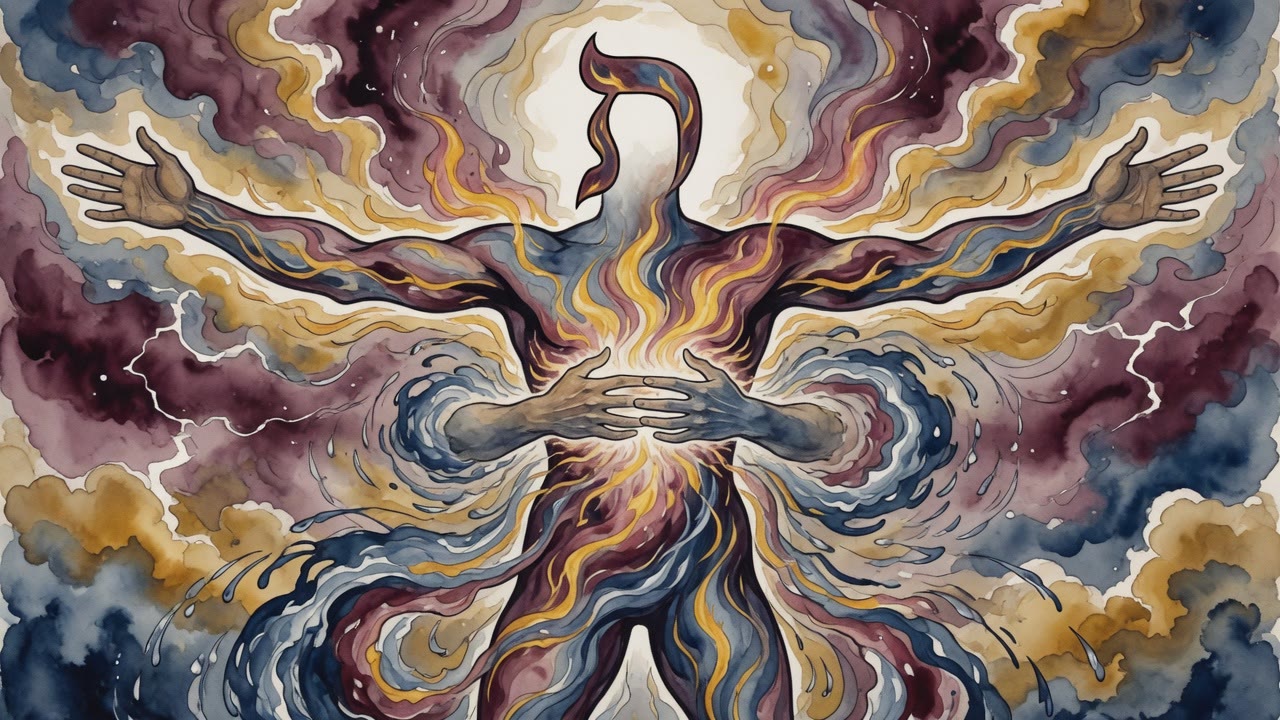 Click for full size
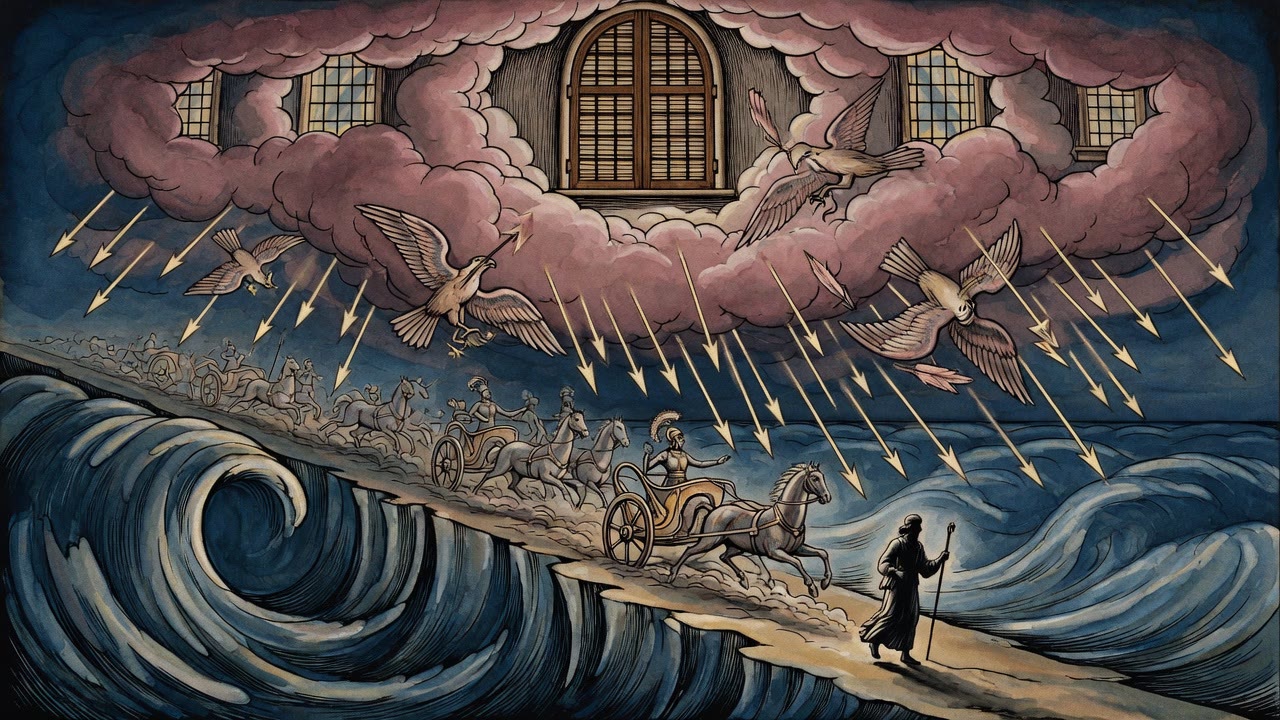
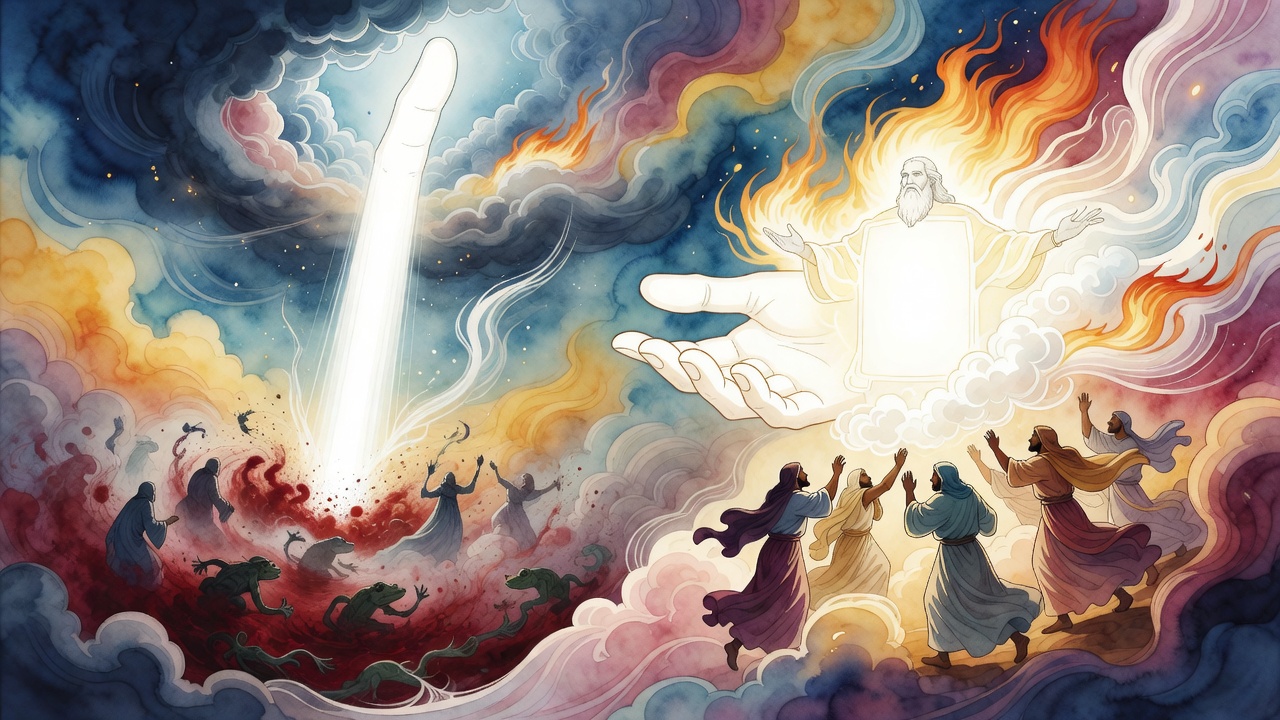
What opened was their eyes. Squadrons of ministering angels stood drawn up on the sand in front of them in battle order, and the whole apparatus came into focus at once, since every piece of the sky over their heads turned out to be equipment. The hail was shot stacked for the catapults. The coals of fire were the engines. Thunder was shields banging together and boots coming down in step, and the voice from above was the scrape of weapons being cleaned before use. Israel had been standing inside an army all afternoon without knowing it.
Then the sun went down, and the army did not move.
The Hour Abraham Rose Early
Gabriel wanted to go in. Egypt was in the water by then, six hundred chariots and the men driving them, and Gabriel had the assignment and the reach and every reason on earth, since the men below him came from the country that had been throwing Hebrew infants into the river.
The Holy One told him to wait. Not for a better line of attack and not for a signal from the sea, but for an hour, the hour of the morning when their own forefather Abraham had got up early, saddled his donkey and gone out to do what he had been told (Genesis 22:3). Egypt had that on deposit, however far back it went, and the account would be honored before it was closed.
So Gabriel did not touch them all night. The two camps came nowhere near each other for the whole of it.
Two Legions Who Hated Each Other
He had a precedent for holding still, and it had come down on Egypt earlier that same year.
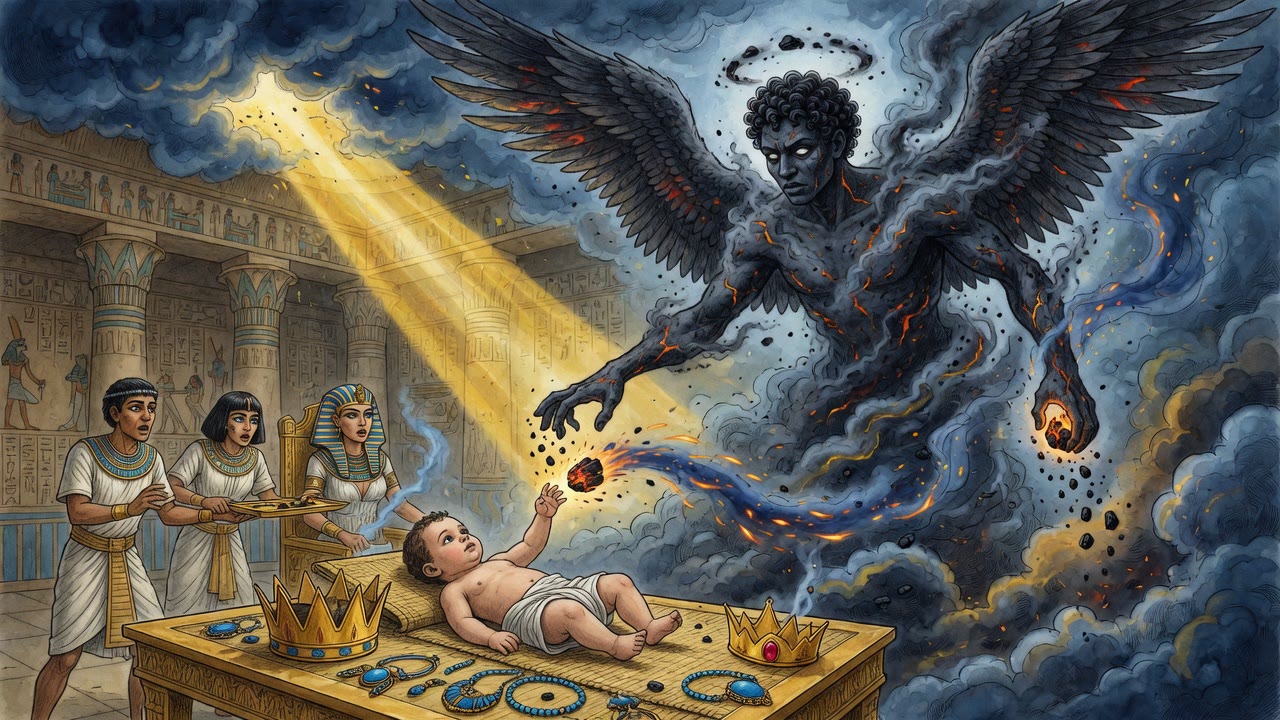
In the seventh plague, rain left heaven and turned to hail on the way down, because nothing evil keeps house beside the Holy One, and inside the hail there was fire. Not fire alongside it. Fire in it, showing through the ice the way the seeds show through a split pomegranate, burning without melting its own shell.
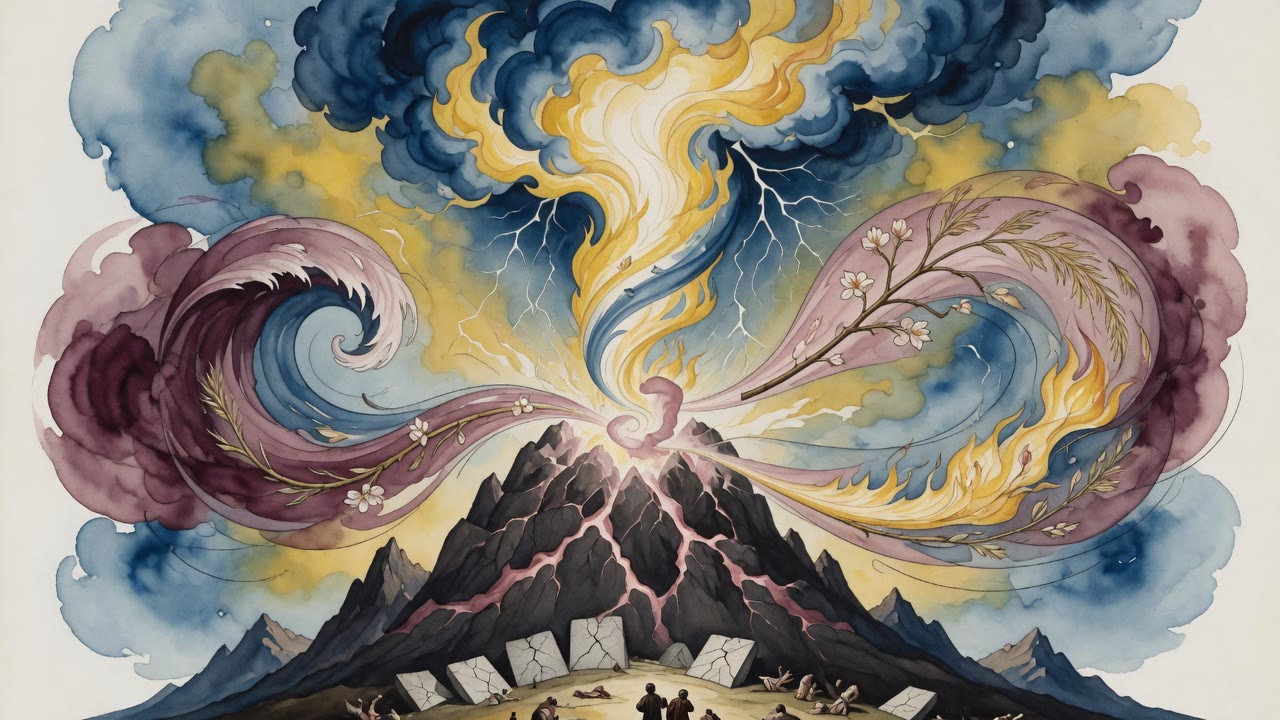
Fire and hail had been enemies since the day they were made, and they were two harsh legions of one king who had spent their whole existence fighting each other, until the king's own war came and they made peace between themselves long enough to go out and fight it for him. Once it held there it held everywhere. The firmament is water and the stars set in it are fire, and neither puts the other out. Michael and Gabriel stand next to each other and neither one burns. He makes peace in His high places (Job 25:2).
Gabriel held.
The Sea Called Them a Deposit
Egypt did not drown quietly. Their magicians worked in the water and the work took, so that men who should have been on the bottom came up through the surface and floated there, and for a stretch of that night it looked as though the sea would have to give back what it had been handed.
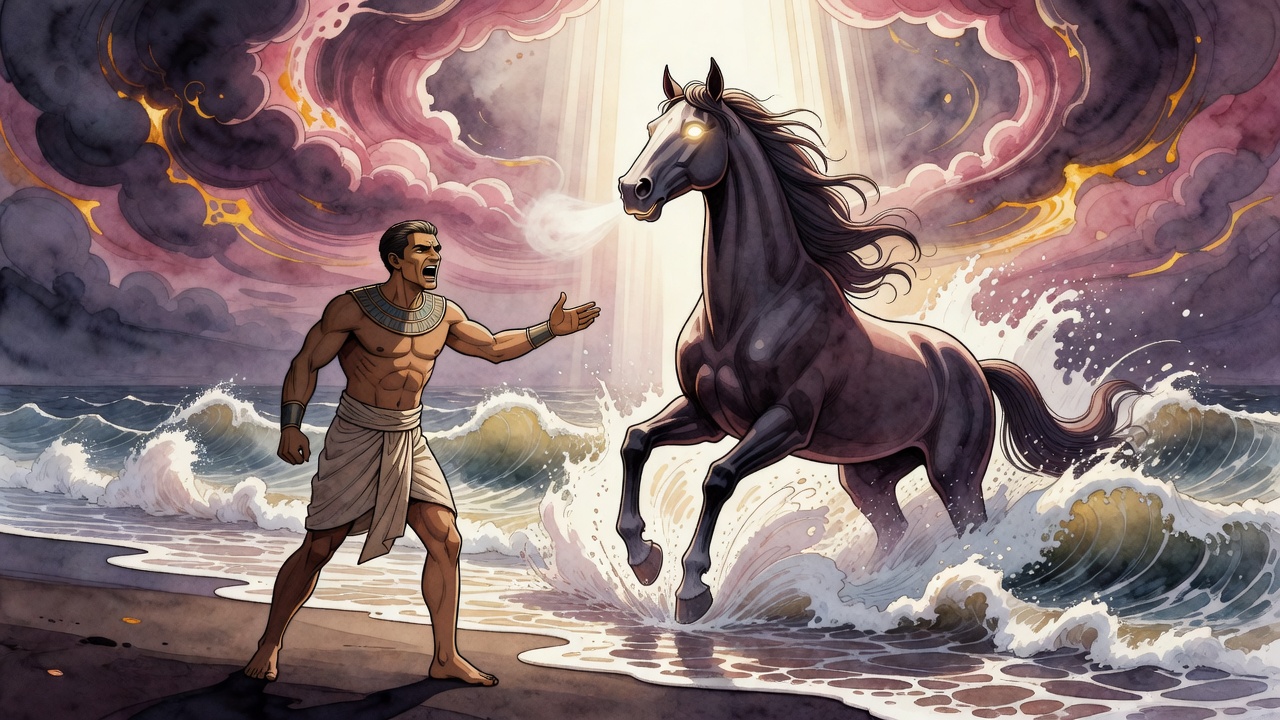
The sea refused. This is a deposit the Holy One left with me, it said, so how am I supposed to let it slip out of my hands? After that the water went hunting. It ran down each Egyptian separately, one wave shaped for one man, took him under and then went back up for the next one, until there was nobody left on the surface to argue with.
Yochani and Mamre Made Wings
Two of them got out. Yochani and Mamre, the two great sorcerers of Egypt, made themselves wings out of their own craft and went up out of the water. They cleared the spray, they cleared the wind, and they hung themselves at the roof of the world, where the sea could not reach and where the angel with the assignment had been told not to move.
Gabriel said the line that was about to be sung on the far shore. In the greatness of Your majesty You break those who rise against You (Exodus 15:7).
Michael was sent instead. He took the two of them by the hair at the crown of the head, the way a man picks up something he does not intend to carry far, and brought them down onto the water hard enough to break the heads of sea monsters (Psalms 74:13). That was dawn. Gabriel had waited the entire night for it and did not get to do it himself.
The Gentle Ones and the Cruel Ones
What came for the drowned was not one kind of thing either. Part of Egypt went into the hands of young angels, the gentle ones, and their dying took no longer than it had to. The rest were handed over to the cruel ones, because a cruel messenger is sent against a man for a reason (Proverbs 17:11), and the reasons had been kept.
Nothing in that water was general. Every man in it met an end cut to his own size, at an hour fixed by an old morning in Canaan when somebody's ancestor got up before the light, and by the time the water lay flat the far shore had already started singing.
← All myths