6 min read

The Blasphemer Who Walked Out of His Own World

A half-Israelite son leaves the showbread dispute, leaves the camp, and leaves the world he still thought he owned.

Curated by Arthur · Told by Maggid ·
Table of Contents
  1. Warm Bread for a King
  2. He Went Out From His World
  3. Four Fences in One Mouth
  4. What the Camp Did With the Silence
  5. The Name That Must Not Be Erased

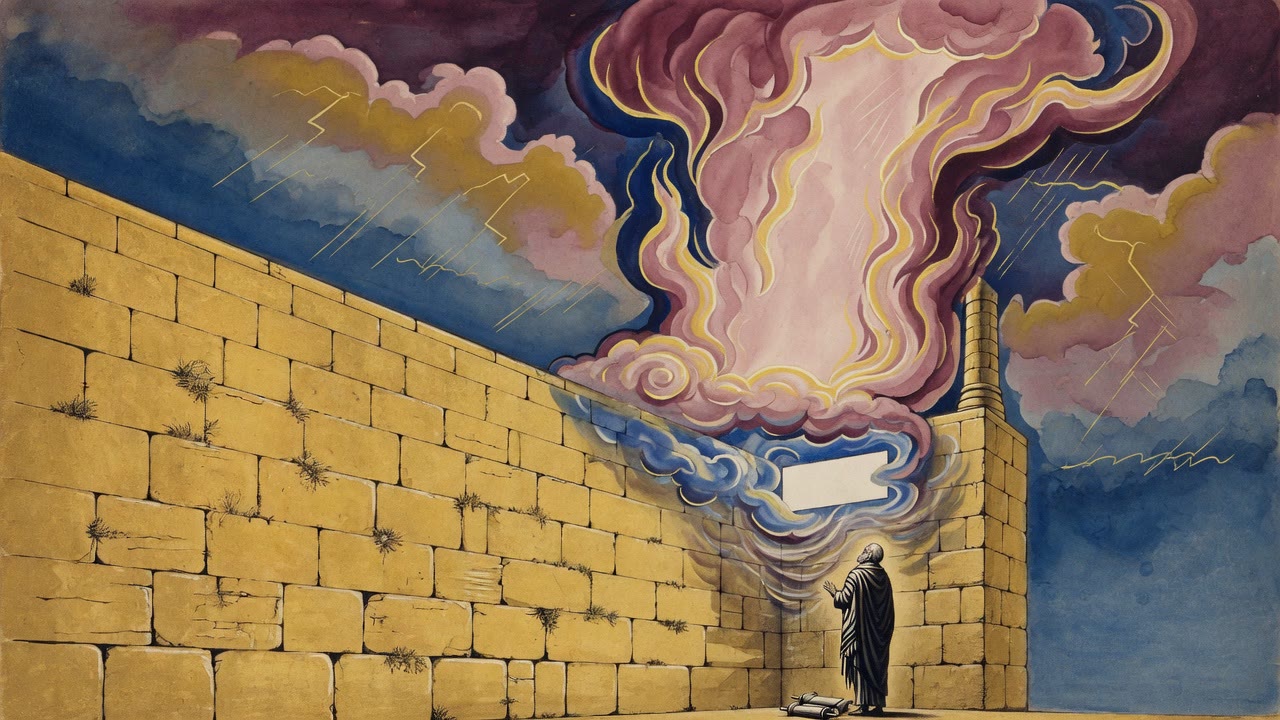
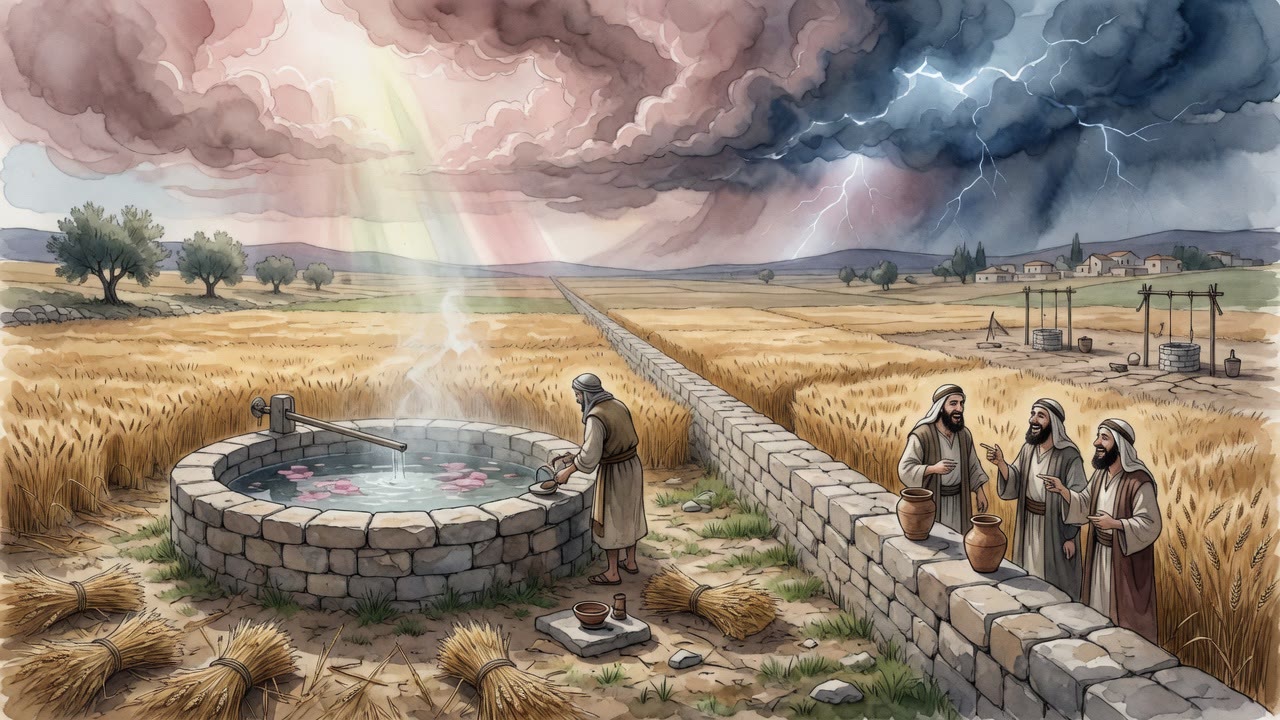
Shelomith's son stepped past the last tent rope and kept walking. Dust stuck to his sandals. Behind him the camp still smelled of flour and oil from the twelve loaves. Ahead of him the open ground offered nothing but a place to speak what he could no longer swallow.
The Blasphemer Who Walked Out of His Own World Click for full size

He was the son of an Israelite woman and an Egyptian father, a man with one foot inside the covenant and one foot still hearing Egypt. On this day the half-measure broke. The Torah would later write only that he "went out." The midrash fills the empty space with a body in motion.

Warm Bread for a King

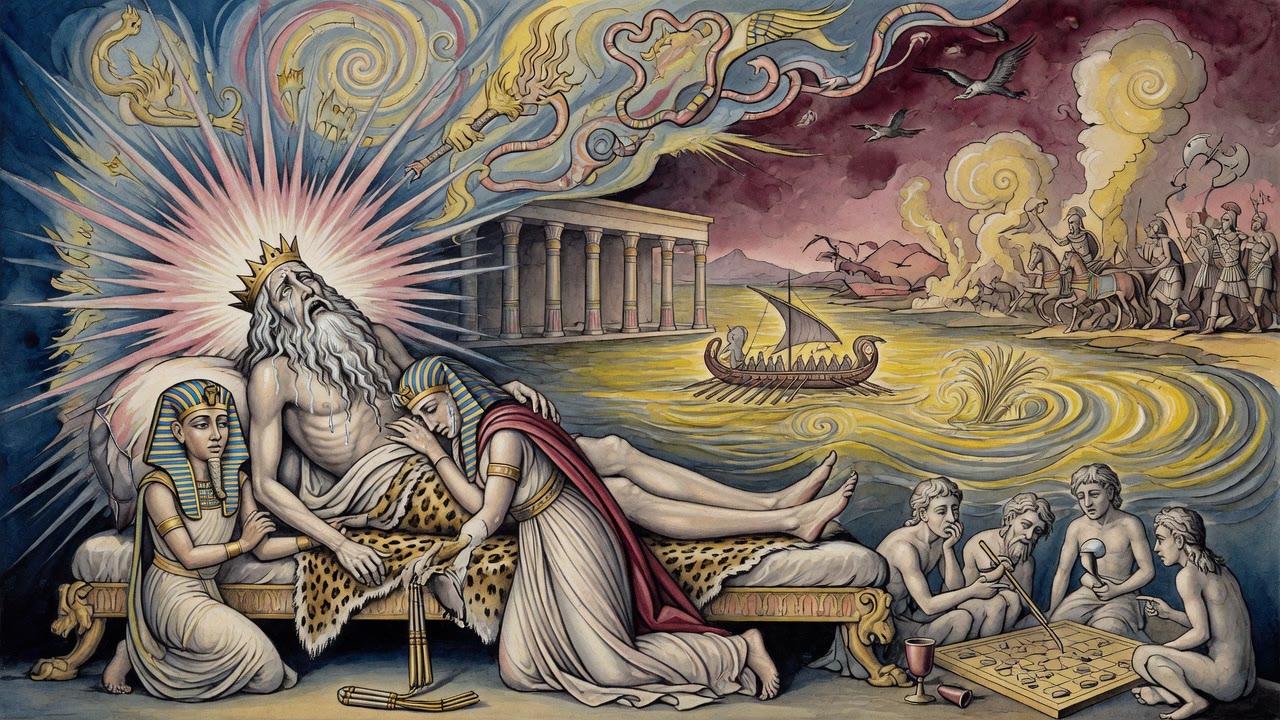
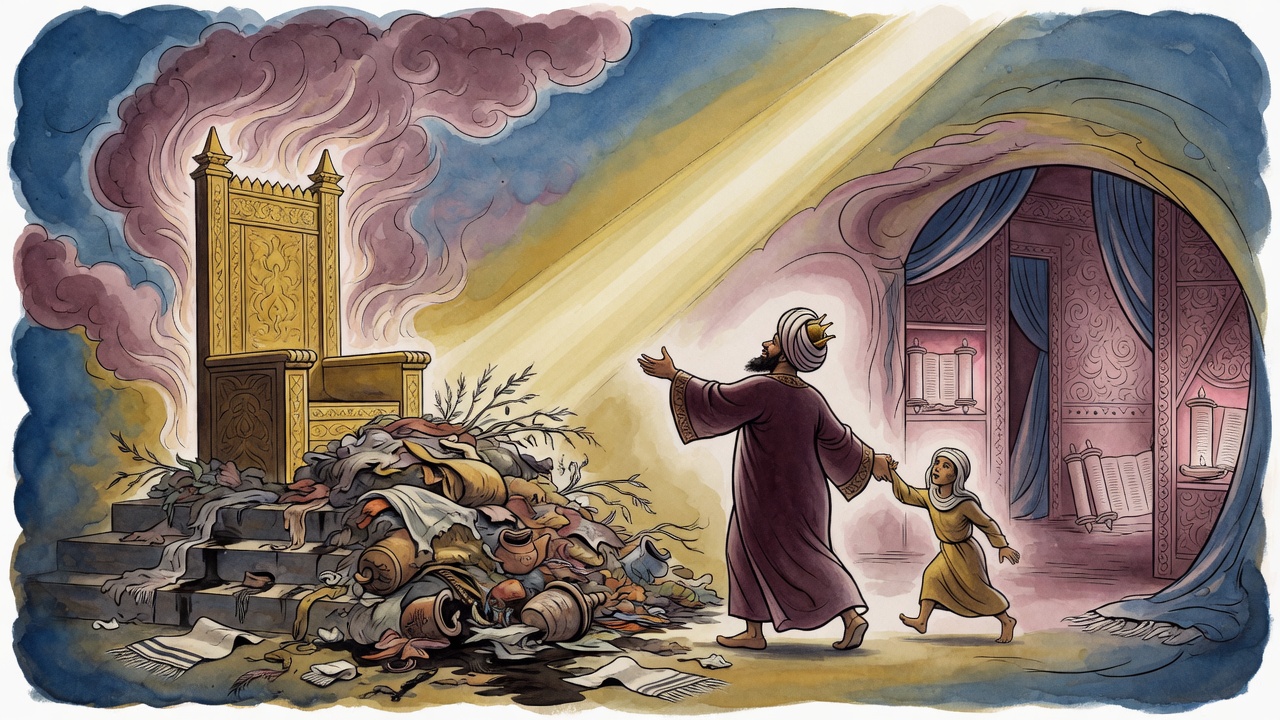
The quarrel had started over the showbread. Fine flour, twelve loaves, set out for the Holy One as if a king still wanted bread while it was warm. The young man watched priests handle the cold loaves and felt the insult climb his throat. "It is customary for a king to eat warm bread," he said. "Would he eat it cold?"

No one answered him with kindness. The ritual stood. The bread would sit until its appointed day, ninth or tenth or eleventh after baking, because Sabbath and festival do not yield to a man's impatience. He heard the rules and heard only that Heaven preferred stale hospitality to his own heat.

Rabbi Berekhyah later said the man went out from that very paragraph, from the showbread chapter into the chapter of the curse. One step from flour to fury. The Torah places them side by side so later generations can watch a soul leave a holy argument and enter a lethal one.

He Went Out From His World

Rabbi Levi heard a harder meaning. The man did not merely leave a tent row. He went out from his world, the way a champion once went out to stand alone between armies. He abandoned the life that still held him. In that reading the blasphemer is already half dead before the first forbidden word leaves his mouth. He has stepped off the map of belonging.

The camp watched him go. Some still thought of him as Shelomith's boy. Others already counted him foreign. He carried both judgments in his chest and found neither one soft enough to rest on.

Four Fences in One Mouth

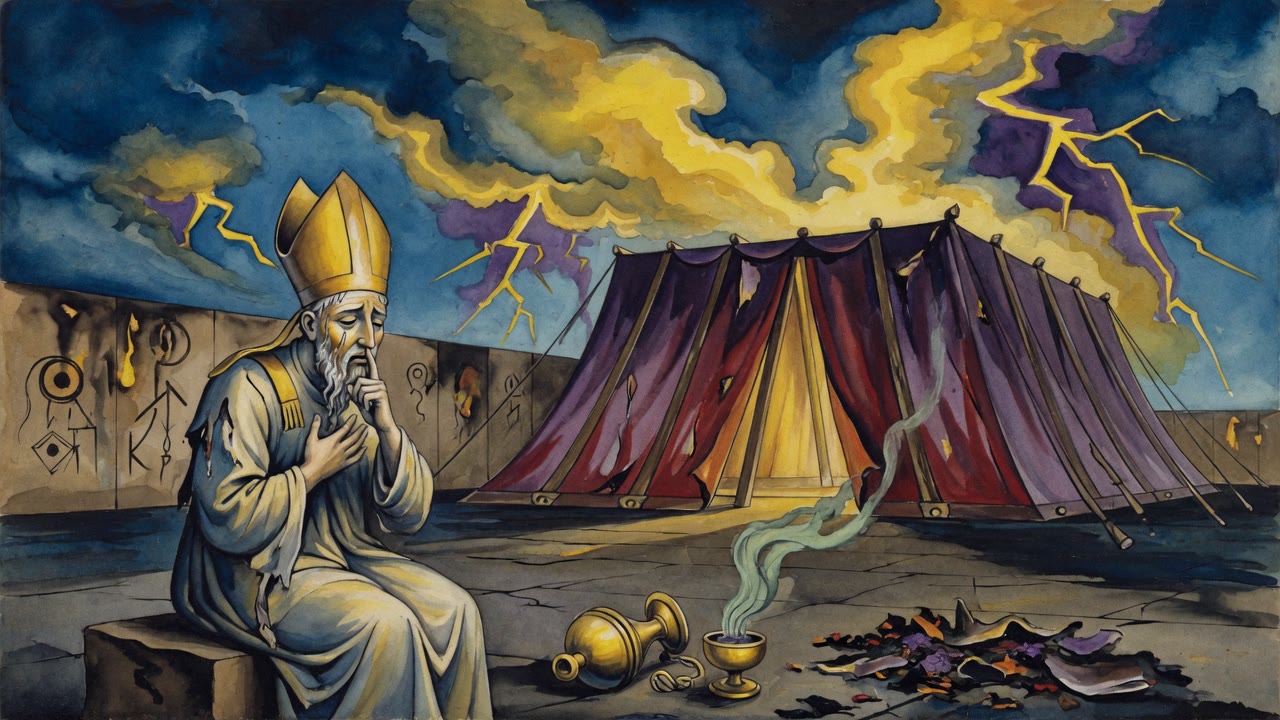
What he spoke next the Torah refuses to print in full. It is enough that he "pronounced the Name" and cursed. Nearby the sages later set two short fences: do not revile God, and do not curse a ruler of your people. The word Elohim can name the Holy One or a human judge. A careless tongue can strike both at once.

They pictured a son of a ruling judge who curses his own father and becomes guilty four ways: against a parent, against a judge, against a ruler, and against a fellow of the covenant. One mouth. Four broken fences. The blasphemer in the wilderness did not need a judge for a father. He still managed to tear more than one boundary with a single breath.

The protection of rulers, the sages added, is not automatic. A tyrant like Ahab forfeits the verse's shield. Ordinary people under "among your people" still deserve restraint. Words land on bodies. The camp learned that when the cursed Name left a living throat.

What the Camp Did With the Silence

They seized him and held him. The law for such speech was not a private quarrel. It belonged to the whole people, because the Name he had dragged into dirt was the Name that had brought them out of Egypt. They waited for judgment the way the showbread waits for its day, not in impatience but in dread.

Neighbors who had shared water with Shelomith's household now stood in a ring that was not quite a circle of comfort. Someone remembered the Egyptian father. Someone else remembered only the Israelite mother and wanted the son's blood kept outside the family count. The law would not run on gossip, yet gossip filled the waiting hours like smoke from too many small fires.

Children were pulled indoors. Priests checked the Name in their own mouths before they spoke any ordinary blessing, as if the blasphemy might be contagious. The held man sat with dust on his lips and no more arguments about warm bread. The quarrel that had seemed sharp in the morning looked small beside the pit he had opened with his tongue.

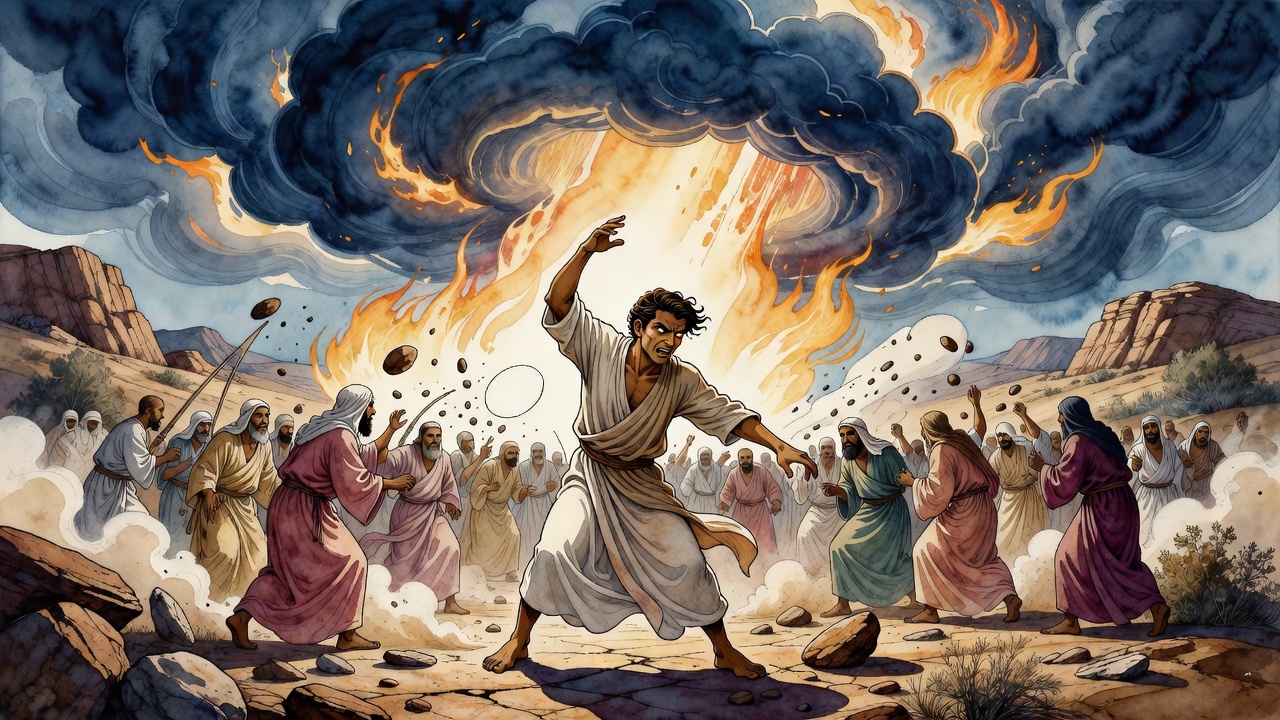
When the sentence came, it was public. Stones. A body that had walked out of its world finished the walk. The midrash does not gloat. It only tracks the path: warm bread refused, world abandoned, Name broken, life ended.

The Name That Must Not Be Erased

Scribes later learned to sort holy Elohim from ordinary uses before a pen touched parchment. The blasphemer had sorted nothing. He treated the Name as a weapon for his own heat. The camp learned the opposite craft: hold the Name so carefully that even a judge's title and the Holy One's title do not blur into one cheap shout.

Shelomith's son remains a warning with a human face. He left a dispute about flour and entered a war with Heaven. The dust on his sandals was the last ordinary thing about him.

Years afterward, when scribes debated which Elohim may be erased from a worn scroll and which may not, the blasphemer's dust still taught the same craft. Sort carefully. Speak carefully. Do not leave your world in a single heated step and expect the Name to follow as a servant.


← All myths
From the tradition

Sources

2 sources

The texts behind this telling. Some cards carry a translation of the source; others are our own retelling of it, and each card says which. Every card links out to the original.

Midrash Tanchuma, Emor 23Midrash Tanchuma

Retold in our words. Read the original at the link below.Townsend 1989 translation of Midrash Tanhuma, S. Buber Recension · CC-BY

(Lev. 24:10:) “Now there went out the son of an Israelite woman.” From where did he go out? R. Levi says, “He went out from his world, just as it is stated (in I Sam. 17:4), ‘And there went out a champion.’” R. Berekhyah said, “He went out from the preceding Parashah, where it is written (in Lev. 24:5), ‘Then you shall take fine flour and bake it into twelve loaves.’ He said, ‘It is customary for a king to eat warm bread. Would [he eat it] cold?’” It is like that which we learn there (in the latter part of Men. 11:9), “The shewbread was eaten no earlier than the ninth day [after baking] and no later than the eleventh day. How so? It was baked on the eve of the Sabbath and eaten on the Sabbath [of the following week, i.e.,] on the ninth day. [If] a holiday happened to fall on the eve of the Sabbath, it was eaten on the tenth. [In the case of] the two-day holiday of the new year, it was eaten on the eleventh, for [the baking] overrides neither the Sabbath nor a holiday. R. Simeon b. Gamaliel says in the name of R. Simeon the son of the Assistant [High Priest], ‘[The baking] overrides a holiday but does not override the fast day.’” (According the first part of Men. 11:9,) the two loaves of bread [offered at Pentecost] were eaten no earlier than the second day and no later than the third. How so? They were baked on the eve of the festival [of Pentecost and] eaten on the festival, [i.e.,] on the second day. If the festival happened to fall on the day after the Sabbath, they were eaten on the third day.

Full source
Yalkut Shimoni on Torah 351:4Yalkut Shimoni on Torah

Translation of the source text.Torat Emet (Yalkut Shimoni) · CC-BY-NC

"You shall not revile God (Exodus 22:27)" - this word serves both the sacred and the ordinary. As for all the secular names whose letters are like the letters of the Divine Name, behold, these may be erased. "For God knows that on the day you eat of it you shall be as God [or: as gods] (Genesis 3:5)" - the first is sacred and the second is ordinary. "For therefore I have seen your face, as one sees the face of God (Genesis 33:10)" - this is ordinary. "This is God's camp (Genesis 32:2)" - this is sacred. "You are a prince of God [among us] (Genesis 23:6)" - sacred.

Whoever has a son from any source, including a mamzer [a child of forbidden union], is liable for striking him and for cursing him. Why? We read here "A ruler among your people you shall not curse (Exodus 22:27)" as applying to one who acts as your people do, that is, when he has repented. But is such a one capable of repentance? Have we not learned, "That which is crooked cannot be made straight (Ecclesiastes 1:15)" - this refers to one who comes upon a forbidden woman and begets a mamzer from her? At all events, right now he does act as your people do.

If one gave money but did not draw the produce from the seller, he may retract, but the Sages said: He who exacted punishment from the generation of the Flood and so forth, He is destined to exact punishment from one who does not stand by his word. How do we deal with such a person? Abaye said: We give him formal notice, as it is written, "A ruler among your people you shall not curse." Rava said: We may even pronounce a curse upon him, for he no longer acts as your people do.

"You shall not revile God" - why is this said? Because Scripture says, "He who blasphemes the name of the LORD shall surely be put to death (Leviticus 24:16)." We have heard the penalty, but we have not heard the prohibition; therefore the verse teaches, "You shall not revile God." These are the words of Rabbi Akiva. Rabbi Ishmael says: Scripture speaks of judges, as it is said, "The matter of them both shall come before the judges (Exodus 22:8)." "You shall not revile God" - I know only the judge; from where do I learn the ruler? The verse teaches, "A ruler among your people you shall not curse."

I might read "A ruler among your people you shall not curse" as including both a judge and a ruler. Then what does "You shall not revile God" teach? To render one liable for this on its own account and for that on its own account. From here they said: There is one who utters a single statement and is liable for it on four counts. The son of a ruler who cursed his father is liable for it on four counts: as father, as judge, as ruler, and as "among your people you shall not curse."

Rabbi Yehuda ben Beteira says: "You shall not revile God" - I might hear that he is not liable unless the man is both judge and ruler; the verse teaches, "You shall not revile God," to make him liable both as judge and as ruler. If a ruler - even one like Ahab and his fellows? The verse teaches, "among your people" - I said this only at a time when they behave according to the custom of your people. "You shall not revile God" - I know only judge and ruler; from where do I learn every other person? The verse teaches, "among your people" - from any source.

Full source