Aaron Entered the Holy Place With Incense and the Word Zot
Aaron stopped at the veil with incense and the word zot, this. The Presence stood near or far by the side he took, and even goodness could taste death.
Table of Contents
 Click for full size
At the Threshold of the Veil
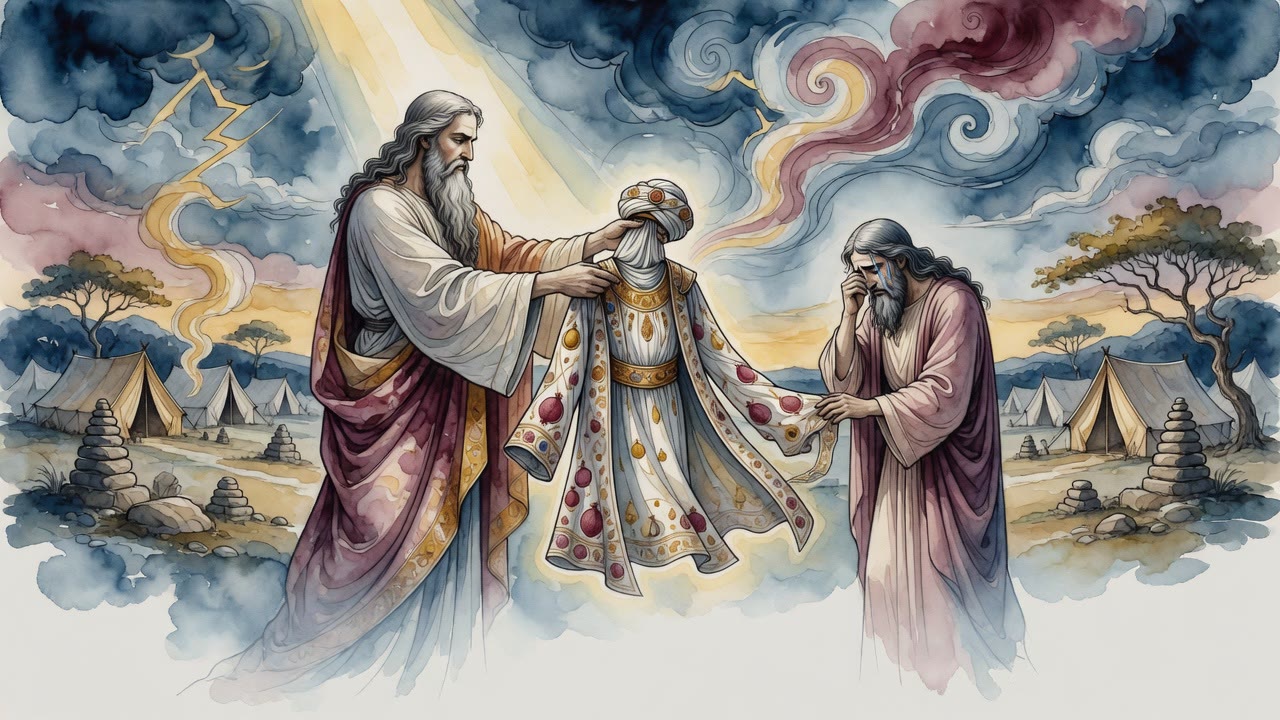
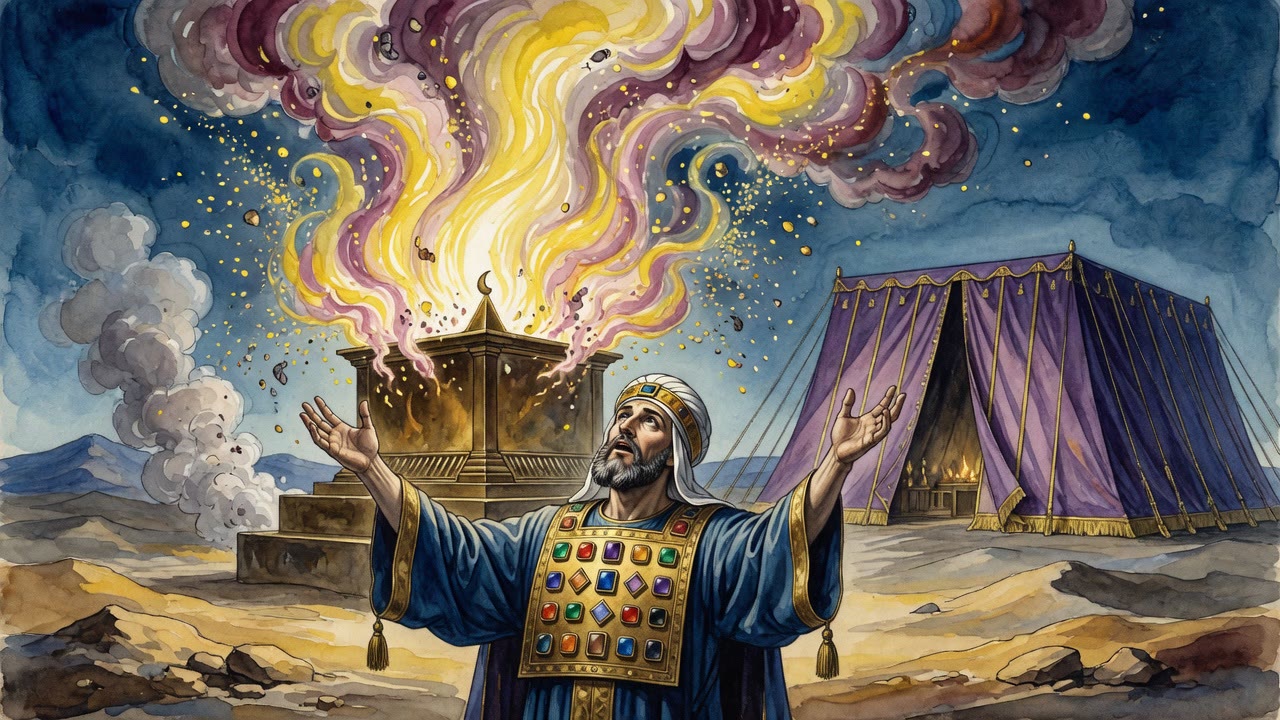
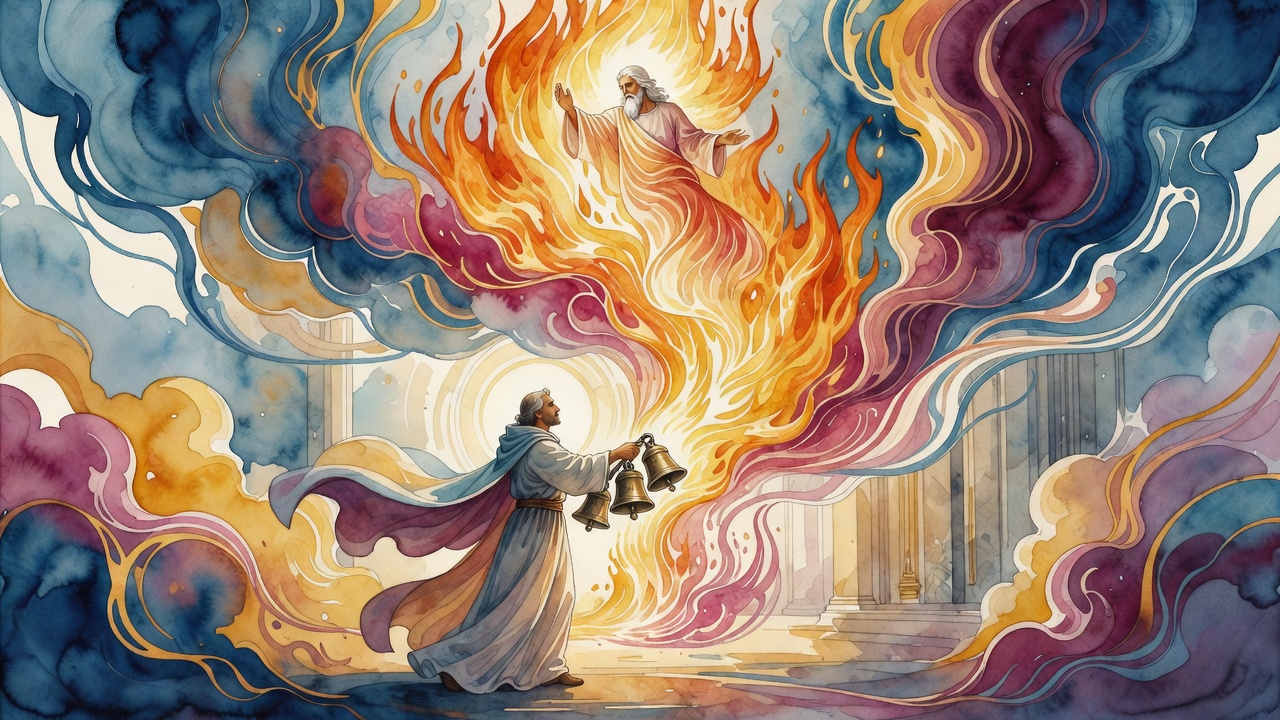
Aaron stood outside the holy with a censer that smoked like a second breath. Gold bells on the hem of his robe had gone quiet because he had stopped walking. Moses had given him the rule, and the rule was not a schedule of convenience. He shall not come at just any time into the holy.
"With zot shall Aaron come," the word pressed against his ribs. Zot, this. Not a tool he could forge. Not a date he could buy. The teachers who later traced the letters would say zot is the Shekhinah (the Divine Presence) (שכינה), the Presence that dwells, the last sefirah (the lowest of the ten divine emanations) called Malkhut, kingdom, the binding that keeps every higher light from pouring out into chaos.
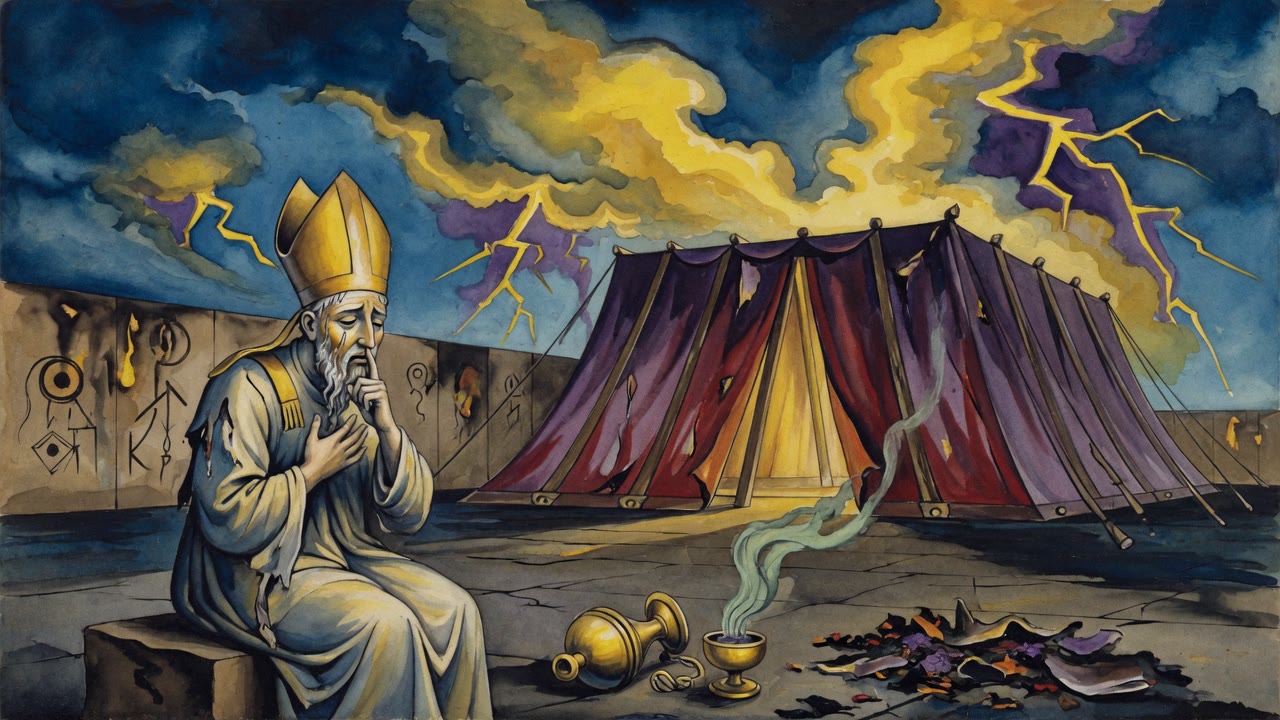
Aaron did not feel like a binding. He felt like a man whose sons had already died for wrong fire, and whose hands still remembered the weight of those bodies. He lifted the incense anyway. Smoke rose. The veil waited without mercy and without mockery.
Near from the Right, Far from the Left
Some days She stood near, and approach came from the right hand side, the side of gift. On those days the air inside the holy did not fight his lungs. Other days She stood distant, and the path bent through the left, through measure and limit, and his knees learned the cost of each step before his mind named it.
From the right, the teaching says, She does not receive impurity. From Her own place, even the good can take on the taste of evil and death, because Her place is the world where blessing and wound share a floor. Aaron walked that floor with blood of bulls and goats and with a heart that refused to pretend the world was already clean.
Moses remained outside the innermost approach in a different office. The lawgiver held the mountain and the tablets. The high priest held the hour when the Presence would accept a human body as a door. Without Her, the sefirot (divine emanations) would spill. With Her, the flow found a vessel and a direction toward those below.
When the Mighty Ones Shout Outside
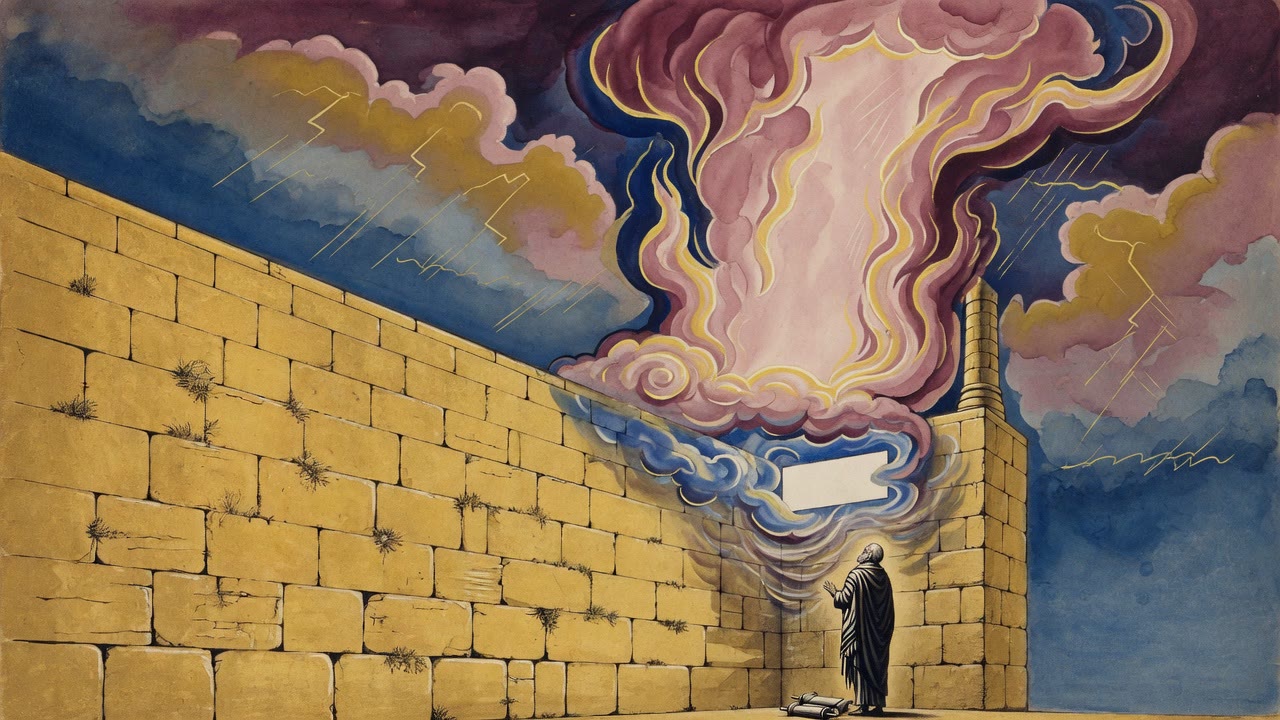
There were seasons after the Temples fell when the scene repeated in exile without gold or veil. The higher waters gathered away from Yesod, the foundation, and the river of the Presence ran dry and parched. Isaiah's line still cut: their mighty ones have shouted outside. Power stood in the street because it had lost its proper house.
Aaron's memory, kept in the books, became a map for a poorer age. A people without a sanctuary still needed to know that holiness is not a mood. It is a side, a nearness, a refusal to enter on any hour that serves only human appetite. The incense of the mind had to match the incense of the hand.
In the dry years the hosts above of the Shekhinah seemed to stand with empty bowls. A river that once ran through two Temples became a memory of wet stone. The priest of the old story still walked the page with zot in his fist, teaching later hands what a threshold costs.
Boast in This Alone
Jeremiah's warning sat beside the rite: let not the wise boast in wisdom, except in zot, in this. Aaron was not the cleverest man in the camp. He was the man willing to become a door for a Presence that could burn him if he came as a tourist.
He entered. Smoke filled the space between cherubim. For a span of breaths the world held. No voice explained the sefirot to him. No diagram hung on the veil. He felt only whether the air received him or resisted, whether the right path had opened or the left had measured him hard.
When he backed out alive, the bells spoke again. Israel heard gold and thought the service had succeeded. Aaron heard his own blood in his ears and knew success was only survival in the presence of a kingdom that binds the upper lights so lower creatures can live.
The Word He Carried Out
He washed. He changed garments. He returned to the ordinary court where goats bleated and people waited for a blessing that would make their year less sharp. He did not tell them about sides of approach. He lifted his hands and let the Name move through the cracks of a human voice.
At night he sat with Moses and said little. The brothers shared a silence thicker than instruction. One had stood in cloud on a mountain. One had stood in smoke before a veil. Both knew that zot is not a trophy. It is a companion that chooses distance and nearness according to a justice no priest invents.
The censer cooled. The veil kept its counsel. Somewhere above the map of lights, Malkhut still gathered what would otherwise scatter, and a man named Aaron still walked toward Her only when the hour and the word agreed to let him live.
← All myths