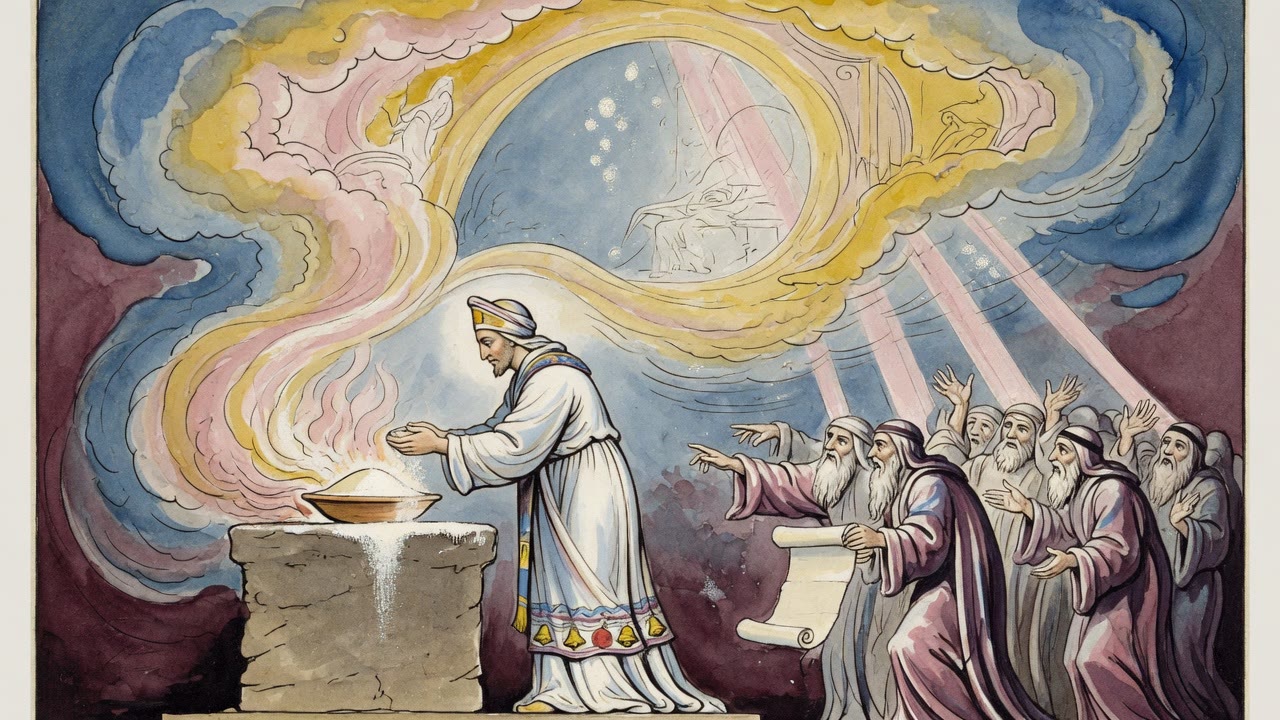
Aaron's Bells Kept the Flaming Fire from Striking
Aaron stopped at the curtain until the gold on his hem spoke. Without that sound, the Holy Place would have taken him as fuel.
Table of Contents
 Click for full size
Gold on the Hem
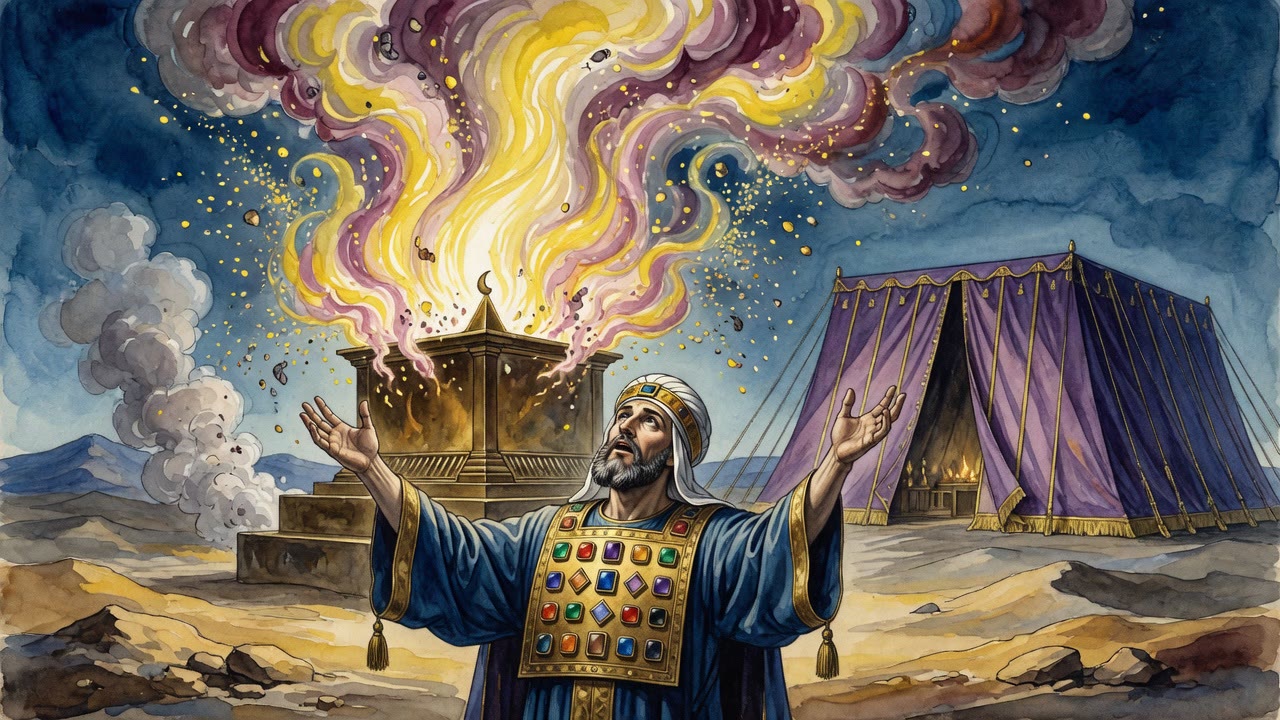
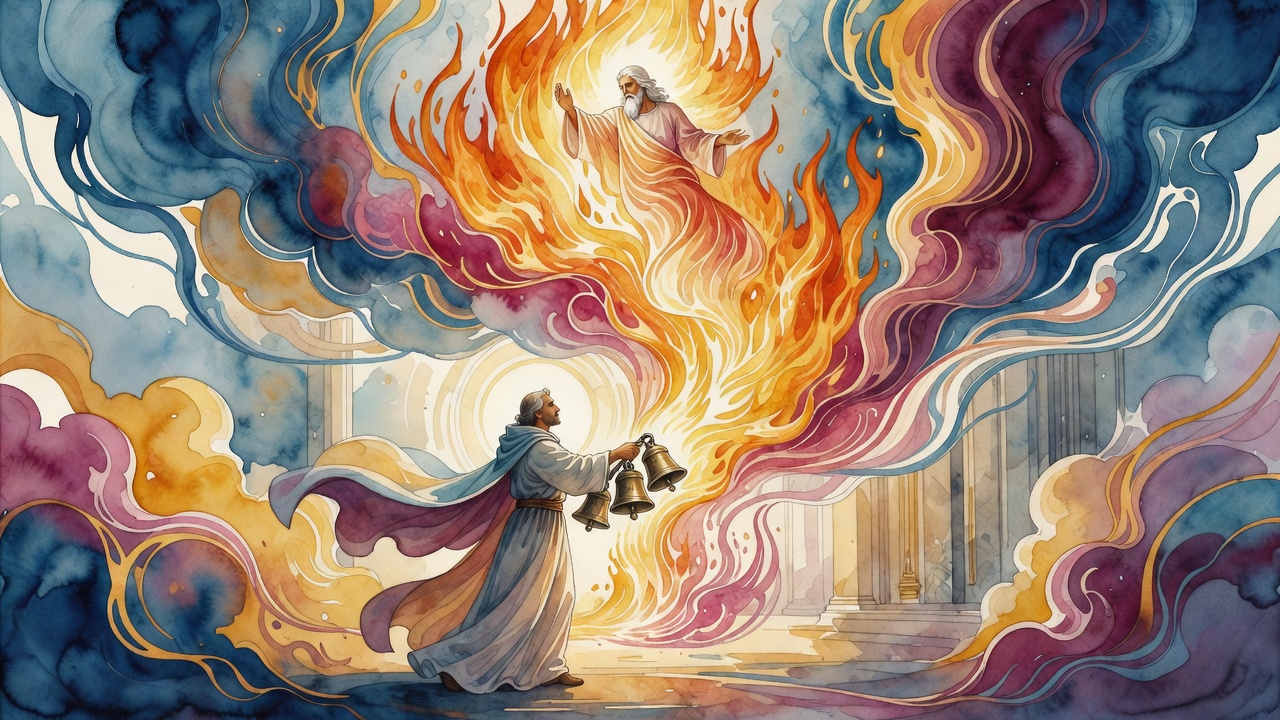
Aaron stopped at the curtain with his heel still on ordinary stone. The robe pulled at his shoulders. Gold bells hemmed the cloth, small enough to hide in a fist, heavy enough to speak when he moved. God had not asked for jewelry. He had asked for a voice. "Its voice shall be heard when he enters the holy place, and when he comes out, that he die not by the flaming fire" (Exodus 28:35).
The Holy Place did not care that he was Moses's brother. It did not care that oil had run down his beard on the day of his ordination. Walk in without warning, and the air could turn to flame. He lifted the hem an inch. One bell tapped another. The sound was thin and bright, a knock on a door no one should open without asking.
Outside, a child turned his head. The camp had learned that silence from that doorway was the worst news in Israel.
He Rang Himself In
Aaron stepped. The bells answered. He stepped again. Smoke from incense already in the room mixed with the smell of metal warmed by his walk. He did not hurry. Hurry is how a man pretends a threshold is a hallway.
Each ring told the Presence a body was coming that knew it was a body. Anointed, ordained, still not free to barge. He served. Blood marked wood and stone. Smoke rose in a straight column. When he turned to leave, the hem spoke again, so the fire would know he was going and would not take him for a thief of holy air.
Israel heard him come out alive. Parents who had not named their fear let their shoulders drop. The bells had kept the flaming fire from striking him. The high priest had knocked. The high priest had been answered with life.
A junior priest later asked why the bells could not be silent gold, pure weight without noise. Aaron struck two cups together. The boy jumped. "Heaven is not guessing whether you are ready," Aaron said. "You must say you are coming."
The Teaching Came Down as Fire
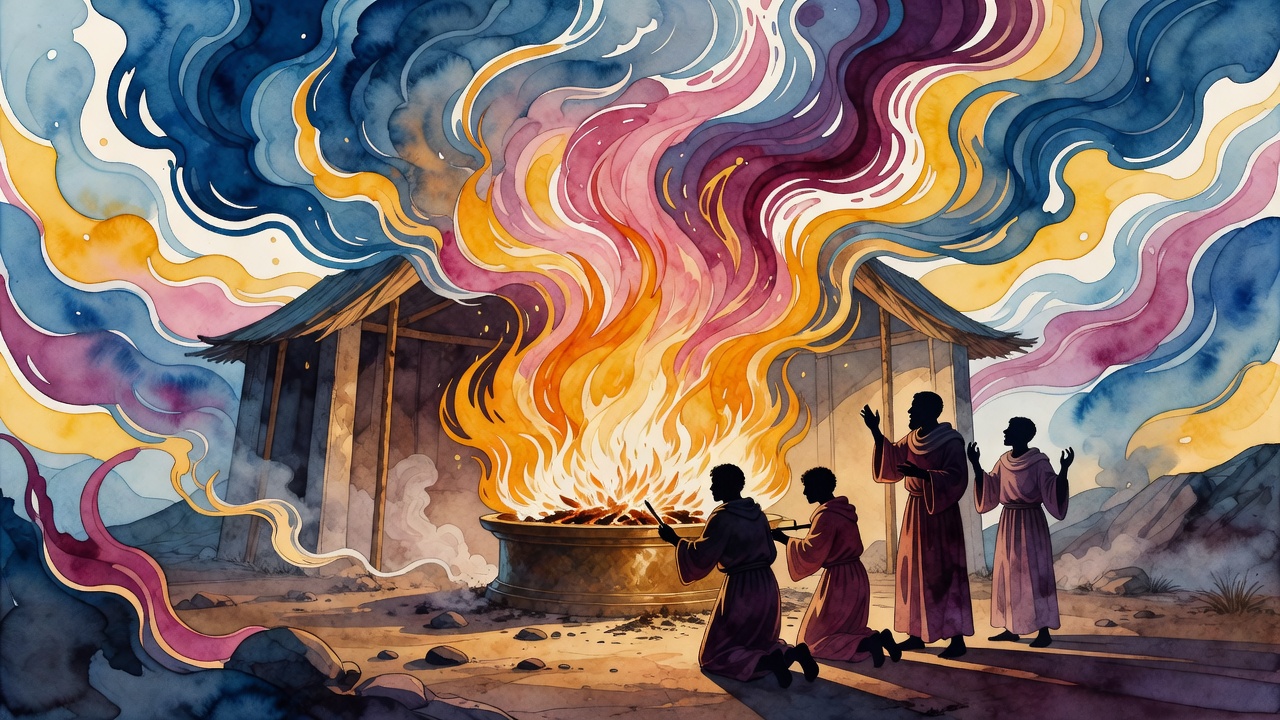
The same heat lived in the Teaching. Words of Torah were not cool ink. They came down from heaven the way fire comes down, and they live the way fire lives.
In a house far from the sanctuary, a student opened a difficult page as if it were a toy. The sentences cut him. He used a holy line to win an argument in the market, and the win tasted like ash. Fire had left a mark, the wrong kind. Men recognized him by a sharpness that made rooms smaller.
His teacher pulled the page back. "This is coal," the teacher said. "You are holding it like a joke." The young man flushed. He had wanted to be seen as clever. The fire had other plans.
Another student approached the same page the way Aaron approached the curtain. He sat. He waited. He spoke the words aloud until they were in his mouth, not only in his eyes. Later, in the marketplace, men knew him by his walk and his speech. A body that has stood near a hearth carries smoke without having been eaten by it.
A Law Given With the Flame
If a protective law had not been given with the Torah, no one could have held the gift. The flame needed a way for human hands to stand near it and live. Aaron's hem trained the body in that mercy. Announce. Enter. Serve. Leave with the sound still speaking.
Without that way, the gift would have eaten the receivers. Teachers who loved their students taught approach as carefully as content. How a man entered was part of what he received.
The junior priest practiced the walk when the sanctuary was empty. He rang himself down the length of the court until the sound no longer startled him. Startle was not the same as fear. Fear, in this house, meant attention.
Distance from the fire left a man cold. Sport with the fire left a man burned. The student who toiled in the words found they gave him life. Sinai had not handed down a mild booklet. It had handed down a flame with rules for holding it.
When the Bells Went Quiet
On the day of service the sanctuary smelled of incense, animal blood, and metal warm from use. Aaron moved inside a cloud of sound. When the work ended, the bells faded. Israel went back to tents and labor. The coal of Torah stayed.
Some carried it home the way a man carries a live ember in a clay cup. Some forgot and got burned in smaller ways: a mouth too quick with holy words, a hand too sure on a page. Night took the camp. The gold on the stored robe did not ring.
Tomorrow it would have to speak again before any foot crossed that stone. Aaron slept knowing the fire had let him leave. The junior priest slept with the two cups still on the table, a small bright lesson waiting for morning.
← All myths