5 min read

Aaron Carried Holiness Between Death and Life

Aaron was called holy after the calf because his priesthood carried atonement, plague-stopping mercy, and a line of sons who survived.

Curated by Arthur · Told by Maggid ·
Table of Contents
  1. The Calf Maker Was Called Holy
  2. The Taking Repaired the Taking
  3. Korah Struck at the Bars of the Palace
  4. Aaron Stood Between the Dead and the Living
  5. The Dying Servant Stood Up

Aaron's name should not have survived so cleanly.

The calf stood in Israel's memory. Gold had passed through his hands. The people had danced. Moses had descended to broken tablets and a camp gone wild. After such a failure, a man might expect Scripture to keep Aaron permanently under accusation.

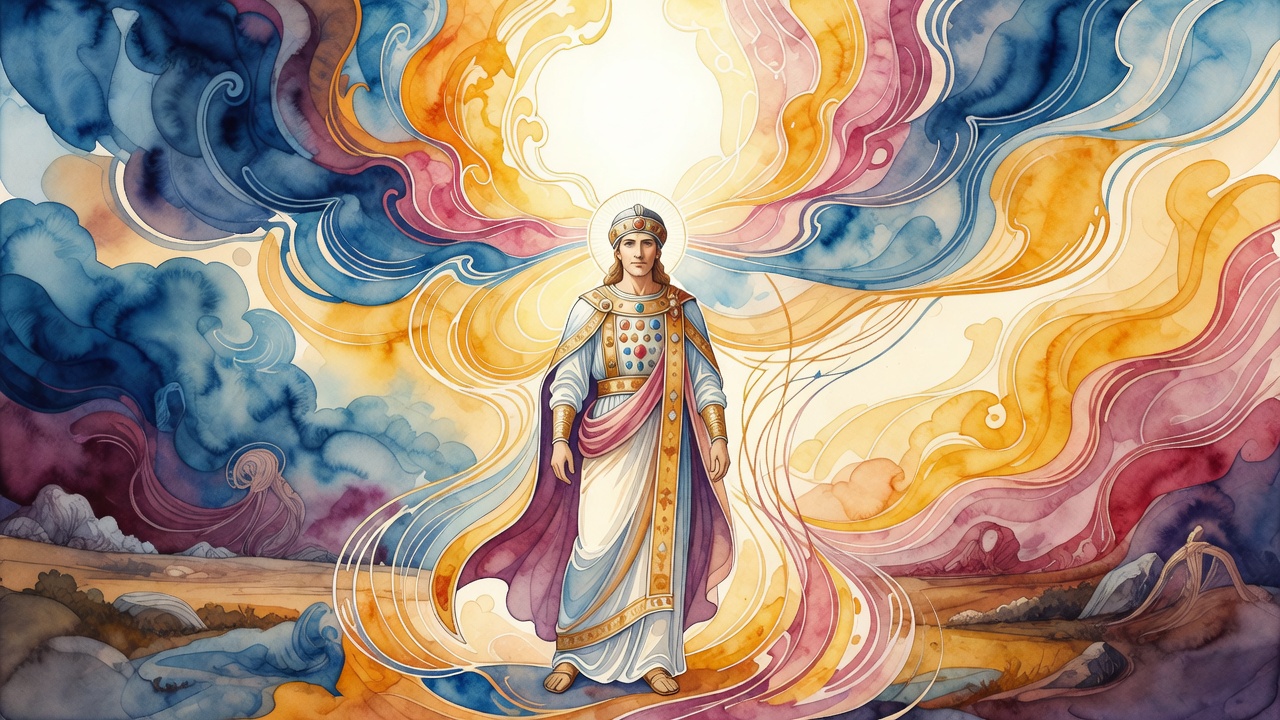
Instead, a psalm calls him holy.

The Calf Maker Was Called Holy

Shemot Rabbah stops at the phrase, "Aaron, the holy one of the Lord."

Rabbi Chanina turns the word holy into a chain. Let the holy one come into the holy place, sacrifice before the Holy One, and atone for the holy people. Aaron is holy. The Sanctuary is holy. God is holy. Israel is holy. The repetition is not decoration. It is a route of repair.

Aaron's holiness is not treated as spotless biography. It is priestly function tested by failure. He enters the sacred place not because the calf never happened, but because Israel still needs atonement after it happened.

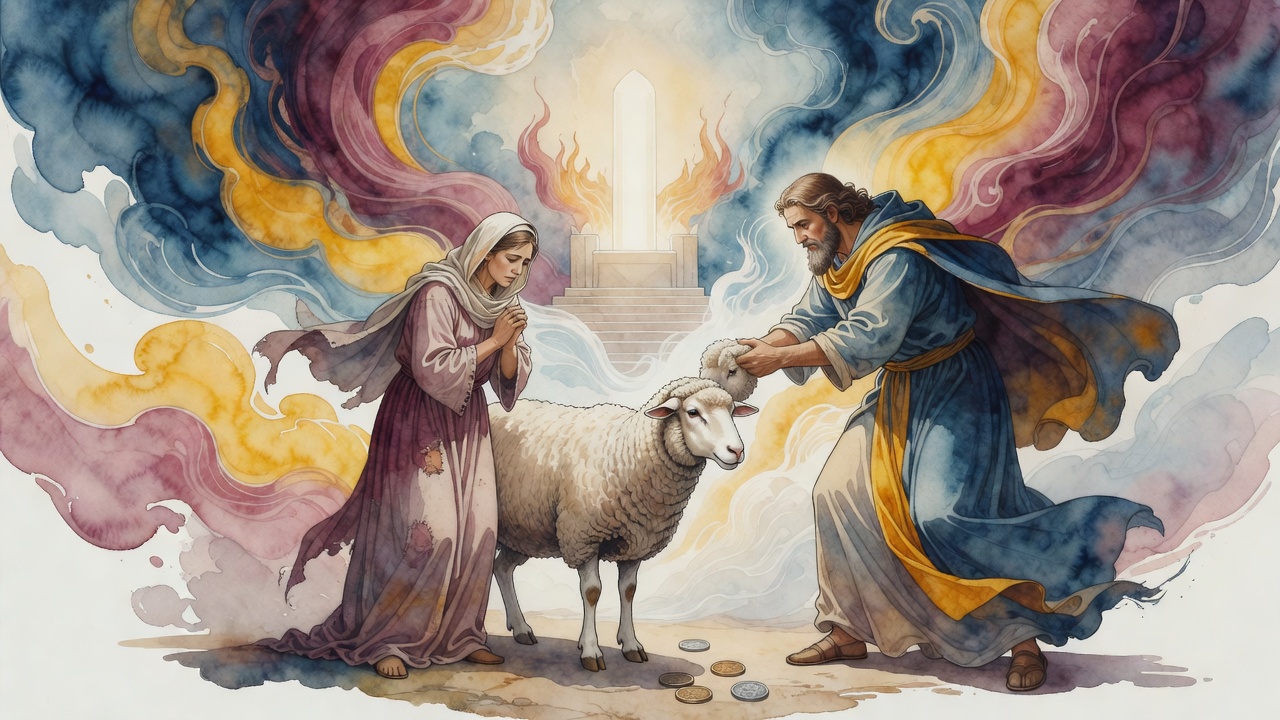
The man with the wound becomes the one who carries blood inward.

The Taking Repaired the Taking

Vayikra Rabbah presses the memory of the calf even harder.

Aaron had taken gold from the people. Later, God takes Aaron and his sons for priesthood. The midrash hears one taking answering another. The elevation of Aaron's house does not erase the earlier act. It rectifies it.

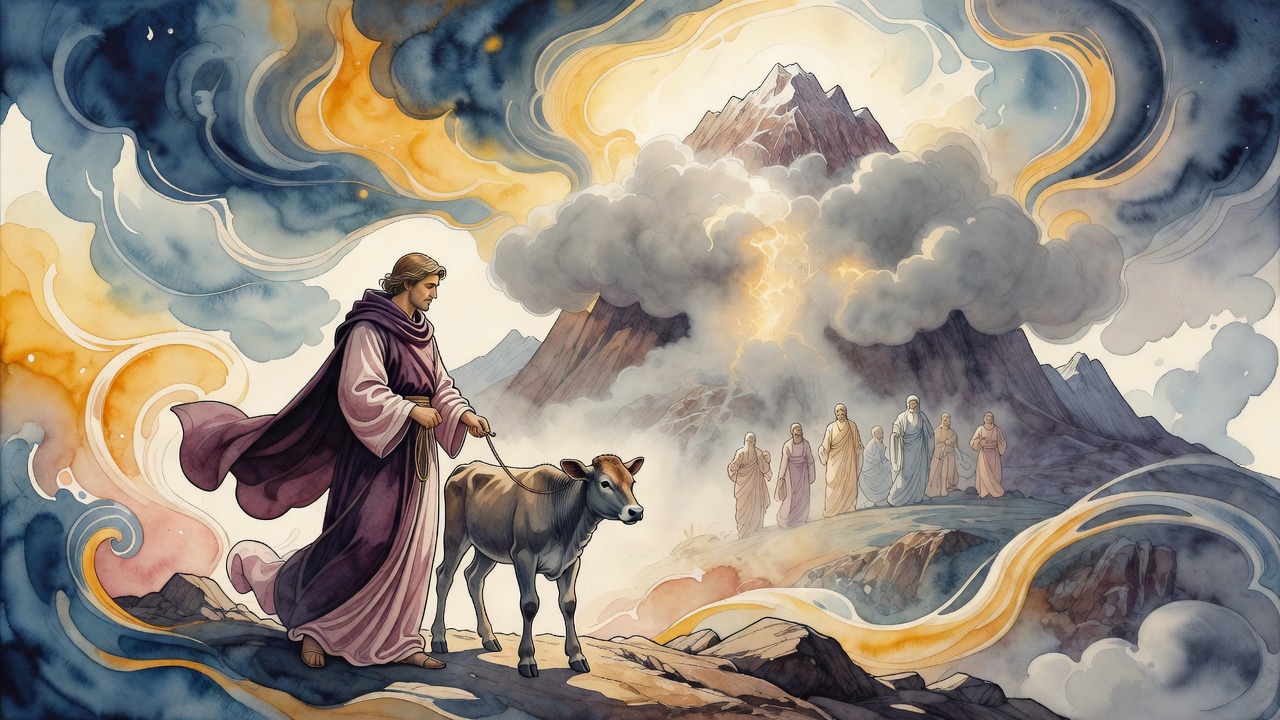
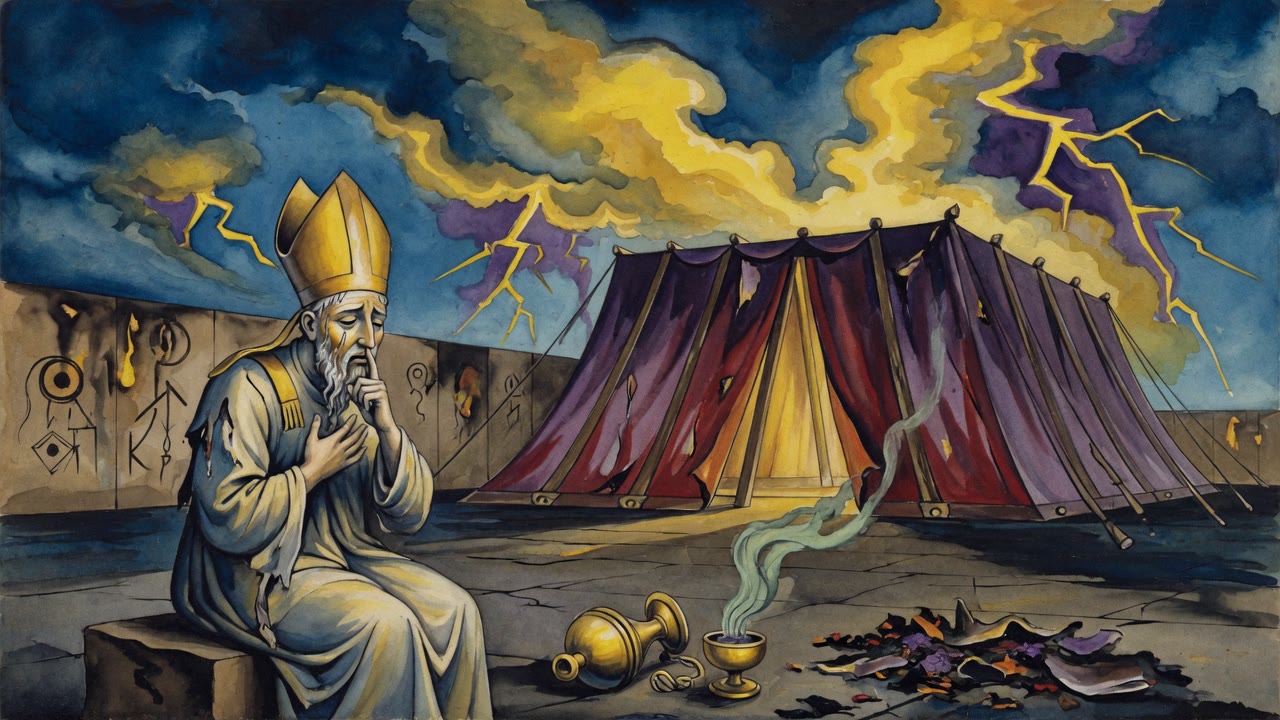
The cost remains visible in his sons. Nadav and Avihu die. Elazar and Itamar remain. Shemot Rabbah also hears the two surviving sons hinted in the command to take one bull and two rams, as if the future wound already stood inside the installation rites.

Aaron's priesthood therefore begins with grief folded into service. The holy garments do not cover the past by hiding it. They carry it into atonement.

Korah Struck at the Bars of the Palace

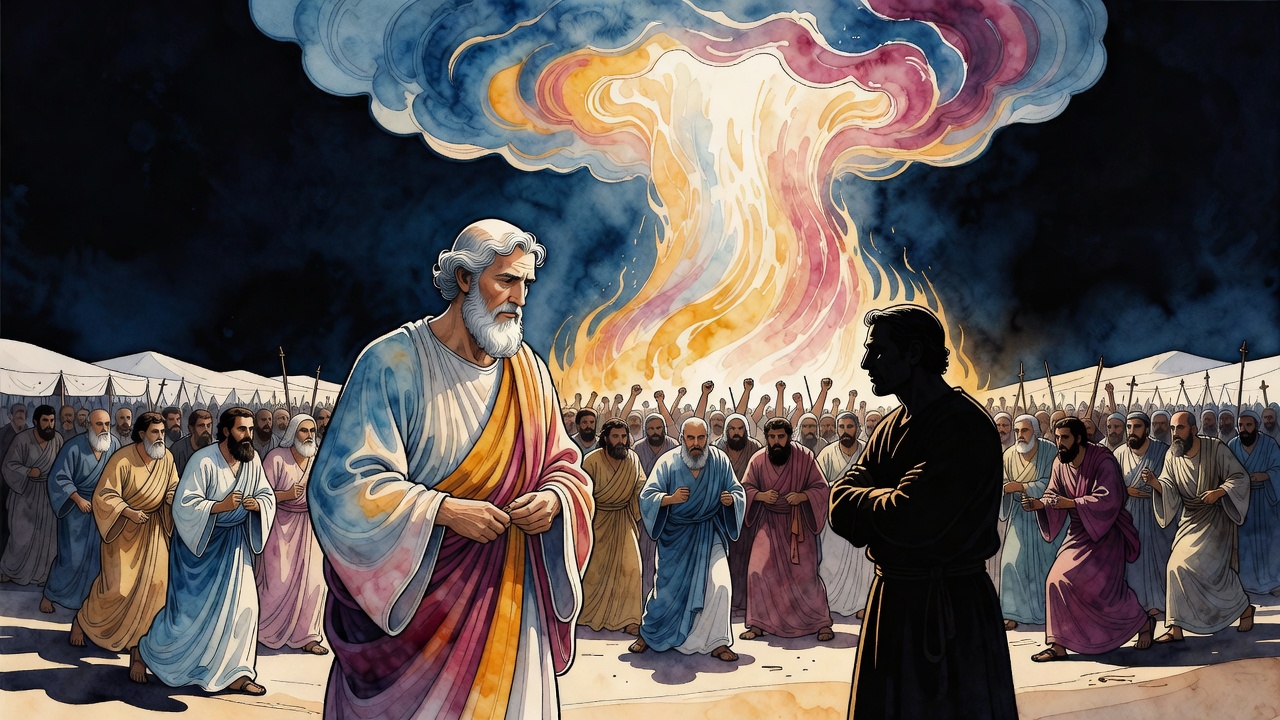
Korah could not bear Aaron's holiness.

Bamidbar Rabbah reads his rebellion as treachery against more than one man. Korah turns against Torah itself, against the strength God gives His people, against the peace meant to hold the camp together. Strife becomes like the bars of a palace.

The image is severe. Palace bars are not reeds. They are built to hold.

The midrash compares Moses to the central bar of the Mishkan, running from end to end. Korah thought he could force apart what God had joined: Moses, Aaron, Torah, and priesthood. He did not understand the strength of the structure in front of him. The house would shake, but the bar would not bend for his envy.

Aaron Stood Between the Dead and the Living

When plague broke out, Aaron did not argue about status.

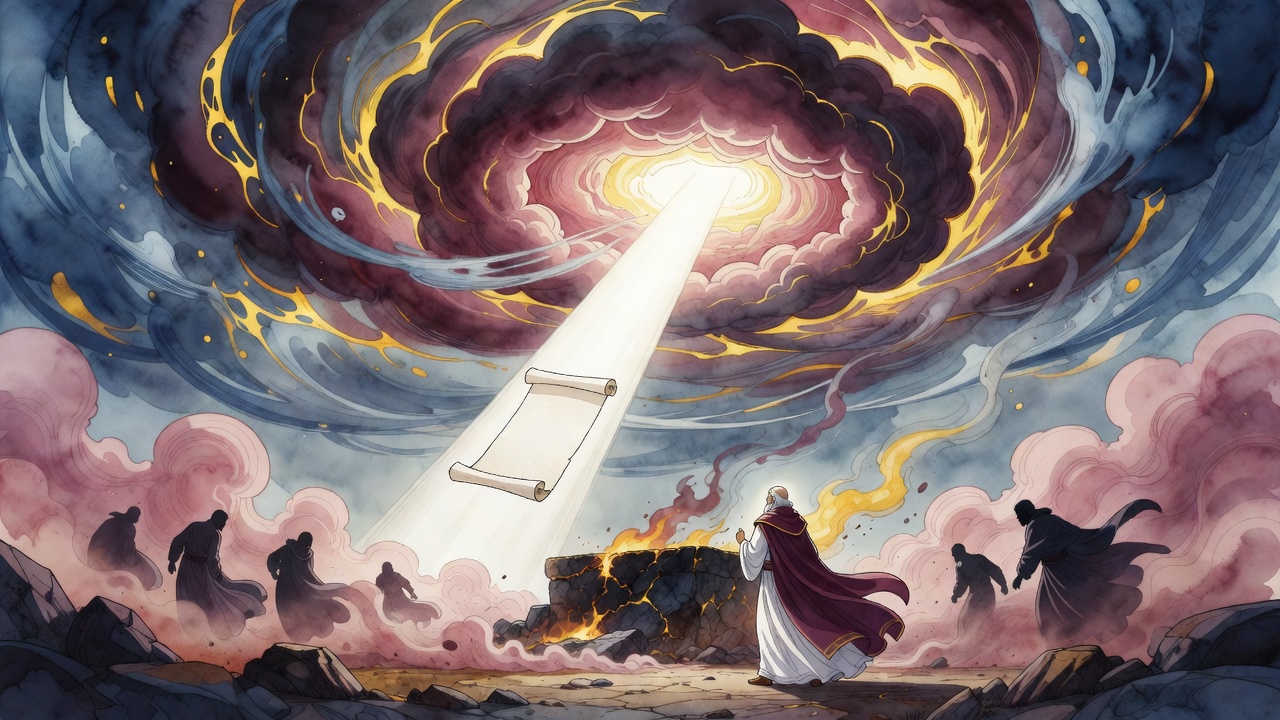
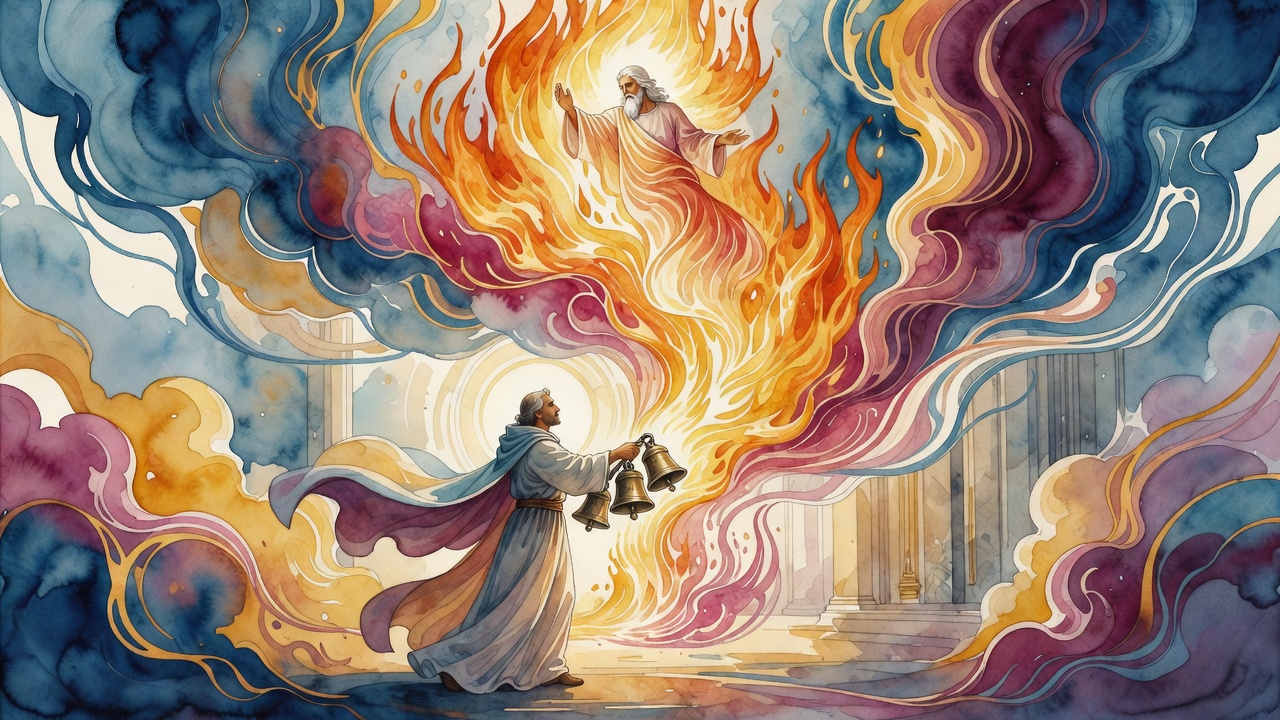
He took the firepan and ran. He stood between the dead and the living, and the plague stopped. Sifrei Devarim remembers that posture when it imagines a terrible absence: God looks and finds no one to plead for mercy, no Aaron, no Pinchas, no intercessor standing in the gap.

The fear of that absence explains Aaron's holiness more sharply than honorific titles do. A priest is not holy because he is admired from a distance. He is holy because he can carry incense into the line where death is moving and refuse to let it pass.

Pinchas, too, rises and prays until plague ceases. The family calling continues.

The Dying Servant Stood Up

Vayikra Rabbah brings an unexpected story about Antoninus and Rabbi Yehuda HaNasi.

Antoninus asks whether the rabbi's students are truly powerful. The rabbi answers that even the least can revive the dead. When Antoninus's servant lies near death, a disciple enters and asks why he is lying down while his master stands. The servant rises.

The scene turns on honor and life. A body almost taken by death is pulled upright by the demand that service still matters.

Then the midrash turns back to Aaron's sons and the verse about delivering those taken to death. The priestly house is not an ornament in Israel. It is a house sent toward the dying, the guilty, and the endangered. Aaron is called holy because his line keeps walking into that borderland, carrying atonement where ordinary courage stops.

Holiness, in these sources, has legs. It runs with a firepan, enters a sanctuary, stands before plague, and refuses to let the condemned disappear without an advocate.


← All myths

From the tradition

Sources

4 sources

The texts this telling draws on, in full. Open a card to read inline, or expand it for a wider, quieter read.

Shemot Rabbah 38:7Shemot Rabbah

It’s a fascinating subject, and one that the ancient Rabbis pondered deeply. In fact, Shemot Rabbah, a classic collection of Midrashic (rabbinic interpretive commentary) interpretations on the Book of Exodus, offers a beautiful and layered understanding of just that.

The text explores a verse from Psalms (106:16): "To Aaron, the holy one of the Lord." Rabbi Ḥanina uses this verse as a springboard to unlock a profound idea. He says: "Let one who is holy come, enter the holy, sacrifice before the Holy, and atone for the holy."

What does all that mean? Rabbi Ḥanina breaks it down for us, revealing that each "holy" refers to something different.

"Let one who is holy come" – This, explains Rabbi Ḥanina, is none other than Aaron, the High Priest, the chosen one. As the verse in Psalms states: “To Aaron, the holy one of the Lord.”

"Enter the holy" – This refers to the mikdash (מִקְדָּשׁ), the Sanctuary itself, the sacred space. As it is written: “The Sanctuary, my Lord, that Your hands established” (Exodus 15:17). The Temple, a place set apart.

"Sacrifice before the Holy" – This is the kadosh baruch hu (קָדוֹשׁ בָּרוּךְ הוּא), the Holy One, blessed be He, God. As it is stated: “For I am holy, the Lord” (Leviticus 19:2).

"And atone for the holy" – This final "holy" refers to the people of Israel! As it is written: “You shall be holy” (Leviticus 19:2). We, the Jewish people, are also called to holiness, and in need of atonement.

Isn’t that powerful? A cycle of holiness, connecting Aaron, the Temple, God, and the people.

But the Midrash doesn't stop there. It continues, drawing our attention to the specific sacrifices Aaron was commanded to offer: "Take one young bull and two rams, unblemished." Rabbi Pinḥas HaKohen (a priest) bar Ḥama sees even more meaning in these instructions. He connects it to the verse in (Isaiah 46:10): "Telling the outcome from the outset."

According to Rabbi Pinḥas, the specifics of the sacrifice hint at a future tragedy. "One bull" represents Aaron himself. The "two rams" represent his sons, Elazar and Itamar. The Midrash suggests that this command contains a subtle, yet heartbreaking, prophecy: that only two of Aaron's four sons would ultimately serve as priests. The bull, specifically, was to atone for Aaron’s role in the sin of the Golden Calf.

The fact that only two rams were required to sanctify two of Aaron’s sons served as a hint that two would die. This, of course, tragically came to pass, as we know from the Torah.

So, what can we take away from this intricate reading? It’s a reminder that even in the seemingly mundane details of ritual, there are layers of meaning, prophecy, and connection to something far greater than ourselves. It highlights the interconnectedness of holiness, the role of leadership, and the ever-present awareness of both joy and sorrow in the human experience. And perhaps, most importantly, it reminds us that even in the face of tragedy, the call to holiness remains.

Full source
Bamidbar Rabbah 18:14Bamidbar Rabbah

Remember him? He was the guy who led a rebellion against Moses and Aaron in the wilderness.

The Midrash (rabbinic interpretive commentary) connects the "treacherous brother" – nifsha in Hebrew – to Korah. But not just as a brother in the literal sense. Korah betrayed something even more profound: the Torah itself. The Torah, which is a source of strength and guidance. The verse, "The Lord gives strength to His people; the Lord will bless His people with peace" (Psalms 29:11), highlights this very point. Korah’s betrayal, then, wasn't just a personal attack; it was an attack on the very foundation of their community and their relationship with God.

Then there's the second part of the proverb: "strife is like the bars of a palace." The Midrash asks a pointed question: Didn't Korah realize his adversaries, Moses and Aaron, were as strong and unyielding as the bars of a palace? Palace bars aren't easily moved. They're solid, steadfast, protecting what's inside. The Midrash draws a parallel to Moses, quoting (Exodus 26:28): "The middle bar inside the planks will extend from end to end." This refers to the construction of the mishkan, the portable sanctuary. Just as that bar ran the entire length of the structure providing stability, Moses was unwavering. He was a leader who couldn’t be easily swayed or broken. He was resolute in his mission.

This Midrash isn't just about Korah's rebellion. It's about understanding the devastating impact of betrayal and the strength required to stand firm in the face of adversity. It reminds us that true strength isn't just about physical power; it's about unwavering commitment to truth and justice, like the unyielding bar of a palace. And it also makes us think about the potential damage caused when someone turns against their own community. It's a powerful reminder that unity and trust are essential for any society to thrive.

Maybe next time you feel that sting of betrayal, you can remember this Midrash. Maybe you'll find a little extra strength to be like that unyielding bar, and to stand strong in your own truth.

Full source
Sifrei Devarim 326:7Sifrei Devarim

The Jewish tradition grapples with this very idea – the absence of an advocate, the void when mercy seems to have vanished. It's a scary thought, isn't it?

Sifrei Devarim, a collection of legal midrashim (rabbinic interpretive commentary) on the Book of Deuteronomy, touches upon this very unsettling scenario. It speaks of a moment "when He sees" – a moment when the Divine gaze falls upon a people, and what does He find? A void.

One interpretation focuses on the absence of someone to implore mercy, someone to stand in the gap as Aaron did. Remember the plague in the wilderness? (Numbers 17:13) tells us, "and he stood between the dead and the living." Aaron, the High Priest, literally placed himself between destruction and his people, his prayers acting as a shield. When that's missing, when there's no Aaron… what then?

Another example offered is Pinchas. (Psalm 106:30) recounts, "And Pinchas arose and prayed, and the plague ceased." Pinchas, with his zealous act, atoned for the sins of the people and stopped a divine plague. He stepped up, took action, and his prayer literally halted disaster. But what happens, the Sifrei Devarim asks, when there's no Pinchas to rise and intercede?

The text continues, expanding on this chilling absence. It speaks of a lack of restraint and strength, echoing the despair found in II (Kings 14:26): "For the L-rd saw the affliction of Israel… with none restrained and none strengthened, and no help for Israel." A people vulnerable, exposed, with no one to hold back the tide of suffering, no one to bolster their spirits. The verse from (Isaiah 59:16) reinforces this: "And He saw that there was no man, and He was astonished that there was no intercessor." Astonished! Can you feel the weight of that word? The Divine, almost in disbelief that no one is stepping forward.

What does this all mean? It's not simply about historical figures, but about the ongoing need for individuals to act as compassionate advocates, to stand up for others, to implore mercy, and to offer strength in times of despair. Are we those people? When we see injustice, when we witness suffering, do we step forward? Do we become the Aaron, the Pinchas, the intercessor that is so desperately needed?

Perhaps the real question the Sifrei Devarim poses is not about a distant past, but about our present. Are we creating a world where such intercessors are abundant, or are we contributing to a world where the Divine might once again be astonished by their absence? It's a challenge, a call to action, and a reminder that even a single voice raised in compassion can make all the difference.

Full source
Vayikra Rabbah 10:4Vayikra Rabbah

The ancient rabbis certainly did. to a fascinating story from Vayikra Rabbah, a midrashic (rabbinic interpretive commentary) collection that explores the Book of Leviticus, and see what wisdom we can unearth.

What does this have to do with Aaron and his sons? Well, the rabbis are masters of finding connections, of seeing the threads that weave through all of Jewish tradition.

Our story features Antoninus, often identified as the Roman Emperor, and Rabbi Yehuda HaNasi, the compiler of the Mishnah (the earliest code of rabbinic law). Antoninus, impressed (or perhaps skeptical) of the Rabbi's students, asks, "Are these the ones of whom you boast?" Rabbi Yehuda HaNasi replies with confidence, "Yes. The least of them can revive the dead." Can you imagine the weight of that statement?

Shortly after, Antoninus's servant falls ill, nearing death. Desperate, he sends to Rabbi Yehuda HaNasi, requesting a miracle. Rabbi Yehuda HaNasi sends him one of his disciples – some say it was Rabbi Shimon ben Ḥalafta – known for his piety and wisdom.

Rabbi Shimon arrives and finds the servant lying down. He asks a seemingly simple, yet powerful question: "Why are you recumbent while your master is standing on his feet?" The servant, jolted by this show of respect for Antoninus, immediately rises, shaking off the illness and regaining his strength. He's granted renewed life!

Now, what’s the connection to Aaron? Here’s where the midrash makes a beautiful, if unexpected, turn. The verse in Proverbs, "deliver those taken to death," is interpreted as referring to the sons of Aaron. Why? Because, as Rav Ḥanan explains, their selection as priests was, in a way, a rectification.

Remember the sin of the Golden Calf? Aaron played a role in its creation. As it says in (Exodus 32:4), "He took it from their hands and crafted it with a graving tool." The midrash suggests a powerful idea: "Let the taking here come and rectify the taking there." The "taking" of Aaron and his sons, their elevation to the priesthood, served to atone for Aaron's earlier transgression of "taking" the gold to create the idol.

Two of Aaron's sons, Nadab and Abihu, tragically died. But two remained: Eleazar and Ithamar. The verse "take Aaron, and his sons," is seen as a sign that Aaron’s selection, along with his remaining sons, partially rectified his sin. Rabbi David Luria expands on this, noting that this selection atoned for Aaron's role in fashioning the Golden Calf.

So what do we take away from this? It’s a story about redemption, about the enduring power of repentance, and about how even our mistakes can be turned into something sacred. It's about how a single act of kindness, a simple show of respect, can bring life. And it's about how the choices we make, even the difficult ones, can pave the way for a brighter future, not just for ourselves but for generations to come. What actions of “taking” in your life can you transform into a sacred act?

Full source