The Burning Scroll and the Spears That Could Not Kill the Chain
Rome decreed teaching Torah was death, so one rabbi taught in the open and burned in the scroll, and one took three hundred spears to save the chain.
Table of Contents
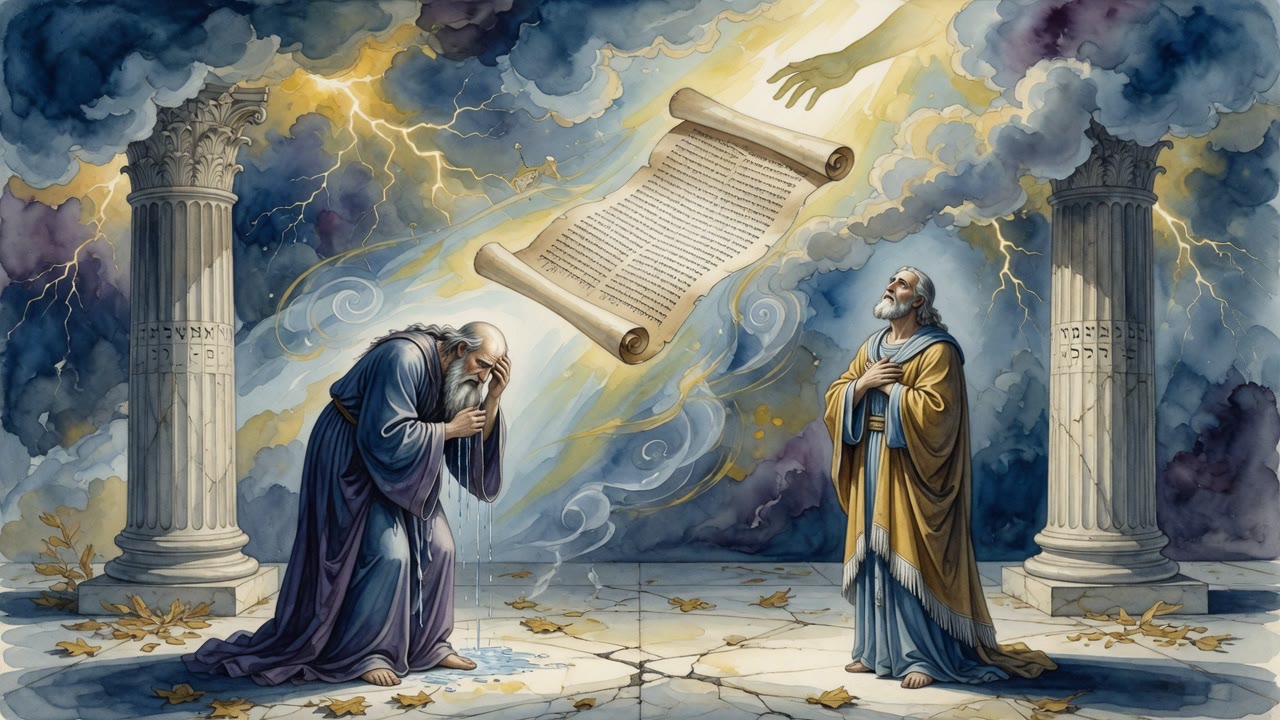
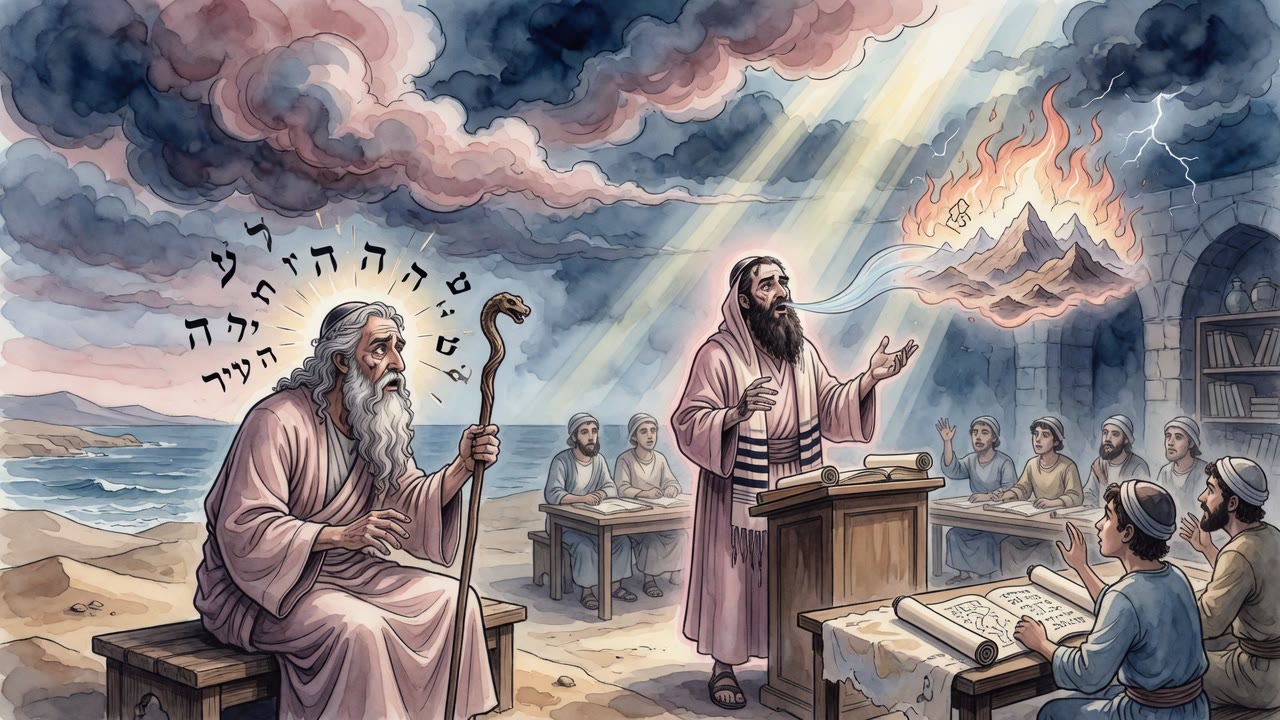
The decree came out of Rome like a blade: anyone who teaches Torah dies, and the city that lets it happen burns with him. Rabbi Hananya ben Teradyon heard the decree and went looking for a crowd. He sat down in the open, where soldiers could see him, and he spread a Torah scroll across his knees, and he began to teach in a voice that carried.
 Click for full size
The Scroll Across His Knees
People warned him. There were quieter ways to keep the words alive. He could whisper. He could meet in cellars. He chose the daylight and the scroll open on his lap, and he read out loud the letters Rome had outlawed.
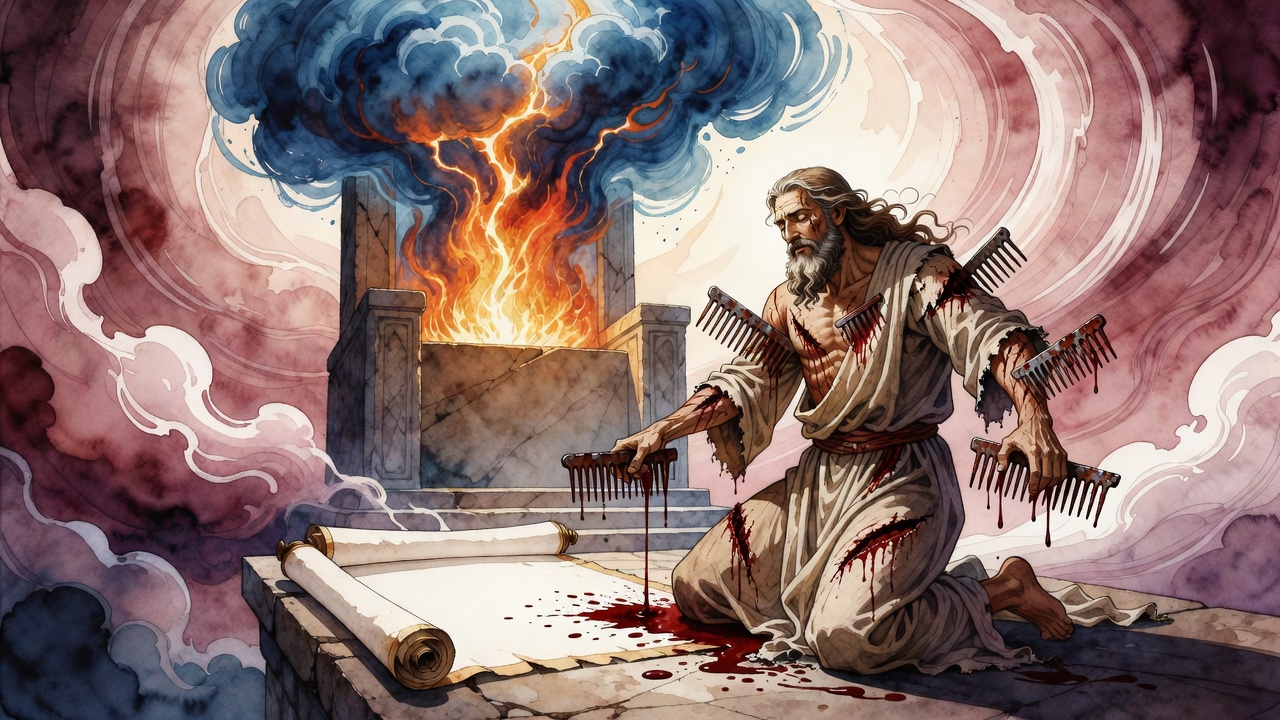
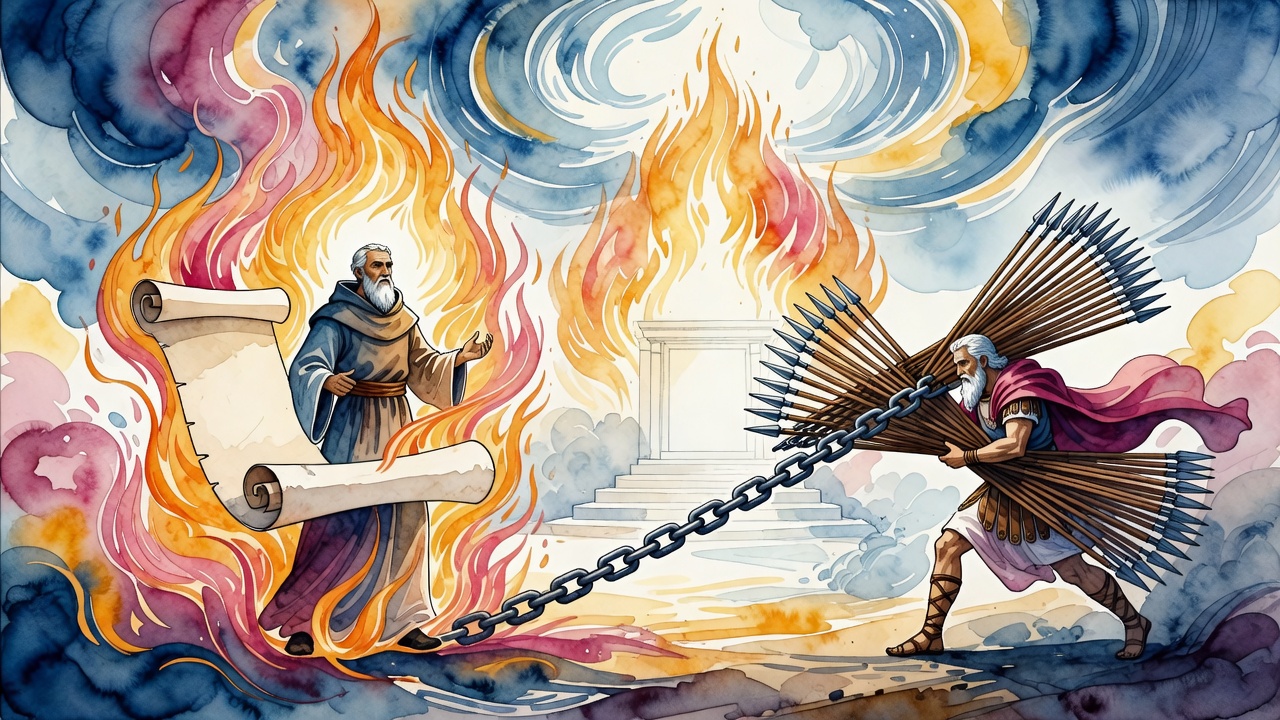
They came for him as he knew they would. The sentence was not a clean execution. The Romans had imaginations, and they spent them on him. They took the very scroll he had been reading from and wound it around his body, the holy text turned into a shroud while he still breathed. Then they stacked green branches around him. Green wood, not dry. Green wood does not catch and consume. It smolders. It takes its time.
And because even slow fire was not slow enough for them, they soaked tufts of wool in water and laid them over his heart. The wet wool kept the flame from reaching the core of him. His chest would not stop. He would burn from the outside in, conscious, for as long as a body can be made to last.
What the Burning Man Saw
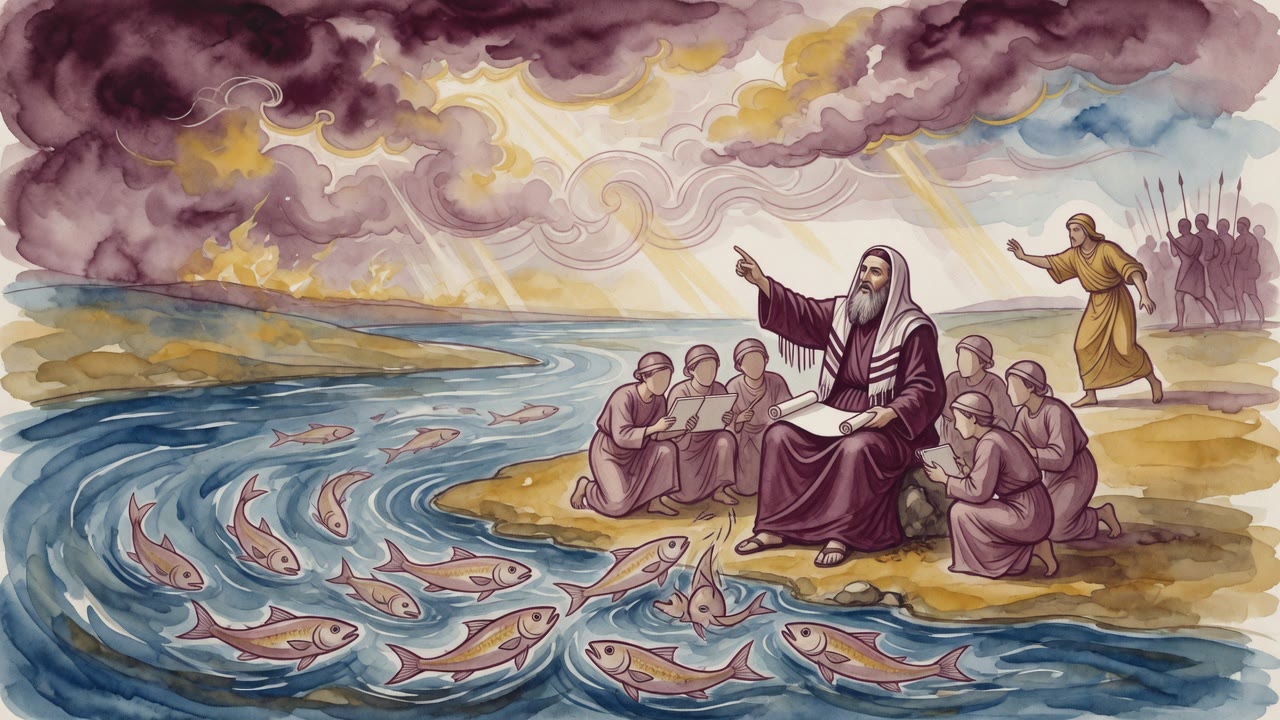
His students had followed. They stood as close as the heat allowed and could not look away and could not help him. One of them broke. "Rabbi," he called through the smoke, "what do you see?"
From inside the fire, Hananya answered. "The parchment is burning," he said. "But the letters are flying upward."
The scroll was meat for the flame. The skin of it blackened and curled. But the letters, the small black shapes that Rome had decided to kill, lifted off the dying parchment and rose, like birds let out of a cage, climbing the smoke toward the place the words had come from at Sinai. Rome could char the leather. The letters were not Rome's to keep.
Then something turned that no one had ordered. The Roman holding the fire, the man whose job was to make the agony last, could not bear what he was watching. He leaned toward the burning sage. "If I make the flames stronger," he asked, "and take the wool off your heart so it ends faster, will you bring me with you into the World to Come?"
"Yes," Hananya told him.
The executioner pulled the wet wool away. He fed the fire until it roared and took the rabbi quickly. And then, before the flame could die back down, he threw himself into it and burned beside the man he had been ordered to torture. A voice came from heaven, and it had room in it for both of them. Both, it said, are bound for the World to Come. The sage who would not stop teaching, and the soldier who, at the very end, did one merciful thing.
The Pass Between Two Mountains
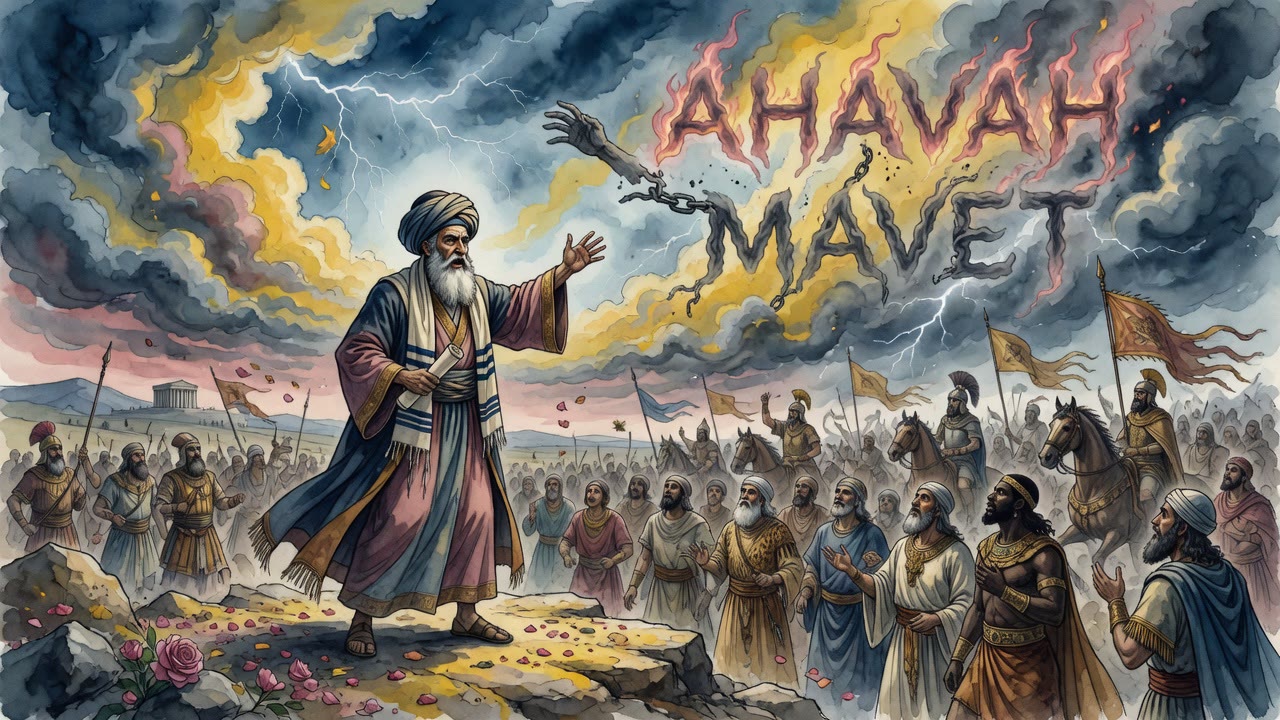
The same Rome that burned Hananya had a sharper fear than any single teacher. It feared the chain. A rabbi could be killed, but as long as old masters could lay hands on younger ones and say you are ordained, you may decide the law, the Torah would keep walking forward on new legs. So Rome cut at the joint. Death to any sage who performs ordination. Destruction to any city in whose limits it is done.
Rabbi Yehuda ben Bava was an old man, and he understood arithmetic. Kill the ordainers, and within a generation there is no one left with the authority to ordain, and the living law goes silent because no mouth is permitted to speak it. He refused to let the chain end on his watch.
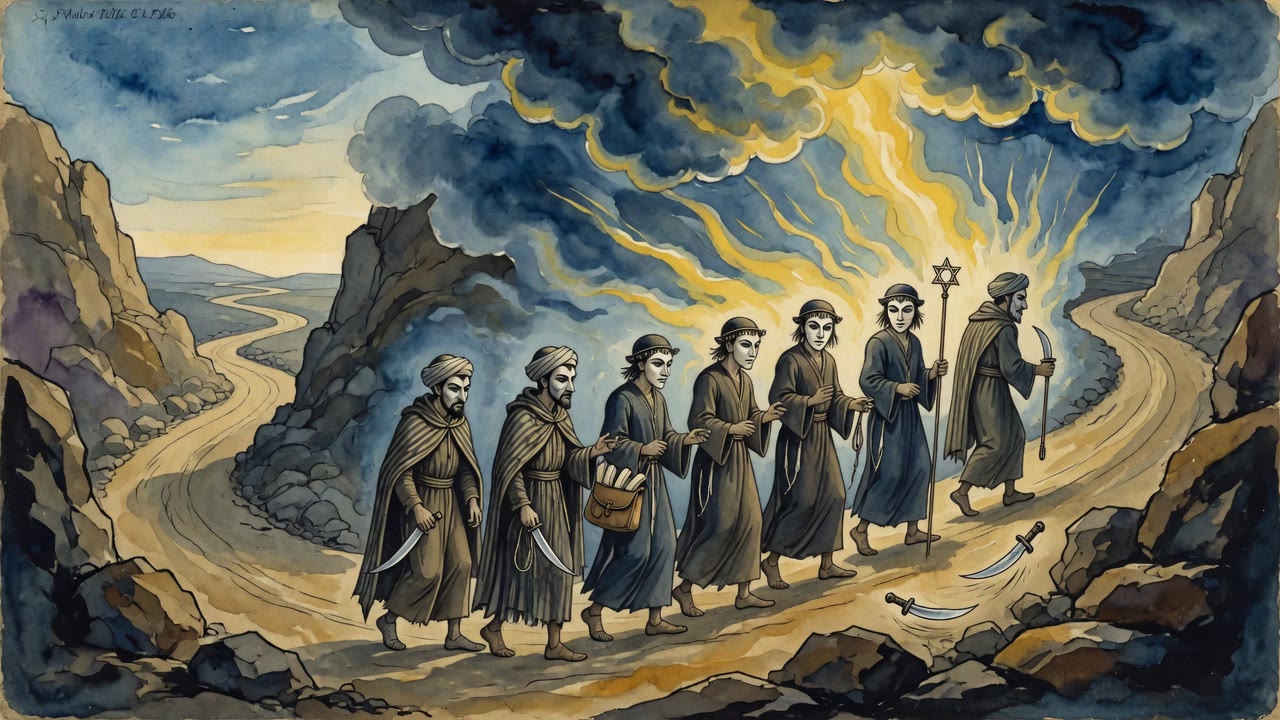
He found a seam in the decree. He gathered five students, Rabbi Meir and Rabbi Shimon bar Yohai among them, and he led them out to a place that belonged to no city: a narrow pass between two mountains, set between two towns, lying across two Sabbath boundaries, so that no settlement could be charged with the crime. There, on open ground that was nobody's jurisdiction, the old man laid his hands on each of them and made them rabbis.
Three Hundred Spears
The soldiers found the pass while the ordination was barely finished. Yehuda turned on his new rabbis and put the rest of his strength into one command. "My children, run."
They would not move at first. "Rabbi," they said, "and you? What about you?"
"I will lie here in front of them," he told them, "like a stone that no one bothers to turn over." An old man is slow. An old man is heavy. An old man can be the thing the soldiers waste their fury on while five young rabbis vanish into the hills carrying everything that mattered.
So they ran. And the Romans reached the pass and found one ancient man standing alone between the two mountains, and they did what their decree promised. They drove three hundred iron spears into his body. They left him where he fell. They had killed an old man and called it the end of the line.
They were wrong about the line. The five had already crossed into other towns. They taught. They ordained students of their own. The hands that Yehuda ben Bava laid down in a nameless pass kept moving from master to student while Rome itself thinned into a memory. His body lay in the dirt under three hundred spears, and the thing he died to carry never touched the ground.
← All myths