Translation of the source text.William Davidson Edition - Vocalized Aramaic + William Davidson Edition - English · CC-BY-NC
and the lungs draw all kinds of liquids, the liver becomes angry, the gall bladder injects a drop of gall into the liver and allays anger, the spleen laughs, the maw grinds the food, and the stomach brings sleep, and the nose awakens. If they reversed roles such that the organ which brings on sleep were to awaken, or the organ which awakens were to bring on sleep, the individual would gradually deteriorate.
It was taught: If both bring on sleep or both awaken, the person immediately dies. With regard to one’s inclinations, it was taught in a baraita that Rabbi Yosei HaGelili says: The good inclination rules the righteous, as it is stated: “And my heart is dead within me” (Psalms 109:22); the evil inclination has been completely banished from his heart. The evil inclination rules the wicked, as it is stated: “Transgression speaks to the wicked, there is no fear of God before his eyes” (Psalms 36:2).
Middling people are ruled by both the good and evil inclinations, as it is stated: “Because He stands at the right hand of the needy, to save him from them that rule his soul” (Psalms 109:31). Rabba said: People like us are middling. Abaye, his student and nephew, said to him: If the Master claims that he is merely middling, he does not leave room for any creature to live. If a person like you is middling, what of the rest of us?
And Rava said: The world was created only for the sake of the full-fledged wicked or the full-fledged righteous; others do not live complete lives in either world. Rava said: One should know of himself whether or not he is completely righteous, as if he is not completely righteous, he knows that his life will be a life of suffering. Rav said: The world was created only for the wicked Ahab ben Omri and for Rabbi Ḥanina ben Dosa.
The Gemara explains: For Ahab ben Omri, this world was created, as he has no place in the World-to-Come, and for Rabbi Ḥanina ben Dosa, the World-to-Come was created. We learned in our mishna the explanation of the verse: “And you shall love the Lord your God with all your heart and all your soul and all your might” (Deuteronomy 6:5). This was elaborated upon when it was taught in a baraita: Rabbi Eliezer says: If it is stated: “With all your soul,” why does it state: “With all your might”?
Conversely, if it stated: “With all your might,” why does it state: “With all your soul”? Rather, this means that if one’s body is dearer to him than his property, therefore it is stated: “With all your soul”; one must give his soul in sanctification of God. And if one’s money is dearer to him than his body, therefore it is stated: “With all your might”; with all your assets. Rabbi Akiva says: “With all your soul” means: Even if God takes your soul.
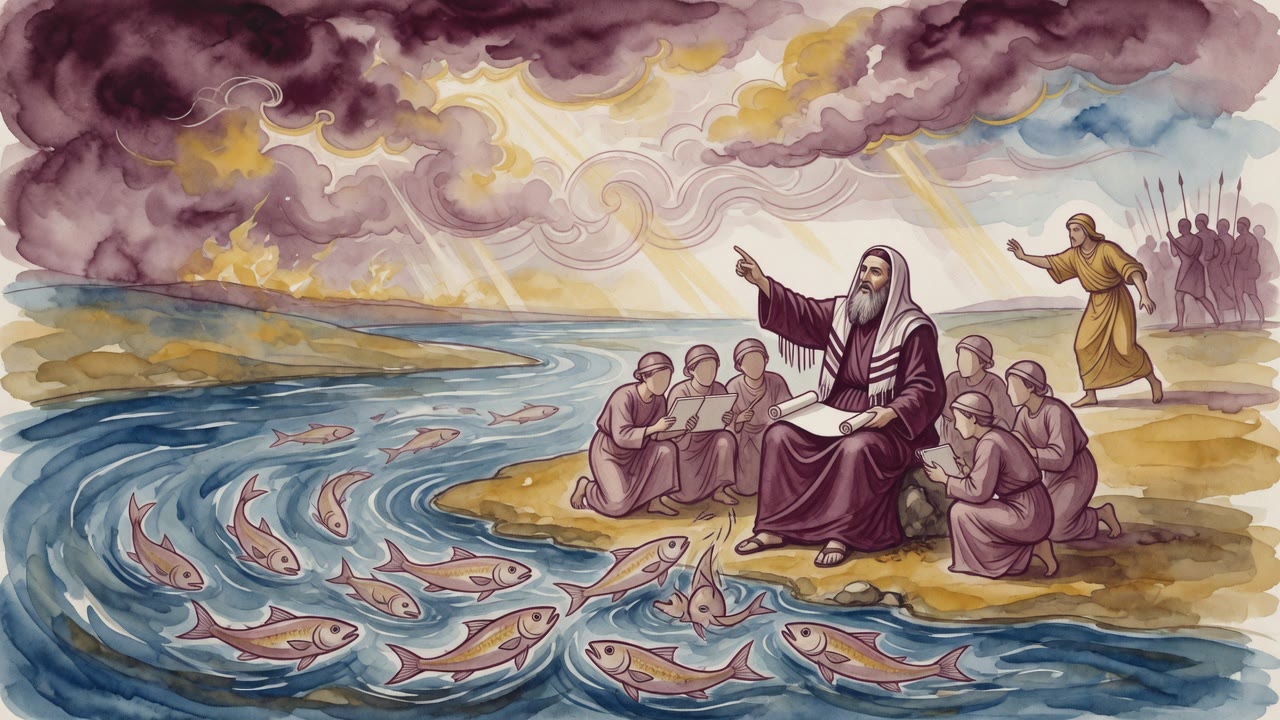
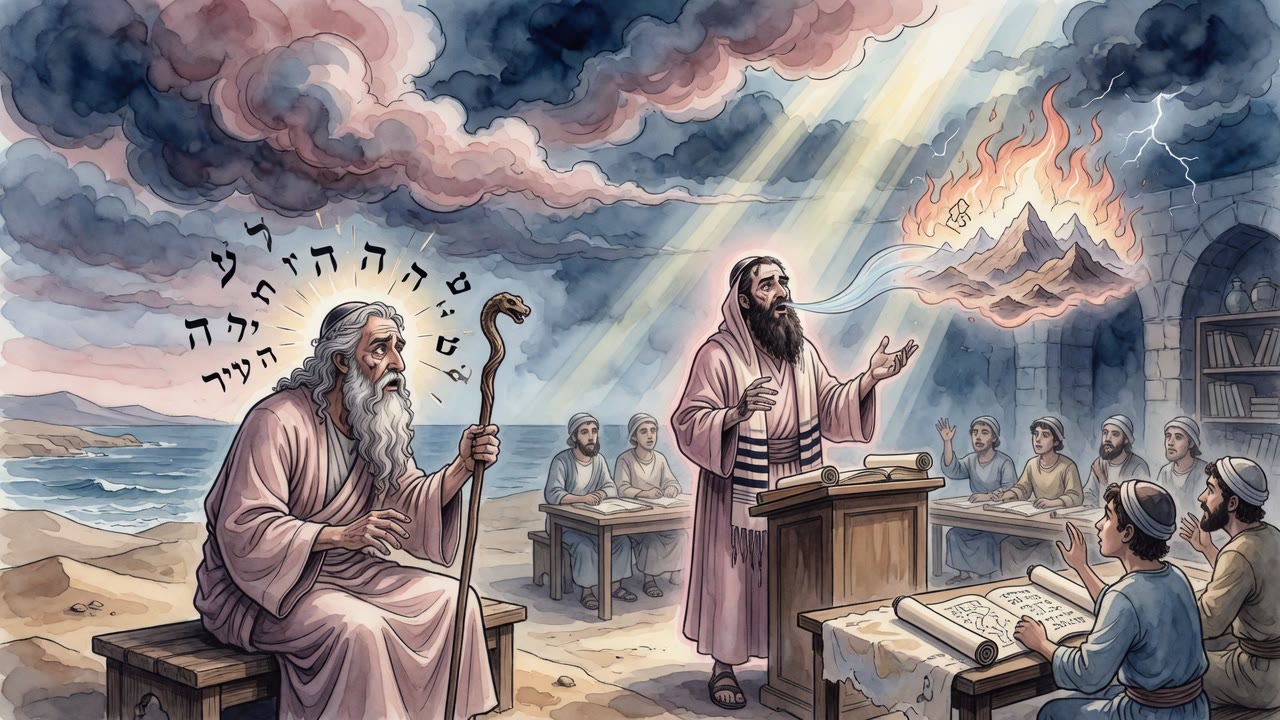
The Gemara relates at length how Rabbi Akiva fulfilled these directives. The Sages taught: One time, after the bar Kokheva rebellion, the evil empire of Rome decreed that Israel may not engage in the study and practice of Torah. Pappos ben Yehuda came and found Rabbi Akiva, who was convening assemblies in public and engaging in Torah study. Pappos said to him: Akiva, are you not afraid of the empire?
Rabbi Akiva answered him: I will relate a parable. To what can this be compared? It is like a fox walking along a riverbank when he sees fish gathering and fleeing from place to place. The fox said to them: From what are you fleeing?
They said to him: We are fleeing from the nets that people cast upon us. He said to them: Do you wish to come up onto dry land, and we will reside together just as my ancestors resided with your ancestors? The fish said to him: You are the one of whom they say, he is the cleverest of animals? You are not clever; you are a fool.
If we are afraid in the water, our natural habitat which gives us life, then in a habitat that causes our death, all the more so. The moral is: So too, we Jews, now that we sit and engage in Torah study, about which it is written: “For that is your life, and the length of your days” (Deuteronomy 30:20), we fear the empire to this extent; if we proceed to sit idle from its study, as its abandonment is the habitat that causes our death, all the more so will we fear the empire.
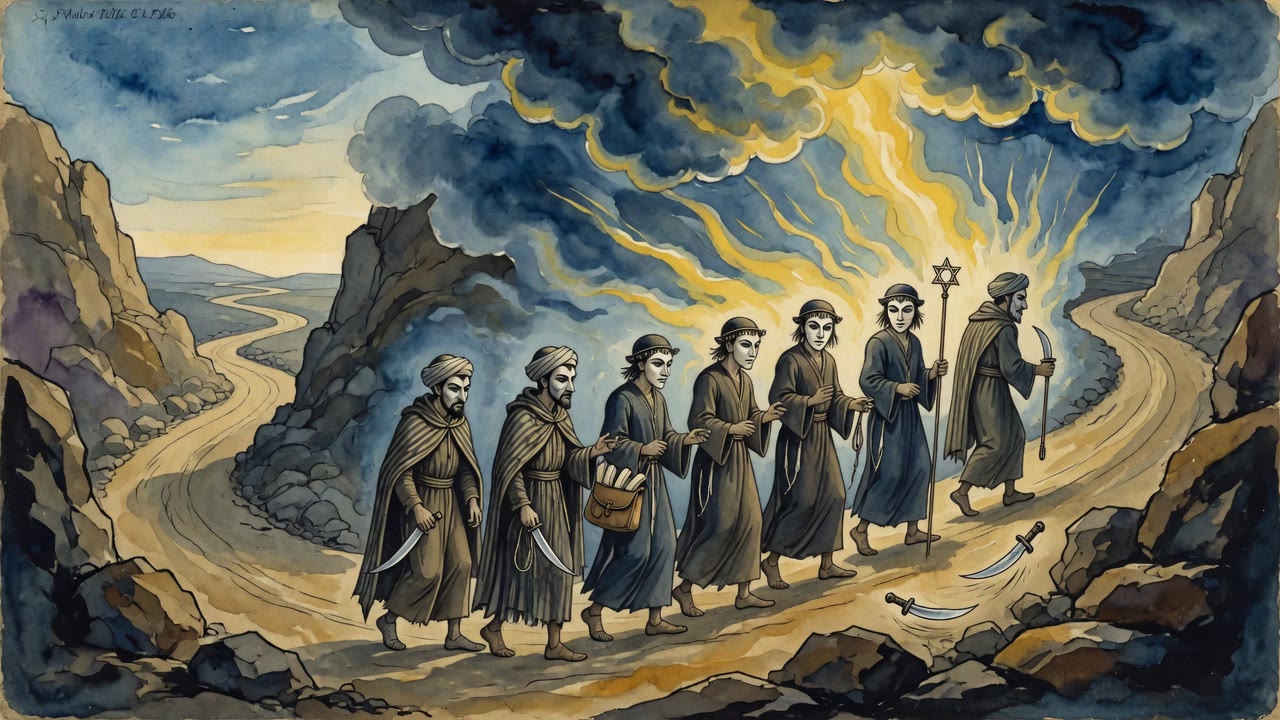
The Sages said: Not a few days passed until they seized Rabbi Akiva and incarcerated him in prison, and seized Pappos ben Yehuda and incarcerated him alongside him. Rabbi Akiva said to him: Pappos, who brought you here? Pappos replied: Happy are you, Rabbi Akiva, for you were arrested on the charge of engaging in Torah study. Woe unto Pappos who was seized on the charge of engaging in idle matters.
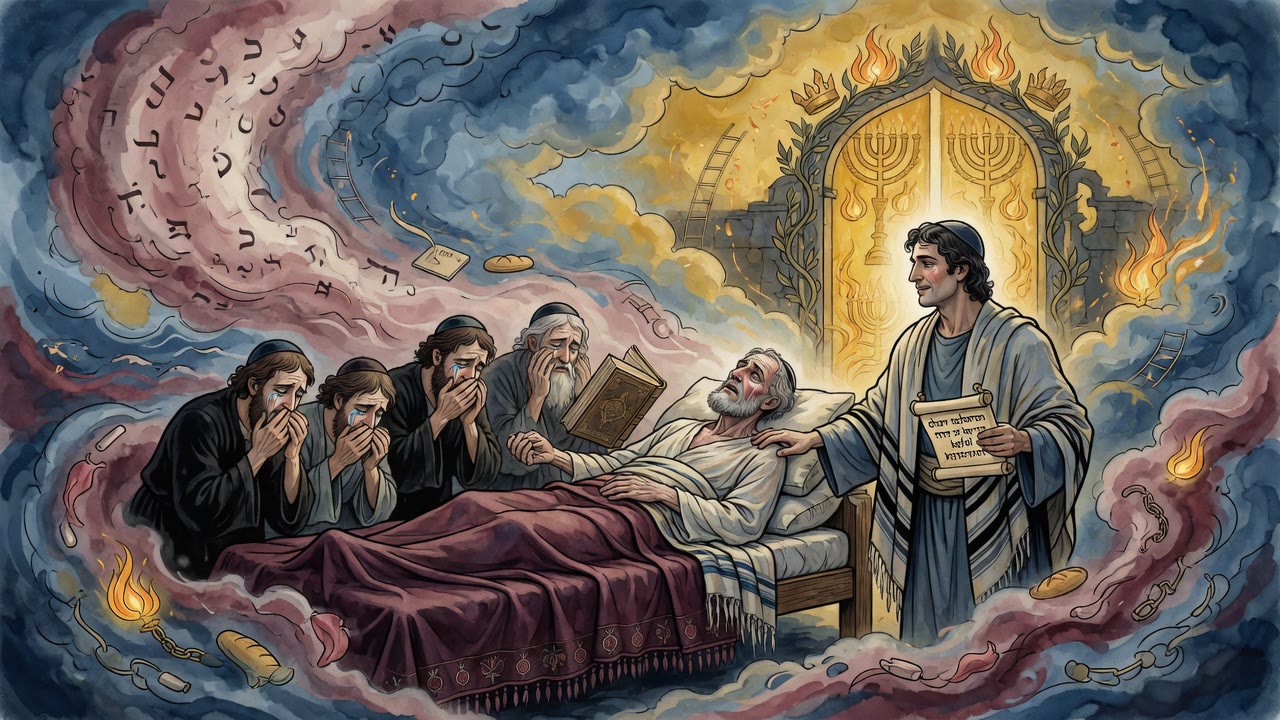
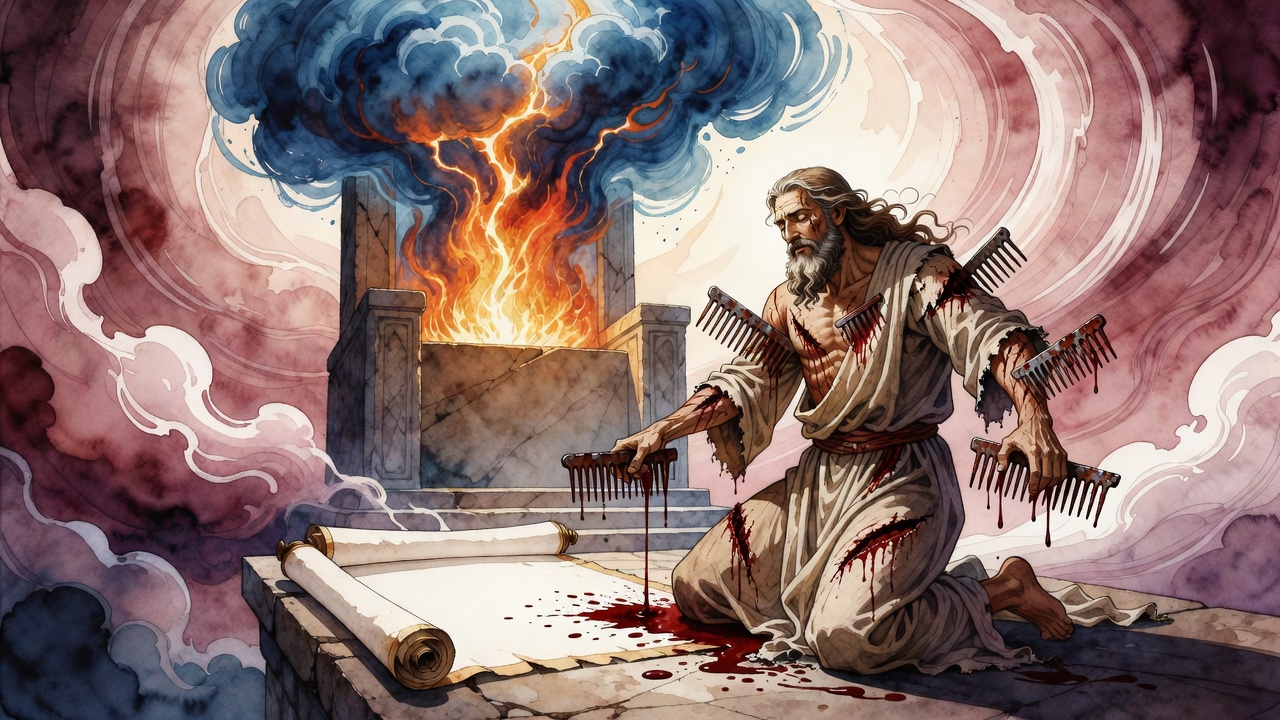
The Gemara relates: When they took Rabbi Akiva out to be executed, it was time for the recitation of Shema. And they were raking his flesh with iron combs, and he was reciting Shema, thereby accepting upon himself the yoke of Heaven. His students said to him: Our teacher, even now, as you suffer, you recite Shema? He said to them: All my days I have been troubled by the verse: With all your soul, meaning: Even if God takes your soul.
I said to myself: When will the opportunity be afforded me to fulfill this verse? Now that it has been afforded me, shall I not fulfill it? He prolonged his uttering of the word: One, until his soul left his body as he uttered his final word: One. A voice descended from heaven and said: Happy are you, Rabbi Akiva, that your soul left your body as you uttered: One.
The ministering angels said before the Holy One, Blessed be He: This is Torah and this its reward? As it is stated: “From death, by Your hand, O Lord, from death of the world” (Psalms 17:14); Your hand, God, kills and does not save. God said the end of the verse to the ministering angels: “Whose portion is in this life.” And then a Divine Voice emerged and said: Happy are you, Rabbi Akiva, as you are destined for life in the World-to-Come, as your portion is already in eternal life.
We learned in the mishna that one may not act irreverently opposite the Eastern Gate, which is aligned with the Holy of Holies. Limiting this halakha, Rav Yehuda said that Rav said: They only said this halakha with regard to irreverent behavior from Mount Scopus [Tzofim] and within, and specifically areas from where one can see the Temple. It is also stated: Rabbi Abba, son of Rabbi Ḥiyya bar Abba, said: Rabbi Yoḥanan said the following: They only said this halakha with regard to Mount Scopus and within, when one can see, and when there is no fence obstructing his view, and when the Divine Presence is resting there, i.e., when the Temple is standing.
In this context, the Sages taught: One who defecates in Judea should not defecate when facing east and west, for then he is facing Jerusalem; rather he should do so facing north and south. But in the Galilee which is north of Jerusalem, one should only defecate facing east and west. Rabbi Yosei permits doing so, as Rabbi Yosei was wont to say: They only prohibited doing so when one can see the Temple, where there is no fence, and when the Divine Presence is resting there.
And the Rabbis prohibit doing so. The Gemara argues: But the opinion of the Rabbis, who prohibit this, is identical to that of the first anonymous tanna, who also prohibits doing so. The Gemara replies: The practical difference between them is with regard to the sides, i.e., a place in Judea that is not directly east or west of Jerusalem, or a place in the Galilee that is not directly north of Jerusalem.
According to the first tanna, it is prohibited; according to the Rabbis, it is permitted. It was taught in another baraita: One who defecates in Judea should not defecate when facing east and west; rather, he should only do so facing north and south. And in the Galilee, defecating while facing north and south is prohibited, while east and west is permitted. And Rabbi Yosei permitted doing so, as Rabbi Yosei was wont to say: They only prohibited doing so when one can see the Temple.
Rabbi Yehuda says: When the Temple is standing, it is prohibited, but when the Temple is not standing, it is permitted. The Gemara adds that Rabbi Akiva prohibits defecating anywhere while facing east and west. The Gemara challenges this: Rabbi Akiva’s position is identical to that of the first, anonymous tanna, who also prohibits doing so. The Gemara responds: The practical difference between them is with regard to places outside of Eretz Yisrael, as according to Rabbi Akiva, even outside of Eretz Yisrael, defecating while facing east and west is prohibited.
The Gemara relates that in Rabba’s bathroom, the bricks were placed east and west in order to ensure that he would defecate facing north and south. Abaye went and placed them north and south, to test if Rabba was particular about their direction or if they had simply been placed east and west incidentally. Rabba entered and fixed them. He said: Who is the one that is upsetting me? I hold in accordance with the opinion of Rabbi Akiva, who said: It is prohibited everywhere.

 Click for full size