David Climbed a Unicorn Before He Became King
The hill had no flowers and no rocks. The tree at the top was horn. David sat at its foot to see what would happen if he stayed.
Table of Contents
David was a shepherd then, and he listened. Birds over the field, the brook turning through the trees, and branches shifting in the summer wind all had music in them, and he kept catching himself turning because he thought someone behind him had said his name. Once he was certain of what he heard.
 Click for full size
"David, David, you shall be king of Israel."
He looked and saw trees and flowers and nobody. So he left the forest and walked out onto a bare plain, and in the distance he saw a hill.
The Hill That Made No Sound
It was very high, and something about it was wrong, because nothing grew on it. From other hills he caught that faint sweetness he could never explain, and from this one he caught nothing at all. He climbed it anyway, though the slope was smooth and gave him nothing to hold. At the summit stood what looked like a tall tree with no branches and no leaves.
He Sat Down on a Horn
Up close it was not wood but horn. He crouched and tried to cut a clod of earth loose with his knife, but the blade would not go in, because the ground was not ground. It was hard the way hide is hard, tough the whole way through, and it gave a little under the knife and then pushed back.
Another boy would have run down the slope. David sat at the foot of the horn instead and said out loud that he wondered what would happen if he stayed.
The hill began to rise and fall in places, slowly, like something taking its time about breathing. A rumble came up through the hide and into his legs. Then a long swish, and at the far end of the hill something enormous swung into the air and whirled.
"That is just like a tail," David said.
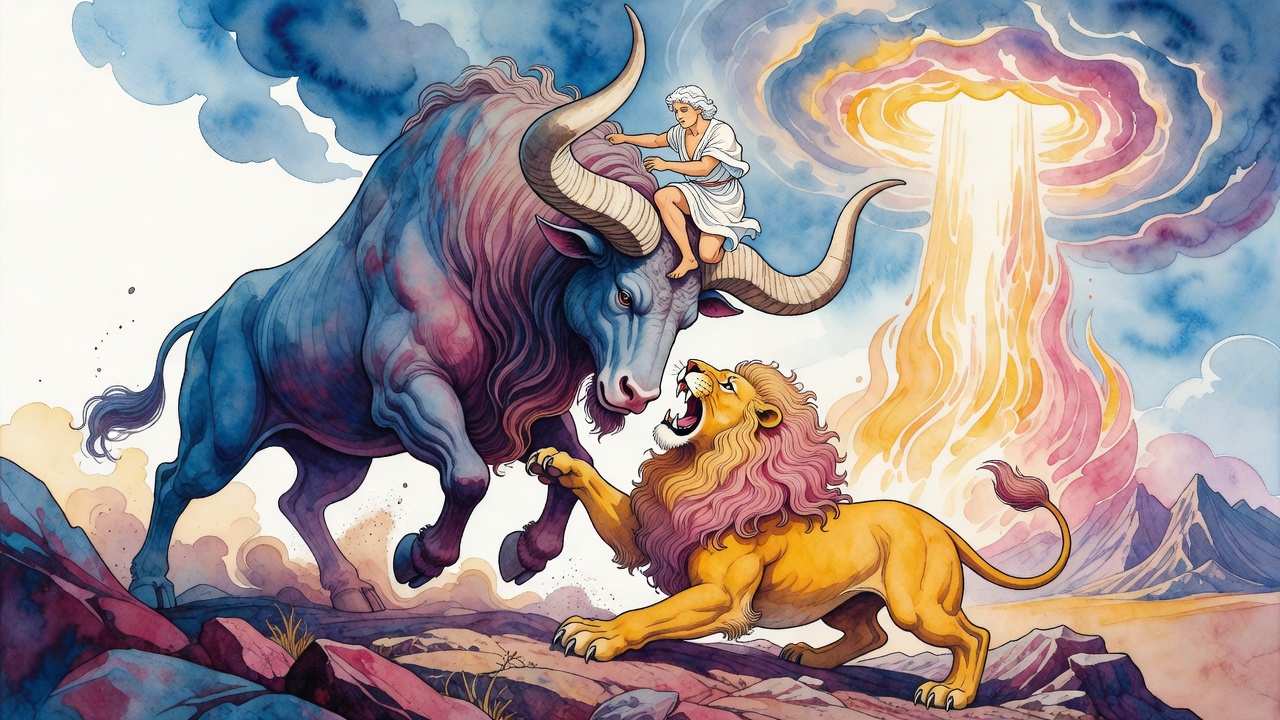
Then the whole mountain stood up, and he got both arms around the horn and held on, because the plain had dropped away under him. Cloud came level with his face, and when he looked down he saw a shadow lying across the earth, thrown by the sun off the thing he was riding, and the size of that shadow told him what he was on. Not a mountain but a re'em (ראם), a wild ox asleep in the sun. He had walked up its flank and made himself comfortable on its horn.
He Vowed a House as High as the Horns
A re'em one day old stands as tall as Mount Tabor, and its neck alone runs three parasangs. One of them once dropped dung into the Jordan and dammed the river. David held on and worked the problem the way a shepherd works a problem. The animal would have to eat sometime. If it lowered its head to graze, he would slide down the horn and be gone before it lifted again.
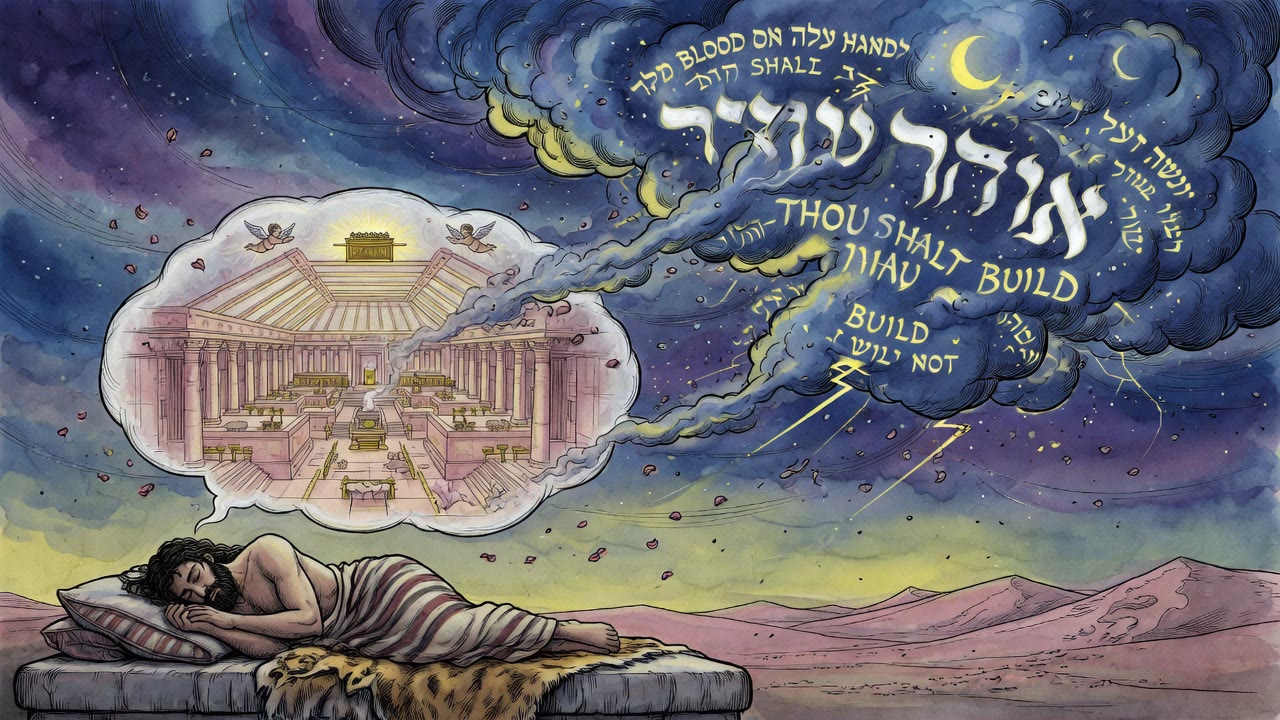
Waiting was not enough, so he made an offer. If God brought him off this creature alive, he would build God a house, not an altar and not a shrine, but a house one hundred ells high, the exact height of the horns he was clinging to. He set the measure while there was still nothing under his feet.
The Lion Called Itself King
The answer came from below, and it came roaring. "Bow to me, for I am king of the beasts."
David could barely find the lion. From that height it was a speck the color of the plain, and against the re'em it was nothing at all, a cat at the foot of a mountain, but the re'em heard it. The re'em went down, head first, the whole tower of it folding toward the dust, the horn tipping until the ground came up under David's feet and he slid the last of the way and stood.
He was standing directly in front of the lion, with blazing eyes and a tail working against its own flanks, left, right. He had killed lions before, four of them out in the desert, and three bears, with nothing in his hands at all. He pulled the knife from his belt, the same knife that had turned aside on the re'em's hide, and walked toward the lion.
The Deer Ran for the Houses
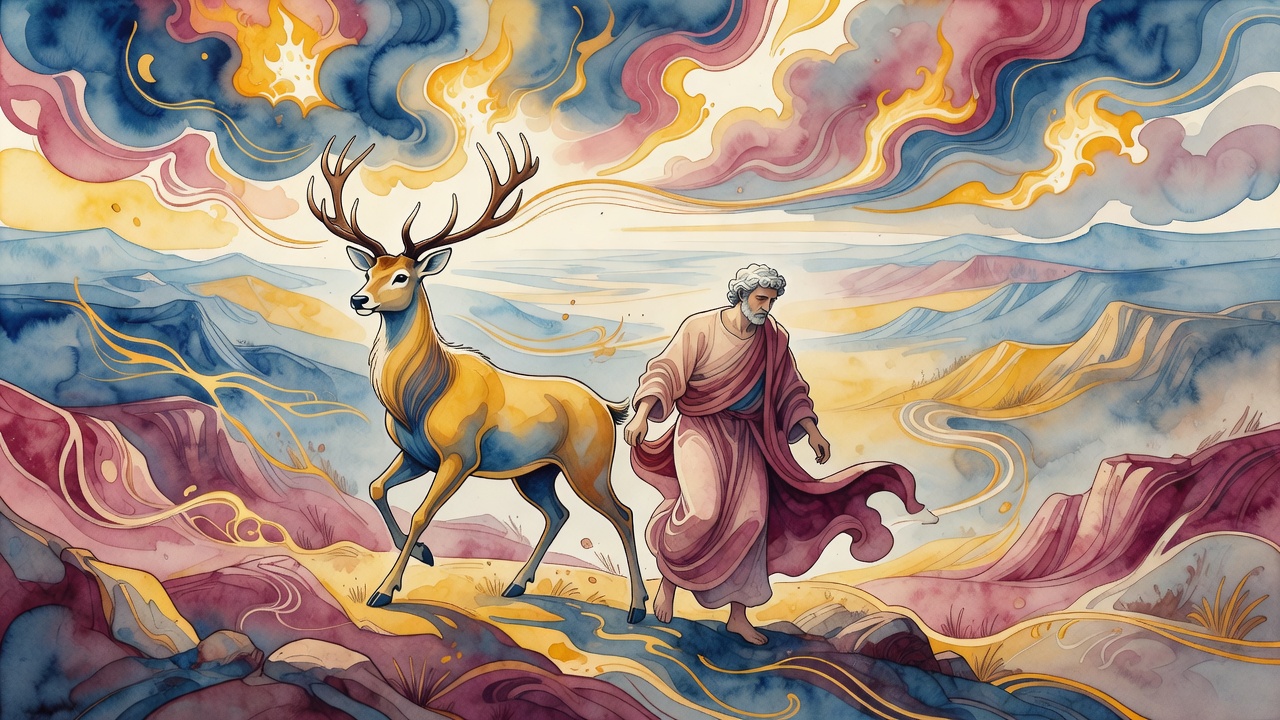
Something moved on the plain, and boy and lion both turned. A deer, and it was already speaking. "I will save you, boy, so get on my back and trust my speed."
David was up before the lion finished turning, because waiting would have been a kind of death. Then the plain went past in one long smear, then the forest, branches whipping his arms, and behind him the roaring stayed close and would not fall away. He held the deer's neck the way he had held the horn.
It stopped where the houses began, roofs and smoke and the ordinary world one field ahead. "You are safe now," the deer said. "You are to become king, and my order was to save you, so do not be afraid, I will take the lion the other way."
He thanked it and slid down. It was gone back across the plain faster than it had carried him, with the lion behind it, and then both of them were out of sight. David walked home singing, still a shepherd, and nobody in the house had any reason to ask where he had been.
Years later he was a king with a harp instead of a knife, and he put that day into a psalm, with the lion's mouth in it and the horns as well.
← All myths