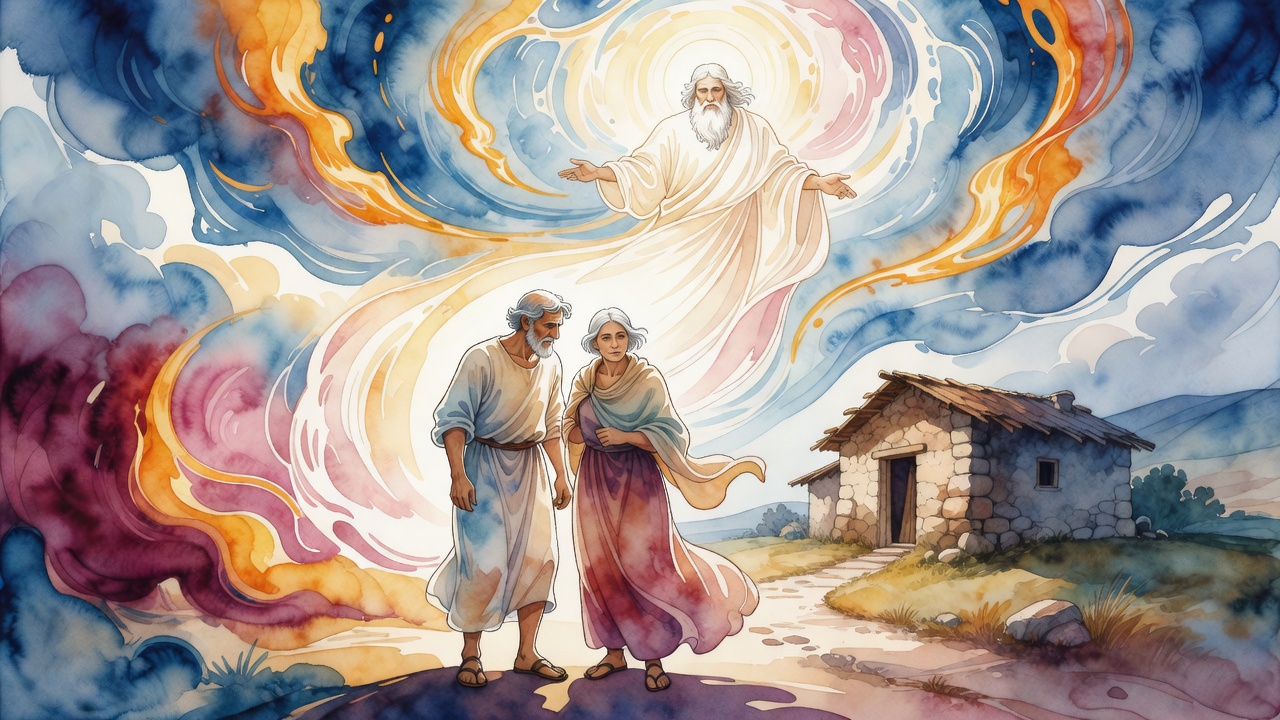
The Miser Mohel Whose Keys Hung in a Demon Village
A woman in a strange village pulled him aside. Eat nothing here, she said. The host was not a man, and the food would put a chain on him.
Table of Contents
 Click for full size
The One Door He Left Open
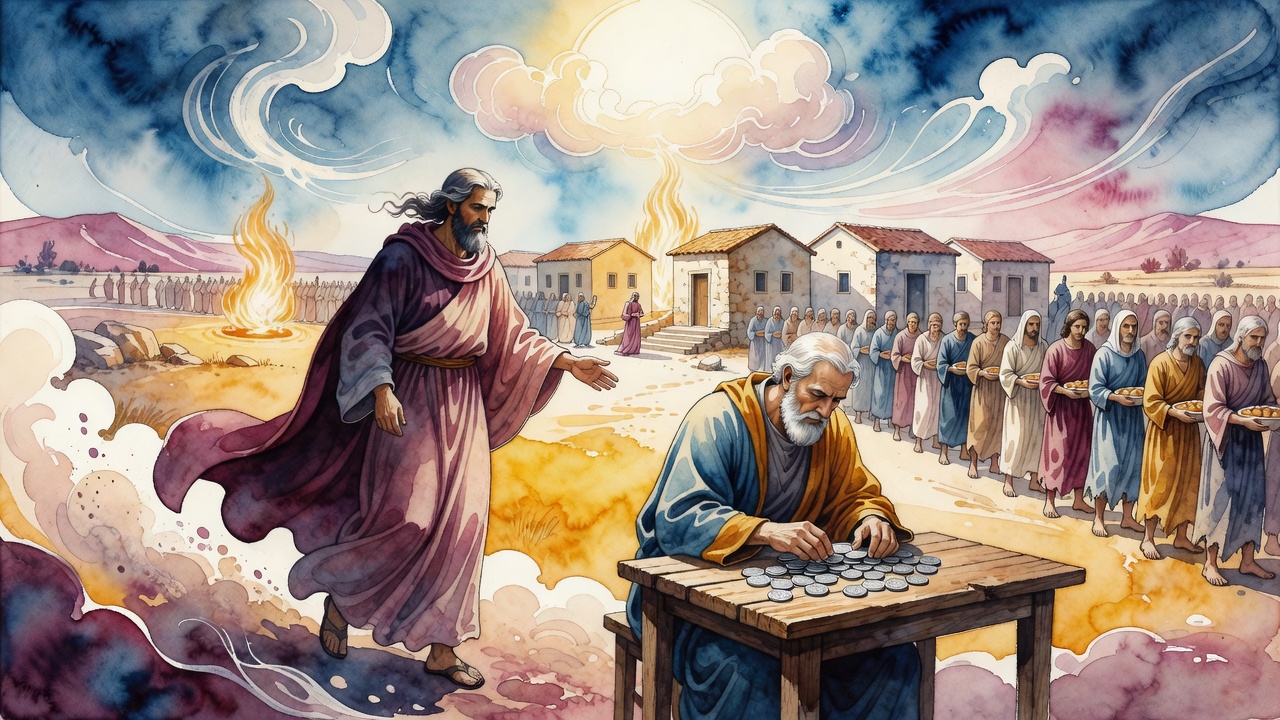
The richest man in town could not open his own hand. He had gold and silver and locked rooms of stones, enough to feed a street, and he still crossed away from the poor box. He would not go to the synagogue on Mondays or Thursdays. Someone might ask him for a coin. He sent his servants to market before sunrise so they would be back before the beggars arrived.
One commandment still got through. He was a mohel, a skilled circumciser, and when a child needed the brit he traveled any distance and took no fee from rich or poor. That single open door was all the invisible world needed to find him.
The Woman Who Warned Him
A man came to the door and said his wife had borne a son. Come, the man said, and the mohel took his knife, climbed into the carriage, and rode. He thought he was sitting beside a father. He was sitting beside a destroyer wearing a man's face.
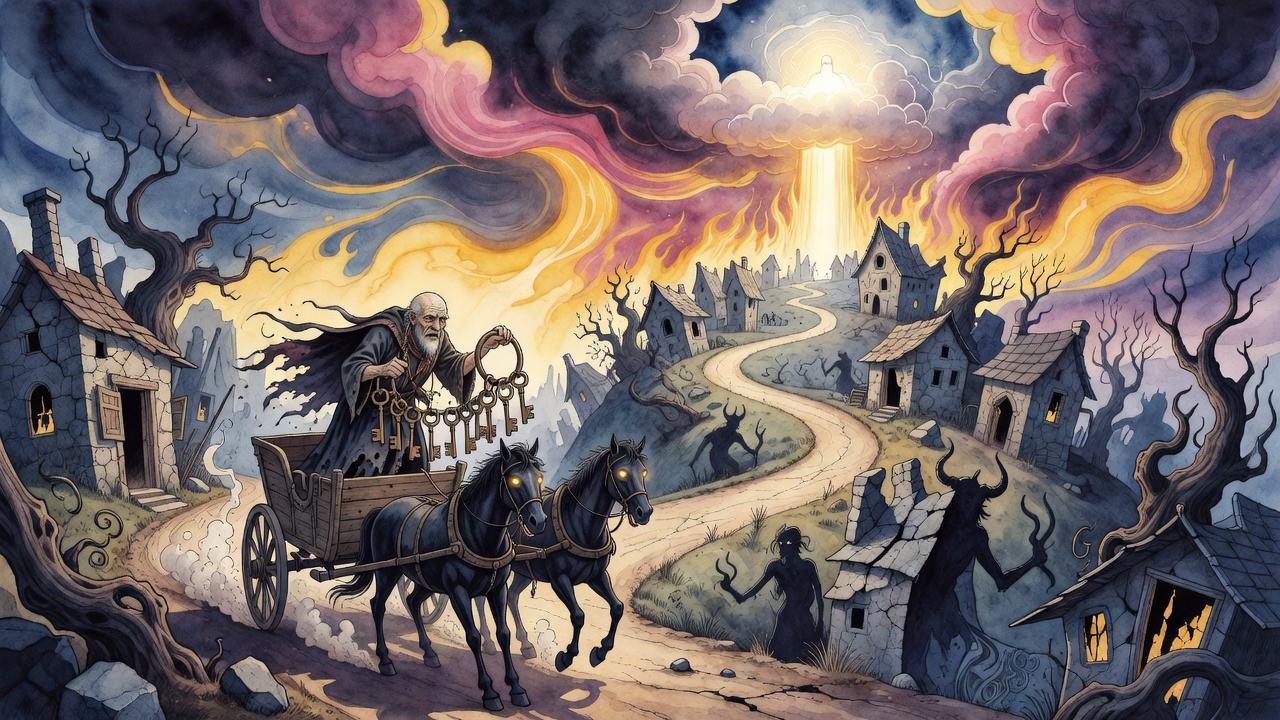
Forest gave way to mountain. Mountain gave way to wilderness no traveler used. They rode two days through land he could not name. On the third day they came to a small village, some twenty houses, all of them beautiful. The host looked rich. Meat and large fish filled the house. A servant led the horse away for fodder as any honest household would.
While the host turned to his affairs, the mohel went in to the woman who had given birth. She was glad to see him. Then she pulled him close. "My husband is a shed (שד), a demon," she said. "I am from human seed. They took me as a child. Their work is empty and full of tricks. Circumcise the boy. Eat nothing. Drink nothing. Take no gift from him or from any of them."
His heart went cold. He believed her.
He Would Not Eat
At evening, men and women arrived on horses and in wagons, looking like neighbors from nearby villages. They were mazzikim, harmers, wearing human shapes well enough to pass a glance. They pressed him to wash and sit for the meal. He refused. "I am tired from the road," he said. He ate nothing that night.
In the morning they went to a synagogue and prayed. He had to stand and sing the mohel's verses. After the prayer they brought the child, and he circumcised the boy as any Jewish house would. The sandek offered brandy and cakes. The mohel would not taste them. He said he was fasting from a dream.
The host moved the feast to evening, after the fast. His whole aim was that the mohel take from his bread. Food from that table would have given the shed a hold on him. The wife had already told the truth, and the host did not know she had spoken. At the evening meal the mohel still would not eat. He said his head and limbs were heavy. They ate every delicacy in the world. He sat with his hands in his lap.
The Room of Iron Keys
When the wine had warmed them, the host said, "Come with me to a room." The mohel thought his hour had come. They went. The first room was silver vessels. The second was gold. "Take one as a remembrance," the host said. The mohel answered that he already owned gold and silver, pearls, rings, bracelets, necklaces. "Take a ring, then, or a vessel you prize." He would not. He already had stones enough.
Then they entered a room hung with keys. Iron keys on nails, all around the walls, bundle after bundle. The mohel stared. One bundle was the image of his own: the rooms, the chests, the strongboxes at home, hanging here on a nail.
The host laughed at him. "I showed you silver and gold and you did not wonder. Now you wonder at iron?" The mohel said, "I wonder because that bundle is the keys to my house."
"You did me a kindness," the host said. "You rode some twelve parasangs to circumcise my son. I saw that God was with you, because you ate nothing, drank nothing, and took nothing from my domain. I am the chief appointed over the shedim who keep watch on misers. We hold their keys so they cannot give charity, and so they cannot even enjoy what they own. Take your bundle. As God lives, no harm will come to you."
He Built With the Keys
The mohel took the keys and went home in joy. When he crossed his own threshold his heart turned. He became a different man. He built a large stone synagogue. He fed the poor. He clothed the naked. He kept giving until he died with a good name.
The gold in the chests had not changed. The man who held the keys had. A village of twenty beautiful houses, a woman stolen as a child, and a room of iron had done what the collections on Mondays and Thursdays had never managed to do. He opened the doors. He kept them open.
← All myths