Dirt Had to Be Set Aside Before the Festival to Cover the Bird's Blood
Before Yom Tov they set dirt aside so bird blood could be covered. Feast meat waited on prepared earth, not on digging.
Table of Contents
 Click for full size
Dirt in a Bowl Before Sundown
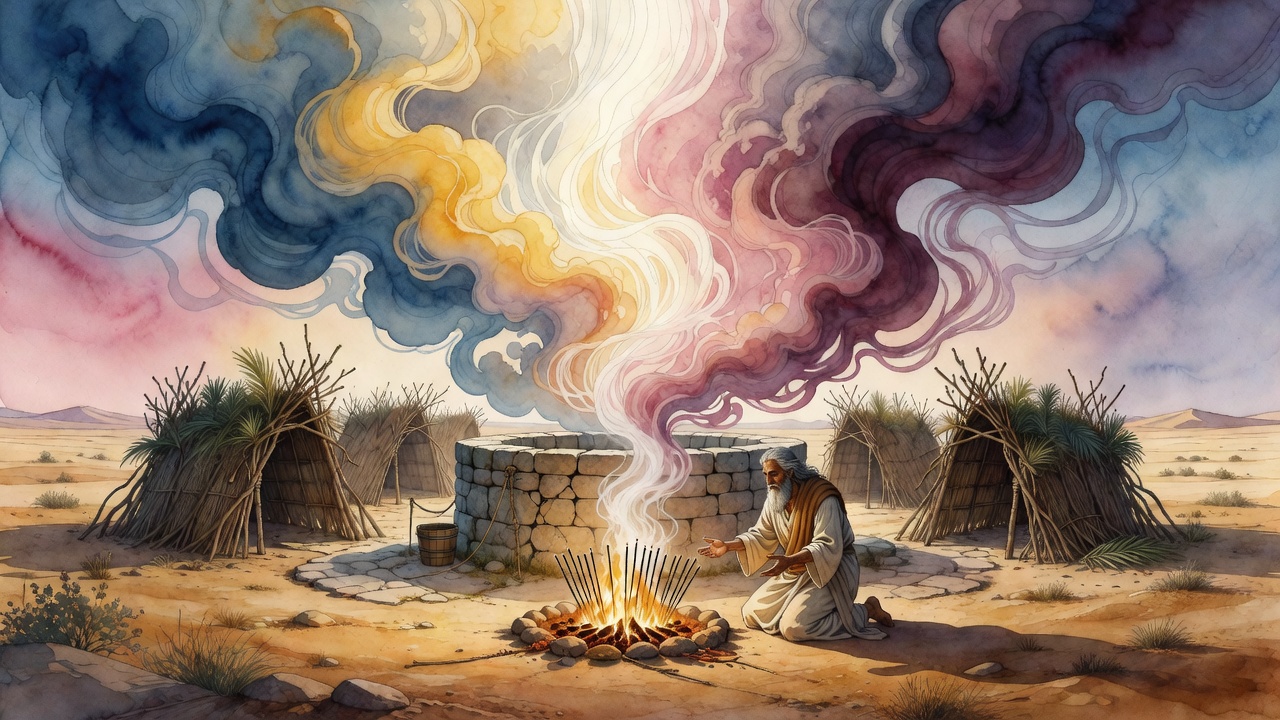
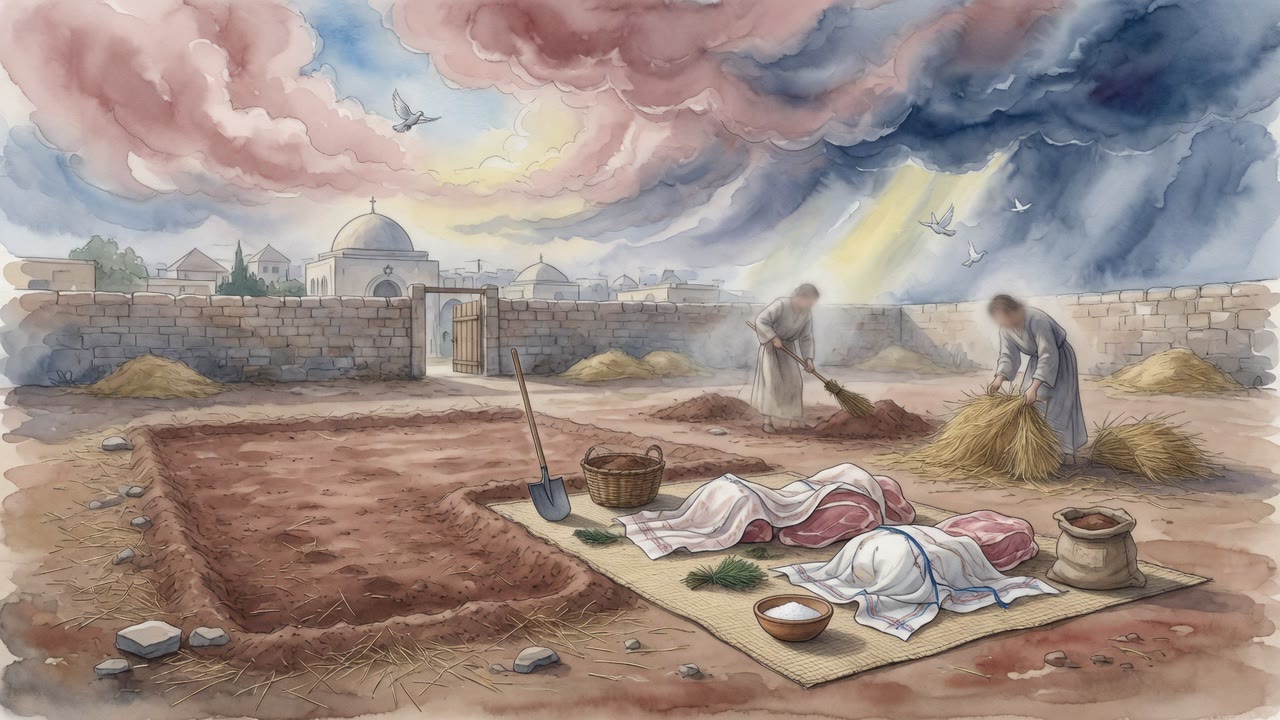
The woman set a bowl of loose earth on the shaded stone while the sun still had work to do. Festival light would arrive soon, and with it the bird for the meal. She had learned the hard way that joy on Yom Tov still walks inside law. Blood of a bird or a wild animal must be covered (Leviticus 17:13). Covering needs dirt. Dirt, if you dig it on the day itself, may be work the day forbids.
Beit Shammai had allowed digging with a shovel to cover. Beit Hillel had drawn a tighter circle: slaughter only if the earth is already prepared. Rabbi Chagai in the name of Rabbi Acha made the practical rule sting: no prepared earth, no slaughter. Food may be readied on the festival. A fresh pit for blood-cover is not food. The bowl on the stone was her answer to that sentence.
The Cut and the Cover
When the bird's blood hit the dust she had set out, she did not scrape and smear as if any contact would do. She covered. The gesture rhymed with another exactness the priests knew in the Temple: dip the finger in the blood, do not wipe along a rim and call it dipping. Measure matters. Contact matters. Atonement and kitchen both refuse theater that only looks like obedience.
Children watched the dark stain disappear under earth and asked why a festival needed such a sober move. She told them the Holy One had permitted meat and still claimed the blood. Joy is not a license to treat life as garbage. The feast table would hold roasted flesh. The ground would hold what the flesh had carried.
What Was Forbidden, What Was Loosed
The rabbis heard a wider pattern in the permissions. Fat forbidden in a domestic animal may be permitted in a wild one. The sciatic nerve forbidden in the wild beast is not the same fence in the bird. Fish come without slaughter. From Tent of Meeting days when slaughter anywhere else could mean being cut off, the law had moved, in its season, toward meat "within all your gates" (Deuteronomy 12:15). Prohibition and permission braid through species and eras.
None of that braid erased the cover. Loosening one fence does not knock down the next. The festival that allows cooking still asks for yesterday's dirt ready in a bowl. A people that can celebrate can also pause over blood.
Night Smell of Smoke and Soil
After dark the courtyard smelled of smoke, herbs, and the faint iron under the earth-cover. Men sang short blessings. A neighbor who had forgotten to prepare dirt ate dairy and swallowed envy with it. No one loaned festival-dug soil as a clever trick. The argument had already been had in houses of study; the kitchen only enforced it.
She rinsed her hands and did not call the work grim. She called it honest. The bird had been life. The law had not pretended otherwise. Covering was the last soft speech to that life before the meal turned toward joy without amnesia.
Exact Joy
In the morning the bowl still held stained earth. She would empty it later with the care she gave any tool of a mitzvah (a commandment). The children would remember the order: prepare, then cut, then cover, then eat. That order is a kind of song, less famous than the sea-song, sung with fingers and dust.
Israel's festivals are not escapes from command. They are commands that taste like wine and roast when the preparations were done in time. The midrash keeps the shovel debate alive so no one solves holiness by digging a convenient hole in the middle of praise.
Her husband had once argued for Beit Shammai's shovel on a hot festival afternoon when guests were already at the gate. She had set an empty bowl in front of him and waited. He went to a neighbor who had prepared earth and came back quieter. Since then the bowl lived on the shelf year-round, a clay conscience. Before every Yom Tov she filled it early, as early as the matzah flour or the wicks.
When the rabbis spoke of permissions moving across species, she did not treat the teaching as loophole hunting. She heard a God who fences and opens with reasons, not moods. Covering blood on a day of joy trained the house to hold two truths: celebration is commanded, and life is never cheap. The children grew up tasting both truths in the same meal, which is harder and better than tasting only one.
Guests praised the roast. She pointed with her chin at the bowl by the door, still holding its dark earth. Praise the preparation, she said, or you only praise the easy half of the day.
← All myths