Blind Wanderers Kissed the Blood of Zekharya
The blind man caught a stranger's sleeve in the ruined street. He asked for Zekharya's stain, not bread. His mouth found warm dust.
Table of Contents
The blind man put out both hands and caught a stranger's sleeve.
 Click for full size
"Take me to the blood," he said. "To the place where they killed Zekharya."
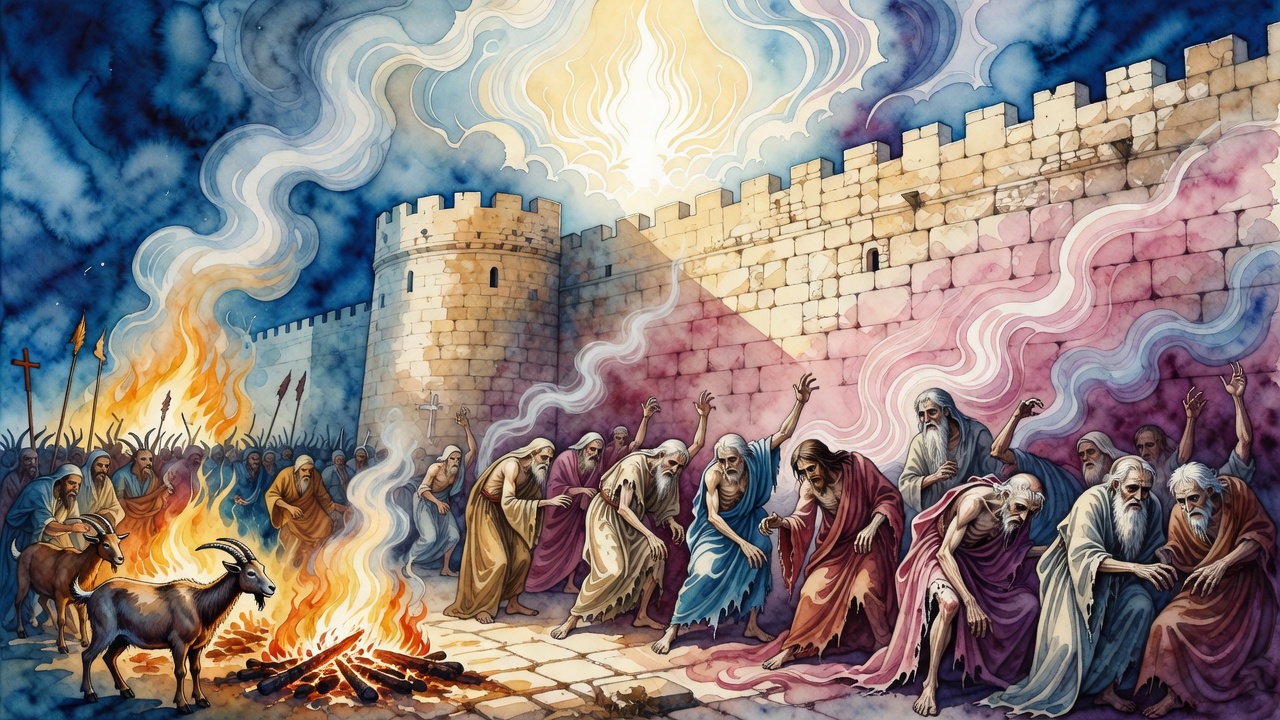
Around them the streets still held lad and elder on the stones, mixed without rank, as the day of wrath had left them (Lamentations 2:21). Sword-dead lay quiet. Hunger-dead still turned their faces toward the wall, as if food might come over it. The blind man did not ask for bread. He asked for the stain.
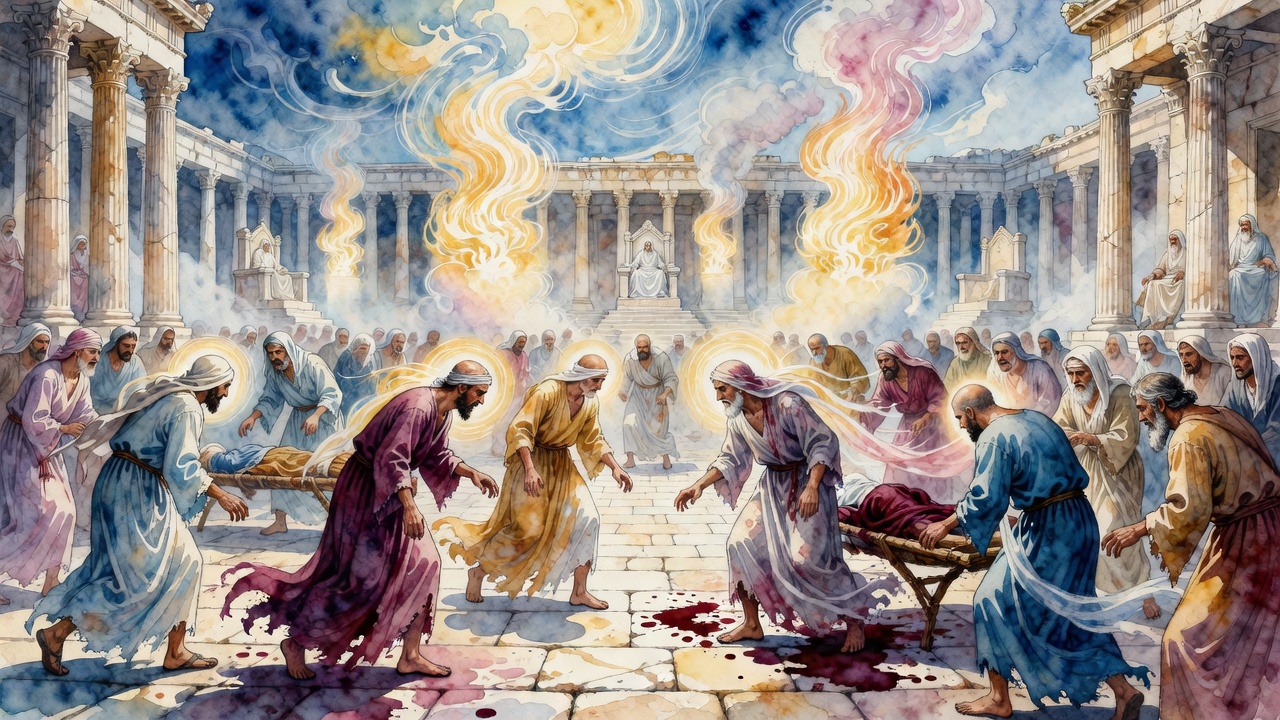
Someone led him. His feet found warm places in the dust. When they reached the courts where the prophet had been struck down for rebuking the people, he fell forward and pressed his mouth to the ground that would not stop speaking blood.
Take Me to the Blood
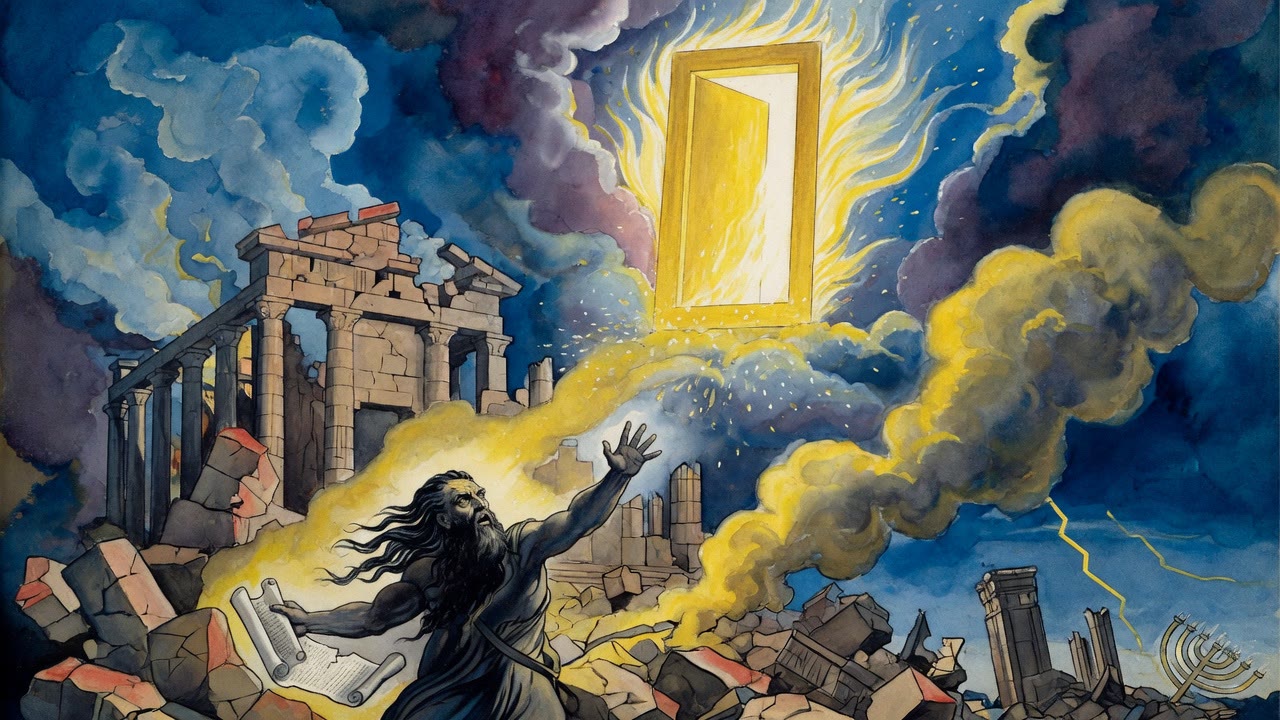
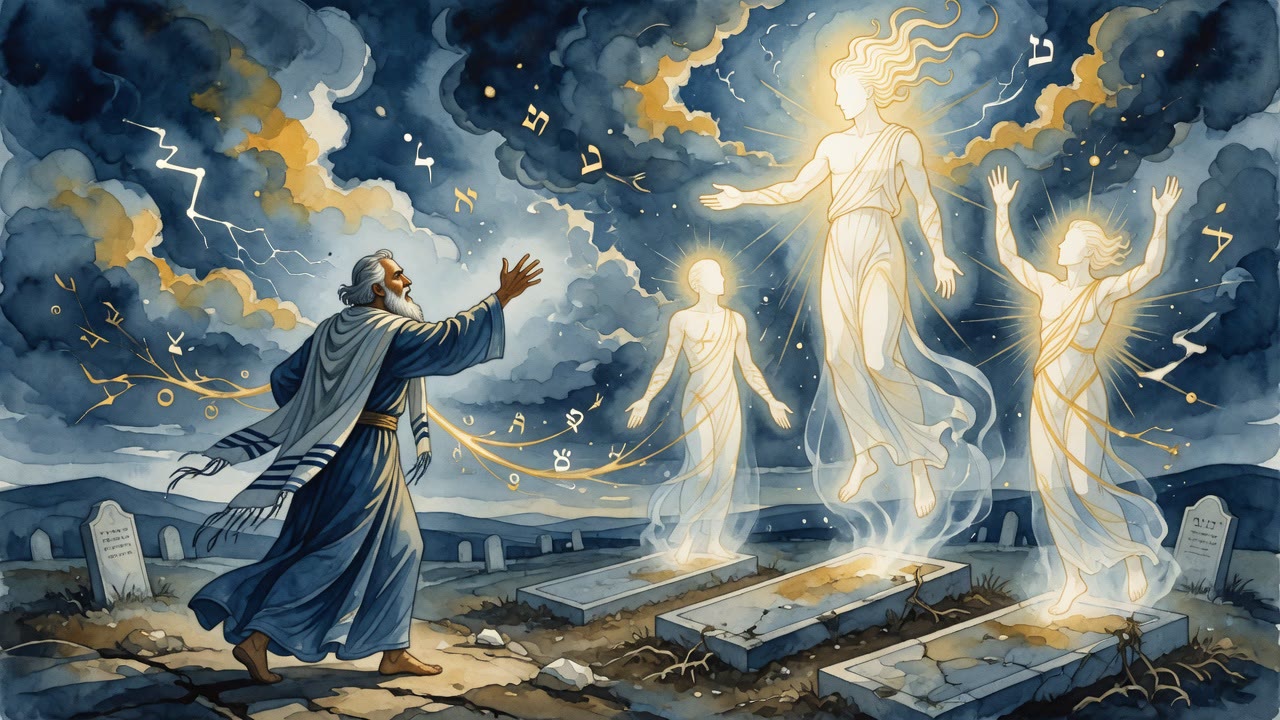
Zekharya had died inside the Temple precinct for words the city refused. His blood did not rest. It seethed. It waited. It answered only when slaughter enough had come to match the crime. By the time the walls fell, the city's catastrophe had become the payment the blood demanded, and still the place of the killing drew bodies.
The blind among the survivors cried out in the streets.
"Who will show us the place where they killed Zekharya?" they said. "We will go there. We will embrace him. We will kiss him."
Hands took theirs. They wandered until their mouths found the stain. They kissed until their garments were sullied, so that one could not touch them (Lamentations 4:14). The blind man kissed once. He kissed again, as if once were not enough to pay a debt. A boy with one good eye stood back and tasted metal without tasting blood.
Roll Us in It
Those who could not walk called from doorways of houses already empty.
"Bring us there," they said. "If we cannot walk to the blood, bring the blood's place under us. Roll us in it."
Helpers lifted them. They carried the lame across a street of mixed corpses and laid them down in the courts. Garments soaked through. No one could touch those clothes afterward without coming away red. The lame did not clean themselves. They treated the prophet's blood as the last holy thing left in a city that had killed its rebuker and then burned around the crime.
Young men who still had sight did not laugh. In a street full of mixed dead, kissing blood no longer looked stranger than dying for the scent of goats.
Lad and Elder on the Stones
Jeremiah had said the wrath would pour on infant and youth, man and woman, elder and those whose days were few (Jeremiah 6:11). The fulfillment lay under the wanderers' feet. The blind stepped over a child. The lame were carried past a grandfather. None of that sorted the ages. The street held them all.
The pilgrims of blood moved through a city already arranged as one indictment. They were Israelites trying to touch the first murder that made the later murders make a terrible kind of sense. If Zekharya's blood still seethed, then the siege had not been random. It had been an answer.
A woman who led the blind man wiped her hands on stone and still found red under her nails. She looked at the Temple's broken lines, then at the stain, then at the enemy camp, and she did not look at the camp again.
The Smell from the West
Those killed by the sword had finished dying. Hunger had not. In the first destruction the starving died from the scent of thistles the enemy cooked outside the wall. The smell drifted in. Bodies that had nothing left ruptured on a smell they could not reach (Lamentations 4:9).
In the later destruction there were no thistles. The enemy drove goats to the west of the city and roasted them there, so the wind would carry the meat over the stones. The scent infused the starving. They fell. They bled as if the field's produce itself had torn them open.
Evening came with that west-wind smell. The blood-kissers did not turn toward the wall. They stayed by the courts until their clothes stiffened.
Clothes No One Could Touch
When they rose, no one offered them clean cloaks. Touch itself had become a problem. A person could not take those garments in hand without coming away marked.
Night covered the streets. The seething, if it still seethed, did so under darkness. Someone spoke low that the prophet's blood had waited years for this answering death. The words did not comfort. They sounded like a door locking behind the city.
If the murder had called the siege, then every kiss on the stain was also a confession that the first blow had been local. The garments kept their stain into whatever exile waited beyond the gate.
← All myths