God Drew His Bow Like an Enemy Over Zion
One rabbi said God filled the city's belly with worms, so Jerusalem was chewed from the inside while the sword took her sons at the gates.
Table of Contents
The wall still stood when Jerusalem felt the first burn start under her own ribs.
 Click for full size
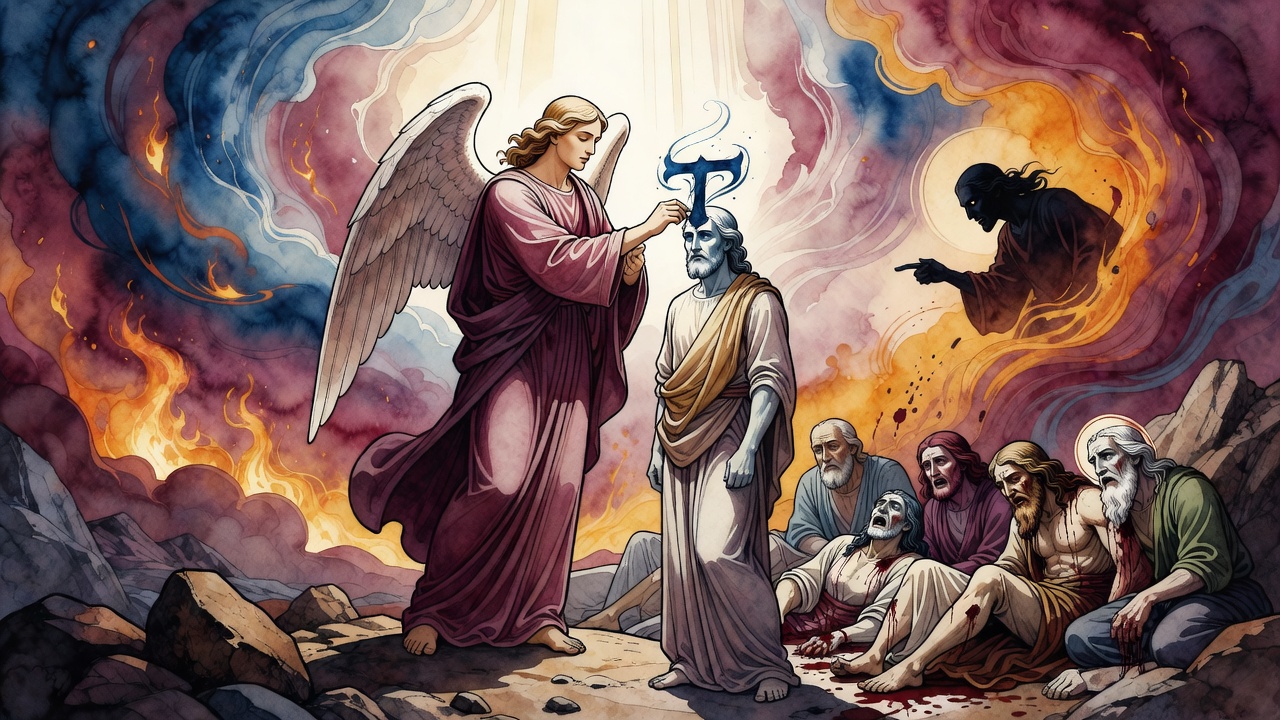
Outside, the sword took sons at the gates. Inside the houses, something slower worked. The city cried the line that Lamentations would lock into memory: "See, Lord, for I am in distress, my innards burn, my heart overturned within me, for I have been defiant. Outside the sword bereaves; in the house, it is like death" (Lamentations 1:20). The cry was not poetry first. It was a body reporting damage from two directions at once.
What Filled the Belly of the City
Rabbi Hiyya bar Hanina refused to soften the doubled word for burning innards. He said God filled the city's gut with parasitic worms, so the suffering chewed from within while the enemy worked from without. Rabbi Shmuel bar Nahmani heard a different pile in the same root: congealed masses heaped inside, a clog of ruin where breath and food should move. Either way, the pain was not only smoke and battering rams. The city was sick in its own cavity.
The heart overturned, the verse says, because defiance had come first. The confession is the cause, not a later excuse. Moses had already sung the map in his last song: outside the sword will bereave, and terror within (Deuteronomy 32:25). On the day the walls failed, the old song became street by street.
The Bow That Was Only "Like"
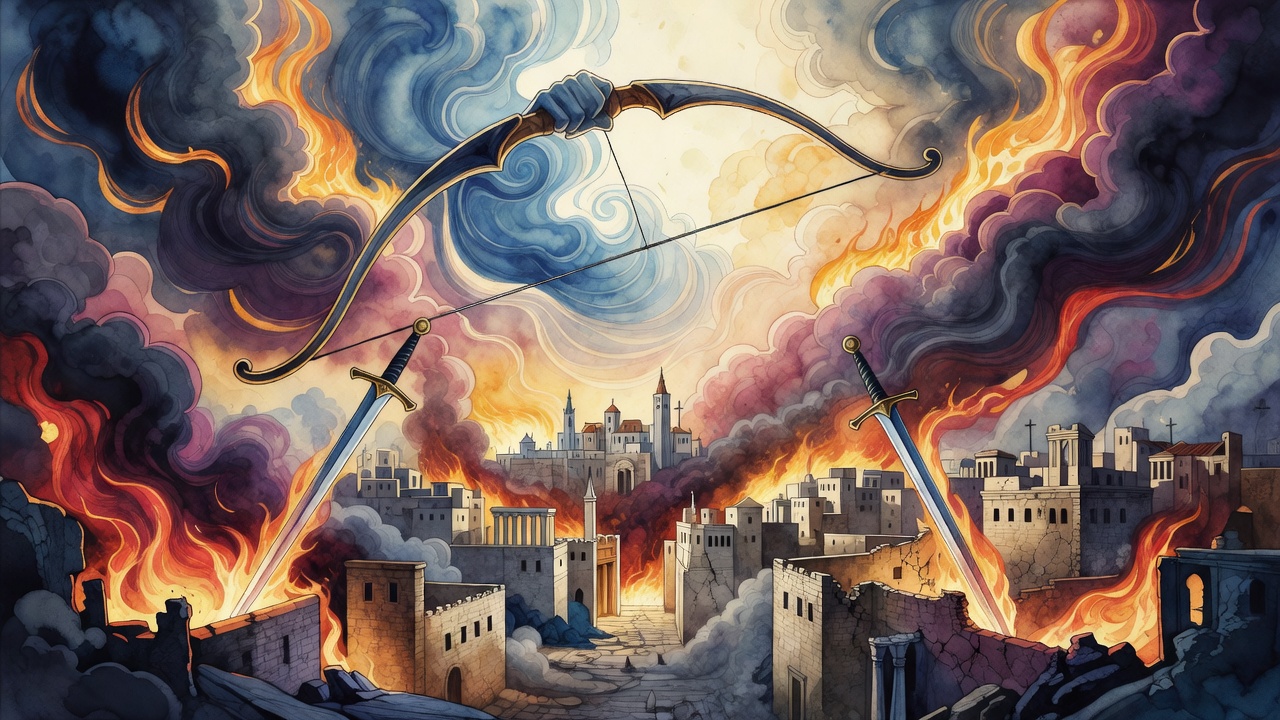
Another line of the lament drew a harder picture. "He drew His bow like an enemy; His right hand stood as an adversary, and he killed all delights of the eye. In the tent of the daughter of Zion, He poured out His fury like fire" (Lamentations 2:4). Rabbi Aivu fixed on the word like. Israel had not sinned as absolute extremes. Scripture had said they were like complainers, like boundary-movers, like a wayward cow. So justice answered in the same key. God drew the bow like an enemy, not as a foreigner who had never loved the city. The resemblance was the wound. The restraint was still a bowstring under tension.
Other voices named the enemy-shapes history had already used. The bow like an enemy could be Pharaoh's mouth on the sea's edge. The right hand as adversary could be Haman at the banquet. The enemy could be Esau's line pressing from the hills. They stack so no single empire owns the arrow. When Zion falls, every old adversary stands in the shadow of a bow held higher than theirs.
Delights of the Eye
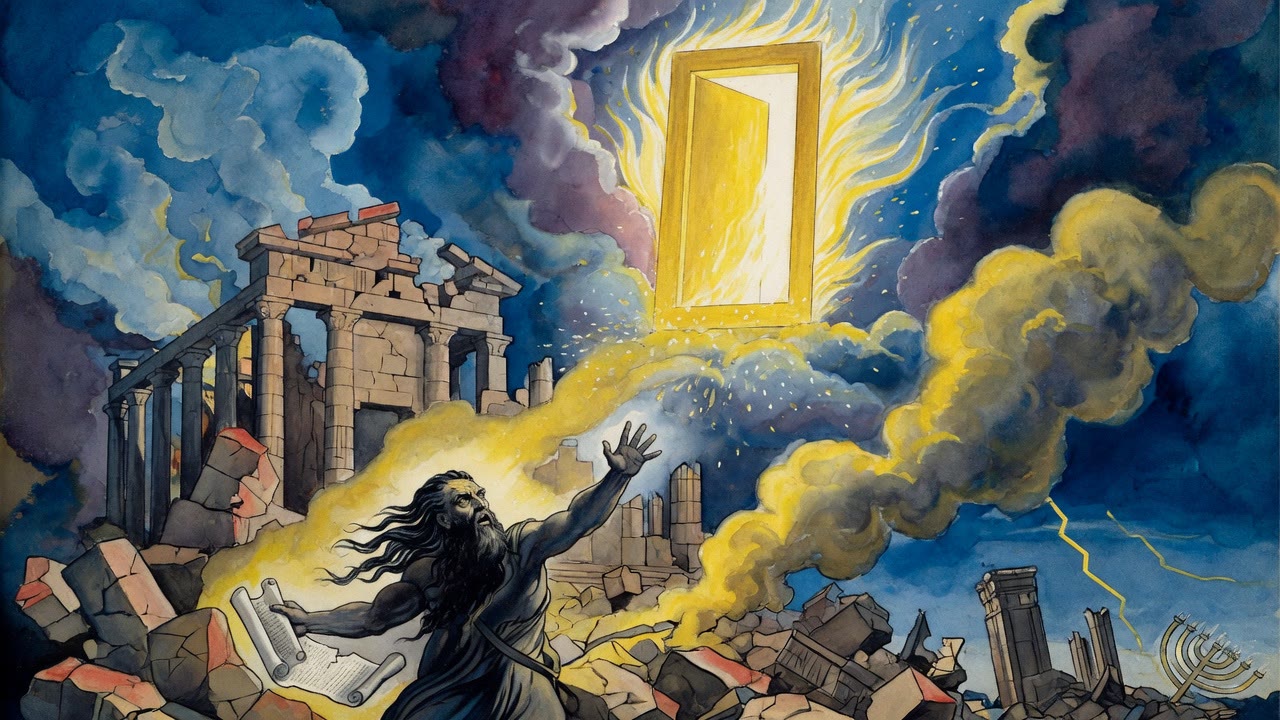
What the bow killed, the sages refused to leave abstract. Delights of the eye meant children, dear as the pupil itself. Or it meant the Sanhedrin, Israel's eye of judgment, cut down until the city could no longer see its own law. Either reading turns the tent of Zion into a place where the most precious sight goes dark first. Fury poured like fire into that tent, set against other pourings in the prophets, some for grace, some for wrath, as if Heaven kept two jugs and this day only one tilted.
A parent who watched a child fall did not need the Sanhedrin reading. A sage who watched the court empty did not need the child reading. The city held both losses in one verse.
Sword Outside, Death Inside
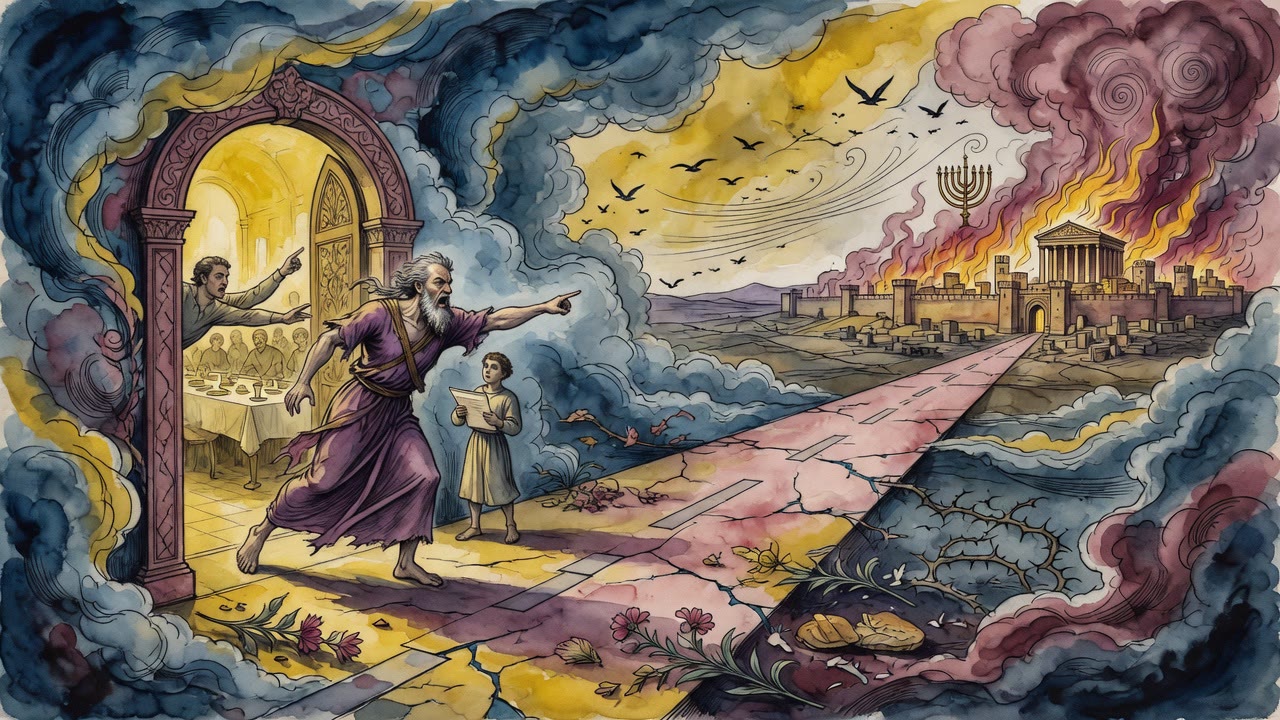
The geometry of the destruction mattered. Outside: open violence, the kind an army can report. Inside: the worm, the clot, the house where death sits without a banner. Moses had named both. Jerusalem lived both. The heart overturned not only from grief but from the knowledge that defiance had invited the double strike. The confession did not stop the burning. It only named who had lit the first match.
Still the word like hung over the bow. An enemy would empty the quiver without memory. The One who bent the bow over Zion still remembered the tent He had chosen. That is why the metaphor will not harden into pure foreign hatred. The tragedy is closer than an invader. It is judgment wearing an enemy's face for a season.
After the String Loosed
When the fire in the tent died down, the people who remained carried two kinds of ash: the ash of walls and the ash of a body that had burned from the middle. They would write the lament so later generations could not pretend the city fell only from outside. The sword did its work. The innards did theirs. Between them stood a bow drawn like an enemy, and a people who had been only "like" sinners learning what "like" justice costs.
Jerusalem's last clear sentence that day was still addressed upward. See, Lord. The seeing was the only weapon left.
← All myths