Gabriel Marked the Righteous with a Taw of Ink
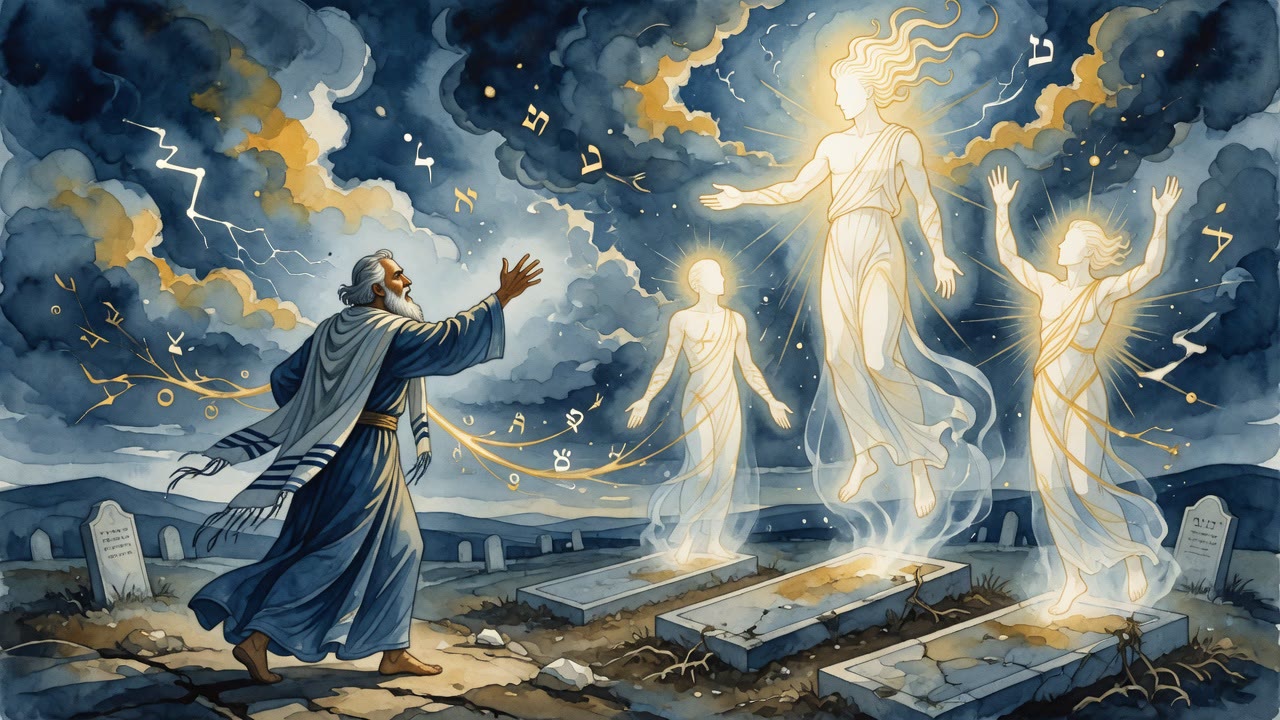
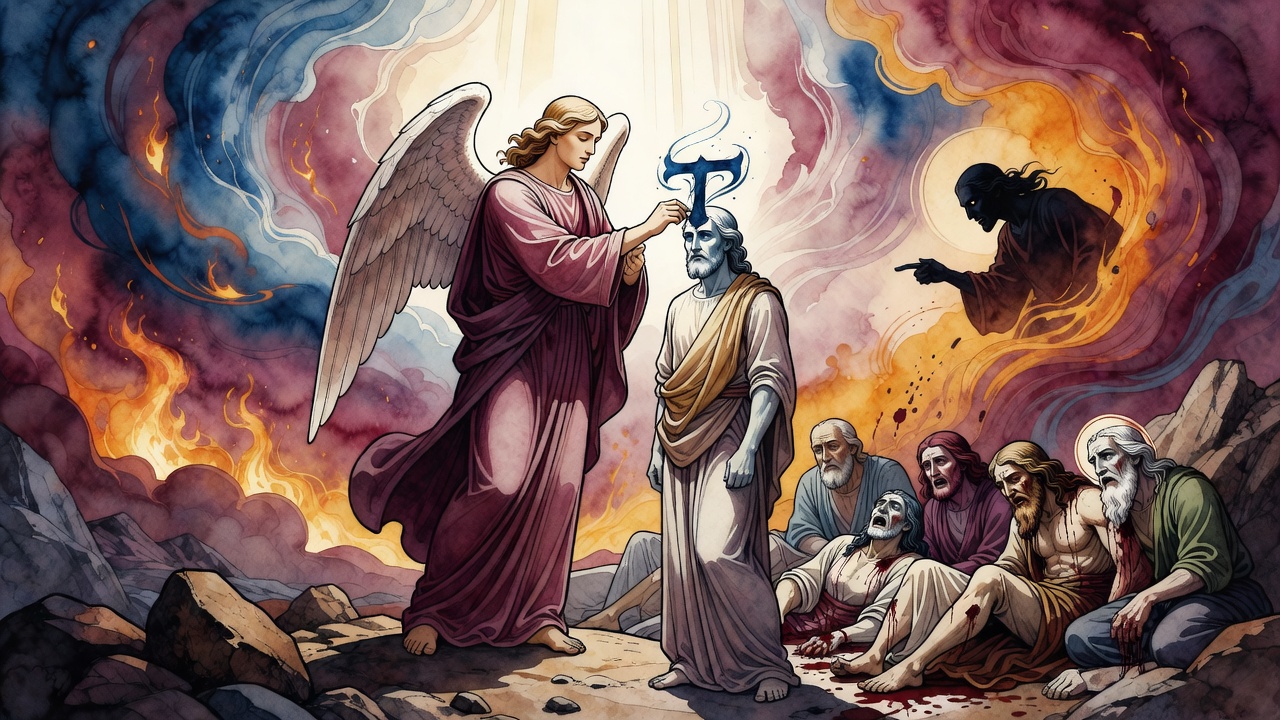
Gabriel inked a taw on the righteous and blood on the wicked. The Accuser argued the ink-marked had failed to protest.
Table of Contents
 Click for full size
Summer Exile Instead of Winter Death
Jerusalem stood condemned, and even the schedule of her doom was argued in heaven. The exile was set for Tevet, midwinter, when cold kills the slow and the young. The Holy One looked at the road and said, if they go out now into the frost, they will die on the way.
So He waited. He led them out in the warmth of summer instead. The prophet's word "I will surely gather them" was read as exile itself: a gathering into removal, timed so that the gathering would not become a mass grave of ice.
Mercy did not cancel the decree. It only chose which month would carry the chains.
Ink and Blood on the Forehead
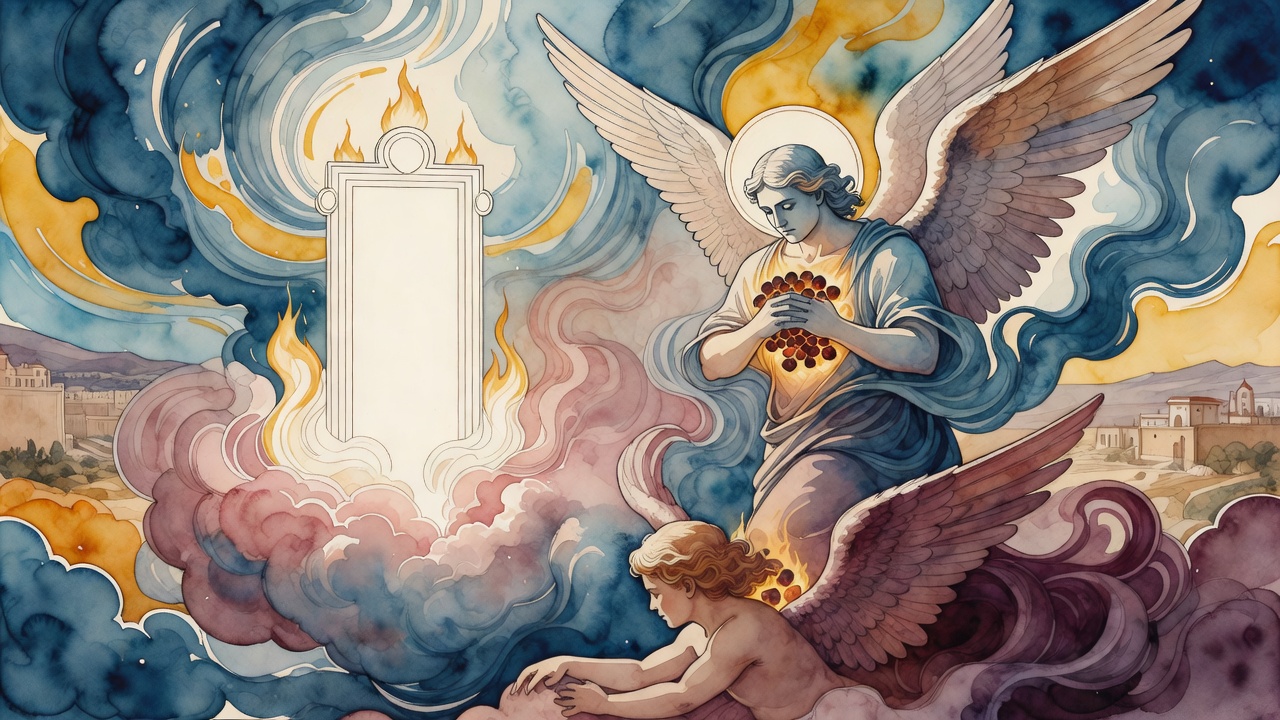
Then judgment moved from calendar to skin. The Holy One commanded Gabriel: write a taw of ink on the foreheads of the righteous, so the angels of destruction find no power over them. Write a taw of blood on the wicked, so they are given over.
Gabriel went to work with two inks. The letter taw, last of the alphabet, mark of a complete word and a finished case, sat on living brows while the city still stood.
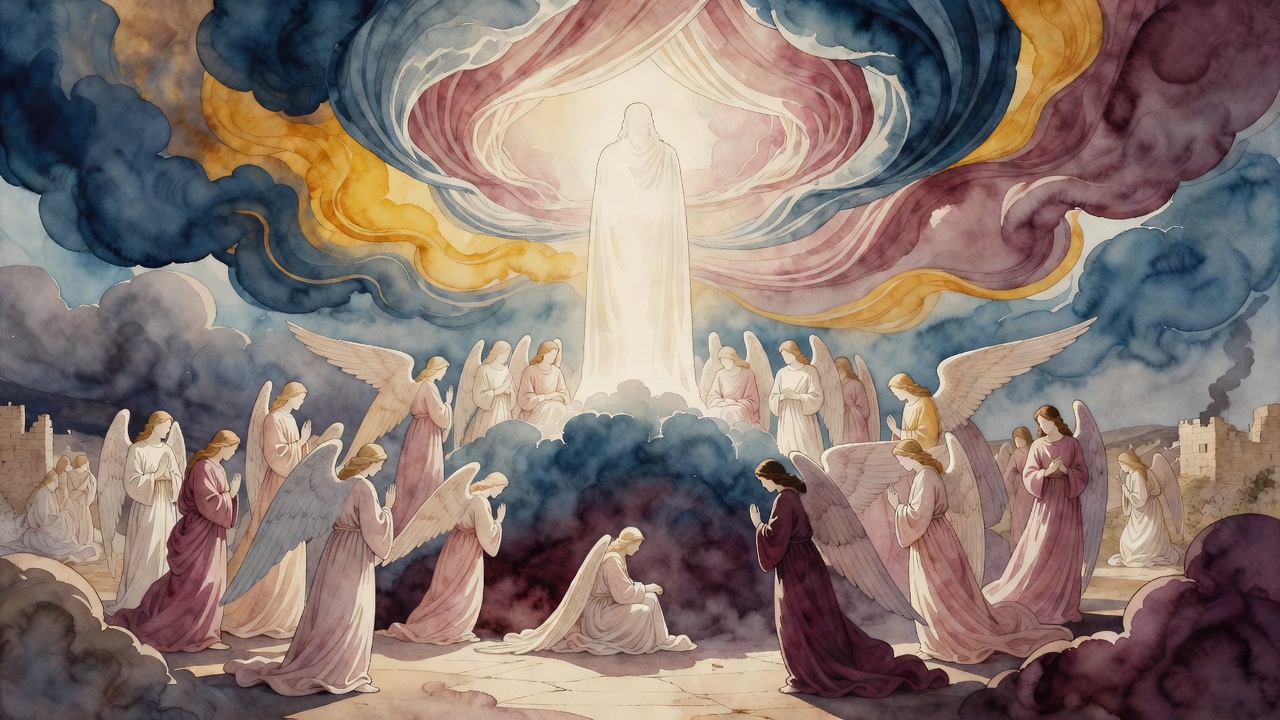
The Prosecutor rose before the Throne. "Master of the Universe, how do these differ from those?"
"These are wholly righteous. Those are wholly wicked."
"The righteous could have protested the sin and did not."
The Argument That Widened the Decree
God answered that protest would not have been heeded. The Prosecutor pressed further. They could have demeaned themselves for the Name. They could have taken blows the way Jeremiah took his troubles, the way Isaiah gave his back to the smiters. Silence was not innocence. Silence was a choice.
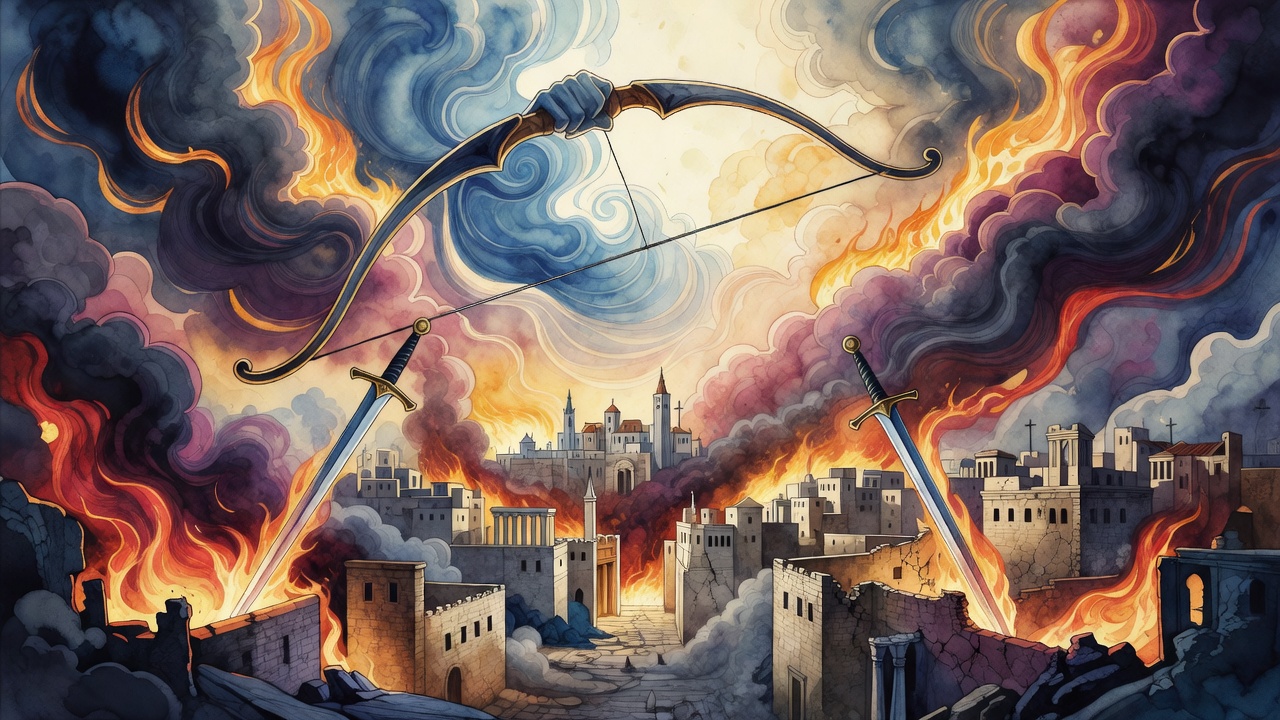
At once the decree fell on old and young alike. Even the inked brows were not spared the full storm the Accuser demanded. The midrash still calls this kindness of a hard kind: wrath spent on the city so that not all Israel would perish. Evil would not sojourn with Him. He would not rest His Name on evil. Better a burned capital than a finished people.
The offerings could still be called "of you." The plague-spots were named only "a man," sparing Israel the full branding of evil in the holy tongue of the law.
He Does Not Afflict Willingly
Eikhah Rabbah reads Lamentations' claim that the Lord will not forsake forever, and that if He torments He will have compassion. Rabbi Shimon ben Lakish says that after the Holy One despairs of the righteous in this world, He then has mercy on them. The torment is real. The forsaking is not forever.
Rabbi Berekhya in the name of Rabbi Levi pairs two failures. At Sinai Israel acted with their mouths but not with their hearts. In Babylon, forced toward an idol, they acted with their hearts but not with their mouths. God said: let the mouth of Sinai atone for the mouth of Babylon, and let the heart of Babylon atone for the heart of Sinai.
Even so, the verse continues, He can set an adversary over them. Haman is named. The wound can still deepen. Mercy is not amnesia.
What the Marks Could Not Fully Hold
Gabriel's two inks were meant to sort the living. The Accuser's mouth unsorted them. The city burned. The road filled with summer dust instead of winter snow. Somewhere in that procession walked people who had worn ink and people who had worn blood, and the midrash refuses a simple tale in which the ink alone was enough.
The righteous who did not protest learn, in this telling, that private purity is not a full defense when a city rots in public. The wicked learn that blood on the brow is not a surprise. Heaven learns, if heaven can be said to learn, the cost of answering a Prosecutor who will not stop at the first reply.
What remains is the double claim of the sources: judgment is real enough to mark faces, and forsaking is not the last word. The Lord does not afflict willingly. He also does not leave the Accuser unanswered when silence looks like consent. The mouth of Sinai and the heart of Babylon still trade places in the ledger of mercy, each covering what the other lacked.
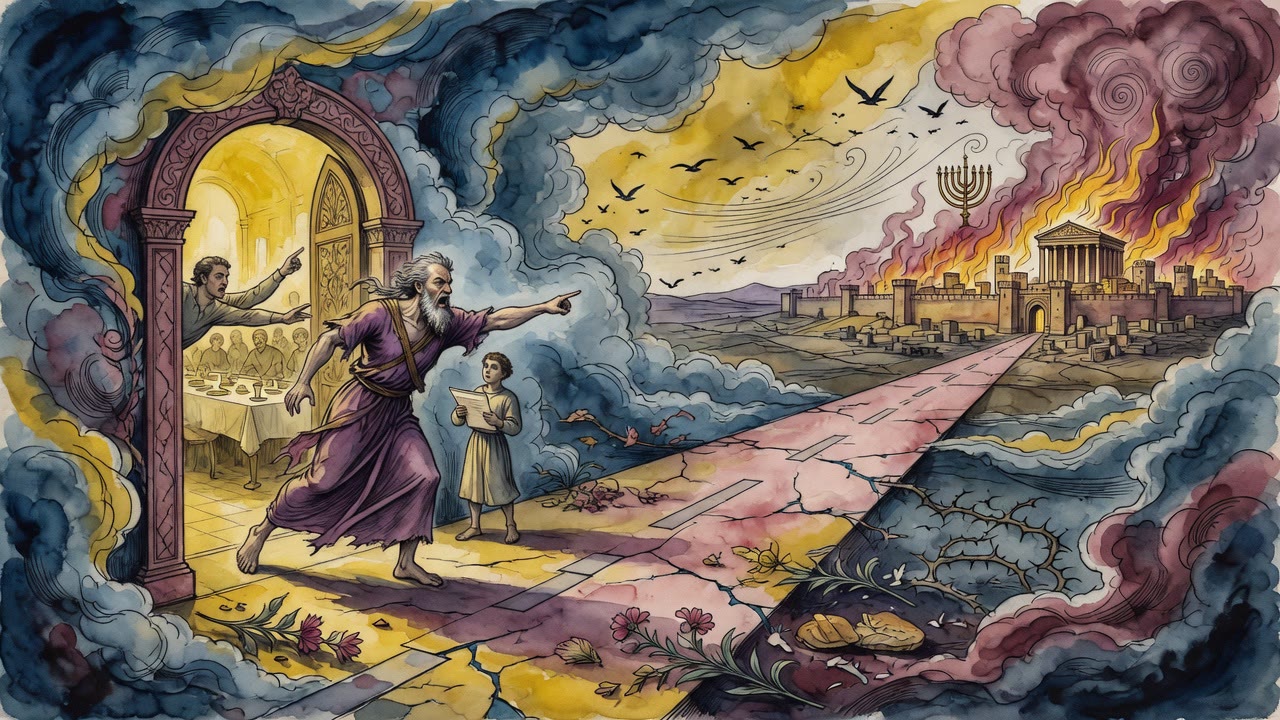
On the road out of Jerusalem, the letter on the forehead was no longer visible under dust and sweat. The argument in heaven was already settled. The compassion, if it came, would come later, according to abundant grace, after the torment had done its work. "For the Lord will not forsake forever" is not a lullaby for the march. It is a hard promise kept for people who have already watched their walls fall.
← All myths