Baruch Hurled the Temple Keys Back to Heaven
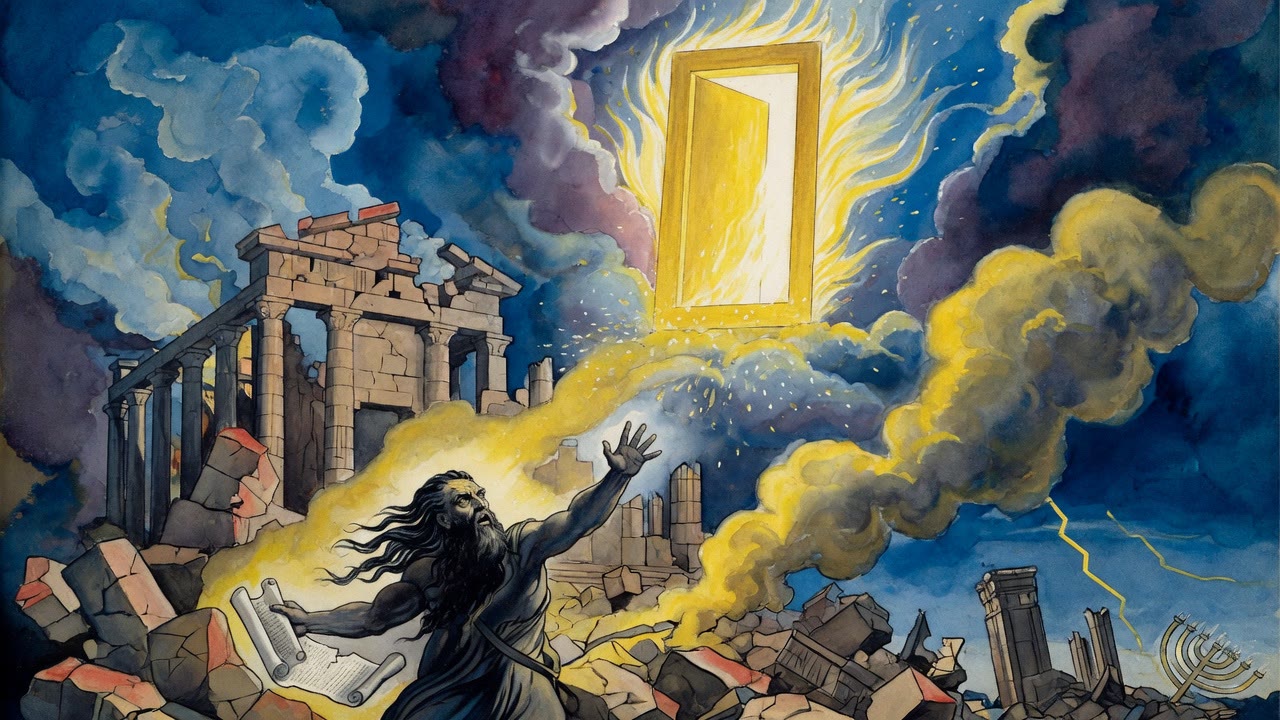
Alone in Zion's ash, Baruch ordered the priests to fling the sanctuary keys upward and told heaven to guard its own house, for the stewards had failed.
Table of Contents
 Click for full size
Two Men in the Ashes
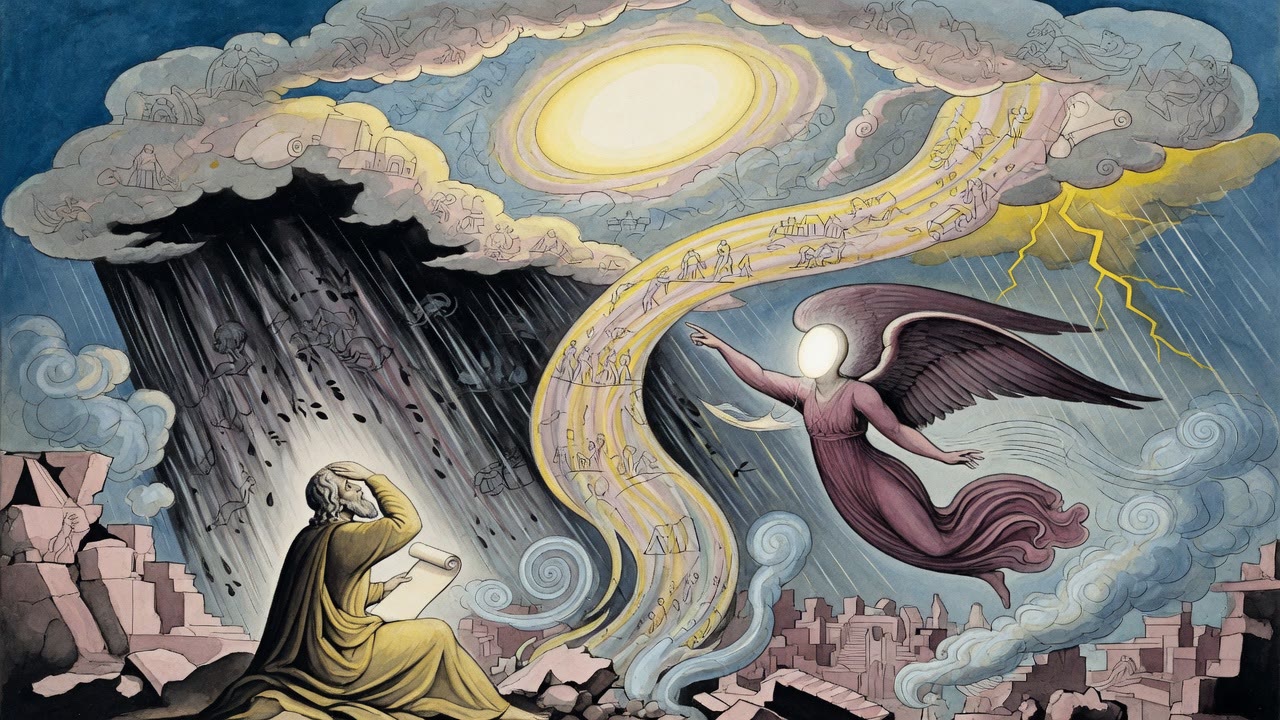
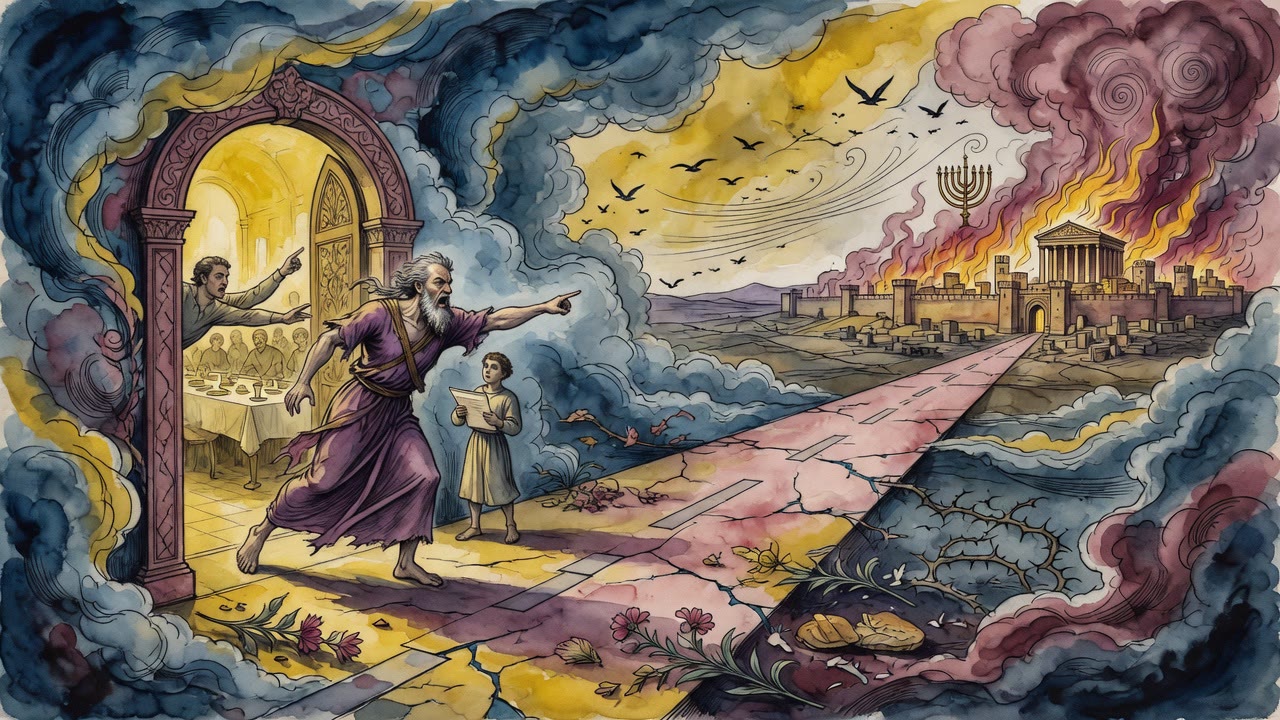
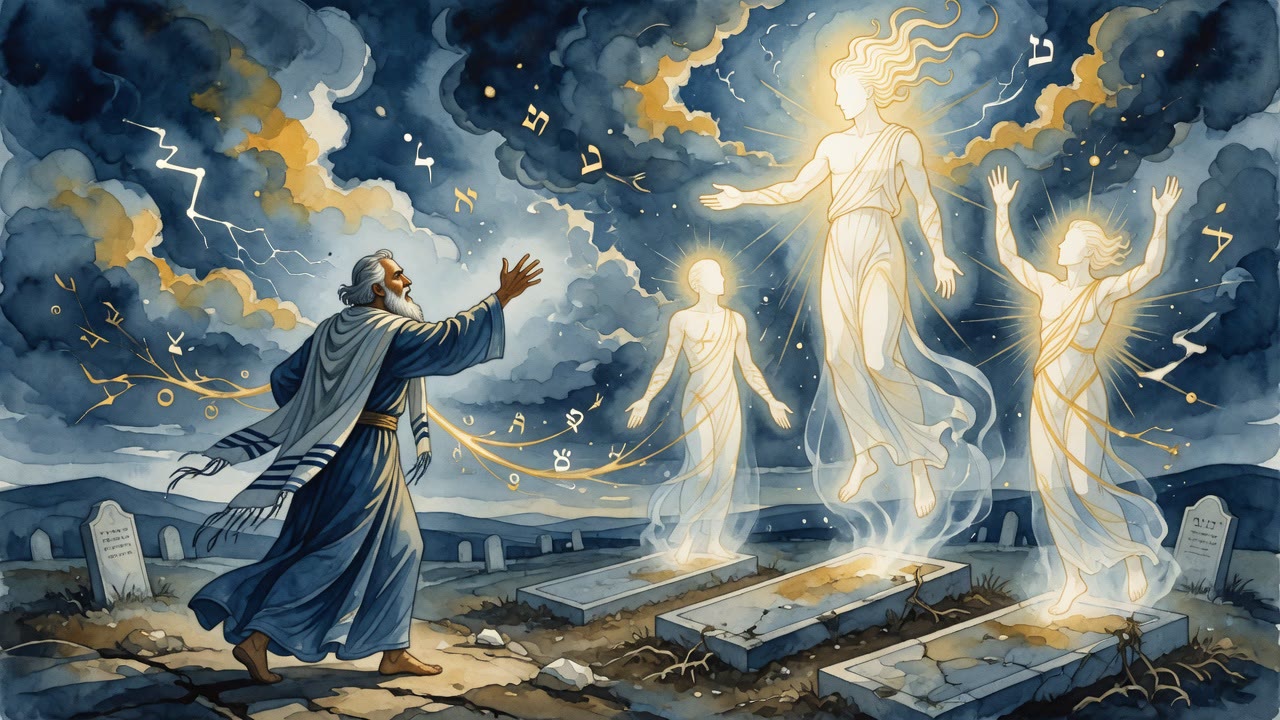
Two men stood in the ashes of the world. Baruch and Jeremiah, the scribe and the prophet, whose hearts had been found pure from sin, who had not been captured when the city fell. They tore their garments. They wept. They mourned. They fasted for seven days until the hunger itself felt like a kind of prayer.
On the seventh day, the word of God came to Baruch with a command that split the two men apart forever. "Tell Jeremiah to go with the captives to Babylon. But you, remain here amid the desolation of Zion. I will show you what will befall at the end of days."
Jeremiah departed with the people. Baruch returned alone to the gates of the ruined Temple and sat down in the wreckage. The partnership of pure hearts ends in different assignments: one walks with the living captives toward the river, one keeps company with stones that still smell of fire.
The Lament That Stopped the World
From the depths of his grief he composed a devastating lament. "Blessed is he who was not born. Or he who, having been born, has died. But as for us who live, woe unto us, because we see the afflictions of Zion." The living envy the unborn. That is how far the ash has climbed.
He called every dark creature to join his mourning. Sirens from the sea. Lilin, the night demons, from the desert. Shedim and dragons from the forests. "Awake and gird yourselves for mourning! Take up the dirges with me!" If the holy city cannot keep its songs, the wild ones will be drafted into the dirge.
Then he turned his grief outward and commanded the natural world to stop. Farmers, sow no more. Earth, keep your harvest within you. Vine, why give wine when no offering will ever again be made in Zion? Heavens, withhold your dew. Sun, withhold your light. Moon, extinguish yourself, for why should light rise again where the light of Zion is darkened?
He forbade joy itself. Bridegrooms, do not enter. Brides, do not adorn yourselves. Women, do not pray for children, for the barren shall rejoice above all others, and those who have sons shall have only anguish. Why bear children in pain only to bury them in grief? The city of prayer becomes a ban on every ordinary future, and the ban is spoken by a man still sitting in the gate.
Keys Thrown Upward
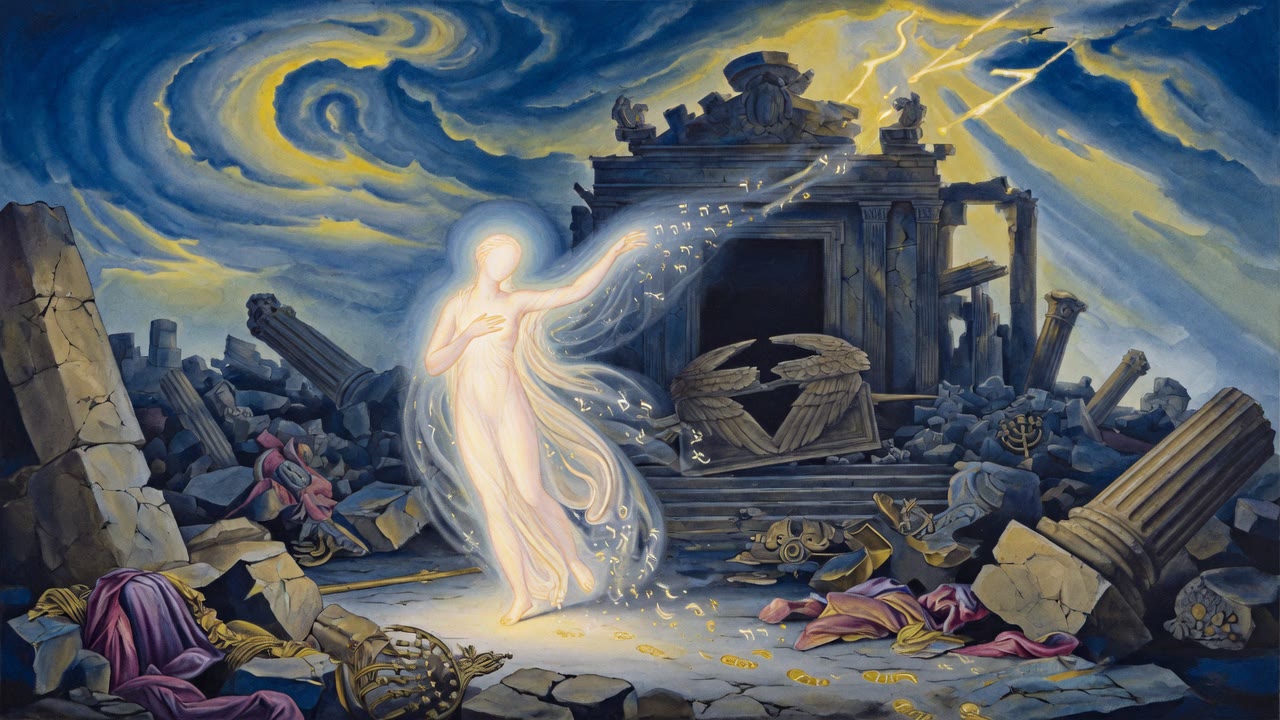
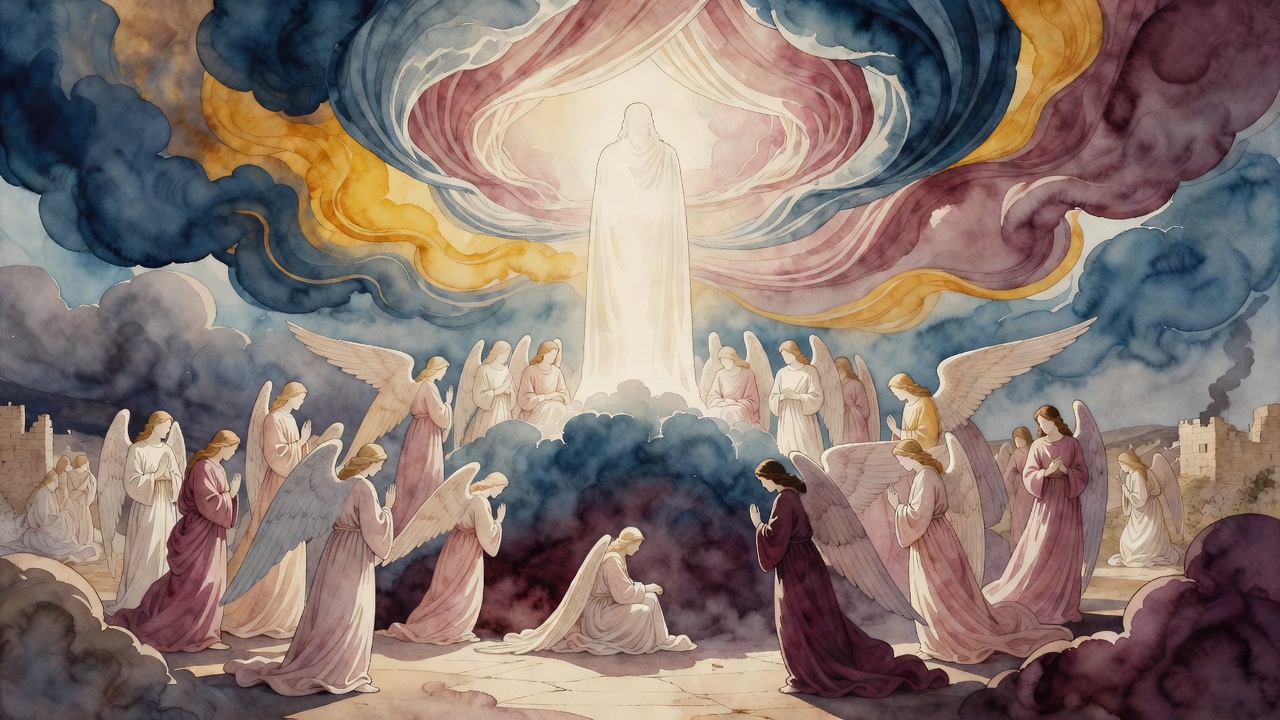
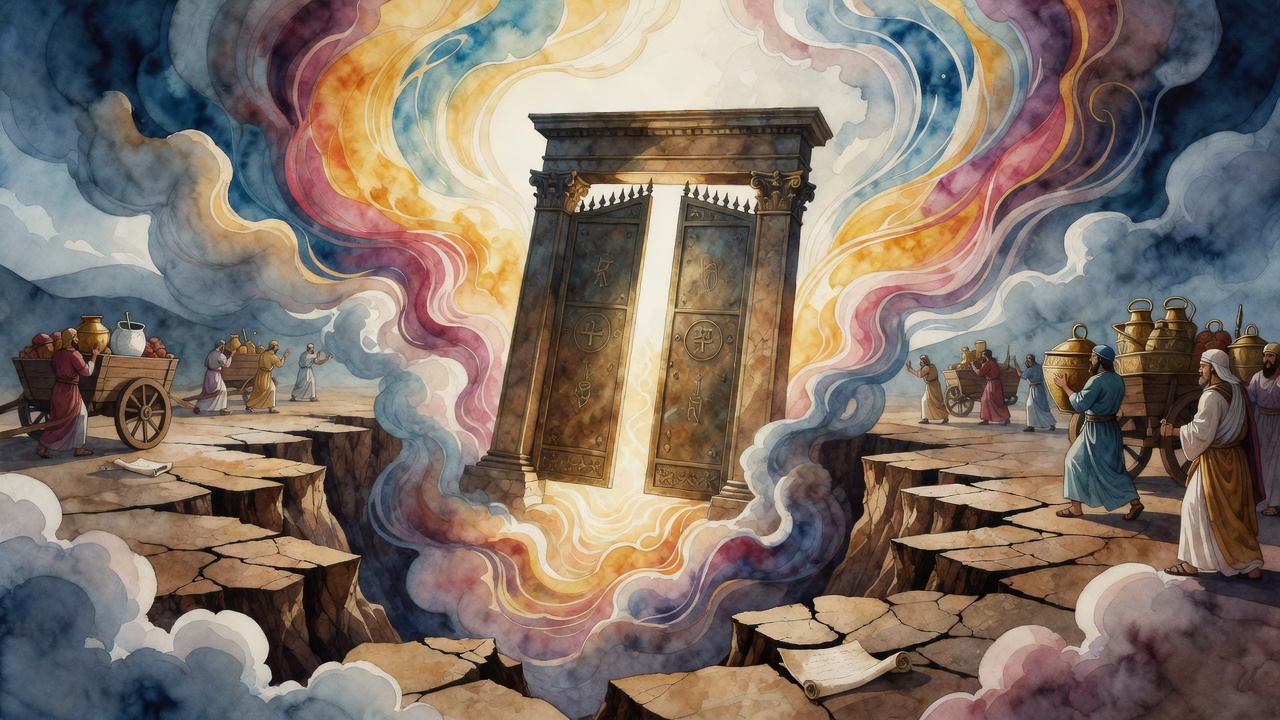
Baruch turned to the priests: "Take the keys of the sanctuary and cast them into the height of heaven. Give them to God and say: 'Guard Your house Yourself, for we are found to be false stewards.'"
To the virgins who wove the Temple's fine linen and silk with gold of Ophir: "Take everything and cast it into the fire. Let the flames carry it back to the One who made it, lest the enemy get possession of it." Better smoke returning to the Maker than cloth in a conqueror's tent.
Finally he turned his fury on Babylon. If she had prospered while Zion still stood, the grief would have been great enough. But now the grief had a second edge. The city of destruction thrived while the city of prayer lay open to the sky, and Baruch would not call that balance fair.
The keys left human hands. Stewardship ended in an upward throw. Heaven was asked to lock what earth could no longer keep. The gold of Ophir returned as smoke rather than plunder. That is the last free act the ruined house can still perform, and Baruch makes the priests perform it while the ash is still warm.
Three Hows Over One Woman
A single Hebrew word, Eikhah, runs through Israel's story. Picture a noblewoman attended by three groomsmen, each of whom saw her in a different season. Moses saw Israel in flourishing and cried, "How can I bear you alone?" (Deuteronomy 1:12). His "how" was almost a complaint of abundance. Isaiah found the same city grown reckless: "How has she become a harlot" (Isaiah 1:21). Jeremiah arrived last, when the ruin was complete: "How does she sit alone" (Lamentations 1:1).
Baruch sits inside Jeremiah's "how." The midrash of the king who exiles twelve sons until even God hires mourning women belongs to the same night. Loss climbs from tribe to tribe until the last child is gone and the lament begins. One word, three witnesses, three moments in the long decline of a beloved city that once had too many people for Moses to carry alone.
The keys in the air and the hired wailers on earth are one gesture: the house has outgrown its keepers' strength. Someone greater must hold what remains. Baruch's throw is not despair alone. It is the last honest inventory of stewardship, counted in metal rising and fabric burning while Babylon counts loot that never should have been hers.
← All myths