Anger Leaves a Door Open Over Ruined Zion
Smoke still climbs from the Temple stones while Reish Lakish refuses to let Lamentations end in final contempt.
Table of Contents
 Click for full size
Ash on the Tongue of the Last Verse
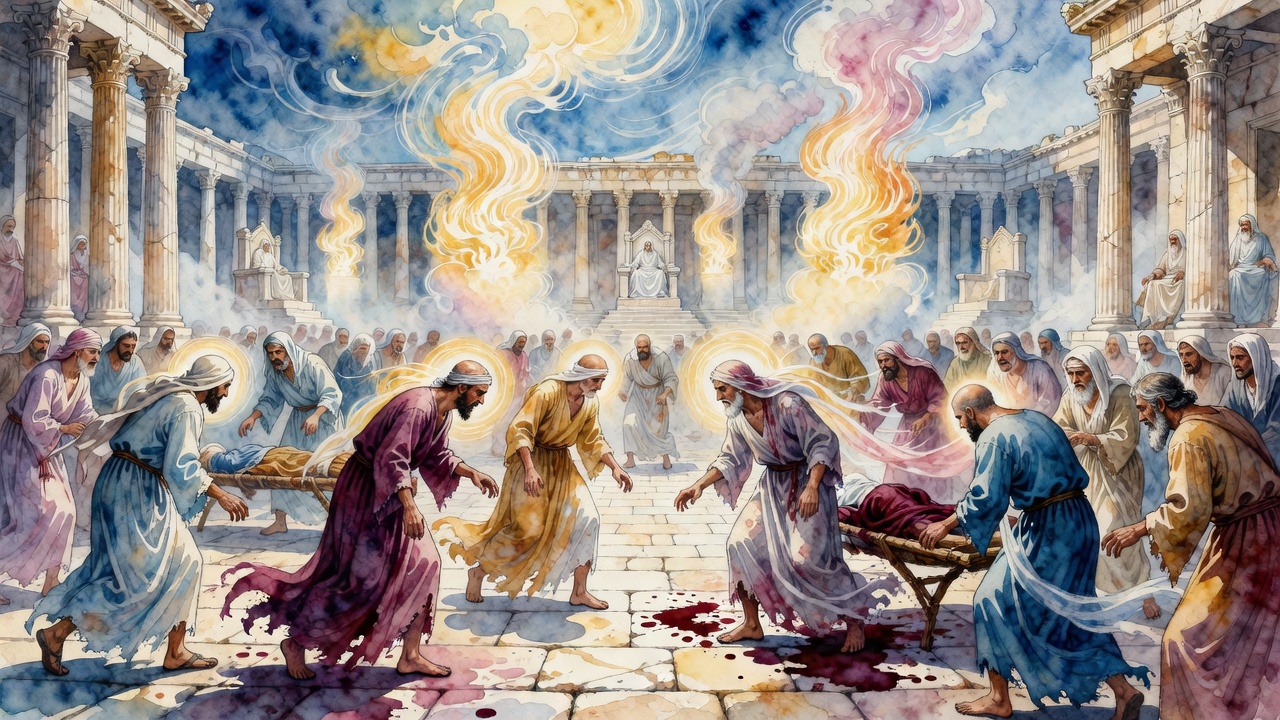
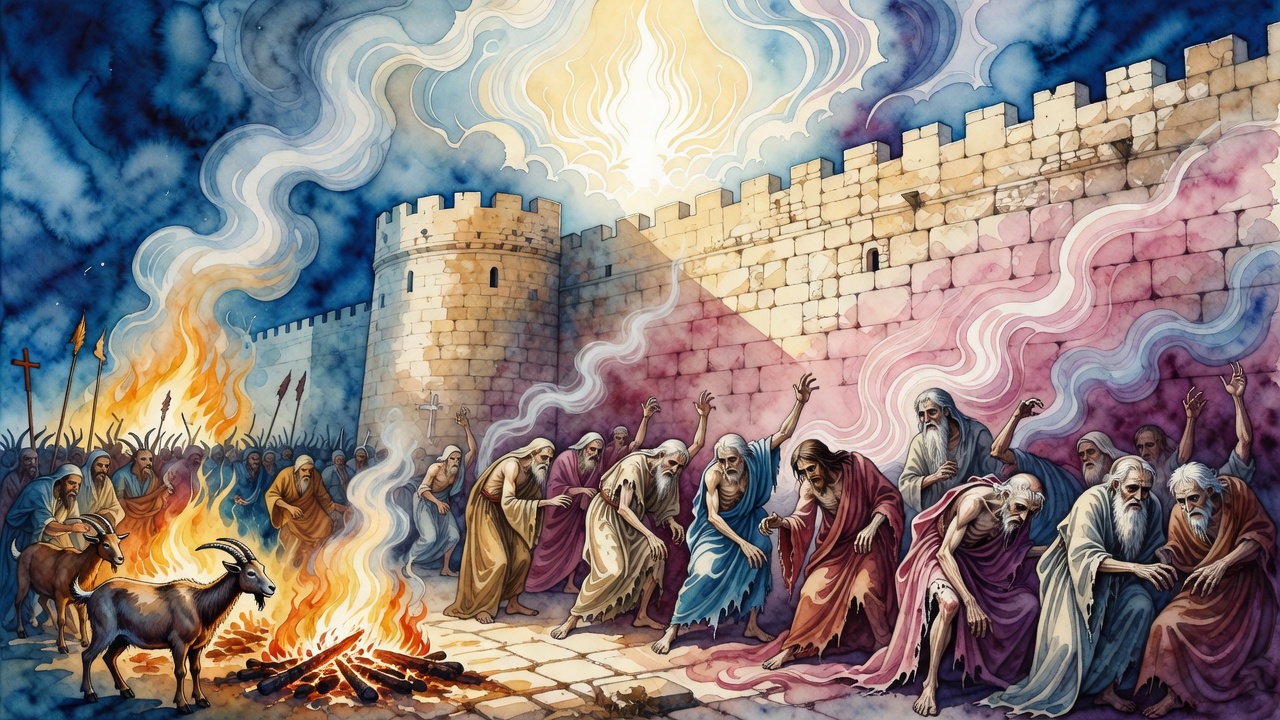
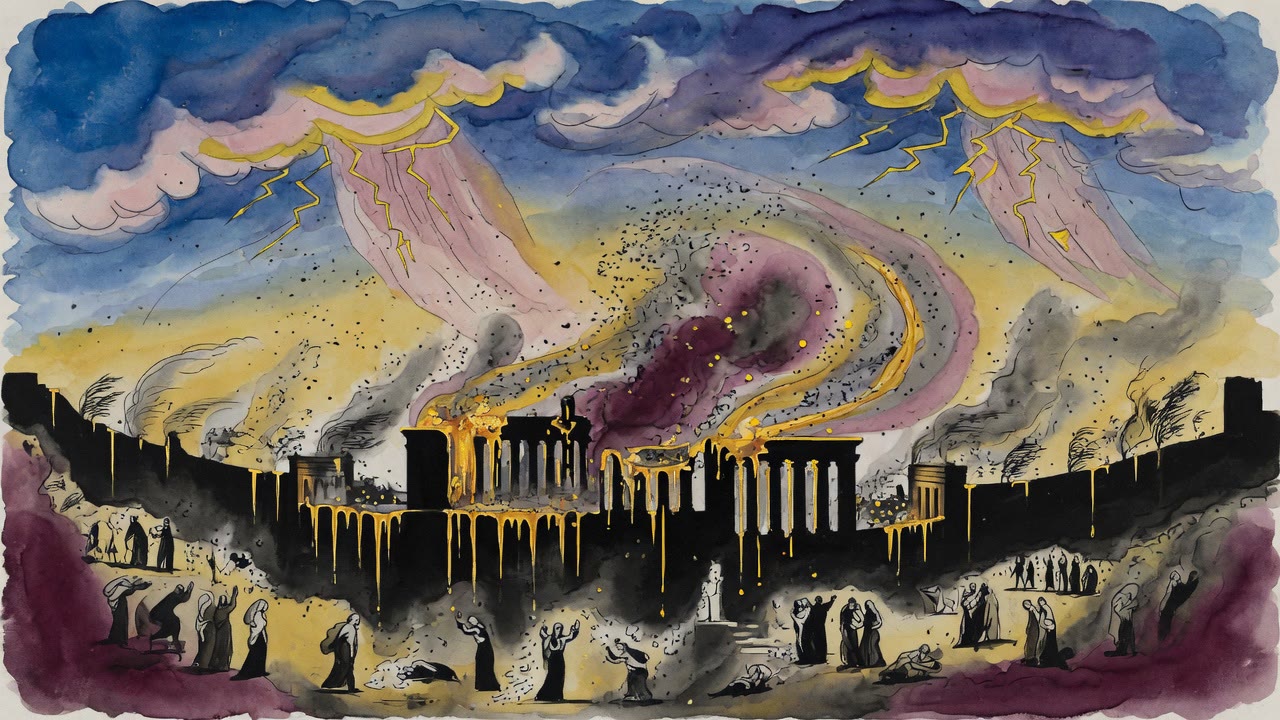
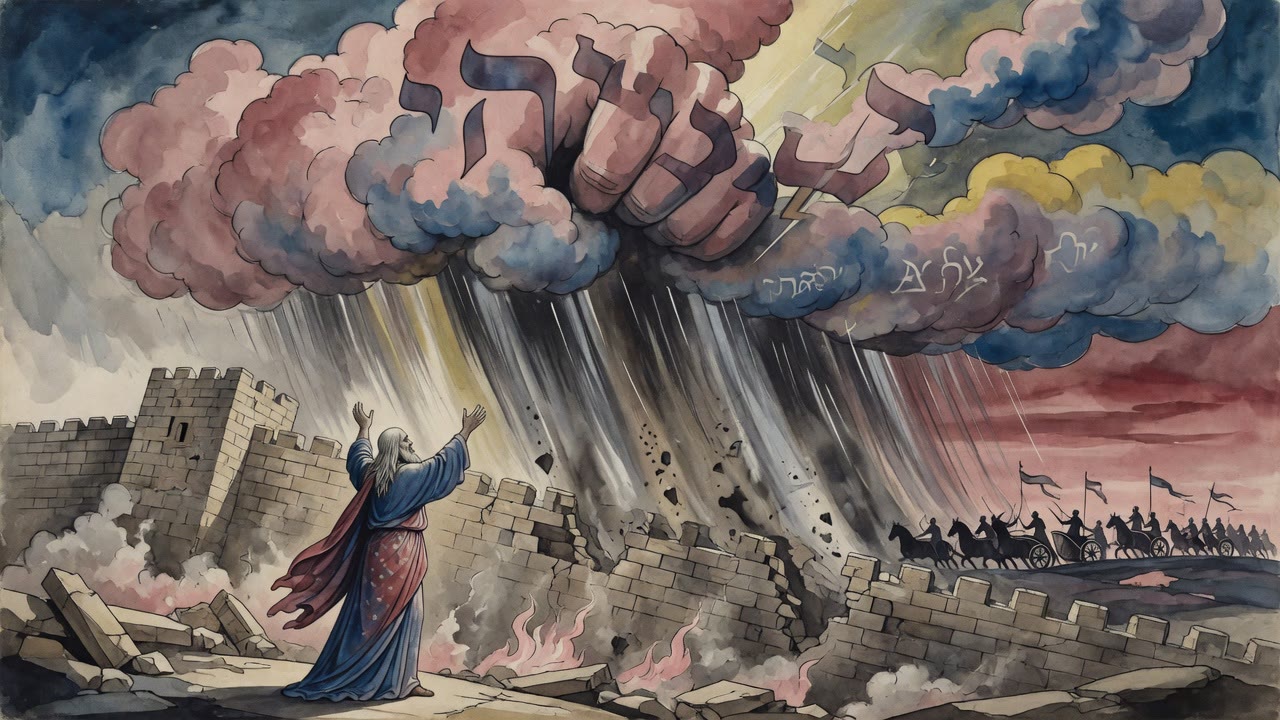
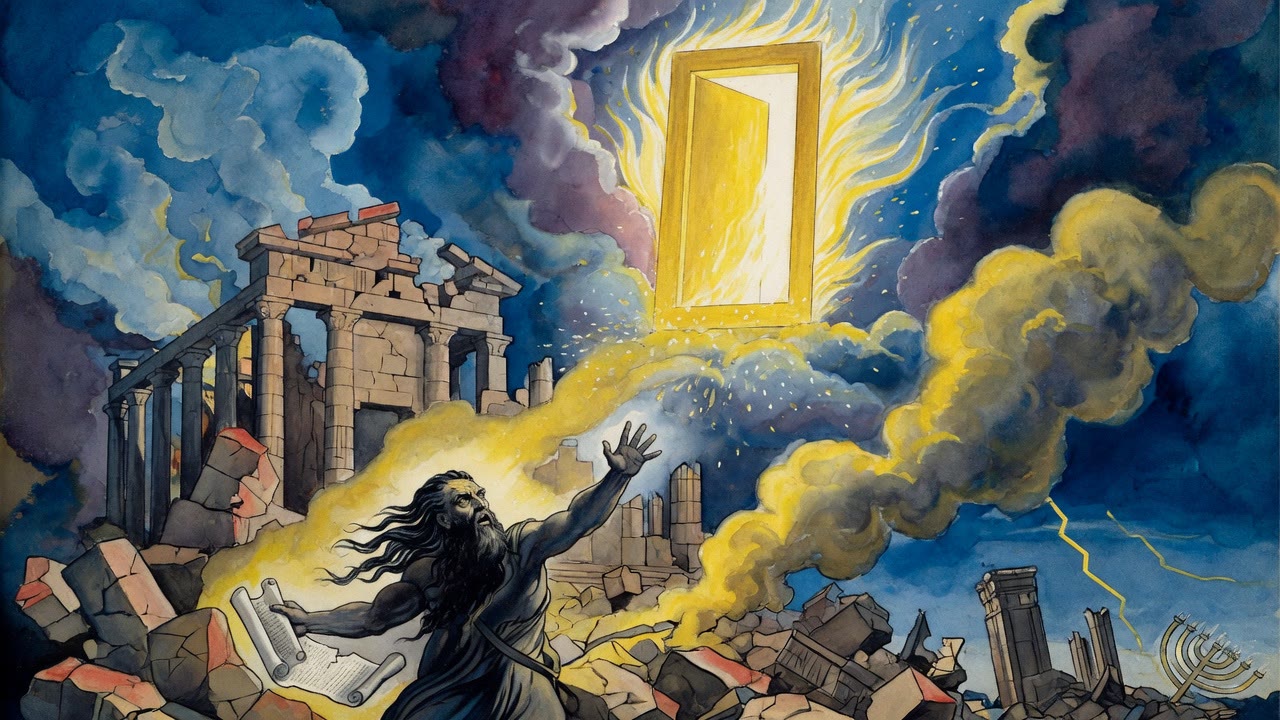
Jerusalem still smoked when the scroll reached its final line. Stones that had carried offerings now held only heat. A survivor's mouth formed the words that close the Book of Lamentations: "For You have despised us, You have been exceedingly angry with us" (Lamentations 5:22). The sentence tasted like a door slammed and barred from the outside.
Around the ruins, men and women who had watched the Temple burn repeated the line until it became more dangerous than the ash. If the Holy One had truly despised them, the covenant was over. Contempt does not argue. Contempt walks away and does not look back.
Reish Lakish would not leave the verse on that edge. He heard two postures pressed into one closing cry, and he forced them apart with his hands as if he were prying a beam from a fallen gate.
Contempt Kills. Anger Still Binds.
Despising, he taught, is a permanent severing. A person who despises another has finished the relationship. Anger is different. Anger is heat inside a bond that has not yet been cut. Anyone who grows angry will, in the end, be assuaged. The heat proves the attachment is still alive.
He anchored the reading in the doubled Hebrew of the verse, where the root of despising appears twice in succession. The repetition sounded conditional: were God truly to despise, the despising would run without end. The verse does not stop there. It turns and names anger that is exceedingly strong. Fierce anger still belongs to a marriage that has not been dissolved in court.
So the bleakest line of the scroll became, in his mouth, a hidden door left open. Wrath, even when it scalds, assumes a people still worth addressing. The nations could point at the smoke and declare the marriage finished. Reish Lakish pointed at the grammar and declared the marriage still under fierce negotiation.
Prophets at Dawn and Dusk
Another voice, gathered later in the teachings of Pesikta de-Rav Kahana, answered the same wound from a different angle. "What shall I testify to you, and to what shall I compare you?" (Lamentations 2:13). The question is not only grief. It is inventory.
How many prophets had already been sent? One in the morning and one in the evening, said one teacher, reading the constant stream of messengers who warned and pleaded while the city still stood. Another pushed further: two in the morning and two in the evening, daily and persistently, until the people grew tired of hearing and the heavens grew tired of speaking.
The testimony was not only threat. "With how many ornaments have I adorned you?" The midrash piles Sinai's gifts beside the ashes: crowns of glory, words of Torah, a presence that once filled the court with light. Grief that forgets the ornaments becomes pure panic. Grief that remembers them becomes a lawsuit still in session, with exhibits of love laid out next to the charges.
Why the Wound Refused to Scab
The scroll ends on a wound that refuses to close because closed wounds can be buried and forgotten. An open wound demands oil, bandages, return. Israel after the burning did not need a polite epitaph. It needed a God still angry enough to keep speaking.
Anger, in this telling, is not cruelty for its own sake. It is the opposite of indifference. The nations could say, Look, their Temple is gone, their God has finished with them. Reish Lakish answered the nations without looking at them. He answered the last verse. If the relationship were contempt, hope would be a lie. If the relationship is anger, hope is built into the heat.
Survivors who still prayed toward the place of the ashes were not denying the fire. They were refusing the colder story, the story in which no one upstairs cares enough to be furious. Facing the ruin was already a legal claim: this address still receives mail.
The Door That Heat Keeps Open
Years later, when the scroll is read each year in the dark month of Av, the last line still lands hard. Congregations do not soften it into a proverb. They let it cut, then they let the old distinction work: despising would be the end; anger is not the end.
Even the calendar keeps the wound open. Once a year the words are spoken in a darkened room, and people shift in their seats. Children who never saw the Temple learn the smoke from the line. Elders who carry later destructions in family memory hear the same hinge. Heat is not proof of abandonment. Cold would be.
The prophets who came morning and evening are gone. The ornaments of Sinai are studied in exile by people who never saw the courts. The argument remains. A people that can still be rebuked has not been discarded. A God who still grows angry has not walked away from the marriage. Ash settles. The door stays ajar because heat holds it. That is the strange mercy hidden inside the closing cry of Lamentations, and it is why the scroll can be finished without finishing the covenant.
← All myths