The Starving Died from the Smell of Roasting Goats
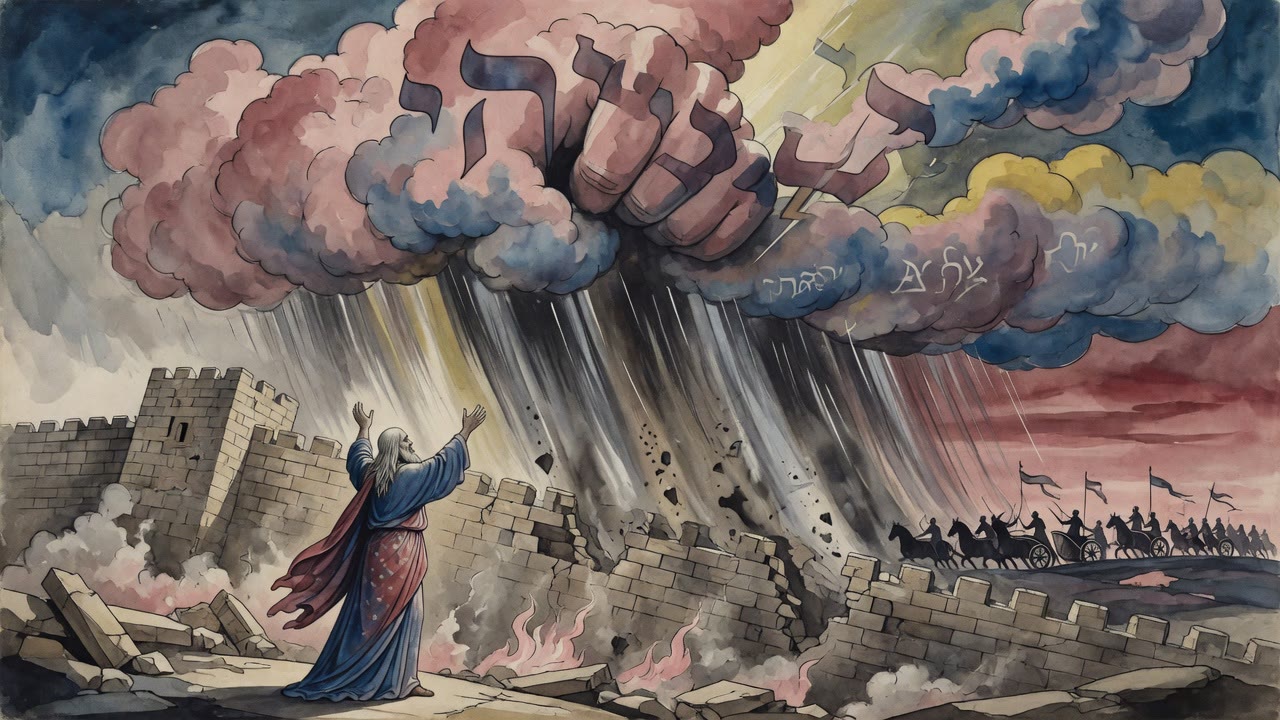
Outside Jerusalem the enemy roasted goats west of the wall so the starving inside died from the scent of meat they could not reach.
Table of Contents
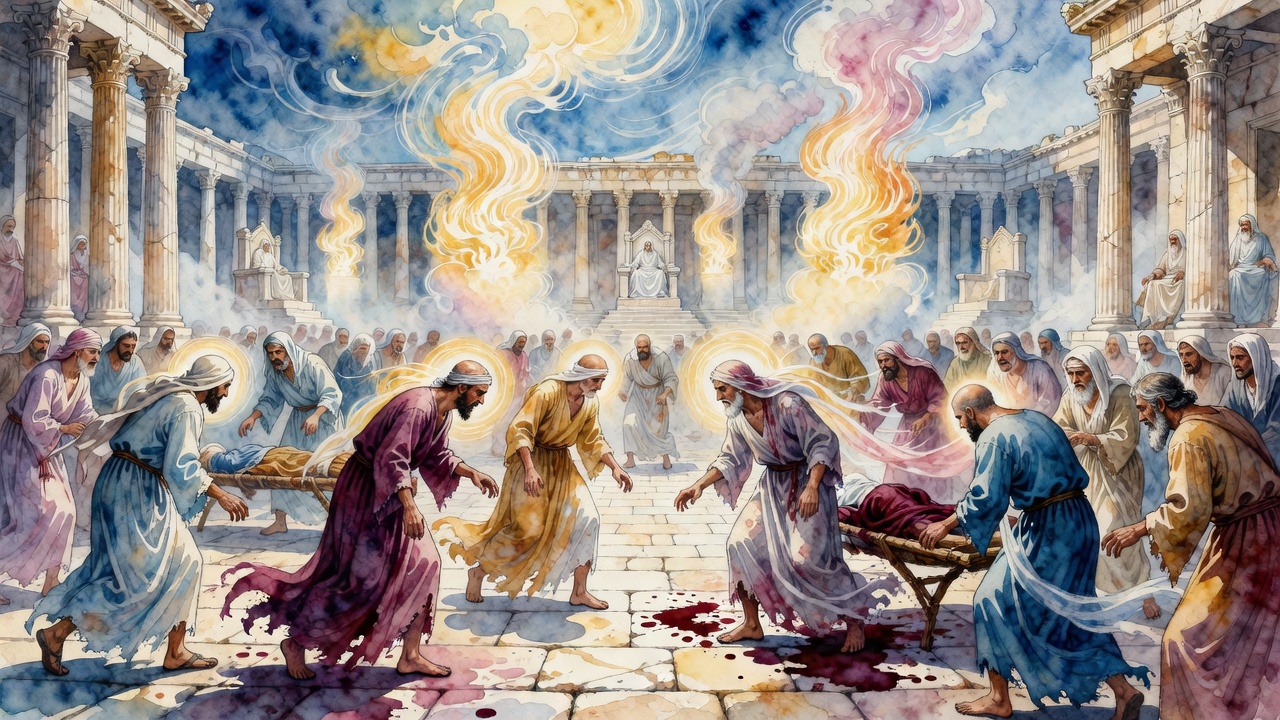
The first deaths were quick. Steel found throats in alleys and courts. Bodies of lad and elder lay where they fell, mixed on the open stones as if age had stopped mattering the moment the wall cracked (Lamentations 2:21).
 Click for full size
The slower deaths waited for the nose.
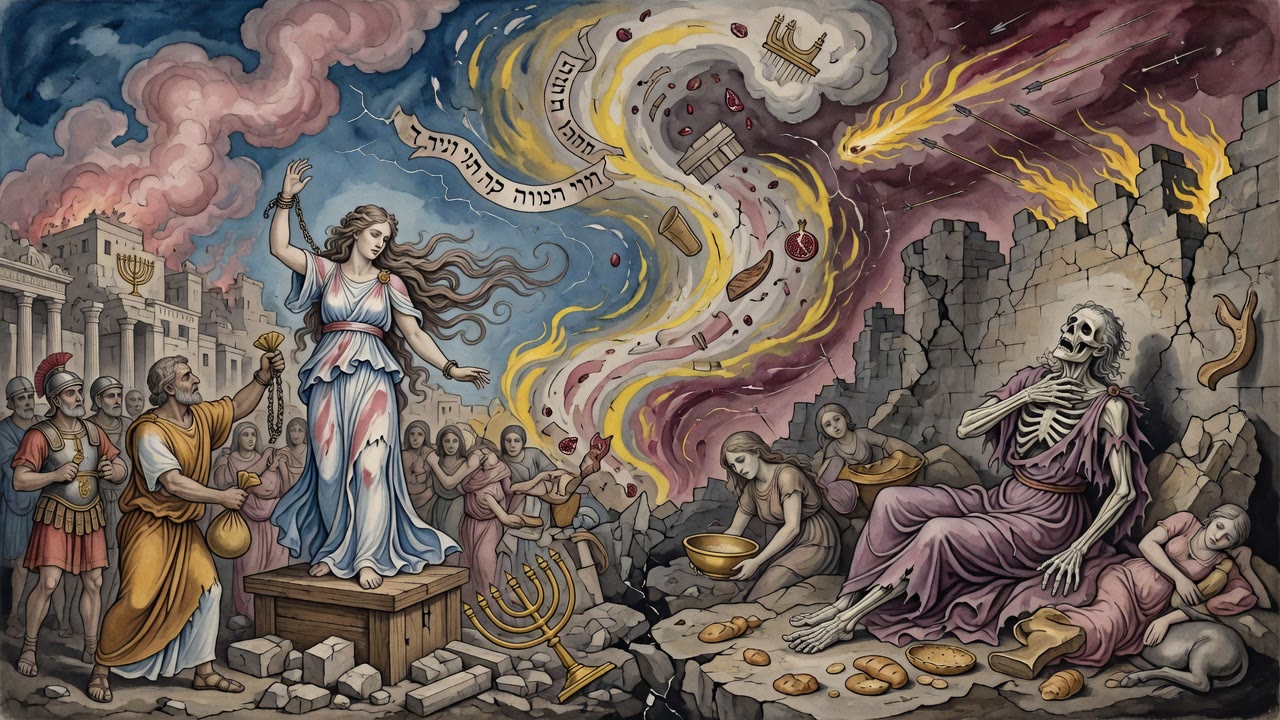
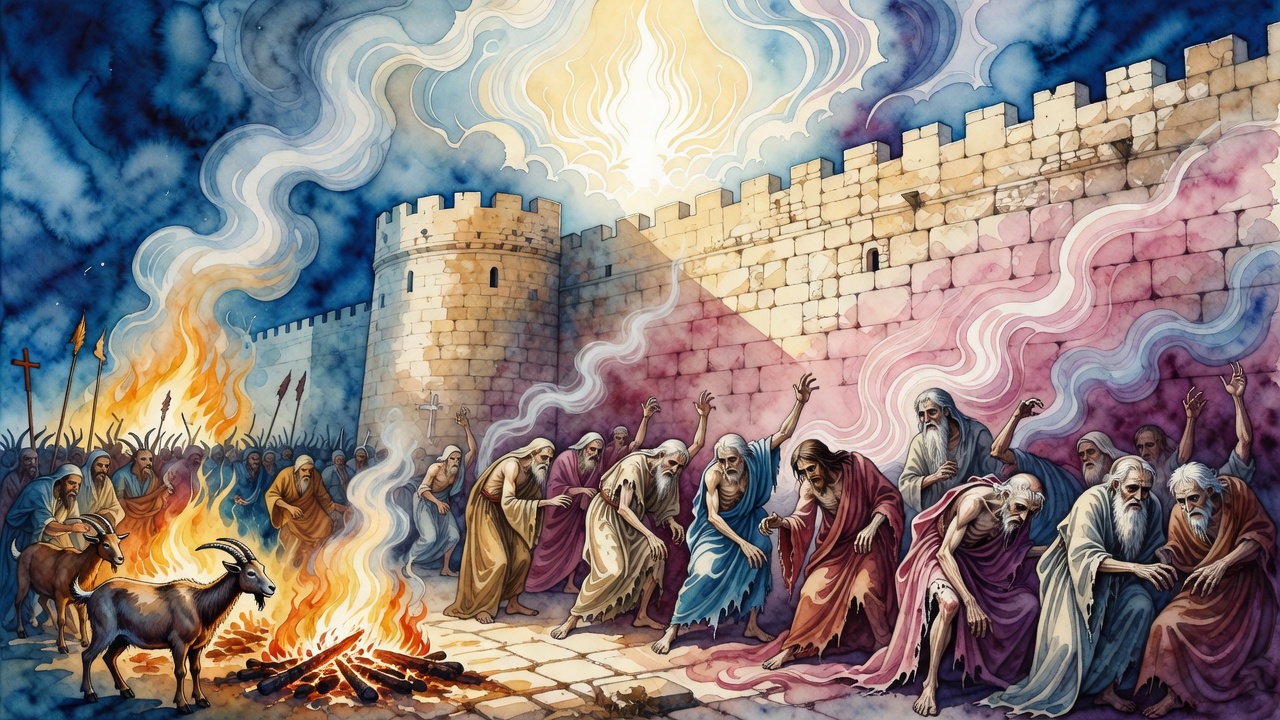
West of the city, beyond the reach of the starving, the enemy set goats over fire. Fat spat. Smoke climbed. The wind, which had once carried temple incense, now carried meat. Inside the walls, bellies that had forgotten bread still knew the smell of roast. Men and women who could no longer stand still turned their faces toward that scent the way plants turn toward light. Then they broke open from within.
The verse later named it without mercy: those killed by the sword were better off than those killed by hunger, ruptured from the produce of the field (Lamentations 4:9).
Thistles Before Goats
The older siege had used a thinner cruelty. In the days of the First Temple, thistles grew wild outside the wall. The enemy boiled them until the bitter green released a smell that promised food to people who had none. Cooking thistles takes a long time. The scent hangs. Inside Jerusalem, bodies with nothing left to burn still answered that promise. Longing alone finished what the sword had spared.
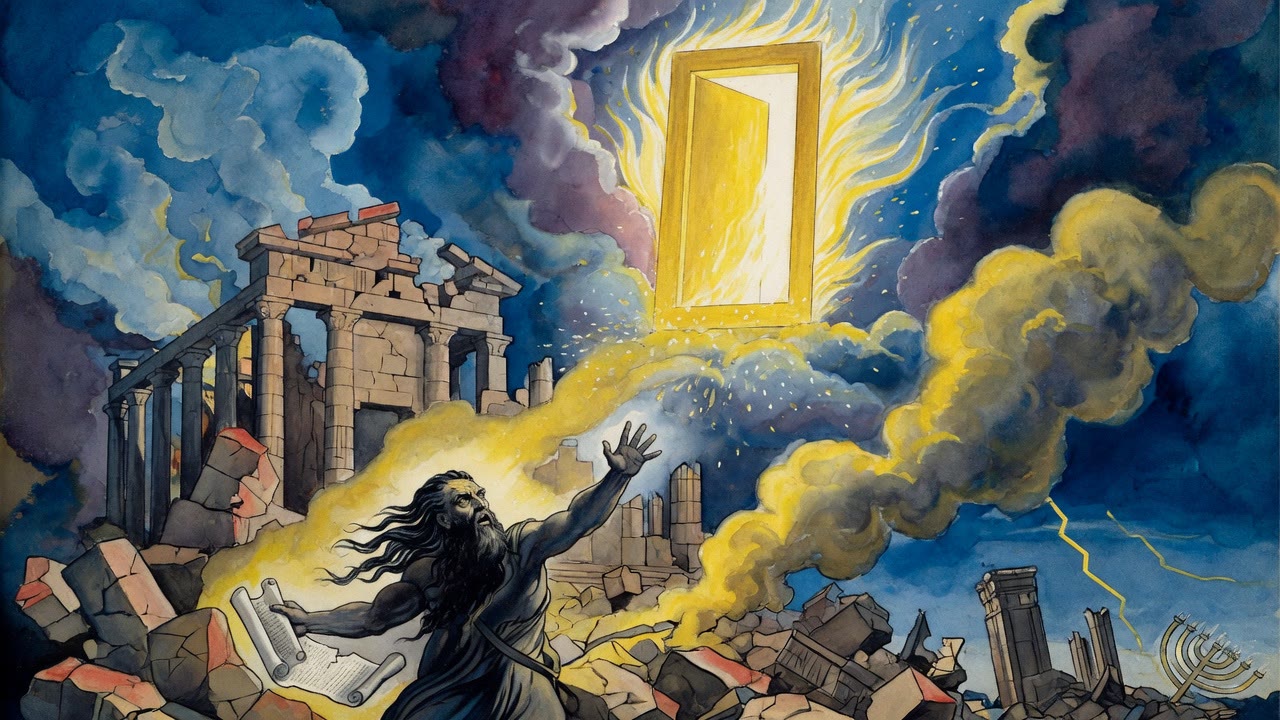
When the Second Temple fell under later iron, thistles were not enough. The enemy brought goats. They roasted them deliberately on the western side so the wind would work for them. The field produce became animal flesh. The rupture stayed the same. Hunger sharpened by nearness kills differently from hunger alone. The midrash keeps both pictures under one line of Lamentations so no generation can claim its famine was only abstract.
A child who had not spoken for days opened his mouth at the goat smell and did not close it again.
Bread That Costs a Life
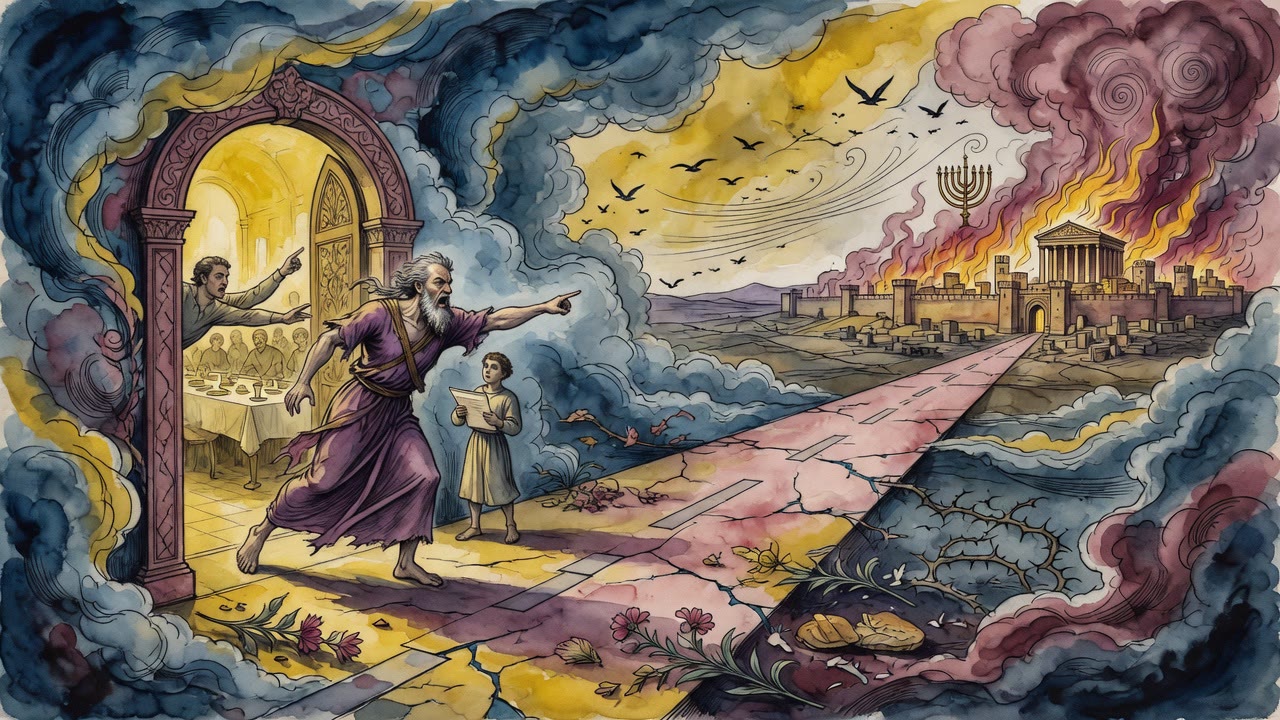
Those still strong enough to move left the streets of corpses and tried the wilderness paths for grain. "We bring our bread at the peril of our lives because of the sword of the wilderness" (Lamentations 5:9). Bread was no longer a kitchen word. It was a raid. A man went out for a crust and might not return. A woman returned with flour on her hands and blood on her hem.
Rabban Shimon ben Gamliel later set that cry against older trembling. The wilderness generation grew impatient on the road (Numbers 21:4). Daniel said his spirit was distressed within him (Daniel 7:15). Isaiah felt his loins fill with trembling (Isaiah 21:3). Jeremiah, the scroll's traditional voice, named the peril of bread itself. If those earlier figures broke under a fraction of the oppression of the four kingdoms, the generation under all four at once had no shame left in its wail.
Comparison did not comfort the living. It only measured the weight.
Streets That Held Every Age
Jeremiah had warned before the stones fell. Wrath would pour on the baby in the street and on the gathering of youths, on men and women, on the elderly whose days were already short (Jeremiah 6:11). When the day came, lad and elder truly lay together on the ground. Young women and young men fell by the sword. The prophet's overflow became the city's floor plan.
Survivors stepped over bodies to reach the western wall's shadow and still caught the goat smoke. Sword and famine divided the dead by speed, not by justice. One fell in a single blow. One fell by inches, following a smell. Both filled the same street. Compassion, the verse said, had not been shown (Lamentations 2:21). The city learned that sentence by walking it.
What Hunger Remembers
Night after night the roasts continued west of the wall. Guards laughed when the wind turned. Inside, people stopped asking whether death would come and began asking only which kind. Some begged for a clean edge of iron. Others sealed their nostrils with rags and still tasted fat on the air.
When the midrash later sat with Lamentations 4:9, it refused to leave the line as poetry. It put thistles in one siege and goats in the next so the word "ruptured" would keep a kitchen smell forever. The sword remained the quicker mercy. The field's near produce remained the longer knife.
In the morning the streets held both kinds of dead, and the wind still smelled like supper no one would eat.
A father who still had strength dragged a cousin toward the gate and turned back when the goat smoke thickened. Better a clean death later, he thought, than another night of the nose betraying the stomach. His cousin slapped him for the thought and then wept because the slap had used the last of his heat.
Priests without a house to serve counted the dead by streets instead of by courses. They had no incense left that could cover the west wind. When they tried to bless bread that was not there, the blessing hung in the air like another cruel smell. Hunger made even sacred words feel heavy.
← All myths