5 min read

Zion Sank Under a Cloud and a Demon Walked at Noon

A thing with one eye in its chest walked the noon shade between Tamuz and Av. Schoolteachers were told to put down their straps for four hours.

Curated by Arthur · Told by Maggid ·
Table of Contents
  1. The Wall Went Down a Little Every Morning
  2. The Days Closed Like a Corridor
  3. Something Walked in the Shade at Noon
  4. Rabbi Abahu Shouted Across the Synagogue
  5. The Teachers Put Down Their Straps
Zion Sank Under a Cloud and a Demon Walked at Noon Click for full size

The Wall Went Down a Little Every Morning

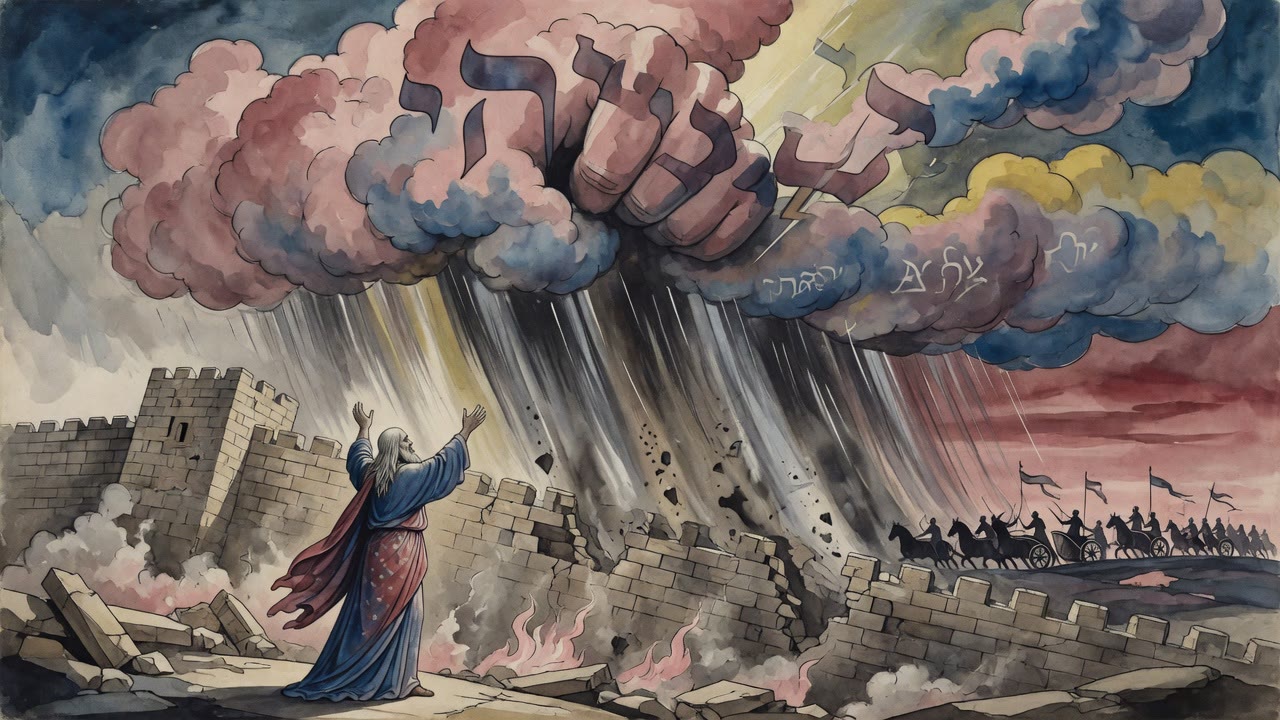
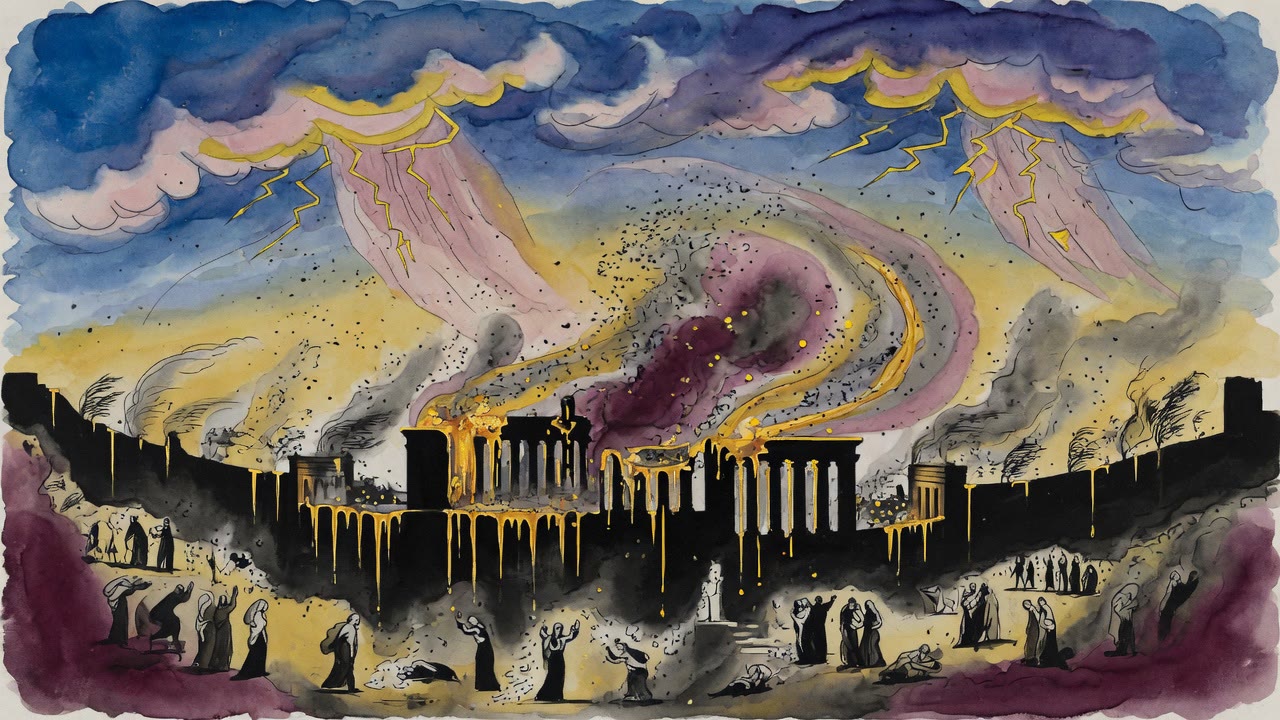
The watchmen measured the north wall at first light, and every morning the cord ran longer over the top of it. Two and a half handbreadths gone since yesterday. No crash, no breach, no ram at the gate to blame. The stones were sinking into their own ground the way a man's knees go when he has decided to stop standing, and the army outside did not have to do anything but wait and cut its ladders shorter.

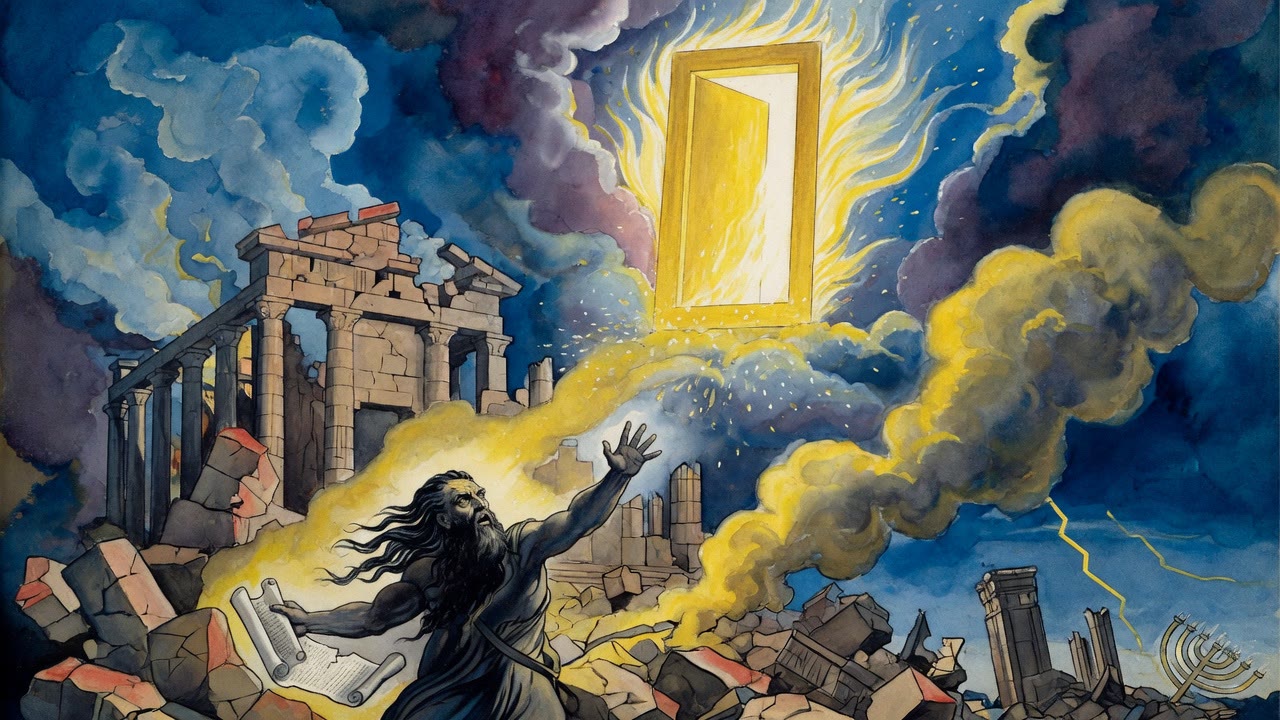
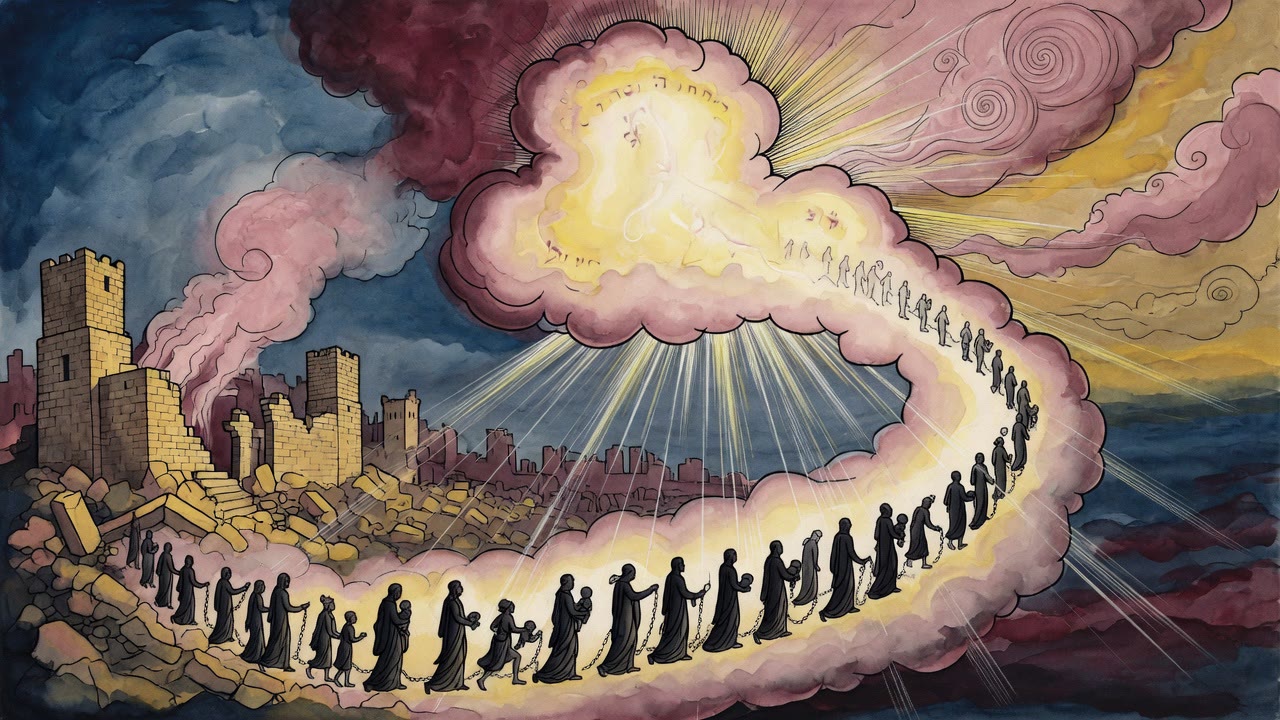
Over the roofs sat a cloud that would not move off. The splendor of Israel had been thrown down out of the sky into the dirt, and the footstool of glory went unremembered by the One who had rested His feet on it.

Israel stood before the Holy One with her complaint. "Once I was the terror," she said. "Men ran to fetch Haman to his death at a word from me. The chieftains of Edom shook when the sea stood up in two walls. Now the terror has turned around and it has me by the throat."

A broken length of pillar can roll a hundred paces across a plaza, strike one rock, and stop there for good. The wrath rolled into Jerusalem and stopped there. It did not glance off toward Tyre or Moab. It leaned on the city and stayed leaning.

The Days Closed Like a Corridor

Her pursuers caught her in the straits, and the straits were a stretch of calendar rather than a canyon. From the seventeenth of Tamuz, the day the wall finally let the enemy walk in, to the ninth of Av, the day the House went up in fire, the year narrowed until there was no side street to step into.

The sages counted the debt back to a lock that had never been opened. Hebrew slaves had been kept past the seventh year, in houses where the door should have swung wide at the end of seven and did not. Men who should have walked out free stayed under another man's roof. Now the whole city was being walked into somebody else's house.

She would settle among the nations and find no rest anywhere, the way the dove came back over the water with nothing under her foot. Had she found rest, she would not have come back at all.

Something Walked in the Shade at Noon

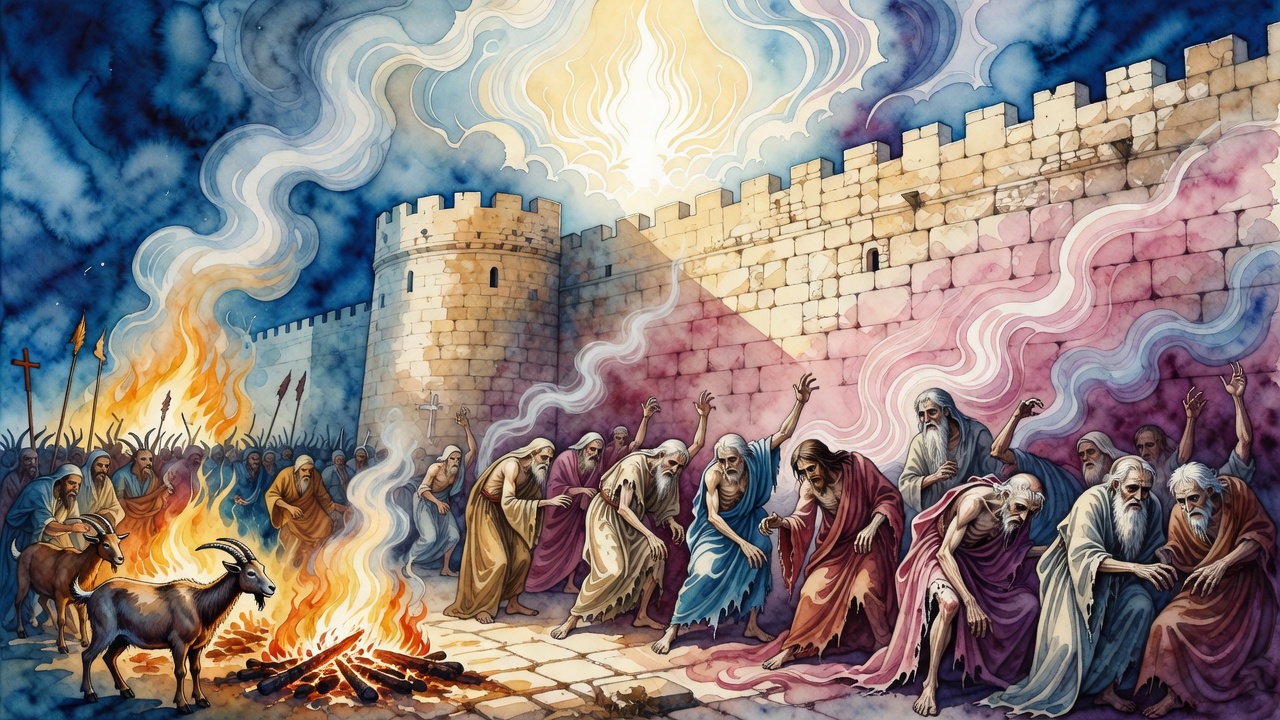
In those weeks a thing walked the streets from the fourth hour to the ninth. Not in the sunlight. Not in the shade either. In the narrow strip of shade that lies against the sunlight, the hand's width where the two edges meet. Its name was Ketev Meriri, the bitter destruction that lays waste at noon.

It was covered over in eyes and scales and hair, and one eye sat in the middle of its chest. A man who looked into that eye fell where he stood and did not get up. One pious man met it at midday, went down on his face in the road, and died there. They still argue over who he was. Some say Yehuda son of Rabbi.

Shmuel met it and stayed on his feet. He looked at it the way a man looks at something moving behind the grain jars. "That is a house snake," he said, and went on walking.

Rabbi Abahu Shouted Across the Synagogue

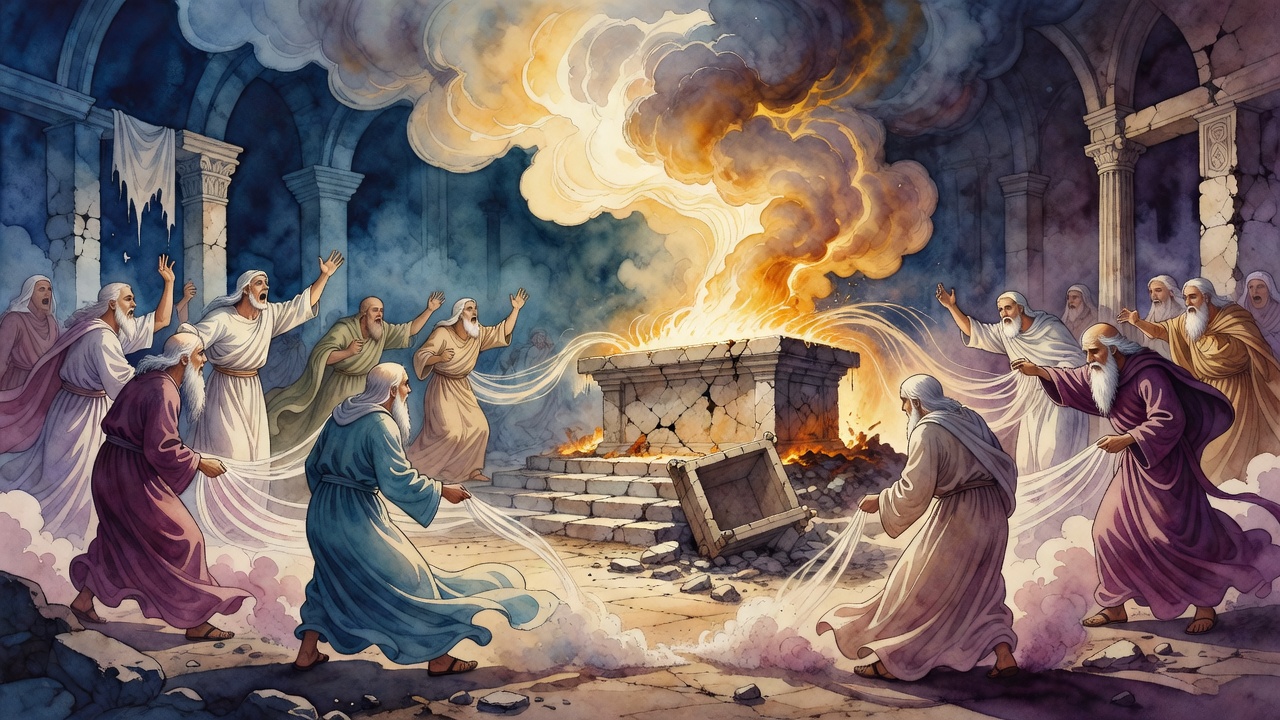
Rabbi Abahu was bent over his books in a synagogue outside Caesarea when a man crossed the floor with a stick in his hand, going for another man's head. Behind the man who was about to be hit, matching him step for step, stood something carrying a bar of iron.

Abahu stood up and shouted the length of the room. "Why do you want to kill your fellow?"

The man stopped and turned the stick over in his hand. "Nobody kills anyone with this."

"There is a demon standing behind him with a rod of iron," Abahu said. "You hit him with that, and it hits him with this, and he dies."

The stick came down to the man's side. Outside, the shade lay against the sunlight in a line the width of a palm.

The Teachers Put Down Their Straps

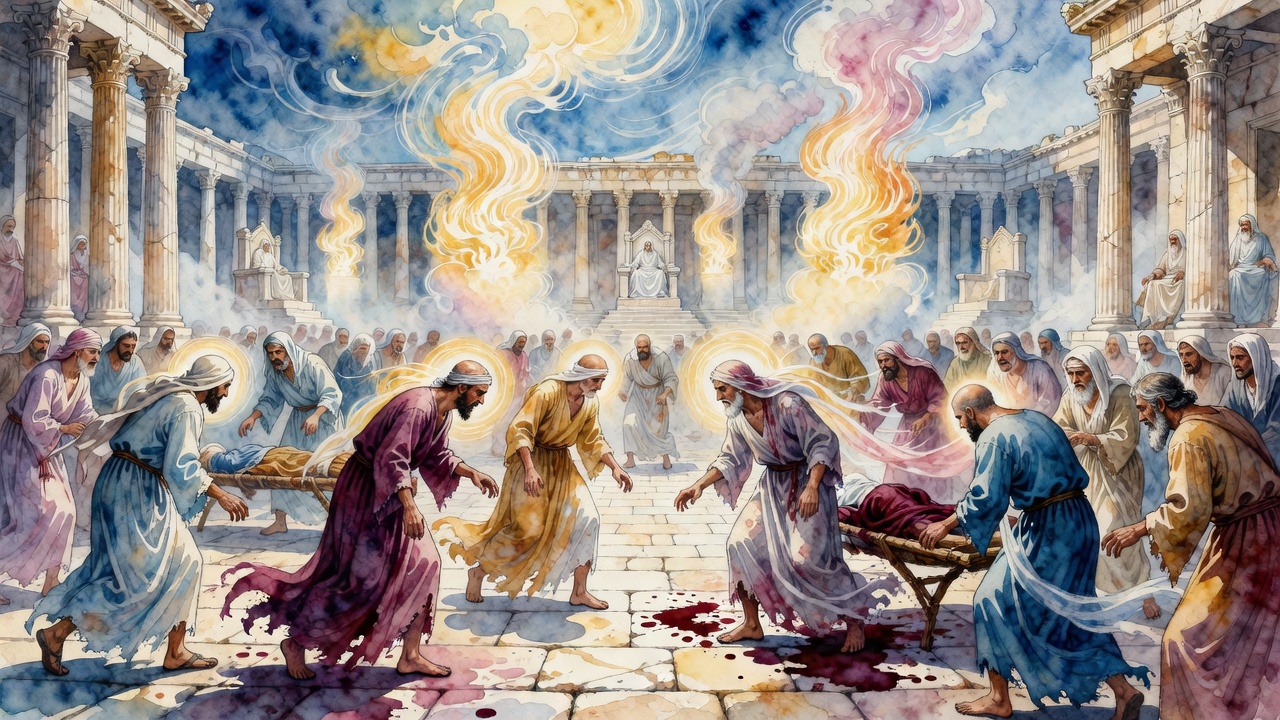
Rabbi Yohanan went to the men who taught Scripture and the men who taught Mishnah and told them to keep their hands down in those days. Not a swat. Not a rap on the knuckles for a verse learned lazily. A teacher's arm could come down on a boy at noon, and something else could bring an iron rod down after it.

Rabbi Shmuel bar Nahmani went further and told them to send the children home for those four hours. So at midday, in the worst weeks of the year, the schoolrooms of the land sat empty, benches bare, scrolls rolled and tied, the teachers standing in doorways with nothing in their hands.

Above the city the cloud held its place. Before morning the wall went down another two and a half handbreadths, and the watchmen measured it again, and wrote the number down.


← All myths
From the tradition

Sources

2 sources

The texts behind this telling. Some cards carry a translation of the source; others are our own retelling of it, and each card says which. Every card links out to the original.

Eikhah Rabbah 2:1Eikhah Rabbah

Retold in our words. Read the original at the link below.The Sefaria Midrash Rabbah, 2022 · CC-BY

“How the Lord has clouded the daughter of Zion in His wrath. He cast the splendor of Israel from the heavens to the earth, and did not remember His footstool on the day of His wrath” (Lamentations 2:1).“Terror [balahot] overwhelms me” (Job 30:15). Rabbi Ḥanina said: The congregation of Israel said before the Holy One blessed be He: In the past, it was I [Israel] who would terrify others, just as it says: “They hastened [vayavhilu] to bring Haman” (Esther 6:14). And another verse says: “I will render you a terror and you will be no more” (Ezekiel 26:21).1This verse is directed to Tyre, as punishment to their actions toward Israel. And it says: “Then the chieftains of Edom were terrified” (Exodus 15:15). Now it has been reversed against me. Rabbi Aḥa said: [This is analogous] to a segment of a pillar that was rolling through a plaza, and it collided with a rock and remained adjacent to it. So, “Your wrath weighs upon me” (Psalms 88:8).2The point is that when God’s wrath, which inflicts terror, came upon Israel, it remained with Israel. “It pursues my virtue [nedivati] like the wind” (Job 30:15), people who are noble minded [nedivim] and are worthy to have redemption come through them, You scatter them like the wind. “And like a cloud, my salvation passes” (Job 30:15), people who are noble minded and are worthy to have salvation come through them, You divert them and cause them to pass like clouds, as it is stated: “How the Lord has clouded the daughter of Zion in His wrath.” And it is written: “Like the nations that the Lord is eliminating from before you [so you will be eliminated]” (Deuteronomy 8:20). Say that just as those were with a priest and a prophet, so, too, these were with a priest and a prophet.3The elimination of the Canaanite nations began with the destruction of Jericho in a process led by priests and by Joshua, a prophet (see Joshua chapter 6). Similarly, Israel’s exile was foretold by Jeremiah, who was both a prophet and a priest (Etz Yosef). Just like those, it was with a shofar and shouting, so, too, these were with a shofar and shouting. And just as these were fourteen, as it is stated: “The Dinites, and the Afaresatekhites, the Tarpelites, the Afaresites, the Arkevites, the Babylonians, the Shushankhites, the Dehites, the Elamites, and the rest of the nations whom the great and honored Asenapar exiled” (Ezra 4:9–10),4The phrase “the rest of the nations” refers to an additional five nations mentioned in (II Kings 17:24). These fourteen nations were exiled from their homelands and resettled in Samaria by Sennacherib of Assyria. They were all who remained of the nations that he conquered. say that these, too, were fourteen, as it is written: “On that day, his fortified cities will be like the abandoned forest and the treetop [haamir] that they abandoned” (Isaiah 17:9). What is haamir? It is as stated.5The midrash (rabbinic interpretive commentary) interprets the word haamir to mean “as stated [haamur],” meaning that the remnant will be as stated earlier in that passage: “There shall be left in it gleanings, as at the beating of an olive tree, two or three berries in the uppermost bough, four or five in the branches of the fruitful tree” (Isaiah 17:6). The verse mentions two, three, four, and five, which equal a total of fourteen. This is an expression of the fact that the remnant will be small in number (Etz Yosef). Rabbi Yehuda ben Rabbi Simon said: As it is stated in the Torah: “Like the nations that the Lord is eliminating from before you [so you will be eliminated]” (Deuteronomy 8:20). Say that just as these were with the collapse of the wall, as it is written: “The wall collapsed in its place” (Joshua 6:20), these, too, were with the collapse of the wall.6See Eikha Rabba, Prologue, 30, where it is asserted that during the Babylonian siege of Jerusalem the wall around the city sank two and a half handbreadths per day until the enemies were able to enter the city. Just as these were with thickets [avim], as it is written: “They go into thickets [be’avim]…and into the rocks” (Jeremiah 4:29),7In the context of the midrash, this is referring to the destruction of other nations. However, the verse in Jeremiah is actually stated regarding the destruction of Israel. Some suggest that since it has been established that the destruction of each is parallel, this verse implies that the destruction of the nations of the world will also be in this manner (Maharzu). Some suggest that the text be emended such that the citation is from (Isaiah 19:1) rather than from (Jeremiah 4:29) (Etz Yosef). these, too, were with avim, “how the Lord has clouded [ya’iv]…in His wrath.”

Full source
Eikhah Rabbah 1:29Eikhah Rabbah

Retold in our words. Read the original at the link below.The Sefaria Midrash Rabbah, 2022 · CC-BY

“And great enslavement,” Rabbi Aḥa said: Because they would keep the Hebrew slave in servitude, just as it says: “At the end of seven years [each of] you shall free [his Hebrew brother]” (Jeremiah 34:14).“She settled among the nations, did not find rest,” Rabbi Yudan ben Rabbi Neḥemya said in the name of Rabbi Shimon ben Lakish: Had she found rest, she would not have returned. Similarly, “the dove did not find rest” (Genesis 8:9). Similarly, “among these nations you will not be calm, and there will be no rest for your foot” (Deuteronomy 28:65).“All her pursuers have overtaken her within the straits [hametzarim].” This is like what we learned, the statement of ben Nanas: By her demarcations and her borders [uvmetzranav].88Mishna, Bava Batra 7:3. The midrash (rabbinic interpretive commentary) cites this mishna to explain the Hebrew term employed in the verse in Lamentations. The word hametzarim, the straits, is understood to mean within her borders.Another matter, “All her pursuers have overtaken her within the straits,” in days of distress, between the seventeenth of Tamuz and the ninth of Av,89The walls of Jerusalem were breached on the seventeenth of Tamuz and the Temple was ultimately destroyed on the ninth of Av (Mishna, Taanit 4:6). during which Ketev Meriri90This is the name of a destructive demon. See Pesaḥim 111b. is prevalent, just as it says: “Nor the pestilence that stalks in darkness, nor the destruction [ketev] that lays waste at noon” (Psalms 91:6). Rabbi Abba bar Kahana and Rabbi Levi, Rabbi Abba bar Kahana said: It passes through during the main time of sunlight,91The part of the day when the sun is strongest. from the beginning of the sixth hour until the end of the ninth.92These are halakhic hours. In this system, the daylight hours are divided into twelve equal parts. Rabbi Levi said: It passes through the main part of the day, from the end of the fourth hour until the beginning of the ninth. It does not pass through the sunlight or the shade, but rather through the shade adjacent to the sunlight.Rabbi Yoḥanan and Rabbi Shimon ben Lakish, Rabbi Yoḥanan said: It is completely full of eyes, scales, and hair. Rabbi Shimon ben Lakish said: One eye is situated on its heart, and anyone who sees it falls and dies. There was an incident involving a certain pious man who saw it and he fell on his face and died. Some say it was Yehuda ben Rabbi [Yehuda Hanasi]. Shmuel saw it and did not fall. He said: It is [just] a house snake.Rabbi Abahu was sitting and studying in a synagogue in the area of Caesarea. He saw a certain person who was carrying a stick and going to strike another person. He saw a demon standing behind him carrying an iron rod. [Rabbi Abahu] stood and called out to him, saying to him: ‘Why do you seek to kill your counterpart?’ [The man] said to him: ‘Can a person kill another with this?’ He said to him: ‘There is a demon standing behind him that is carrying an iron rod. You strike him with this and it will strike him with that and he will die.’Rabbi Yoḥanan would instruct the teachers of Bible and the teachers of Mishna not to raise a strap to the children during those days.93The days between the seventeenth of Tamuz and the ninth of Av. Rabbi Shmuel bar Naḥmani would instruct the teachers of Bible and the teachers of Mishna to dismiss the children during those four hours.94He did not want the teachers to instruct the children at all during the four hours when Ketev Meriri is active in the world, lest the teachers strike the students, which could lead to danger due to the demon.

Full source