God Cursed His Own Altar and the Enemy Sang in His House
Soldiers drove their spears point-down into the sanctuary floor and sang like it was a feast day. No fire fell on them. Nothing came out of the smoke.
Table of Contents
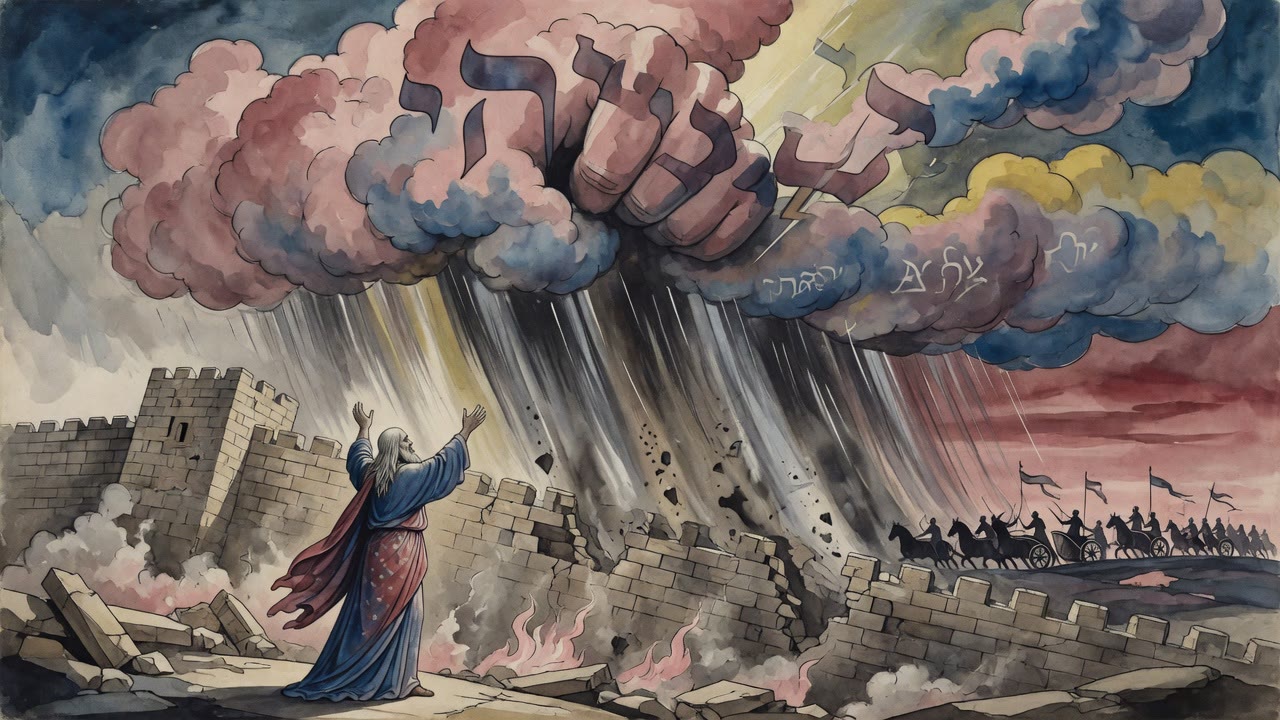
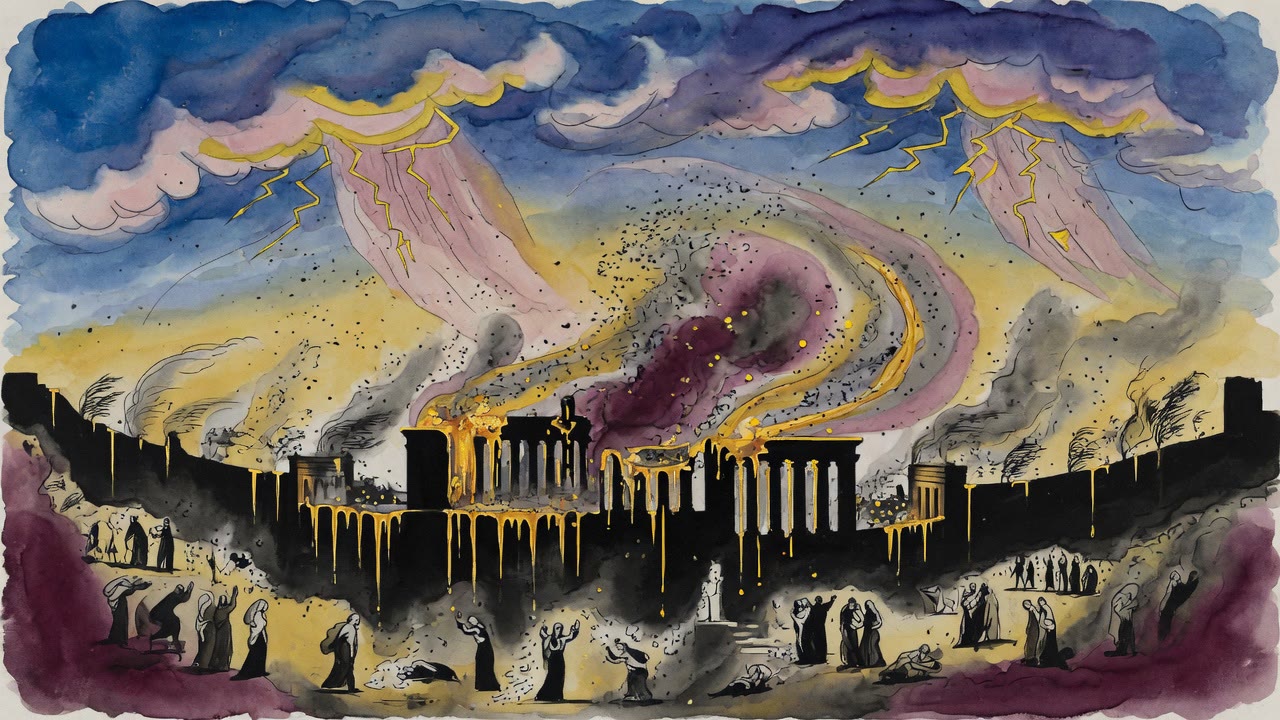
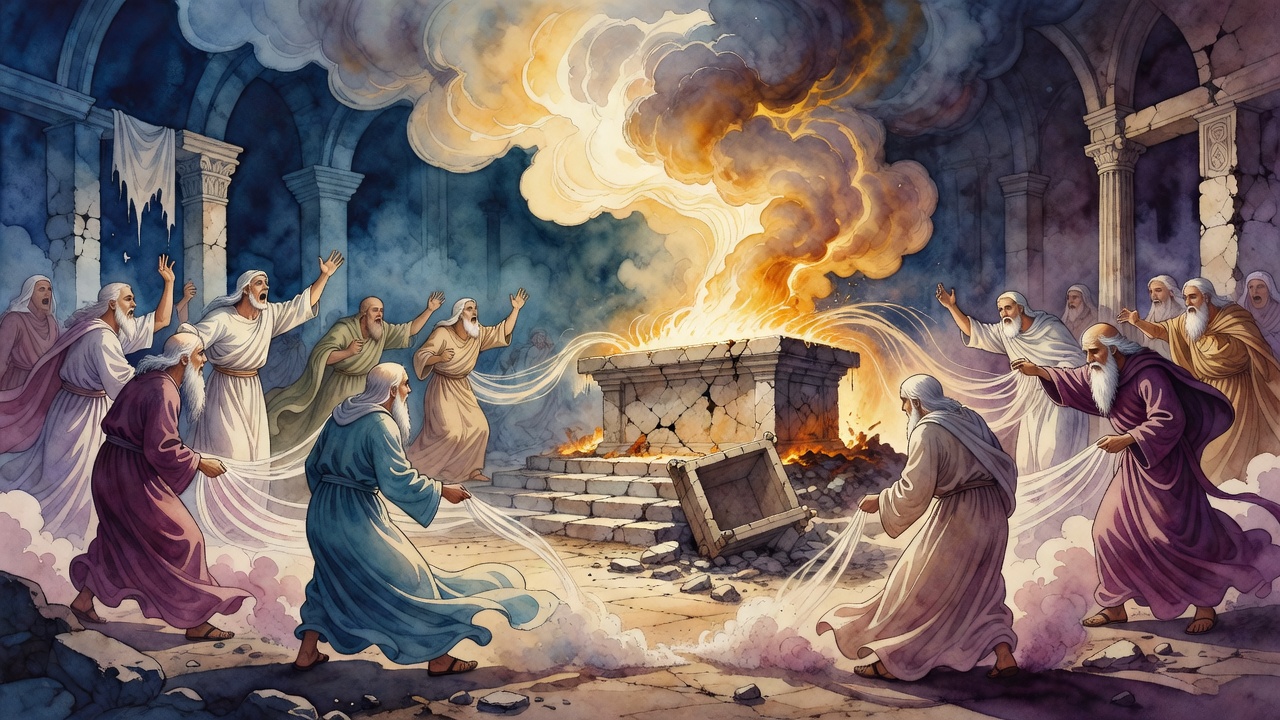
On the day the walls came down, the men who broke them did not plunder in silence. They climbed into the House of the Lord, tipped their faces toward the place where the smoke of offerings once rose, laced their fingers behind their necks, and cursed. Then they drove their spears into the sanctuary floor, point downward, a hedge of iron closing around the captured priests, and under the blackened beams they lifted their voices as though it were a festival day.
 Click for full size
No fire fell to stop them. No hand reached out of the smoke. That silence was the worst thing in the room.
The King Threw the Table Back in Their Faces
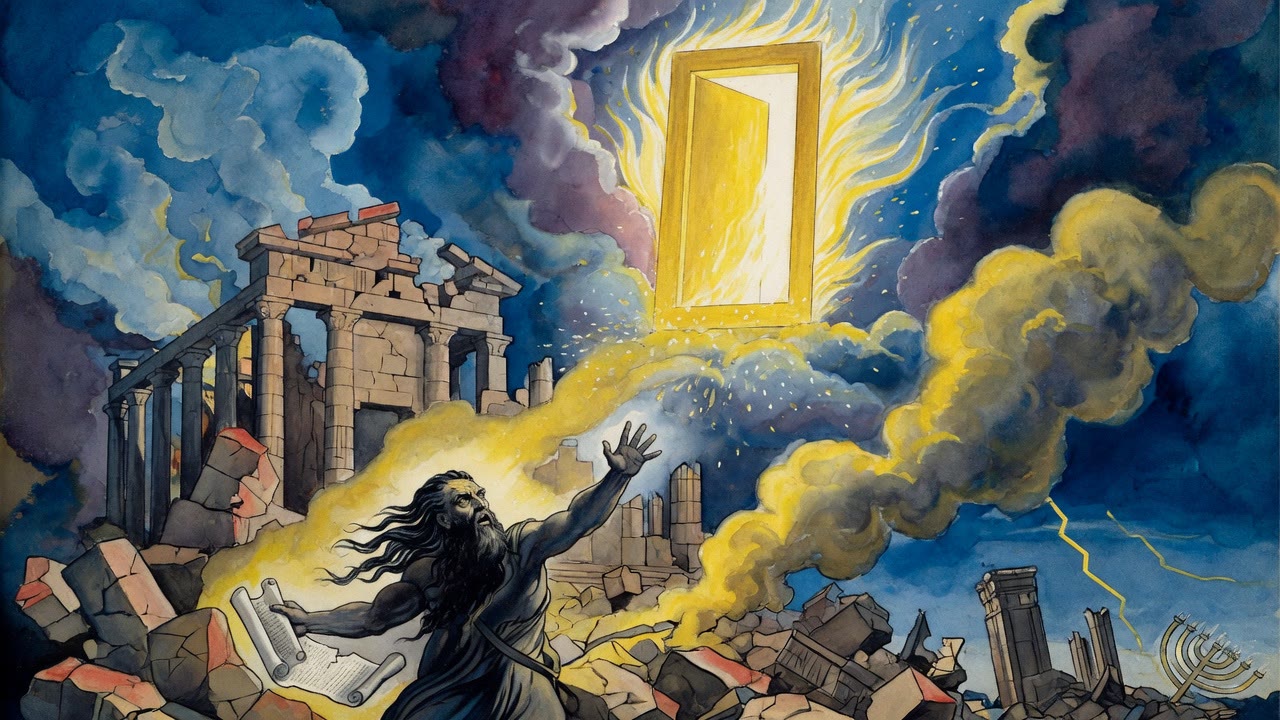
God had kept a table in that house longer than the kingdom had stood. Every morning a bullock, every dusk a lamb, the fat rising off the stones, the blood dashed against them. Israel had eaten at that table and then turned from it to burn incense to other gods. Now the Owner of the house spoke, and His voice was the voice of a king whose guests have insulted him at his own board. "Are you angering Me only through the offerings you brought Me?" He said. "Here they are, thrown back in your faces." So He forsook His altar. He cursed His own sanctuary. He loosed the walls of its palaces into the enemy's grip, and it was His withdrawal, not their strength, that let the iron come in.
Zion Called to Her Lovers and They Turned Away
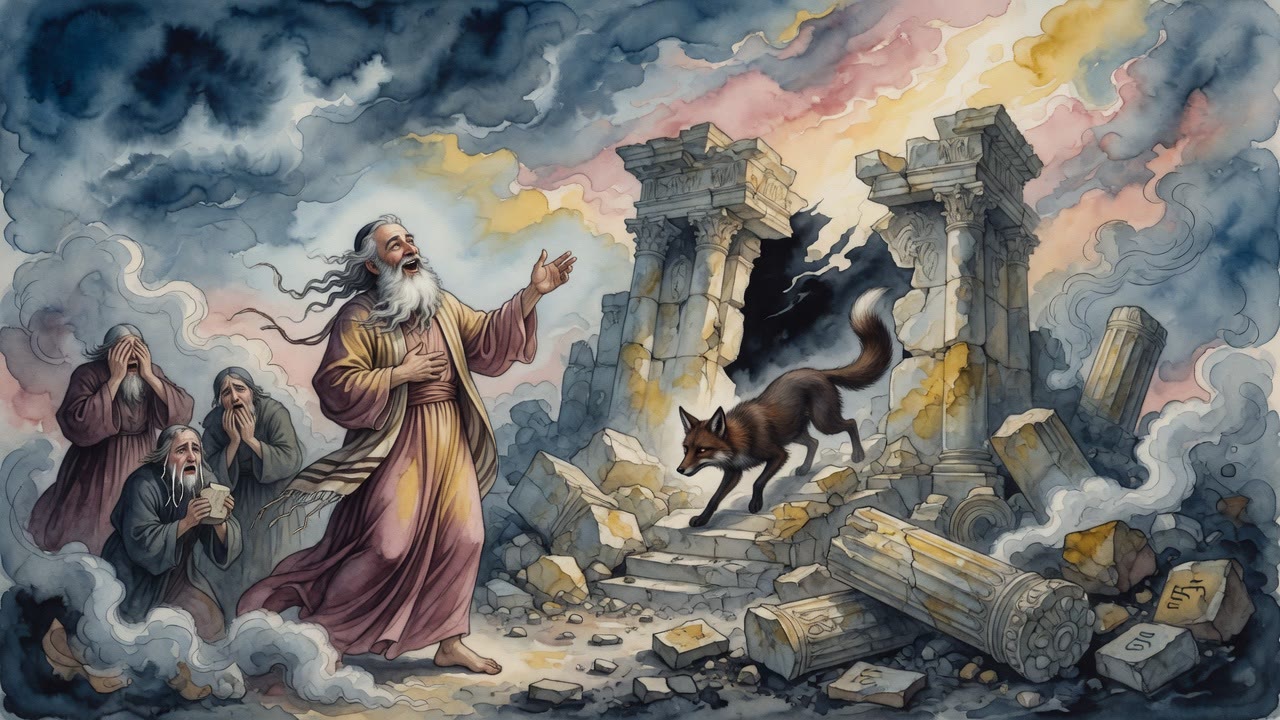
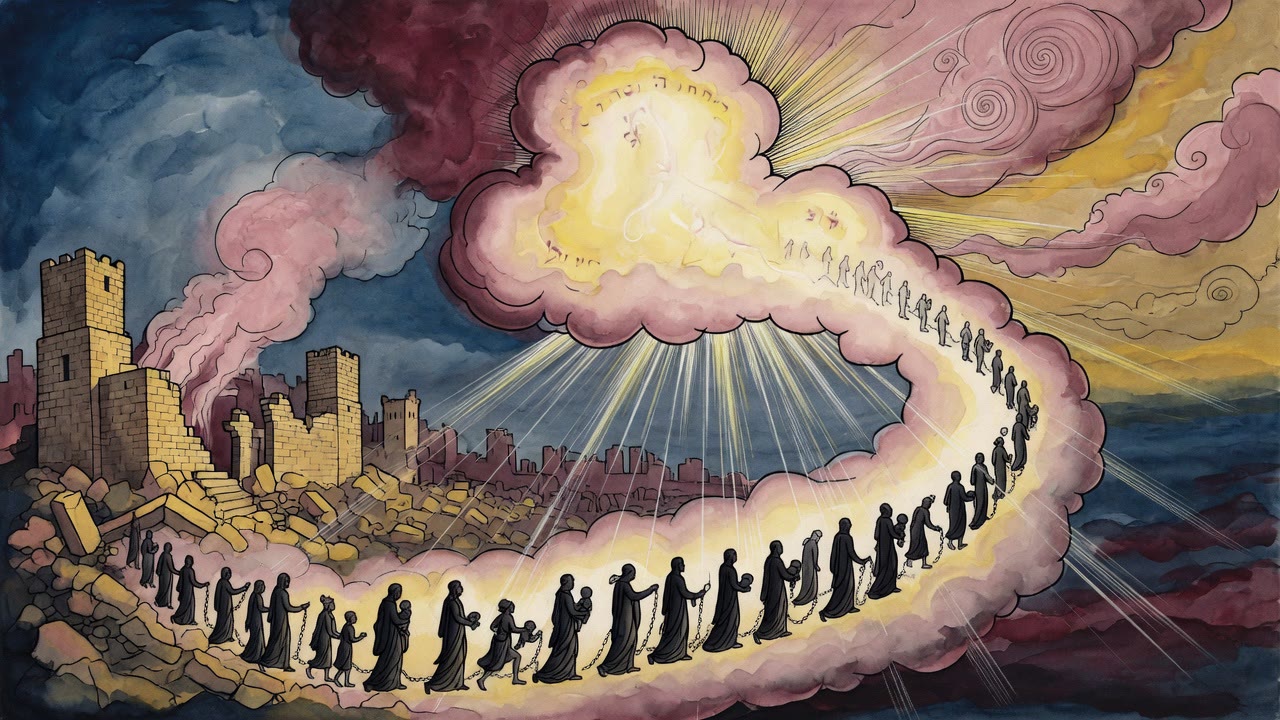
Zion lifted her head from the rubble and called for help to everyone who had promised it. The prophets who had stood in her gates for years, the ones who swore the city could not fall, who made every foreign idol sound like a friend, she called to them now. They had deceived her. They had never stopped deceiving her, prophesying comfort and futility until the lie itself carried her out through the broken gate into exile. "I called to my lovers, they deceived me," she said. Around her the priests who had served the vanished altar wandered the streets hunting for bread, and her elders with them, and they dropped in the roadway with the crust still unfound, seeking a mouthful to bring their souls back and finding none.
A Raw Hare and an Oath on the Inner Altar
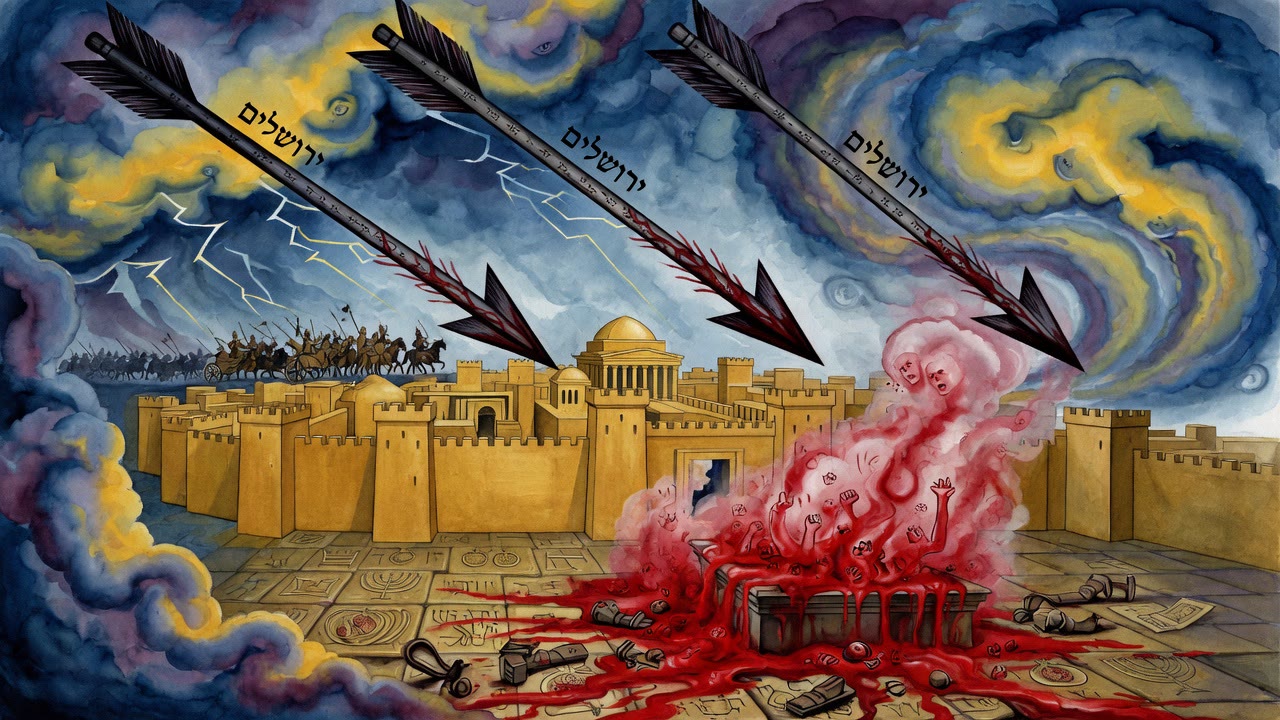
The ruin had a longer root, and it ran back to a secret. When Jehoiachin was carried off to Babylon, King Nebuchadnezzar raised up Zedekiah in his place and set him over five kings, the kings of Edom and Moab and Ammon and Tyre and Sidon. Zedekiah walked in and out of the royal chamber without asking leave. One day he came in unannounced and caught the king tearing the flesh of a live hare and eating it raw. Nebuchadnezzar looked up with the meat in his teeth. "Swear to me you will never tell this," he said, and he led Zedekiah to the inner altar and made him take the oath there, on the holy stone. Zedekiah swore.
The five kings hated their overlord. They sat with Zedekiah and poured poison in his ear. "The crown does not suit Nebuchadnezzar," they told him. "It suits you. You are the seed of David." And Zedekiah, warm with their flattery, let the secret slip. "I saw him tear a hare and eat it raw," he said. The words were on the road to Babylon before the night was out. He had broken the oath sworn on the altar, and he rebelled against the king of Babylon, and the empire turned toward Jerusalem.
The Law of Vows Became a Trap at Daphne
Nebuchadnezzar did not march straight to the city. He stopped at Daphne of Antioch, and the Great Sanhedrin, the supreme court of Israel, came out to meet him. When he saw how noble they looked, he ordered chairs of honor brought and seated them like princes. "Teach me the Torah," he said. So they opened the scroll and read to him portion by portion, translating each one into his tongue, until they reached the law of vows. "When a man takes a vow to the Lord," they read, "he shall not break his word."
The king leaned forward. "And if he wishes to take it back," he asked, "can he, or can he not?" They answered plainly, not seeing the trap closing. "He can go to a Sage, and the Sage can annul the vow for him." Nebuchadnezzar sat back. "It seems to me," he said slowly, "that you are the ones who annulled the oath Zedekiah swore to me." He gave the order at once.
Dust on the Heads of the Elders
They set the elders of the daughter of Zion down on the ground, and the elders went silent. They took dust and poured it over their heads, pleading the merit of Abraham, who had stood before God and called himself dust and ashes. They wound sackcloth around their bodies, pleading the merit of Jacob, who had bound sackcloth on his loins in his grief. It bought them nothing. Their captors tied the old men by the hair to the tails of horses and drove the horses from Jerusalem to Lod, and the elders were dragged the length of that road through the dirt. The young women of the city lowered their heads to the ground and would not raise them.
Behind them the sanctuary stood open to the wind, its altar cursed by its own Owner, its floor bristling with enemy spears, and the singing had not stopped.
← All myths