How Jerusalem's Arrogance Became Its Exile
Eikhah Rabbah follows Jerusalem's wealthy through the siege from golden baskets lowered over walls to the shame of being called impure in the nations.
Table of Contents
 Click for full size
The Basket of Gold
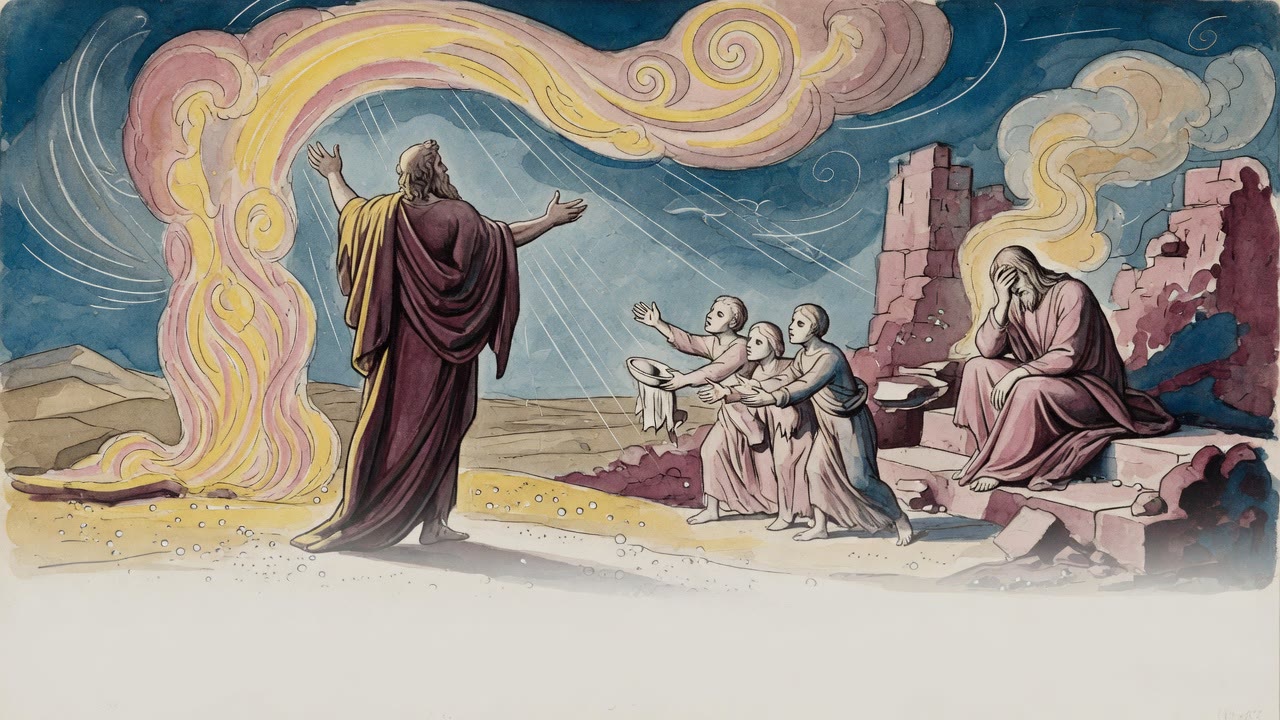
The siege had tightened but the wealthy still had something to trade. They lowered baskets of gold from the walls of besieged Jerusalem. Below, the enemy soldiers took the gold and sent wheat back up the wall. The transaction was obscene, but it worked. A person who had gold could still eat while the city starved around them.
Eikhah Rabbah describes the progression with clinical precision. First: gold for wheat, when the siege began and gold still had value. Then, as the siege dragged on and the enemy soldiers grew contemptuous of the city's desperation, gold for barley. Then gold for something worse. Then gold for nothing. The enemy realized the people inside the walls were willing to give everything for food, and the exchange ceased to be an exchange and became extraction.
The Torah's chronology supports this. Jeremiah 52:6 says the famine intensified in the fourth month, the ninth day, so severely there was no bread for the people of the land. The wealthy of Judah still had bread at that point, Eikhah Rabbah notes. The distinction lasted exactly as long as their gold did, and then they were starving alongside everyone else they had thought themselves above.
What the Daughters of Zion Expected
Before the siege, there had been warnings. Jeremiah had stood in the streets and at the Temple gates and in the king's court and told anyone who would listen that punishment was coming. Some of the wealthy women of Jerusalem had heard him and reached their own conclusion about what foreign officers entering the city would mean for them.
They would be lifted into carriages. Rabbi Hanina reports this assessment. The daughters of Zion, haughty and walking with outstretched necks and painted eyes and dainty steps with their anklets tinkling, had looked at Jeremiah's prophecy and converted it into a fantasy of elevation. If enemies came, these women reasoned, the officers would be attracted to them. They would be carried off in comfort. Their beauty would protect them. Their status would survive the fall of everything around them.
That fantasy made the repentance Jeremiah called for feel unnecessary. Why change if the worst outcome was still a carriage ride?
The Door That Was Open Too Long
Eikhah Rabbah does not frame Jerusalem's failure as a single catastrophic moment of decision. It frames it as a series of windows that stayed open and then closed. First the door of repentance, which was wide open before the siege and which the city's wealthy and powerful refused to walk through. Then the door of ransom, which was open as long as the gold lasted. Then the door of simple survival, which narrowed as the famine intensified.
By the time the city recognized what Jeremiah had actually been saying, the sequence was nearly complete. The hungry had already given their jewelry for food, then their carriages, then their best garments, then their last possessions. The things they had used to mark themselves as above the ordinary people of the land were gone, exchanged one by one for the bread that prolonged the suffering a little further.
Turn Away, Impure
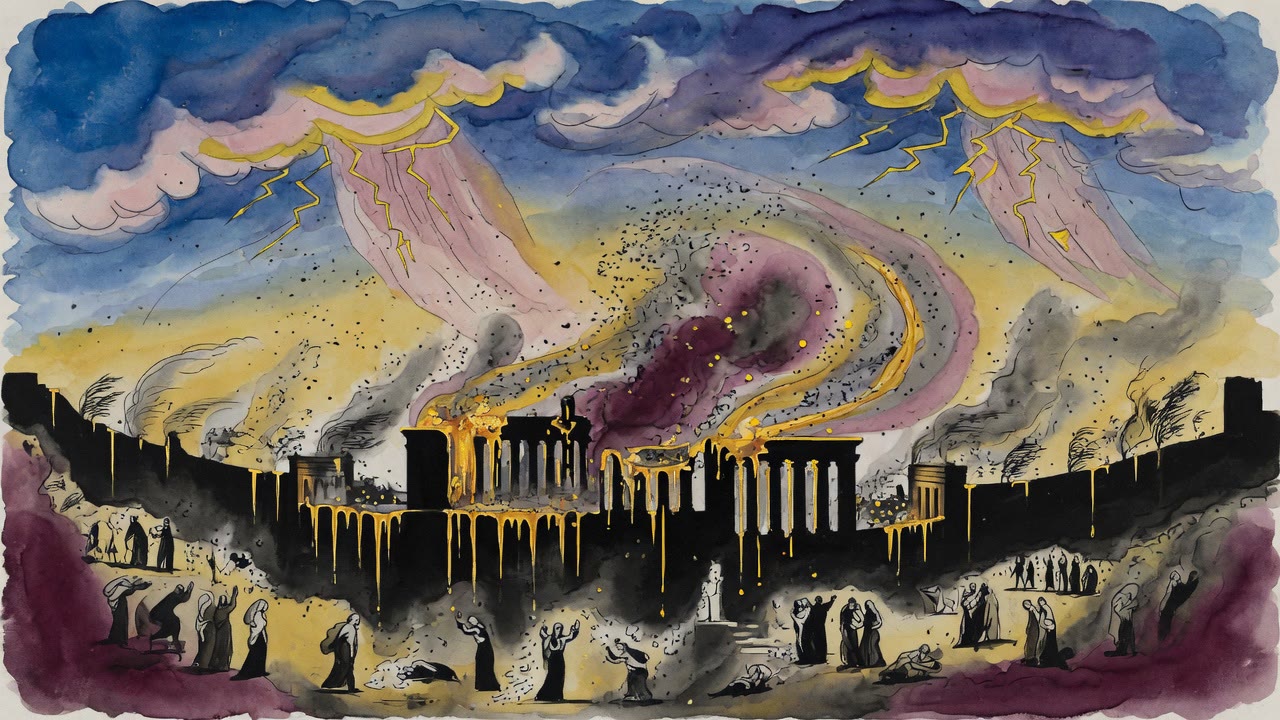
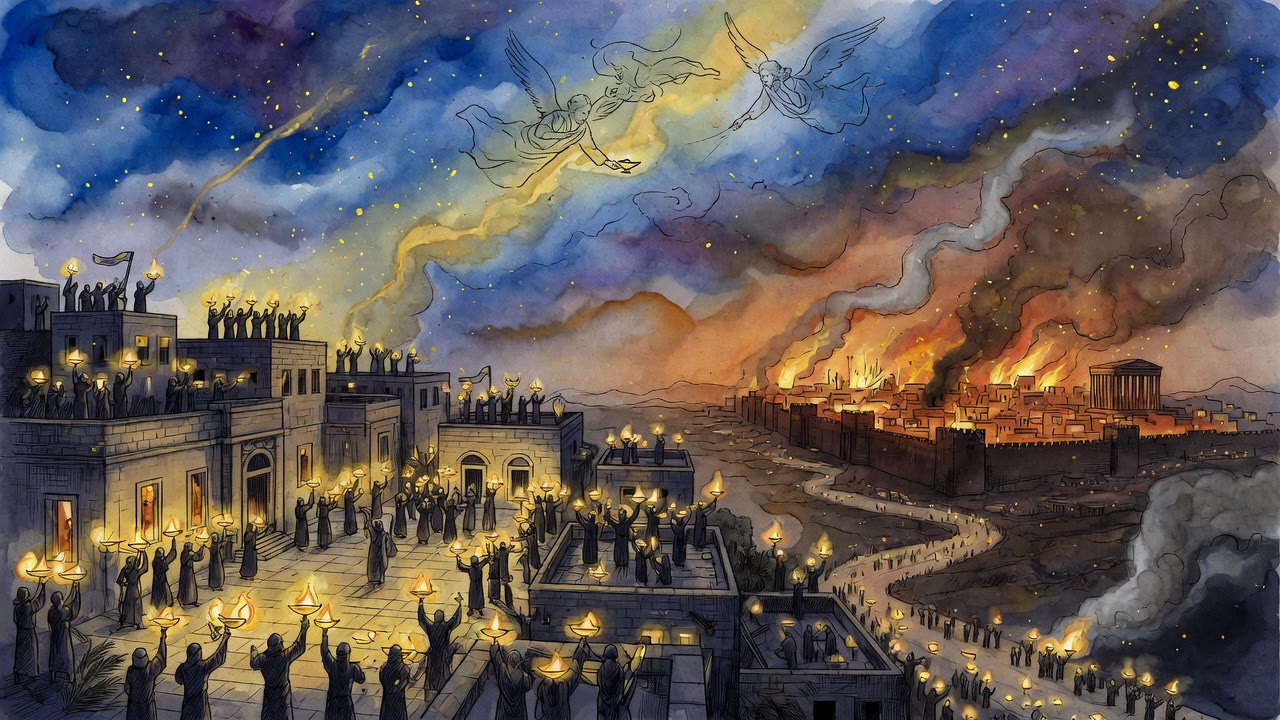
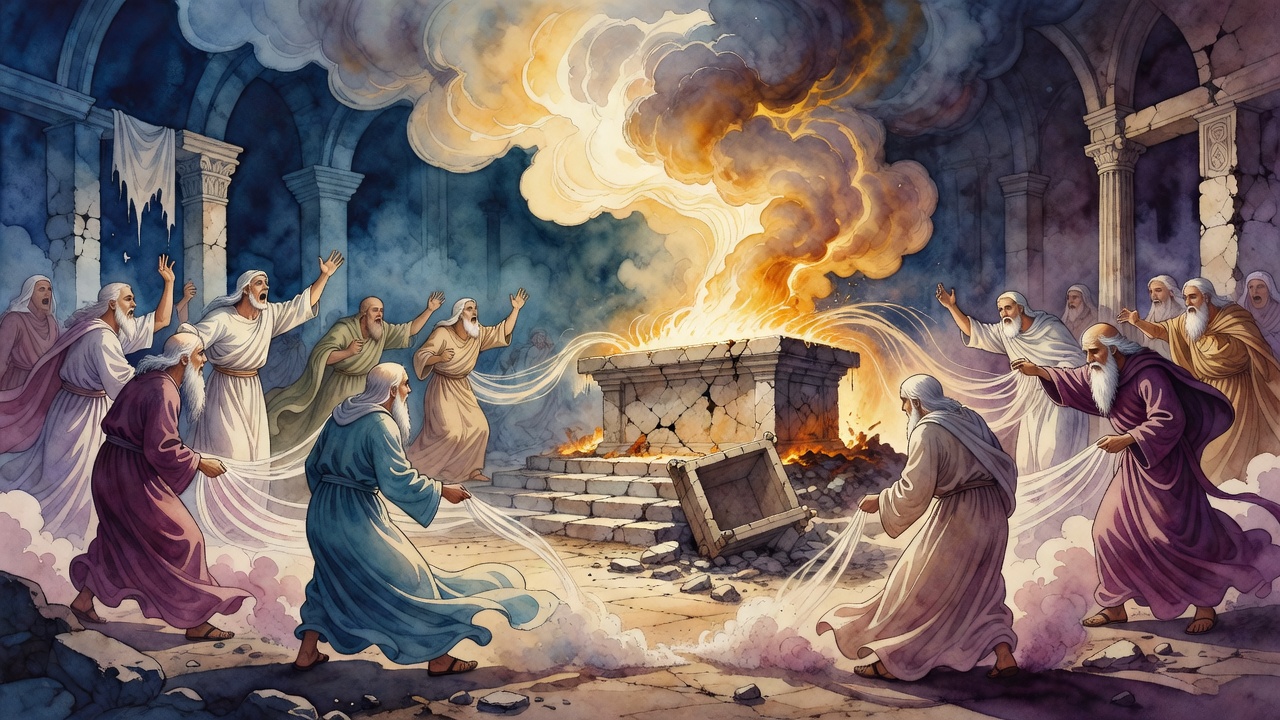
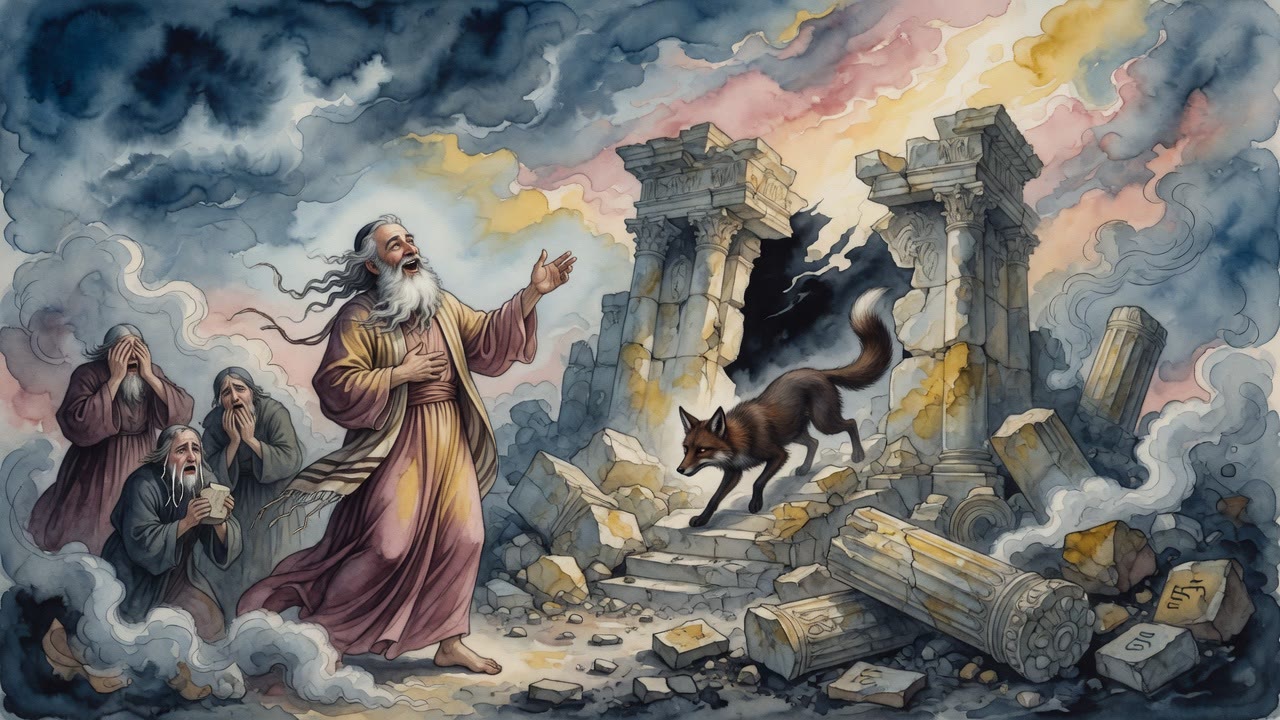
Then came exile. In the nations, the survivors of Jerusalem who had finally been driven out of the city they had thought invulnerable were greeted with a phrase from Lamentations that carries all the accumulated bitterness of the sequence. Turn away, impure. Do not touch. The nations said it to the people who had been ejected from the city of the Temple. The very people who had walked with painted eyes and tinkling anklets past the prophet they refused to hear were now being shouted away from contact, called unclean by peoples who had not been given the Torah and who certainly did not know or care what had been forfeited in the siege.
Eikhah Rabbah reads the verse with Rabbi Hanina's commentary as the final irony. Jerusalem had called itself a holy city. Its women had called themselves beautiful and untouchable. Now the nations called them untouchable in the other sense, as contaminated, as people who had lost the holiness that marked them and left only the exile that replaced it.
← All myths