5 min read

Jeremiah Carried the Cup of Wrath to Jerusalem

Jeremiah tried to refuse the prophetic call, but God placed the cup of wrath in his hand and sent Jerusalem to drink first.

Curated by Arthur · Told by Maggid ·
Table of Contents
  1. The Boy Named the Wounds
  2. God Loved the Word Lad
  3. The Cup Came First to Home
  4. A Priest Recognized His Mother
  5. God Stood Outside Egypt
  6. The Sacred Portion Could Not Stay There

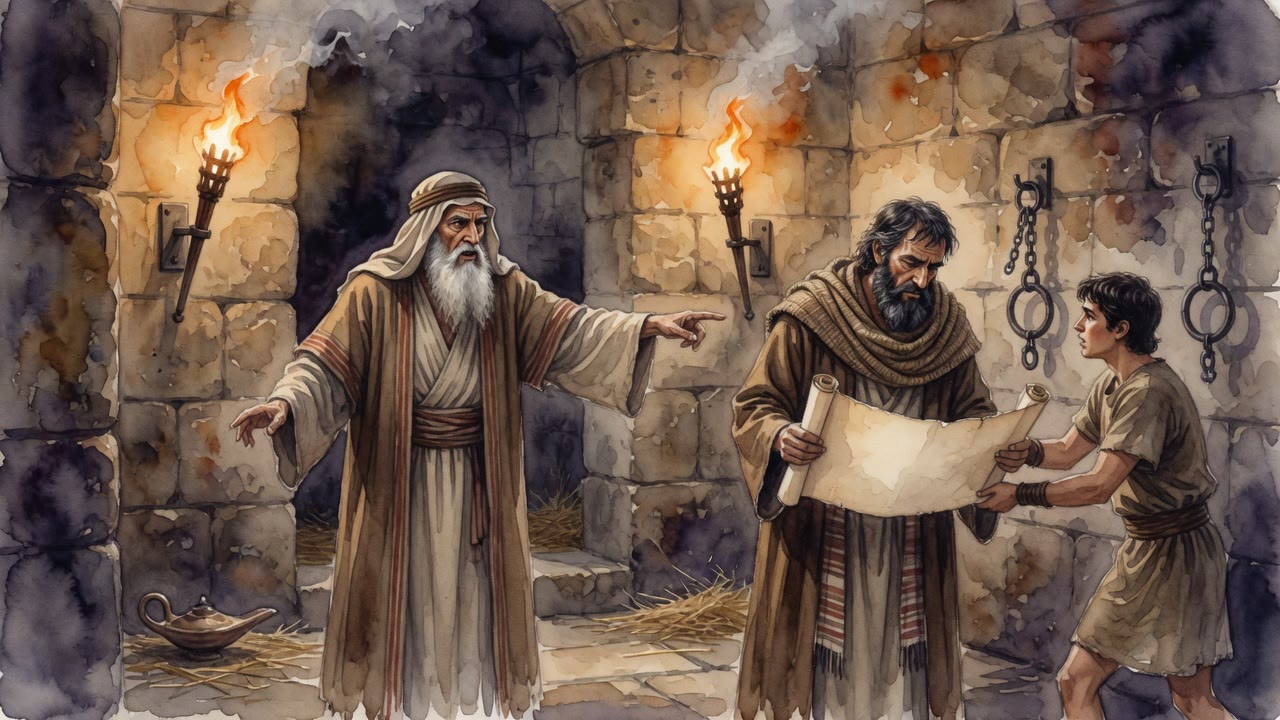
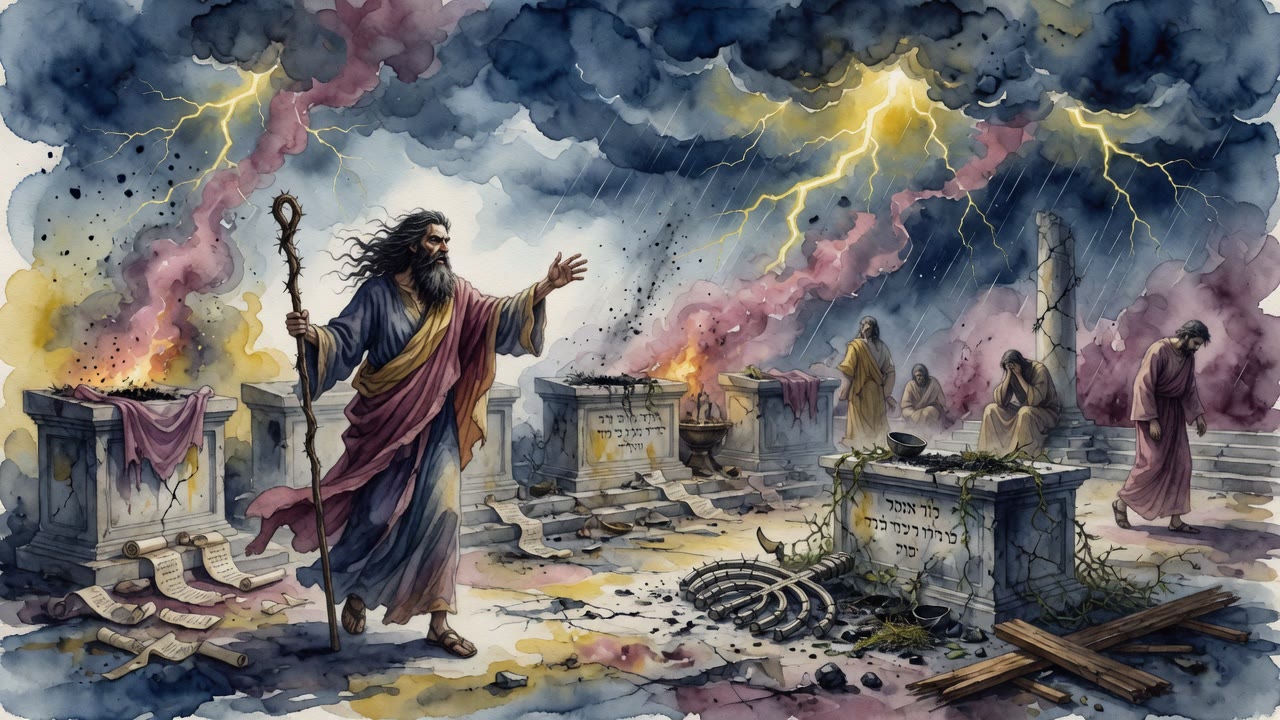
Jeremiah tried to refuse before the cup touched his hand. He was young, but his fear was not childish. He knew what Israel had done to the voices sent before him.
The Boy Named the Wounds

He named them one by one. Moses and Aaron had led a people through wilderness and nearly met stones from the hands they were saving. Elijah, the hairy prophet of fire and drought, had been mocked. Elisha had heard boys chase him through the street with the cry, "Go up, bald head." Prophecy did not look like honor from where Jeremiah stood. It looked like a man sent into a crowd already reaching for a weapon.

So he refused. Not with polished humility. With evidence. No prophet had gone to Israel without finding hatred waiting somewhere along the road. Jeremiah was only a lad. He had no beard of authority, no old scars to prove survival, no desire to become the next name in the list.

God Loved the Word Lad

God did not treat the word lad as a weakness. God took it back from Jeremiah's fear and filled it with memory. Youth was beloved because it still held innocence. Israel itself had once been called a lad when God carried the people out of Egypt. When love remembered Israel, it remembered the beginning, before the long stain of refusal and blood.

Jeremiah's objection became his summons. The part of him that felt too young was the part God named fit for the errand. A prophet did not need the hardness of age to carry a hard word. He needed a mouth that had not learned to make peace with corruption.

The Cup Came First to Home

Then the cup appeared.

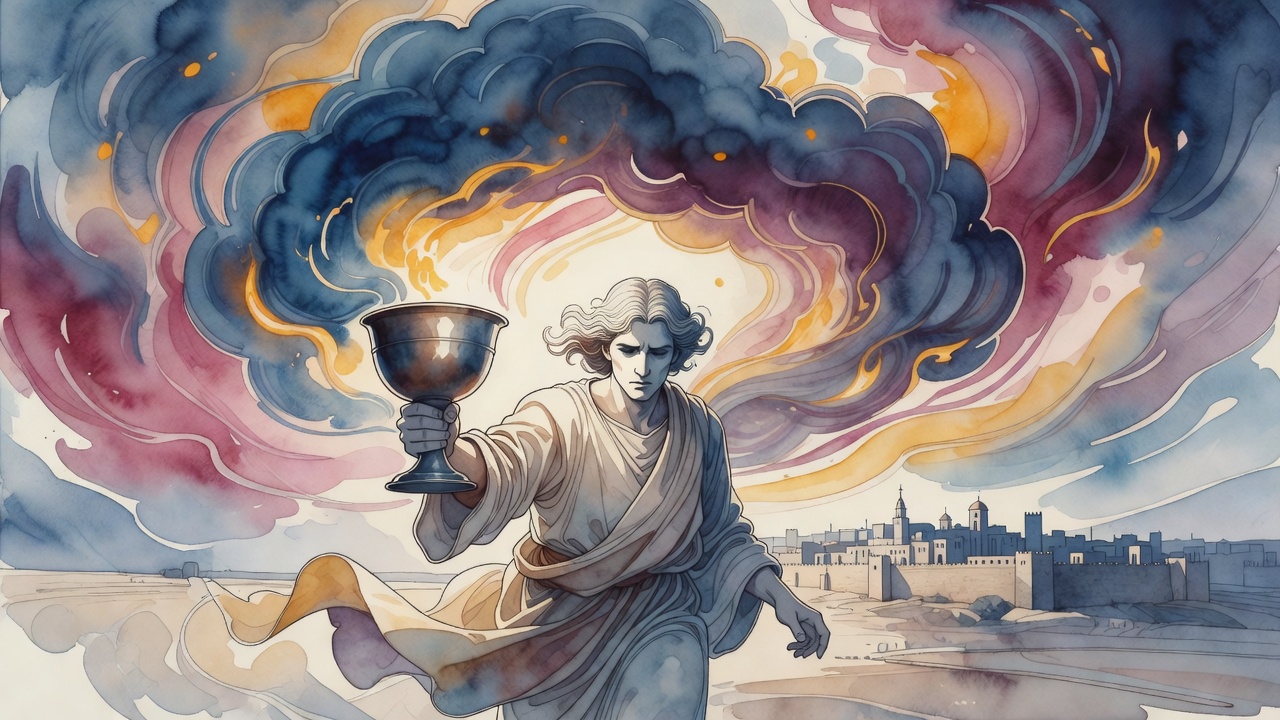
God placed the cup of wrath before Jeremiah and sent him to make the nations drink. Jeremiah did what a frightened servant does when handed a task too large for his hands. He asked for the order. Which land first? Which province would put its lips to the bitter wine?

The answer turned the cup into a wound. Jerusalem first. The cities of Judah first. The head of the earthly kingdoms would drink before the strangers, before the distant powers, before the enemies Jeremiah may have imagined when he first saw the cup.

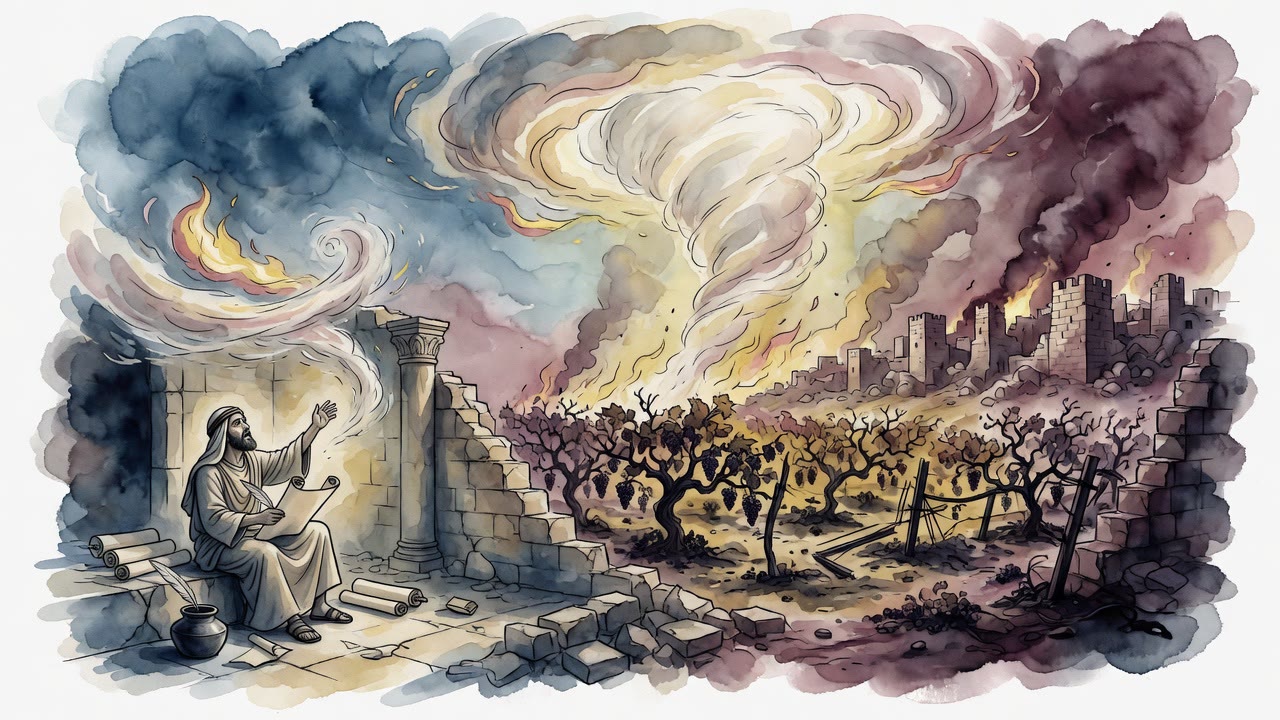
He cursed the day of his birth. The office he feared had become worse than danger. He had not been sent only to stand before enemies. He had been sent to serve judgment to his own mother.

A Priest Recognized His Mother

Jeremiah reached for the image that could hold the horror. A High Priest is chosen to give the bitter waters to a woman suspected of betrayal. Her hair is loosened. The cup is prepared. The ritual moves forward with the force of law.

Then he looks up and sees her face.

It is his mother. The hand that should honor her must now shame her. The priest who should protect the house must carry the cup to the woman who gave him life. Jeremiah saw Zion that way. He had thought prophecy would let him speak comfort over her, call her toward restoration, and crown her with good words. Instead, Mother Zion stood before him with the cup already mixed.

God Stood Outside Egypt

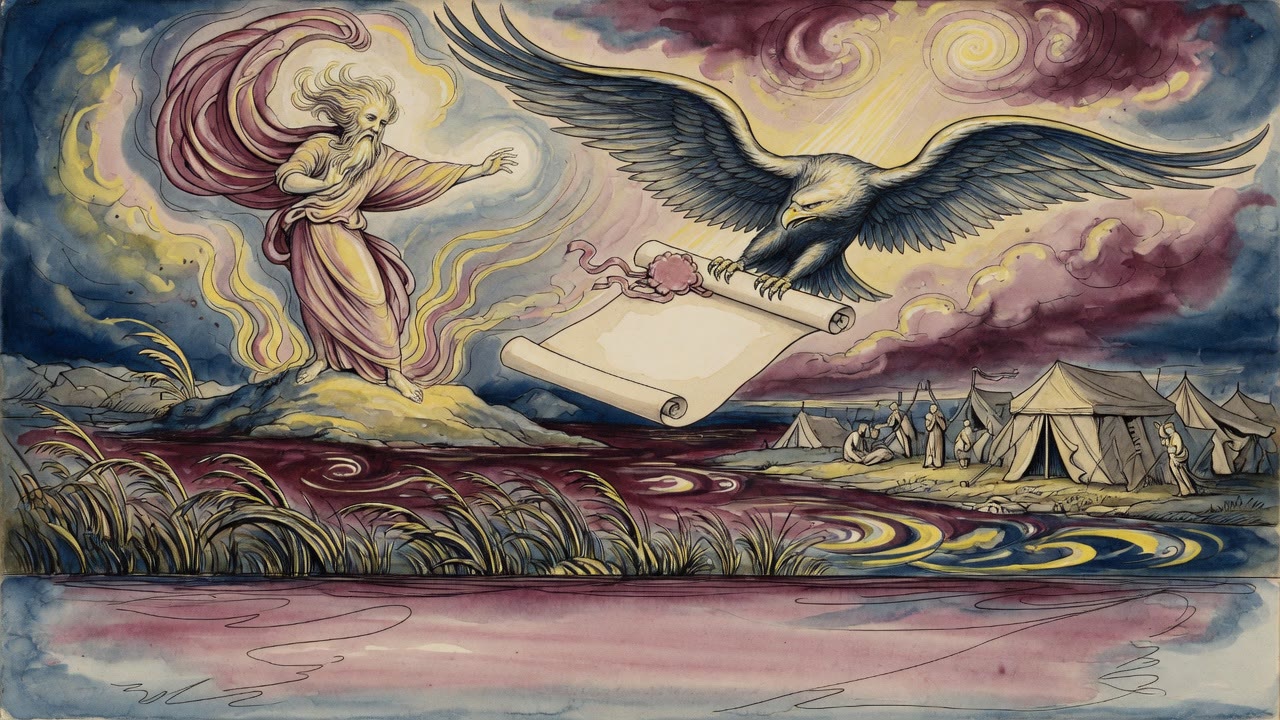
Long before Jeremiah, God had shown how carefully a boundary can be kept. When the word came to Moses and Aaron in Egypt, it came in the land, not in the crowded heart of Egypt's cities. A debt collector must stand outside the debtor's house and cannot burst in to seize property. God honored that line even while preparing to break Pharaoh's hold.

Power did not give God permission to trample a doorway. Liberation began with restraint.

But love also has its terrible urgency. Israel in Egypt was like terumah, the sacred priestly portion, fallen into a cemetery. A priest cannot enter the graves without becoming impure. He also cannot abandon the sacred portion to the dead. So he enters once, retrieves what is holy, and then seeks purification.

The Sacred Portion Could Not Stay There

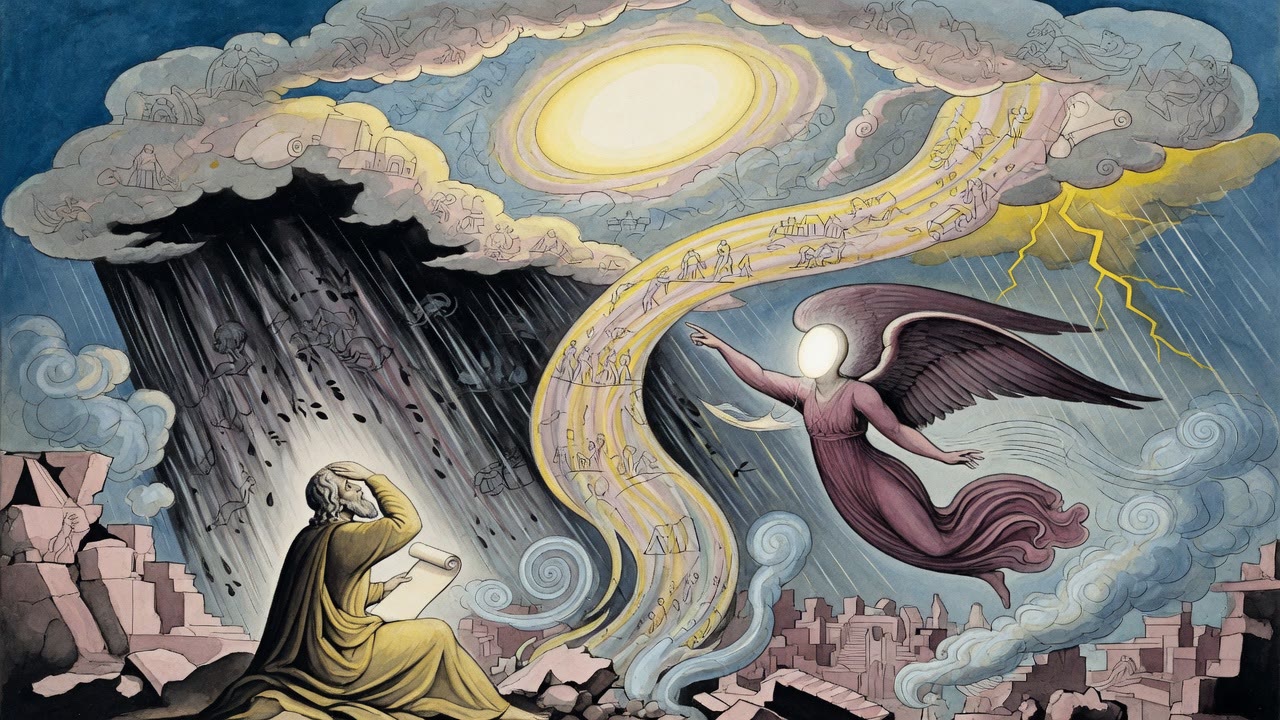
That old image sharpened Jeremiah's cup. God had entered Egypt because Israel could not be left among graves. Now Jerusalem herself had become the place of danger. The mother was holy, and the mother was guilty. The cup had to come home first because home was where the wound had opened.

Jeremiah did not become less young when he accepted the errand. He became the lad God loved and the priest who trembled before his mother. His hand closed around the cup. Jerusalem waited at the front of the line.


← All myths
From the tradition

Sources

2 sources

The texts this telling draws on, in full. Open a card to read inline, or expand it for a wider, quieter read.

Legends of the Jews 10:10Legends of the Jews

As a young man, Jeremiah received the call to be a prophet. But unlike some heroes who leap at the chance, Jeremiah hesitated. He flat-out refused! "O Lord," he argued, "I cannot go as a prophet to Israel! When was there ever a prophet whom Israel didn't want to kill?" Moses and Aaron? They were nearly stoned! Elijah the Tishbite was mocked for his long hair. They taunted Elisha with "Go up, thou bald head!" (Ouch.) And Jeremiah? He felt like just a kid. “No, I cannot go to Israel, for I am still naught but a lad."

God replied, and His response is so tender. "I love youth," God says, "for it is innocent." He even recalls carrying Israel out of Egypt and calling them a "lad." And when He thinks of Israel with love, He speaks of them as a lad. "Say not, therefore, thou art only a lad, but thou shalt go on whatsoever errand I shall send thee."

The task God then gives him? It's no easy one. God continues, "Now, then, take the 'cup of wrath,' and let the nations drink of it."

Jeremiah, understandably, wants to know the order. Which land is to drink first from this "cup of wrath"? The answer? "First Jerusalem is to drink, the head of all earthly nations, and then the cities of Judah."

Can you imagine hearing that? When Jeremiah heard this, he began to curse the day of his birth.

He laments, "I am like the high priest who has to administer the 'water of bitterness' to a woman suspected of adultery, and when he approaches her with the cup, lo, he beholds his own mother!" (This imagery alludes to the ordeal of the suspected adulteress described in Numbers 5, where a priest administers a potion to determine guilt or innocence).

"And I, O Mother Zion," Jeremiah cries, "thought, when I was called to prophesy, that I was appointed to proclaim prosperity and salvation to thee, but now I see that my message forebodes thee evil." Talk about a heavy burden.

The image of the "cup of wrath" appears throughout the prophetic literature, a potent symbol of divine judgment. As we find in Midrash Rabbah and other sources, it represents the consequences of straying from God's path.

Jeremiah's reluctance, his feeling of inadequacy, his anguish at having to deliver such a devastating message… it all makes him incredibly human, doesn't it? It reminds us that even the greatest prophets wrestled with their calling, with the weight of responsibility, and with the pain of witnessing suffering. What do we do when our calling is not what we expected, or when we must deliver a difficult message? Food for thought.

Full source
Shemot Rabbah 15:5Shemot Rabbah

It seems like a minor detail, but as we learn in Shemot Rabbah, it's anything but.

Rabbi Ḥanina offers a beautiful explanation. He says that God's choice of words reflects a profound sense of respect and a commitment to upholding the law, even for Himself! He connects this to the Torah's instruction in (Deuteronomy 24:11): "You shall stand outside." This refers to a debt collector who must remain outside a debtor's home, unable to barge in and seize property. Rabbi Ḥanina explains that God, in a similar way, chose to speak to Moses and Aaron "in the land of Egypt," meaning within its borders, but not in Egypt’s population centers. It was a way of maintaining distance, a divine adherence to the principle of respecting boundaries. Even in the act of liberating His people, God is mindful of boundaries, of a certain kind of divine etiquette. It's a powerful image.

There's more. Rabbi Shimon offers another layer of understanding. He points out how extraordinary it was for God to reveal Himself in a place so steeped in idol worship, a place of spiritual impurity. Egypt, at that time, was hardly a beacon of holiness. So why there?

Rabbi Shimon uses a striking analogy. Imagine a priest whose terumah – that's the sacred offering set aside for the priests – falls into a cemetery. A terrible situation! He can’t just leave it there, but entering the cemetery would make him ritually impure. What’s he to do? The solution, Rabbi Shimon suggests, is that he should choose the lesser of two evils: become impure once, retrieve the terumah, and then purify himself. He can’t let the sacred offering be lost.

In the same way, Rabbi Shimon says, the Israelites were like God's terumah. As it says in (Jeremiah 2:3), "Israel is holy to the Lord, the first of His crop." But they were surrounded by spiritual "graves," mired in the impurity of Egypt. Remember the description in (Exodus 12:30): "As there was no house in which there were none dead"? And (Numbers 33:4) adds that "Egypt was burying [those whom the Lord had smitten]". God couldn't abandon His "offering," His chosen people. So, as (Exodus 3:8) says, He "came down to deliver them from the hand of Egypt."

God willingly descended into the muck and mire to redeem His people. He chose to enter the "cemetery," so to speak, to rescue what was sacred to Him.

And the story doesn't end there. According to Shemot Rabbah, after God brought the Israelites out of Egypt, He summoned Aaron to purify Him. This is connected to the verse in (Leviticus 16:33), "He shall atone for the Holy of Holies [mikdash hakodesh]" and (Leviticus 16:16), "He shall atone for the Sanctuary [hakodesh]". Here, hakodesh, usually translated as "holy" or "sanctuary," is understood homiletically – that is, interpretively – to refer to the very Source of sanctity, God Himself. In a sense, by entering Egypt, God had to be "atoned" for, or purified, after this act of immersing Himself in the world.

So, what does it all mean? This passage from Shemot Rabbah invites us to consider the lengths to which God will go for His people. It speaks of divine respect, even for the boundaries of a land steeped in impurity, and of a profound love that compels God to "descend" and redeem. It's a story of choosing the lesser of two evils to preserve what is truly sacred. And ultimately, it’s a story about the enduring, unbreakable bond between God and Israel, a bond so strong that it requires even the Divine to undergo a process of purification after coming into contact with the world's impurities. It makes you wonder: what are we willing to do for the things we hold sacred?

Full source