Three Arrows Pointed to Jerusalem and Zechariah's Blood Kept Boiling
Nebuchadnezzar's arrows all turned toward Jerusalem. When his army arrived it found blood in the Temple courtyard still boiling after centuries of waiting.
Table of Contents
 Click for full size
The Arrows That Would Not Lie
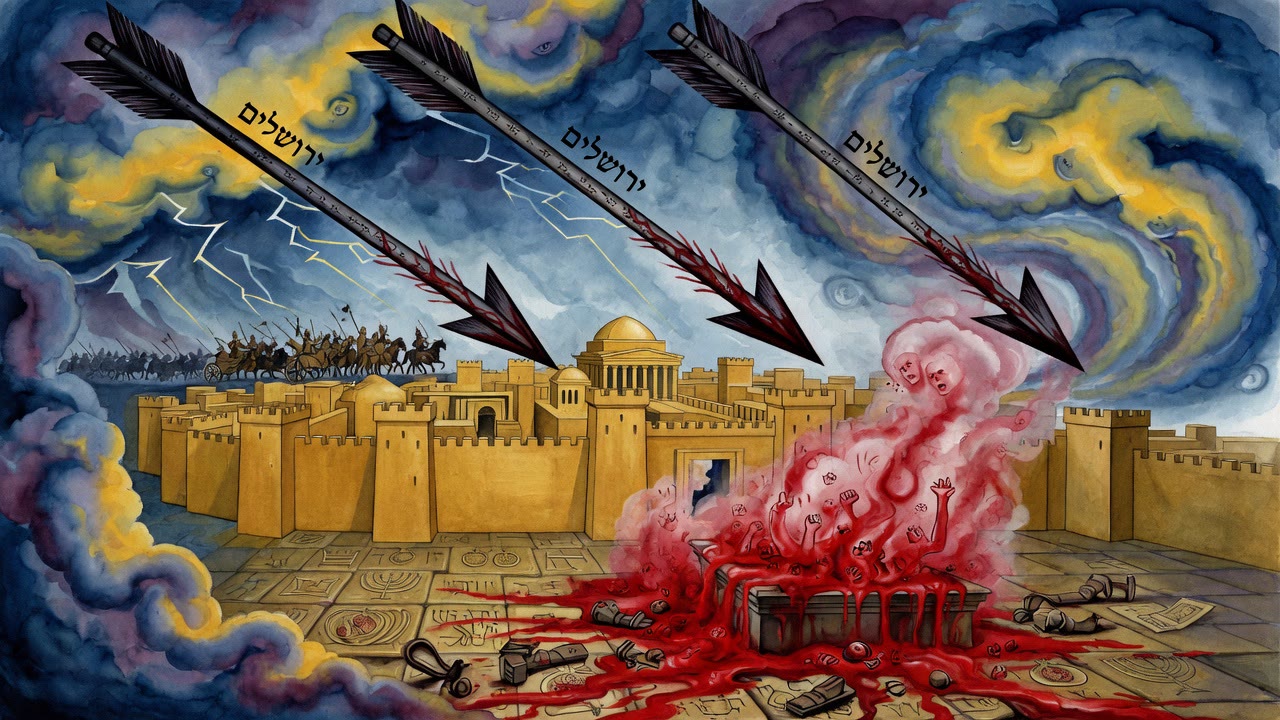
Before he marched on Judah, Nebuchadnezzar paused for divination. He was king of an age that consulted weapons before committing armies. He bent his bow and pointed west. The arrow curved in the air and turned toward Jerusalem. He pointed east. The shaft swung and turned toward Jerusalem. He drew a third time and asked the wood and feather which city in the world was the guilty one. The third arrow flew and pointed to Jerusalem.
The empire imagines its violence as strategy. The aggadah (the rabbis' storytelling tradition) makes it testimony. Three arrows turned the Babylonian king's ritual against him: he thought he was practicing belomancy, divination to select a target, but the arrows were not selecting. They were confirming a verdict already given. Nebuchadnezzar did not choose Jerusalem. He received it as an answer from something he did not control. The bow became a courtroom, and every shot returned the same finding.
He took the three-fold sign as license. The prophet Ezekiel would record that he stood at the fork of two roads and cast lots. The lots, the arrows, the entrail-reading, all of them, in the rabbinic understanding, pointed the same direction because the city had already been weighed. The Babylonian army was not the cause of Jerusalem's fall. It was the instrument of a verdict given before the army moved.
The Blood That Outlasted the Temple
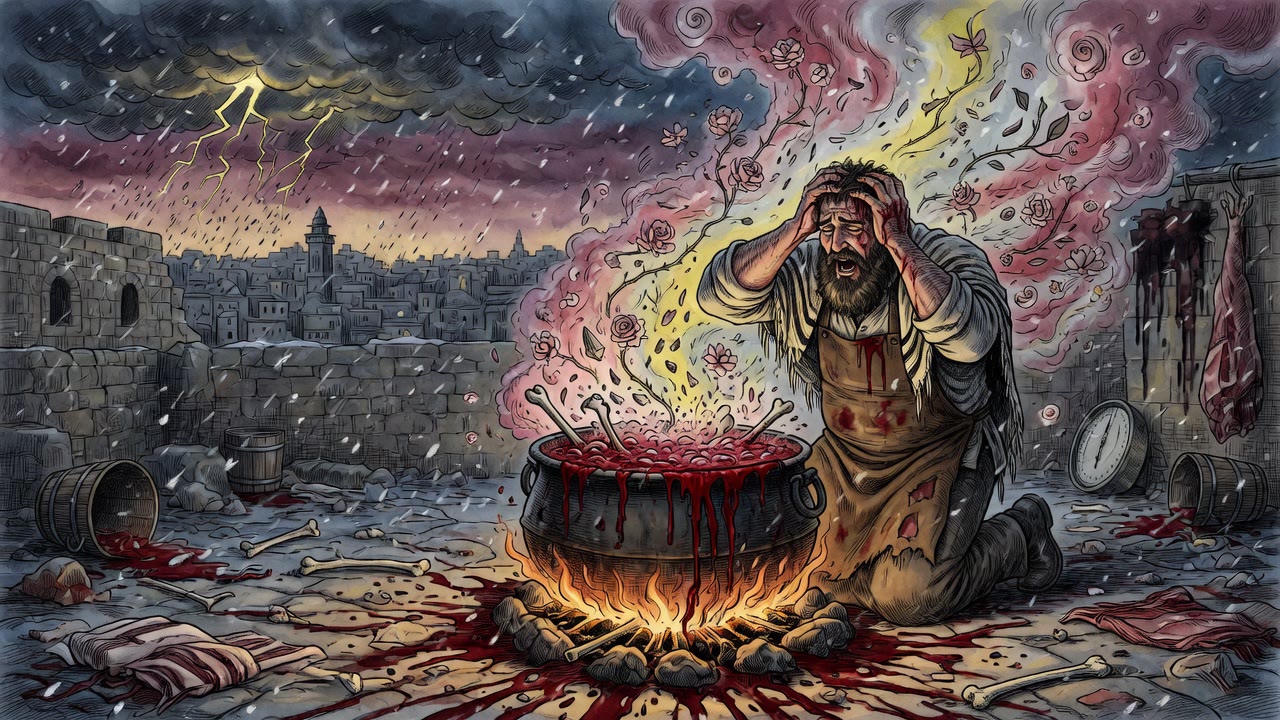
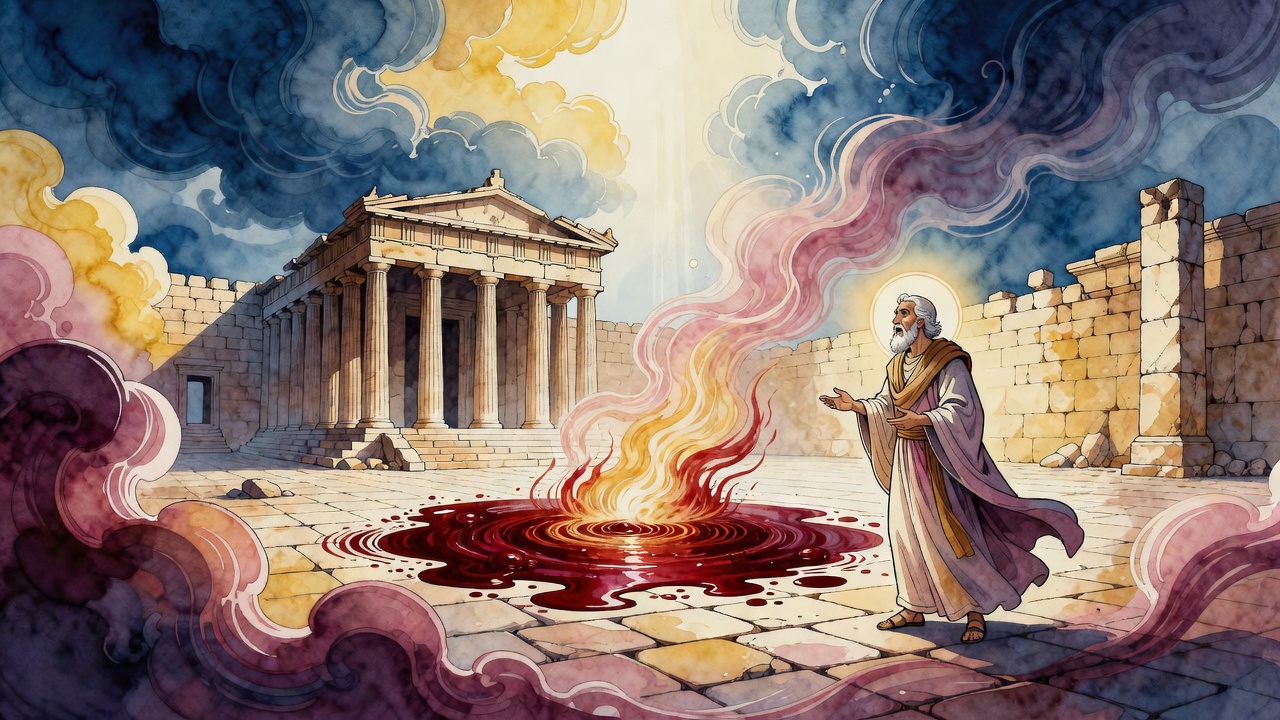
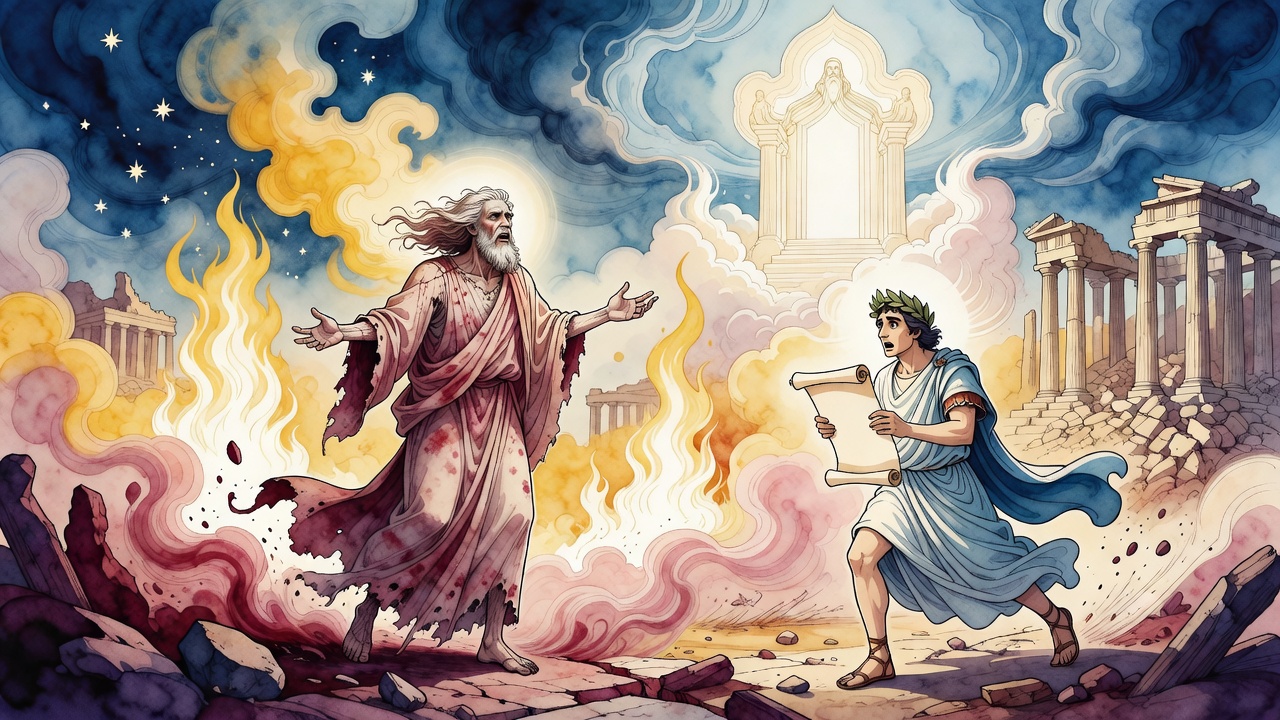
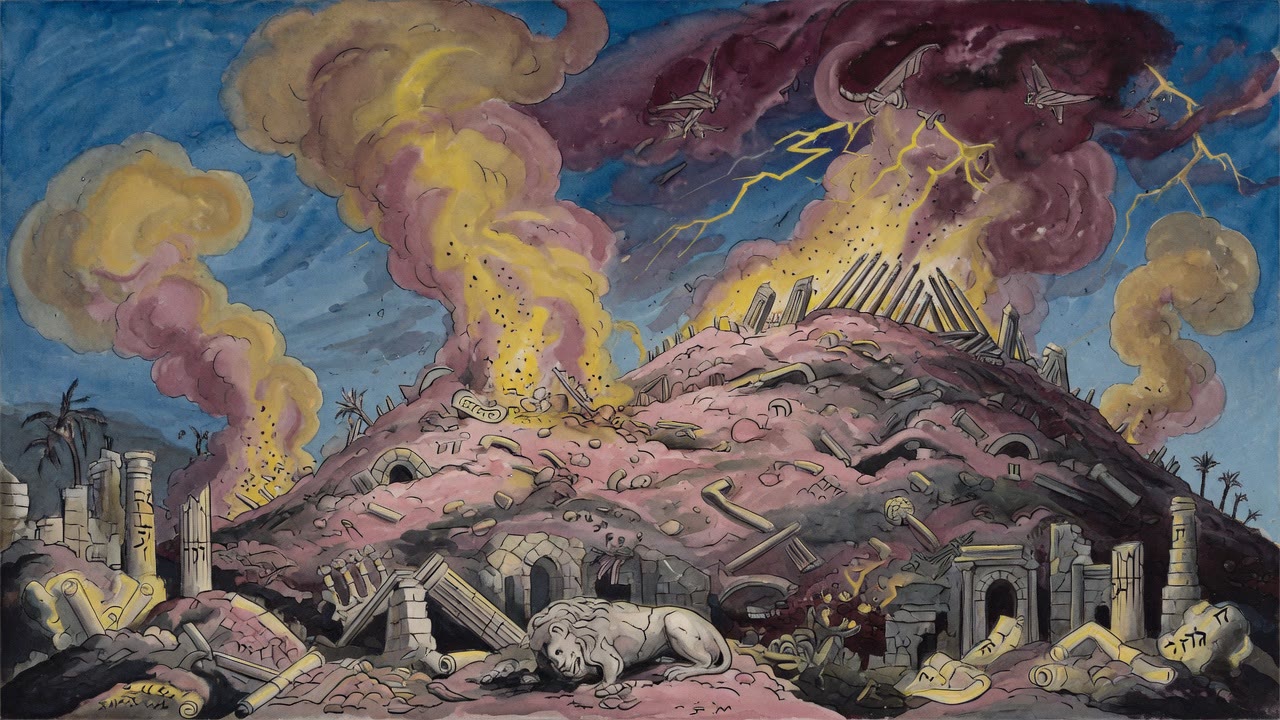
When Nebuzaradan, Nebuchadnezzar's captain of the guard, entered the ruins of the Temple, he found something in the courtyard that was not supposed to be there. A pool of blood. Boiling. Churning. Not flowing from a fresh wound but bubbling up from stone as though the rock itself were bleeding.
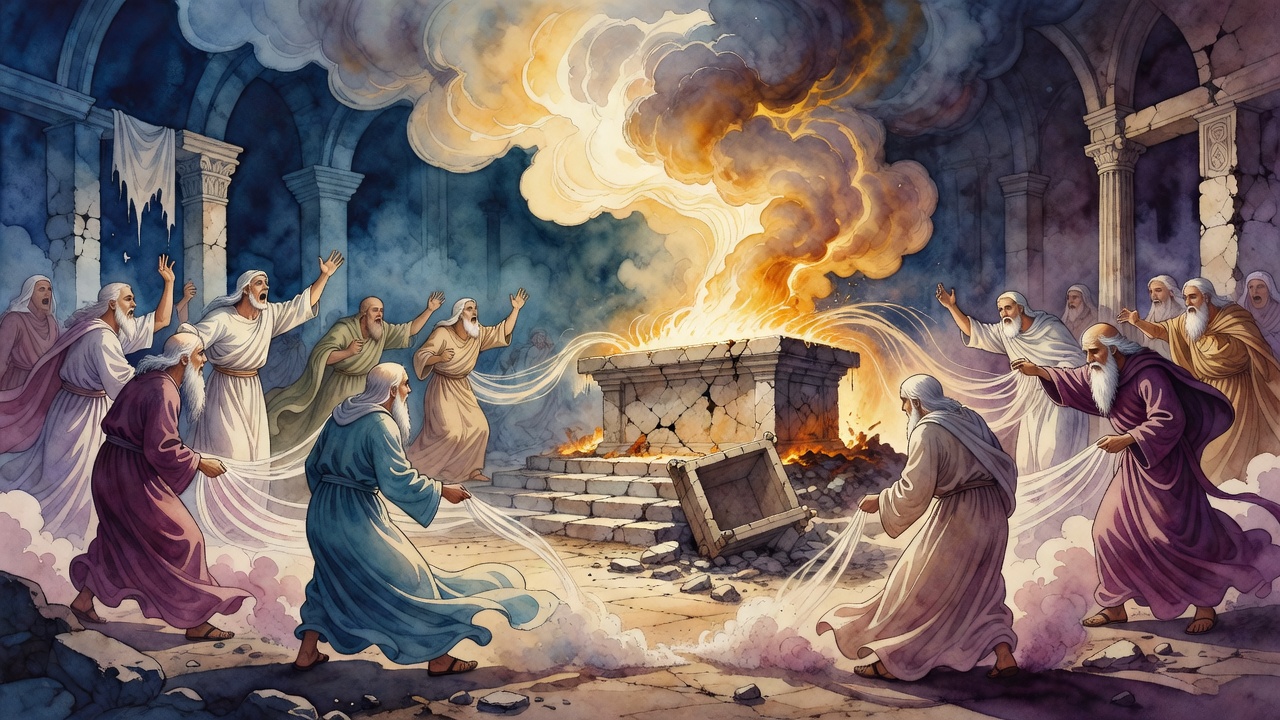
He asked the priests what it was. They told him it was the blood of sacrificial animals. He killed priests and poured their blood on the spot. The boiling did not stop. He killed more and more. He killed seventy members of the Sanhedrin (Jerusalem's supreme rabbinic court). Still the blood moved. The numbers grew catastrophic, the Talmudic tradition places 940,000 deaths in Jerusalem alone, the soil of Judah saturated for seven years afterward.
Whose Blood Would Not Be Covered
The old blood was the blood of Zechariah the prophet, son of Jehoiada the priest. King Joash had ordered him stoned to death in the Temple courtyard because Zechariah had rebuked the king for abandoning God. As he died, Zechariah cried out for God to see and avenge. His blood fell on bare rock and was never covered. It had been waiting since the days of the First Temple, through the Babylonian invasion, rising and falling but never still.
The Captain Who Interrogated a Stain
Nebuzaradan interrogated the blood directly. He demanded it stop. The blood would not stop for the blood of the priests he had just poured over it. It would not stop for the Sanhedrin members. It would not stop for anyone.
Finally the captain understood what he was looking at. He spoke to the blood: Zechariah, Zechariah. I have killed the best of them for you. Do you want me to destroy them all?
The blood stilled.
The city that had killed its prophet had been condemned from that moment. The blood carried the record of what the city had done, boiling for centuries, waiting for the destruction that would settle the account. The Babylonian general was not its avenger in any righteous sense. He was the instrument that finally quieted what Jerusalem's own hands had set in motion.
← All myths