The King Who Let Judah Bow to Him as a God
The boy was hidden in the Holy of Holies and lived. Years later his princes called that proof he was a god, and Joash believed them.
Table of Contents
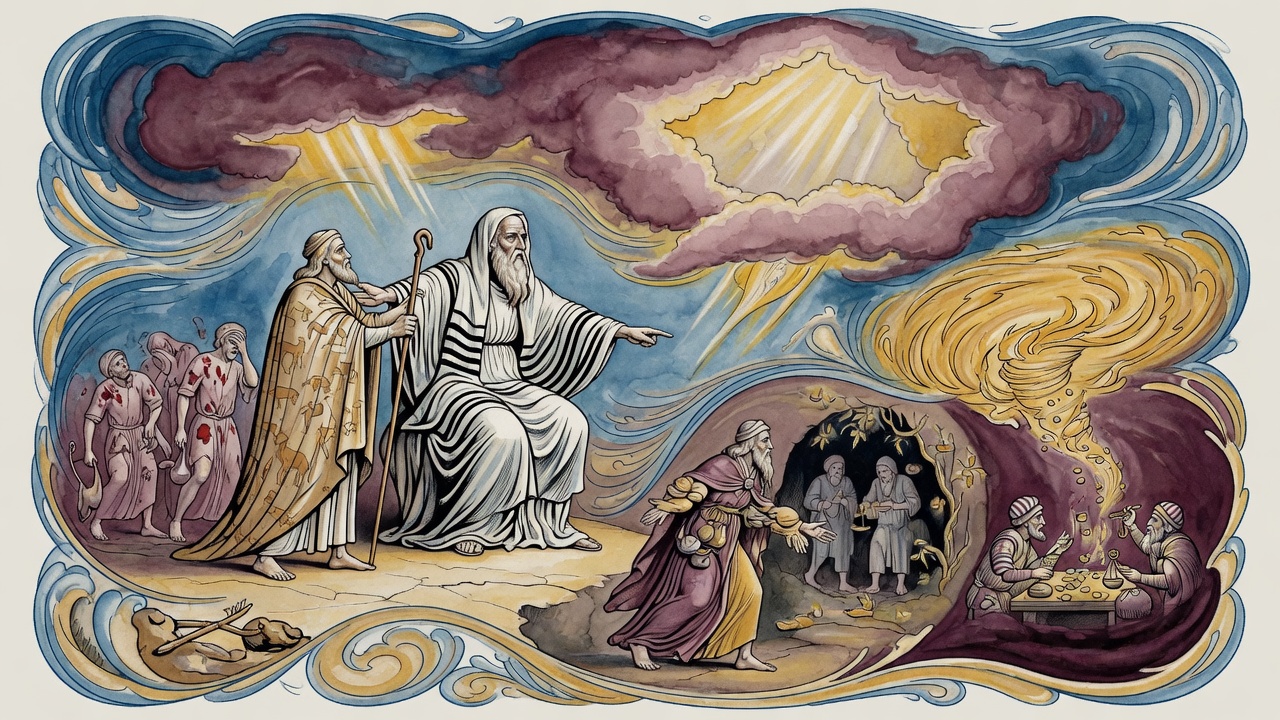
They found the child hidden inside the Temple, behind a curtain in the priests' quarters, where his aunt had carried him the night the queen ordered every grandson of David put to the sword. For six years the infant slept in the holiest precinct of the house of God, nursed in secret, while a usurper sat the throne of Judah. When the boy was seven, the priest Jehoiada brought him out into the light, set a crown on his small head, and the people clapped their hands and shouted, "Long live the king." His name was Joash, and he had been saved by a hiding place no one would dare search.
 Click for full size
The Boy King and the Priest Who Raised Him
Jehoiada was no ordinary priest. He was the son of Benaiah, who had commanded Solomon's armies, and he had lived long enough to have seen Solomon's Temple with his own eyes before the kingdom split and rotted. Now he guided the boy's hand on every decree. Together they tore the altars of Baal apart and rebuilt the house of God, and they worked so fast that Jehoiada, old as he was, stood inside the finished sanctuary and wept, granted the sight of a second Temple before he died.
As long as the old man breathed, Joash walked humbly. He listened. He restored. He was the lamp lit in a dark generation, a king pulled out of obscurity and set back on a throne that should have been emptied of his line forever. And then Jehoiada died, one hundred and thirty years old, and they buried him among the kings because of the good he had done in Israel. The hand that had steadied Joash was in the ground.
The Princes Who Came to Bow
The princes of Judah came to the court, and they bowed low before the throne, lower than men bow to a king. Joash watched them press their faces toward the floor. Then they began to speak, and what they said was poison poured slow and sweet.
"You are a god," they told him. "If you were only flesh and blood, how could you have lived six years in the Holy of Holies? The high priest enters that place one time in the year, and the whole nation prays him in and prays him out, terrified he will not come back alive. You dwelt there as an infant for six years, and you did not die. No mortal does that. You are a god."
Joash could have laughed at them. Instead he leaned into the words. He had been hidden in that chamber as a helpless child, carried there by others, and now they handed him the secret of his own survival rewritten as proof of divinity. He listened to them. The scripture says it plainly, the king hearkened unto them, and in those four words a man traded the truth of his rescue for a lie about himself. He let the people of Judah worship him.
The Idol in the House and the Prophet at the Door
It did not stop at flattery. A god needs a shrine, and Joash moved to set an idol up inside the Temple itself, in the very house his hands had rebuilt. That was when a man stepped into the doorway and would not move.
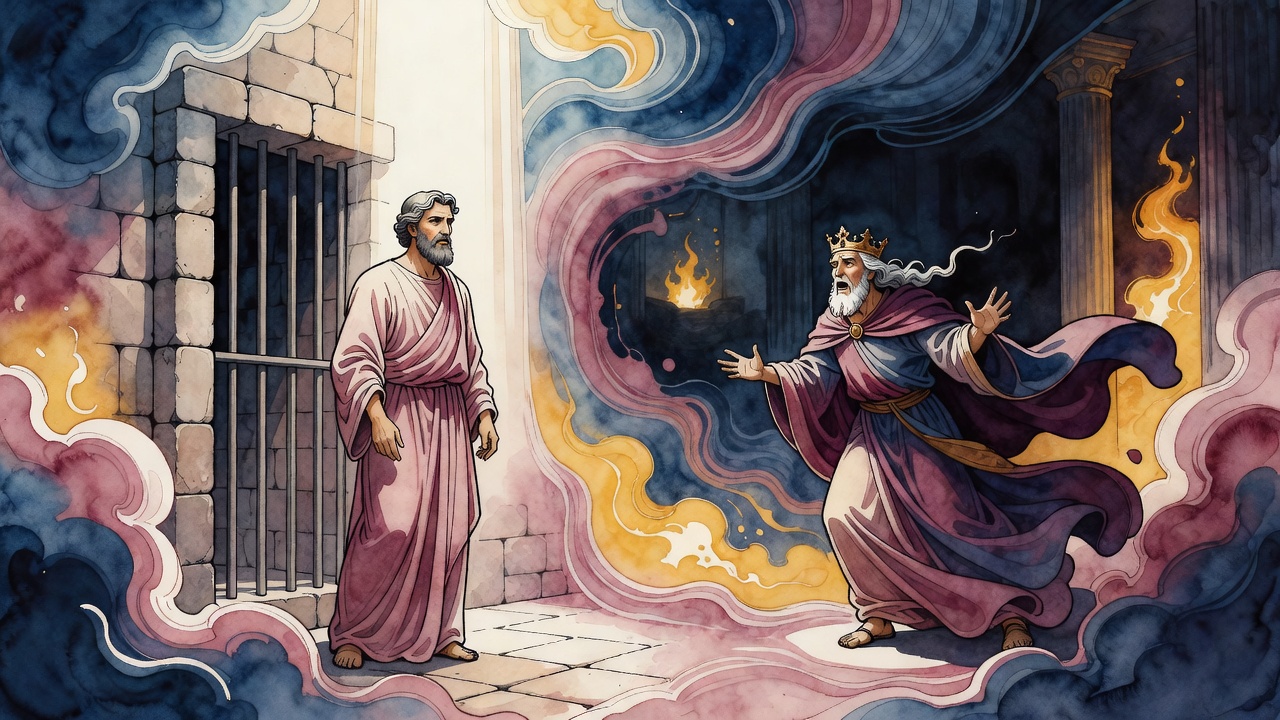
Zechariah stood at the entrance to the sanctuary. He was Jehoiada's son, raised in the same holiness that had raised the king. He was priest and prophet and judge, and he was Joash's own son-in-law, married into the house of David. He looked at the king he had grown up beside and he said, "You shall not do this thing while I am alive."
The Spirit of God came over Zechariah and he cried out to the people that they had forsaken the Lord, and so the Lord had forsaken them. The crowd's mood turned. And Joash, who had once obeyed this man's father in everything, remembered nothing of the kindness Jehoiada had shown him. He gave the order. In the court of the house of God, on the Day of Atonement, which that year fell upon the Sabbath, they stoned the prophet to death between the porch and the altar. As Zechariah died on the holy floor he lifted his voice one last time. "May the Lord see," he said, "and avenge."
The Blood That Would Not Be Silent
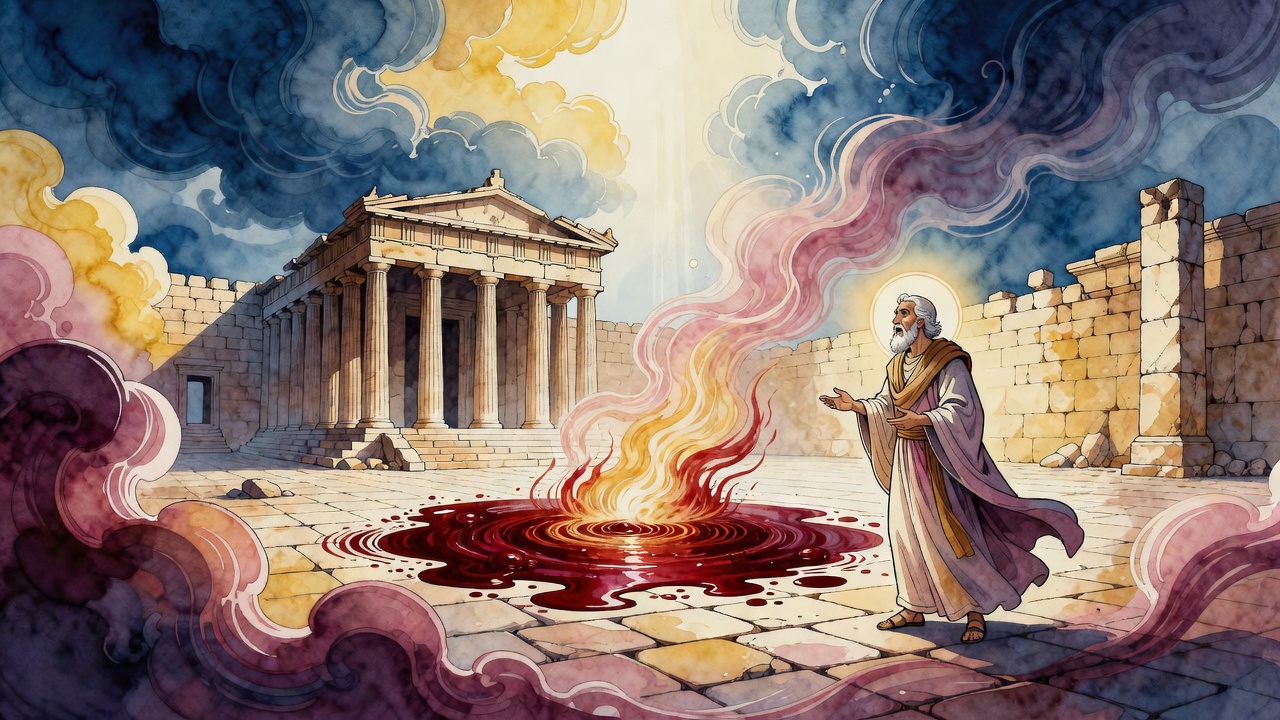
The Lord saw. The blood of Zechariah pooled on the stone of the Temple court, and it did not soak away, and it did not dry, and it did not cool. It bubbled. It churned and seethed as though something living were trapped beneath the floor, and no water poured over it would wash it clean. For more than two centuries it boiled there, a wound in the earth that no one could close, an accusation that no king and no priest could answer.
Then Babylon broke through the walls. Nebuzaradan, captain of Nebuchadnezzar's guard, walked into the ruined Temple and stopped at the sight of blood that moved by itself. "What is this," he demanded. The priests told him it was the blood of bullocks from the sacrifices. He slaughtered animals and set their blood beside it, and theirs lay still while this blood raged. He pressed them until the truth came out, the murder of a prophet by his own king's hand. Nebuzaradan turned to the boiling pool. "I will appease you," he said, and he began killing until the floor ran red, and only then did Zechariah's blood at last grow quiet.
The God of Judah Falls Like a Man
Joash did not escape the judgment he had set in motion. A small Syrian army marched against Jerusalem, and the host of Judah that had bowed and called him divine was scattered before a handful of men, because the people had abandoned the God of their fathers. Joash was left grievously wounded, and the Syrians used him in their cruelty before they withdrew. As he lay broken in his bed, his own servants conspired against him for the blood of the sons of Jehoiada, and they killed him where he lay. The king who had been worshipped as a god bled out like any other man, and they would not even bury him in the tombs of the kings.
So heaven made it known. The child who had lived six years in the Holy of Holies had been saved by a hiding place, not by his own divinity, and the throne he sat had been a gift handed to him by a priest who loved him. He had called himself a god. He died proving he was only ever a man, and not even a good one.
← All myths