Parshat Vaera6 min read

Four Kings Crowned Themselves Gods and Heaven Pulled Them Down

Pharaoh told the Nile he had made himself, so God crowned Moses a rival god and four kings learned the divine crown is a noose.

Curated by Arthur · Told by Maggid ·
Table of Contents
  1. The River That Belonged to No One
  2. God Makes a Rival God
  3. The Madman and the Boy King
  4. The Fire That Would Not Go Out

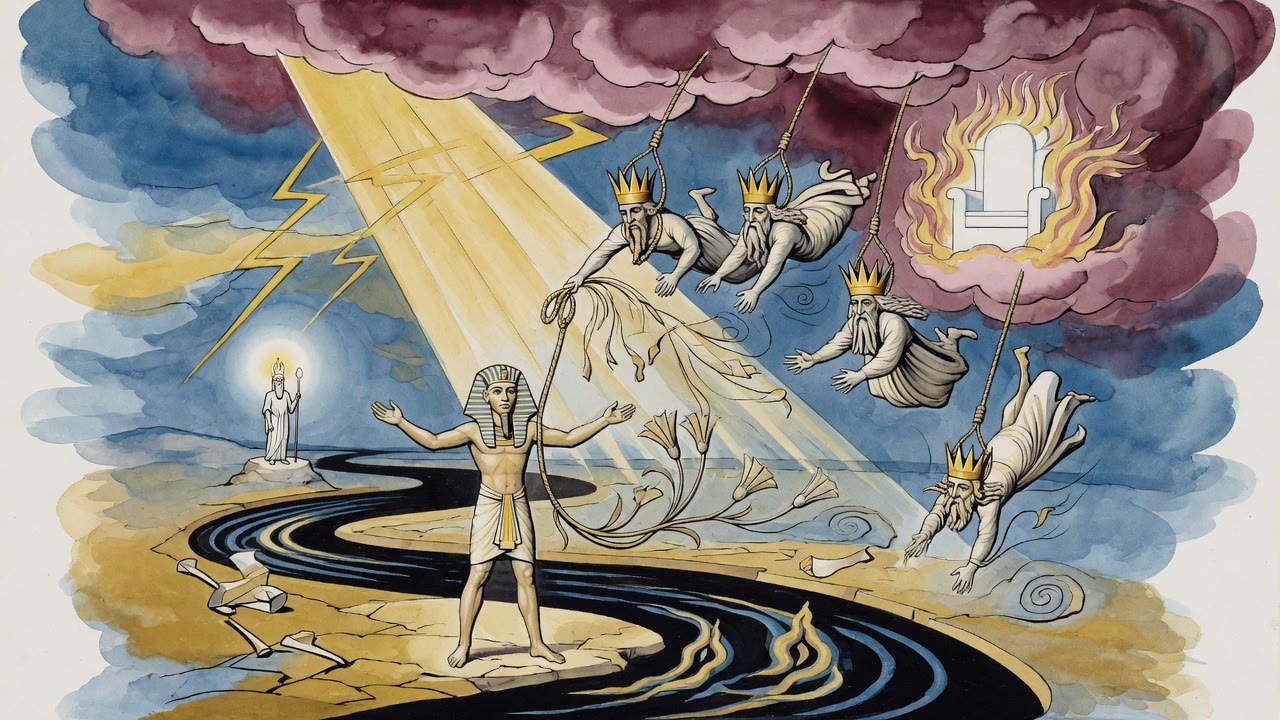
The first to say it aloud was Hiram, prince of Tyre, standing on his island fortress with the sea breaking white on every side. He had ringed his city with cedar and silver, and the ships of the nations came bowing to his harbor. So he lifted his chin above the waterline and announced what the wealth had taught him. "I am a god," he said. "I sit in the seat of God, in the heart of the seas."
The sea did not answer. But the word was loose now, and once a man crowns himself it is hard to take the crown back.

The River That Belonged to No One

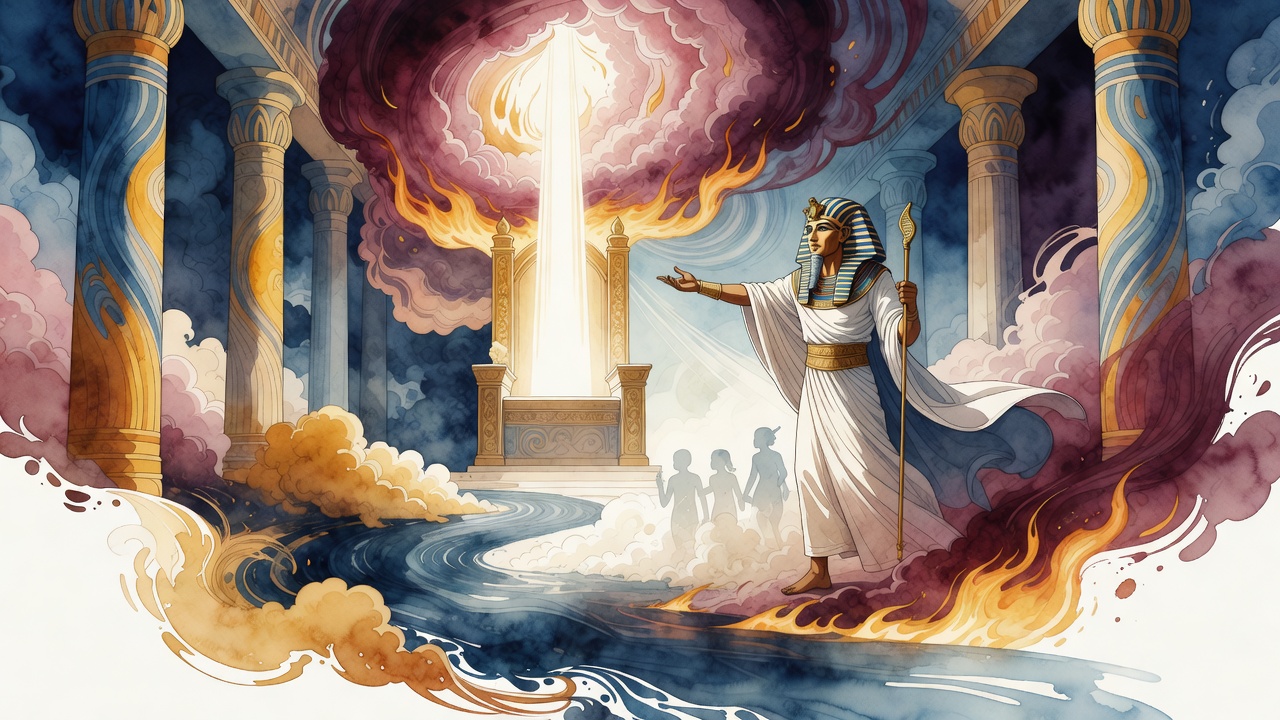
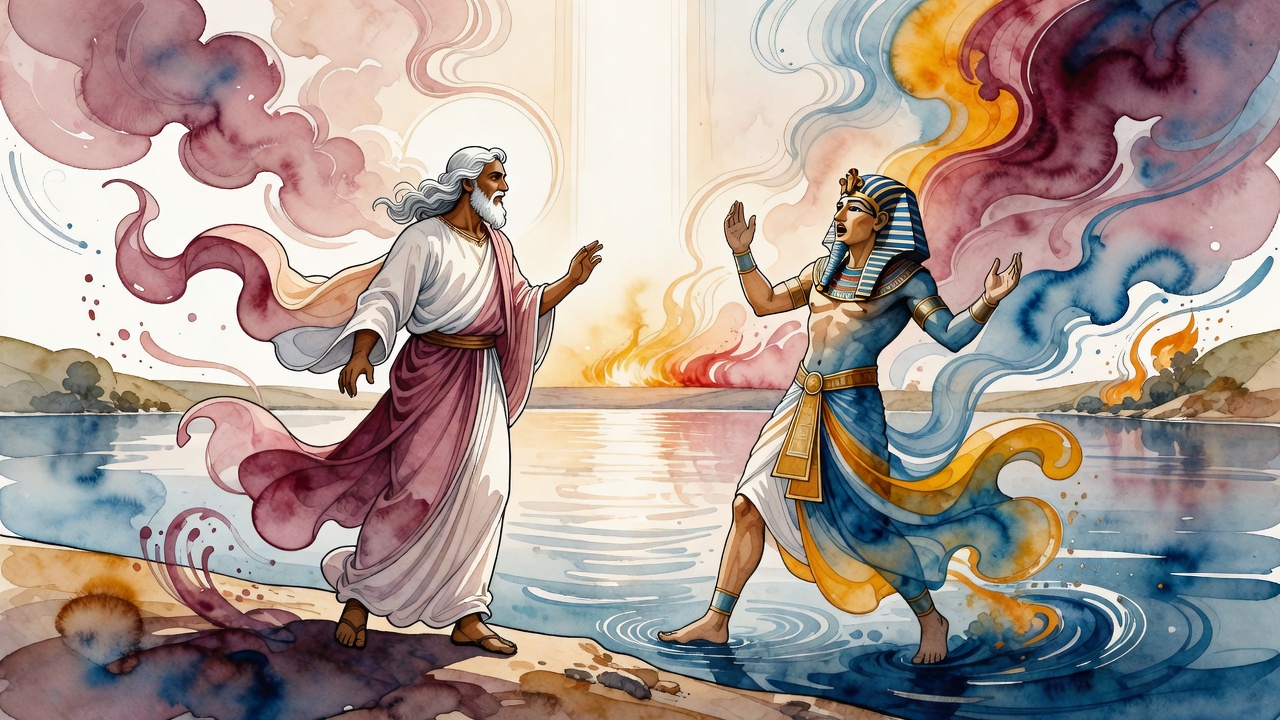
Down in Egypt, Pharaoh heard the same music. He stood over the Nile at flood, the brown water sliding fat and slow past his feet, the whole black soil of his kingdom fed by it. Other men prayed for the river to rise. Pharaoh did not pray. He looked at the water that made his country live and decided he had made it himself.

"My river is my own," he said. "And I made myself."

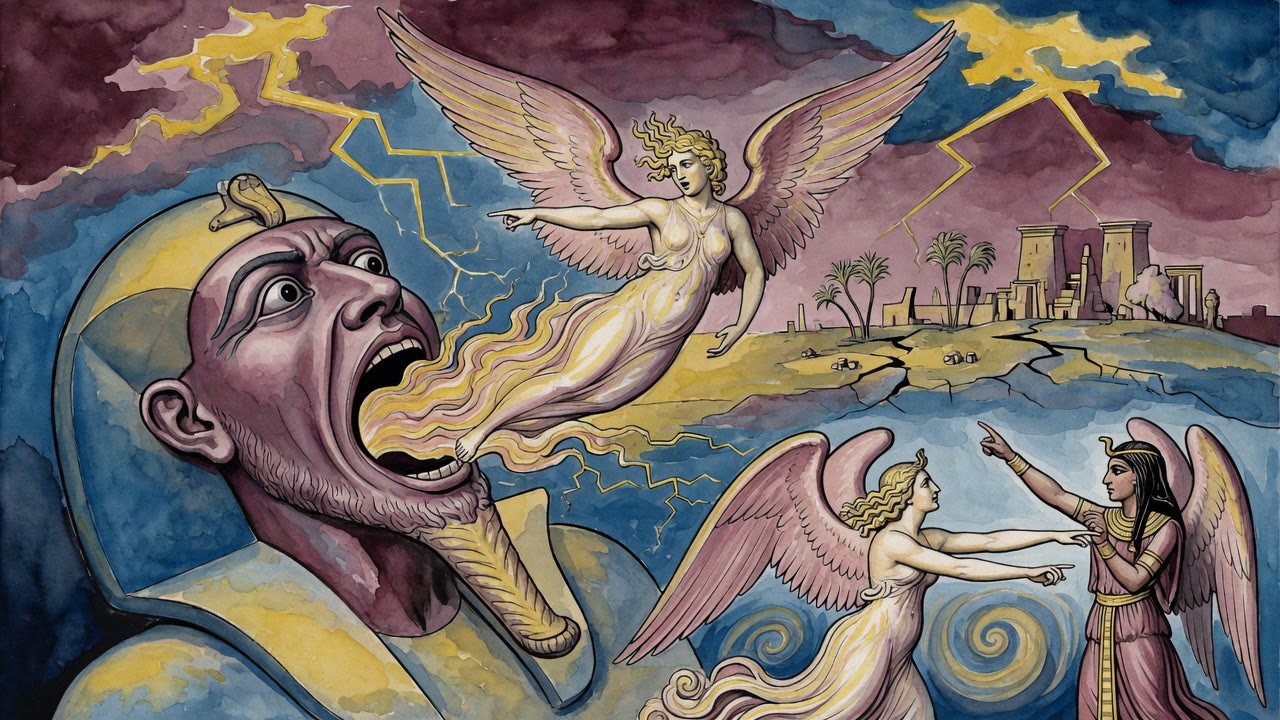
That last phrase is the one that turned the heavens. Not I am rich, not I am strong, but I made myself, as though he had reached back before his own birth and called himself into being out of the mud. A man who claims to be his own maker has cut the one cord that holds a creature to its Creator.

God let the boast stand a while. Then He answered it in a language Pharaoh would understand.

God Makes a Rival God

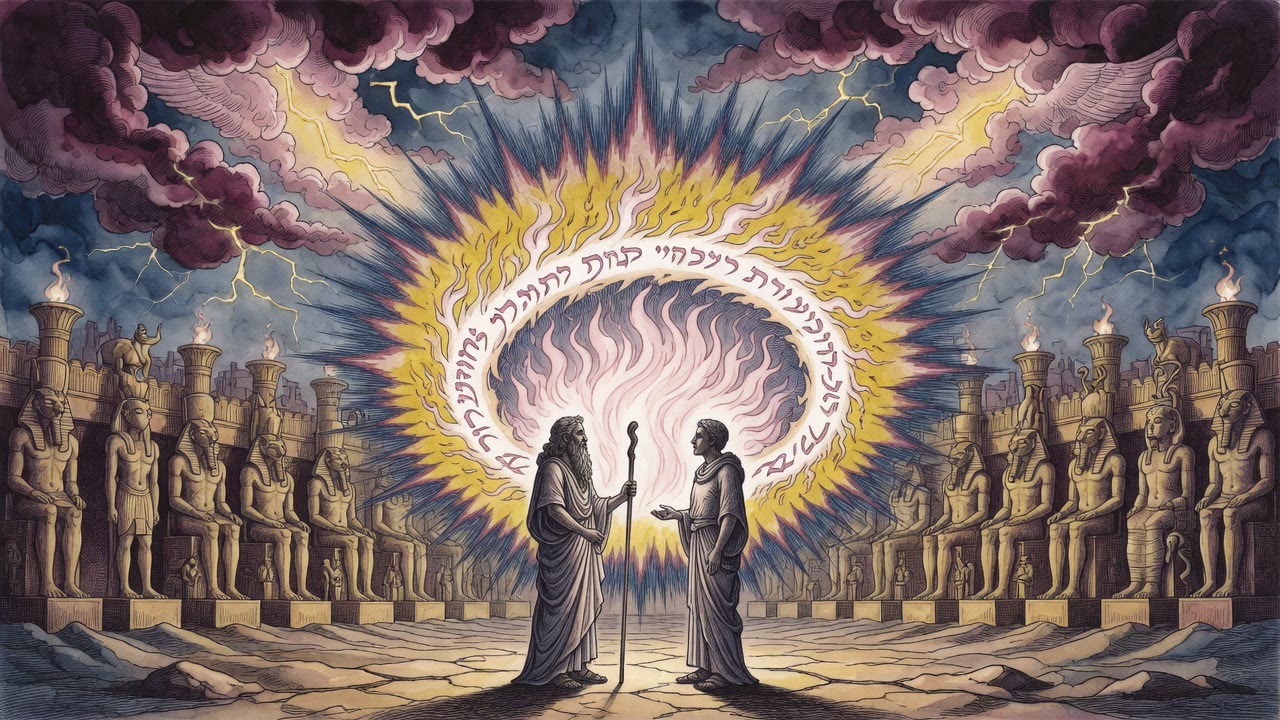
He went to Moses, the fugitive shepherd who stammered and hid behind his brother, and He said, "See, I have made you a god to Pharaoh." The words landed strangely in Moses' ears. He was no divinity. He was a man with a staff and a stutter and a price on his head in Egypt.

That was the whole point. Pharaoh had appointed himself a god. So God appointed a counterfeit of His own, a true one, to walk into Pharaoh's court and out-god him. If the throne of Egypt wanted a deity, it would get two, and only one of them could turn the river to blood. Every plague that followed was an answer to the boast at the water's edge. You made yourself? Then save yourself. The Nile that Pharaoh claimed to have created ran red, then bred frogs, then stank, and the self-made god could not lift a finger to stop the unmaking of his own handiwork.

The Madman and the Boy King

There were others who reached for the same crown. Nebuchadnezzar, who burned the Temple and dragged Judah into chains, looked up at the clouds over Babylon and said, "I will ascend above the heights of the clouds. I will be like the Most High."

Heaven let him climb in his own mind. Then it pulled him down, not to the grave but to the grass. The king who wanted the clouds was put out to pasture like an ox. His hair grew matted as feathers, his nails curled into claws, and the beasts of the field came and looked at him and saw one of their own and bit him. The lord of the earth became food for the things that crawl on it. He ate grass for seven years, a god grazing in a meadow, until the kingdom inside his own skull was emptied out.

And there was Joash, the boy hidden in the Temple, raised by the priest Jehoiada who had saved his life. While the old priest lived, Joash stayed a man. But Jehoiada died, and the princes of Judah came and bowed low to the young king and called him a god, and the boy who owed his very breath to the Temple opened his mouth and accepted it. He listened to them. That was his whole crime, a moment of listening. Soon after, his own servants struck him down on his bed, and the judgments fell on the head that had let itself be worshiped.

Four men. Three from the nations, one from Israel. Each one took the title, and each one found that the title was a noose. The crown of godhood does not sit on a mortal skull. It tightens.

The Fire That Would Not Go Out

Long after Pharaoh drowned and Hiram fell, the sages of Israel sat with the prophets and traced the pattern forward. Rabbi Elazar ben Pedat read the verse, "When the report reaches Egypt, they will tremble at the report of Tzor," and he heard something larger than two old cities in it. Tzor, Tyre, he said, is not only the island of Hiram. Spelled one way it is the harbor town. Spelled another, stripped of a single letter, it is the wicked kingdom, the empire that oppressed Israel and was named for the word tzar, to oppress.

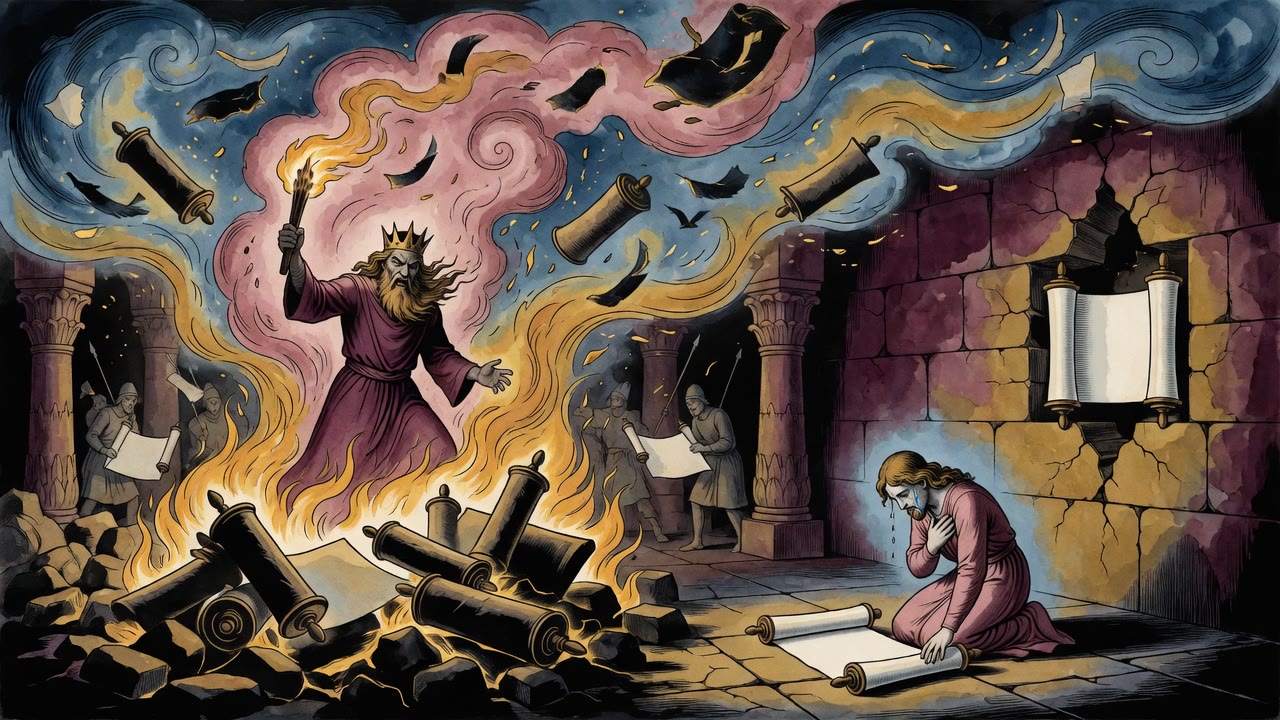
And what was prophesied for that empire? The very plagues of Egypt, run again on a longer reel. Egypt's water turned to blood, so Tzor's streams would turn to pitch. Egypt burned with fire from heaven, but Tzor's fire would be worse, a flame that "will not be extinguished night and day," that burns while everyone sleeps and burns while they wake. Why so relentless? Because that kingdom had stopped Israel from the one thing meant to be done day and night, the study of Torah, and a fire that never rests is the wage for stealing a people's nights and days. They burned the House of God until smoke filled it. So their own smoke "will rise forever."

It is the same story, told in a wider frame. A power swells until it forgets it is only a power. It mistakes its river, its clouds, its harbor, its army, for proof that it answers to no one. Then the river reddens, the grass grows, the harbor floods with pitch, and the smoke goes up and does not come down. The throne in the heart of the seas was always borrowed. The lease, in every case, came due.


← All myths
From the tradition

Sources

3 sources

The texts this telling draws on, in full. Open a card to read inline, or expand it for a wider, quieter read.

Yalkut Shimoni on Torah 180:2Yalkut Shimoni on Torah

Another interpretation: "See, I have made you a god." The Holy One, blessed be He, said to him: Because Pharaoh made himself a god, let it be made known that he is nothing at all in the world; behold, I am making you a god over him. And from where do we know that Pharaoh made himself a god? As it is said, "Because he said, My river is my own, and I have made myself" (Ezekiel 29:3), meaning, I am the one who created myself. This is one of four men who made themselves into divinities and brought harm upon their own souls, three from the nations of the world and one from Israel. They are these: Hiram, Nebuchadnezzar, Pharaoh, and Joash. From where do we know about Hiram? As it is said, "Say to the prince of Tyre, Thus says the Lord GOD: Because your heart is haughty and you have said, I am a god." And because he made himself a god he harmed his own soul, as it is said, "You have corrupted your wisdom by reason of your splendor; I have cast you to the ground" (Ezekiel 28:17). From where do we know about Nebuchadnezzar? As it is said, "I will ascend above the heights of the clouds, I will be like the Most High" (Isaiah 14:14). The Holy One, blessed be He, said to him: By your life, "Yet you shall be brought down to Sheol, to the depths of the pit." What did the Holy One, blessed be He, do to him? He exiled him while he was still in his kingdom, and fed him grass like an animal, as it is said, "They shall make you eat grass like oxen" (Daniel 4:22); and beast and creature saw him in the likeness of a beast and creature and bit him, as it is said, "And the destruction of the beasts shall terrify them" (Habakkuk 2:17), for he became food for every beast and creature. From where do we know about Joash? As it is said, "And after the death of Jehoiada the princes of Judah came and bowed down to the king" (II Chronicles 24:17), for they made him a god, and he accepted it, as it is said, "Then the king listened to them." And he harmed his own soul, as it is said, "And they executed judgments upon Joash" (II Chronicles 24:24). Pharaoh made himself a god and harmed his own soul, as it is said, "Behold, I am against Pharaoh" [Hophra], meaning, that he received his recompense from the Holy One, blessed be He.

Full source
Shemot Rabbah 9:13Shemot Rabbah

The ancient rabbis certainly thought so. In Shemot Rabbah, a collection of homiletic interpretations of the Book of Exodus, we find a fascinating, and frankly chilling, comparison between the fate of Egypt and the future of Tzor.

Rabbi Elazar ben Pedat, a prominent Amoraic sage, draws a direct line between the plagues visited upon Egypt and the destiny awaiting Tzor. But who is Tzor? Rabbi Elazar clarifies: he's not just talking about the literal city of Tyre. He’s referring to the wicked kingdom of Edom, which, in rabbinic tradition, is often equated with the Roman Empire – the empire that brutally oppressed the Jews. Tzor, he explains, is called Tzor, because it oppressed [tzar] the Jews.

In Rabbi Elazar, just as the Egyptians trembled at the plagues, so too will Tzor tremble when its own destruction arrives. He bases this on the verse in (Isaiah 23:5), "When the report reaches Egypt, they will tremble at the report of Tzor." He cleverly interprets this homiletically – meaning, finding a deeper, allegorical meaning. Just as the Egyptians trembled at the report of their own plagues, they will tremble when they hear the report of Tzor’s downfall.

Rabbi Elazar even points to a subtle detail in the spelling of Tzor in the Bible. Every mention of Tzor that is spelled without a vav (a Hebrew letter), he says, refers to the wicked kingdom. And every Tzor that is spelled with the vav refers to the actual city of Tyre. Pretty insightful. But the connections don’t stop there. Just as Egypt was afflicted with blood, so too will Tzor's "streams will be turned into pitch" (Isaiah 34:9) – a prophecy regarding Edom. The suffering inflicted upon the Israelites will be mirrored in the punishment of Tzor.

And the fire… oh, the fire. "It will not be extinguished night and day" (Isaiah 34:10), the prophet says. Why such a relentless, eternal flame? Because, Rabbi Elazar explains, they – Tzor, Edom, Rome – caused Israel to be idle from Torah study. We find in (Joshua 1:8), "You shall contemplate it day and night." Since they prevented the Jewish people from engaging with Torah day and night, God will exact retribution with a fire that never ceases, day or night.

And because they burned the House of the Holy One, the Temple in Jerusalem, about which it is written: "The house was filled with smoke" (Isaiah 6:4), therefore, "its smoke will rise forever" (Isaiah 34:10). It's a powerful image of unending consequences.

The passage concludes with a similar parallel drawn from (Isaiah 66:6): "An uproar from the city, a sound from the Sanctuary, the sound of the Lord paying retribution to His enemies." This "uproar from the city, a sound from the Sanctuary," echoes (Lamentations 2:7): "They have made a noise in the house of the Lord, as a day of solemn assembly." Therefore, they will be subject to "the sound of the Lord paying retribution to His enemies."

So, what are we to make of all this? It’s more than just a historical comparison. It's a theological statement about justice, about the consequences of oppression, and about the enduring nature of divine retribution. It suggests that actions, especially those that harm the sacred and prevent spiritual growth, have lasting repercussions. It’s a reminder that history, may rhyme – and that we should strive to be on the right side of that rhyme.

Full source
Midrash Tanchuma Buber, Vaera 16:3Midrash Tanchuma Buber, Vaera

Joash also made himself into a god, as it is stated (II Chron. 24:17): "[Now] after the death of Jehoiada the priest, [the princes of Judah came and bowed low to the king]." They said to him: You are a god! Were you not a god, you would not have spent six years in the Holy of Holies. The High Priest would enter there only one time, and everyone would pray for him that he enter in peace; yet you spent six years there. Were you not a god, you would not have lived. At that time he accepted it from them, as it is stated (II Chron. 24:17, continued): "Then the king hearkened unto them." Immediately the Holy One made known to him that he was flesh and blood. What is written (II Chron. 24:24)? "So they inflicted judgments on Joash." Ergo (Ps. 9:21): "Let the nations know that they are only human. Selah."

Full source