The Butcher of Jerusalem Who Repented Over Boiling Blood
The priests said it was sacrificial blood. Nebuzaradan slaughtered animals on the spot to compare. Theirs lay flat and dead. The other pool kept boiling.
Table of Contents
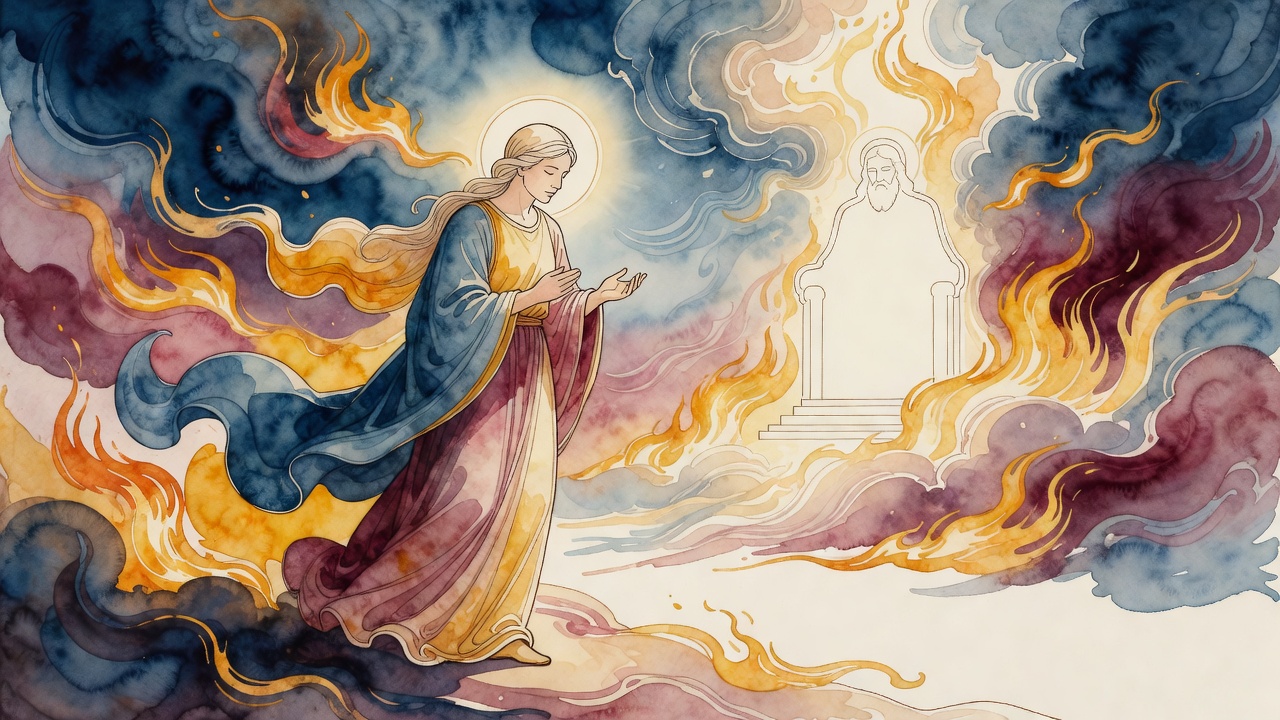
The king would not go in. Nebuchadnezzar sat on his horse outside the broken Temple and would not cross the threshold, because something in that ruined house frightened the man who had ordered it burned. So the angel Michael came down. He took the horse by the bridle, slave to a king who was now lower than a slave, and led beast and rider up the steps and through the smoke into the Holy of Holies. The conqueror entered the most guarded room on earth not as a victor but as cargo, hauled in by a prince of heaven who walked on the ground like a servant so that the king could ride like a god he was not.
 Click for full size
The General Who Could Not Be Refused
Nebuchadnezzar had a general for the killing, and the general's name was Nebuzaradan, captain of the guard. He had marched on Jerusalem with one order above all others. About the prophet Jeremiah the king had been precise. "Take him, and look well to him, and do him no harm; but do unto him even as he shall say unto thee." Everyone else was Nebuzaradan's to do with as he pleased, and what pleased him was thorough.
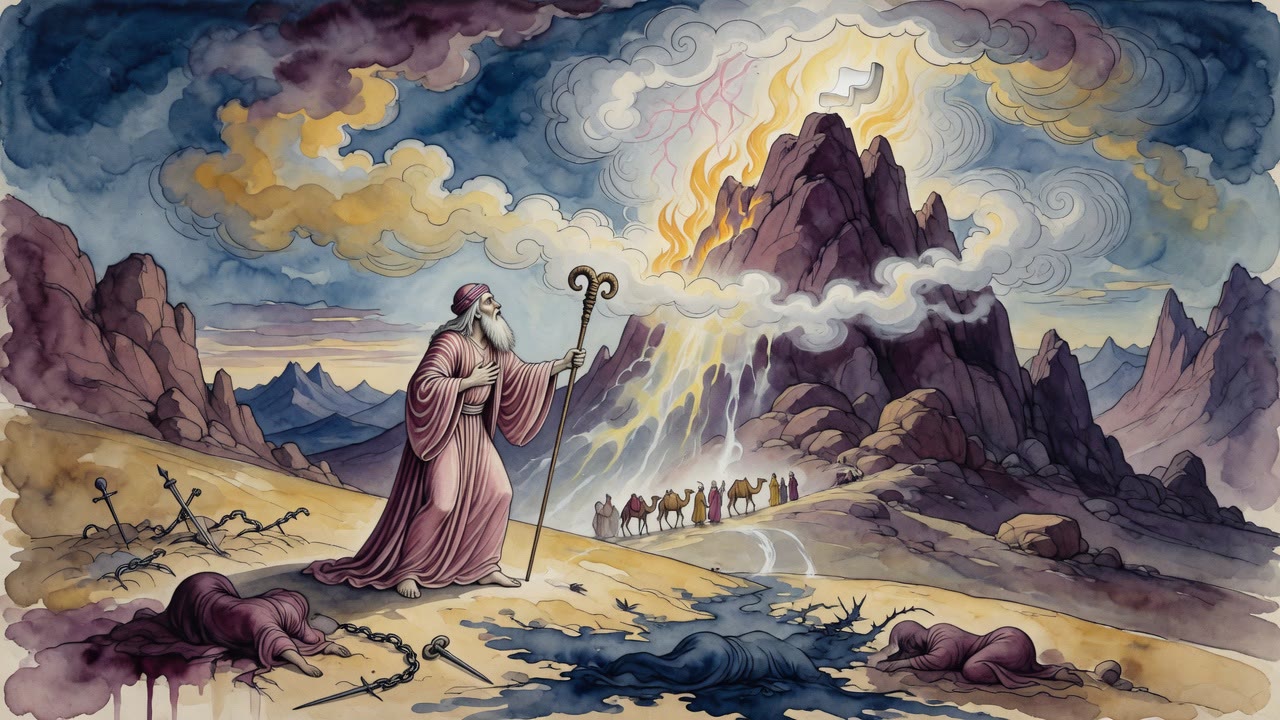
The strange thing was the prophet himself. Nebuzaradan kept finding Jeremiah where no protected man should be. He found him forcing his own head into the pillory beside the young men chained for the marching, and pulled him out. He found him later among the old men in their irons, sharing their shame, and pulled him out again. The general could not read it. He decided the prophet was one of three kinds of liar. A false prophet, since the city he had threatened for years had fallen and now he wept instead of crowning himself right. A man who hated his own life and went hunting for pain. Or a shedder of blood, because if the king's protected prophet kept walking into the slaughter, the king would hear of it and take it out of Nebuzaradan's own neck.
Jeremiah did not argue. He went on sliding his head in among the doomed, again and again, while the general kept fishing him back out.
A Stain That Had Waited Two Hundred Years
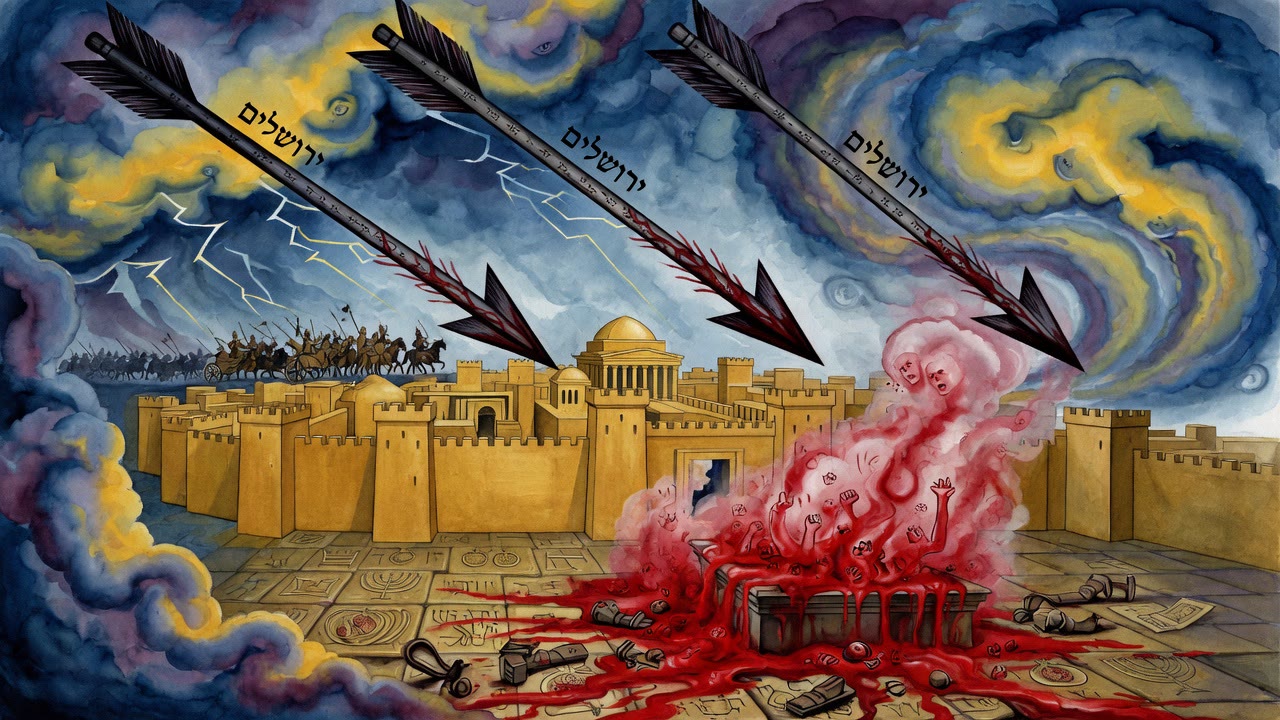
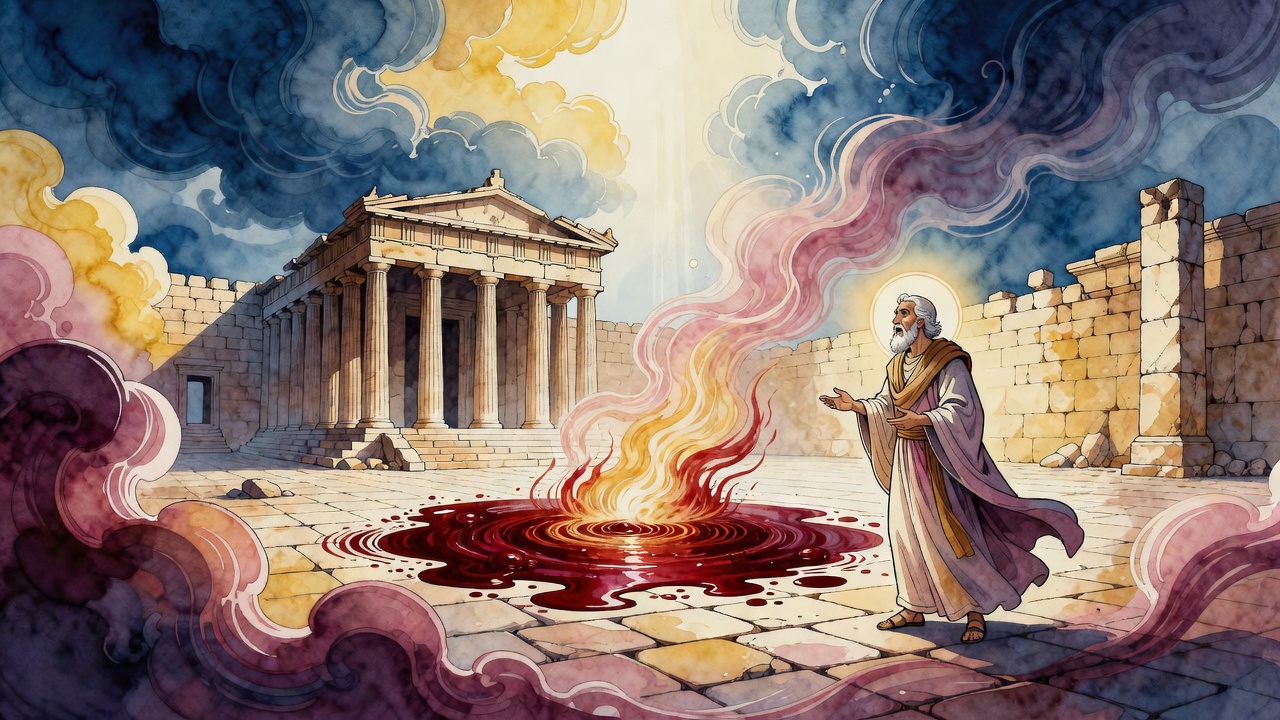
Then Nebuzaradan came into the inner court, where the priests served, and the floor was moving. On the bare rock of the courtyard a pool of blood seethed and turned over on itself, fresh and furious, as though a vein had opened under the stone that very hour. It had been churning there, the rabbis said, for more than two centuries.
It was the blood of Zechariah, son of Jehoiada the priest. He had stood in that same court and rebuked the people for abandoning God, and they had stoned him to death between the altar and the sanctuary, on the holiest ground they had. He died crying out for one thing. "May the Lord see and avenge." Then they left his blood where it fell. They did not cover it with dust as the Torah commands for the blood of a hunted deer or a slaughtered bird. They set it on the naked rock, and on the naked rock it stayed, refusing to be still, an accusation no rain could rinse away.
Nebuzaradan stood over the bubbling stain and demanded to know what it was. The priests told him it was sacrificial blood, the blood of bulls and lambs and rams spilled on the altar. The general did not believe them. He sent for animals, slaughtered them on the spot, and poured their blood beside the seething pool to compare. The two looked nothing alike. The sacrificial blood lay flat and dead. The other went on boiling.
I Will Appease You
He drew his sword and put the truth to them plainly. Tell him, or he would rake their flesh with iron combs. They broke. "He was a prophet, a priest, and a judge, who prophesied to us all the things you are now doing to us, and we rose up and killed him, and his blood has not rested since."
The general turned to the blood as though it could hear him, and it could. "I will appease you," he said.
So he began to feed it. He brought the great Sanhedrin (the high court of seventy-one sages) and the lesser Sanhedrin to the edge of the pool and killed them over it, and the blood drank and went on boiling. He killed eighty thousand young priests in their first bloom over that one stain, until their blood ran across the court and reached the place where Zechariah lay buried, and still the surface heaved and would not settle. He stood ankle deep in a reckoning two hundred years overdue, and the prophet's blood took every drop he offered and asked for more.
The Cruelest Man Breaks First
Something in the butcher gave way. He looked at the blood that had swallowed a city and would not be filled, and he shouted at it like a man arguing with God. "What do you want? Shall your whole nation be wiped out on your account?"
And in that instant the heavens moved. The Holy One looked down at this pagan, this hireling killer who was here today and gone tomorrow, and saw that even he had reached the bottom of his cruelty and pitied the dying. If a man like that could be filled with mercy for these children, said the Holy One, how much more I, of whom it stands written that the Lord your God is a merciful God who will not fail you nor destroy you. A sign passed from heaven to the courtyard. The boiling stopped. The blood drew down into the stone and was absorbed at last in the place where it had waited, and the rock went quiet.
Nebuzaradan stood in the silence he had failed to buy with eighty thousand lives, and understood that the God whose house he had just burned had answered him and not the blade. The most efficient killer of the exile set down the work of slaughter. He turned away from the king who had sent him and from the gods of Babylon, and he gave himself to the God of the ruined Temple. The man who had filled Jerusalem with corpses became a Jew over the one stain he could not silence.
← All myths