Parshat Yitro4 min read

Jethro Came Because His Soul Was Already at Sinai

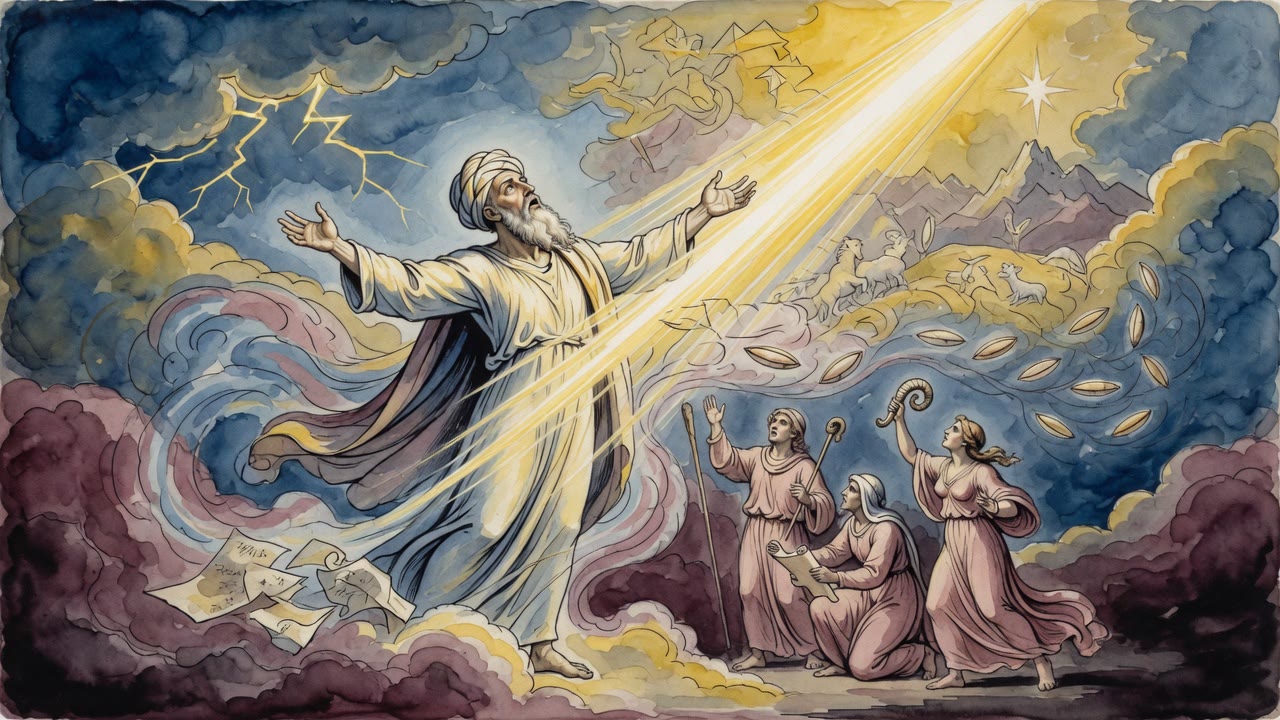
Jethro heard what God had done for Israel and came. Midrash Tanchuma opens with a verse about the wicked and the dead, and reshapes what conversion means.

Curated by Arthur · Told by Maggid ·
Table of Contents
  1. Three Words That Demand an Answer
  2. The Wicked Are Dead Before They Die
  3. What Jethro Had Already Been at Sinai
  4. The First Gentile to Hear What Israel Knew

Three Words That Demand an Answer

Exodus 18:1 opens with three Hebrew words: Vayishma Yitro. Now Jethro heard. He heard what God had done for Israel in Egypt and at the sea. And he came.

That is the Torah's account of one of the most significant arrivals in the wilderness narrative, the father-in-law of Moses crossing the desert to find the camp of Israel. Three words explaining why he came, and then he comes. The Midrash Tanchuma, compiled in the Land of Israel in the 5th century CE, could not accept that the motion was that simple. It opened by quoting Ecclesiastes.

The Wicked Are Dead Before They Die

Ecclesiastes 8:10: And I saw the wicked buried, and they came into their rest, but those who had done right went away from the holy place and were forgotten in the city. What does this verse have to do with a Midianite priest arriving at an Israelite camp?

Rabbi Simon, cited in the Tanchuma, answers by refusing the plain reading of the verse. It cannot mean that the wicked rest while the righteous are forgotten. That would be a theological absurdity. Instead he reads it as a statement about the nature of wicked lives: the wicked are already dead and buried while they are still walking around. Wickedness is a form of death before death, a disconnection from the source of life that leaves a person going through motions without participating in the vitality that makes motion meaningful.

This is the Tanchuma's starting point for understanding Jethro. Before Jethro heard and came, he was a man of stature in Midian, a priest, a person of reputation. But his life in Midian, for all its outward form, was a kind of walking burial. He had not yet found his way to the place where life actually comes from.

What Jethro Had Already Been at Sinai

The Tanchuma introduces a tradition with enormous implications: Jethro's soul had already stood at Sinai. Before his body arrived at the camp of Israel, before Moses went out to meet him, before the meal they shared with the elders of Israel, his soul had already been present at the revelation. When he heard what God had done, he was not hearing something entirely new. He was recognizing something he had already, in some deeper register, witnessed.

This is why three words are enough to explain his motion. He heard, and something in him responded not as to new information but as to a summons that had been waiting for his body to catch up with what his soul already knew. Conversion in this reading is not a change of religion. It is the alignment of the whole person with a truth the deepest part of that person has always recognized.

The First Gentile to Hear What Israel Knew

The Tanchuma's broader argument about Jethro is that he received the news that everyone in the world had access to and acted on it alone. Every nation heard what happened in Egypt and at the Sea of Reeds. The plagues had shaken the ancient world. The crossing was a public event. Everyone heard. Jethro came.

That contrast is the Tanchuma's sharpest point. Information does not produce movement. The nations had the same facts Jethro had. They processed the facts and went back to what they were doing. Jethro processed the same facts and crossed the desert. The difference was not what he heard but what was already alive in him to hear it with.


← All myths

From the tradition

Sources

3 sources

The texts this telling draws on, in full. Open a card to read inline, or expand it for a wider, quieter read.

Midrash Tanchuma, Yitro 1Midrash Tanchuma

18:1). Scripture states elsewhere in reference to this verse: And so I saw the wicked buried, and they came into their rest; but they that had done right went away from the holy place, and were forgotten in the city; this also is vanity (Eccles. 8:10). Is it really so that wicked buried come and go at will? R. Simon declared: These are the wicked, who are considered as dead and buried while still living, as it is said: The wicked man travails with pain all his days (Job 15:20). What is the meaning of mitholel (“travails with pain”)? The wicked man, even in his lifetime, is considered as met (“dead”) and halal (“slain”) even while alive.

Another explanation of I saw the wicked buried, and they entered into their rest. Scripture speaks here of the proselytes who come to repent. And went away from the holy places alludes to the synagogues and the houses of study (they visited).

Another comment on went away from the holy places. From the place where Israel was designated as holy (i.e., Mount Sinai), thence they go (i.e., their souls were at Sinai during the giving of the Torah). And were forgotten in the city all that they did implies that all their wicked deeds were ignored in the city. Another comment (on) were forgotten. They were found through their good deeds. This also is vanity. It is not vanity when the inhabitants of the world see them as they seek to enter under the wings of the Shekhinah (the Divine Presence) through conversion, but if they see them and they fail to be converted, this is vanity. Who was it that came to be converted and was a sincere proselyte? It was Jethro, as it is said: Now Jethro heard.

Full source
Legends of the Jews 4:29Legends of the Jews

It’s a scene ripe with drama, intrigue, and conflicting advice.

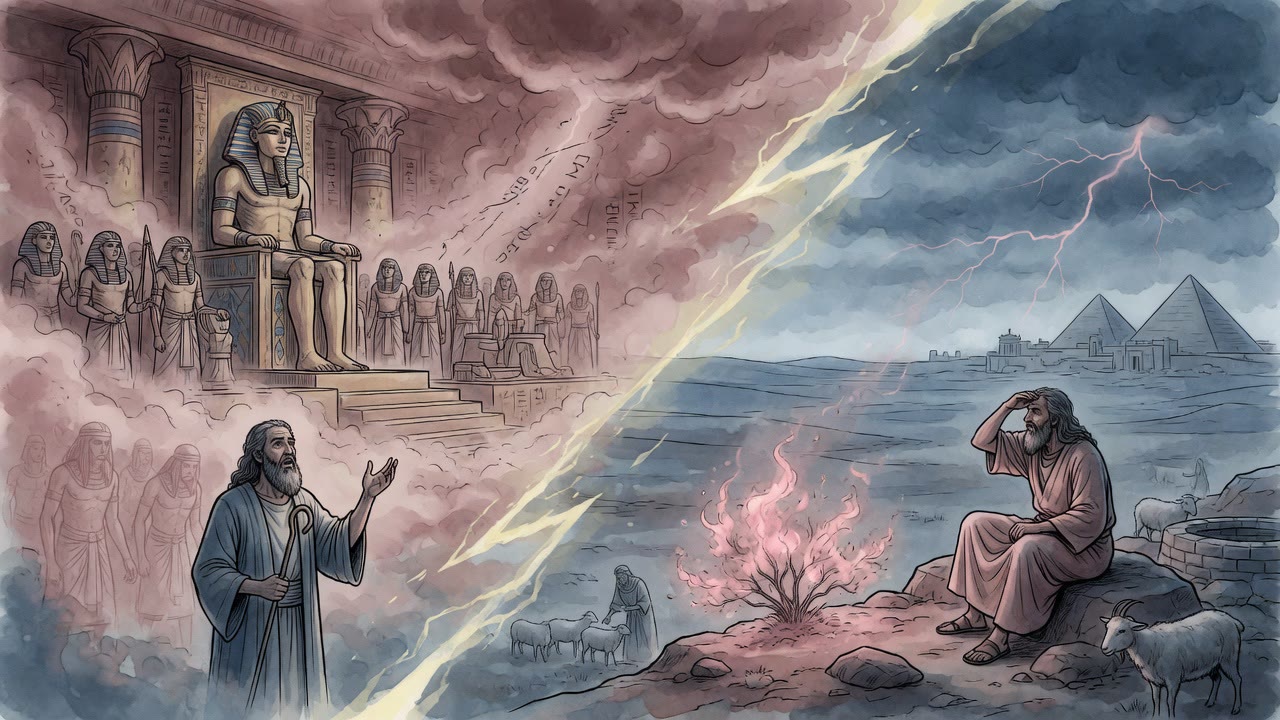
The story begins, as many of the best stories do, with a betrayal. Jethro, also known as Reuel, later to become Moses' father-in-law, dared to speak out against Pharaoh’s growing hostility towards the Hebrews. That Pharaoh was "exceedingly wroth with him," and Jethro was promptly dismissed from his position in disgrace, forced to flee to Midian. Ouch. Imagine the courage it took to stand up to a king, especially one as powerful as Pharaoh!

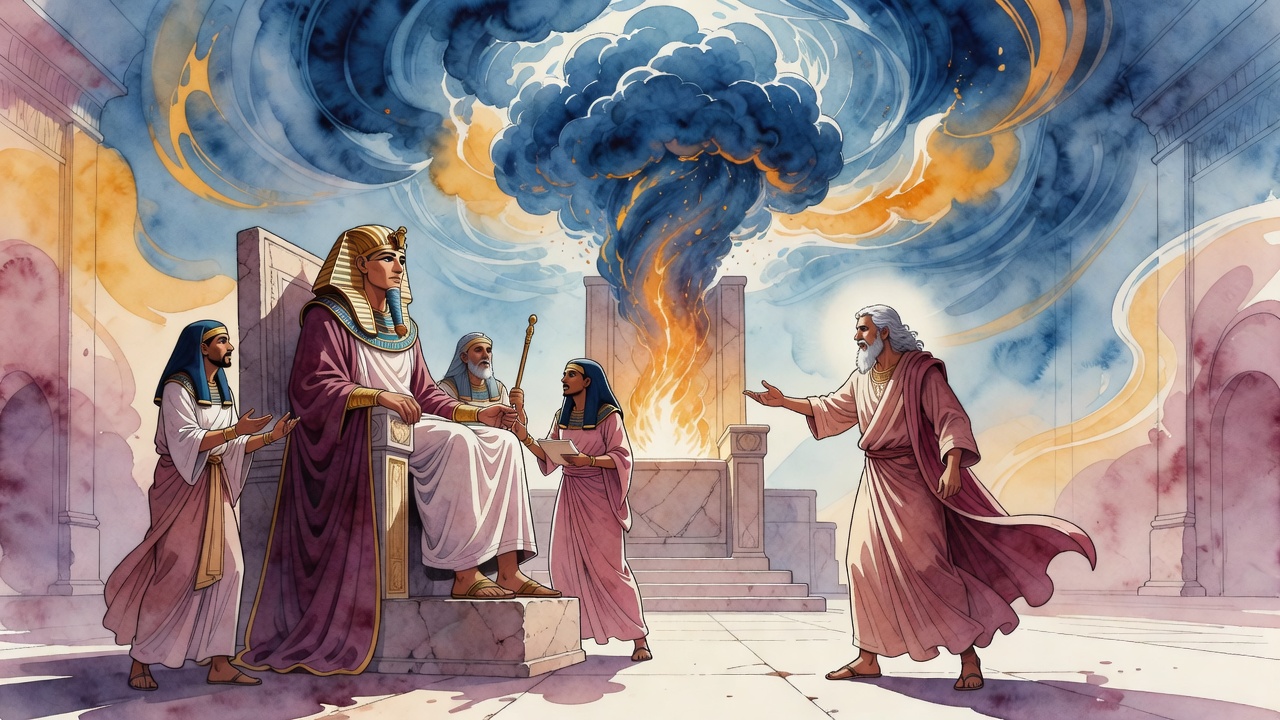
Left without Jethro's counsel, Pharaoh turned to other advisors, seeking their opinions on how to deal with the growing "problem" of the Hebrew population. First up was Job. Yes, that Job, the one of immense suffering and unwavering faith. And what was his advice? Well, not much, actually. As the text recounts, Job essentially washed his hands of the situation, saying, "Behold, all the inhabitants of the land are in thy power. Let the king do as seemeth good in his eyes." It's a bit disappointing, isn't it? Especially coming from someone known for his moral fortitude.

Finally, Pharaoh called upon Balaam. Balaam, a fascinating and complex figure, was a non-Israelite prophet known for his powerful blessings and curses (Numbers 22-24). Now, Balaam's advice is where things get really interesting. According to Ginzberg's retelling in Legends of the Jews, Balaam essentially warned Pharaoh that any attempt to destroy the Hebrews through methods that had challenged their forefathers would fail. "From all that the king may devise against the Hebrews, they will be delivered," Balaam declared.

He reminded Pharaoh that the Hebrews’ God had saved Abraham from the fiery furnace, as we see in the Book of Genesis and elaborated upon in various Midrashic (rabbinic interpretive commentary) traditions. "If thou thinkest to diminish them by the flaming fire, thou wilt not prevail over them, for their God delivered Abraham their father from the furnace." He further pointed out that Isaac had been spared from sacrifice, referencing the binding of Isaac (Akeidah) in Genesis 22. "Perhaps thou thinkest to destroy them with a sword, but their father Isaac was delivered from being slaughtered by the sword.” And, he added, even the back-breaking labor that Jacob endured while working for Laban couldn't break the Hebrews. "And if thou thinkest to reduce them through hard and rigorous labor, thou wilt also not prevail, for their father Jacob served Laban in all manner of hard work, and yet he prospered.”

So, what WAS Balaam's advice? His suggestion was chilling: target the newborn male children by throwing them into the Nile. "If it please the king, let him order all the male children that shall be born in Israel from this day forward to be thrown into the water. Thereby canst thou wipe out their name, for neither any of them nor any of their fathers was tried in this way.”

This was a tactic that hadn’t been used before, a way to circumvent the protective hand that had guided the patriarchs. A truly horrific suggestion! It’s a stark reminder of the depths of cruelty to which fear and prejudice can lead. We read in (Exodus 1:22), "Then Pharaoh commanded all his people, ‘Every boy that is born to the Hebrews you shall throw into the Nile, but you shall let every girl live.’"

What's so fascinating about this whole episode is the way it highlights the power of memory and the weight of history. Pharaoh and his advisors weren't just dealing with a present-day population; they were confronting a people deeply connected to their past, a past filled with divine interventions and miraculous escapes. Did Pharaoh truly believe he could outsmart the God of Abraham, Isaac, and Jacob? Maybe. Or perhaps he was simply blinded by fear and a desperate desire to maintain control. It makes you wonder: what "advice" are we listening to today that might lead us down a similarly dark path?

Full source
Legends of the Jews, IV. Moses In Egypt, JethroLegends of the Jews

Legends of the Jews (Ginzberg) turns to Jethro.

In Ginzberg's retelling in, Legends of the Jews, Jethro lived for many years in the city of Midian – a place named for a son of Abraham and Keturah. There, he served as a priest to idols. But something wasn't sitting right with him. He became increasingly convinced of the futility – the hevel, the emptiness – of idol worship. It became repugnant to him.

So, Jethro decided to resign. He stood before his townsmen and basically said, "Look, I'm getting too old for this. You choose someone else to take my place." He handed over all the paraphernalia of idol worship and told them to give it to his successor. But they suspected his motives. They figured he was up to something, and they weren't happy about it. As a result, the people put him under a ban. Nobody was allowed to help him in any way. Even the shepherds wouldn't pasture his flocks. He was on his own. The only option was to put his seven daughters in charge of the work.

This transformation from idolatrous priest to God-fearing man is reflected in Jethro's many names. It's fascinating! He was called Jether, because, the tradition says, the Torah contains an "additional" section about him. He was called Jethro because he "overflowed" with good deeds. He was also known as Hobab, "the beloved son of God"; Reuel, "the friend of God"; Heber, "the associate of God"; Putiel, "he that hath renounced idolatry"; and Keni, he that was "zealous" for God and "acquired" the Torah. Quite the resume. The story goes that because of the town's hostility, Jethro's daughters had to arrive at the watering troughs early, before the other shepherds. But even that didn't always work. The shepherds would often drive them away and water their own flocks using the water the young women had drawn.

Enter Moses. When he arrived in Midian, he stopped at the well. And what happened there? Well, his experience mirrored that of Isaac and Jacob. Like them, he found his future helpmeet at a well. Remember, Rebekah was chosen as Isaac's wife while she was drawing water. Jacob first saw Rachel while she was watering her sheep. And at this well in Midian, Moses met his future wife, Zipporah.

But the shepherds' rudeness reached a new level on the very day Moses arrived. First, they stole the water the daughters had drawn and then, unbelievably, they tried to do violence to them, even throwing them into the well with the intent to kill them!

That’s when Moses stepped in. He rescued the maidens from the water and watered the flocks – first Jethro's, then the shepherds', even though they didn't deserve it. True, it wasn't much trouble for him. He only had to draw one bucketful, and the water flowed so abundantly that it sufficed for all the herds. And it didn't stop flowing until Moses left the well. This, according to tradition, was the same well where Jacob met Rachel, and the same well God created at the beginning of the world, revealing its opening on the twilight of the first Sabbath eve. Incredible, isn't it?

When Jethro's daughters thanked Moses for his help, he brushed it off, saying, "You should be thanking the Egyptian I killed. If it weren't for him, I wouldn't be here now."

So, what do we take away from the story of Jethro? Perhaps it’s a reminder that even those who seem to be on the wrong path can turn towards good. That even a priest of idols can become a man of God. And sometimes, all it takes is a little kindness at a well to change the course of history.

Full source