Heaven Kept Records on Everyone Who Destroyed the Temple
Forty years of omens precede the Temple's fall, a prophet's blood boils for centuries naming its killers, and Nero reads his own verdict and runs.
Table of Contents
 Click for full size
The Second Temple Had a Hidden Glory
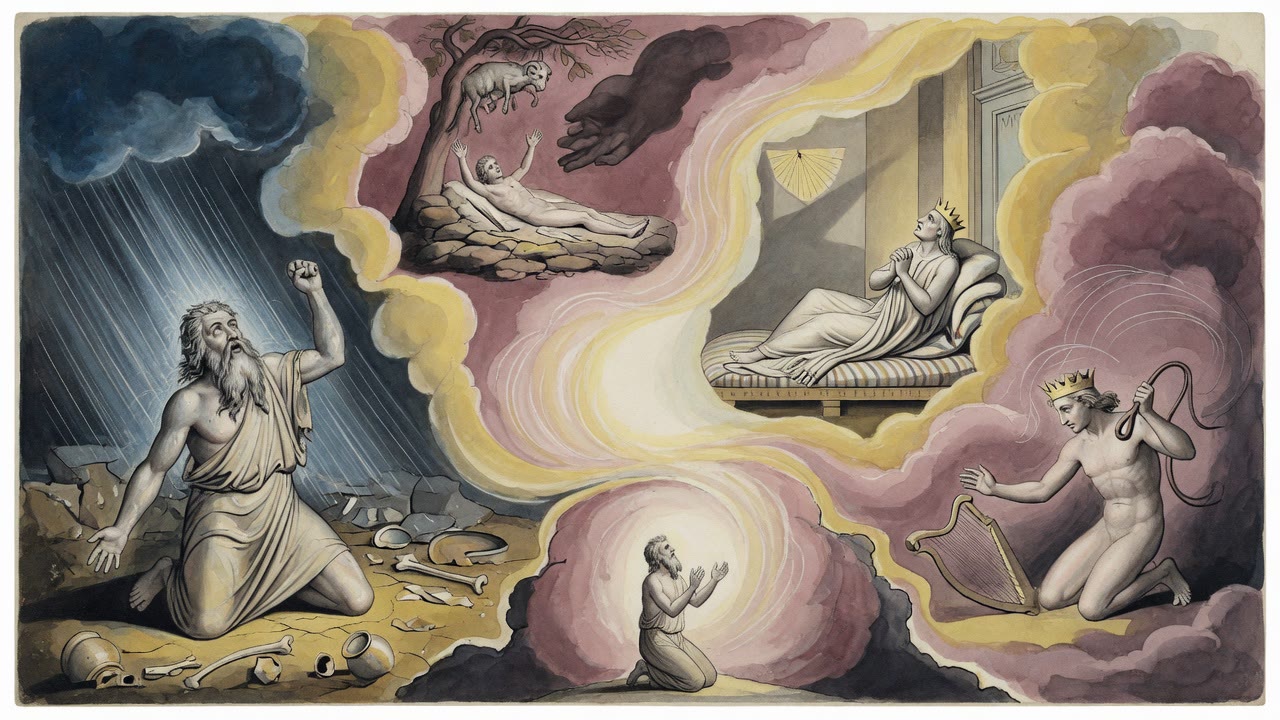
Everyone who stood in the Second Temple and remembered the First knew what was missing. The Ark of the Covenant, taken or hidden. The Cherubim. The fire that had descended from heaven to consume the first offerings. The Shekhinah, the visible divine Presence that had filled Solomon's Temple at its dedication. The Urim and Tumim, the oracular stones in the high priest's breastplate.
Five visible glories of the First Temple were absent from the Second. The prophet Haggai had said the Second Temple's glory would exceed the First's. How could both things be true?
The rabbis reframed the question. The glories of the First Temple, they argued, had begun to become the thing people worshipped instead of the Presence the things pointed toward. The fire from heaven, the audible Presence, the visible mercy seat: these had started to substitute for the relationship they were meant to signify. The Second Temple's spiritual clarity lay in the absence of the substitutes. It demanded that Israel relate to the Presence directly, without the architectural props. That was not lesser glory. It was more demanding glory.
Forty Years of Signs
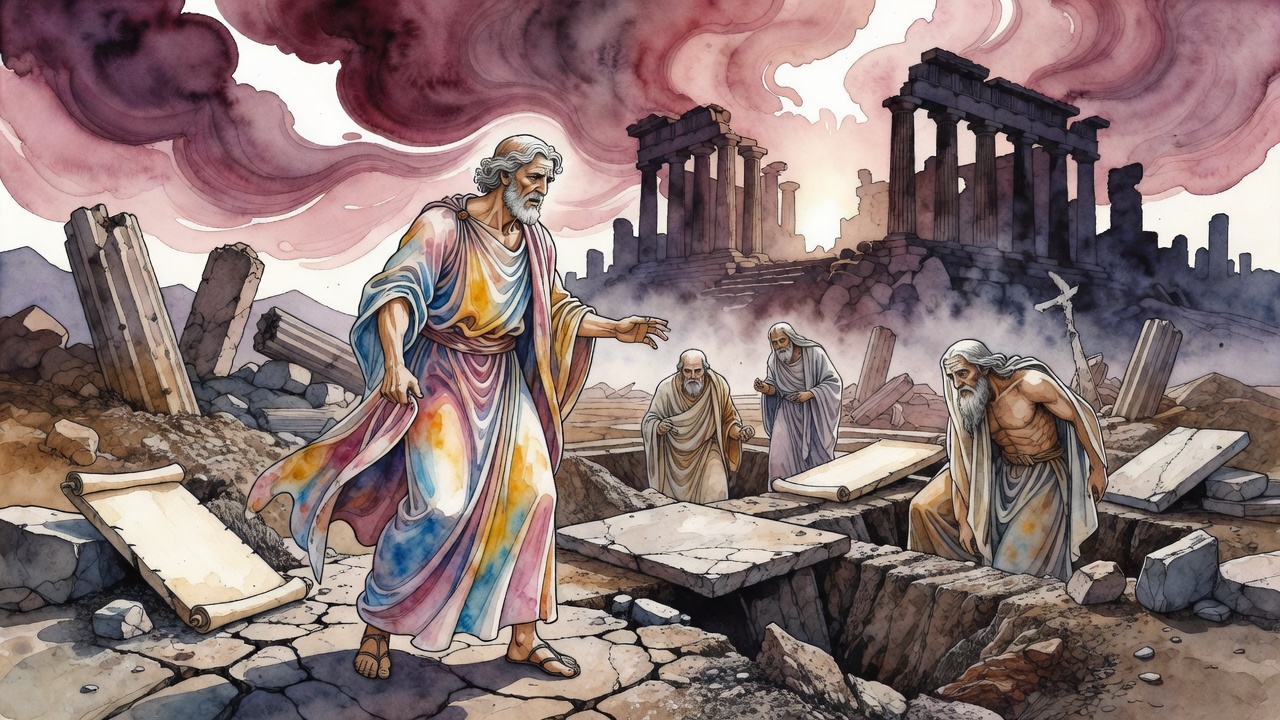
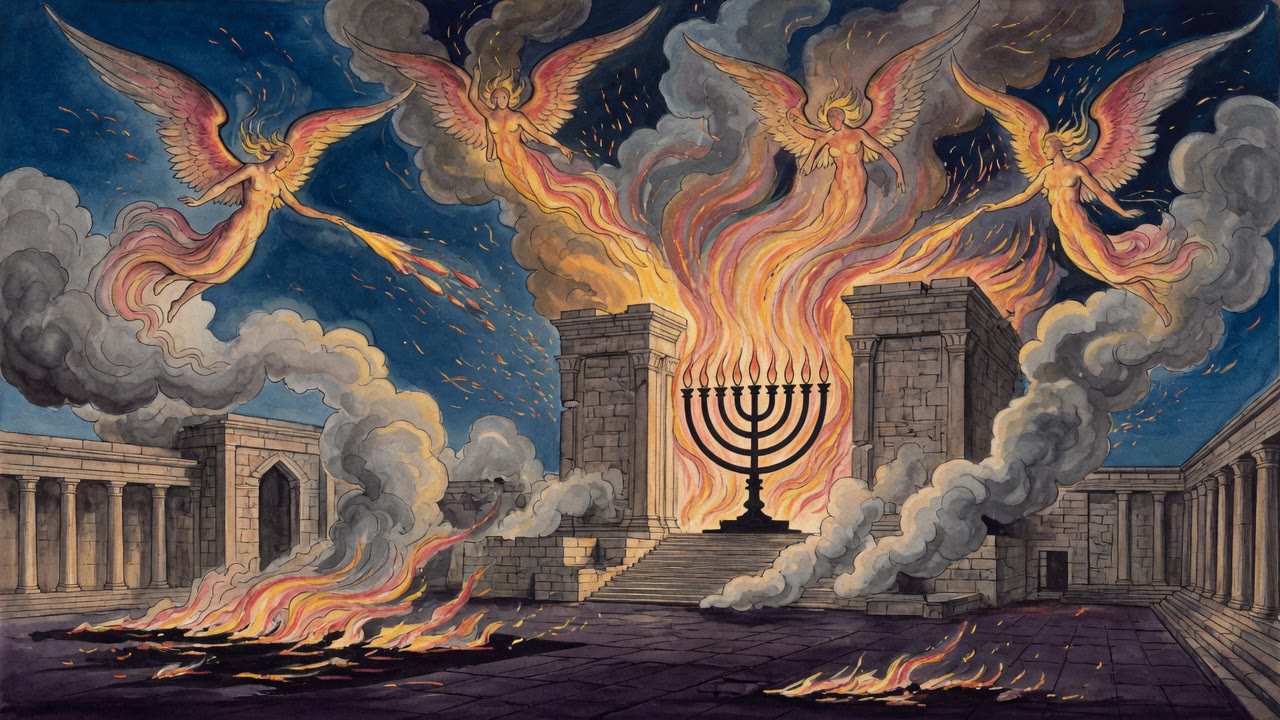
The Temple did not fall without announcement. The rabbinic tradition preserved a count of omens, forty years in duration, that preceded the destruction. The lot for the Lord's goat on Yom Kippur stopped falling in the right hand and fell consistently in the left, year after year. The scarlet thread that was supposed to turn white as a sign of atonement stopped turning white. The Temple doors swung open by themselves in the night, something that had once been understood as a sign of divine welcoming but was now read by the sages as an invitation to the enemy. The western light in the Temple menorah (the lampstand) would not stay lit.
Forty years. From around 30 CE to 70 CE. The tradition is insisting that the destruction was not sudden. It was preceded by a generation of signs that could be read by anyone who was willing to read them. The heaven that had been tracking everything was also signaling, year by year, that the structure of the world was shifting beneath the building. The building stood, and the omens accumulated, and the generation that saw both did not fully understand what was being communicated until the legions arrived.
The Blood That Would Not Stop Boiling
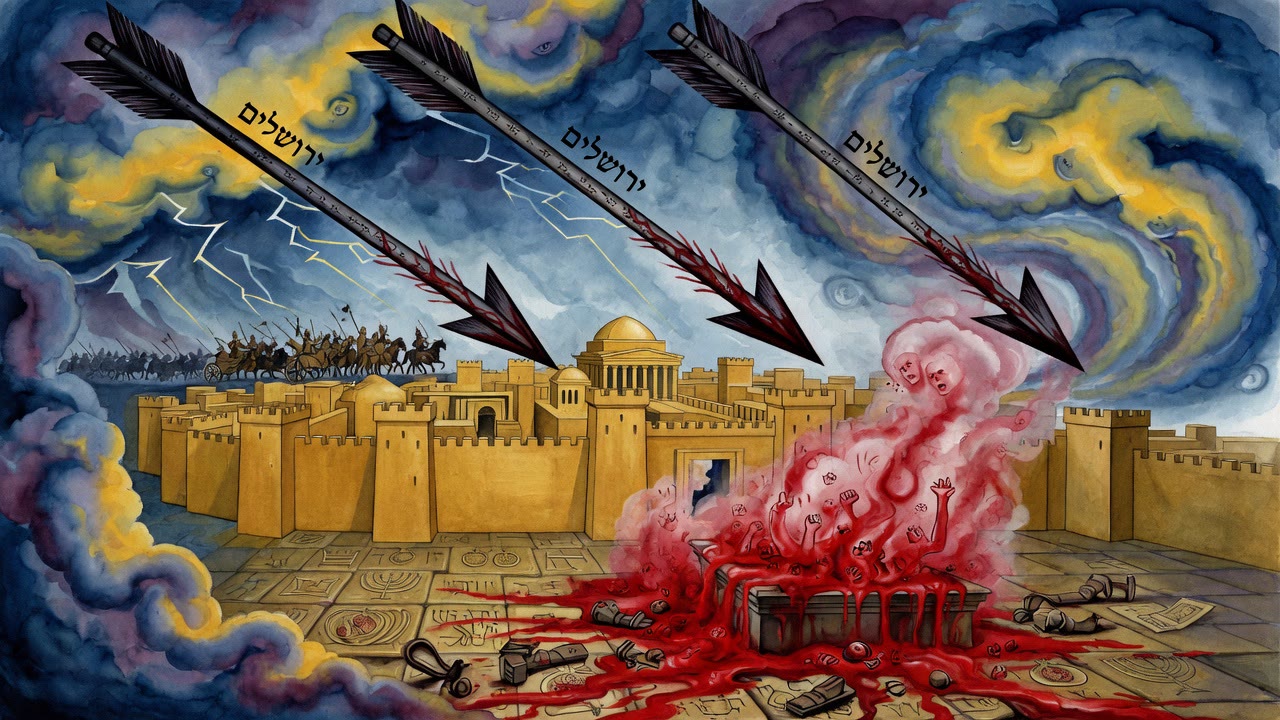
Centuries before the Second Temple fell, something happened in the First Temple that left a mark the world could not cover. Zechariah the son of Jehoiada was a prophet, and he was killed in the Temple court. His blood hit the stones and stayed there. Priests swept over it. Brooms and sand and time could not stop it. The blood kept bubbling, warm and active, as though it had not yet finished saying what it had to say.
When Nebuchadnezzar's army took the city and entered the Temple, they found the blood still moving on the stones. They tried everything they could think of to still it. They killed men over it, killed women over it, killed children, killed students, until eighty thousand were dead and the blood kept boiling. Finally a voice came out of heaven: you cannot satisfy this blood. It will not be answered with numbers. Stop.
The blood eventually quieted. But the record was made. The question of who had killed Zechariah and why, and what the answer to his death required, was answered on the stones of the Temple court and then in every death that followed. Heaven was keeping accounts that no human ledger had the columns to hold.
Nero Reads His Own Verdict and Runs
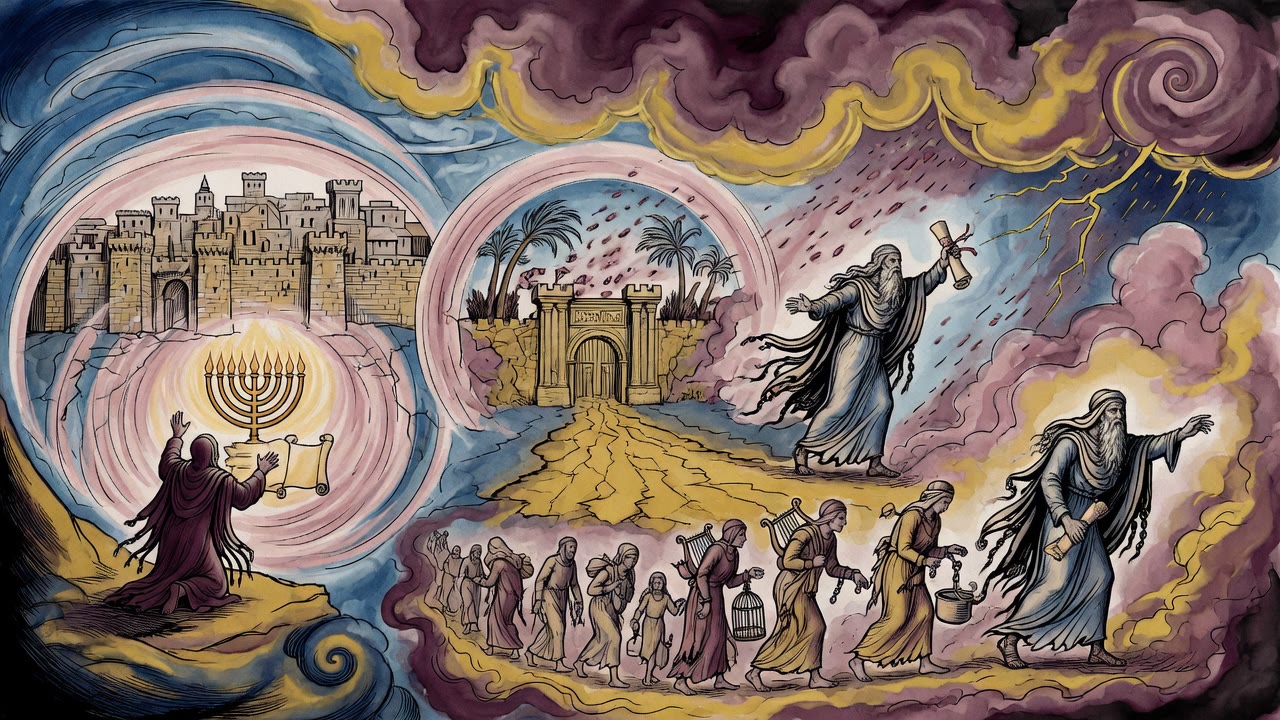
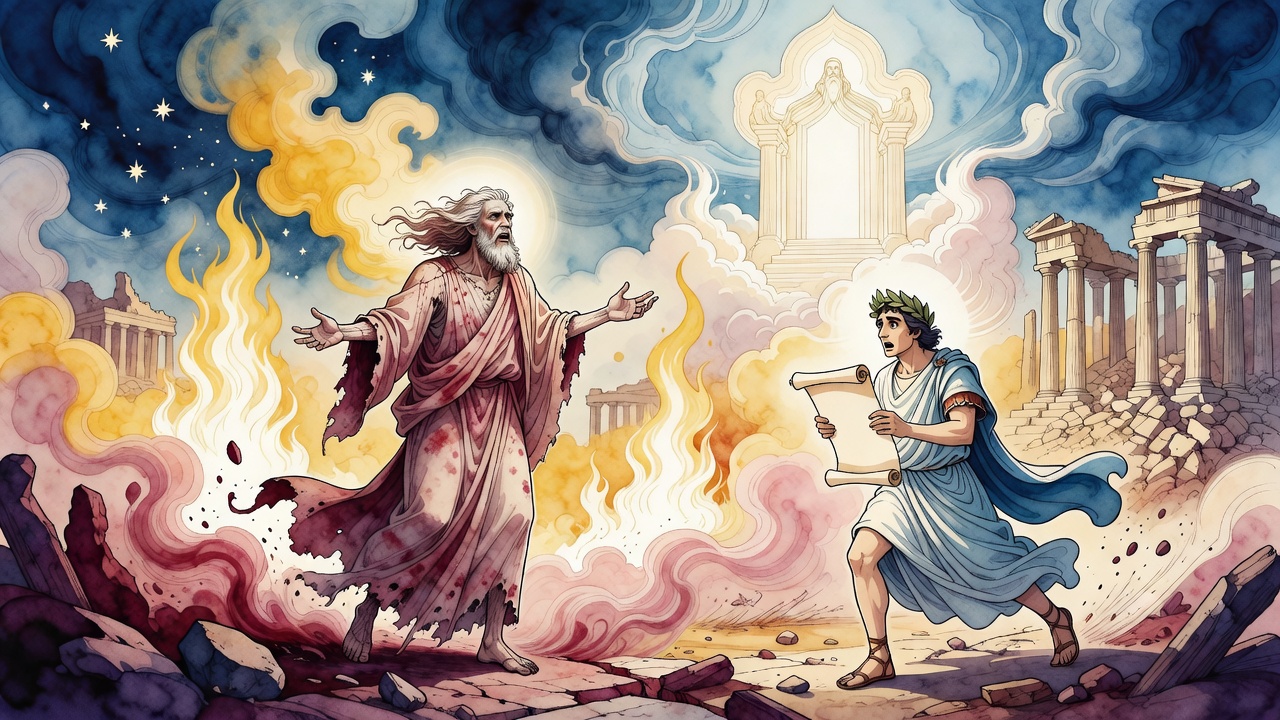
Nero was sent to besiege Jerusalem. The night before he arrived, he asked a child to recite a verse. The child recited: I will give my vengeance upon Edom by the hand of my people Israel (Ezekiel 25:14). Nero opened to another child. The verse was: the Lord hath purposed to destroy the wall of the daughter of Zion (Lamentations 2:8). A third child: flee, O Nebuchadnezzar, for I will break his yoke from off your neck (Jeremiah 30:8).
Nero read the three verses together and recognized his position. He was about to do something the prophets had predicted would happen, and then he was going to be punished for doing it. He was the instrument of a judgment against Jerusalem, but the instrument would not escape judgment itself. He ran. He did not go back to Rome. He did not complete the siege. He converted to Judaism, according to the tradition, and the line of destruction fell to Vespasian instead.
What the rabbis preserved in this account was not primarily a story about Nero's conversion. It was a record of the principle. Those who destroy the Temple do not close a chapter. They open one. The verses that described their role also described their fate. Heaven had been tracking the account before any of them arrived at the gate.
← All myths