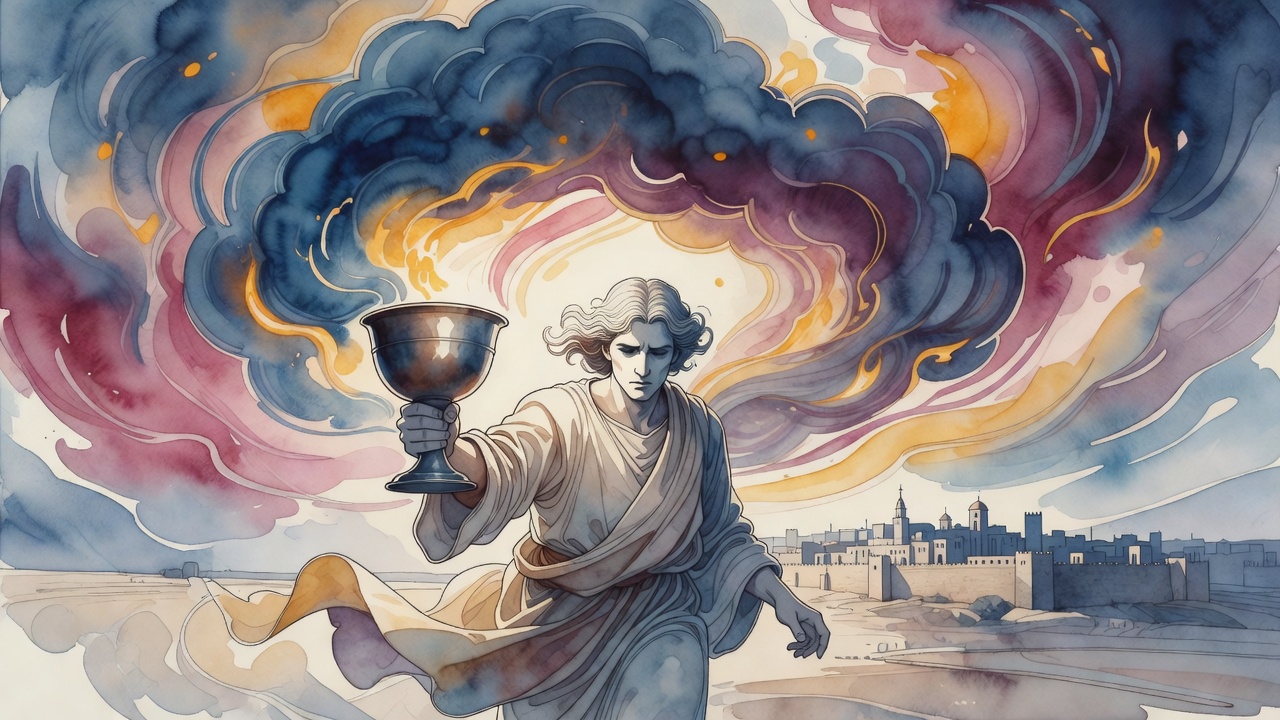
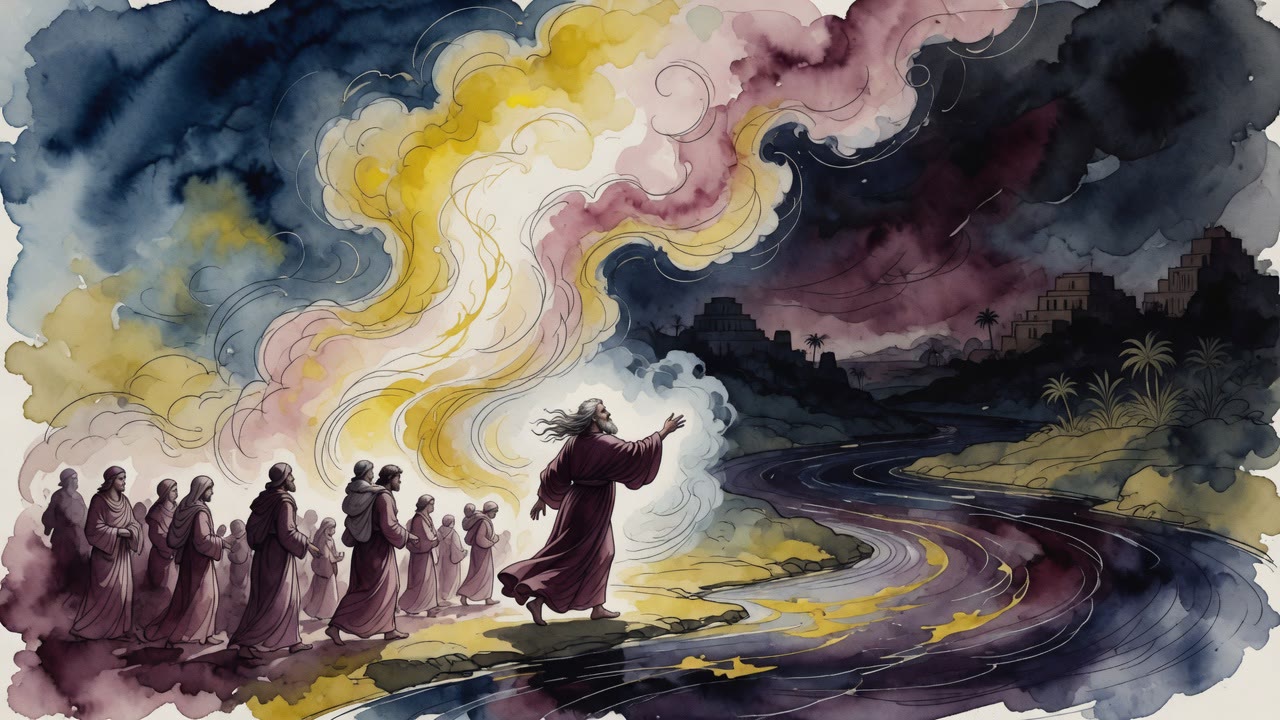
Jeremiah Returned to Walk Beside the Jerusalem Captives
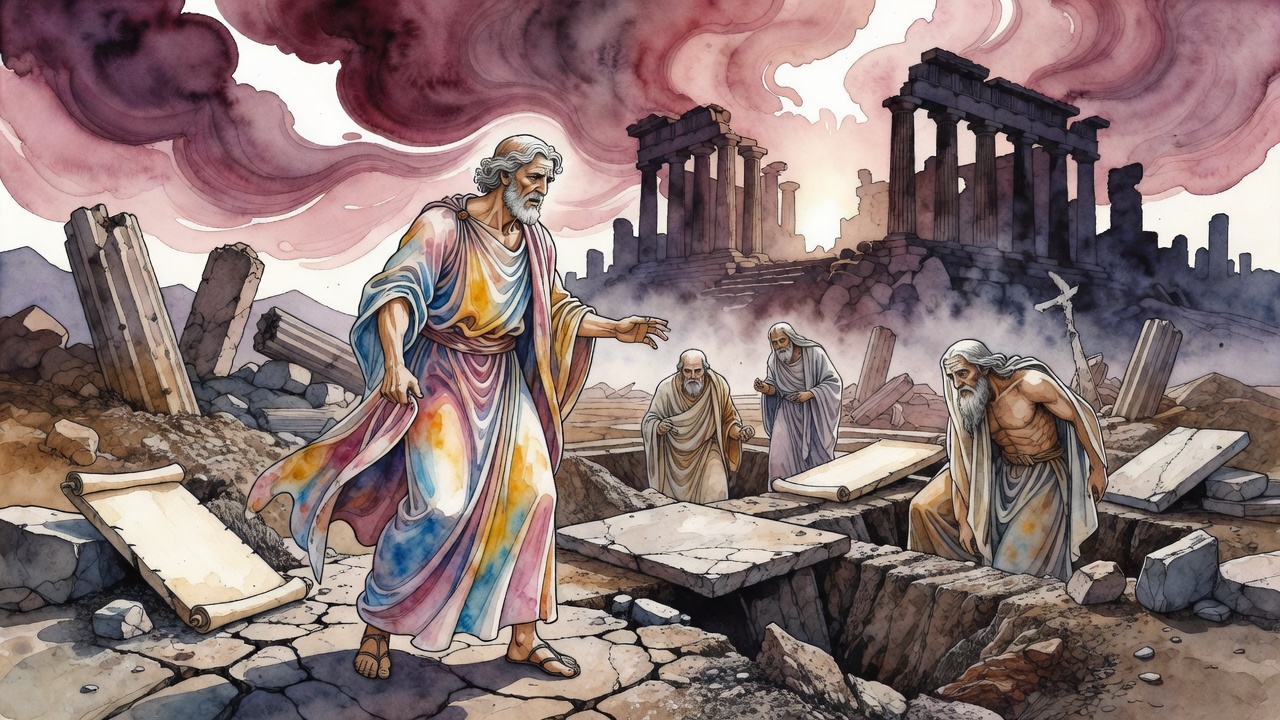
The high priest put on his ephod and walked into the fire. Captives hauled Temple vessels with iron on their necks. Jeremiah found them on the road.
Table of Contents
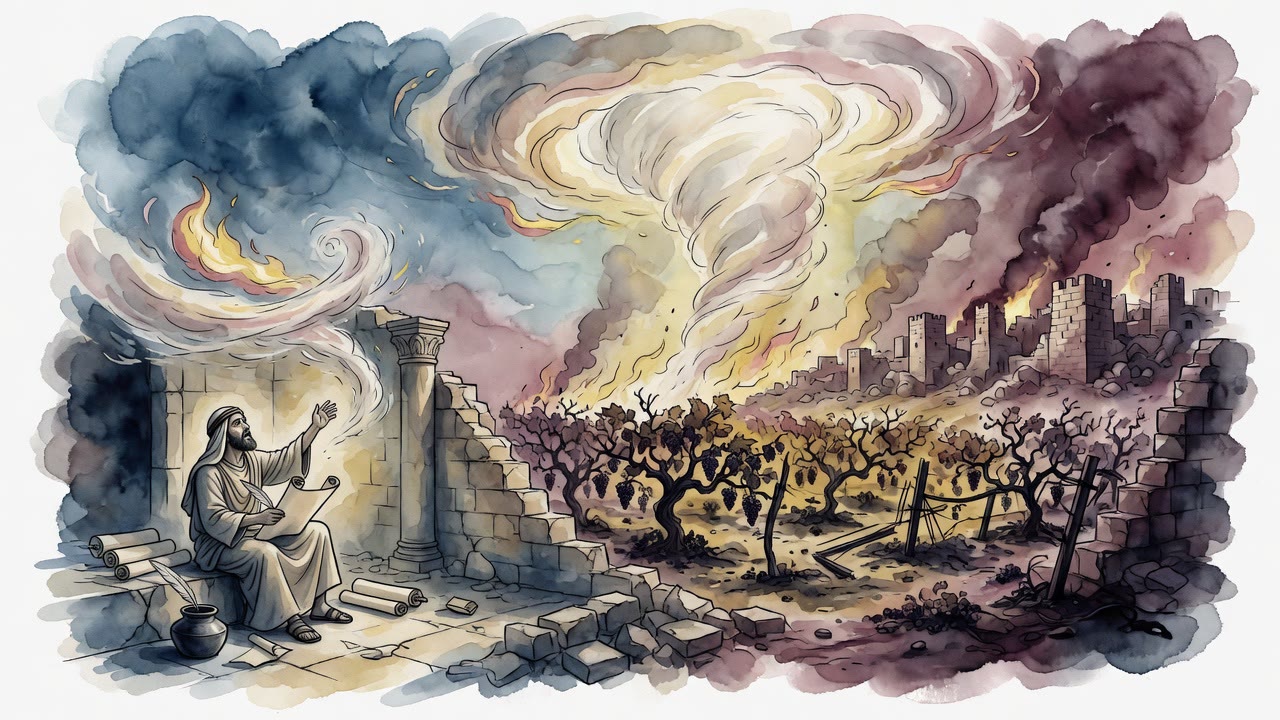
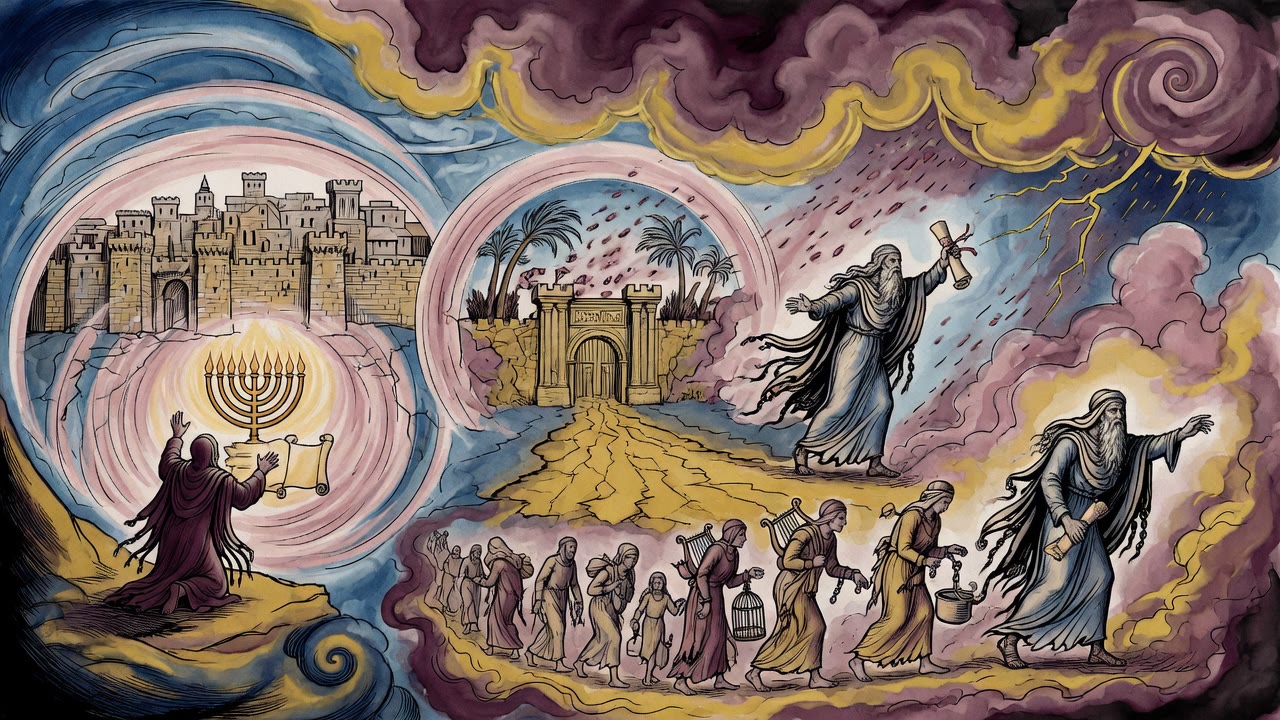
Jeremiah walked out through the Benjamin gate while Jerusalem was still standing. The walls held. The Temple still had its gold. His prayer had been the beam under all of it.
 Click for full size
He was going toward Anathoth, toward his own portion in Benjamin. He did not take the city's verdict with him on purpose. He was withdrawn. The moment he was gone, the beam came out of the building.
The Shield Left With Him
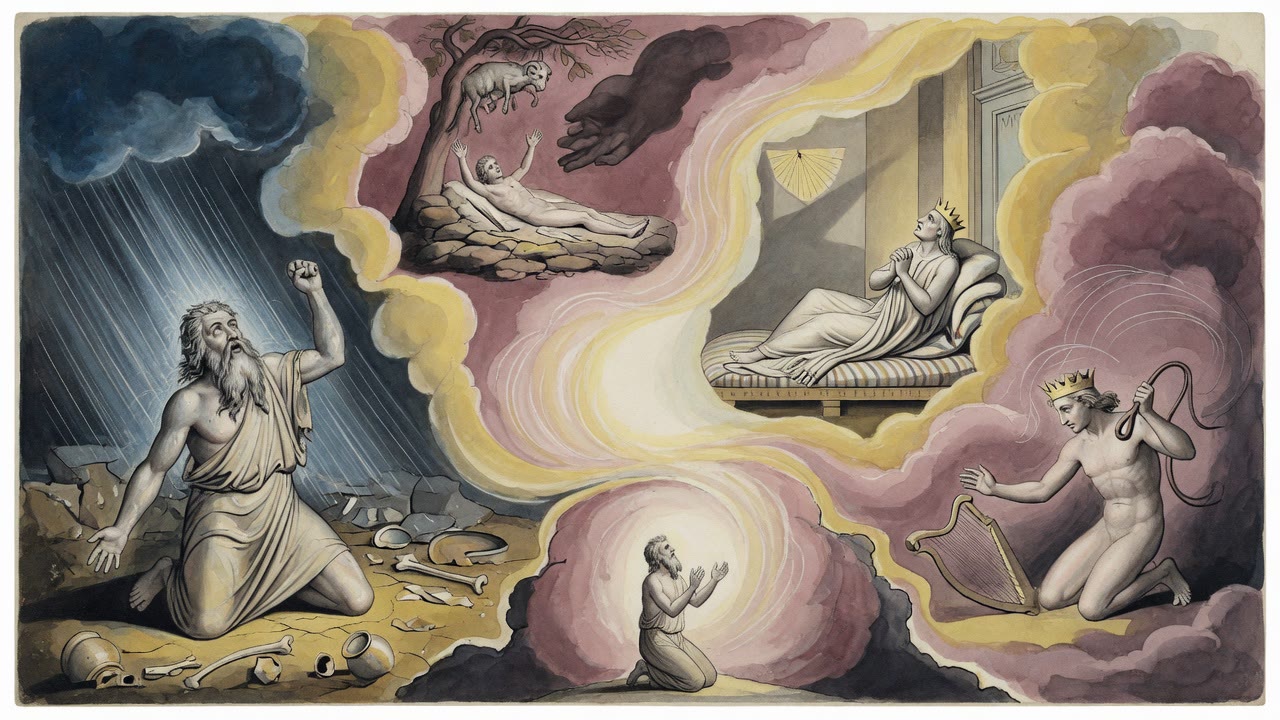
For decades he had warned and been ignored, mocked, thrown into a pit. So long as he remained in the city and prayed for mercy upon it, the verdict stayed in the air and did not fall. The glory had already left the sanctuary before the Babylonians arrived. What still held the walls was not the furniture of the Temple. It was one man's mouth, open day after day.
The people would not hear him. The shield got thin. Then he was not there at all.
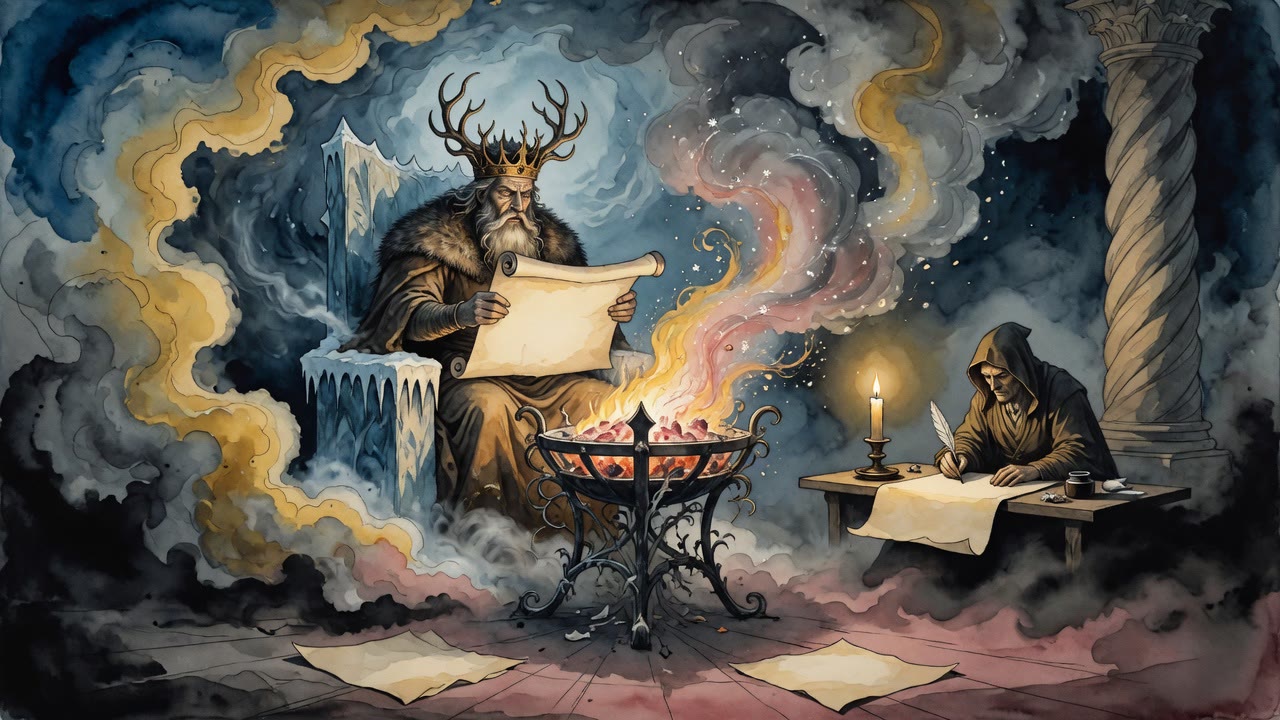
Nebuchadnezzar moved. He did not walk the burning streets himself. He stayed at Riblah to the north and sent Nebuzaradan, captain of the guard, to do the work (Jeremiah 39:9). The land was laid waste. The walls were broken down. The men entered the house Solomon had built, stripped its ornaments, took its vessels, and put fire to what was left.
The High Priest Walked Into the Fire
The high priest stood in the burning courts, put on his robe and ephod, and looked at the flames climbing the sanctuary walls. He spoke his last words as a priest. "Now that the Temple is destroyed, no priest is needed to officiate."
He threw himself into the fire and was consumed.
The priests who were still alive watched him go. They took their harps and their other instruments, the tools of the daily song, and followed him in. The service ended inside the same fire that ended the house. No one was left to sing in a courtyard that was no longer a courtyard.
The Captives Carried What Had Been Holy
Outside, the people the soldiers had not killed were bound in iron chains and loaded with the Temple vessels as spoil. They walked out of Jerusalem almost naked, holy things in their arms, iron on their necks. The vessels that had held offerings now traveled as loot. The hands that had been meant to serve them now hauled them toward Babylon.
Jeremiah came back. Not to a city. There was no city. He came back to the road the captives were on and he walked with them.
When they saw him they cried out. "Why are you walking with us? Why did you not pray for us? You spoke for us in the courts. Where were you when the walls came down?"
He Clothed Them at Bet Kuro
He did not argue that he had been a shield. He did not deny that he had been gone. He walked.
When they reached a place called Bet Kuro, he got better clothing for them and put it on the ones who were almost naked. Then he spoke to Nebuchadnezzar and the Chaldeans. "Think not that of your own strength you were able to overcome the people chosen of the Lord. Their iniquities condemned them to this sorrow."
The captain could stack vessels on a road. He could not claim the victory as his. Jeremiah said so to his face, then turned back to the line of captives and kept walking. Prophet and prisoners on the same dust, the same iron clink, the same direction.
He had not been able to hold the city once his mouth left the gate. He was able to be present for the walk that followed. The people who had refused his warning now had him beside them, and they still asked why he had not been enough, and he still did not step off the road.
← All myths