Four Things Jewish Memory Could Not Forget About the Temple's Fall
A sage escapes in a coffin, the dew stops blessing the earth, a pig appears on the siege wall, and the Levites hang their harps on Babylonian willows.
Table of Contents
 Click for full size
The Sage Who Left Jerusalem Dead
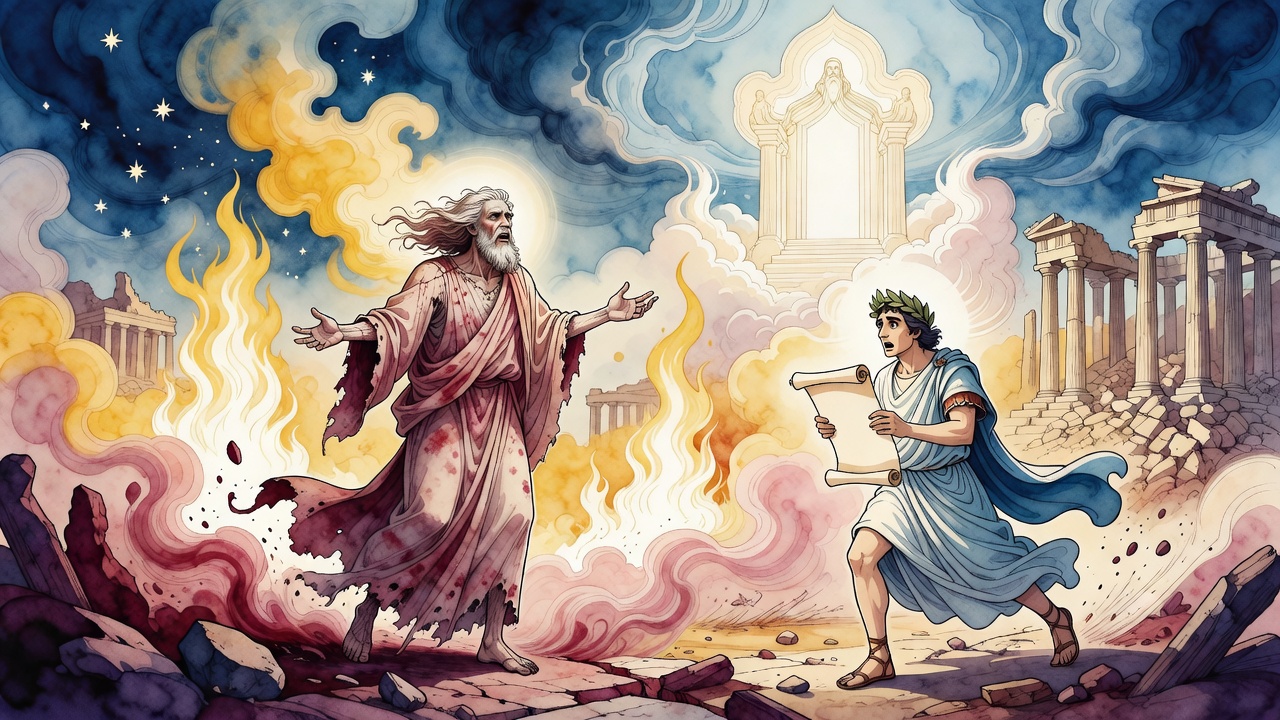
Rabbi Yochanan ben Zakkai walked through the city during the siege and saw people boiling straw in water to drink. He said the words a man says when he cannot hold back grief. Then he went to his nephew, Ben Batiach, who was one of the Zealot commanders holding the city against any negotiation, any exit, any survival plan that involved opening the gates before the battle was lost beyond recovery.
Ben Batiach had issued a standing order: no living body leaves. The only exception was the dead. Yochanan ben Zakkai arranged to appear to die. His students carried him out through the gate in a coffin, past the guards who checked for breathing, past the soldiers who had decided the city would fall with everyone inside it.
Outside the gate, he rose. He went to Vespasian's camp. He told the Roman general that he would become emperor, and asked in return for Yavneh, a small coastal town where the scholars could gather and the tradition could continue. Vespasian agreed to give him whatever he wanted when the prophecy proved true. The prophecy proved true. Yavneh became the place where the oral Torah survived the destruction of the place where the written Torah had been housed.
The coffin trick was not a coward's escape. It was the continuity plan of a man who understood that the tradition outlasted any building, and who was willing to be carried out as a corpse to ensure the tradition survived.
The Dew That Stopped Blessing
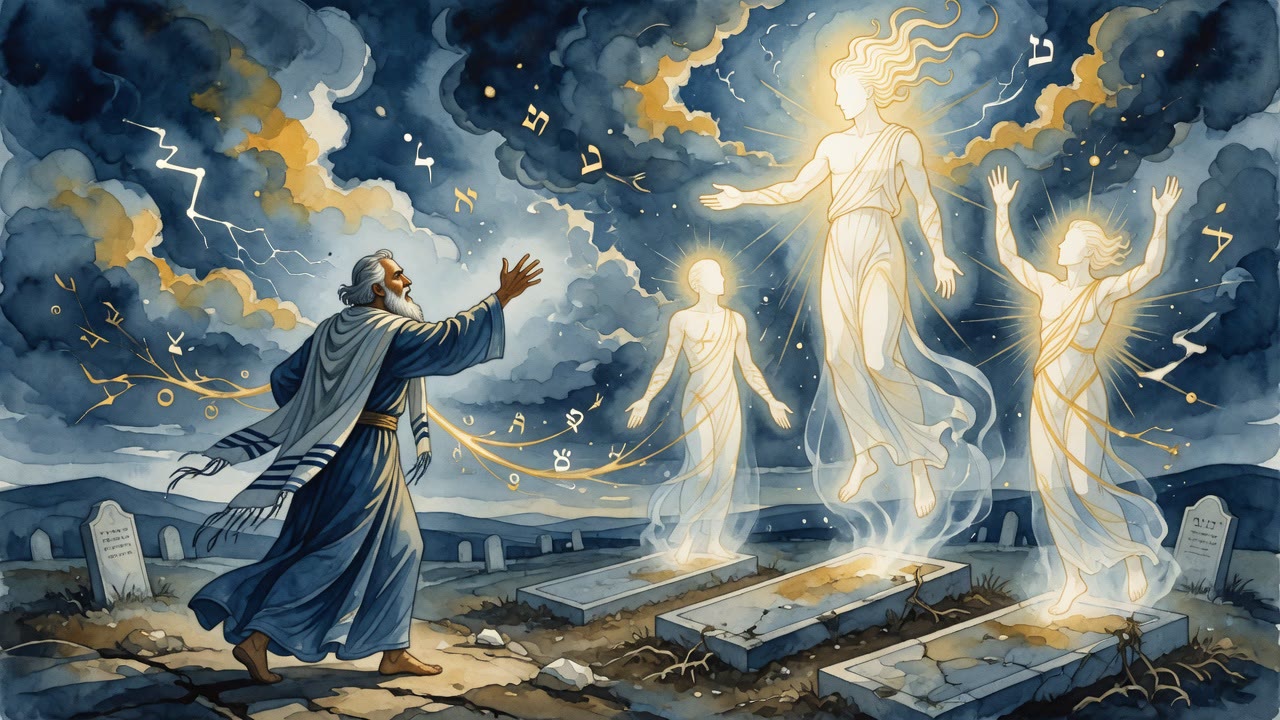
When the Temple fell, something went out of the world that had not been noticed until it was gone. The dew that fell on the fields of Israel had once carried a particular quality. It had blessed what it touched. Grain grew fatter, fruit ripened fully, the land responded to moisture the way a body responds to sleep. After the Temple fell, the dew kept coming but the blessing left it. The taste went out of the produce. The grain grew but did not satisfy in the same way. Something in the connection between heaven and the land had been cut.
This is the memory that refuses to be translated into political terms. The legions and the fire and the siege engines are events with dates and commanders and military logic. The dew losing its blessing is something else. It is the memory of a world that was calibrated slightly differently, where a building in Jerusalem had some part in maintaining the quality of moisture that fell on fields in the Galilee and the Negev, and the loss of the building changed the quality of the morning.
The Pig on the Wall
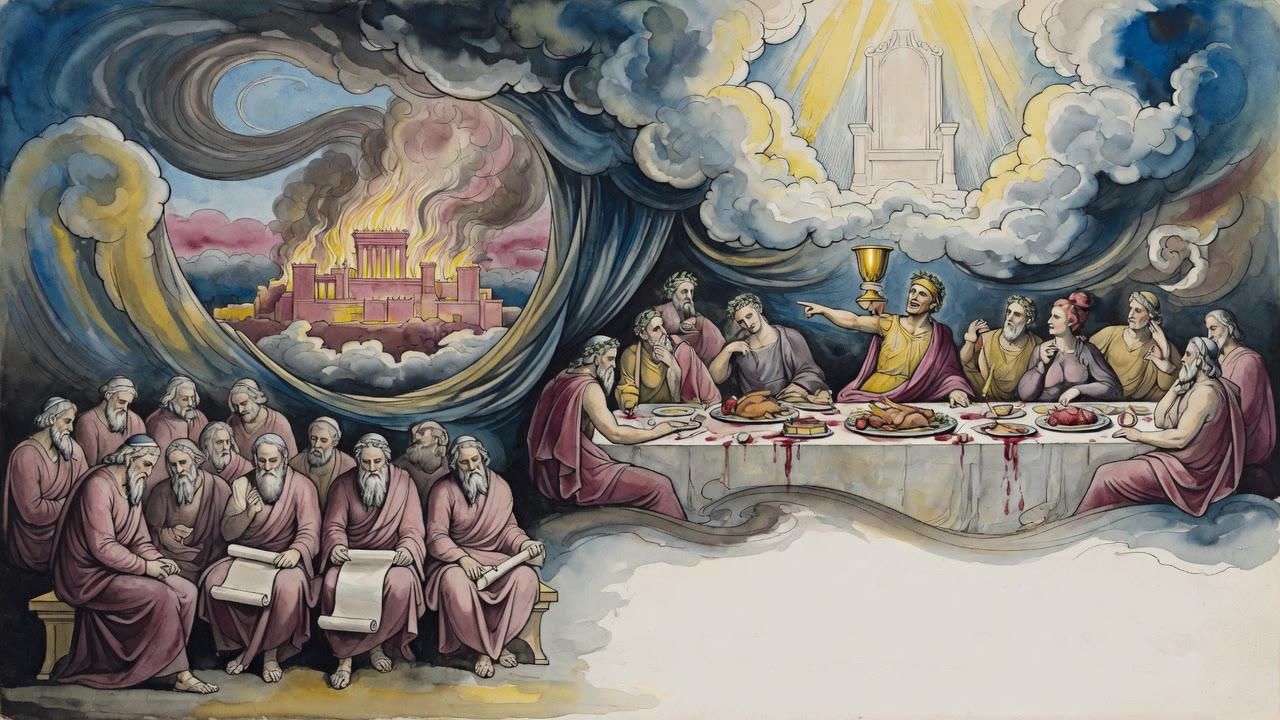
During the siege, the Jews inside were still sending out animals for the daily sacrifices on the altar. The Romans, whoever was supplying them from outside, sent up a pig instead. The pig reached halfway up the wall and embedded its hooves. The earth shuddered. The earthquake was felt four hundred miles away. The tremor that ran through the ground at that moment was the physical record of the desecration landing.
The image was preserved because it captured something that a list of battles could not capture. The Temple's sanctity was not a legal principle. It was a physical condition of the world. When something fundamentally incompatible with that sanctity reached the altar's threshold, the world registered the impact at its foundations. The pig on the wall is not a story about pigs. It is a story about what the Temple was, and what happened to the world when it was treated as though it were nothing.
The Harps on the Willows
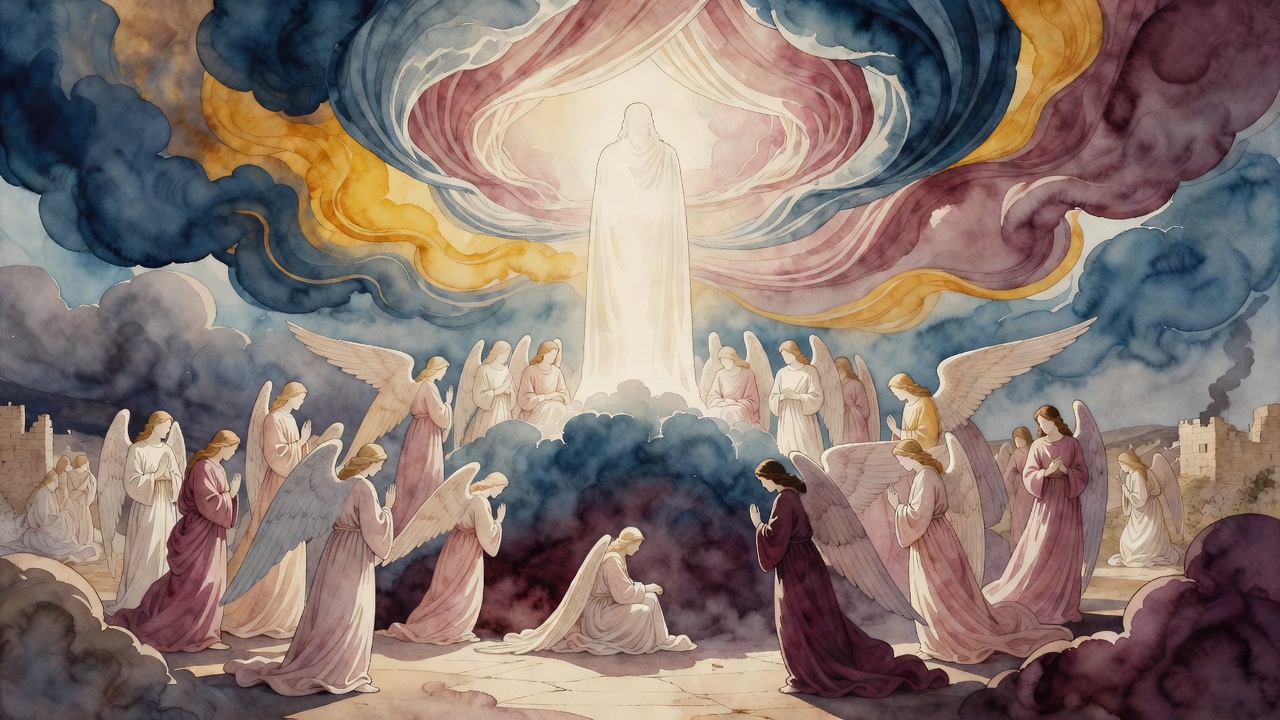
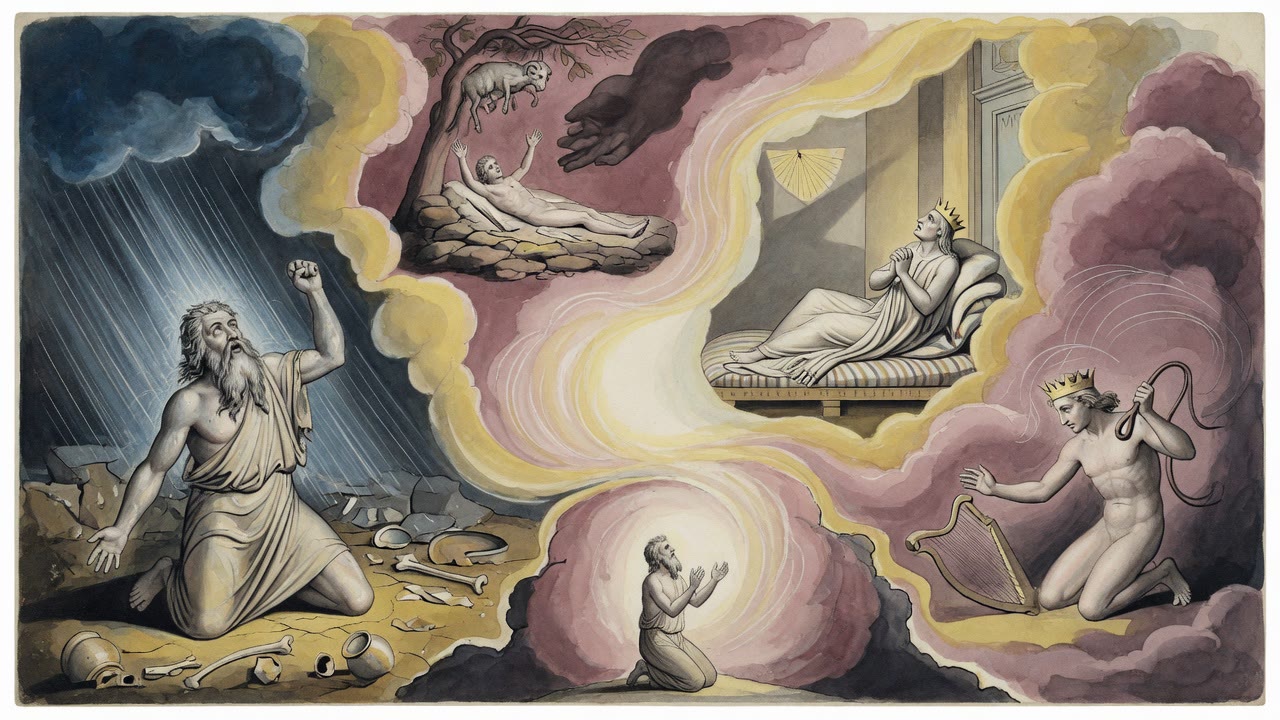
In Babylon, the Levites hung their harps in the willow trees along the river and sat down beside the water. The Babylonians asked them to sing. Sing us one of the songs of Zion. The Levites did not answer with argument. They answered with silence and a question of their own. How can we sing the songs of the Lord in a foreign land?
The harps hanging in the willows became one of the most enduring images in all of Jewish memory. Not the burning. Not the dead. Not the exile march. The harps that could not be played. The songs that could not be sung. The musicians who had spent their entire lives in the service of the Temple music, whose craft and lineage and purpose were all bound to a specific place, now sitting beside a river in a country they had not chosen, with the instruments they could not use hanging above them in the branches.
The image survived because it named the particular loss of a life built around a practice that required a place. The Levites were not merely sad. They were functionally incomplete. The meaning of everything they had trained to do was suspended until the place existed again to receive it.
← All myths