When Zion's Children Went Into Exile, God Went With Them
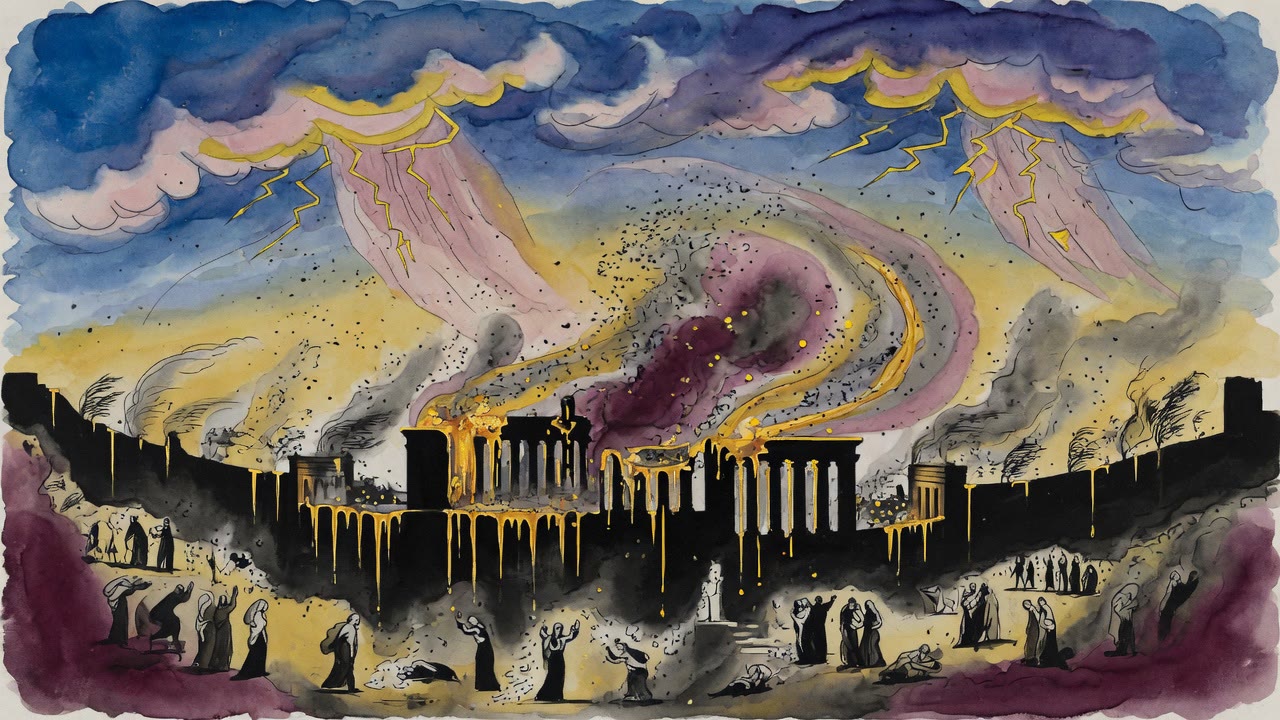
The Sanhedrin left. The priestly watches left. Heaven stayed. Then the infants were led out, and the Presence stood up and walked.
Table of Contents
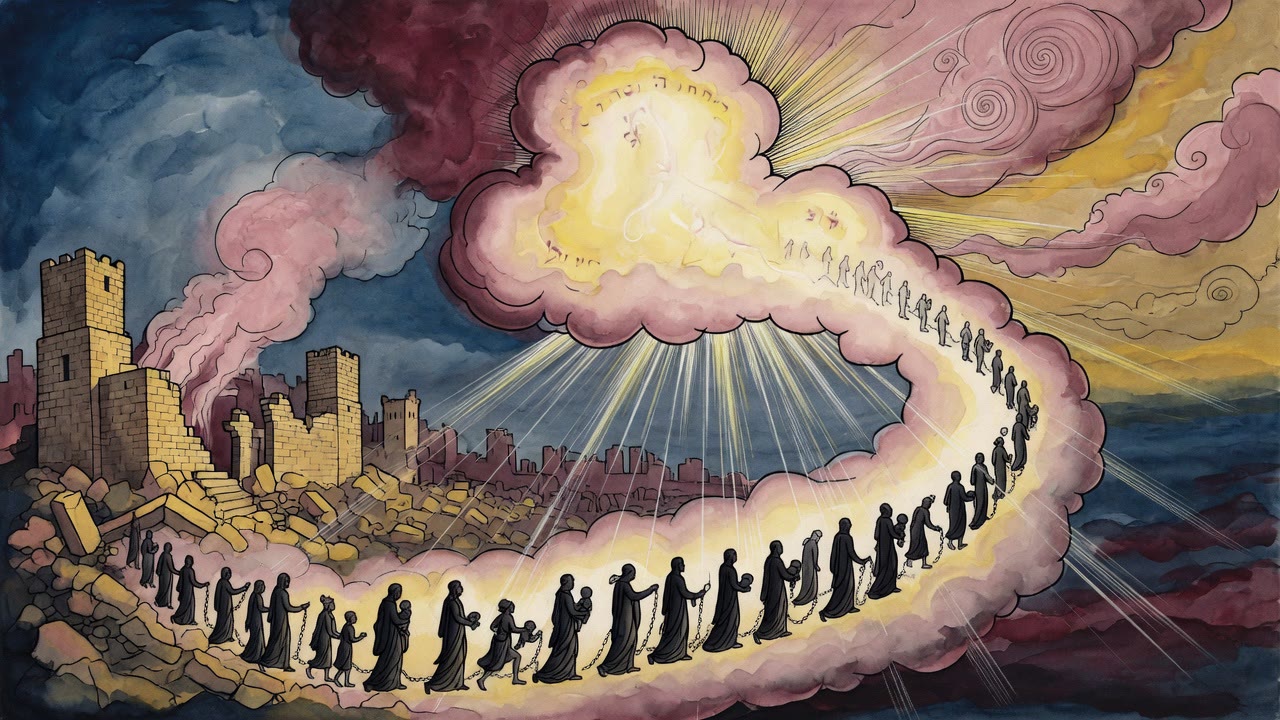
A child dropped a wooden toy in the dust and could not turn back. The line of captivity did not wait. A sandal strap broke. No one stopped long enough to fix it. "Her infants are led into captivity before the adversary" (Lamentations 1:5).
 Click for full size
A mother reached for a gate that no longer opened inward. Behind them the city still had walls for a little while. Behind them the study halls had already emptied in other columns, and the priestly watches had already gone. None of those columns pulled heaven out of its seat the way the children did.
Courts Went Without Heaven
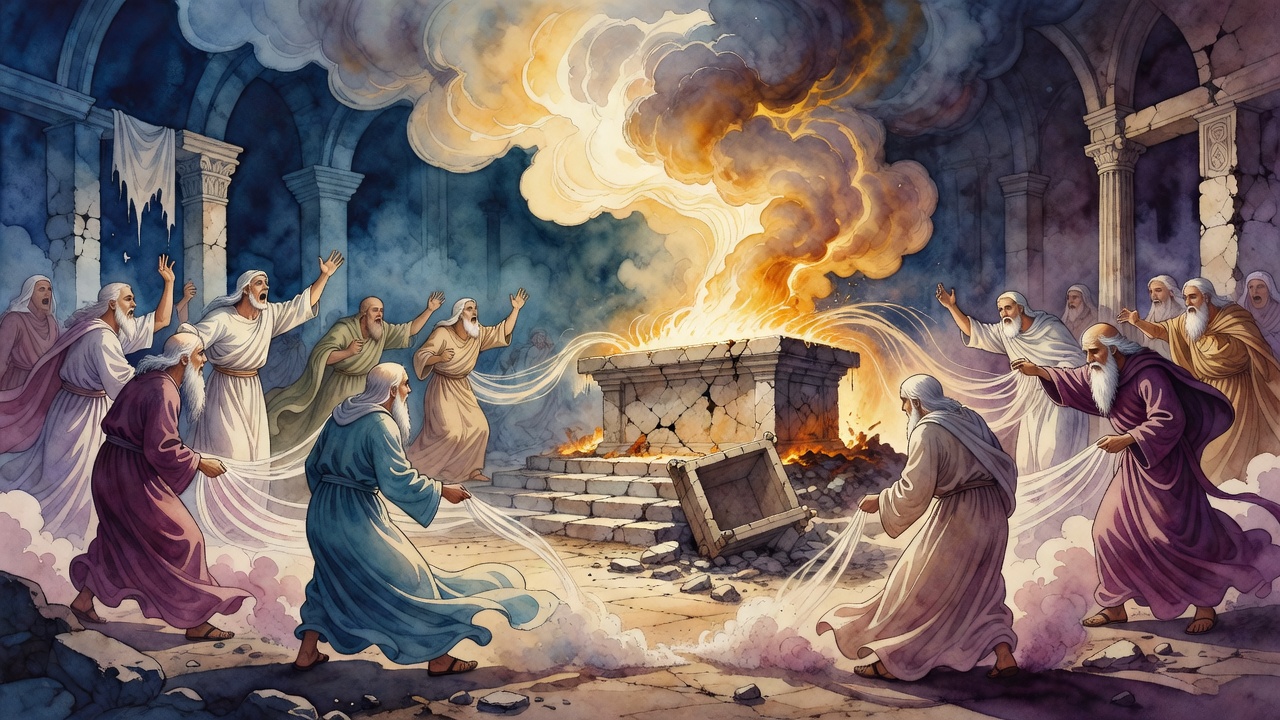
Rabbi Yehuda said to look carefully. The Sanhedrin (Israel's high court of sages) was exiled, and the Divine Presence did not go with them. Scrolls were rolled and carried. Benches stood empty. Heaven did not stand up.
The priestly watches were exiled, and the Presence did not go with them. Incense thinned. Courses of service broke. Heaven still sat.
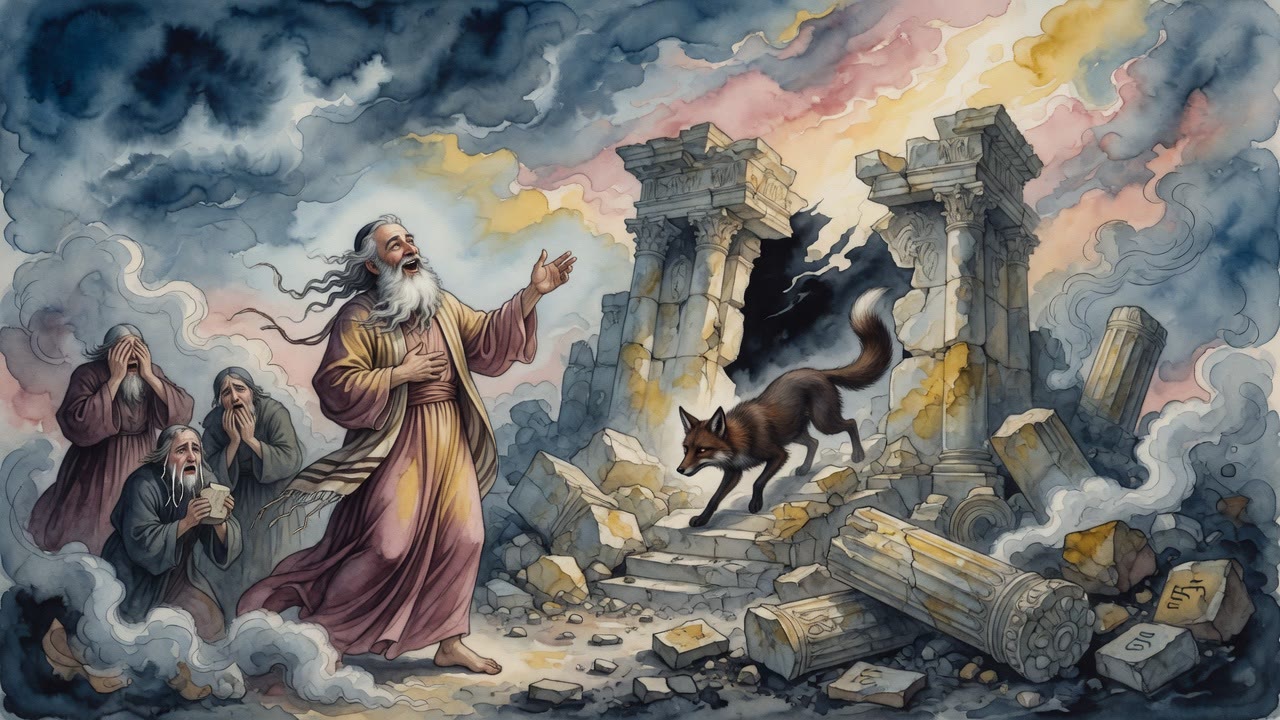
When the children were exiled, the Shechinah (שכינה), the Divine Presence, rose. "Gone from the daughter of Zion is all her splendor" (Lamentations 1:6). The word for splendor had worn many bodies. Glory on God. Courts that dressed Torah in force. Aged faces a people must rise to honor. Priests praising in the beauty of holiness. Each loss hurt. Only the smallest file moved God out of the city.
"The Lord is my lot and my portion" (Psalms 16:5) became a portion walking east under a foreign spear.
Princes Like Starved Deer
"Her princes are like deer that have not found pasture; they went powerless before the pursuer" (Lamentations 1:6). Deer should find green. These found none.
They had been soft once, likened to sheep in quiet folds. Hard hunger and hard roads turned them into deer that run and find no grass. Legs still fast. Strength already gone. Ribs showed under cloth that had been fine in another season.
Rank did not feed them. Memory of a throne room did not feed them. The same road that took the children took the men who once decided cases and commanded watches. Dust rose around ankles that had known marble. By the second night no one on that road looked like a prince. A man who had sealed documents with wax now sealed his mouth against thirst.
A deer that finds no pasture still runs. Running is not the same as living. Zion watched her heights thin into flight without rest, and the pursuer did not need to sprint to keep them.
Wrath Settled Like Stone
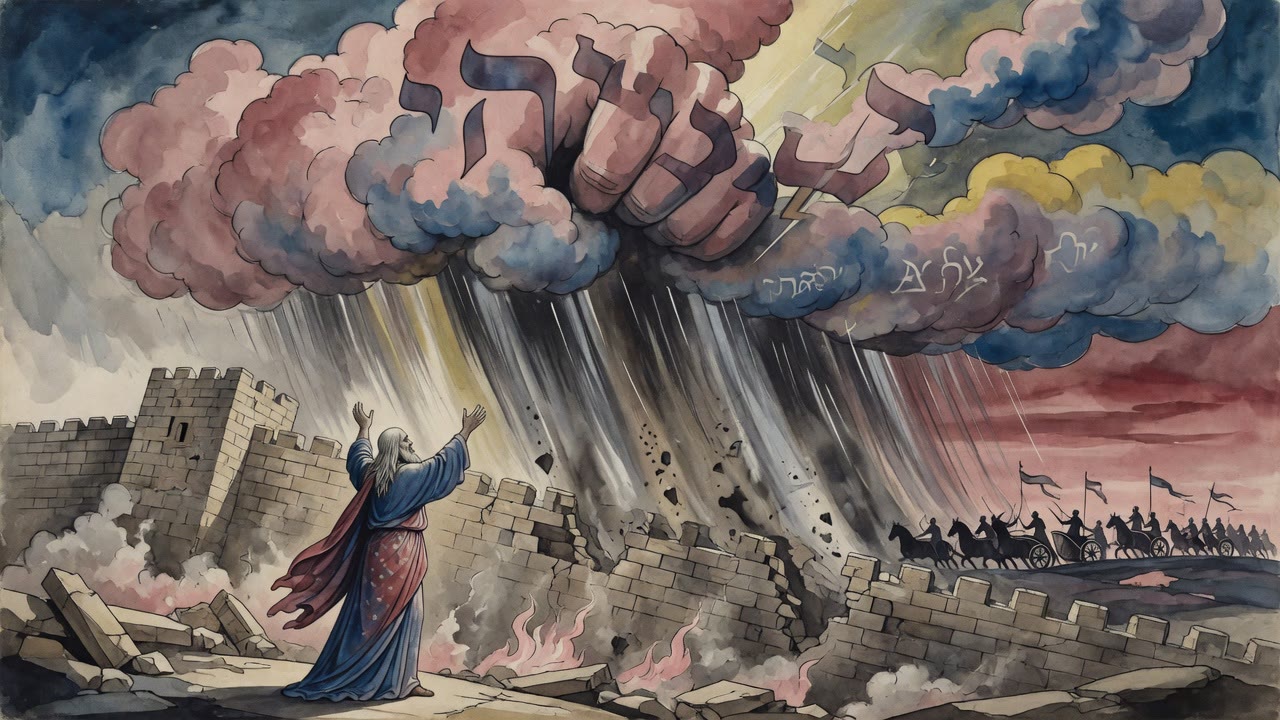
"How the Lord has clouded the daughter of Zion in His wrath. He cast the splendor of Israel from the heavens to the earth" (Lamentations 2:1). The congregation of Israel answered from inside the cloud. Once Israel had been the terror of others. Chieftains of Edom had been terrified (Exodus 15:15). Courtiers had hurried to bring Haman when fear ran the other way (Esther 6:14). Now the terror turned around and stayed on Israel's own neck.
Rabbi Aha pictured a pillar segment rolling through a plaza until it struck a rock and stopped against it. Wrath rolled until it hit Israel and remained there, heavy, unmoving. "Your wrath weighs upon me" (Psalms 88:8). Not a storm that passes. A weight that chooses a resting place and settles its bulk.
Noble ones who might have carried redemption were scattered like wind. Salvation that might have stood still passed like cloud. The day of wrath did not remember the footstool. Heaven's splendor hit earth and broke into exile dust.
Shofar (the ram's horn) and shouting, once tools for taking a land under Joshua, now marked the reverse under Jeremiah the priest-prophet: a people removed the way other nations had been removed (Deuteronomy 8:20). Same horns. Same noise. Opposite direction. The cloud did not lift when the march began.
God Took the Children's Road
God did not stay in an empty sanctuary to keep a clean reputation. When the children marched, the Presence marched. Splendor gone from Zion did not mean splendor left ownerless for the enemy. It meant the Glory chose the weaker column and left marble for dust.
A child stumbled on a root. Someone lifted the child and kept walking. The Presence did not take a separate carriage. Courts and watches could leave without dragging heaven along. Infants could not. Heaven would not keep a seat that preferred institutions to the small bodies that once filled courtyards with noise and sticky hands and questions no sage had scheduled.
Behind them the Temple mount cooled. Ahead of them a foreign road heated under noon. Between those temperatures walked a people and a Presence that had left its footstool rather than lose the children alone.
Zion lost her children. God left too, walking with them, not away from them. Zion's daughter stood stripped. Her cloud was wrath. Her company, even then, was God. The road took both. The city kept neither the children nor the light that refused to stay without them.
At dusk the line still moved. A child slept against a shoulder. The Presence did not peel away when the singing stopped and only the shuffle of feet remained.
← All myths