Retold in our words. Read the original at the link below.The Sefaria Midrash Rabbah, 2022 · CC-BY
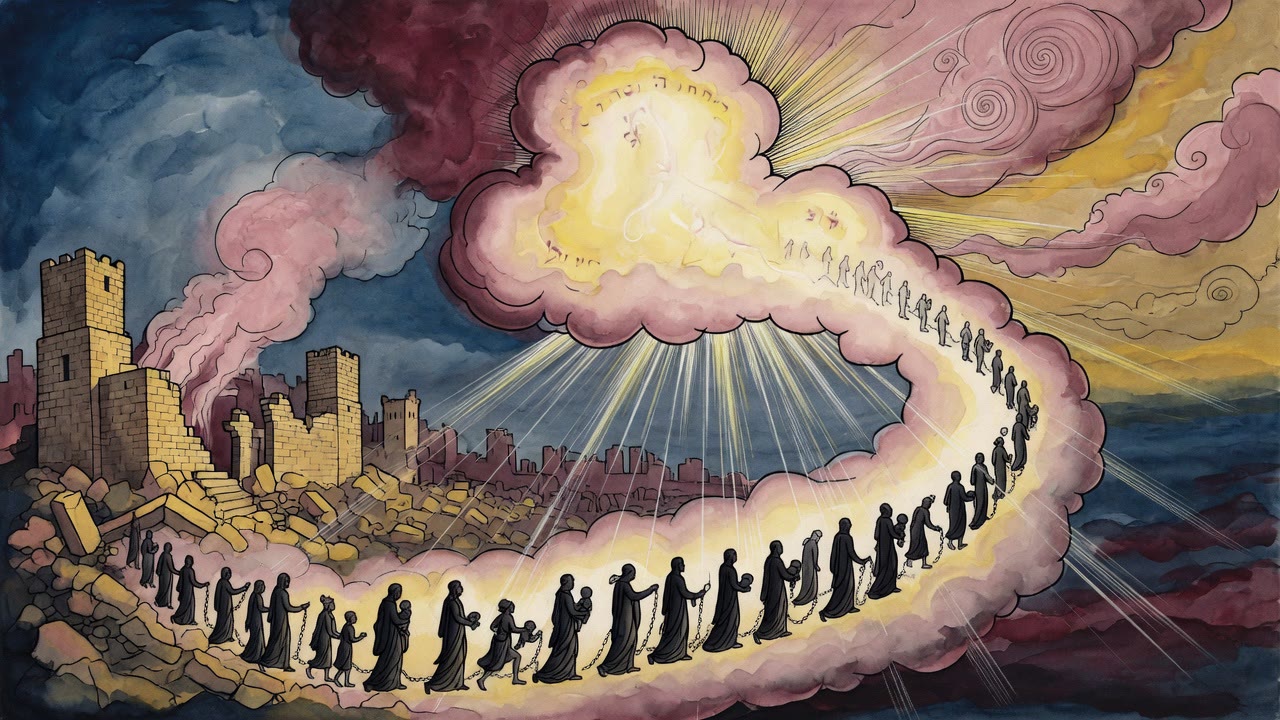
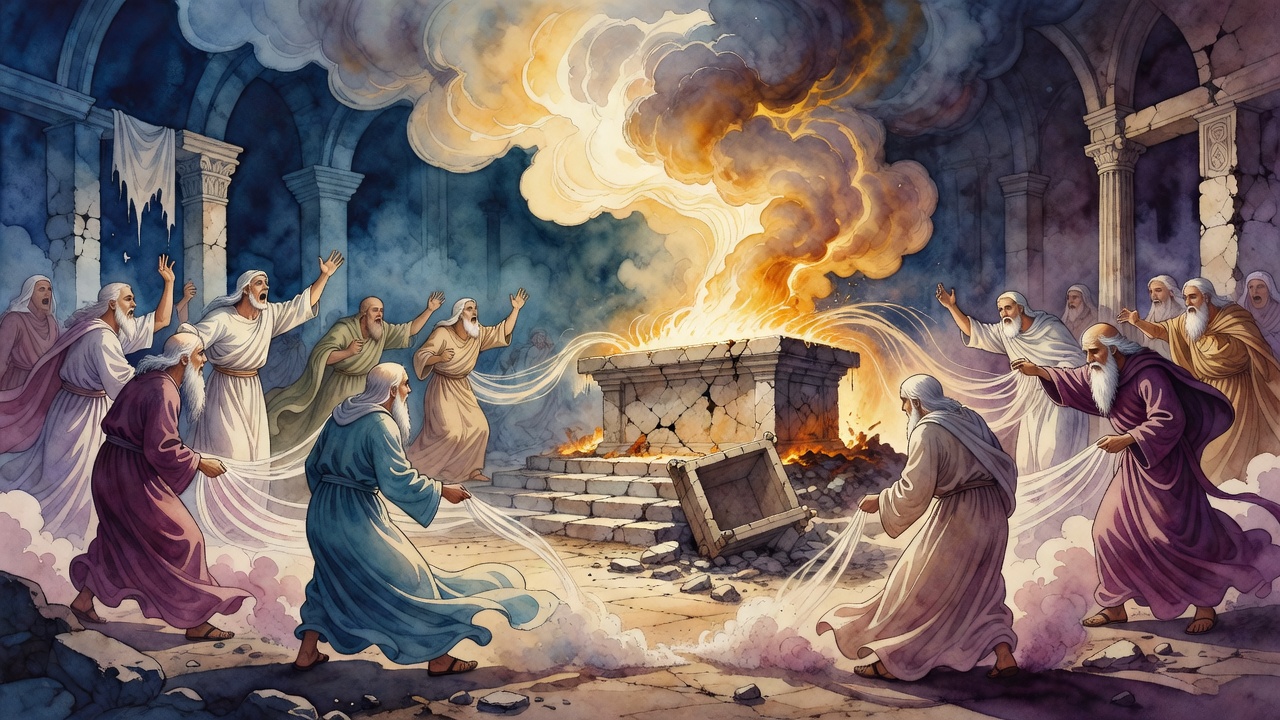
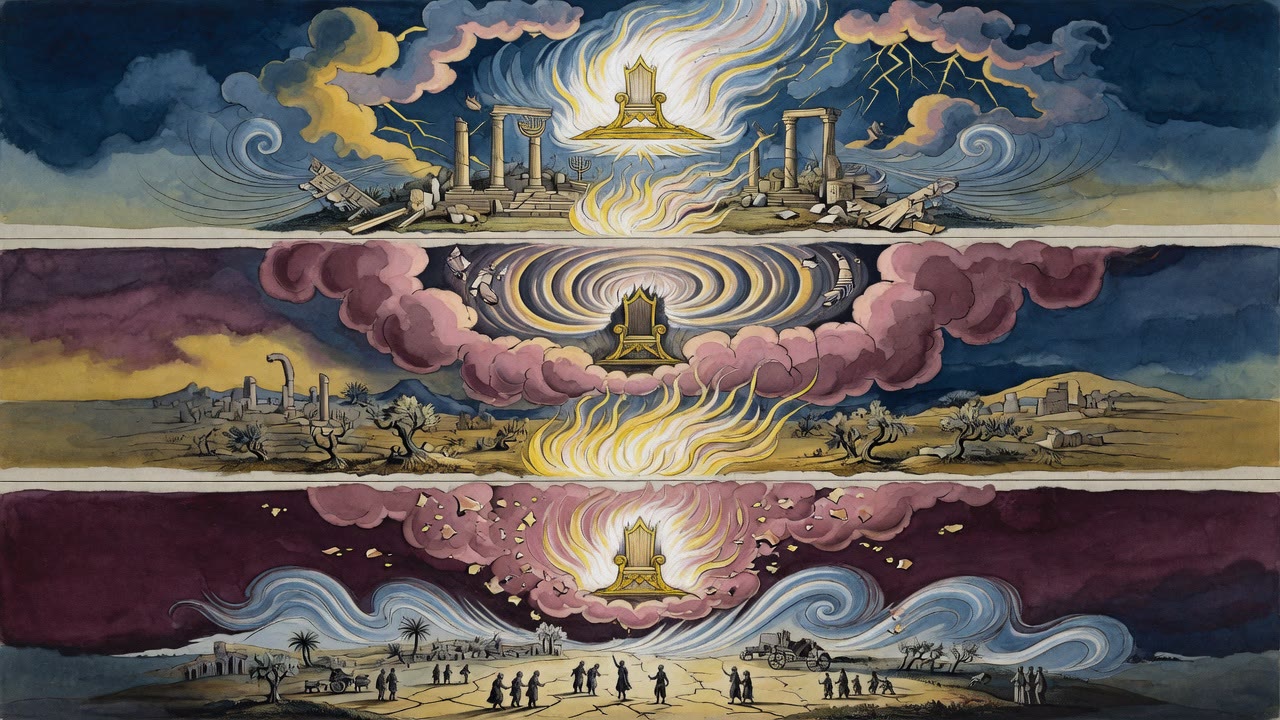
“I remember my song in the night; I meditate with my heart, and my spirit searches” (Psalms 77:7). Rabbi Yehuda ben Rabbi Simon and Rabbi Aivu.58The text of the midrash (rabbinic interpretive commentary) appears to be cut off. The statement of these Sages will be cited below.The Rabbis say:59This is a continuation of Chapter 21. Because they sinned from alef through tav, they are consoled from alef through tav. Likewise, you find that for all the harsh prophecies that Jeremiah prophesied regarding Israel, Isaiah preceded him and brought a remedy for them. Jeremiah said: “How [eikha] does…sit solitary”? (Lamentations 1:1). Isaiah said: “You will say in your heart: who bore me these.” (Isaiah 49:21).60This is what Israel will say when its children return and it will no longer sit solitary. The verse stated by Jeremiah begins with the word “how” [eikha], which starts with an alef. The verse stated by Isaiah foresees the time when Jeremiah’s verse will be undone. Jeremiah said: “She weeps [bakho] bitterly at night” (Lamentations 1:2).61This verse starts with the word bakho, which begins with a bet. Isaiah said: “You will weep no longer, He will show you grace…” (Isaiah 30:19). Jeremiah said: “Judah was exiled [galta] due to affliction” (Lamentations 1:3).62In Hebrew, the first word of this verse is galta, which begins with a gimmel. Isaiah said: “He will gather the dispersed of Israel…” (Isaiah 11:12). Jeremiah said: “The ways [darkhei] of Zion are in mourning” (Lamentations 1:4). Isaiah said: “A voice calls in the wilderness, clear the way of the Lord” (Isaiah 40:3). Jeremiah said: “Her adversaries have become [hayu] the head” (Lamentations 1:5). Isaiah said: “The sons of your tormentors will come to you, bowed” (Isaiah 60:14). Jeremiah said: “Gone [vayetze] from the daughter of Zion is all [her splendor] (Lamentations 1:6). Isaiah said: “A redeemer will come to Zion” (Isaiah 59:20). Jeremiah said: “Jerusalem remembered [zakhra] […all her delights]” (Lamentations 1:7). Isaiah said: “For, behold, I am creating new heavens and a new earth and the former will not be remembered and will not come to mind” (Isaiah 65:17). Jeremiah said: “Jerusalem has comitted a sin [ḥet]” (Lamentations 1:8). Isaiah said: “I have wiped away your transgressions like a cloud” (Isaiah 44:22). Jeremiah said: “Her impurity [tumatah] is on the edges of her skirts” (Lamentations 1:9). Isaiah said: “When the Lord will have washed the filth of the daughters of Zion” (Isaiah 4:4). Jeremiah said: “The adversary extended his hand [yado]” (Lamentations 1:10). Isaiah said: “The Lord will once again show His hand” (Isaiah 11:11). Jeremiah said: “All her [kol] people are sighing, [seeking bread]…” (Lamentations 1:11). Isaiah said: “They will not hunger and they will not thirst” (Isaiah 49:10). Jeremiah said: “May it not [lo] befall you, all wayfarers” (Lamentations 1:12) Isaiah said: “Until a spirit will be poured upon us from on high” (Isaiah 32:15).63Maharzu amends the text such that the verse cited here is (Isaiah 57:15), whereas (Isaiah 32:15) is cited below after (Lamentations 1:13). Accordingly, the midrash is understood as follows: Lamentations states “Is there any pain like my pain” (Lamentations 1:12) while Isaiah speaks of healing, as it is stated: “to revive the spirit of the humble and revive the heart of the downtrodden” (Isaiah 57:15). Jeremiah said: “From on high [mimarom] He sent fire into my bones” (Lamentations 1:13). Isaiah said: “Exalted and holy I will rest, and the despondent…” (Isaiah 57:15).64According to the Maharzu,the verse cited here should be (Isaiah 32:15), which more directly parallels (Lamentations 1:13). Jeremiah said: “The yoke of my transgressions is preserved [niskad] in His hand” (Lamentations 1:14). Isaiah said: “Undo the restraints on your neck” (Isaiah 52:2). Jeremiah said: “[The Lord] trampled [sila] all my mighty” (Lamentations 1:15). Isaiah said: “Pave [solu] the highway, clear it of stones” (Isaiah 62:10). Jeremiah said: “For [al] these I weep; […my eye sheds water]” (Lamentations 1:16). Isaiah said: “With their eyes they will see [the Lord returning to Zion]” (Isaiah 52:8). Jeremiah said: “Zion spread [persa] her hands, [there was no comforter for her]” (Lamentations 1:17). Isaiah said: “I, it is I, who am your Comforter” (Isaiah 51:12). Jeremiah said: “The Lord is righteous [tzadik]” (Lamentations 1:18). Isaiah said: “Your people they are all righteous” (Isaiah 60:21). Jeremiah said: “I called [karati] to my lovers; they deceived me” (Lamentations 1:19). Isaiah said: “You will call Your walls salvation” (Isaiah 60:18). Jeremiah said: “See [re’e], Lord, for I am in distress” (Lamentations 1:20). Isaiah said: “You will see and your heart will be gladdened” (Isaiah 66:14). Jeremiah said: “They heard [shamu] that I sigh” (Lamentations 1:21). Isaiah said: “Comfort, comfort My people” (Isaiah 40:1). Jeremiah said: “Let all their wickedness come [tavo] before You” (Lamentations 1:22) Isaiah said: “I will bring them to the mountain of My holiness” (Isaiah 56:7).Another matter, “I remember my song [neginati] in the night” (Psalms 77:7). Rabbi Aivu and Rabbi Yehuda ben Rabbi Simon, Rabbi Aivu says: The congregation of Israel said before the Holy One blessed be He: ‘I remember how I was broken before You in the night of the kingdoms,65The times during which Israel suffered persecution at the hands of foreign nations is are referred to here as night. just as it says: “Blessed is God, the Most High, who broke [migen] your enemies into your hand”’ (Genesis 14:20). Rabbi Yehuda says: I remember the songs that I sang before You in the nights, just as it says: “[The Lord is to save me] and we will play my songs all the days of our lives” (Isaiah 38:20), this is the night of Pharaoh, as it is written: “It was at midnight” (Exodus 12:29). And the night of Gideon who smote the Midianite and Amalekite camp, as it is written: “It was on that night” (Judges 7:9). And the night of Sennacherib, in whose regard it is written: “It was on that night, and the angel of God emerged” (II Kings 19:35).66According to Rabbi Yehuda, the reference is to the songs Israel sang when they experienced salvation at night. Each of the three verses cited refers to an event in which an enemy of Israel was defeated at night.“I meditate with my heart” (Psalms 77:7), I speak with my heart. “And my spirit searches” (Psalms 77:7), I examine my actions. And it says: “Will the Lord forsake forever? Will He never again appease?” (Psalms 77:8). God forbid, He has not abandoned and will not abandon, as it is written: “For the Lord will not forsake forever” (Lamentations 3:31).“Will He never again appease [lirtzot]” or be appeased [leratzot]? In the past He would appease others. When Moses was angry, it says: “And he returned [veshav] to the camp” (Exodus 33:11). Read it as: And return [veshuv].67Despite Moses’s anger in the wake of the sin of the Golden Calf, God implores him to return to the camp. When Elijah was angry, it says: “Go, return on your way to the wilderness of Damascus” (I Kings 19:15); but now, He does not appease, and is not appeased.“Has His kindness come to an end [he’afes] forever, [is His decision final for all generations]?” (Psalms 77:9). What is he’afes? Rabbi Reuven said: It is a Greek term, just as it says: “He will say none [afes]” (Amos 6:10).68The word afes is a Greek term meaning “let go,” similar to the usage of the term in Amos, where one is asked if there is anyone with him and he says “none,” meaning dismiss the thought from your mind. Thus, It is not God’s kindness that has ceased, but He has let go of it in the sense that He has ceased to implement His kindness in the world. Rabbi Ḥanina bar Pappa and Rabbi Simon, Rabbi Ḥanina said: Has the matter that the Holy One blessed be He said to Moses, “I will favor whom I favor” (Exodus 33:19), concluded? Rabbi Simon says: It has already been concluded, and this was confirmed by means of Jeremiah: “For I have withdrawn My peace [and kindness and mercy from this people]” (Jeremiah 16:5).“Has God forgotten to be gracious [ḥanot]” (Psalms 77:10), has God forgotten His encampment [ḥanoto] in the wilderness, “According to the word of God they would encamp” (Numbers 9: 20). Has He forgotten “God, merciful and gracious [veḥanun]”? (Exodus 34:6). “Has He closed in anger His mercy? Sela” (Psalms 77:10); even though He is angry, His mercy is near. But Zion said: ‘The Lord has forsaken me and my Lord has forgotten me,’ as it is written: “Zion said: The Lord has forsaken me [and the Lord has forgotten me]” (Isaiah 49:14).69However, God responds: “Yet I will not forget you” (Isaiah 49:15).“Then I said: This is my weakness [ḥaloti], [the right hand of the Most High has changed]” (Psalms 77:11). Rabbi Alexandrai said: Because we did not entreat [ḥilinu] You in repentance, the right hand has changed.70The right hand signifies God’s support and giving. This has changed from supporting Israel to supporting its enemies (Etz Yosef). Rabbi Shmuel bar Naḥmani said: The oath that He made with us at Ḥorev71This is another name for Sinai. has been violated [nitḥalela], and so the right hand has changed.Rabbi Simon said: Have you ever heard that the orb of the sun is ill and unable to rise and serve? For His servants there are no illnesses, but before Him there is illness?72The term ḥaloti is expounded to mean illnesses [ḥolayin], such that the verse reads “this is my illness.” As the midrash explains, it cannot be that God’s providence has changed due to His illness, as that is impossible. Rabbi Yitzḥak said: [This is analogous] to a mighty person who was there in a province, and all the residents of the province relied on him and would say: ‘No troops will come here. If troops came to the city, once he would emerge and show his face, they would flee immediately.’ One time the troops came, and he said to them: ‘My right hand hurts.’73Since he is not ready for battle, the enemies are no longer afraid of him. However, the Holy One blessed be He is not so, but rather, “Behold, the Lord’s hand is not too short to save…” (Isaiah 59:1).“The right hand of the Most High has changed.” Rabbi Shimon ben Lakish said: If it is due to illnesses, there is hope, for one who is hurt will ultimately heal. But if it has changed, there is no hope.74In the case of the change to God’s right hand, as it were, there is hope, because the change is based on something akin to illness. The verse from Isaiah cited above is followed by the following: “But your iniquities have separated between you and your God” (Isaiah 59:2) (Matnot Kehuna). That is the opinion of Rabbi Yehoshua ben Levi Rabbi Shimon bar Yoḥai said: The Holy One blessed be He said to Israel: ‘You wept a gratuitous weeping; ultimately, you will weep a weeping of substance.’ Where did Israel weep a gratuitous weeping? “Moses heard the people weeping according to its families” (Numbers 11:10). “The entire congregation raised and sounded their voice [and the people wept that night]” (Numbers 14:1). Where did Israel weep a weeping of substance? Rabbi Aivu and Rabbi Yehuda ben Rabbi Simon, Rabbi Aivu said: Once in Rama and once in Babylon. In Rama, as it is written: “So said the Lord: A voice is heard in Rama, wailing, bitter weeping, [Rachel weeping for her children]” (Jeremiah 31:15). In Babylon, as it is written: “By the rivers of Babylon, [there we sat and also wept]” (Psalms 137:1). Rabbi Yehuda ben Rabbi Simon said: One in the “province of Judah” (Ezra 5:8) and one in Babylon. In the province of Judah, “she weeps bitterly at night” (Lamentations 1:2). In Babylon, “by the rivers of Babylon.”Rabbi Aivu said: So said the Holy One blessed be He to Israel: ‘As a reward for that weeping, I will gather in your exiles.’ That is what is written: “So said the Lord, restrain your voice from weeping…there is hope for your future, the utterance of the Lord” (Jeremiah 31:16–17).“She weeps bitterly [bakho tivkeh],” she will weep [bakho] due to one calf; she will weep [tivkeh] due to two calves.75The midrash expounds the doubled Hebrew expression bakho tivkeh (in which the root bet-kaf-heh is used twice consecutively) to refer to two sins: The sin of the Golden Calf in the wilderness and Jeroboam’s two golden calves in the Land of Israel (see (I Kings 12:26)–30). Another matter, over Judah, and over Zion and Jerusalem.76Zion and Jerusalem count as one. Alternatively, they are separate and there is a third source of weeping expressed in the verse in Lamentations, which continues: “her tears are on her cheeks” (Lamentations 1:2). Another matter, she will weep [bakho] over the exile of the Ten Tribes; she will weep [tivkeh] over the exile of Judah and Benjamin. Another matter, she weeps and causes others to weep with her, she weeps and causes the Holy One blessed be He to weep with her, as it is written: “The Lord, God of hosts, called on that day for weeping and for lamentation” (Isaiah 22:12). She weeps and causes the ministering angels to weep with her, as it is written: “Behold, their angels cry out outside [ḥutza], [the messengers of peace weep bitterly]” (Isaiah 33:7). Rabbi Ze’eira said: Ḥitza is written,77The word ḥutza is written without a vav, such that it can be read ḥitza. it is unnatural [ḥitza] for him to slaughter him.78Rabbi Ze’eira interprets this verse as pertaining to God’s command to Abraham to sacrifice Isaac. The angels responded that this was a command that violated human nature. Rabbi Berekhya said: Just as it says: “He took him outside [haḥutza] [and said: Look now toward the heavens]” (Genesis 15:5).79Rabbi Berekhya cites this verse to demonstrate that ḥutza refers to the heavens. Thus, he interprets the verse in Genesis to mean that God took Abraham outside and directed him to look toward the heavens, and he interprets the verse in Isaiah to mean that the angels cry in the heavens.“She will weep [bakho],” she weeps and causes the heavens and the earth to weep with her. That is what is written: “The sun and the moon darkened” (Joel 2:10). “She will weep [bakho],” she weeps and causes the mountains and the hills to weep with her. That is what is written: “I saw the mountains [they are quaking, and all the hills have disintegrated]” (Jeremiah 4:24). “She will weep [bakho],” she weeps and causes the seventy nations to weep with her. Rabbi Pinḥas said: The seventy bulls that Israel would sacrifice on the festival of Sukkot (the Festival of Tabernacles) correspond to the seventy nations, so that the world would not be vacant of them. “She will weep [bakho],” she weeps and casues the congregation of Israel to weep with her. That is what is written: “The entire congregation raised [vatisa]…[and the people wept that night]” (Numbers 14:1). Rabbi Ḥunya taught it in the name of Rabbi Neḥemya: Vatisa is written, they left a bad debt for the generations, just as it says: “When you lend [tasheh] to your neighbor” (Deuteronomy 24:10).

 Click for full size