7 min read

Moses Dissolves God's Vow at the Golden Calf

When Israel worshipped the calf, Moses wrapped himself in his cloak, sat as an elder, and dissolved the oath God had sworn to destroy them.

Curated by Arthur · Told by Maggid ·
Table of Contents
  1. The Law Moses Carried Out of the Desert
  2. The Calf and the Verdict
  3. The Elder and the Supplicant
  4. What He Could Not Argue for Himself
  5. Zion and the King Who Stood Before It

Belshazzar did not know the name of Moses. He knew the golden cups his grandfather Nebuchadnezzar had stripped from the Temple in Jerusalem, and he knew how to fill them with wine and pass them to his lords and his wives and his concubines, and he knew the gods of gold and silver and wood and stone that his servants carried in from the storerooms to stand on the tables while the feast roared. What he did not know, and what the handwriting on the wall began to teach him, was that a law had been pronounced at a mountain in the desert four centuries before, a law about what happens to a man who lifts his neck and refuses to bow. The law was still in force. It had always been in force. Belshazzar was simply the latest name it reached (Daniel 5).

The Law Moses Carried Out of the Desert

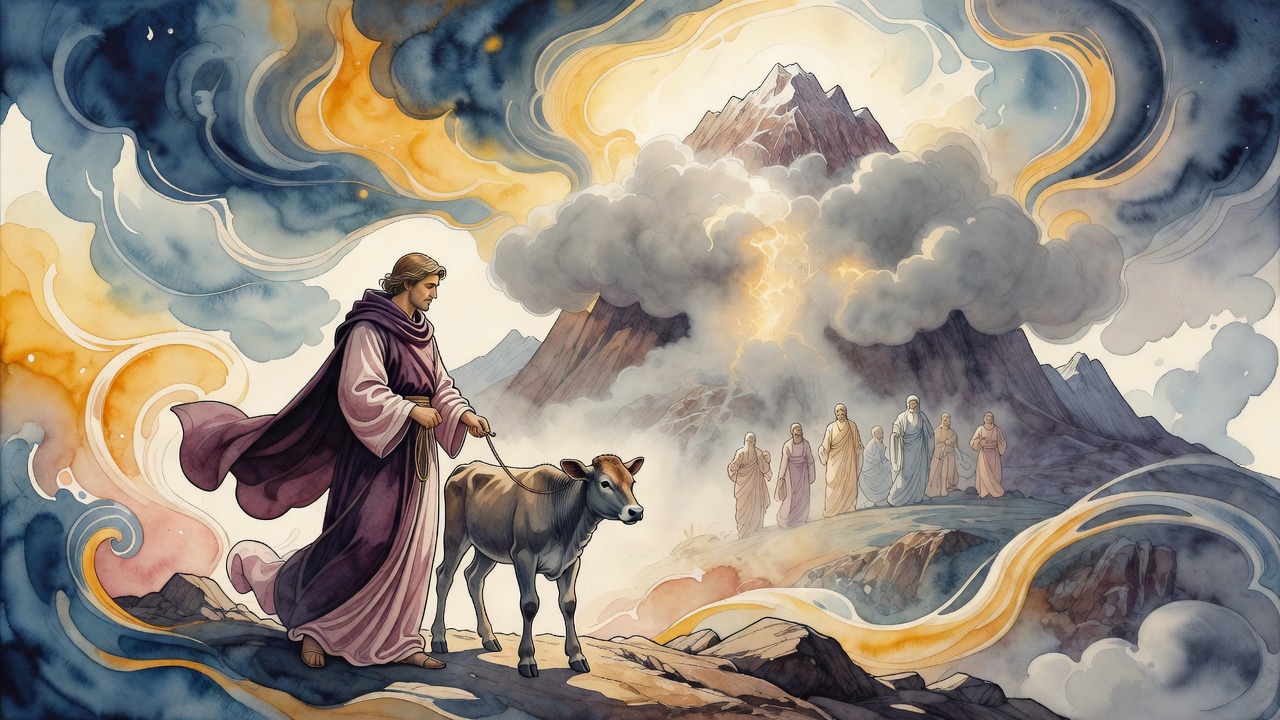
When Moses descended Sinai with the commandments, he carried more than the words carved in stone. He carried the entire structure of law that God had given him to transmit: laws of sacrifice and purity, laws of property and testimony, laws governing what a person may swear and how an oath may be dissolved. That last category had its own term. Hafarah (הפרה), the annulment of vows. A sage could release a man from an oath if the man showed he would not have sworn it had he understood what it entailed. The authority to dissolve a vow was a real authority, not a workaround. Moses understood it as a provision for human weakness. He did not yet understand that he would one day use it against the oath-maker himself.

The Calf and the Verdict

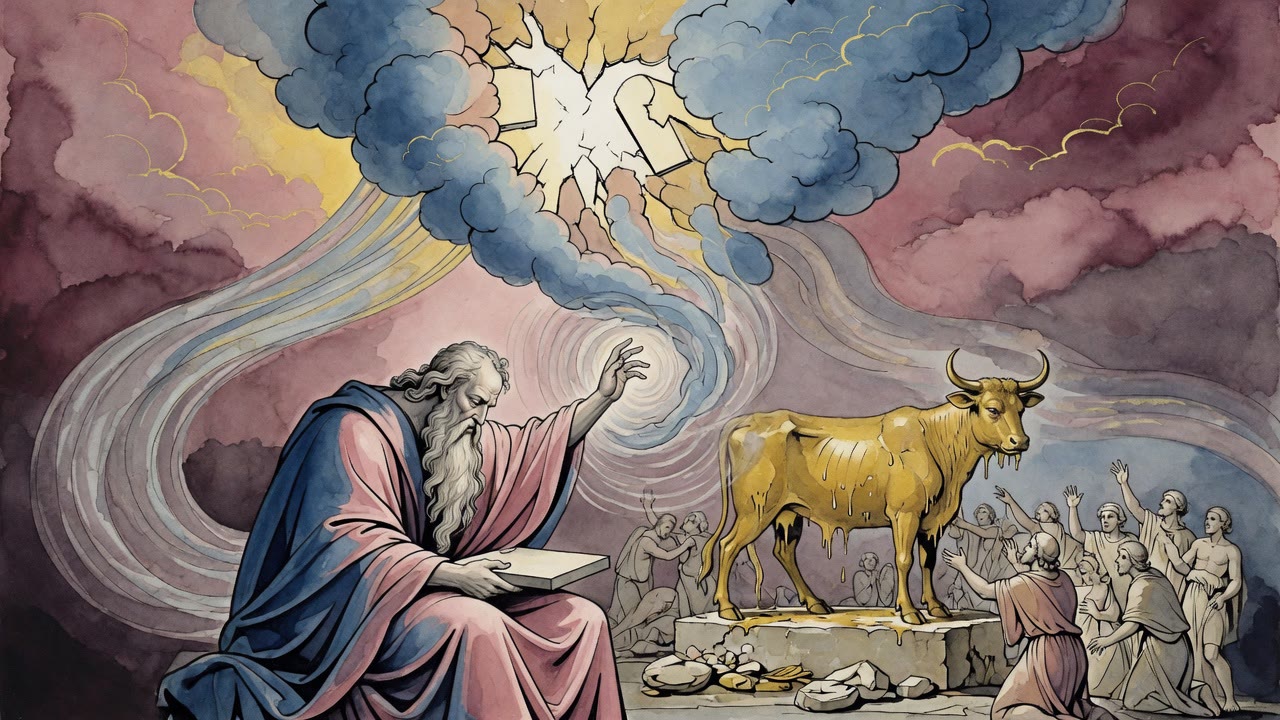
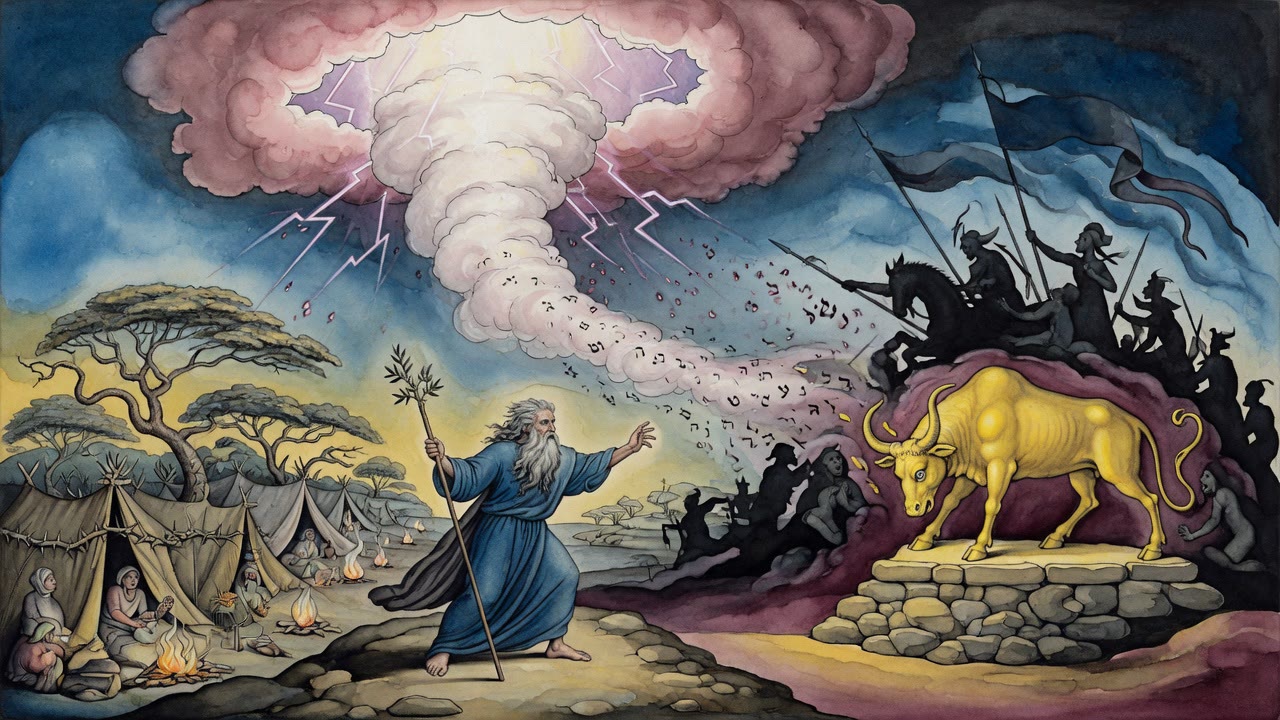
Forty days after the thunder at Sinai went silent, Israel broke. The people could not see Moses descending. They pressed Aaron until he melted their gold and shaped it into a calf and called the festival a festival to God. The fire of the furnace had barely cooled when God spoke to Moses on the mountain. The words were not a warning. They were a verdict. God had already sworn: one who sacrifices to other gods shall be destroyed (Exodus 22:19). An oath had emerged from the mouth of God. I do not recant what my mouth has spoken.

The offer God extended to Moses was, in its way, generous. Let me destroy them. I will make you into a great nation instead (Exodus 32:10). Moses, alone on the mountain with the tablets that Israel had already broken faith with, could have accepted. He had earned it. He had been the one standing between Pharaoh and the people. He was slow of speech, slow of tongue, and he had spoken to kings and to the sea and to the pillar of fire and all of it had cost him something. Taking the offer would have ended the debt.

Moses turned it down.

The Elder and the Supplicant

What happened next is recorded in a single verb. Vayhal (ויחל): the word the Torah uses when it says Moses implored God (Exodus 32:11). The word looks like it means to entreat or beseech. Rabbi Berekhya, transmitting in the name of Rabbi Ḥelbo, in the name of Rabbi Yitzḥak, read the verb as derived from the same root as hafarah: Moses dissolved the vow of his Maker.

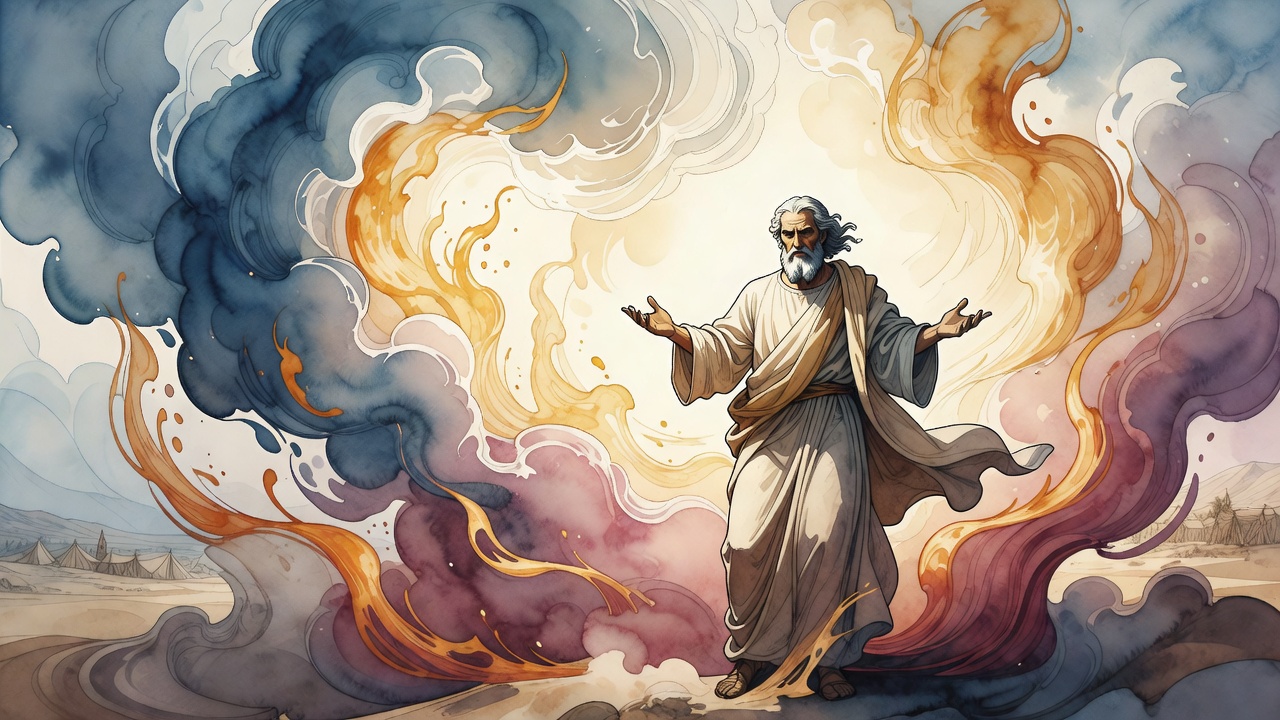
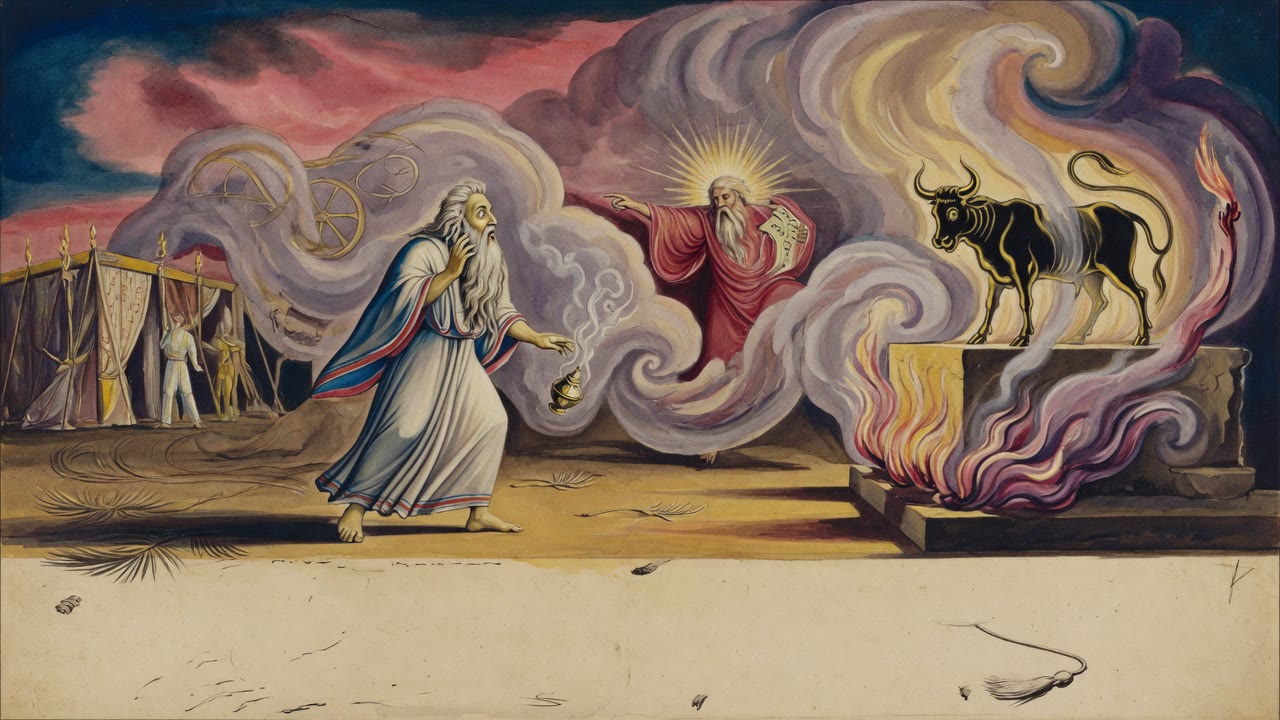
Moses wrapped himself in his cloak and sat down. He sat the way a sage sits when a man comes before him with a vow that needs releasing. Then he spoke the argument. God had given him the laws of vow-nullification. Any elder who issues rulings and wants others to accept those rulings must first fulfill them himself. God had given Moses the authority to dissolve oaths. It was only right that God fulfill the same law. Moses was not threatening. He was citing precedent. He was holding up the Torah like a mirror.

Moses asked God: Do you regret it? That was the legal question, the one a sage asks a man who comes to have a vow dissolved. God answered: I regret the evil I said I would perform against my people. At that moment Moses said: It is dissolved for You. It is dissolved for You. There is no vow here and there is no oath here.

God stood before him. The Holy One stood like one who requests nullification of his vow.

A mortal sat. God stood. Israel lived.

What He Could Not Argue for Himself

The same force that worked for an idolatrous nation did not work when Moses turned it on his own behalf. God told him he would not cross the Jordan. Moses pleaded. He invoked the promises made to Abraham and Isaac and Jacob. God said the decree stood (Deuteronomy 3:26-27). Moses asked for one concession: let me at least see the land. God brought him to the summit of Pisgah and showed him everything, from Gilead to Dan, from Naphtali to the Negev, to the plain of Jericho (Deuteronomy 34:1-3). Moses saw what he could not enter.

Then he died.

The proportion is precise in a way the tradition does not soften. The man who sat as an elder while God stood before him like a supplicant, who dissolved the oath sworn against an entire nation, could not argue himself over a river. The force worked for others. It did not work for himself.

Zion and the King Who Stood Before It

When the second Psalm asks who sits enthroned on Zion, the tradition's answer is Moses. Not David, not Solomon. Moses, who never set foot in Jerusalem, who died on the eastern side of the Jordan with the city nowhere near his body. The covenant of Zion reaches back past the Temple's foundations to the man who stood in the wilderness and argued God into keeping his promise to Abraham and Isaac and Jacob (Exodus 32:13). Zion is not a hill. It is the place where what Moses carried finally came to rest.

Belshazzar lifted his neck and the hand appeared on the wall. The verdict was four centuries old. Moses had transmitted it at Sinai without knowing Babylon would one day require it. The law that humbles kings was always the same law. Moses spoke it first. Time confirmed it, empire by empire.


← All myths

From the tradition

Sources

3 sources

The texts this telling draws on, in full. Open a card to read inline, or expand it for a wider, quieter read.

Midrash Tehillim 2:8Midrash Tehillim

Like one minute it's love and compassion, and the next. well, fire and brimstone?

That tension, that push-and-pull between divine mercy and divine judgment, is something Jewish tradition wrestles with constantly. And it's right there, front and center, in the Midrash Tehillim, a collection of interpretations and stories woven around the Book of Psalms. This particular midrash (rabbinic interpretive commentary) dives deep into the second Psalm, tackling some pretty weighty questions about God's relationship with, well, everyone.

"So He will speak to them in His anger," the Psalm states. But then, elsewhere, we read, "Gracious and merciful is He" (Psalm 111:4). So, which is it? Is God all sunshine and rainbows, or is there a stern, judgmental side too?

The Midrash Tehillim suggests a nuanced answer. It's not an either/or situation. God's mercy, it suggests, is particularly directed towards Israel. But what about everyone else? Well, the midrash points to (Isaiah 13:9): "Behold, the day of the Lord comes, cruel, with wrath and fierce anger." That verse, it implies, speaks to God's relationship with the nations, the goyim. It's a tough verse, no doubt. It hints at a complex relationship, one where judgment plays a significant role.

Now, let's turn to the next part of the midrash, which focuses on the phrase "And I have anointed my king." Who is this "anointed one," this mashiach? What does it even mean to be anointed?

The midrash offers several intriguing interpretations. First, it references (Daniel 10:3), where someone says, "I did not anoint myself with oil." This suggests that the "anointed one" isn't necessarily someone who's literally been slathered in oil. Instead, the midrash presents a series of symbolic readings.

One interpretation equates the "anointed one" with God's signet ring. A signet ring, in ancient times, was a symbol of authority and power. Think of it like God's stamp of approval. But the midrash doesn't stop there. It makes a startling connection, referencing the Golden Calf incident in (Exodus 32:4): "a molten calf." Wait, what? How does a golden calf fit into all this?

It's a provocative connection, forcing us to consider the complexities of leadership and idolatry. Perhaps it is a warning: even those in positions of power can be led astray, can create false idols.

Another interpretation identifies the "anointed one" with "my nobles." The midrash cites (Micah 5:4), "and the eight leaders of men," and (Ezekiel 43:7), "Here are the princes of the sanctuary," supporting this claim. This suggests that the "anointed one" isn't just one person, but a collective of righteous leaders.

And where is this "anointed one's" greatness found? "On Zion, the mountain of my sanctuary." Zion, of course, is Jerusalem, the heart of Jewish identity and the place where heaven and earth are believed to meet. It's a reminder that true greatness is rooted in holiness and connection to the divine.

So, what do we take away from all of this? The Midrash Tehillim doesn't offer easy answers. It presents us with a series of questions, forcing us to confront the complexities of faith, power, and divine justice. It reminds us that God's relationship with the world, and with each of us, is many-sided and ever-evolving. It's a challenge, and an invitation, to keep searching, keep questioning, and keep striving to understand.

Full source
Midrash Tehillim 75:3Midrash Tehillim

Jewish tradition has a word of caution for that feeling – a reminder that true power, true exaltation, doesn't come from where we expect.

Midrash Tehillim, a collection of interpretations on the Book of Psalms, dives deep into Psalm 75, specifically the lines: "Do not lift up your horns on high; speak not with a stiff neck. For not from the east or from the west and not from the wilderness comes exaltation." What does it really mean?

The Midrash offers a fascinating glimpse into the story of Belshazzar, the Babylonian king. Remember the tale from the Book of Daniel? Belshazzar throws a lavish party, desecrating the sacred vessels from the Temple in Jerusalem. Suddenly, a mysterious hand appears and writes on the wall. Terrified, Belshazzar summons all the wise men of his kingdom, but none can decipher the cryptic message.

It's at this moment, the Midrash (rabbinic interpretive commentary) tells us, that Belshazzar understood something profound. He realized that his impending doom wasn't the result of a rebellion brewing within his kingdom, but rather a decree from God. "God brings low and he raises up" (1 Samuel 2:7). Belshazzar's arrogance, his "lifting up his horns on high," blinded him to the true source of power. His downfall was a direct consequence of his hubris.

But the Midrash doesn't stop there. It offers another, equally compelling interpretation, connecting this idea of humbling and exalting to the story of the Golden Calf. Remember that episode? Moses ascends Mount Sinai to receive the Torah, and the Israelites, impatient and fearful, build a golden idol to worship. A colossal mistake.

The Midrash highlights the people's dismissive words about Moses: "This fellow Moses, we don't know what's become of him" (Exodus 32:1). They humbled Moses in their hearts, rejecting his leadership. But then, when God declared, "Whoever has sinned against me, him will I blot out of my book" (Exodus 32:33), the Levites stepped forward, taking decisive action against the transgressors. This act of devotion, of choosing God over the idol, led to their exaltation. They were elevated in status and granted special roles within the community.

So, what's the takeaway? The Midrash is teaching us that true exaltation doesn't come from worldly power, arrogance, or even popular opinion. It comes from recognizing a higher power, from humility, and from unwavering commitment to what’s right, even when it’s difficult. It’s a profound reminder that the forces that shape our lives often come from unexpected directions, humbling us and exalting us in ways we might never anticipate. What does it mean for us, today? Perhaps it’s a call to examine where we place our trust, and where we seek our validation.

Full source
Shemot Rabbah 43:4Shemot Rabbah

A fascinating, even audacious, story from Shemot Rabbah – a collection of rabbinic interpretations on the Book of Exodus. It's a story about Moses, the ultimate intercessor, and it asks a profound question: can a human being dissolve a vow made by God Himself?

The episode centers around the aftermath of the Golden Calf. The Israelites, impatient and afraid, had turned away from God so soon after receiving the Torah at Sinai. God, understandably, was furious. As we read in (Exodus 22:19), He declared, "One who sacrifices to gods shall be destroyed!" And God doesn't break His promises. As the text emphasizes, an oath that has emerged from God's mouth, He does not recant.

Moses..Moses implored (vayḥal) God. What does this mean, vayḥal? Rabbi Berekhya, quoting Rabbi Ḥelbo in the name of Rabbi Yitzḥak, offers a stunning interpretation: Moses dissolved the vow of his Maker! How could a mortal possibly undo something God has sworn?

In this tradition, Moses argued with God using God’s own Torah! He reminded God of the laws regarding the nullification of vows, found in (Numbers 30:3): "If a man takes a vow to the Lord, or takes an oath to impose a prohibition upon himself, he shall not profane (yaḥel) his word?" Moses pointed out that while the man himself cannot profane his vow, a Sage can pardon it when he requests it. And who gave Moses the laws of nullification of vows? God himself!

The logic is airtight, almost audacious: God, you commanded me regarding the nullification of vows, therefore you also must nullify your vow, as you commanded me to nullify for others.

The story goes on to paint a truly remarkable picture. Moses, wrapped in his cloak, sat as an elder in judgment. And the Holy One, blessed be He, stood before him, like one seeking the nullification of a vow! As (Deuteronomy 9:9) says, "I sat on the mountain" (though the verse is often translated "I remained"). But is it possible, the text asks, that Moses was sitting and God was standing?

Rabbi Derusai suggests that God crafted for Moses a special chair that would appear to be standing, yet he was, in fact, sitting.

Rav Huna bar Aḥa explains that Moses sat specifically to dissolve God's vow. But what exactly did he say? Rabbi Yoḥanan suggests the difficult question Moses posed was: "Do you regret it?" Because if the individual who made a vow regrets it, the rabbi may nullify it. It's a bold, even shocking idea – to suggest God might experience regret. The text clarifies that what Moses asked of God was whether He regretted the evil He said He would perform against His people.

And God, in this incredible midrashic (rabbinic interpretive commentary) moment, relents. "I regret the evil that I said I would perform against My people."

At that moment, Moses declared: "It is dissolved for You, it is dissolved for You. There is no vow here and there is no oath here!" That, says the midrash, is the true meaning of vayḥal – that Moses nullified the vow of his Maker, just as (Numbers 30:3) says, “He shall not profane (yaḥel) his word."

Rabbi Shimon ben Lakish takes it even further, explaining that this is why Moses is called a "man of God" – because he dissolved a vow for God! Just as a man can dissolve his wife’s vow, Moses dissolved God’s vow.

What are we to make of this astonishing story? It's a powerful evidence of the role of the righteous leader, the tzaddik, as an advocate for their people. It suggests that even divine decrees can be challenged, negotiated, and perhaps, even overturned through prayer, righteous action, and a deep understanding of God's own law. It reveals a God who, while powerful and absolute, is also willing to listen, to reconsider, and to show mercy. It's a radical thought, to be sure, but one that speaks to the profound and dynamic relationship between humanity and the Divine.

Full source