Baruch Watches Black and Bright Waters Fall
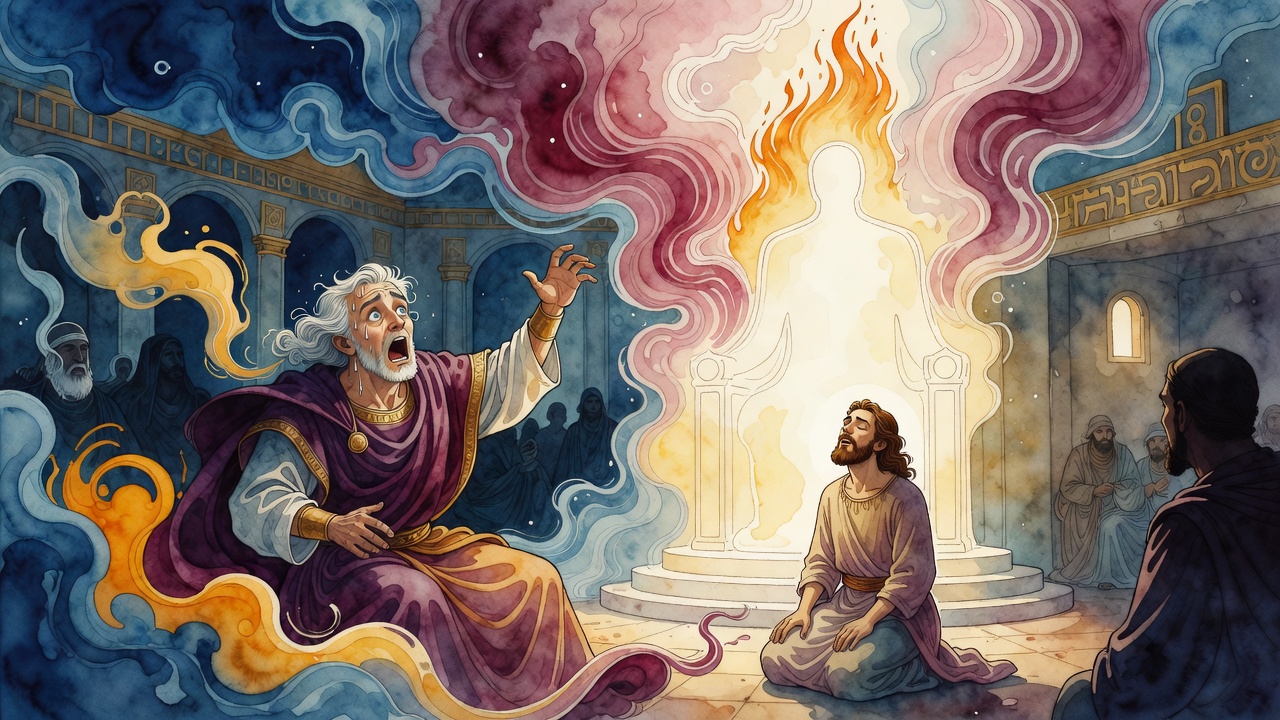
After Jerusalem falls, Baruch sees a cloud pour Adam's black waters and Abraham's bright ones. Ramiel names each flood until history itself becomes weather.
Table of Contents
 Click for full size
After the Smoke
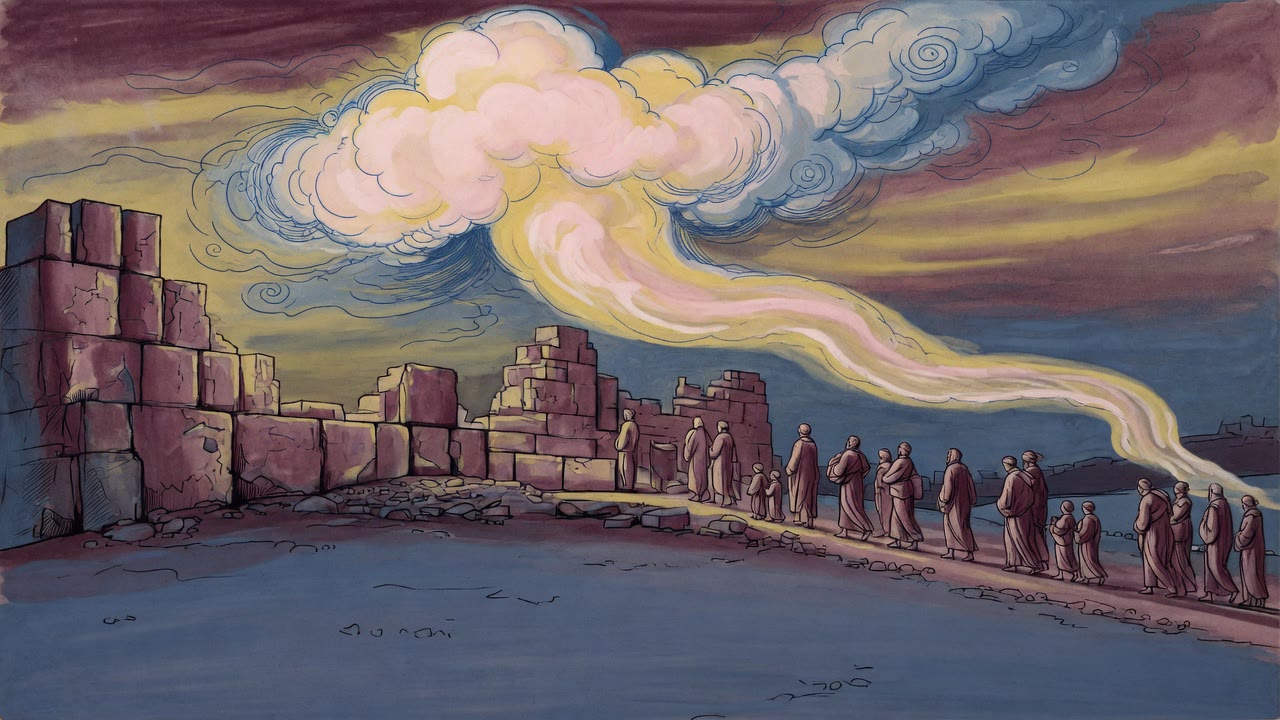
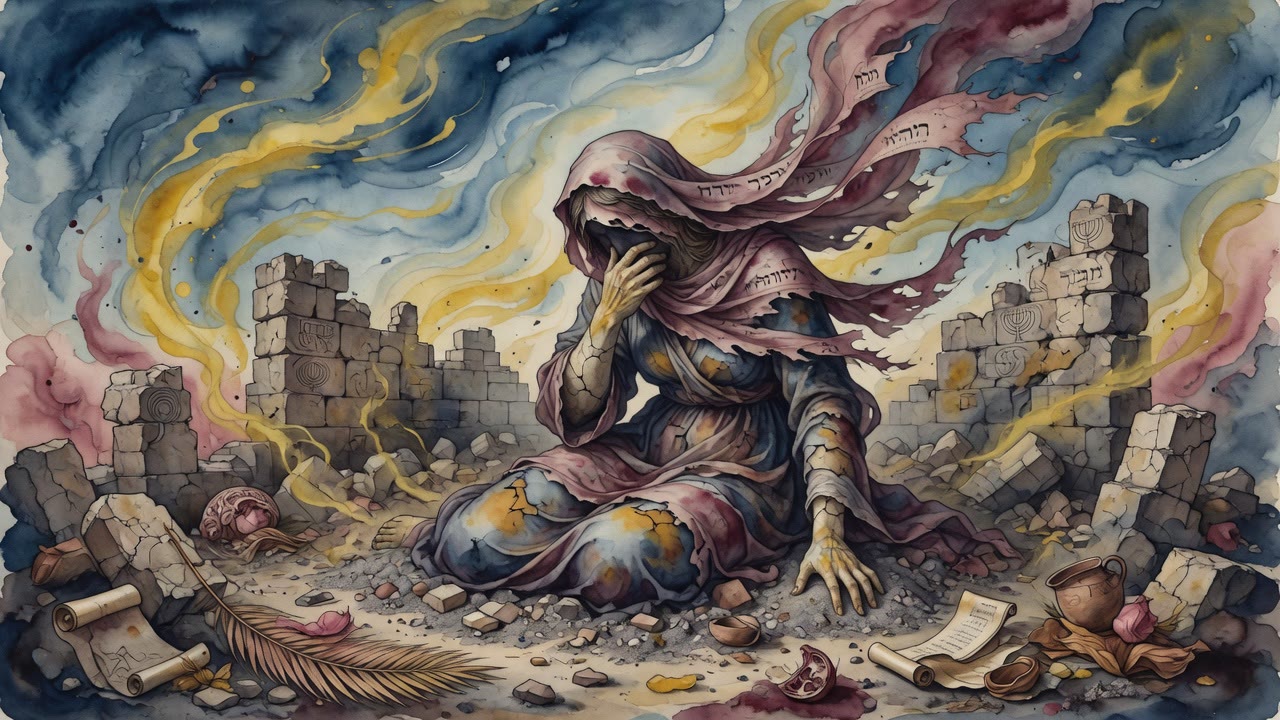
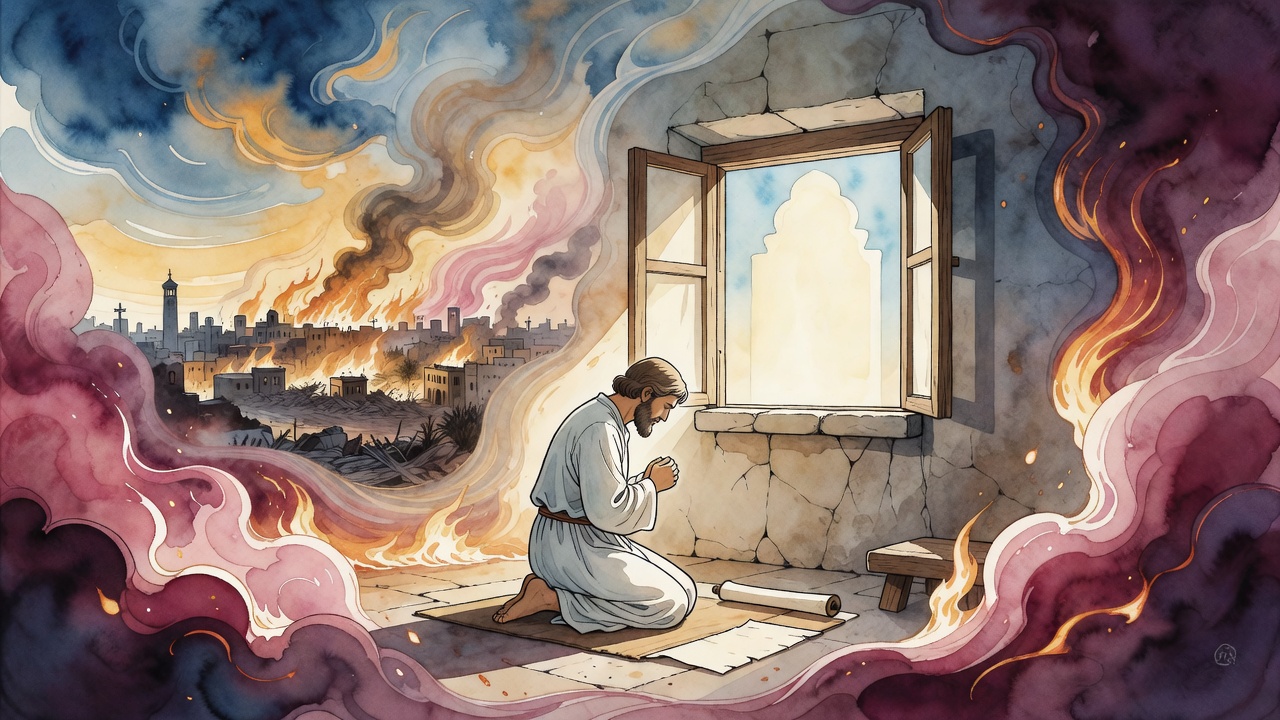
Baruch stood where the Temple's heat still lived in the stones. Jerusalem had fallen. The rooms that once held song held ash and the smell of meat left too long in fire. He had been the scribe of Jeremiah, trained to write the words of warning while there was still time to turn. Now the warning had become weather, and the city could not unhear it. The gates that had known processions knew only the traffic of conquest.
He did not sleep easily among the ruins of a capital that had believed itself permanent. When sleep finally took him, it did not give rest. It gave a cloud large enough to hold the world.
The Cloud That Held the World
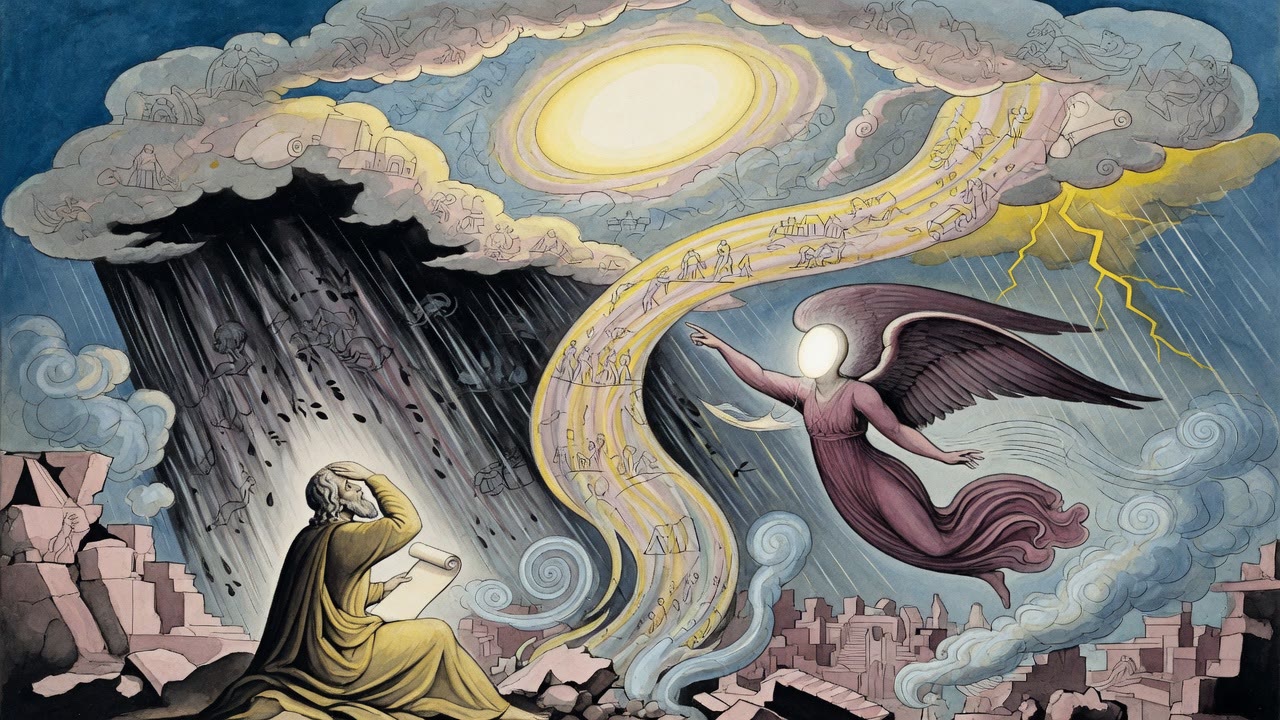
The cloud was the duration of the entire creation, formed when God took counsel to make it. From that cloud, waters fell in alternating colors that refused to mix into a polite gray. First black waters: the transgression of Adam, the opening of untimely death, grief, anguish, pain, disease, and the demands of Sheol (the shadowy land of the dead). Darkness bred darkness the way rot spreads in grain. Angels descended and mingled with human women. Those who lived on earth perished in the great flood, and the black pour seemed for a moment to be the only weather the world would ever know.
Then bright waters: Abraham and his seed, the season when the unwritten law was named, when the works of the commandments were fulfilled before Sinai's thunder, when belief in coming judgment was born and the promise of the world to come first put down roots in human speech. The pattern did not apologize for its violence or its hope. Black for the sins of the nations in Egypt. Bright for Moses, Aaron, Miriam, and Joshua, the generation when the lamp of eternal law shone on all who sat in darkness.
Ramiel Names the Floods
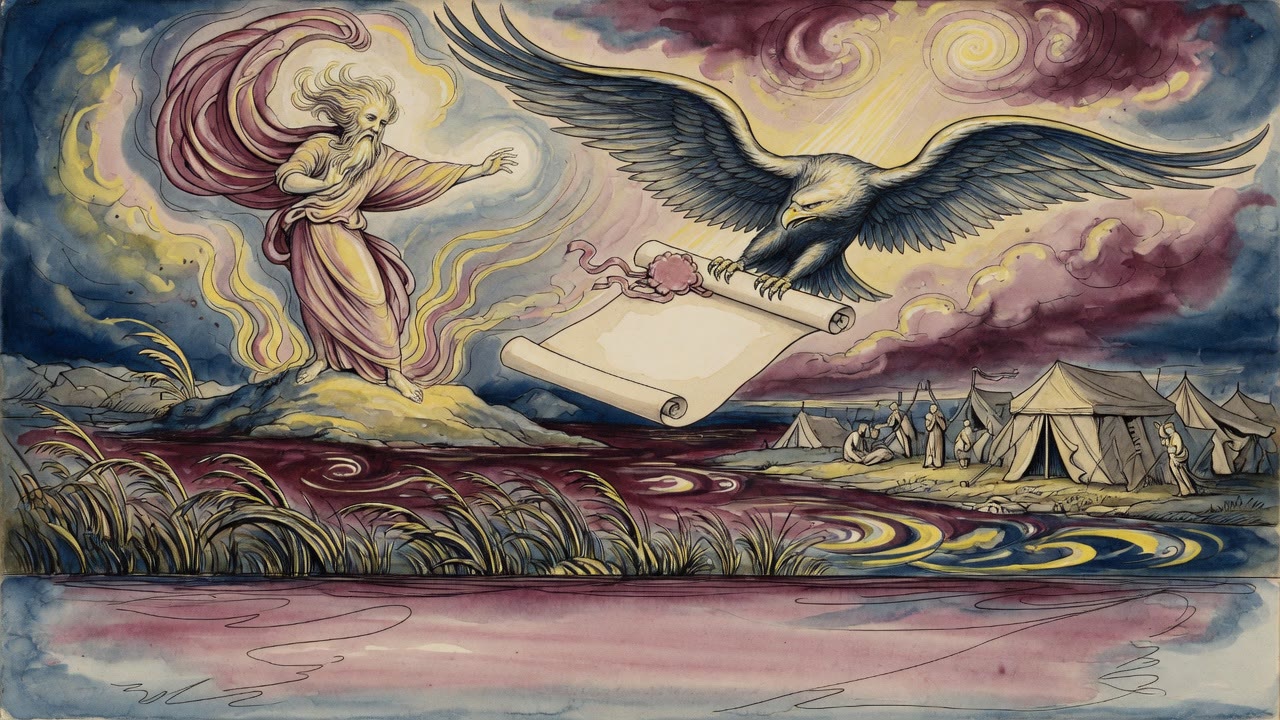
The angel Ramiel interpreted what Baruch could only watch with a scribe's helpless accuracy. Black waters for the Amorites and the sins of Israel under the judges. Bright waters for David and Solomon, for Zion built and the Temple dedicated, when wisdom was heard in the assembly and the land was glorified beyond all lands. Black again for Jeroboam's golden calves, for the curse of Jezebel, for the captivity of the ten tribes dragged from their fields. Bright for Hezekiah, whose righteousness moved God to send Ramiel himself against Sennacherib, burning 185,000 commanders from within while their armor stayed strangely whole in the morning light.
Black for Manasseh, who made an idol with five faces and was cast into a brazen horse heated until it melted around him. Bright for Josiah, the king who cleaned the land, restored the offerings, and burned the bones of the wicked. The vision kept pouring. History was not a straight road from garden to glory. It was a weather system with a memory, and every flood had a name.
When Upheaval Looks Like Betrayal
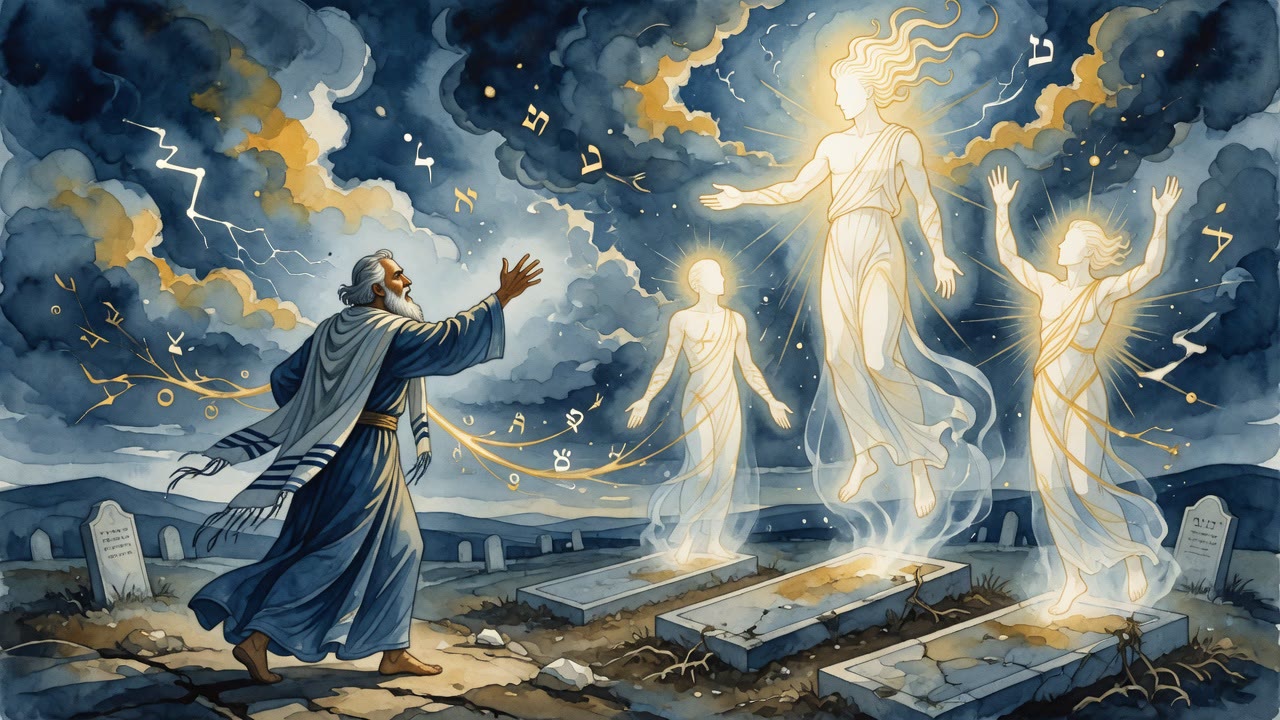
A later soul would say out loud what Baruch's eyes already knew in the ash: the great overturnings often look like the opposite of God's plan. Revolutions, collapses, and nights when injustice seems to win make the heart lean left or right into despair or into wild claims that force a meaning too small for the facts. No human chest can hold the full scope. Baruch's cloud did not deny that feeling. It trained it. Even the black waters were counted inside a counsel older than the fire in the city.
God had shown Moses measures of fire, depths of the abyss, the weight of the winds, the number of raindrops, the root of wisdom, the greatness of Paradise, the mouth of Gehinnom, and the splendor of the angels. Baruch received a smaller, harsher gift: a sequence he could write. Sin, then light. Collapse, then a king who mends. The Temple's fall sat inside that sequence without becoming the last word on the page.
What the Scribe Kept
When the vision loosened its hold, Baruch still lived in a ruined capital. The bright waters had not rebuilt a single gate or returned a single singer to the choirs. But the black waters no longer looked like proof that heaven had abandoned the ledger. Adam's first dark pour had not canceled Abraham's bright one. Egypt's night had not erased Moses' lamp. Sennacherib's army had met Ramiel's fire from the inside while armor stood empty in the field.
Baruch went on writing because a scribe's work is to refuse amnesia. The cloud had taught him the grammar of Jewish time: not endless bright, not endless black, but a poured history in which every flood is named, and naming is the first resistance to despair. He picked up his tools among the stones and began again, not because the weather had cleared, but because he had seen that weather was not chaos. It was a story still being told in alternating waters, and his generation was one more pour, black or bright, still under the cloud that held the world from the first counsel.
← All myths